Changing Behaviour in the
Operating Theatre
Ed Fitzgerald
@DrEdFitzgerald
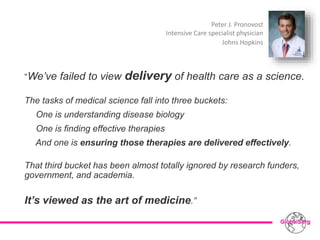
“We’ve failed to view delivery of health care as a science.
The tasks of medical science fall into three buckets:
One is understanding disease biology
One is finding effective therapies
And one is ensuring those therapies are delivered effectively.
That third bucket has been almost totally ignored by research funders,
government, and academia.
It’s viewed as the art of medicine.”
Peter J. Pronovost
Intensive Care specialist physician
Johns Hopkins
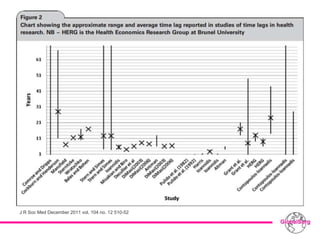
J R Soc Med December 2011 vol. 104 no. 12 510-52
What’s implementation about?
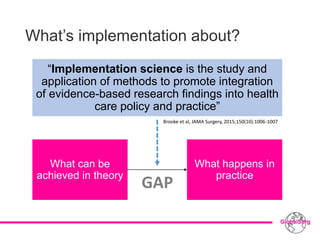
“Implementation science is the study and
application of methods to promote integration
of evidence-based research findings into health
care policy and practice”
What can be
achieved in theory
What happens in
practice
Brooke et al, JAMA Surgery, 2015;150(10):1006-1007
GAP
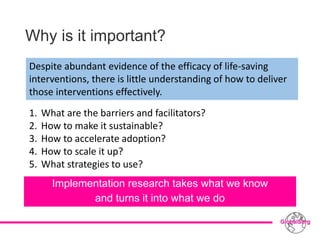
Why is it important?
Despite abundant evidence of the efficacy of life-saving
interventions, there is little understanding of how to deliver
those interventions effectively.
Implementation research takes what we know
and turns it into what we do
1. What are the barriers and facilitators?
2. How to make it sustainable?
3. How to accelerate adoption?
4. How to scale it up?
5. What strategies to use?
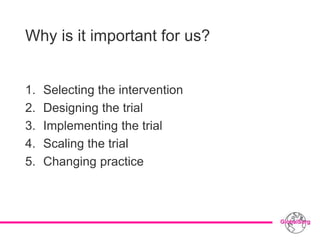
Why is it important for us?
1. Selecting the intervention
2. Designing the trial
3. Implementing the trial
4. Scaling the trial
5. Changing practice
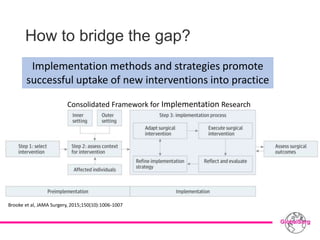
How to bridge the gap?
Implementation methods and strategies promote
successful uptake of new interventions into practice
Brooke et al, JAMA Surgery, 2015;150(10):1006-1007
Consolidated Framework for Implementation Research
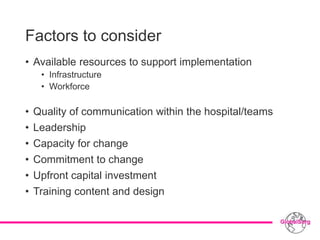
Factors to consider
• Available resources to support implementation
• Infrastructure
• Workforce
• Quality of communication within the hospital/teams
• Leadership
• Capacity for change
• Commitment to change
• Upfront capital investment
• Training content and design
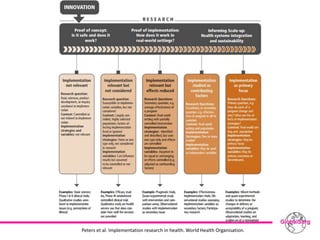
Peters et al. Implementation research in health. World Health Organisation.
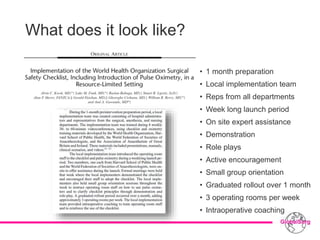
What does it look like?
• 1 month preparation
• Local implementation team
• Reps from all departments
• Week long launch period
• On site expert assistance
• Demonstration
• Role plays
• Active encouragement
• Small group orientation
• Graduated rollout over 1 month
• 3 operating rooms per week
• Intraoperative coaching
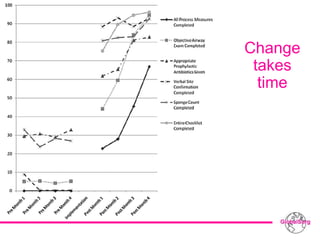
Change
takes
time
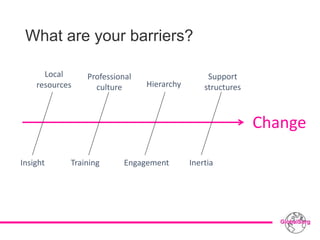
What are your barriers?
Change
Training
Local
resources
Insight
Professional
culture Hierarchy
InertiaEngagement
Support
structures
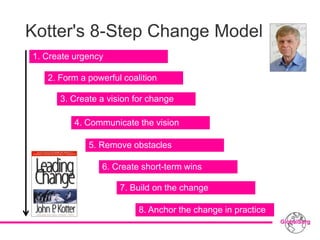
Kotter's 8-Step Change Model
2. Form a powerful coalition
3. Create a vision for change
4. Communicate the vision
5. Remove obstacles
6. Create short-term wins
7. Build on the change
8. Anchor the change in practice
1. Create urgency
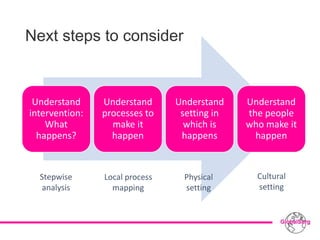
Next steps to consider
Understand
intervention:
What
happens?
Understand
processes to
make it
happen
Understand
setting in
which is
happens
Understand
the people
who make it
happen
Local process
mapping
Stepwise
analysis
Cultural
setting
Physical
setting
Human behaviour flows from three
main sources:
Desire, emotion, and knowledge.
Plato
www.globalsurg.org
@GloablSurg
Dr Ed Fitzgerald
jeffitzgerald@gmail.com
@DrEdFitzgerald

Changing Behaviour in the Operating Theatre - GlobalSurg Implementation presentation

  • 1.
    Changing Behaviour inthe Operating Theatre Ed Fitzgerald @DrEdFitzgerald
  • 2.
    “We’ve failed toview delivery of health care as a science. The tasks of medical science fall into three buckets: One is understanding disease biology One is finding effective therapies And one is ensuring those therapies are delivered effectively. That third bucket has been almost totally ignored by research funders, government, and academia. It’s viewed as the art of medicine.” Peter J. Pronovost Intensive Care specialist physician Johns Hopkins
  • 3.
    J R SocMed December 2011 vol. 104 no. 12 510-52
  • 4.
    What’s implementation about? “Implementationscience is the study and application of methods to promote integration of evidence-based research findings into health care policy and practice” What can be achieved in theory What happens in practice Brooke et al, JAMA Surgery, 2015;150(10):1006-1007 GAP
  • 5.
    Why is itimportant? Despite abundant evidence of the efficacy of life-saving interventions, there is little understanding of how to deliver those interventions effectively. Implementation research takes what we know and turns it into what we do 1. What are the barriers and facilitators? 2. How to make it sustainable? 3. How to accelerate adoption? 4. How to scale it up? 5. What strategies to use?
  • 6.
    Why is itimportant for us? 1. Selecting the intervention 2. Designing the trial 3. Implementing the trial 4. Scaling the trial 5. Changing practice
  • 7.
    How to bridgethe gap? Implementation methods and strategies promote successful uptake of new interventions into practice Brooke et al, JAMA Surgery, 2015;150(10):1006-1007 Consolidated Framework for Implementation Research
  • 8.
    Factors to consider •Available resources to support implementation • Infrastructure • Workforce • Quality of communication within the hospital/teams • Leadership • Capacity for change • Commitment to change • Upfront capital investment • Training content and design
  • 9.
    Peters et al.Implementation research in health. World Health Organisation.
  • 10.
    What does itlook like? • 1 month preparation • Local implementation team • Reps from all departments • Week long launch period • On site expert assistance • Demonstration • Role plays • Active encouragement • Small group orientation • Graduated rollout over 1 month • 3 operating rooms per week • Intraoperative coaching
  • 11.
  • 12.
    What are yourbarriers? Change Training Local resources Insight Professional culture Hierarchy InertiaEngagement Support structures
  • 13.
    Kotter's 8-Step ChangeModel 2. Form a powerful coalition 3. Create a vision for change 4. Communicate the vision 5. Remove obstacles 6. Create short-term wins 7. Build on the change 8. Anchor the change in practice 1. Create urgency
  • 14.
    Next steps toconsider Understand intervention: What happens? Understand processes to make it happen Understand setting in which is happens Understand the people who make it happen Local process mapping Stepwise analysis Cultural setting Physical setting
  • 15.
    Human behaviour flowsfrom three main sources: Desire, emotion, and knowledge. Plato
  • 16.

Editor's Notes

  • #3 Personally resonates with checklist, never events and the work that Lifebox is undertaking