2Co 5:17 So if anyone is in Christ,
there is a new creation: everything
old has passed away; see,
everything has become new!
Changes that Matter Undergoes
Section 3.1 Physical Change
Section 3.1a States of Matter
Section 3.1b Phase Changes

Section 3.2 Chemical Change

Exit
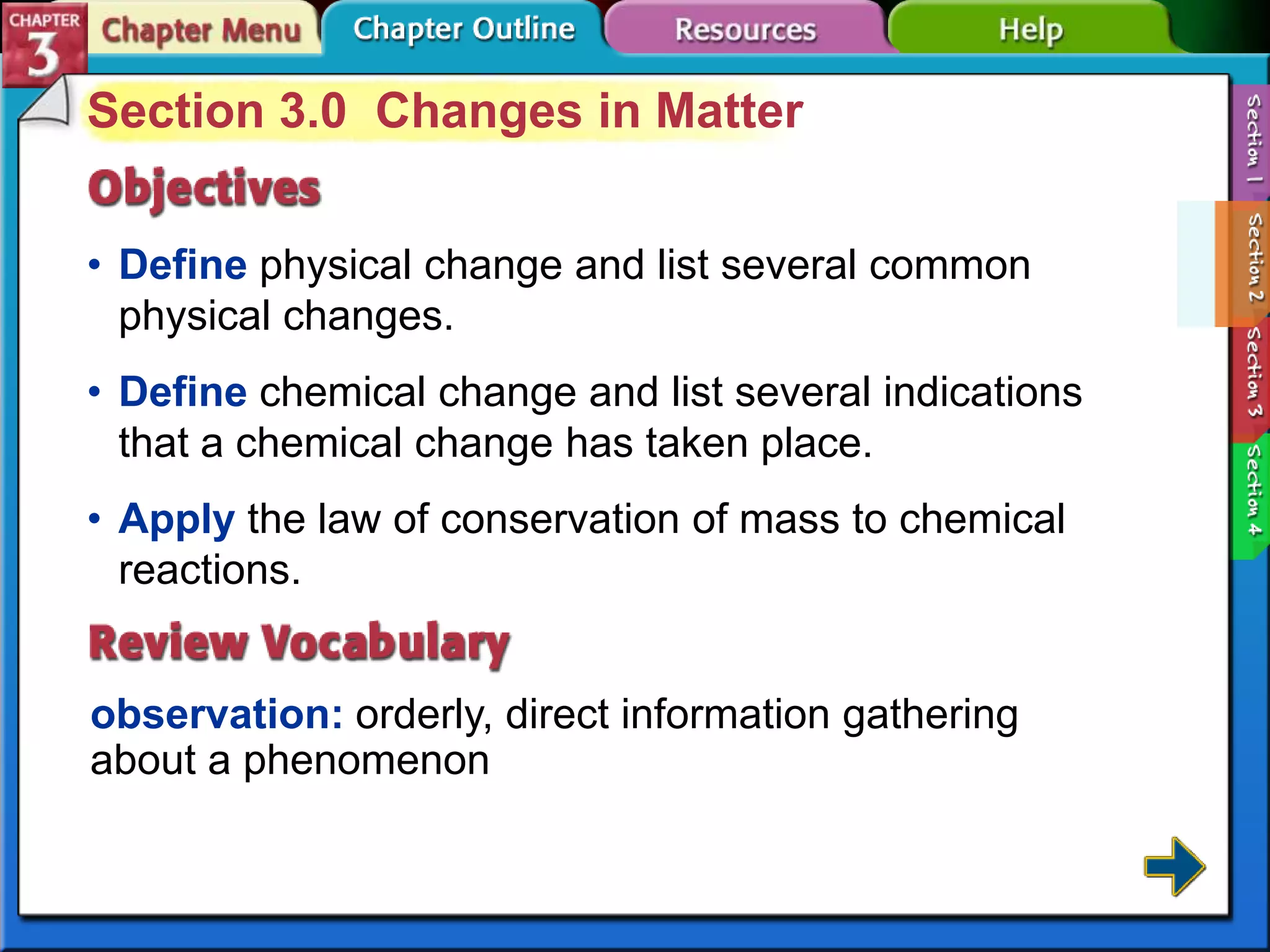
Section 3.0 Changes in Matter
• Define physical change and list several common
physical changes.

• Define chemical change and list several indications
that a chemical change has taken place.
• Apply the law of conservation of mass to chemical
reactions.

observation: orderly, direct information gathering
about a phenomenon
Physical Changes
• A change that alters a substance without
changing its composition is known as a
physical change.
It’s a physical change if...
• It changes shape or size ( broken glass, cutting
papers)
• It dissolves (Sugar dissolving in water)
• It changes state/phase (melting of ice)
A phase change is a transition of matter from
one state to another.
States of Matter
• The physical forms of matter, either solid,
liquid, or gas, are called the states of
matter.
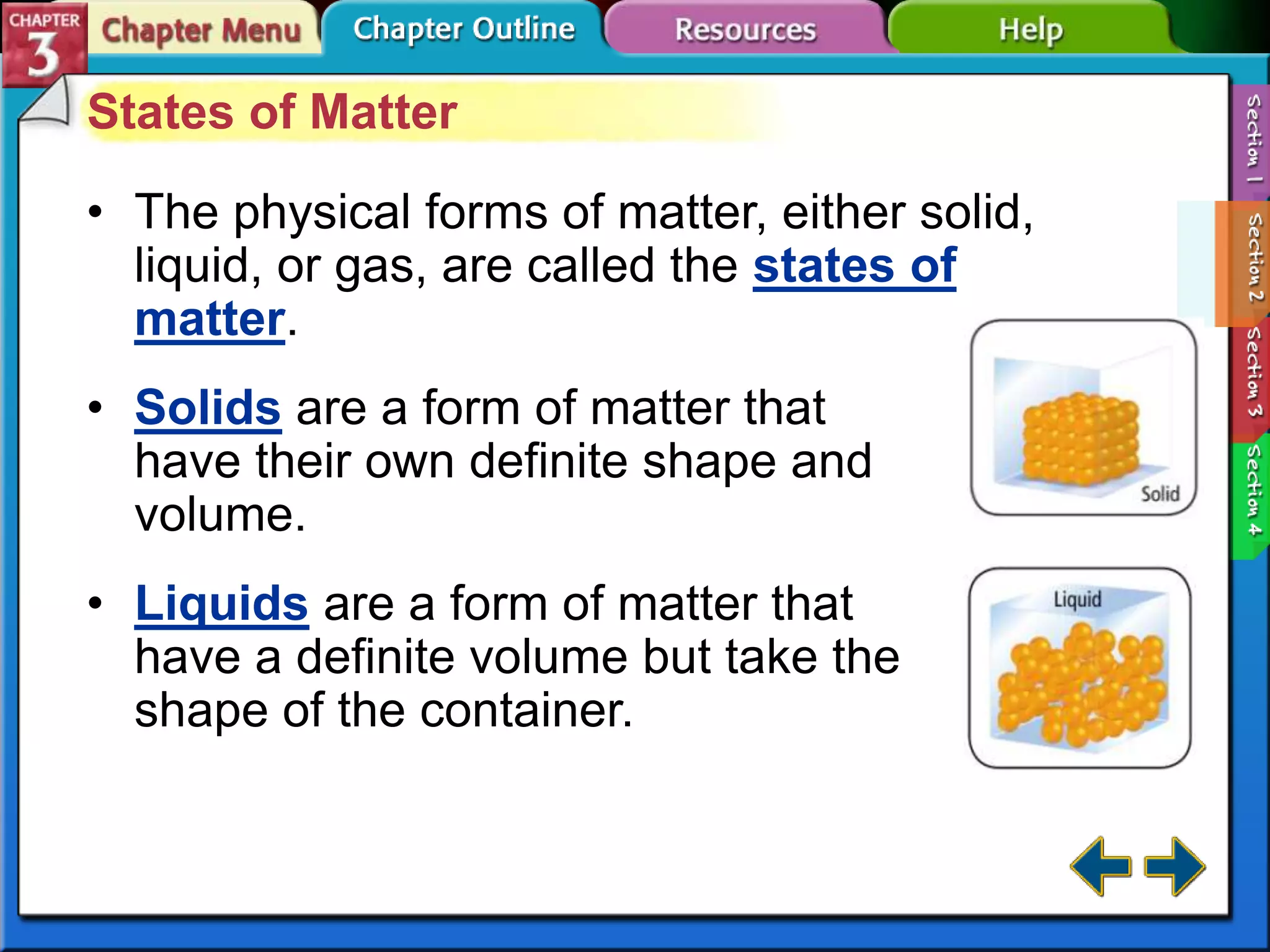
• Solids are a form of matter that
have their own definite shape and
volume.
• Liquids are a form of matter that
have a definite volume but take the
shape of the container.
States of Matter (cont.)
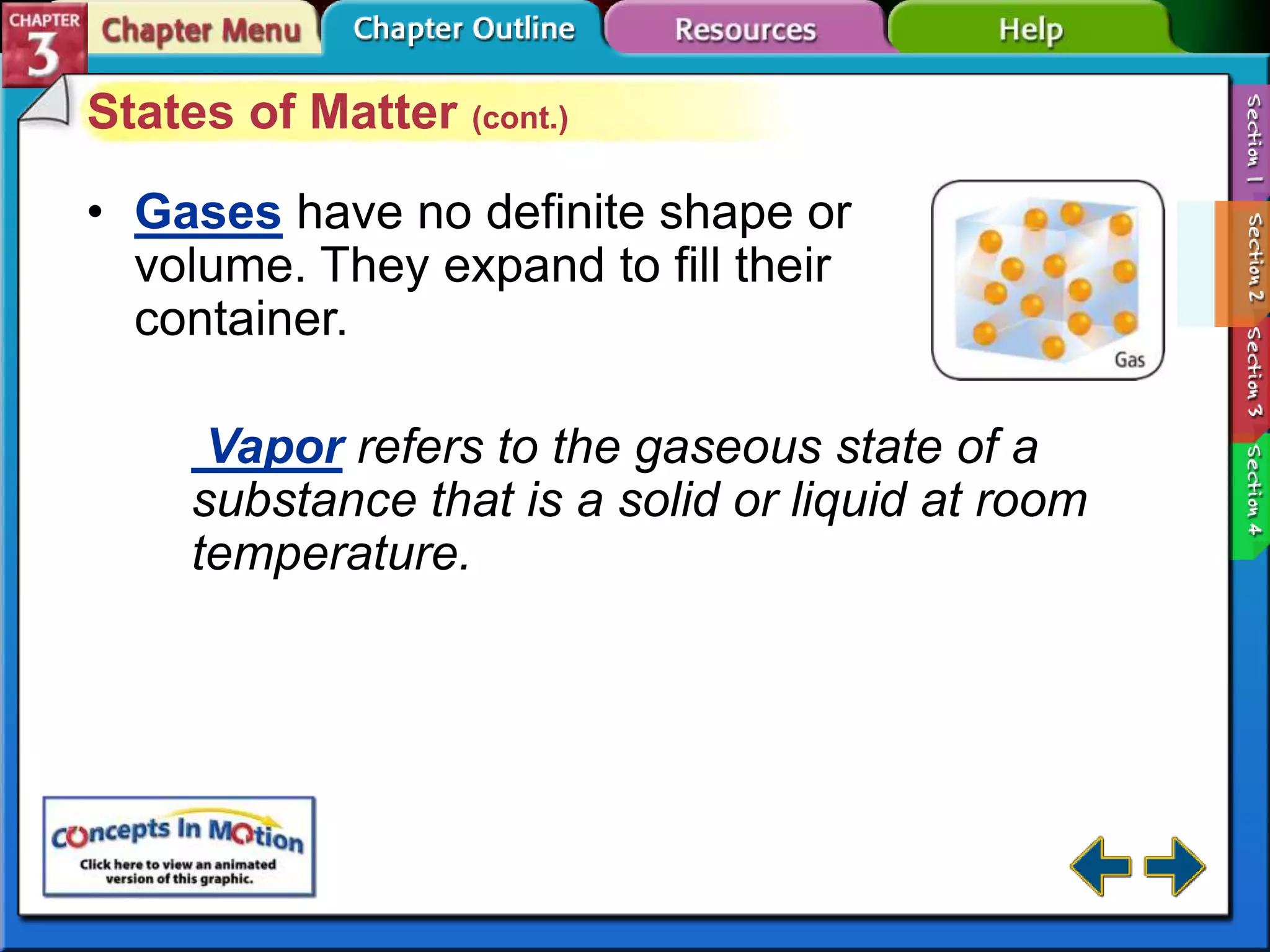
• Gases have no definite shape or
volume. They expand to fill their
container.
Vapor refers to the gaseous state of a
substance that is a solid or liquid at room
temperature.
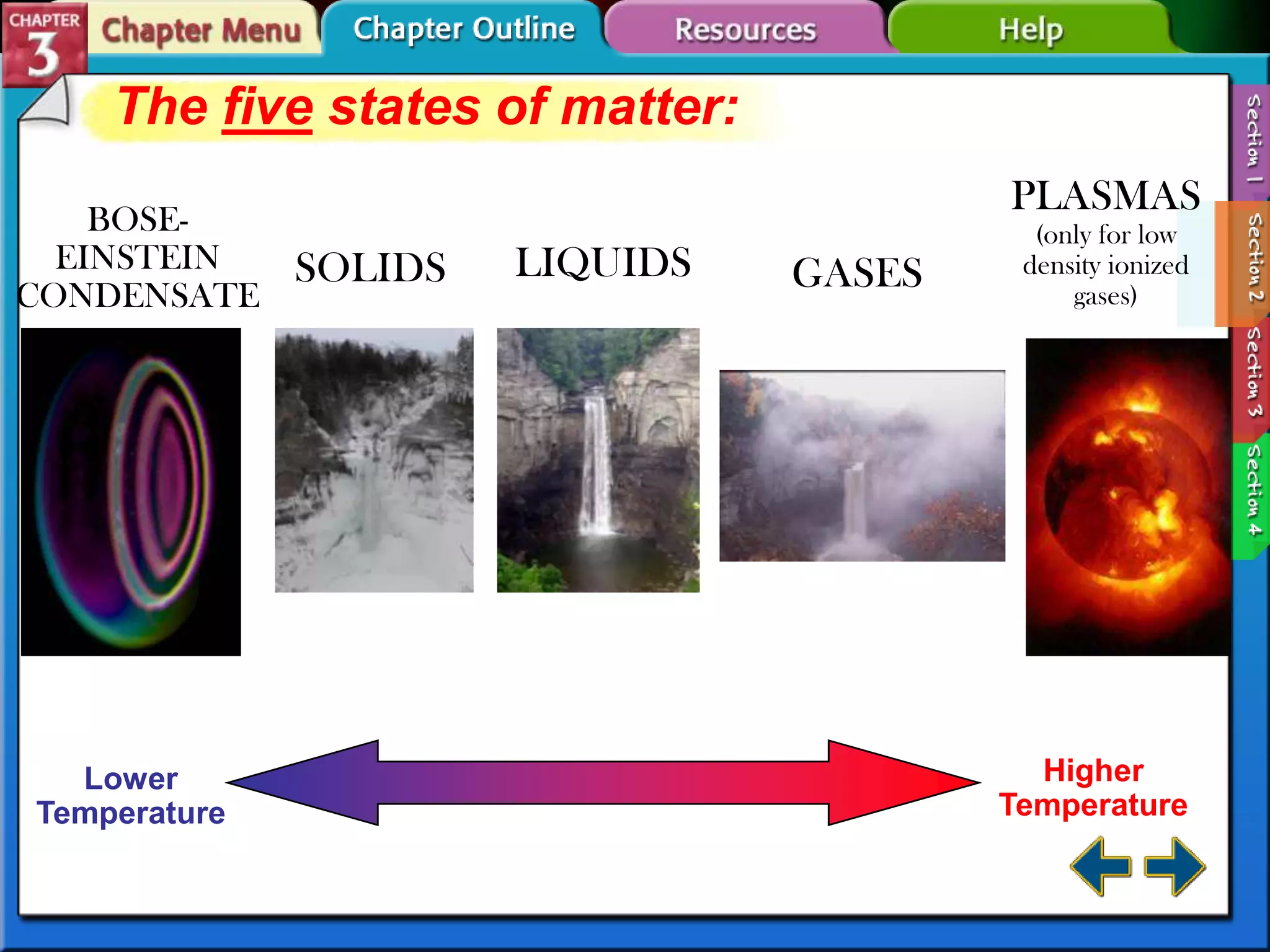
The five states of matter:
BOSEEINSTEIN
SOLIDS
CONDENSATE

Lower
Temperature

PLASMAS
LIQUIDS

GASES

(only for low
density ionized
gases)

Higher
Temperature
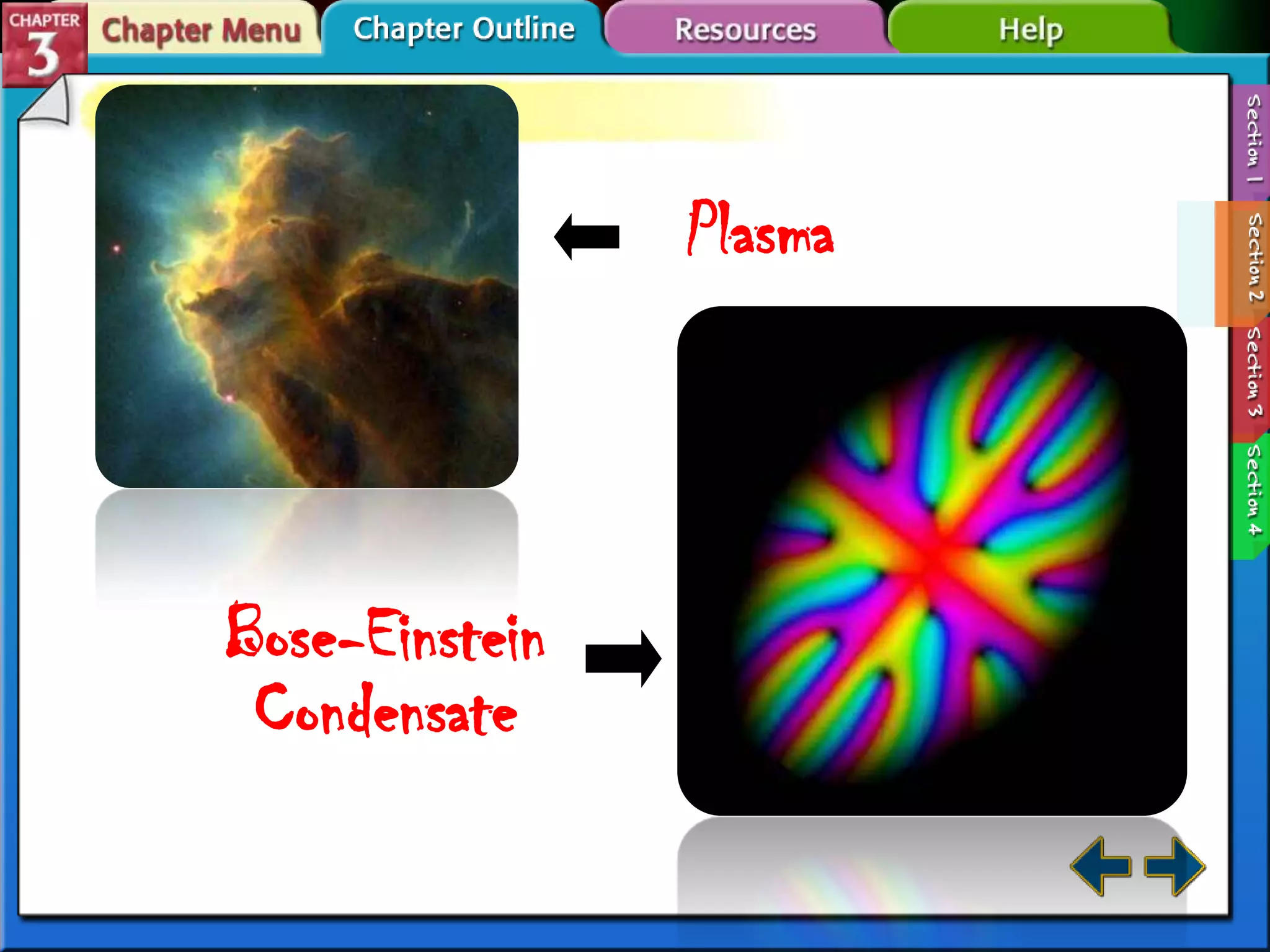
Plasma

Bose-Einstein
Condensate
But what happens if you raise the
temperature to super-high levels…
between
1000 C and 1,000,000,000 C ?

Will everything
just be a gas?
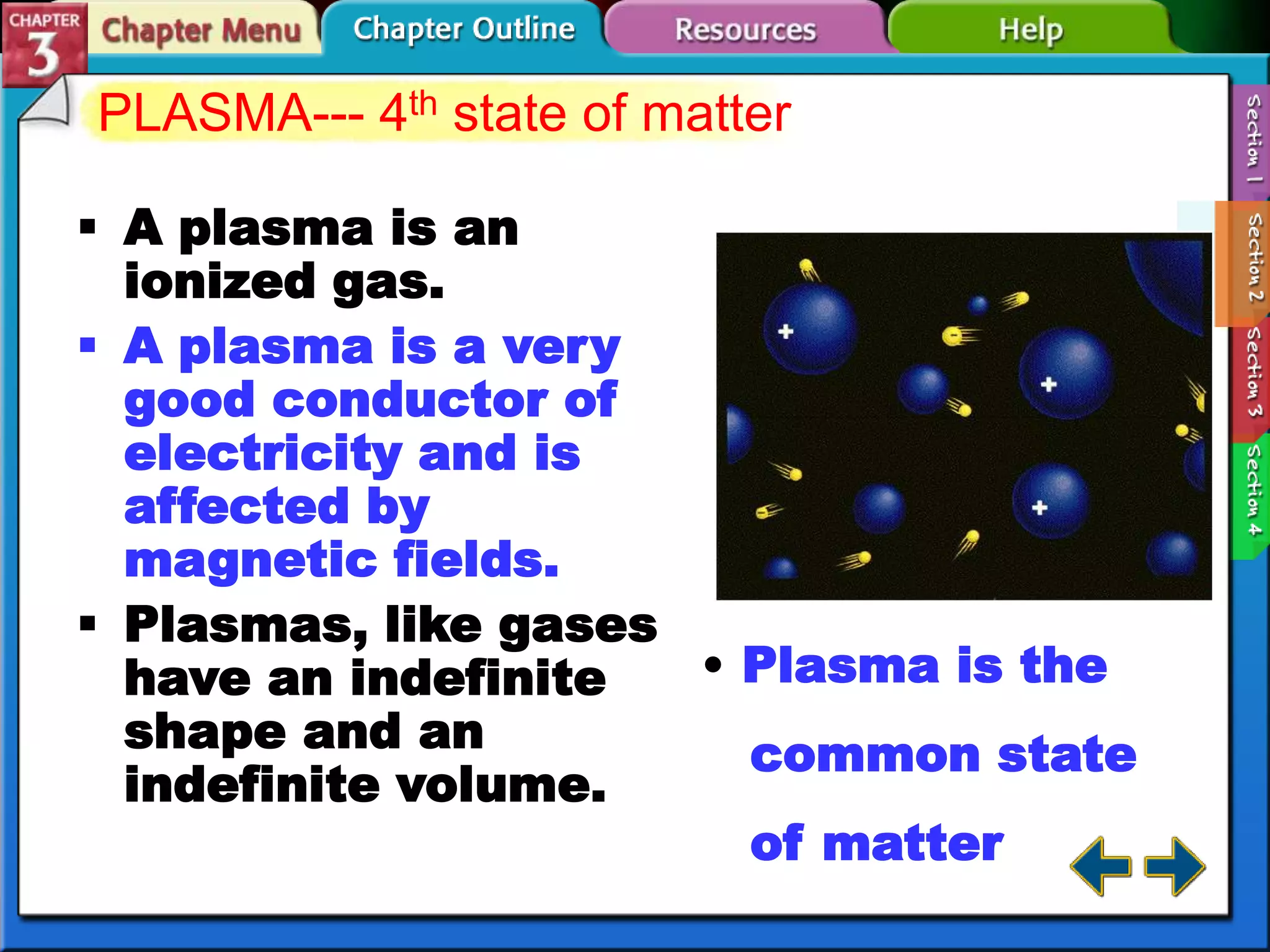
PLASMA--- 4th state of matter
ď‚§ A plasma is an
ionized gas.
ď‚§ A plasma is a very
good conductor of
electricity and is
affected by
magnetic fields.
ď‚§ Plasmas, like gases
• Plasma is the
have an indefinite
shape and an
common state
indefinite volume.
of matter
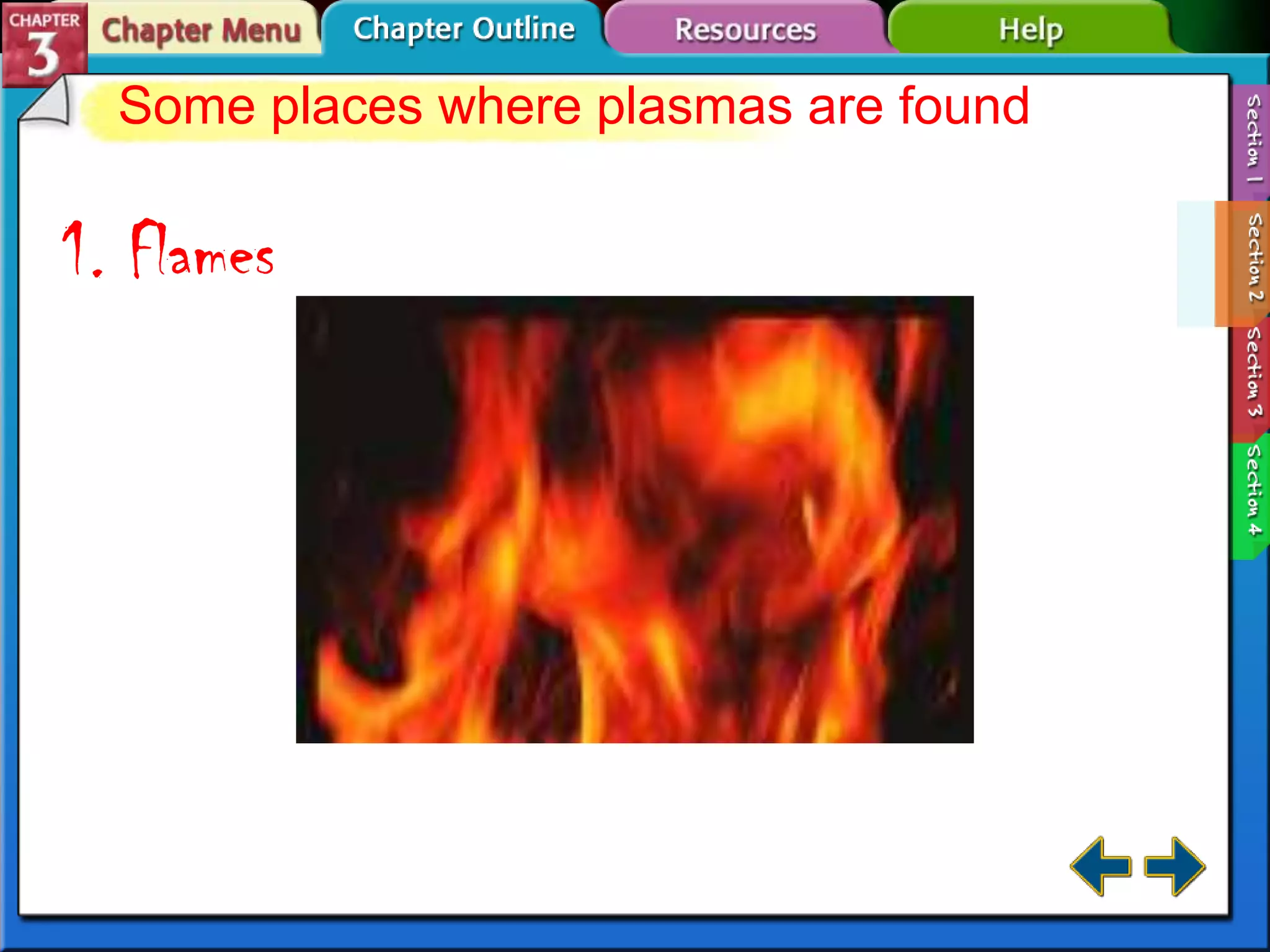
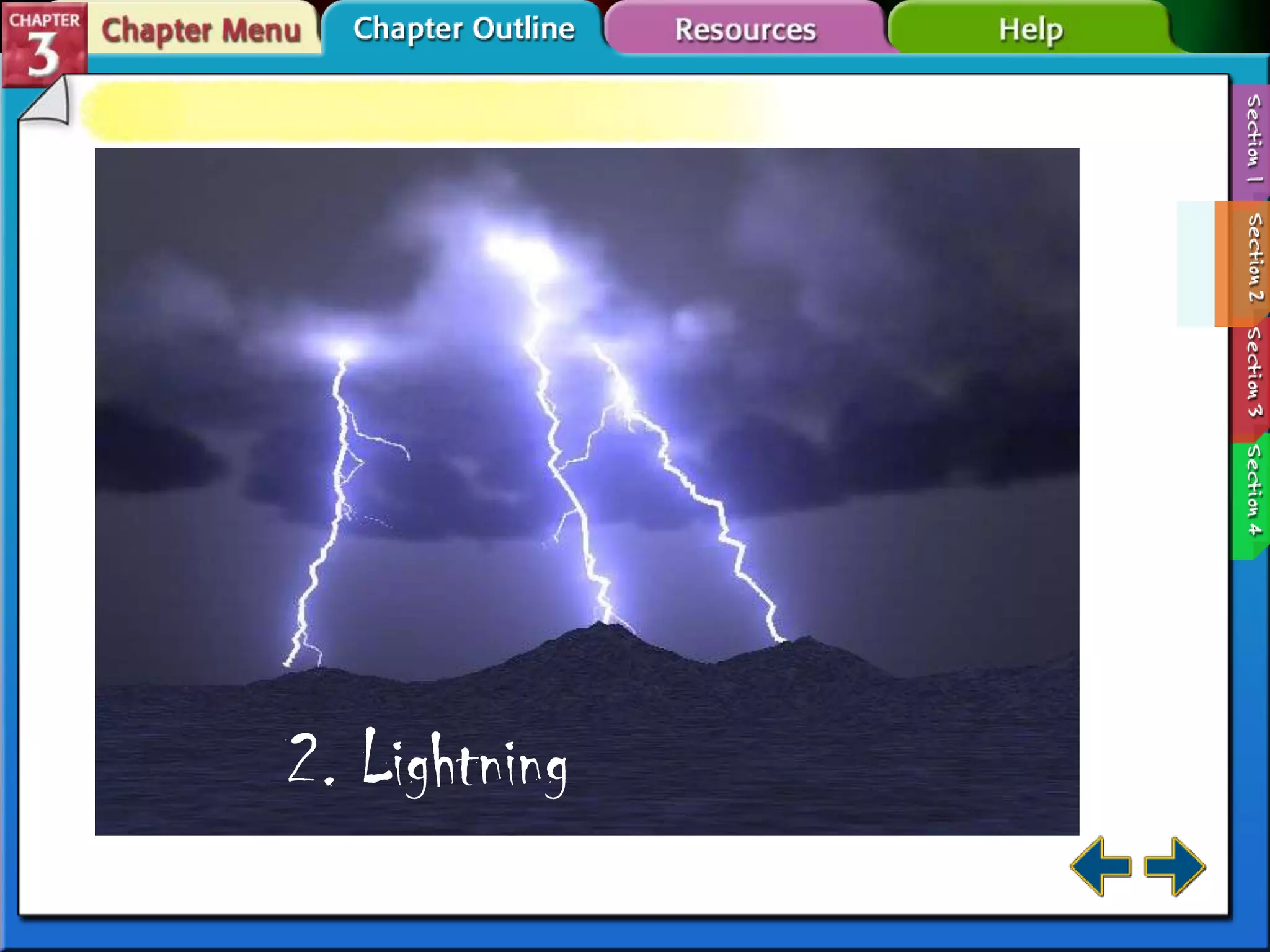
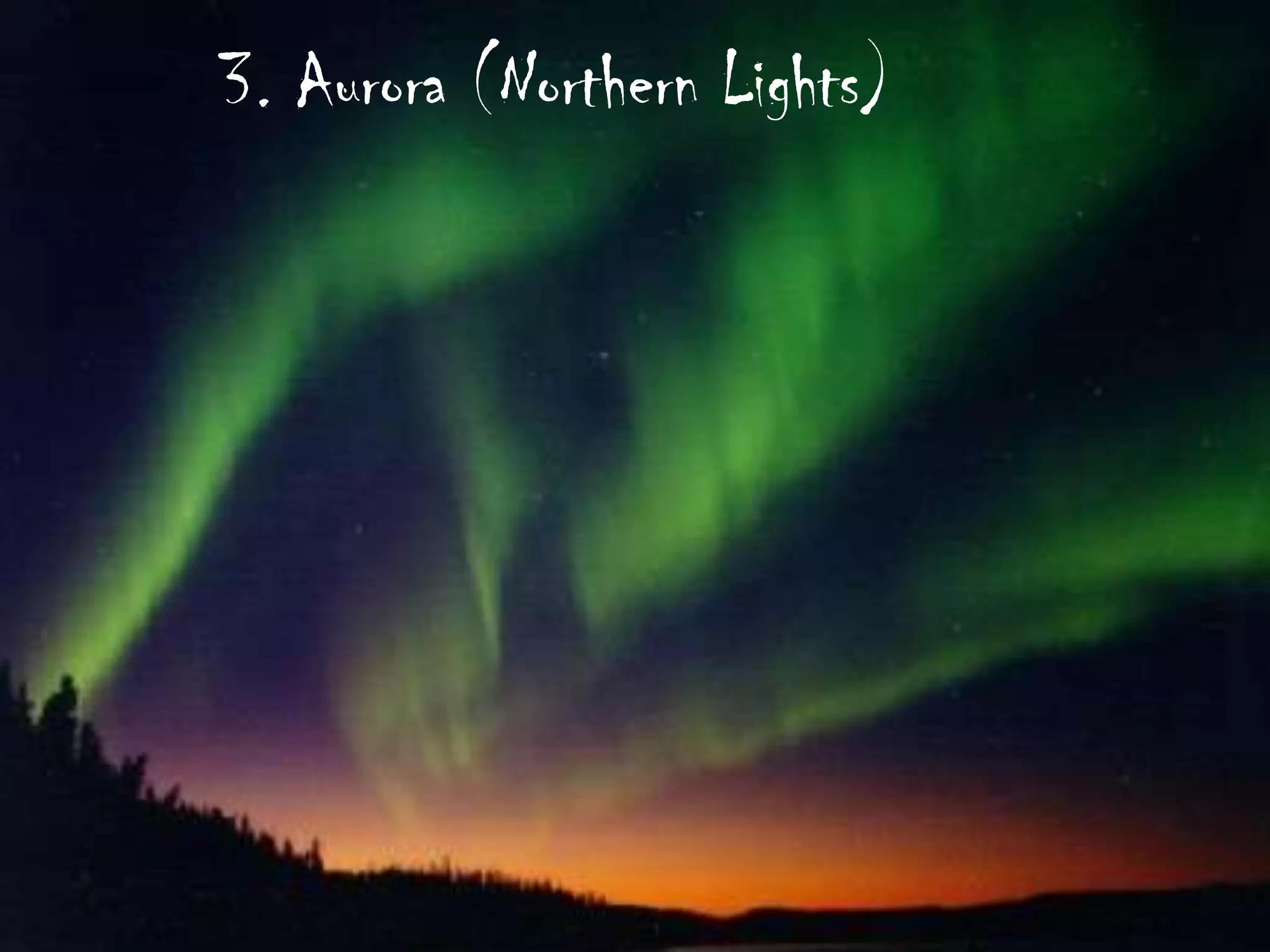
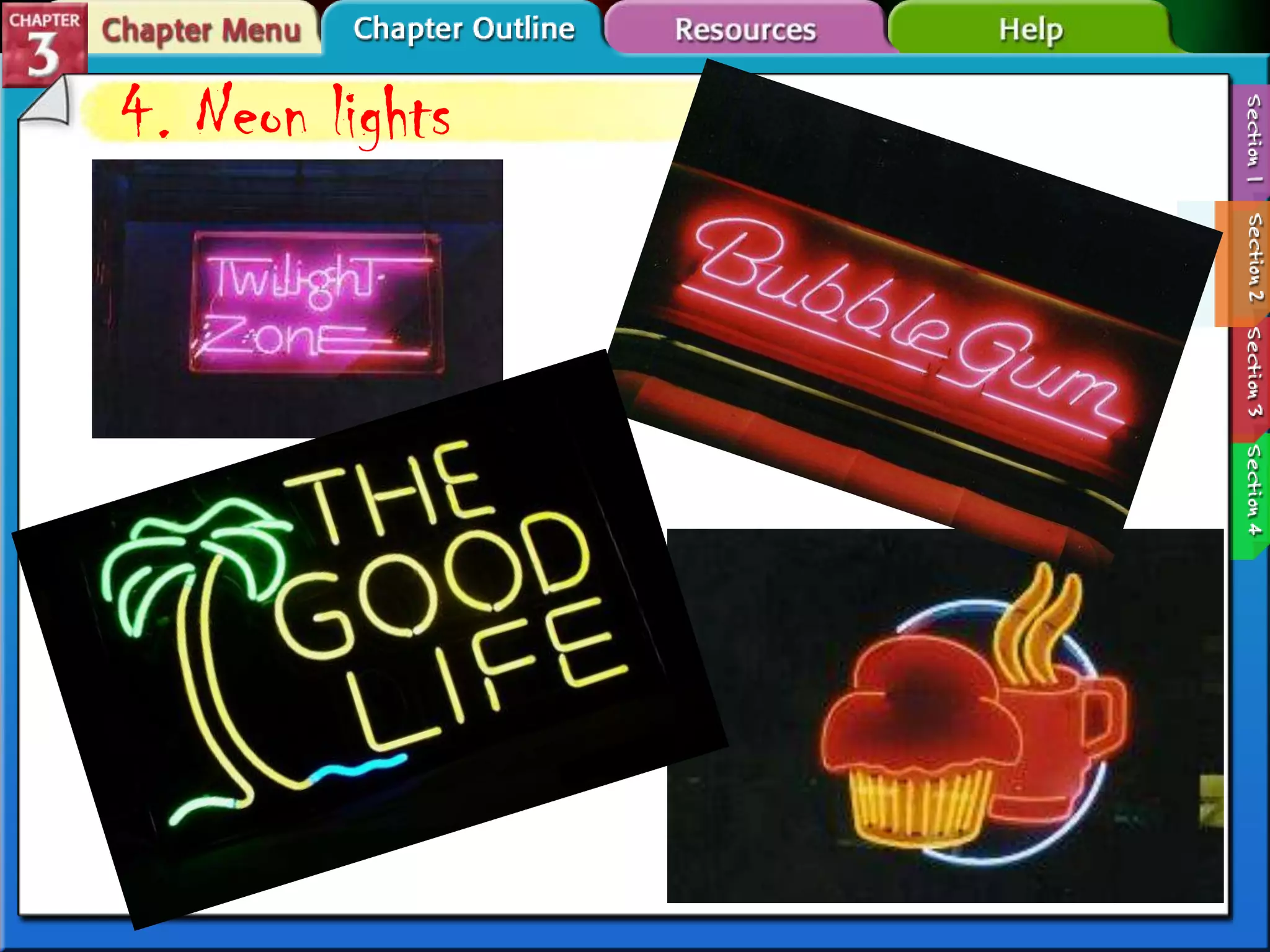
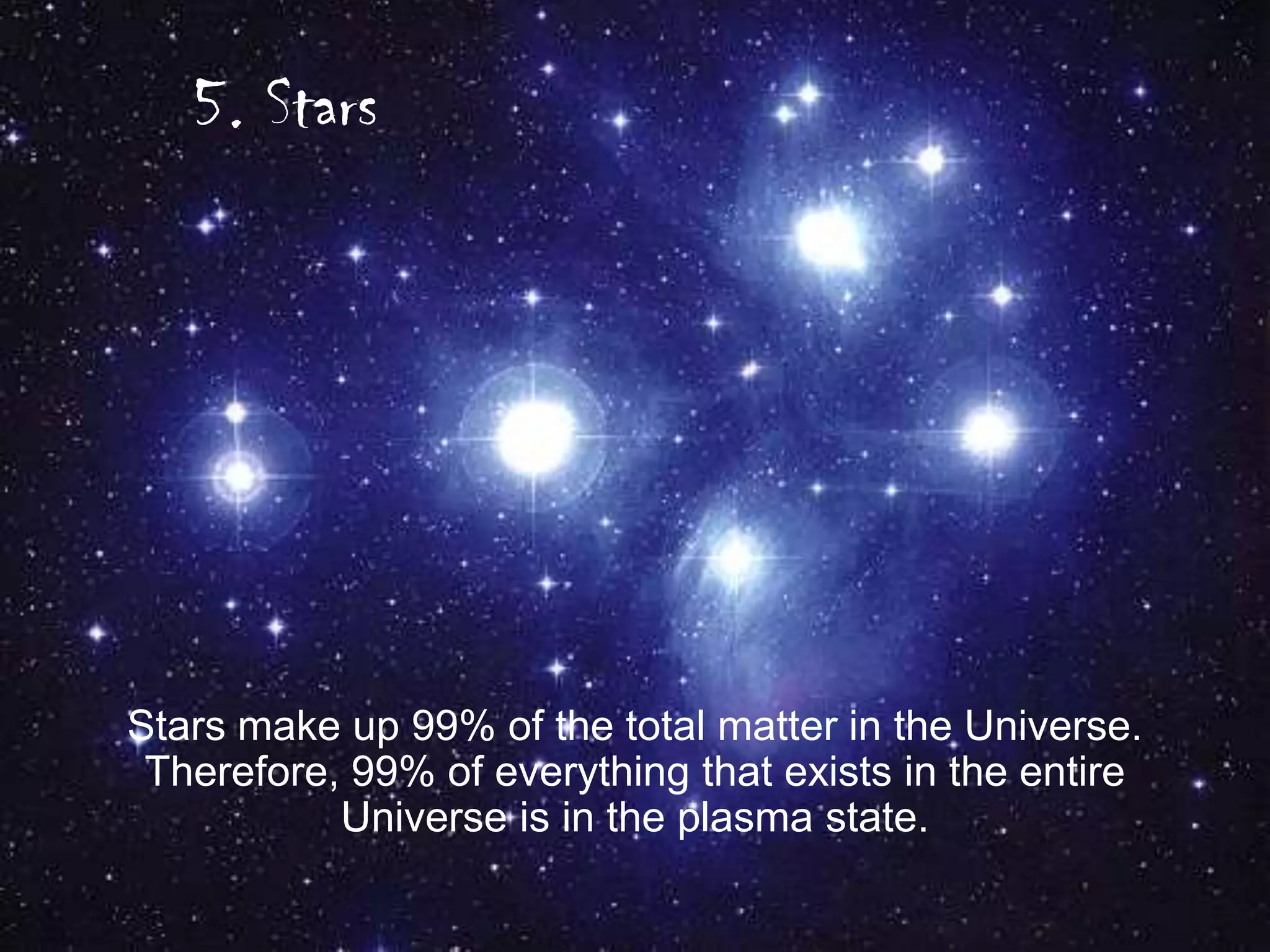
Some places where plasmas are found…

1. Flames
2. Lightning
3. Aurora (Northern Lights)
4. Neon lights
5. Stars

Stars make up 99% of the total matter in the Universe.
Therefore, 99% of everything that exists in the entire
Universe is in the plasma state.
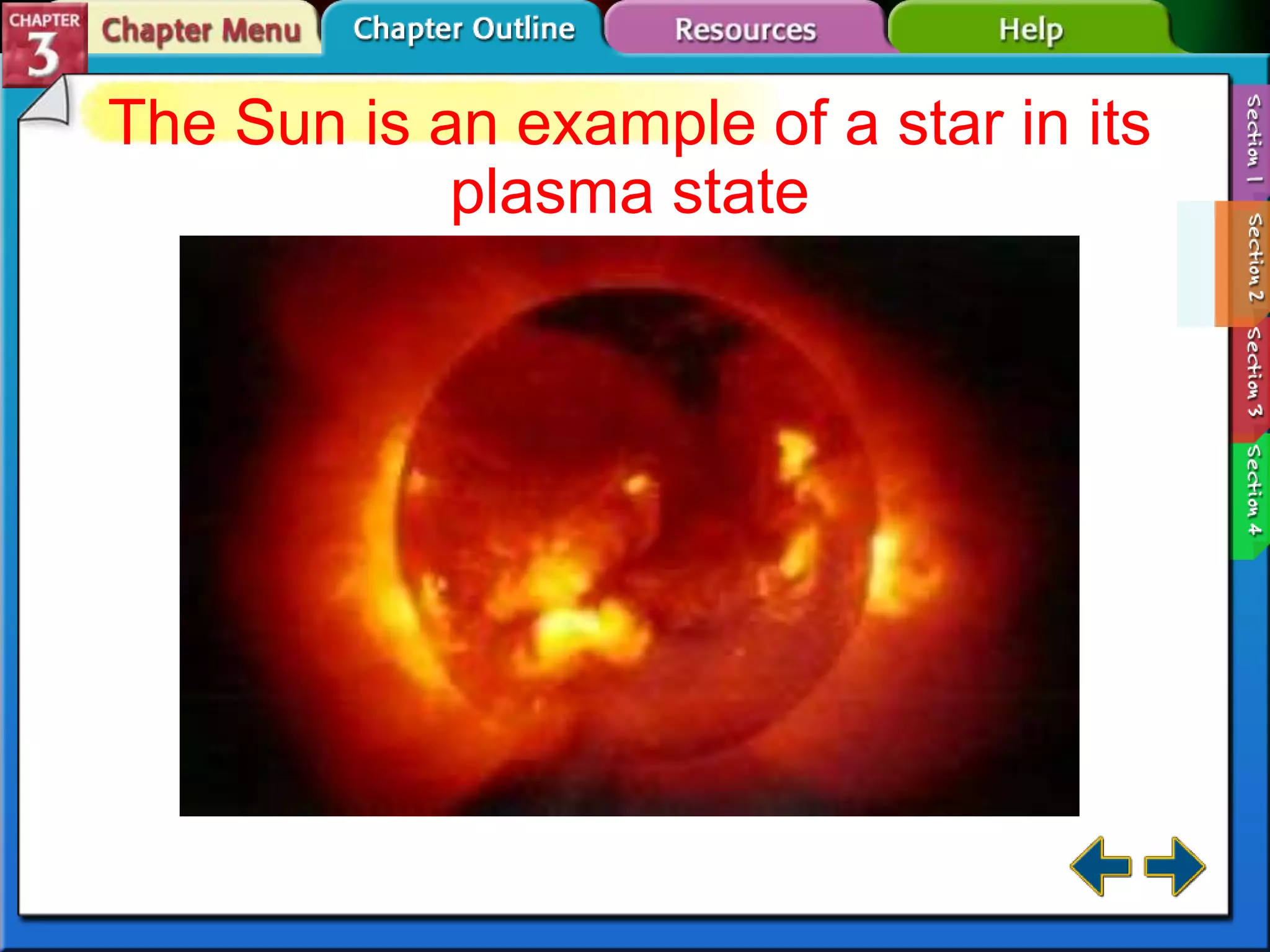
The Sun is an example of a star in its
plasma state
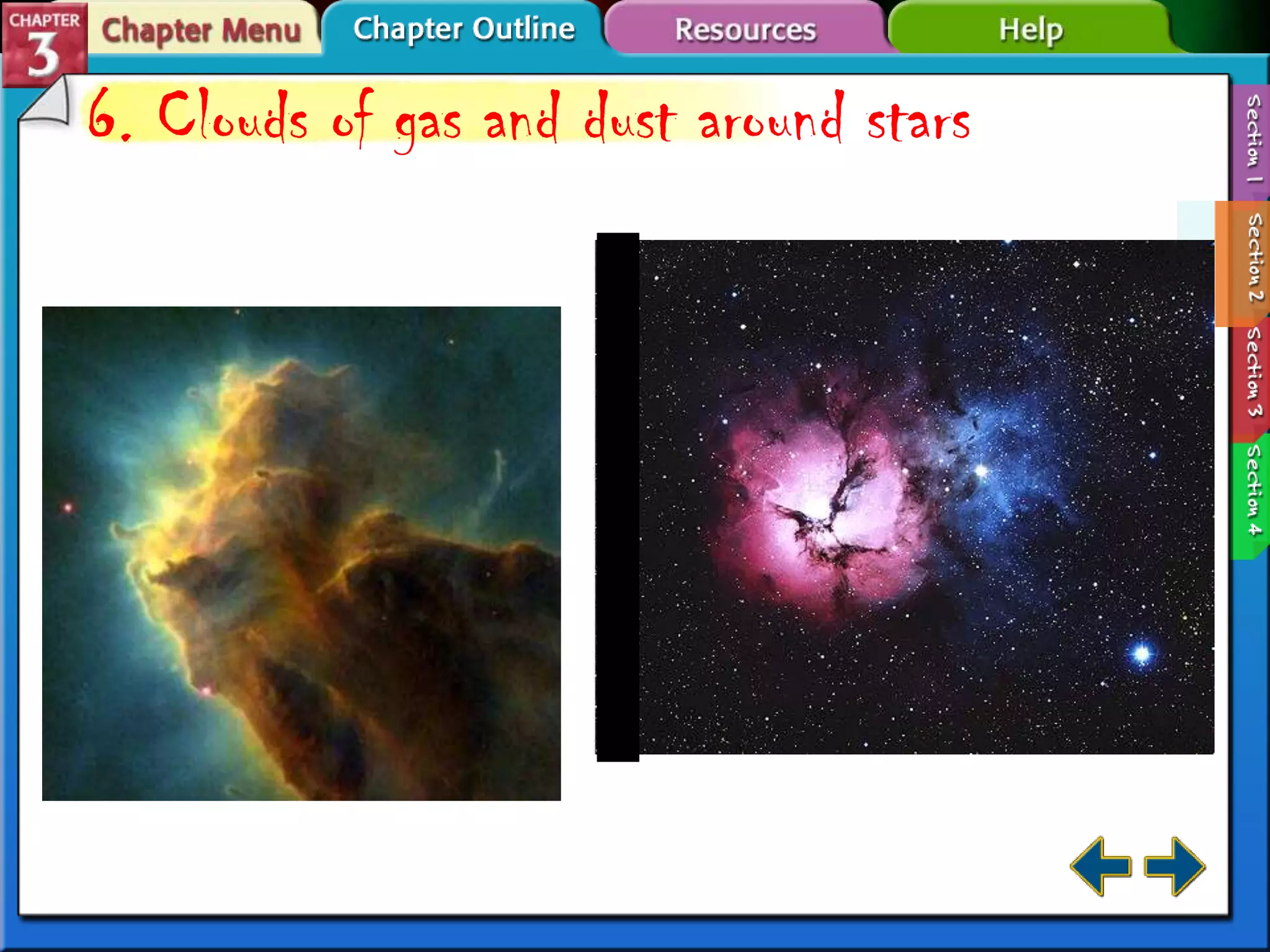
6. Clouds of gas and dust around stars

6
But now what happens if you lower the
temperature way, way, down to
100 nano degrees above
“Absolute Zero” (-273°C)

Will everything
just be a frozen
solid?
Not Necessarily!
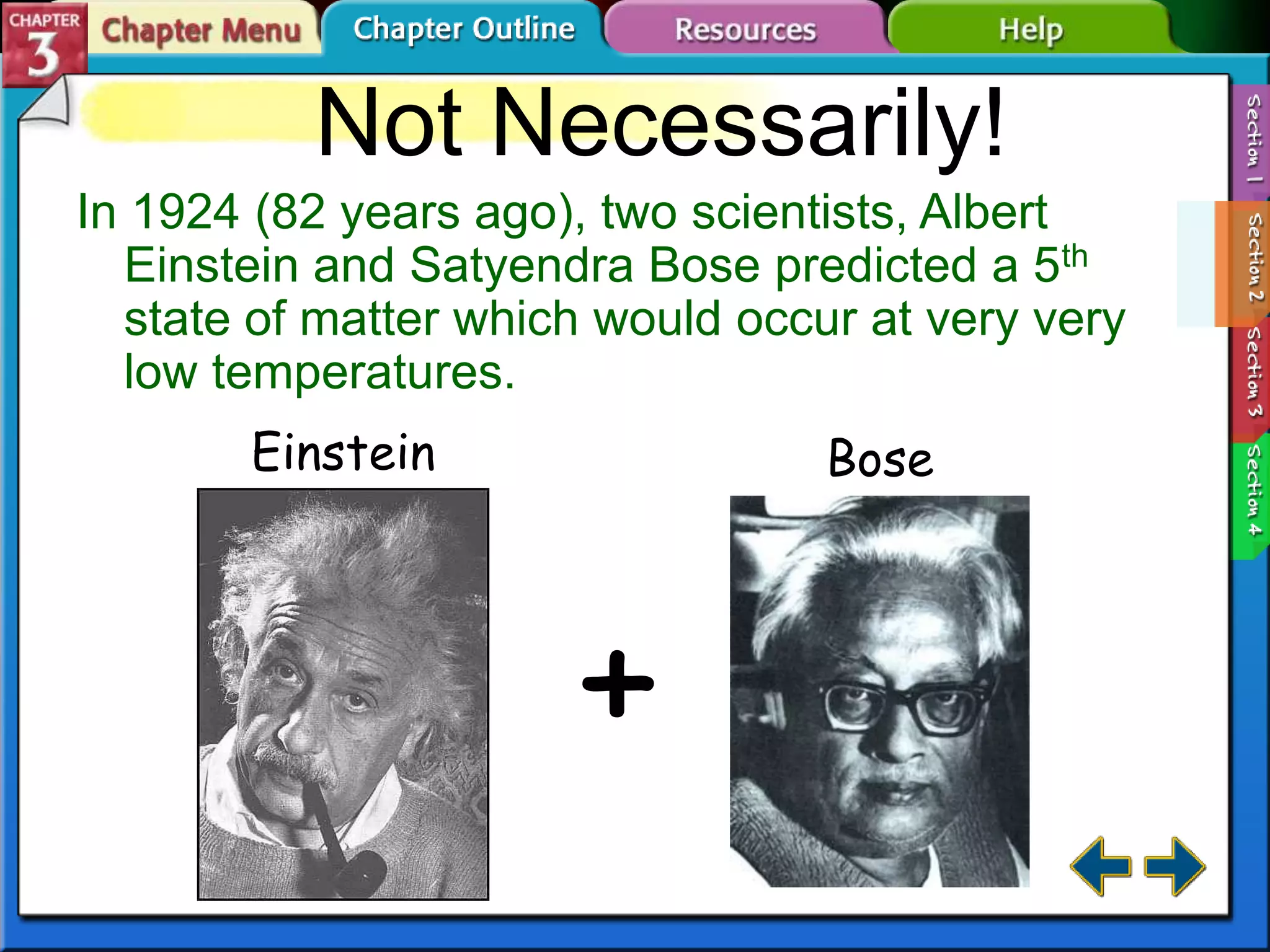
In 1924 (82 years ago), two scientists, Albert
Einstein and Satyendra Bose predicted a 5th
state of matter which would occur at very very
low temperatures.
Einstein

Bose

+
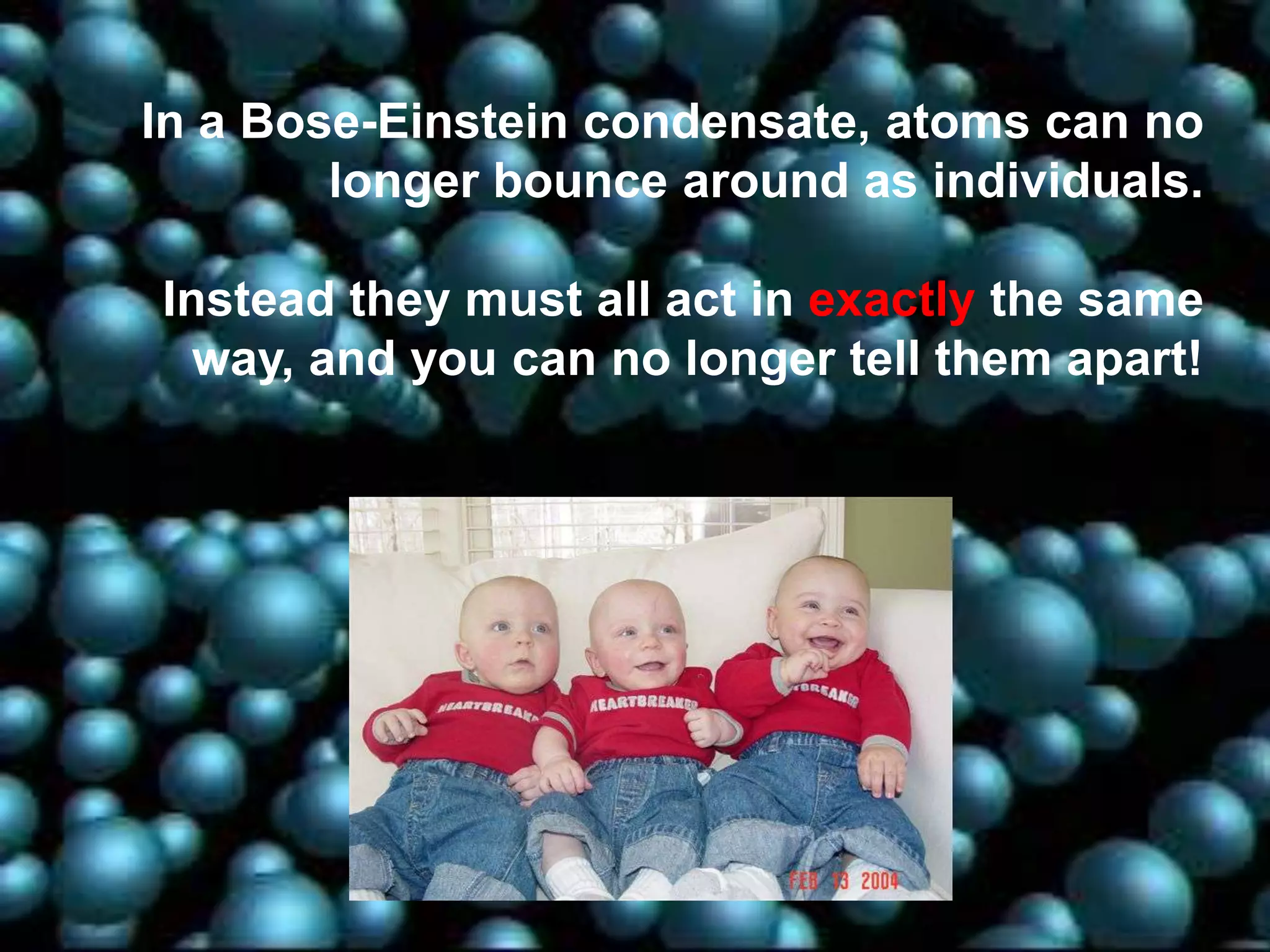
In a Bose-Einstein condensate, atoms can no
longer bounce around as individuals.
Instead they must all act in exactly the same
way, and you can no longer tell them apart!
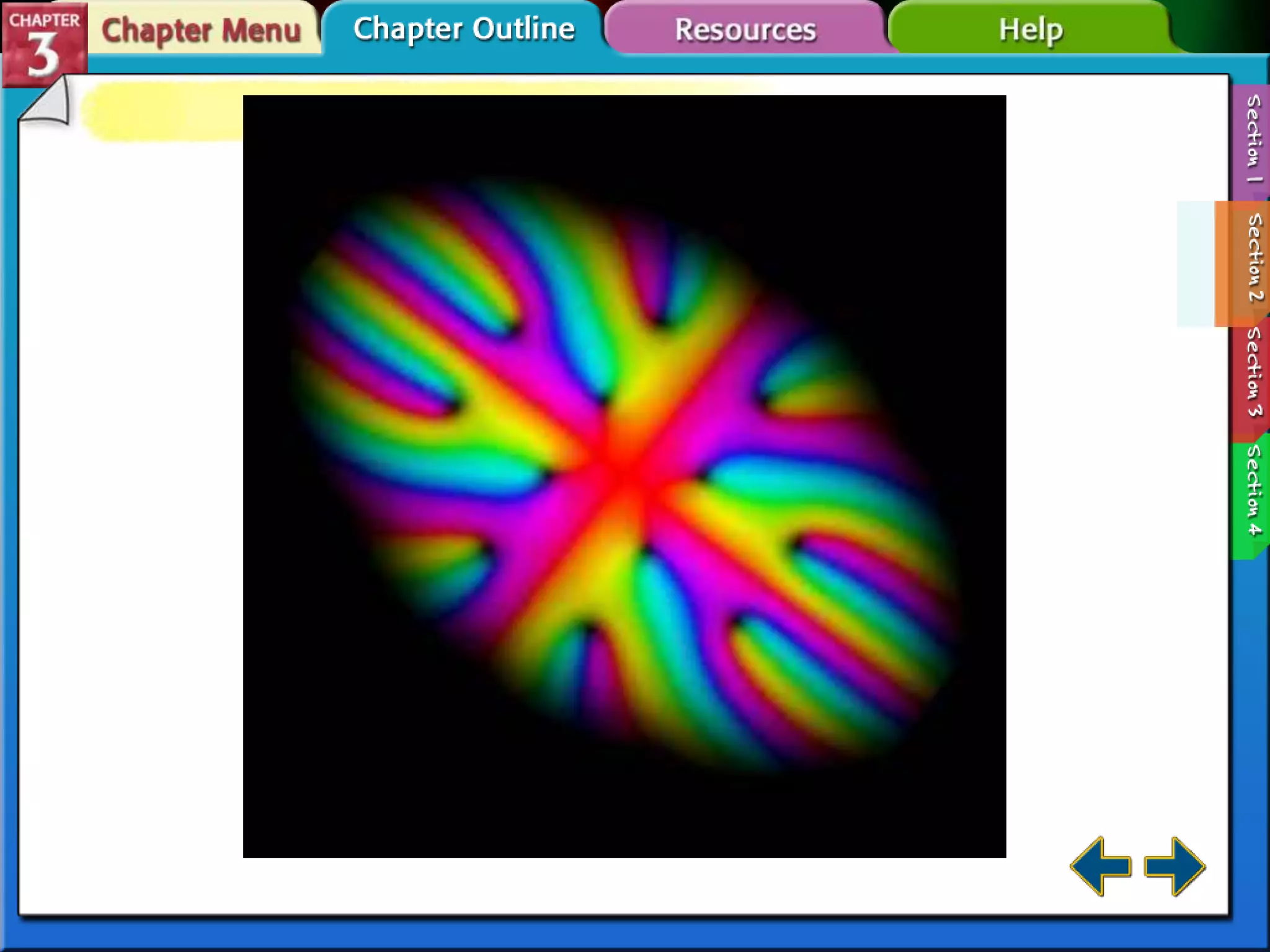
Some other computer images of Bose-Einstein Condensates…
To really understand BoseEinstein condensate you
need to know

Quantum Physics
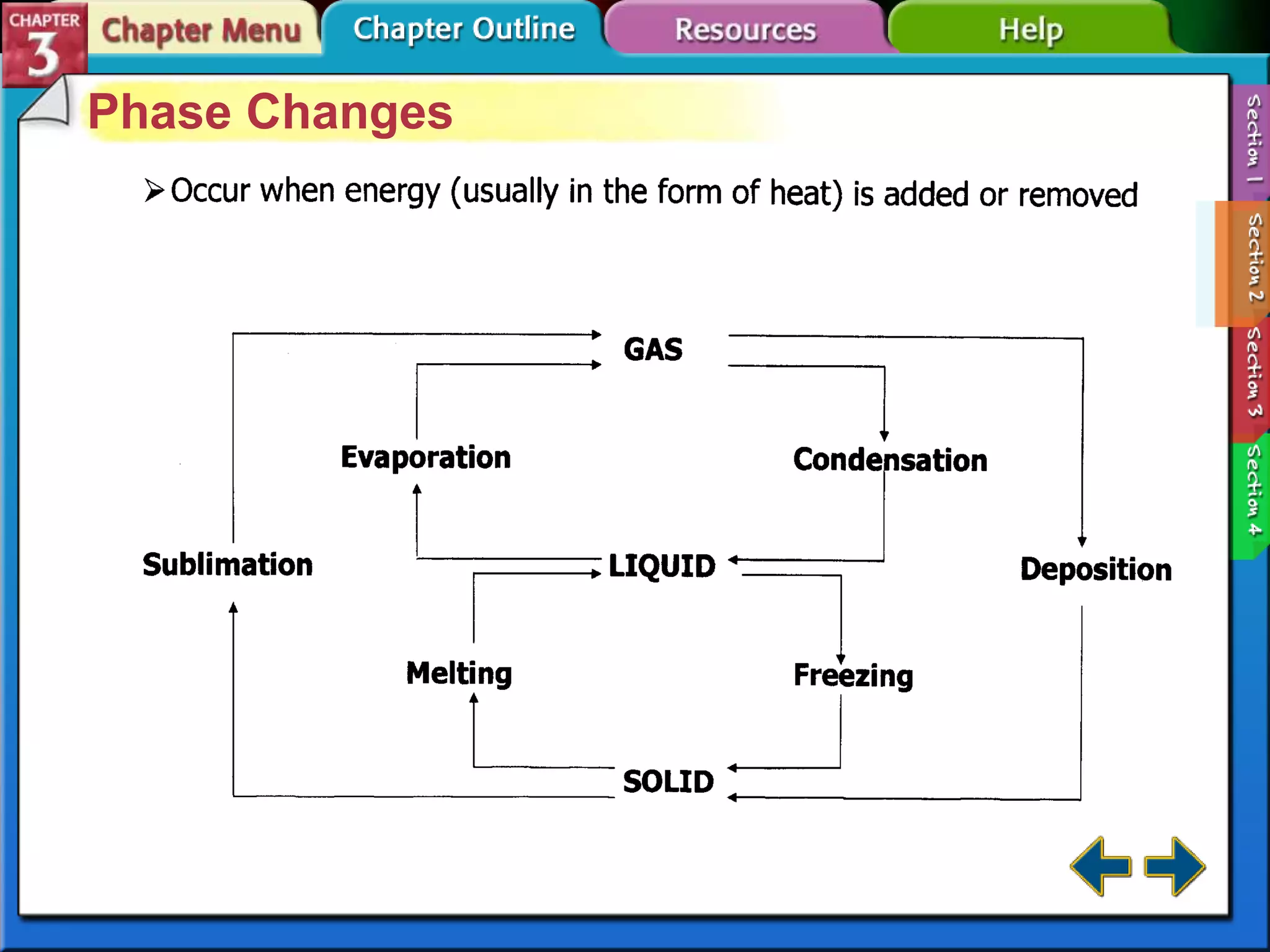
Phase Changes
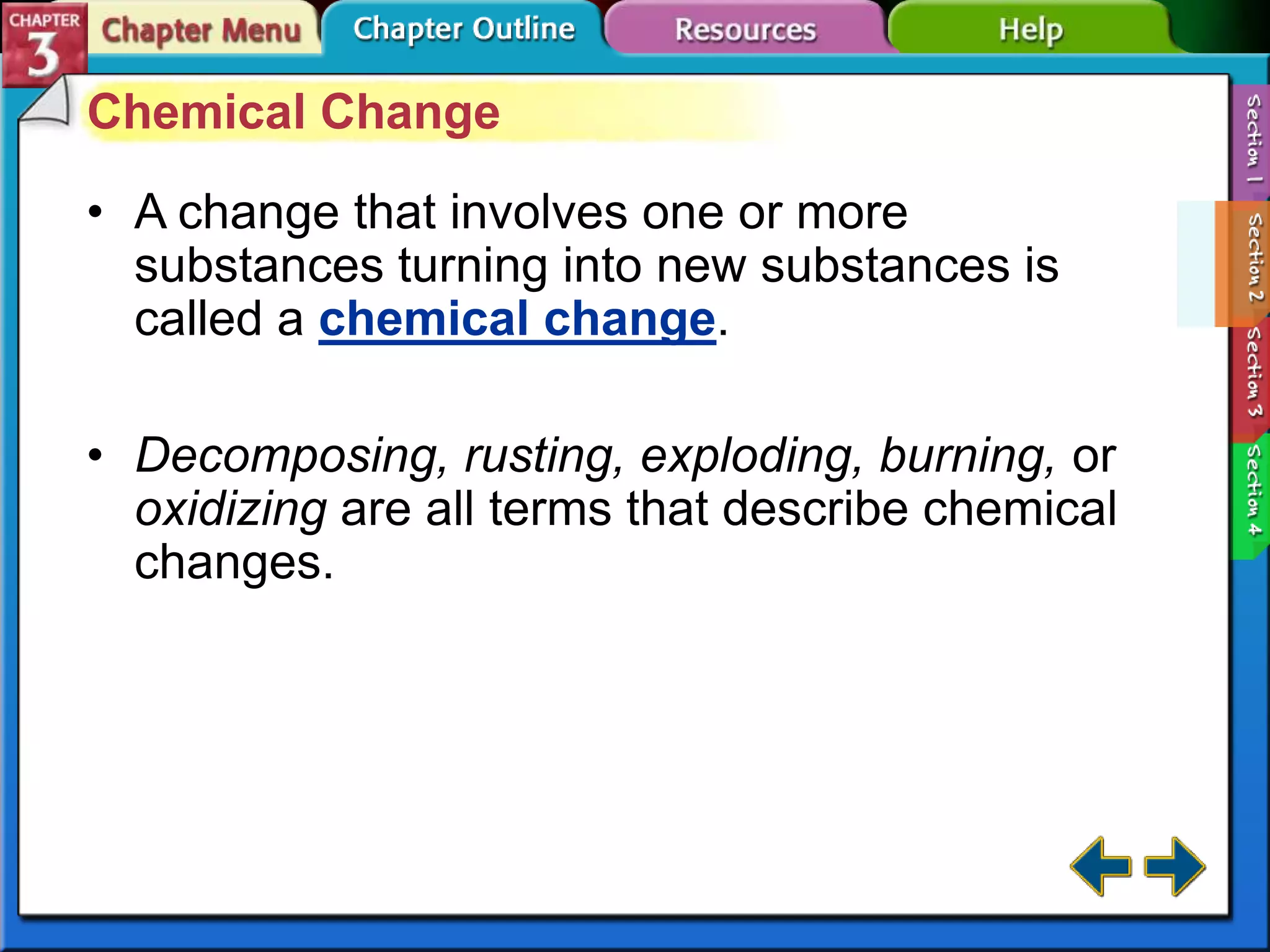
Chemical Change
• A change that involves one or more
substances turning into new substances is
called a chemical change.
• Decomposing, rusting, exploding, burning, or
oxidizing are all terms that describe chemical
changes.
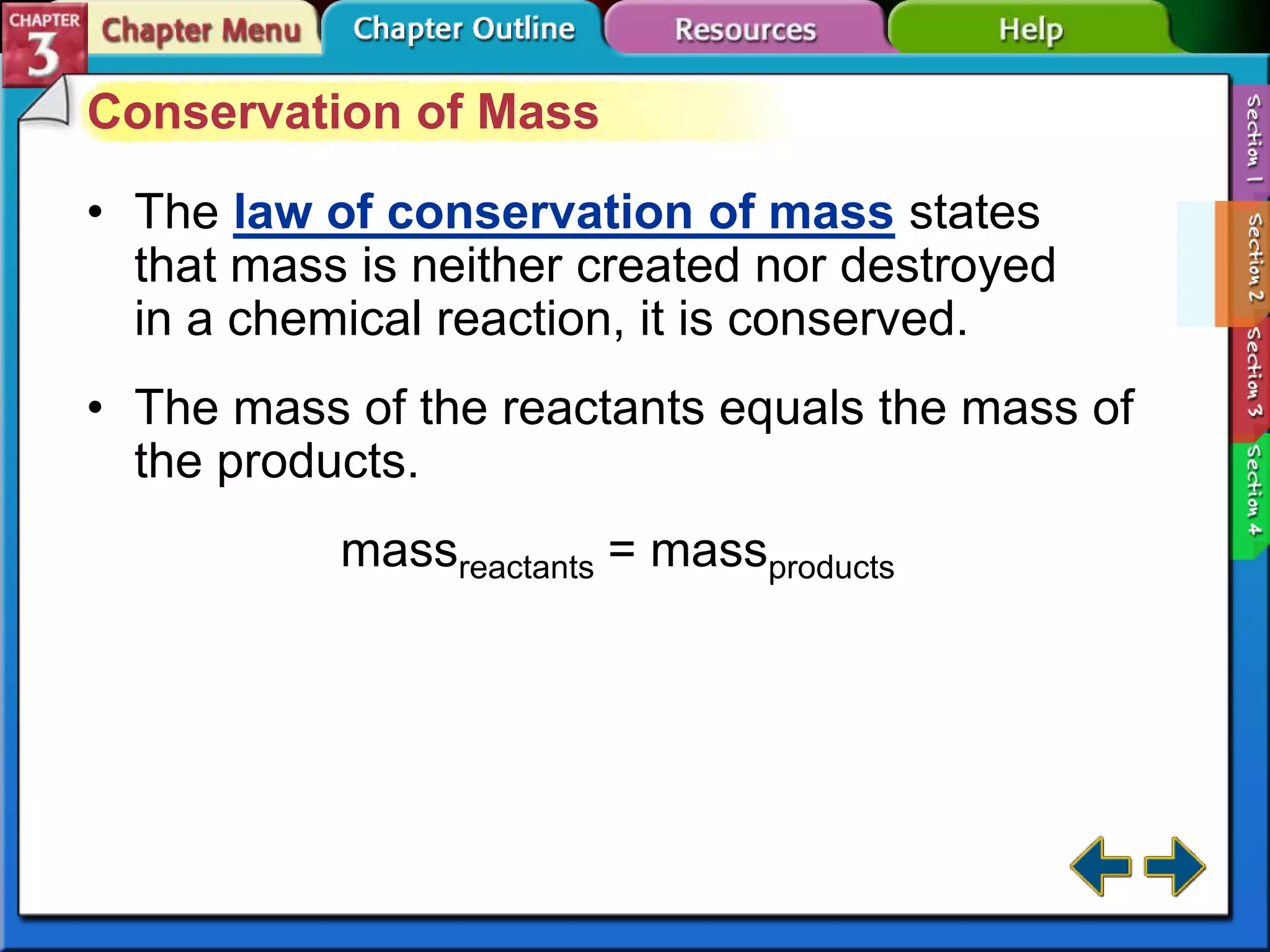
Conservation of Mass
• The law of conservation of mass states
that mass is neither created nor destroyed
in a chemical reaction, it is conserved.
• The mass of the reactants equals the mass of
the products.

massreactants = massproducts
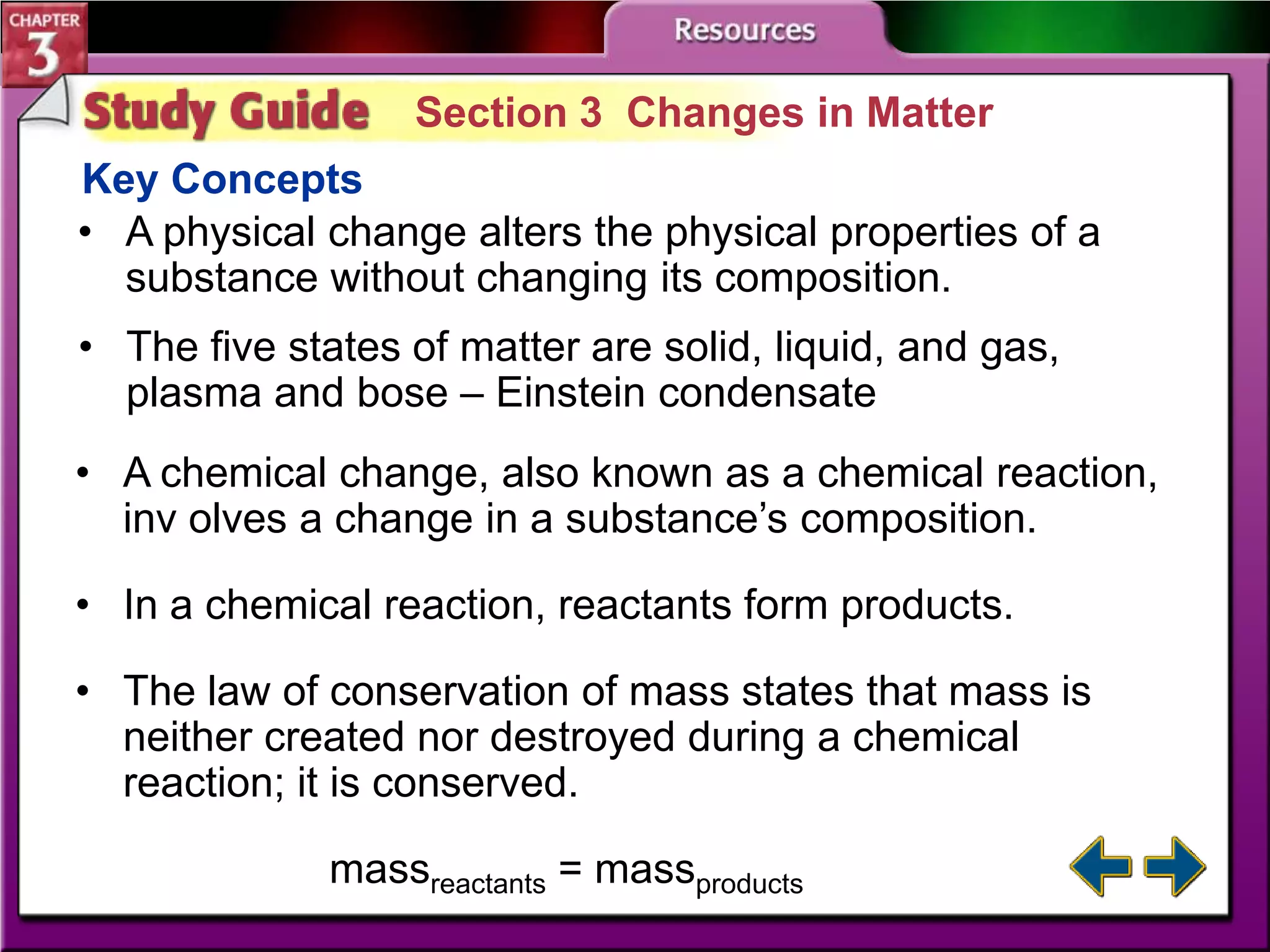
Section 3 Changes in Matter
Key Concepts
• A physical change alters the physical properties of a
substance without changing its composition.
• The five states of matter are solid, liquid, and gas,
plasma and bose – Einstein condensate

• A chemical change, also known as a chemical reaction,
inv olves a change in a substance’s composition.
• In a chemical reaction, reactants form products.
• The law of conservation of mass states that mass is
neither created nor destroyed during a chemical
reaction; it is conserved.
massreactants = massproducts
“You can never change the nature of things
Because CHANGE is the nature of things”

Changes in matter lesson

  • 1.
    2Co 5:17 Soif anyone is in Christ, there is a new creation: everything old has passed away; see, everything has become new!
  • 3.
    Changes that MatterUndergoes Section 3.1 Physical Change Section 3.1a States of Matter Section 3.1b Phase Changes Section 3.2 Chemical Change Exit
  • 4.
    Section 3.0 Changesin Matter • Define physical change and list several common physical changes. • Define chemical change and list several indications that a chemical change has taken place. • Apply the law of conservation of mass to chemical reactions. observation: orderly, direct information gathering about a phenomenon
  • 5.
    Physical Changes • Achange that alters a substance without changing its composition is known as a physical change. It’s a physical change if... • It changes shape or size ( broken glass, cutting papers) • It dissolves (Sugar dissolving in water) • It changes state/phase (melting of ice) A phase change is a transition of matter from one state to another.
  • 6.
    States of Matter •The physical forms of matter, either solid, liquid, or gas, are called the states of matter. • Solids are a form of matter that have their own definite shape and volume. • Liquids are a form of matter that have a definite volume but take the shape of the container.
  • 7.
    States of Matter(cont.) • Gases have no definite shape or volume. They expand to fill their container. Vapor refers to the gaseous state of a substance that is a solid or liquid at room temperature.
  • 8.
    The five statesof matter: BOSEEINSTEIN SOLIDS CONDENSATE Lower Temperature PLASMAS LIQUIDS GASES (only for low density ionized gases) Higher Temperature
  • 9.
  • 10.
    But what happensif you raise the temperature to super-high levels… between 1000 C and 1,000,000,000 C ? Will everything just be a gas?
  • 11.
    PLASMA--- 4th stateof matter  A plasma is an ionized gas.  A plasma is a very good conductor of electricity and is affected by magnetic fields.  Plasmas, like gases • Plasma is the have an indefinite shape and an common state indefinite volume. of matter
  • 12.
    Some places whereplasmas are found… 1. Flames
  • 13.
  • 14.
  • 15.
  • 16.
    5. Stars Stars makeup 99% of the total matter in the Universe. Therefore, 99% of everything that exists in the entire Universe is in the plasma state.
  • 17.
    The Sun isan example of a star in its plasma state
  • 18.
    6. Clouds ofgas and dust around stars 6
  • 19.
    But now whathappens if you lower the temperature way, way, down to 100 nano degrees above “Absolute Zero” (-273°C) Will everything just be a frozen solid?
  • 20.
    Not Necessarily! In 1924(82 years ago), two scientists, Albert Einstein and Satyendra Bose predicted a 5th state of matter which would occur at very very low temperatures. Einstein Bose +
  • 21.
    In a Bose-Einsteincondensate, atoms can no longer bounce around as individuals. Instead they must all act in exactly the same way, and you can no longer tell them apart!
  • 22.
    Some other computerimages of Bose-Einstein Condensates…
  • 24.
    To really understandBoseEinstein condensate you need to know Quantum Physics
  • 25.
  • 26.
    Chemical Change • Achange that involves one or more substances turning into new substances is called a chemical change. • Decomposing, rusting, exploding, burning, or oxidizing are all terms that describe chemical changes.
  • 28.
    Conservation of Mass •The law of conservation of mass states that mass is neither created nor destroyed in a chemical reaction, it is conserved. • The mass of the reactants equals the mass of the products. massreactants = massproducts
  • 29.
    Section 3 Changesin Matter Key Concepts • A physical change alters the physical properties of a substance without changing its composition. • The five states of matter are solid, liquid, and gas, plasma and bose – Einstein condensate • A chemical change, also known as a chemical reaction, inv olves a change in a substance’s composition. • In a chemical reaction, reactants form products. • The law of conservation of mass states that mass is neither created nor destroyed during a chemical reaction; it is conserved. massreactants = massproducts
  • 30.
    “You can neverchange the nature of things Because CHANGE is the nature of things”