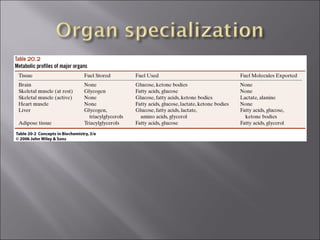
Metabolic interrelationship

                Chapter 6:
  Integration, Specialization, and Regulation of
                  Metabolism
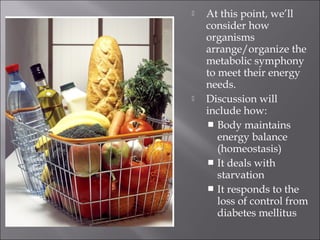
   At this point, we’ll
    consider how
    organisms
    arrange/organize the
    metabolic symphony
    to meet their energy
    needs.
   Discussion will
    include how:
     Body maintains
       energy balance
       (homeostasis)
     It deals with
       starvation
     It responds to the
       loss of control from
       diabetes mellitus
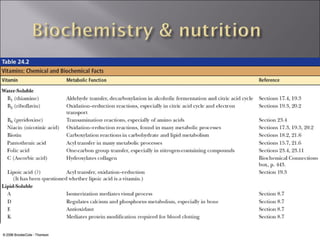
Table 24-2, p.666
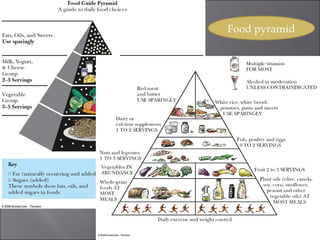
Food pyramid


       Fig. 24-2, p.668
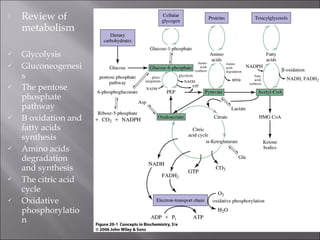
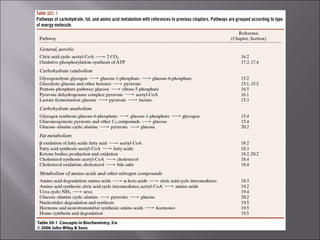
   Review of
    metabolism

   Glycolysis
   Gluconeogenesi
    s
   The pentose
    phosphate
    pathway
   Β oxidation and
    fatty acids
    synthesis
   Amino acids
    degradation
    and synthesis
   The citric acid
    cycle
   Oxidative
    phosphorylatio
    n
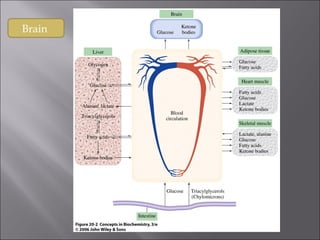
Brain
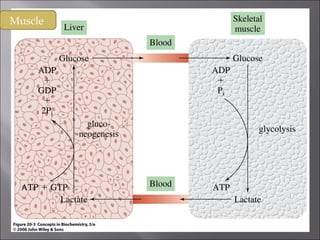
Muscle
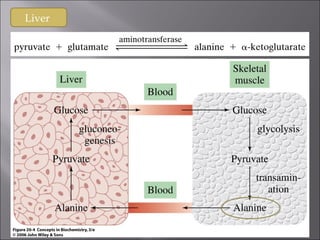
Liver
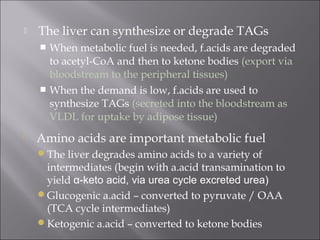
   The liver can synthesize or degrade TAGs
     When metabolic fuel is needed, f.acids are degraded
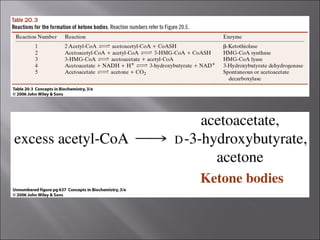
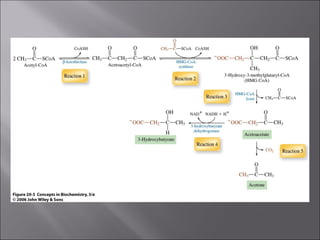
      to acetyl-CoA and then to ketone bodies (export via
      bloodstream to the peripheral tissues)
     When the demand is low, f.acids are used to
      synthesize TAGs (secreted into the bloodstream as
      VLDL for uptake by adipose tissue)
   Amino acids are important metabolic fuel
    The liver degrades amino acids to a variety of
     intermediates (begin with a.acid transamination to
     yield α-keto acid, via urea cycle excreted urea)
    Glucogenic a.acid – converted to pyruvate / OAA
     (TCA cycle intermediates)
    Ketogenic a.acid – converted to ketone bodies
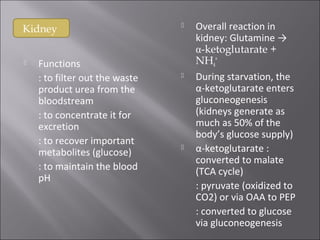
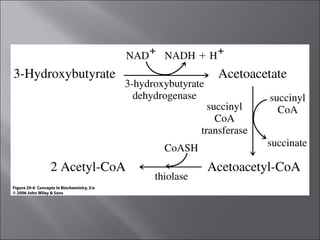
Kidney                             Overall reaction in
                                    kidney: Glutamine →
                                    α-ketoglutarate +
   Functions                       NH4+
    : to filter out the waste      During starvation, the
    product urea from the           α-ketoglutarate enters
    bloodstream                     gluconeogenesis
    : to concentrate it for         (kidneys generate as
    excretion                       much as 50% of the
                                    body’s glucose supply)
    : to recover important
    metabolites (glucose)
                                   α-ketoglutarate :
                                    converted to malate
    : to maintain the blood         (TCA cycle)
    pH
                                    : pyruvate (oxidized to
                                    CO2) or via OAA to PEP
                                    : converted to glucose
                                    via gluconeogenesis
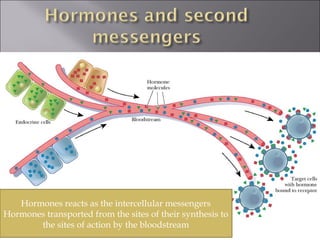
Hormones reacts as the intercellular messengers
Hormones transported from the sites of their synthesis to
       the sites of action by the bloodstream
                                                            Fig. 24-5, p.671
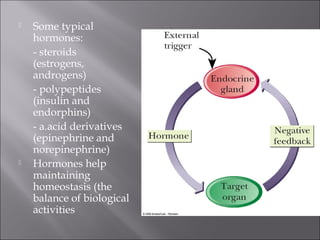
   Some typical
    hormones:
    - steroids
    (estrogens,
    androgens)
    - polypeptides
    (insulin and
    endorphins)
    - a.acid derivatives
    (epinephrine and
    norepinephrine)
   Hormones help
    maintaining
    homeostasis (the
    balance of biological
    activities
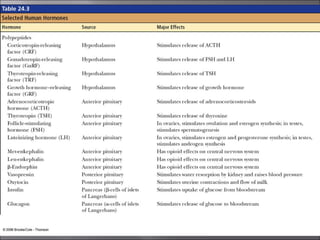
Table 24-3, p.672
   The effects of hormones triggered
    the responses within the cell
   There are three hormones play a
    part in the regulation of CHO
    metabolism
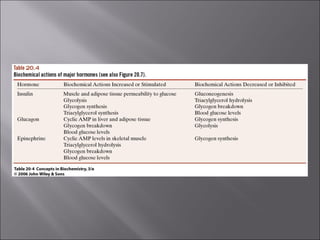
   Epinephrine, insulin and glucagon
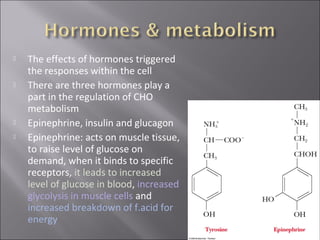
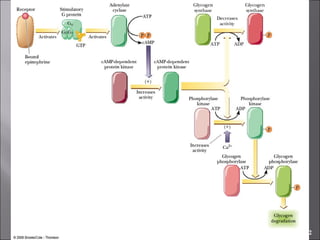
   Epinephrine: acts on muscle tissue,
    to raise level of glucose on
    demand, when it binds to specific
    receptors, it leads to increased
    level of glucose in blood, increased
    glycolysis in muscle cells and
    increased breakdown of f.acid for
    energy
                                           p.681
Fig. 24-14, p.682
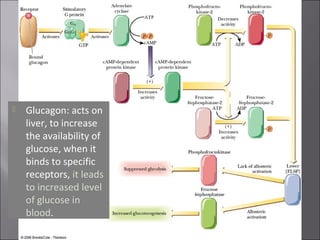
   Glucagon: acts on
    liver, to increase
    the availability of
    glucose, when it
    binds to specific
    receptors, it leads
    to increased level
    of glucose in
    blood.
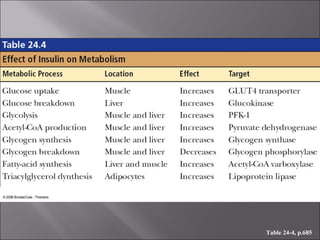
Table 24-4, p.685
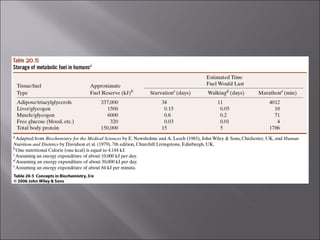
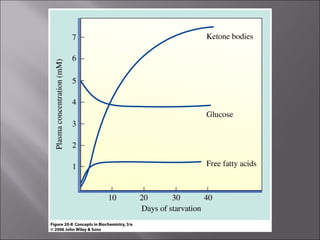
   During prolonged starvation or fasting, the brain slowly
    adapts from the use of glucose as its soul fuel source to the
    use of ketone bodies, shift the metabolic burden form
    protein breakdown to fat breakdown

   Diabetes mellitus is a disease in which insulin either not
    secreted or doesn’t stimulate its target tissues → high
    [glucose] in the blood and urine. Abnormally high
    production of ketone bodies is one of the most dangerous
    effects of uncontrolled diabetes

   Dieting – to lose excess weight. Diet forced the body to
    follow the same adjustment like starvation or fasting but a
    more moderate or controllable pace. Dieting is not free of
    problems, therefore it is advisable to undergo diet under
    supervision of physician or nutritionist.

Ch06 b

  • 1.
    Metabolic interrelationship Chapter 6: Integration, Specialization, and Regulation of Metabolism
  • 2.
    At this point, we’ll consider how organisms arrange/organize the metabolic symphony to meet their energy needs.  Discussion will include how:  Body maintains energy balance (homeostasis)  It deals with starvation  It responds to the loss of control from diabetes mellitus
  • 3.
  • 4.
    Food pyramid Fig. 24-2, p.668
  • 5.
    Review of metabolism  Glycolysis  Gluconeogenesi s  The pentose phosphate pathway  Β oxidation and fatty acids synthesis  Amino acids degradation and synthesis  The citric acid cycle  Oxidative phosphorylatio n
  • 9.
  • 10.
  • 11.
  • 12.
    The liver can synthesize or degrade TAGs  When metabolic fuel is needed, f.acids are degraded to acetyl-CoA and then to ketone bodies (export via bloodstream to the peripheral tissues)  When the demand is low, f.acids are used to synthesize TAGs (secreted into the bloodstream as VLDL for uptake by adipose tissue)  Amino acids are important metabolic fuel The liver degrades amino acids to a variety of intermediates (begin with a.acid transamination to yield α-keto acid, via urea cycle excreted urea) Glucogenic a.acid – converted to pyruvate / OAA (TCA cycle intermediates) Ketogenic a.acid – converted to ketone bodies
  • 13.
    Kidney  Overall reaction in kidney: Glutamine → α-ketoglutarate +  Functions NH4+ : to filter out the waste  During starvation, the product urea from the α-ketoglutarate enters bloodstream gluconeogenesis : to concentrate it for (kidneys generate as excretion much as 50% of the body’s glucose supply) : to recover important metabolites (glucose)  α-ketoglutarate : converted to malate : to maintain the blood (TCA cycle) pH : pyruvate (oxidized to CO2) or via OAA to PEP : converted to glucose via gluconeogenesis
  • 17.
    Hormones reacts asthe intercellular messengers Hormones transported from the sites of their synthesis to the sites of action by the bloodstream Fig. 24-5, p.671
  • 18.
    Some typical hormones: - steroids (estrogens, androgens) - polypeptides (insulin and endorphins) - a.acid derivatives (epinephrine and norepinephrine)  Hormones help maintaining homeostasis (the balance of biological activities
  • 19.
  • 20.
    The effects of hormones triggered the responses within the cell  There are three hormones play a part in the regulation of CHO metabolism  Epinephrine, insulin and glucagon  Epinephrine: acts on muscle tissue, to raise level of glucose on demand, when it binds to specific receptors, it leads to increased level of glucose in blood, increased glycolysis in muscle cells and increased breakdown of f.acid for energy p.681
  • 21.
  • 22.
    Glucagon: acts on liver, to increase the availability of glucose, when it binds to specific receptors, it leads to increased level of glucose in blood.
  • 26.
  • 32.
    During prolonged starvation or fasting, the brain slowly adapts from the use of glucose as its soul fuel source to the use of ketone bodies, shift the metabolic burden form protein breakdown to fat breakdown  Diabetes mellitus is a disease in which insulin either not secreted or doesn’t stimulate its target tissues → high [glucose] in the blood and urine. Abnormally high production of ketone bodies is one of the most dangerous effects of uncontrolled diabetes  Dieting – to lose excess weight. Diet forced the body to follow the same adjustment like starvation or fasting but a more moderate or controllable pace. Dieting is not free of problems, therefore it is advisable to undergo diet under supervision of physician or nutritionist.

Editor's Notes

  • #5 FIGURE 24.2 The Food Guide Pyramid (USDA). The recommended choices reflect a diet based primarily on carbohydrates. Smaller amounts of proteins and lipids are sufficient to meet the body’s needs.
  • #18 FIGURE 24.5 Endocrine cells secrete hormones into the bloodstream, which transports them to target cells.
  • #19 FIGURE 24.6 A simple feedback control system involving an endocrine gland and a target organ.
  • #21 Tyrosine and epinephrine. The hormone epinephrine is metabolically derived from the amino acid tyrosine.
  • #22 FIGURE 24.14 When epinephrine binds to its receptor, the binding activates a stimulatory G protein, which in turn activates adenylate cyclase. The cAMP thus produced activates a cAMPdependent protein kinase. The phosphorylation reactions catalyzed by the cAMP-dependent kinase suppress the activity of glycogen synthase and enhance that of phosphorylase kinase. Glycogen phosphorylase is activated by phosphorylase kinase, leading to glycogen breakdown.
  • #23 FIGURE 24.15 Binding of glucagon to its receptor sets off the chain of events that leads to the activation of a cAMP-dependent protein kinase. The enzymes phosphorylated in this case are phosphofructokinase-2, which is inactivated, and fructose- bis phosphatase-2, which is activated. The combined result of phosphorylating these two enzymes is to lower the concentration of fructose-2,6- bis phosphate (F2,6P). A lower concentration of F2,6P leads to allosteric activation of the enzyme fructose- bis phosphatase, thus enhancing gluconeogenesis. At the same time, the lower concentration of F2,6P implies that phosphofructokinase is lacking a potent allosteric activator, with the result that glycolysis is suppressed.
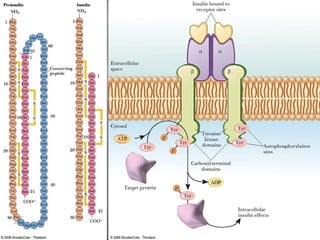
  • #26 FIGURE 24.16 Proinsulin is an 86-residue precursor to insulin (the sequence shown here is human proinsulin). Proteolytic removal of residues 31 through 65 yields insulin. Residues 1 through 30 (the B chain) remain linked to residues 66 through 86 by a pair of interchain disulfide bridges.