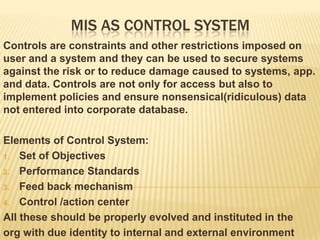
MIS AS CONTROL SYSTEM
Controls are constraints and other restrictions imposed on
user and a system and they can be used to secure systems
against the risk or to reduce damage caused to systems, app.
and data. Controls are not only for access but also to
implement policies and ensure nonsensical(ridiculous) data
not entered into corporate database.

Elements of Control System:
1. Set of Objectives

2. Performance Standards

3. Feed back mechanism

4. Control /action center

All these should be properly evolved and instituted in the
org with due identity to internal and external environment
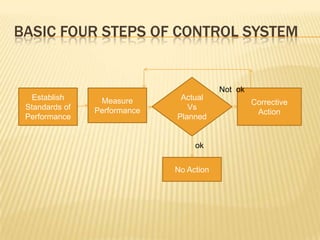
BASIC FOUR STEPS OF CONTROL SYSTEM


                                          Not ok
   Establish     Measure       Actual
                                                   Corrective
 Standards of   Performance      Vs
                                                    Action
 Performance                  Planned


                                   ok


                              No Action
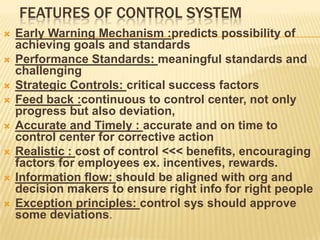
FEATURES OF CONTROL SYSTEM
   Early Warning Mechanism :predicts possibility of
    achieving goals and standards
   Performance Standards: meaningful standards and
    challenging
   Strategic Controls: critical success factors
   Feed back :continuous to control center, not only
    progress but also deviation,
   Accurate and Timely : accurate and on time to
    control center for corrective action
   Realistic : cost of control <<< benefits, encouraging
    factors for employees ex. incentives, rewards.
   Information flow: should be aligned with org and
    decision makers to ensure right info for right people
   Exception principles: control sys should approve
    some deviations.
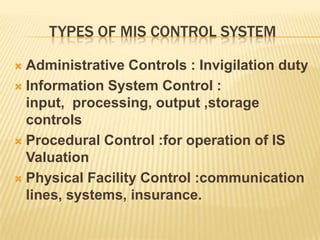
TYPES OF MIS CONTROL SYSTEM

 Administrative Controls : Invigilation duty
 Information System Control :
  input, processing, output ,storage
  controls
 Procedural Control :for operation of IS
  Valuation
 Physical Facility Control :communication
  lines, systems, insurance.
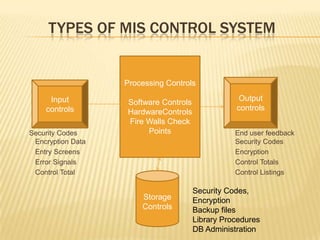
TYPES OF MIS CONTROL SYSTEM


                   Processing Controls

     Input                                        Output
                   Software Controls
    controls                                      controls
                   HardwareControls
                   Fire Walls Check
Security Codes          Points                    End user feedback
 Encryption Data                                  Security Codes
 Entry Screens                                    Encryption
 Error Signals                                    Control Totals
 Control Total                                    Control Listings

                                       Security Codes,
                       Storage         Encryption
                       Controls        Backup files
                                       Library Procedures
                                       DB Administration
APPLICATIONS OF MIS
  Strategy Support
 Data Processing

Strategy Support:
• While computers cannot create business strategies by
   themselves they can assist management in understanding the
   effects of their strategies, and help enable effective decision-
   making.

*provide financial statements and performance reports to assist in
   the planning, monitoring and implementation of strategy.

*unmanageable volumes of data: By studying the correct reports
  decision-makers can identify patterns and trends that would
  have remained unseen if the raw data were consulted manually
APPLICATIONS OF MIS
Data Processing:
 A valuable time saving benefit to the
  workforce. Where in the past business
  information had to be manually processed
  for filing and analysis it can now be entered
  quickly and easily onto a computer by a data
  processor, allowing for faster decision
  making and quicker reflexes for the
  enterprise as a whole.
 Example :Personnel Management

Ch02 mis-ctrl-appl

  • 1.
    MIS AS CONTROLSYSTEM Controls are constraints and other restrictions imposed on user and a system and they can be used to secure systems against the risk or to reduce damage caused to systems, app. and data. Controls are not only for access but also to implement policies and ensure nonsensical(ridiculous) data not entered into corporate database. Elements of Control System: 1. Set of Objectives 2. Performance Standards 3. Feed back mechanism 4. Control /action center All these should be properly evolved and instituted in the org with due identity to internal and external environment
  • 2.
    BASIC FOUR STEPSOF CONTROL SYSTEM Not ok Establish Measure Actual Corrective Standards of Performance Vs Action Performance Planned ok No Action
  • 3.
    FEATURES OF CONTROLSYSTEM  Early Warning Mechanism :predicts possibility of achieving goals and standards  Performance Standards: meaningful standards and challenging  Strategic Controls: critical success factors  Feed back :continuous to control center, not only progress but also deviation,  Accurate and Timely : accurate and on time to control center for corrective action  Realistic : cost of control <<< benefits, encouraging factors for employees ex. incentives, rewards.  Information flow: should be aligned with org and decision makers to ensure right info for right people  Exception principles: control sys should approve some deviations.
  • 4.
    TYPES OF MISCONTROL SYSTEM  Administrative Controls : Invigilation duty  Information System Control : input, processing, output ,storage controls  Procedural Control :for operation of IS Valuation  Physical Facility Control :communication lines, systems, insurance.
  • 5.
    TYPES OF MISCONTROL SYSTEM Processing Controls Input Output Software Controls controls controls HardwareControls Fire Walls Check Security Codes Points End user feedback Encryption Data Security Codes Entry Screens Encryption Error Signals Control Totals Control Total Control Listings Security Codes, Storage Encryption Controls Backup files Library Procedures DB Administration
  • 6.
    APPLICATIONS OF MIS  Strategy Support  Data Processing Strategy Support: • While computers cannot create business strategies by themselves they can assist management in understanding the effects of their strategies, and help enable effective decision- making. *provide financial statements and performance reports to assist in the planning, monitoring and implementation of strategy. *unmanageable volumes of data: By studying the correct reports decision-makers can identify patterns and trends that would have remained unseen if the raw data were consulted manually
  • 7.
    APPLICATIONS OF MIS DataProcessing:  A valuable time saving benefit to the workforce. Where in the past business information had to be manually processed for filing and analysis it can now be entered quickly and easily onto a computer by a data processor, allowing for faster decision making and quicker reflexes for the enterprise as a whole.  Example :Personnel Management

Editor's Notes

  • #2 nonsensical5
  • #3 aligned
  • #4 Critical success factor (CSF) is the term for an element that is necessary for an organization or project to achieve its mission. It is a critical factor or activity required for ensuring the success of a company or an organizationExample1:Non-profit Organization CSF Measured by Number of Volunteers Increase number of volunteers by 15% increase by the end of 2011. People Served Increase number of people served by 20% by the end of 2012. Number of Donors Increase number of donors by 10% by June, 2011. Example #2Restaurant :CSF Measured by Customer Satisfaction Increase satisfaction rating by 10 pts from 73 to 83 pts by the end of 2011. Increased Market Share Increase monthly customers by 15% by June, 2012. Employee Turnover Decrease employee turnover from 75% to 50% by December 2012.
  • #5 Postulate strategic
  • #7 Coherent : consistent
  • #8 Accounting, Query, Analysis, Control, Reports, Statutory Reports, Information updates, Operation update, Decision analysis, Action reports