Made by:Mahesh
What is soil
Soil is one of the most
important natural resources.
It supports the growth of
plants by holding the roots
firmly and supplying water
and nutrients. It is the home
for many organisms. Soil is
essential for agriculture.
Agriculture provides food,
clothing and shelter for all.
Soil is thus an inseparable
part of our life.
Layers of Soil
Soil is composed of distinct layers.
Soil Profile
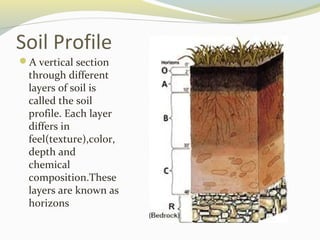
A vertical section
through different
layers of soil is
called the soil
profile. Each layer
differs in
feel(texture),color,
depth and
chemical
composition.These
layers are known as
horizons
Horizons of Soil
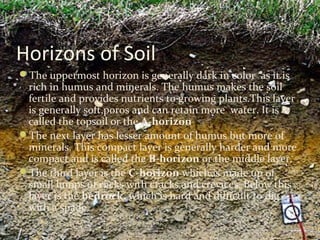
The uppermost horizon is generally dark in color as it is
rich in humus and minerals. The humus makes the soil
fertile and provides nutrients to growing plants.This layer
is generally soft,poros and can retain more water. It is
called the topsoil or the A-horizon
The next layer has lesser amount of humus but more of
minerals. This compact layer is generally harder and more
compact and is called the B-horizon or the middle layer.
The third layer is the C-horizon which is made up of
small lumps of rocks with cracks and crevices. Below this
layer is the bedrock, which is hard and difficult to dig
with a spade.
Parts of Soil
As you know, wheathering of
rocks produces small particles
of various materials . These
include sand and clay depends
upon the rock from which the
particles were formed, that is
the present rock . The
mixture of rock particles
and humus is called the soil.
Living organisms, such as
bacteria, plant roots and
earthworm are also important
parts of any soil
Wheathering
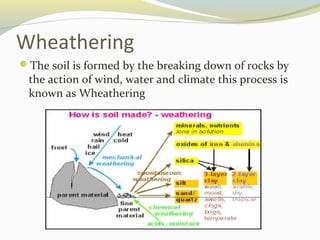
The soil is formed by the breaking down of rocks by
the action of wind, water and climate this process is
known as Wheathering
Types of Soil
The soil is classified on the proportion of particles of
various sizes.
If soil contains greater proportion of big particles it is
called sandy soil.
If the proportion of fine particles is relatively higher ,
then it is called clayey soil.
if the amount of large and fine particles is about the
same, then it is called loamy soil.
Properties of Soil
Percolation rate of water in soil
Formulae of rate percolation is
Percolation rate (ml/min)
= Amount of water (ml)/Percolation time (min)
Moisture in soil
Soil moisture is difficult to define because it means
different things in different disciplines. For example,
a farmer's concept of soil moisture is different from
that of a water resource manager or a weather
forecaster. Generally, however, soil moisture is the
water that is held in the spaces between soil particles.
Soil and Crops
Different types of soils are found in different
parts of India. In some parts there is clayey
soil, in some parts there is loamy soil while in
some other parts there is sandy soil. Soil is
affected by wind, rainfall, temperature , light
and humidity. These are some important
climatic factors which affect the soil profile
and bring changes in the soil structure.The
climatic factors, as well as the components of
soil, determine the various. Types of
vegetation and crops that might grow in any
region.
Making Pots
Pottery is made by forming a clay body into objects of a
required shape and heating them to high temperatures in
a kiln which removes all the water from the clay, which
induces reactions that lead to permanent changes
including increasing their strength and hardening and
setting their shape. A clay body can be decorated before or
after firing. Prior to some shaping processes, clay must be
prepared. Kneading helps to ensure an even moisture
content throughout the body. Air trapped within the clay
body needs to be removed. This is called de-airing and can
be accomplished by a machine called a vacuum pug or
manually by wedging. Once a clay body has been kneaded
and de-aired or wedged, it is shaped by a variety of
techniques. After shaping it is dried and then fired.
Soil Erosion
Erosion is the process by which soil and rock are removed
from the Earth's surface by exogenetic processes such as
wind or water flow, and then transported and deposited in
other locations.
While erosion is a natural process, human activities have
increased by 10-40 times the rate at which erosion is
occurring globally. Excessive erosion causes problems such
as desertification, decreases in agricultural productivity
due to land degradation, sedimentation of waterways, and
ecological collapse due to loss of the nutrient rich upper
soil layers. Water and wind erosion are now the two
primary causes of land degradation; combined, they are
responsible for 84% of degraded acreage, making excessive
erosion one of the most significant global environmental
problems
How can we prevent Soil Erosion
Plant grass and ground cover in huge expansive
gardens and on sports fields
Never leave embankments or sloped gardens bare and
exposed.
Ensure that homes and other buildings have adequate
draining and water collection systems.
Adopt a small piece of land outside your property as
your own.
Create a dislike for bare and open spaces around your
home, schools, universities etc.
Thank you

Ch 9 Soil

  • 1.
  • 2.
    What is soil Soilis one of the most important natural resources. It supports the growth of plants by holding the roots firmly and supplying water and nutrients. It is the home for many organisms. Soil is essential for agriculture. Agriculture provides food, clothing and shelter for all. Soil is thus an inseparable part of our life.
  • 3.
    Layers of Soil Soilis composed of distinct layers.
  • 4.
    Soil Profile A verticalsection through different layers of soil is called the soil profile. Each layer differs in feel(texture),color, depth and chemical composition.These layers are known as horizons
  • 5.
    Horizons of Soil Theuppermost horizon is generally dark in color as it is rich in humus and minerals. The humus makes the soil fertile and provides nutrients to growing plants.This layer is generally soft,poros and can retain more water. It is called the topsoil or the A-horizon The next layer has lesser amount of humus but more of minerals. This compact layer is generally harder and more compact and is called the B-horizon or the middle layer. The third layer is the C-horizon which is made up of small lumps of rocks with cracks and crevices. Below this layer is the bedrock, which is hard and difficult to dig with a spade.
  • 6.
    Parts of Soil Asyou know, wheathering of rocks produces small particles of various materials . These include sand and clay depends upon the rock from which the particles were formed, that is the present rock . The mixture of rock particles and humus is called the soil. Living organisms, such as bacteria, plant roots and earthworm are also important parts of any soil
  • 7.
    Wheathering The soil isformed by the breaking down of rocks by the action of wind, water and climate this process is known as Wheathering
  • 8.
    Types of Soil Thesoil is classified on the proportion of particles of various sizes. If soil contains greater proportion of big particles it is called sandy soil. If the proportion of fine particles is relatively higher , then it is called clayey soil. if the amount of large and fine particles is about the same, then it is called loamy soil.
  • 9.
    Properties of Soil Percolationrate of water in soil Formulae of rate percolation is Percolation rate (ml/min) = Amount of water (ml)/Percolation time (min) Moisture in soil Soil moisture is difficult to define because it means different things in different disciplines. For example, a farmer's concept of soil moisture is different from that of a water resource manager or a weather forecaster. Generally, however, soil moisture is the water that is held in the spaces between soil particles.
  • 10.
    Soil and Crops Differenttypes of soils are found in different parts of India. In some parts there is clayey soil, in some parts there is loamy soil while in some other parts there is sandy soil. Soil is affected by wind, rainfall, temperature , light and humidity. These are some important climatic factors which affect the soil profile and bring changes in the soil structure.The climatic factors, as well as the components of soil, determine the various. Types of vegetation and crops that might grow in any region.
  • 11.
    Making Pots Pottery ismade by forming a clay body into objects of a required shape and heating them to high temperatures in a kiln which removes all the water from the clay, which induces reactions that lead to permanent changes including increasing their strength and hardening and setting their shape. A clay body can be decorated before or after firing. Prior to some shaping processes, clay must be prepared. Kneading helps to ensure an even moisture content throughout the body. Air trapped within the clay body needs to be removed. This is called de-airing and can be accomplished by a machine called a vacuum pug or manually by wedging. Once a clay body has been kneaded and de-aired or wedged, it is shaped by a variety of techniques. After shaping it is dried and then fired.
  • 12.
    Soil Erosion Erosion isthe process by which soil and rock are removed from the Earth's surface by exogenetic processes such as wind or water flow, and then transported and deposited in other locations. While erosion is a natural process, human activities have increased by 10-40 times the rate at which erosion is occurring globally. Excessive erosion causes problems such as desertification, decreases in agricultural productivity due to land degradation, sedimentation of waterways, and ecological collapse due to loss of the nutrient rich upper soil layers. Water and wind erosion are now the two primary causes of land degradation; combined, they are responsible for 84% of degraded acreage, making excessive erosion one of the most significant global environmental problems
  • 13.
    How can weprevent Soil Erosion Plant grass and ground cover in huge expansive gardens and on sports fields Never leave embankments or sloped gardens bare and exposed. Ensure that homes and other buildings have adequate draining and water collection systems. Adopt a small piece of land outside your property as your own. Create a dislike for bare and open spaces around your home, schools, universities etc.
  • 14.