Lesson Overview

Homeostasis and Cells

7.4 Homeostasis
and Cells
Lesson Overview

Homeostasis and Cells

The Cell as an Organism
Homeostasis – maintenance of a relatively
constant internal physical and chemical
conditions
How do individual cells maintain
homeostasis?
To maintain homeostasis, unicellular
organisms grow, respond to the
environment, transform energy, and
reproduce.
Lesson Overview

Homeostasis and Cells

Multicellular Life
How do the cells of multicellular organisms work
together to maintain homeostasis?
The cells of multicellular organisms become
specialized for particular tasks and
communicate with one another to maintain
homeostasis.
Lesson Overview

Homeostasis and Cells

Multicellular Life
The cells of multicellular organisms are
interdependent, and like the members of a successful
baseball team, they work together.
In baseball, players take on a particular role, such as
pitcher, catcher, infielder, or outfielder. Messages and
signals are sent and understood by teammates and
coaches to play the game effectively.

Cells in a multicellular organism work the same way.
The cells of multicellular organisms become specialized
for particular tasks and communicate with one another
in order to maintain homeostasis.
Lesson Overview

Homeostasis and Cells

Example - Specialized Animal Cells
Particles of dust, smoke, and bacteria are part of even
the cleanest air.
Specialized animal cells act like street sweepers to
keep the particles out of the lungs.
These cells are full of mitochondria, which provide a
steady supply of the ATP that powers the cilia on their
upper surfaces.
Lesson Overview

Homeostasis and Cells

Example - Specialized Plant Cells
Pollen grains are highly specialized cells that
are tiny and light, with thick cell walls to
protect the cell’s contents.

Pine pollen grains have two tiny wings that
enable the slightest breeze to carry them
great distances.
Lesson Overview

Homeostasis and Cells

Levels of Organization
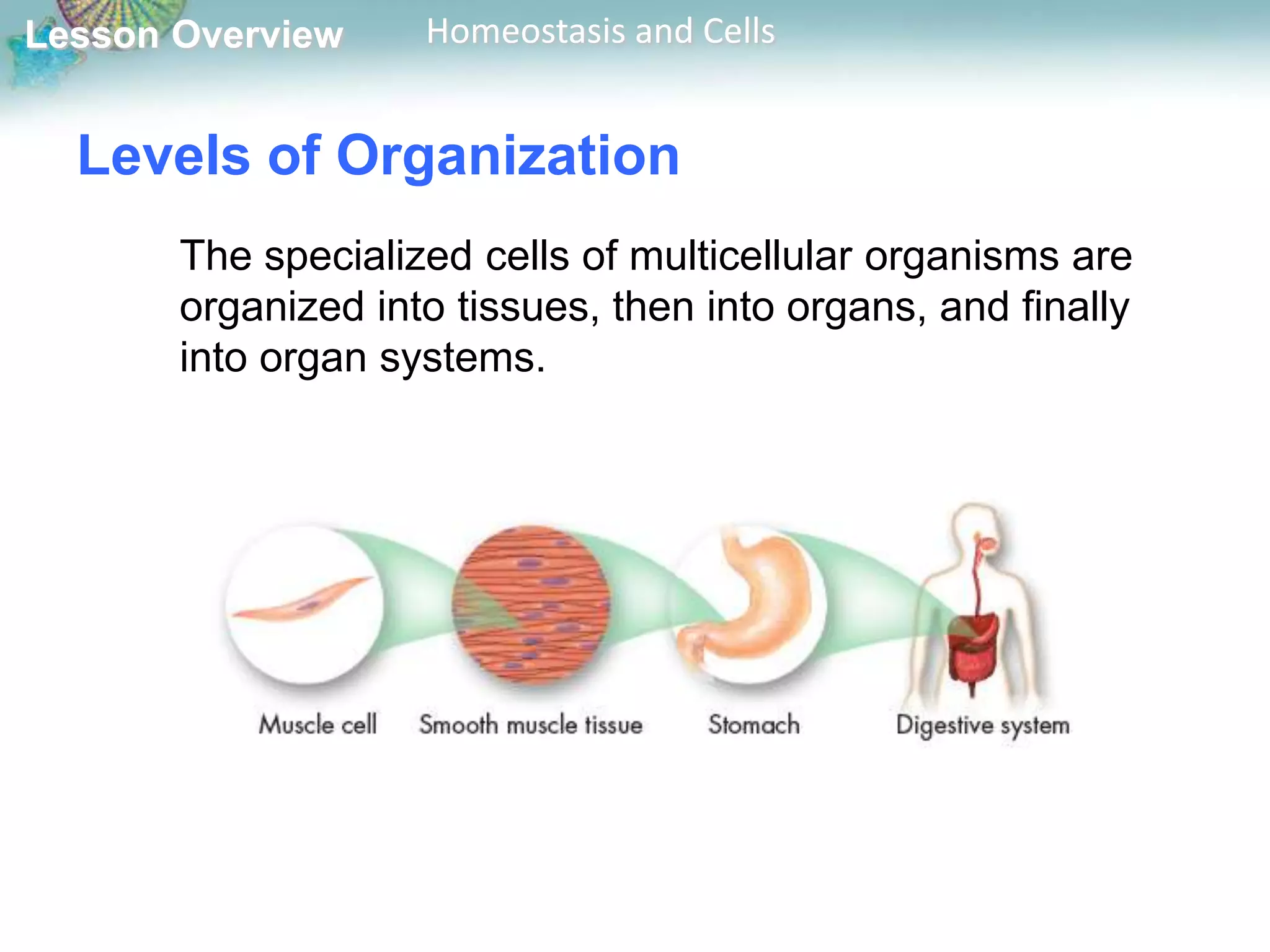
The specialized cells of multicellular organisms are
organized into tissues, then into organs, and finally
into organ systems.
Lesson Overview

Homeostasis and Cells

Levels of Organization
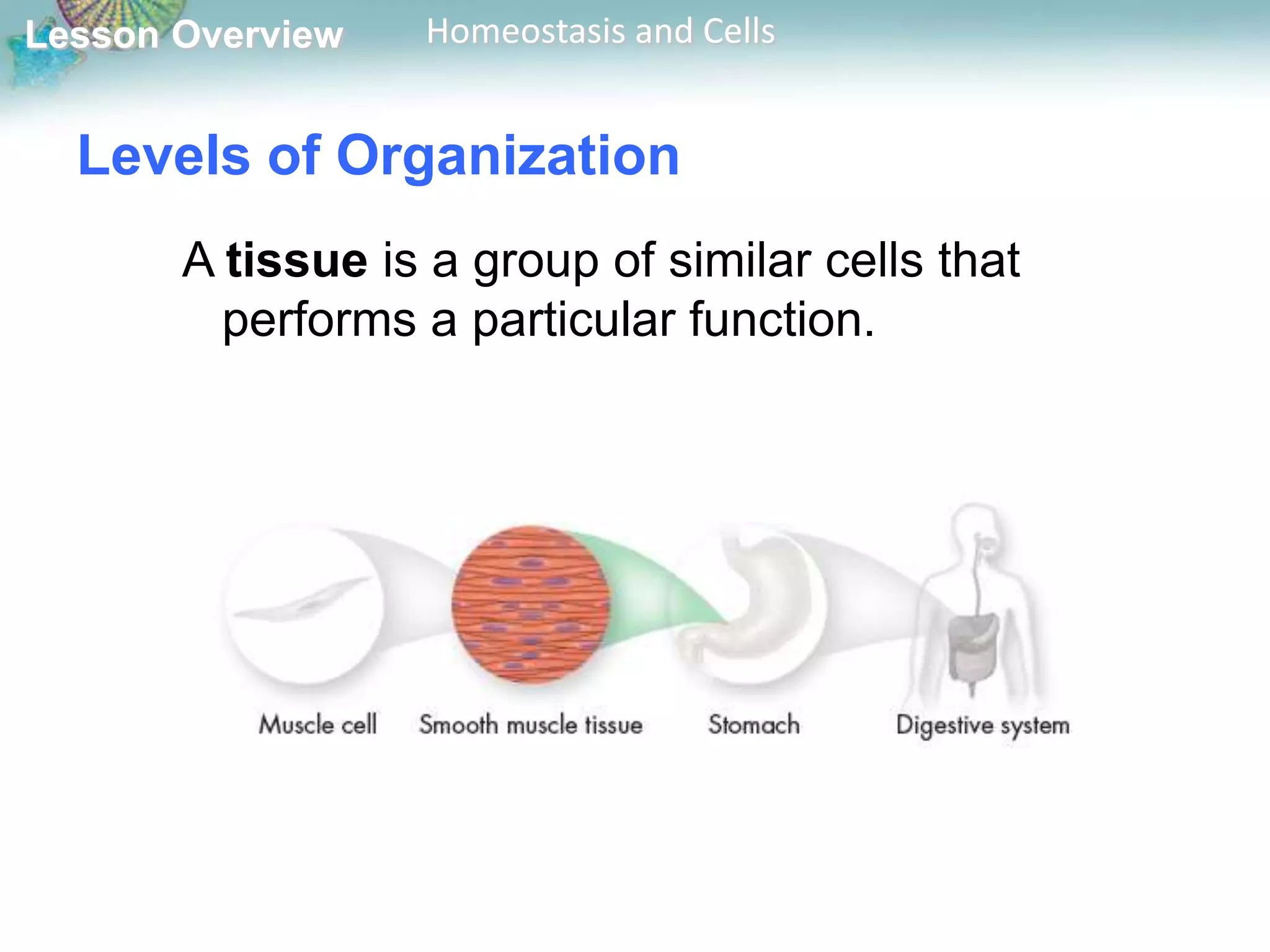
A tissue is a group of similar cells that
performs a particular function.
Lesson Overview

Homeostasis and Cells

Levels of Organization
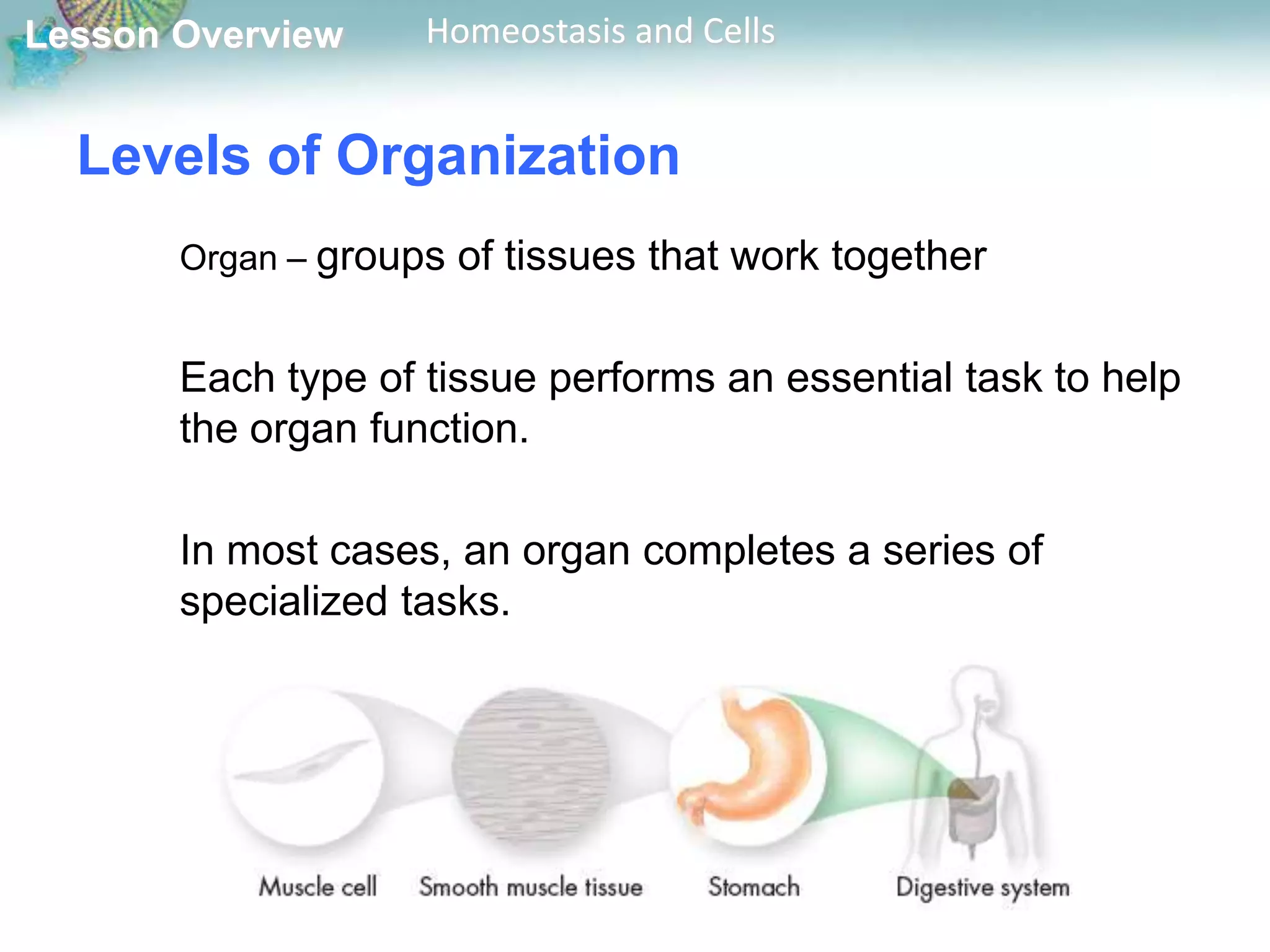
Organ – groups of tissues that work together

Each type of tissue performs an essential task to help
the organ function.

In most cases, an organ completes a series of
specialized tasks.
Lesson Overview

Homeostasis and Cells

Levels of Organization
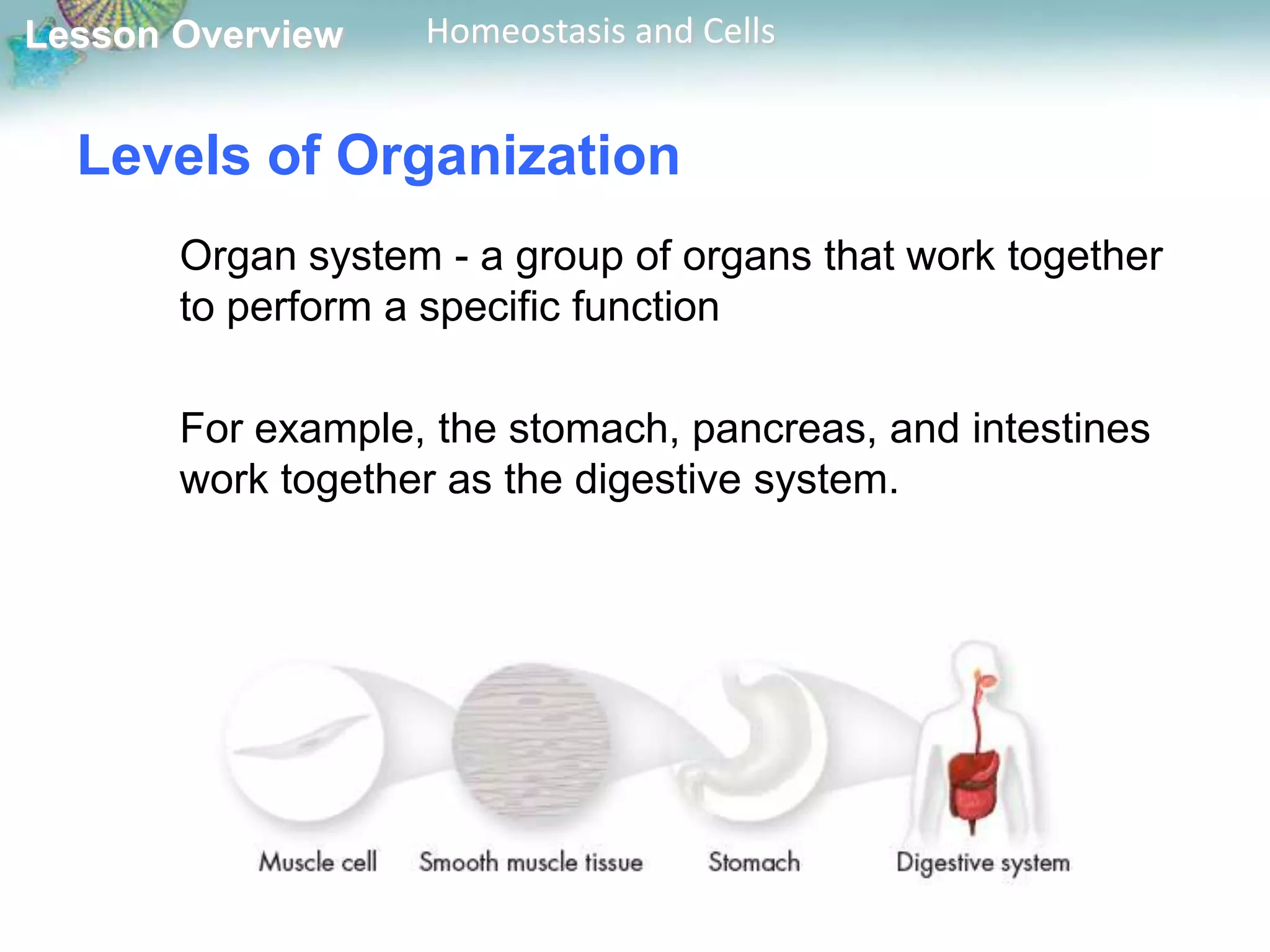
Organ system - a group of organs that work together
to perform a specific function
For example, the stomach, pancreas, and intestines
work together as the digestive system.
Lesson Overview

Homeostasis and Cells

Levels of Organization
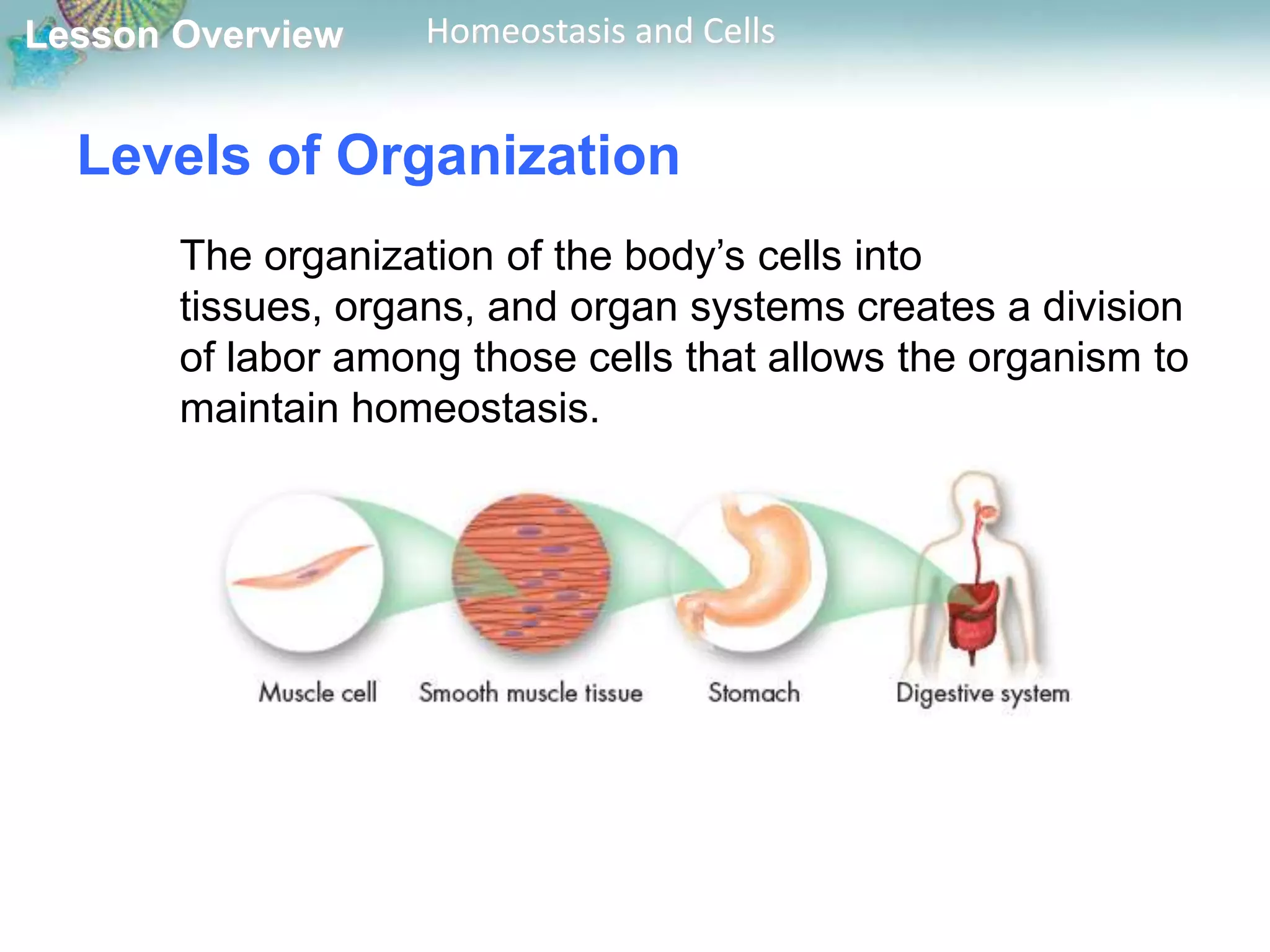
The organization of the body’s cells into
tissues, organs, and organ systems creates a division
of labor among those cells that allows the organism to
maintain homeostasis.
Ch. 7.4 Summary - Homeostasis

  • 1.
    Lesson Overview Homeostasis andCells 7.4 Homeostasis and Cells
  • 2.
    Lesson Overview Homeostasis andCells The Cell as an Organism Homeostasis – maintenance of a relatively constant internal physical and chemical conditions How do individual cells maintain homeostasis? To maintain homeostasis, unicellular organisms grow, respond to the environment, transform energy, and reproduce.
  • 3.
    Lesson Overview Homeostasis andCells Multicellular Life How do the cells of multicellular organisms work together to maintain homeostasis? The cells of multicellular organisms become specialized for particular tasks and communicate with one another to maintain homeostasis.
  • 4.
    Lesson Overview Homeostasis andCells Multicellular Life The cells of multicellular organisms are interdependent, and like the members of a successful baseball team, they work together. In baseball, players take on a particular role, such as pitcher, catcher, infielder, or outfielder. Messages and signals are sent and understood by teammates and coaches to play the game effectively. Cells in a multicellular organism work the same way. The cells of multicellular organisms become specialized for particular tasks and communicate with one another in order to maintain homeostasis.
  • 5.
    Lesson Overview Homeostasis andCells Example - Specialized Animal Cells Particles of dust, smoke, and bacteria are part of even the cleanest air. Specialized animal cells act like street sweepers to keep the particles out of the lungs. These cells are full of mitochondria, which provide a steady supply of the ATP that powers the cilia on their upper surfaces.
  • 6.
    Lesson Overview Homeostasis andCells Example - Specialized Plant Cells Pollen grains are highly specialized cells that are tiny and light, with thick cell walls to protect the cell’s contents. Pine pollen grains have two tiny wings that enable the slightest breeze to carry them great distances.
  • 7.
    Lesson Overview Homeostasis andCells Levels of Organization The specialized cells of multicellular organisms are organized into tissues, then into organs, and finally into organ systems.
  • 8.
    Lesson Overview Homeostasis andCells Levels of Organization A tissue is a group of similar cells that performs a particular function.
  • 9.
    Lesson Overview Homeostasis andCells Levels of Organization Organ – groups of tissues that work together Each type of tissue performs an essential task to help the organ function. In most cases, an organ completes a series of specialized tasks.
  • 10.
    Lesson Overview Homeostasis andCells Levels of Organization Organ system - a group of organs that work together to perform a specific function For example, the stomach, pancreas, and intestines work together as the digestive system.
  • 11.
    Lesson Overview Homeostasis andCells Levels of Organization The organization of the body’s cells into tissues, organs, and organ systems creates a division of labor among those cells that allows the organism to maintain homeostasis.