Top Ten Uses of the Internet for Education Lesa Robertson EDU 6606 Dr. Yang
Higher Education Accredited Universities Online takes the distance out of distance learning. Classroom instruction can be accessed from your home using the internet. www.troy.edu
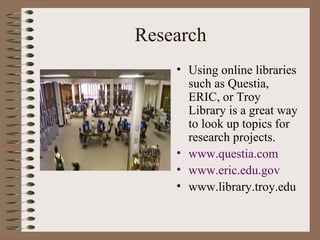
Research Using online libraries such as Questia, ERIC, or Troy Library is a great way to look up topics for research projects. www.questia.com www.eric.edu.gov www.library.troy.edu
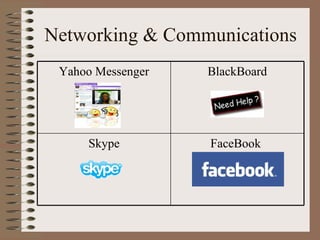
Networking & Communications FaceBook   Skype BlackBoard Yahoo Messenger
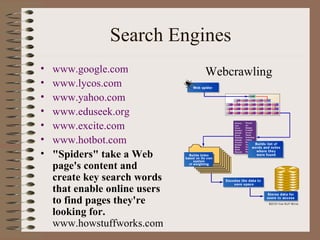
Search Engines www.google.com www.lycos.com www.yahoo.com www.eduseek.org www.excite.com www.hotbot.com "Spiders" take a Web page's content and create key search words that enable online users to find pages they're looking for. www.howstuffworks.com Webcrawling
Online reporting MyGradeBook allows teachers to grade assignments, print out reports, email parents, wherever they’ve got a computer and an Internet connection. MyGradeBook offers secure service and gives teachers access to their data 24 hours a day, 7 days a week. www.mygradebook.com
Planning Using online websites with the ultimate goal of providing resources that all educators would find useful, with a particular focus on helping teachers in the process of developing exemplary lesson plans.  www.lessonplans.com
Portfolios A portfolio is a purposeful collection of student work that exhibits the student's efforts, progress and achievements in one or more areas. The collection must include student participation in selecting contents, the criteria for selection; the criteria for judging merit, and evidence of student self-reflection.  www.eduscapes.com
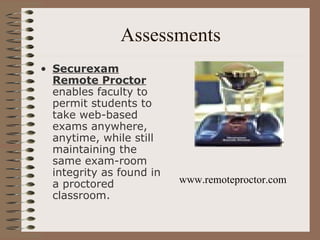
Assessments Securexam Remote Proctor  enables faculty to permit students to take web-based exams anywhere, anytime, while still maintaining the same exam-room integrity as found in a proctored classroom.  www.remoteproctor.com
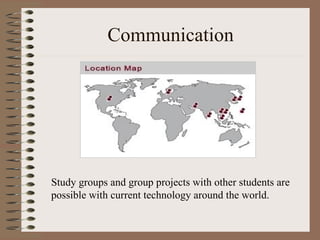
Communication Study groups and group projects with other students are possible with current technology around the world.
The End Lesa Robertson Troy University April 3, 2010

C:\Fakepath\Edu 6606 Ppt Internet Uses

  • 1.
    Top Ten Usesof the Internet for Education Lesa Robertson EDU 6606 Dr. Yang
  • 2.
    Higher Education AccreditedUniversities Online takes the distance out of distance learning. Classroom instruction can be accessed from your home using the internet. www.troy.edu
  • 3.
    Research Using onlinelibraries such as Questia, ERIC, or Troy Library is a great way to look up topics for research projects. www.questia.com www.eric.edu.gov www.library.troy.edu
  • 4.
    Networking & CommunicationsFaceBook Skype BlackBoard Yahoo Messenger
  • 5.
    Search Engines www.google.comwww.lycos.com www.yahoo.com www.eduseek.org www.excite.com www.hotbot.com "Spiders" take a Web page's content and create key search words that enable online users to find pages they're looking for. www.howstuffworks.com Webcrawling
  • 6.
    Online reporting MyGradeBookallows teachers to grade assignments, print out reports, email parents, wherever they’ve got a computer and an Internet connection. MyGradeBook offers secure service and gives teachers access to their data 24 hours a day, 7 days a week. www.mygradebook.com
  • 7.
    Planning Using onlinewebsites with the ultimate goal of providing resources that all educators would find useful, with a particular focus on helping teachers in the process of developing exemplary lesson plans. www.lessonplans.com
  • 8.
    Portfolios A portfoliois a purposeful collection of student work that exhibits the student's efforts, progress and achievements in one or more areas. The collection must include student participation in selecting contents, the criteria for selection; the criteria for judging merit, and evidence of student self-reflection. www.eduscapes.com
  • 9.
    Assessments Securexam RemoteProctor enables faculty to permit students to take web-based exams anywhere, anytime, while still maintaining the same exam-room integrity as found in a proctored classroom. www.remoteproctor.com
  • 10.
    Communication Study groupsand group projects with other students are possible with current technology around the world.
  • 11.
    The End LesaRobertson Troy University April 3, 2010