Failure to thrive: Cystic Fibrosis
By Rubab imran
INTRODUCTION
 Since ancient times, children around the world have been afflicted with cystic fibrosis
which leads to shortened lifespans.
 Salty skin was a sign of an impending illness without cause or cure.
 High salt levels in the sweat of patients with cystic fibrosis suggest an abnormality in
electrolyte transport from the sweat glands.
 It is a chronic disease that frequently leads to chronic Sinopulmonary infections and
pancreatic insufficiency
 The most common cause of death is end-stage lung disease
Definition
 Cystic fibrosis is an autosomal recessive genetic disorder with features that reflect
mutations in the cystic fibrosis transmembrane conductance regulator (CFTR) gene which
encodes a protein expressed in the apical membrane of exocrine epithelial cells.
Epidermiology
 The most common mutation is delta F508, which is found in 70% of American white patients
with CF and two-thirds of all cases worldwide.
 The mutation is a class 2 mutation of abnormal folding of the CFTR protein, leading to
premature destruction within the Golgi apparatus.
 The delta F508 mutation commonly leads to exocrine pancreatic insufficiency and a
higher likelihood of meconium ileus.
Pathophysiology
 CFTR transports chloride ions across cell membranes in the lungs, liver, pancreas, digestive
tract, reproductive tract, and skin.
Sinus disease
 Occur when secretion viscosity increases which obstructs the sinus ostia.
 Ciliary dysfunction, increased inflammatory mediators, and increased bacterial
colonization with pathogens like Pseudomonas aeruginosa.
 Subsequently, chronic sinusitis occurs, and secondary structural damage may occur.
Lung disease
 A high rate of sodium absorption and low rate of chloride secretion reduces salt and water
content in mucus and depletes peri-ciliary liquid.
 The mucus adheres to the airway surface, leading to decreased mucus clearing.
 Predisposition to Staph and Pseudomonas infection.
 Bronchiectasis and further thick purulent sputum production occur.
 Poorly managed pulmonary manifestations are the primary cause of death in patients with CF.
Pancreatic manifestation
 Obstruction of the pancreatic ductules by thickened secretions.
 As a result, intestinal chyme is not enzymatically processed in the intestines resulting in
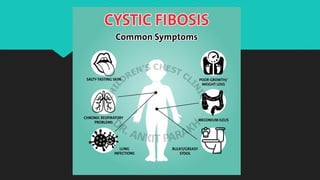
pathognomonic greasy stools, colicky abdominal pain, and malabsorption of nutrients
from food.
 Specifically, fat-soluble vitamins A, D, E, and K are notably deficient.
Cont..
 Auto-digestion of the pancreas may occur as this enzyme targets the pancreatic tissues.
 In severe, chronic cases, this can lead to endocrine pancreatic failure when the islets of
Langerhans begin to be digested by trapped pancreatic enzymes.
 The lasting impacts of this spectrum of disease mimic type-1 Diabetes Mellitus.
Biliary and hepatic systems
 The biliary ductules may be plugged with secretion.
 Obstructive cirrhosis and post-hepatic hyperbilirubinemia can occur.
 Gallbladder disease is more likely to occur as a spectrum of this manifestation of CF, with
up to 15% of those with cystic fibrosis having gallstones.
Sweat glands
 Normally sweat glands move chloride from the extracellular space into the intracellular
space. Thus, sodium and water are reabsorbed from the sweat gland tissue into the body.
 However, failure of the chloride channel to reabsorb chloride leads to a loss of sodium
onto the skin surface and a subsequent fluid loss.
 This causes the pathognomonic salty skin seen with cystic fibrosis.
History and Physical
 Newborns with CF may present with meconium ileus, prolonged neonatal jaundice, or
early lung infection.
 Infants and children with CF may present with failure to thrive and poor weight gain,
anemia, undescended testicles in boys, recurrent sinopulmonary infections, and a distal
intestinal obstructive syndrome with or without pancreatic insufficiency.
Cont.…
 Males may be infertile due to absent vas deferens.
 Females have reduced fertility due to thickened cervical mucus.
Investigation
 The diagnostic pathway starts with a sweat chloride test. If normal but still symptomatic, a
repeat sweat chloride test is indicated.
 If the test is abnormal, DNA testing is indicated. If one or less CFTR mutations are found,
expanded DNA analysis is indicated.
 However, the finding of 2 CF-related mutations confirms the diagnosis of cystic fibrosis.
Cont..
 The test for immunoreactive trypsinogen (IRT), a pancreatic enzyme, increases sensitivity
and specificity in screening newborns with meconium ileus for CF.
Additional Dignostic
 A chest radiography may help identify hyperinflation, bronchiectasis, and abscesses.
 Sinus radiography may demonstrate panopacification of the paranasal sinuses.
 Abdominal radiography may be helpful in neonatal who present with meconium ileus
 Bronchoalveolar lavage typically shows many neutrophils
Differential diagnosis
 Asthma
 Bronchiolitis
 Bronchiectasis
 Nutritional considerations in failure to thrive
 Pediatric aspergillosis
 Primary ciliary dyskinesia
 Sinusitis
Treatment
 Cystic fibrosis is a systemic that has broad implications for both quality and quantity of life
when poorly controlled.
 Therefore, treatment should focus on optimizing function to avoid acute illness events.
 CF guidelines recommend at least one antibiotic to cover each pathogenic bacteria
cultured from respiratory secretions and two antibiotics for P.aeruginosa infections.
Cont.
 Ventilation and oxygenation should be supported through the use of inhaled
bronchodilators, including albuterol and ipratropium bromide.
 Agents such as inhaled dornase Alfa or inhaled hypertonic saline are prescribed to
promote airway secretion clearance in conjunction with chest physiotherapy.
 Anti-inflammatory medicines such as glucocorticoids are also used to assist in opening
airways to relieve the obstruction.
you

"Understanding Failure to Thrive: Causes, Symptoms, and Interventions"

  • 1.
    Failure to thrive:Cystic Fibrosis By Rubab imran
  • 2.
    INTRODUCTION  Since ancienttimes, children around the world have been afflicted with cystic fibrosis which leads to shortened lifespans.  Salty skin was a sign of an impending illness without cause or cure.  High salt levels in the sweat of patients with cystic fibrosis suggest an abnormality in electrolyte transport from the sweat glands.  It is a chronic disease that frequently leads to chronic Sinopulmonary infections and pancreatic insufficiency  The most common cause of death is end-stage lung disease
  • 3.
    Definition  Cystic fibrosisis an autosomal recessive genetic disorder with features that reflect mutations in the cystic fibrosis transmembrane conductance regulator (CFTR) gene which encodes a protein expressed in the apical membrane of exocrine epithelial cells.
  • 5.
    Epidermiology  The mostcommon mutation is delta F508, which is found in 70% of American white patients with CF and two-thirds of all cases worldwide.  The mutation is a class 2 mutation of abnormal folding of the CFTR protein, leading to premature destruction within the Golgi apparatus.  The delta F508 mutation commonly leads to exocrine pancreatic insufficiency and a higher likelihood of meconium ileus.
  • 6.
    Pathophysiology  CFTR transportschloride ions across cell membranes in the lungs, liver, pancreas, digestive tract, reproductive tract, and skin.
  • 7.
    Sinus disease  Occurwhen secretion viscosity increases which obstructs the sinus ostia.  Ciliary dysfunction, increased inflammatory mediators, and increased bacterial colonization with pathogens like Pseudomonas aeruginosa.  Subsequently, chronic sinusitis occurs, and secondary structural damage may occur.
  • 8.
    Lung disease  Ahigh rate of sodium absorption and low rate of chloride secretion reduces salt and water content in mucus and depletes peri-ciliary liquid.  The mucus adheres to the airway surface, leading to decreased mucus clearing.  Predisposition to Staph and Pseudomonas infection.  Bronchiectasis and further thick purulent sputum production occur.  Poorly managed pulmonary manifestations are the primary cause of death in patients with CF.
  • 9.
    Pancreatic manifestation  Obstructionof the pancreatic ductules by thickened secretions.  As a result, intestinal chyme is not enzymatically processed in the intestines resulting in pathognomonic greasy stools, colicky abdominal pain, and malabsorption of nutrients from food.  Specifically, fat-soluble vitamins A, D, E, and K are notably deficient.
  • 10.
    Cont..  Auto-digestion ofthe pancreas may occur as this enzyme targets the pancreatic tissues.  In severe, chronic cases, this can lead to endocrine pancreatic failure when the islets of Langerhans begin to be digested by trapped pancreatic enzymes.  The lasting impacts of this spectrum of disease mimic type-1 Diabetes Mellitus.
  • 11.
    Biliary and hepaticsystems  The biliary ductules may be plugged with secretion.  Obstructive cirrhosis and post-hepatic hyperbilirubinemia can occur.  Gallbladder disease is more likely to occur as a spectrum of this manifestation of CF, with up to 15% of those with cystic fibrosis having gallstones.
  • 12.
    Sweat glands  Normallysweat glands move chloride from the extracellular space into the intracellular space. Thus, sodium and water are reabsorbed from the sweat gland tissue into the body.  However, failure of the chloride channel to reabsorb chloride leads to a loss of sodium onto the skin surface and a subsequent fluid loss.  This causes the pathognomonic salty skin seen with cystic fibrosis.
  • 13.
    History and Physical Newborns with CF may present with meconium ileus, prolonged neonatal jaundice, or early lung infection.  Infants and children with CF may present with failure to thrive and poor weight gain, anemia, undescended testicles in boys, recurrent sinopulmonary infections, and a distal intestinal obstructive syndrome with or without pancreatic insufficiency.
  • 14.
    Cont.…  Males maybe infertile due to absent vas deferens.  Females have reduced fertility due to thickened cervical mucus.
  • 15.
    Investigation  The diagnosticpathway starts with a sweat chloride test. If normal but still symptomatic, a repeat sweat chloride test is indicated.  If the test is abnormal, DNA testing is indicated. If one or less CFTR mutations are found, expanded DNA analysis is indicated.  However, the finding of 2 CF-related mutations confirms the diagnosis of cystic fibrosis.
  • 16.
    Cont..  The testfor immunoreactive trypsinogen (IRT), a pancreatic enzyme, increases sensitivity and specificity in screening newborns with meconium ileus for CF.
  • 17.
    Additional Dignostic  Achest radiography may help identify hyperinflation, bronchiectasis, and abscesses.  Sinus radiography may demonstrate panopacification of the paranasal sinuses.  Abdominal radiography may be helpful in neonatal who present with meconium ileus  Bronchoalveolar lavage typically shows many neutrophils
  • 18.
    Differential diagnosis  Asthma Bronchiolitis  Bronchiectasis  Nutritional considerations in failure to thrive  Pediatric aspergillosis  Primary ciliary dyskinesia  Sinusitis
  • 19.
    Treatment  Cystic fibrosisis a systemic that has broad implications for both quality and quantity of life when poorly controlled.  Therefore, treatment should focus on optimizing function to avoid acute illness events.  CF guidelines recommend at least one antibiotic to cover each pathogenic bacteria cultured from respiratory secretions and two antibiotics for P.aeruginosa infections.
  • 20.
    Cont.  Ventilation andoxygenation should be supported through the use of inhaled bronchodilators, including albuterol and ipratropium bromide.  Agents such as inhaled dornase Alfa or inhaled hypertonic saline are prescribed to promote airway secretion clearance in conjunction with chest physiotherapy.  Anti-inflammatory medicines such as glucocorticoids are also used to assist in opening airways to relieve the obstruction.
  • 21.