MOHAMED GAMALABOUELYAZEED
ASSISTANT LECTURER OF PHYSICAL
THERAPY FOR WOMEN’S HEALTH
SOUTH VALLEY UNIVERSITY
Cesarean Section
&
Physical Therapy
role
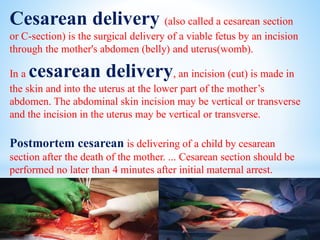
Cesarean delivery (also called a cesarean section
or C-section) is the surgical delivery of a viable fetus by an incision
through the mother's abdomen (belly) and uterus(womb).
In a cesarean delivery, an incision (cut) is made in
the skin and into the uterus at the lower part of the mother’s
abdomen. The abdominal skin incision may be vertical or transverse
and the incision in the uterus may be vertical or transverse.
Postmortem cesarean is delivering of a child by cesarean
section after the death of the mother. ... Cesarean section should be
performed no later than 4 minutes after initial maternal arrest.
Cesarean section is one of the commonly
performed surgical procedures in obstetrics and is certainly one of
the oldest operations in surgery. One of the most dramatic features of
modern obstetrics is the increase in the caesarean section rate.
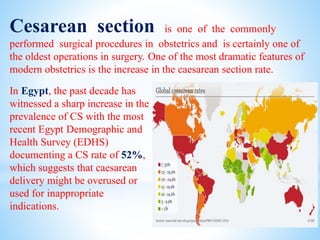
In Egypt, the past decade has
witnessed a sharp increase in the
prevalence of CS with the most
recent Egypt Demographic and
Health Survey (EDHS)
documenting a CS rate of 52%,
which suggests that caesarean
delivery might be overused or
used for inappropriate
indications.
Types of CS :
(A) LOWER SEGMENT CS ( LSCS)
The transverse uterine incision should be made through
the thin, noncontractile portion of the lower uterine
segment and it is the most common type. It is associated
with fast healing, reduced blood loss and lower
incidence of rupture in subsequent pregnancies.
(B) UPPER SEGMENT CS (USCS)
The classical longitudinal uterine incision is made through
the contractile portion of the myometrium and it is
uncommon type. It is associated with slow difficult
healing, sever blood loss and increased incidence of
rupture in subsequent pregnancies.
*Elective CS: when CS is done before onset of labor.
*Selective CS: when CS is done after onset of labor.
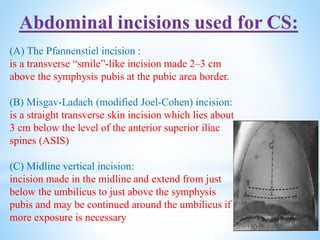
(A) The Pfannenstiel incision :
is a transverse “smile”-like incision made 2–3 cm
above the symphysis pubis at the pubic area border.
(B) Misgav-Ladach (modified Joel-Cohen) incision:
is a straight transverse skin incision which lies about
3 cm below the level of the anterior superior iliac
spines (ASIS)
(C) Midline vertical incision:
incision made in the midline and extend from just
below the umbilicus to just above the symphysis
pubis and may be continued around the umbilicus if
more exposure is necessary
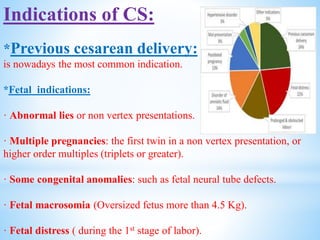
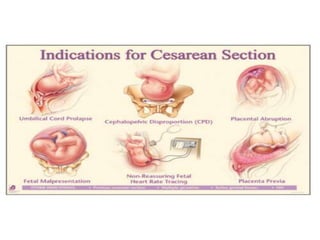
Indications of CS:
*Previous cesarean delivery:
is nowadays the most common indication.
*Fetal indications:
· Abnormal lies or non vertex presentations.
· Multiple pregnancies: the first twin in a non vertex presentation, or
higher order multiples (triplets or greater).
· Some congenital anomalies: such as fetal neural tube defects.
· Fetal macrosomia (Oversized fetus more than 4.5 Kg).
· Fetal distress ( during the 1st stage of labor).
*Maternal indications:
· Contracted pelvis: Moderate and marked degrees (commonest cause
in primigravidas).
· Cervical dystocia: leading to failed trial of labor (TOL).
· Placenta previa (PL PRV):Central or marginal posterior.
· Perineal lesions: as Human Papilloma Virus (HPV).
· Pelvic tumors: as low corporeal fibroid or ovarian tumors.
· Sever vaginal stenosis: Scarring or masses obstructing labor.
. High risk pregnant mothers: Sever pre-eclampsia & DM.
. Repeated unexplained (IUFD) intrauterine fetal death.
Cesarean hysterectomyrefers to removal of the
uterus at the time of cesarean delivery. It is a technically challenging
procedure due to the anatomic and physiologic changes of pregnancy,
including a massive increase in blood flow to the uterus at term.
*Indications of cesarean hysterectomy:
-Uterine atony associated with uncontrollable postpartum hemorrhage.
-Couvelaire uterus (Sever concealed accidental hemorrhage).
-Placenta Accreta, Increta and Percreta.
-Tumors associated with pregnancy such as ovarian & cervix cancer.
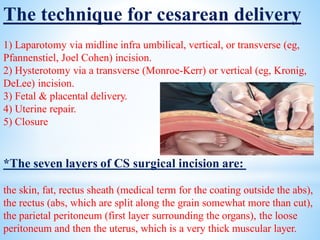
The technique for cesarean delivery
1) Laparotomy via midline infra umbilical, vertical, or transverse (eg,
Pfannenstiel, Joel Cohen) incision.
2) Hysterotomy via a transverse (Monroe-Kerr) or vertical (eg, Kronig,
DeLee) incision.
3) Fetal & placental delivery.
4) Uterine repair.
5) Closure
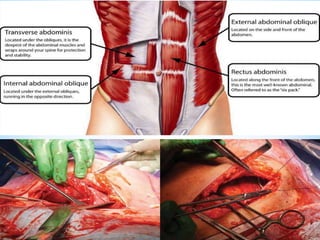
*The seven layers of CS surgical incision are:
the skin, fat, rectus sheath (medical term for the coating outside the abs),
the rectus (abs, which are split along the grain somewhat more than cut),
the parietal peritoneum (first layer surrounding the organs), the loose
peritoneum and then the uterus, which is a very thick muscular layer.
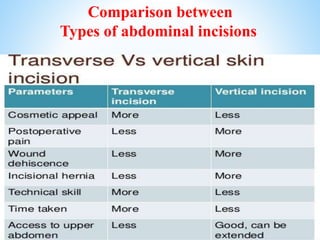
Comparison between
Types of abdominal incisions
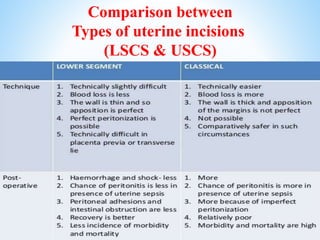
Comparison between
Types of uterine incisions
(LSCS & USCS)
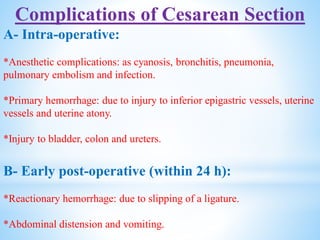
Complications of Cesarean Section
A- Intra-operative:
*Anesthetic complications: as cyanosis, bronchitis, pneumonia,
pulmonary embolism and infection.
*Primary hemorrhage: due to injury to inferior epigastric vessels, uterine
vessels and uterine atony.
*Injury to bladder, colon and ureters.
B- Early post-operative (within 24 h):
*Reactionary hemorrhage: due to slipping of a ligature.
*Abdominal distension and vomiting.
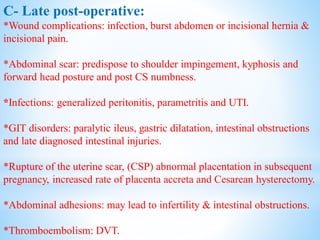
C- Late post-operative:
*Wound complications: infection, burst abdomen or incisional hernia &
incisional pain.
*Abdominal scar: predispose to shoulder impingement, kyphosis and
forward head posture and post CS numbness.
*Infections: generalized peritonitis, parametritis and UTI.
*GIT disorders: paralytic ileus, gastric dilatation, intestinal obstructions
and late diagnosed intestinal injuries.
*Rupture of the uterine scar, (CSP) abnormal placentation in subsequent
pregnancy, increased rate of placenta accreta and Cesarean hysterectomy.
*Abdominal adhesions: may lead to infertility & intestinal obstructions.
*Thromboembolism: DVT.
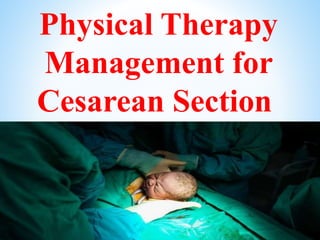
Physical Therapy
Management for
Cesarean Section
Significance of Physical Therapy
after CS
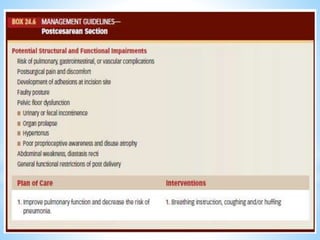
1) To improve pulmonary function and decrease the risk of pneumonia
2) To prevent or manage post surgical vascular complications or
abdominal & pelvic adhesions
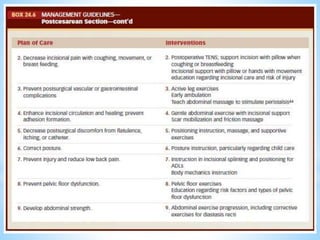
3) To decrease incisional pain with coughing, movement &breastfeeding
4) To enhance incisional circulation, healing, prevent hypertrophic scar
formation and enhance abdominal sensory nerves regeneration
5) To correct posture and prevent or manage different musculoskeletal
disorders that are related to cesarean section scar
6) To assist mothers to return to their previous healthy status
Physical Therapy management post CS
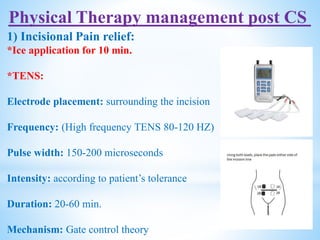
1) Incisional Pain relief:
*Ice application for 10 min.
*TENS:
Electrode placement: surrounding the incision
Frequency: (High frequency TENS 80-120 HZ)
Pulse width: 150-200 microseconds
Intensity: according to patient’s tolerance
Duration: 20-60 min.
Mechanism: Gate control theory
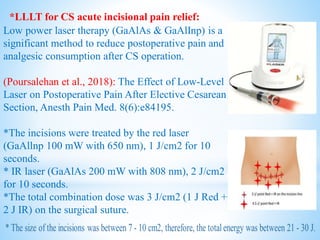
*LLLT for CS acute incisional pain relief:
Low power laser therapy (GaAlAs & GaAlInp) is a
significant method to reduce postoperative pain and
analgesic consumption after CS operation.
(Poursalehan et al., 2018): The Effect of Low-Level
Laser on Postoperative Pain After Elective Cesarean
Section, Anesth Pain Med. 8(6):e84195.
*The incisions were treated by the red laser
(GaAllnp 100 mW with 650 nm), 1 J/cm2 for 10
seconds.
* IR laser (GaAlAs 200 mW with 808 nm), 2 J/cm2
for 10 seconds.
*The total combination dose was 3 J/cm2 (1 J Red +
2 J IR) on the surgical suture.
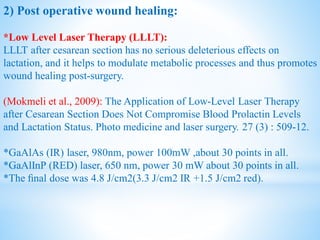
2) Post operative wound healing:
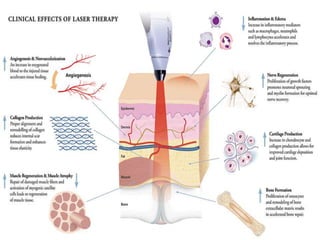
*Low Level Laser Therapy (LLLT):
LLLT after cesarean section has no serious deleterious effects on
lactation, and it helps to modulate metabolic processes and thus promotes
wound healing post-surgery.
(Mokmeli et al., 2009): The Application of Low-Level Laser Therapy
after Cesarean Section Does Not Compromise Blood Prolactin Levels
and Lactation Status. Photo medicine and laser surgery. 27 (3) : 509-12.
*GaAlAs (IR) laser, 980nm, power 100mW ,about 30 points in all.
*GaAlInP (RED) laser, 650 nm, power 30 mW about 30 points in all.
*The final dose was 4.8 J/cm2(3.3 J/cm2 IR +1.5 J/cm2 red).
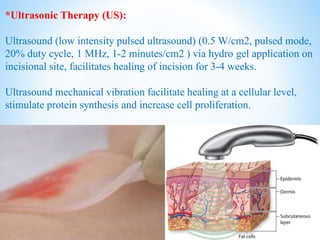
*Ultrasonic Therapy (US):
Ultrasound (low intensity pulsed ultrasound) (0.5 W/cm2, pulsed mode,
20% duty cycle, 1 MHz, 1-2 minutes/cm2 ) via hydro gel application on
incisional site, facilitates healing of incision for 3-4 weeks.
Ultrasound mechanical vibration facilitate healing at a cellular level,
stimulate protein synthesis and increase cell proliferation.
*High Voltage Pulsed Galvanic Stimulation (HVPGS):
Voltage: always ranged from 150 to 200 V.
Intensity: The stimulation intensity was at a sensory level to prevent the
occurrence of motor reactions.
Pulse duration: 50-100 microseconds.
Frequency:100 HZ
Duration: 45-60min.[3 sessions weekly non infected & daily if infected]
Electrode placement: treatment electrode was placed on the wound with
dispersive electrode on healthy skin at least 15–20 cm from the wound.
Polarity: begin with negative treatment electrode to stimulate wound
healing if infected wound &positive treatment electrode if not infected.
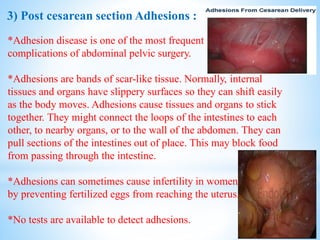
*Adhesion disease is one of the most frequent
complications of abdominal pelvic surgery.
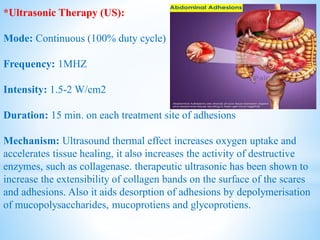
*Adhesions are bands of scar-like tissue. Normally, internal
tissues and organs have slippery surfaces so they can shift easily
as the body moves. Adhesions cause tissues and organs to stick
together. They might connect the loops of the intestines to each
other, to nearby organs, or to the wall of the abdomen. They can
pull sections of the intestines out of place. This may block food
from passing through the intestine.
*Adhesions can sometimes cause infertility in women
by preventing fertilized eggs from reaching the uterus.
*No tests are available to detect adhesions.
3) Post cesarean section Adhesions :
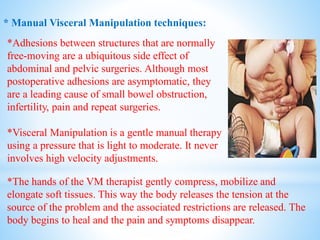
* Manual Visceral Manipulation techniques:
*Adhesions between structures that are normally
free-moving are a ubiquitous side effect of
abdominal and pelvic surgeries. Although most
postoperative adhesions are asymptomatic, they
are a leading cause of small bowel obstruction,
infertility, pain and repeat surgeries.
*Visceral Manipulation is a gentle manual therapy
using a pressure that is light to moderate. It never
involves high velocity adjustments.
*The hands of the VM therapist gently compress, mobilize and
elongate soft tissues. This way the body releases the tension at the
source of the problem and the associated restrictions are released. The
body begins to heal and the pain and symptoms disappear.
*Ultrasonic Therapy (US):
Mode: Continuous (100% duty cycle)
Frequency: 1MHZ
Intensity: 1.5-2 W/cm2
Duration: 15 min. on each treatment site of adhesions
Mechanism: Ultrasound thermal effect increases oxygen uptake and
accelerates tissue healing, it also increases the activity of destructive
enzymes, such as collagenase. therapeutic ultrasonic has been shown to
increase the extensibility of collagen bands on the surface of the scares
and adhesions. Also it aids desorption of adhesions by depolymerisation
of mucopolysaccharides, mucoprotiens and glycoprotiens.
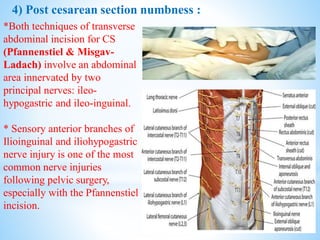
4) Post cesarean section numbness :
*Both techniques of transverse
abdominal incision for CS
(Pfannenstiel & Misgav-
Ladach) involve an abdominal
area innervated by two
principal nerves: ileo-
hypogastric and ileo-inguinal.
* Sensory anterior branches of
Ilioinguinal and iliohypogastric
nerve injury is one of the most
common nerve injuries
following pelvic surgery,
especially with the Pfannenstiel
incision.
*Ultrasonic Therapy:
low intensity pulsed ultrasound
(5 min, 0.5 w/cm2, 1MHZ with 20% duty cycle.
*LIPU can accelerate the regeneration and functional recovery of
neurotometic injured nerve at earlier stages after injury.
*Low Level Laser Therapy (LLLT):
low level laser therapy (Gallium Aluminum Arsenide Laser),
808nm, 4J/cm2, pulsating signal, 30-60 seconds for each point,
30 mW/cm2
*Application of laser irradiation (GA-As laser) inhibits the
degeneration process, accelerate remyelination, and nerve function
recovery.
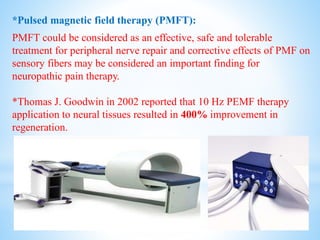
*Pulsed magnetic field therapy (PMFT):
PMFT could be considered as an effective, safe and tolerable
treatment for peripheral nerve repair and corrective effects of PMF on
sensory fibers may be considered an important finding for
neuropathic pain therapy.
*Thomas J. Goodwin in 2002 reported that 10 Hz PEMF therapy
application to neural tissues resulted in 400% improvement in
regeneration.
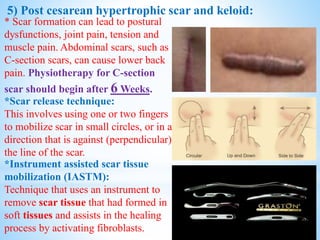
5) Post cesarean hypertrophic scar and keloid:
* Scar formation can lead to postural
dysfunctions, joint pain, tension and
muscle pain. Abdominal scars, such as
C-section scars, can cause lower back
pain. Physiotherapy for C-section
scar should begin after 6 Weeks.
*Scar release technique:
This involves using one or two fingers
to mobilize scar in small circles, or in a
direction that is against (perpendicular)
the line of the scar.
*Instrument assisted scar tissue
mobilization (IASTM):
Technique that uses an instrument to
remove scar tissue that had formed in
soft tissues and assists in the healing
process by activating fibroblasts.
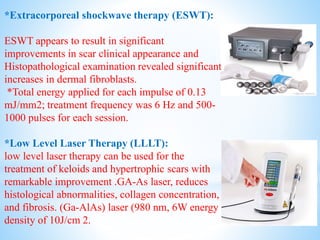
*Extracorporeal shockwave therapy (ESWT):
ESWT appears to result in significant
improvements in scar clinical appearance and
Histopathological examination revealed significant
increases in dermal fibroblasts.
*Total energy applied for each impulse of 0.13
mJ/mm2; treatment frequency was 6 Hz and 500-
1000 pulses for each session.
*Low Level Laser Therapy (LLLT):
low level laser therapy can be used for the
treatment of keloids and hypertrophic scars with
remarkable improvement .GA-As laser, reduces
histological abnormalities, collagen concentration,
and fibrosis. (Ga-AlAs) laser (980 nm, 6W energy
density of 10J/cm 2.
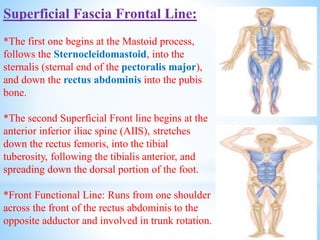
Superficial Fascia Frontal Line:
*The first one begins at the Mastoid process,
follows the Sternocleidomastoid, into the
sternalis (sternal end of the pectoralis major),
and down the rectus abdominis into the pubis
bone.
*The second Superficial Front line begins at the
anterior inferior iliac spine (AIIS), stretches
down the rectus femoris, into the tibial
tuberosity, following the tibialis anterior, and
spreading down the dorsal portion of the foot.
*Front Functional Line: Runs from one shoulder
across the front of the rectus abdominis to the
opposite adductor and involved in trunk rotation.
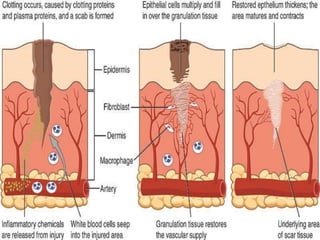
*After surgery, scar tissue will develop where surgical incision is in
the skin. If muscles and tendons were cut or repaired, scar tissue will
develop there as a process of healing.
*Cutting into multiple layers of anatomy: the epidermis or skin surface;
subcutaneous fat; fascia or connective tissue; muscles, peritoneum and
uterus. the obstetrician must respect in repair of the surgery all layers of
the seven-layer of cesarean section to decrease abnormal excessive scar
tissue formation.
The tension pull from the scar may cause postural changes and the
scarring can cause the adjacent muscles to develop trigger points.
*Elective CS was significantly associated with an increased risk of
persistent LOW BACK PELVIC PAIN (LBPP) after pregnancy
(Ingrid MM, 2007).
*The prevalence of low back pain is higher in post-partum women with
cesarean section compared to normal vaginal delivery (Joshi and
Parikh, 2016).
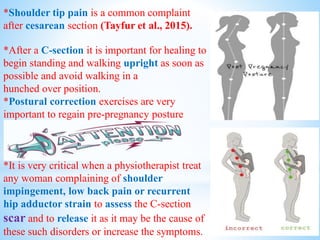
*Shoulder tip pain is a common complaint
after cesarean section (Tayfur et al., 2015).
*After a C-section it is important for healing to
begin standing and walking upright as soon as
possible and avoid walking in a
hunched over position.
*Postural correction exercises are very
important to regain pre-pregnancy posture
*It is very critical when a physiotherapist treat
any woman complaining of shoulder
impingement, low back pain or recurrent
hip adductor strain to assess the C-section
scar and to release it as it may be the cause of
these such disorders or increase the symptoms.
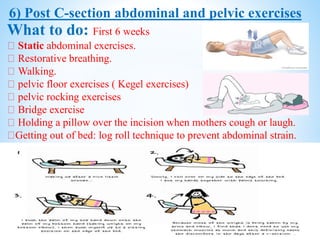
6) Post C-section abdominal and pelvic exercises
What to do: First 6 weeks
Static abdominal exercises.
Restorative breathing.
Walking.
pelvic floor exercises ( Kegel exercises)
pelvic rocking exercises
Bridge exercise
Holding a pillow over the incision when mothers cough or laugh.
Getting out of bed: log roll technique to prevent abdominal strain.
What to avoid: First 6 weeks:
Abdominal exercises which involve (twisting movement)
Full sit ups
Full crunches
Full planks
Twisting with pulling and lifting action
Lifting any heavy things
Driving
After 6 weeks check, and if all is well, Gradual beginning in
previous avoided exercises and activities such as:
Seated ball stability hold
Bird dog
crunches
planks
Wall squats
Core twisting
After 6 weeks
Cesarean section

Cesarean section

  • 2.
    MOHAMED GAMALABOUELYAZEED ASSISTANT LECTUREROF PHYSICAL THERAPY FOR WOMEN’S HEALTH SOUTH VALLEY UNIVERSITY
  • 3.
  • 4.
    Cesarean delivery (alsocalled a cesarean section or C-section) is the surgical delivery of a viable fetus by an incision through the mother's abdomen (belly) and uterus(womb). In a cesarean delivery, an incision (cut) is made in the skin and into the uterus at the lower part of the mother’s abdomen. The abdominal skin incision may be vertical or transverse and the incision in the uterus may be vertical or transverse. Postmortem cesarean is delivering of a child by cesarean section after the death of the mother. ... Cesarean section should be performed no later than 4 minutes after initial maternal arrest.
  • 5.
    Cesarean section isone of the commonly performed surgical procedures in obstetrics and is certainly one of the oldest operations in surgery. One of the most dramatic features of modern obstetrics is the increase in the caesarean section rate. In Egypt, the past decade has witnessed a sharp increase in the prevalence of CS with the most recent Egypt Demographic and Health Survey (EDHS) documenting a CS rate of 52%, which suggests that caesarean delivery might be overused or used for inappropriate indications.
  • 6.
    Types of CS: (A) LOWER SEGMENT CS ( LSCS) The transverse uterine incision should be made through the thin, noncontractile portion of the lower uterine segment and it is the most common type. It is associated with fast healing, reduced blood loss and lower incidence of rupture in subsequent pregnancies. (B) UPPER SEGMENT CS (USCS) The classical longitudinal uterine incision is made through the contractile portion of the myometrium and it is uncommon type. It is associated with slow difficult healing, sever blood loss and increased incidence of rupture in subsequent pregnancies. *Elective CS: when CS is done before onset of labor. *Selective CS: when CS is done after onset of labor.
  • 7.
    (A) The Pfannenstielincision : is a transverse “smile”-like incision made 2–3 cm above the symphysis pubis at the pubic area border. (B) Misgav-Ladach (modified Joel-Cohen) incision: is a straight transverse skin incision which lies about 3 cm below the level of the anterior superior iliac spines (ASIS) (C) Midline vertical incision: incision made in the midline and extend from just below the umbilicus to just above the symphysis pubis and may be continued around the umbilicus if more exposure is necessary
  • 8.
    Indications of CS: *Previouscesarean delivery: is nowadays the most common indication. *Fetal indications: · Abnormal lies or non vertex presentations. · Multiple pregnancies: the first twin in a non vertex presentation, or higher order multiples (triplets or greater). · Some congenital anomalies: such as fetal neural tube defects. · Fetal macrosomia (Oversized fetus more than 4.5 Kg). · Fetal distress ( during the 1st stage of labor).
  • 9.
    *Maternal indications: · Contractedpelvis: Moderate and marked degrees (commonest cause in primigravidas). · Cervical dystocia: leading to failed trial of labor (TOL). · Placenta previa (PL PRV):Central or marginal posterior. · Perineal lesions: as Human Papilloma Virus (HPV). · Pelvic tumors: as low corporeal fibroid or ovarian tumors. · Sever vaginal stenosis: Scarring or masses obstructing labor. . High risk pregnant mothers: Sever pre-eclampsia & DM. . Repeated unexplained (IUFD) intrauterine fetal death.
  • 11.
    Cesarean hysterectomyrefers toremoval of the uterus at the time of cesarean delivery. It is a technically challenging procedure due to the anatomic and physiologic changes of pregnancy, including a massive increase in blood flow to the uterus at term. *Indications of cesarean hysterectomy: -Uterine atony associated with uncontrollable postpartum hemorrhage. -Couvelaire uterus (Sever concealed accidental hemorrhage). -Placenta Accreta, Increta and Percreta. -Tumors associated with pregnancy such as ovarian & cervix cancer.
  • 12.
    The technique forcesarean delivery 1) Laparotomy via midline infra umbilical, vertical, or transverse (eg, Pfannenstiel, Joel Cohen) incision. 2) Hysterotomy via a transverse (Monroe-Kerr) or vertical (eg, Kronig, DeLee) incision. 3) Fetal & placental delivery. 4) Uterine repair. 5) Closure *The seven layers of CS surgical incision are: the skin, fat, rectus sheath (medical term for the coating outside the abs), the rectus (abs, which are split along the grain somewhat more than cut), the parietal peritoneum (first layer surrounding the organs), the loose peritoneum and then the uterus, which is a very thick muscular layer.
  • 13.
    Comparison between Types ofabdominal incisions
  • 14.
    Comparison between Types ofuterine incisions (LSCS & USCS)
  • 15.
    Complications of CesareanSection A- Intra-operative: *Anesthetic complications: as cyanosis, bronchitis, pneumonia, pulmonary embolism and infection. *Primary hemorrhage: due to injury to inferior epigastric vessels, uterine vessels and uterine atony. *Injury to bladder, colon and ureters. B- Early post-operative (within 24 h): *Reactionary hemorrhage: due to slipping of a ligature. *Abdominal distension and vomiting.
  • 16.
    C- Late post-operative: *Woundcomplications: infection, burst abdomen or incisional hernia & incisional pain. *Abdominal scar: predispose to shoulder impingement, kyphosis and forward head posture and post CS numbness. *Infections: generalized peritonitis, parametritis and UTI. *GIT disorders: paralytic ileus, gastric dilatation, intestinal obstructions and late diagnosed intestinal injuries. *Rupture of the uterine scar, (CSP) abnormal placentation in subsequent pregnancy, increased rate of placenta accreta and Cesarean hysterectomy. *Abdominal adhesions: may lead to infertility & intestinal obstructions. *Thromboembolism: DVT.
  • 17.
  • 18.
    Significance of PhysicalTherapy after CS 1) To improve pulmonary function and decrease the risk of pneumonia 2) To prevent or manage post surgical vascular complications or abdominal & pelvic adhesions 3) To decrease incisional pain with coughing, movement &breastfeeding 4) To enhance incisional circulation, healing, prevent hypertrophic scar formation and enhance abdominal sensory nerves regeneration 5) To correct posture and prevent or manage different musculoskeletal disorders that are related to cesarean section scar 6) To assist mothers to return to their previous healthy status
  • 21.
    Physical Therapy managementpost CS 1) Incisional Pain relief: *Ice application for 10 min. *TENS: Electrode placement: surrounding the incision Frequency: (High frequency TENS 80-120 HZ) Pulse width: 150-200 microseconds Intensity: according to patient’s tolerance Duration: 20-60 min. Mechanism: Gate control theory
  • 22.
    *LLLT for CSacute incisional pain relief: Low power laser therapy (GaAlAs & GaAlInp) is a significant method to reduce postoperative pain and analgesic consumption after CS operation. (Poursalehan et al., 2018): The Effect of Low-Level Laser on Postoperative Pain After Elective Cesarean Section, Anesth Pain Med. 8(6):e84195. *The incisions were treated by the red laser (GaAllnp 100 mW with 650 nm), 1 J/cm2 for 10 seconds. * IR laser (GaAlAs 200 mW with 808 nm), 2 J/cm2 for 10 seconds. *The total combination dose was 3 J/cm2 (1 J Red + 2 J IR) on the surgical suture.
  • 23.
    2) Post operativewound healing: *Low Level Laser Therapy (LLLT): LLLT after cesarean section has no serious deleterious effects on lactation, and it helps to modulate metabolic processes and thus promotes wound healing post-surgery. (Mokmeli et al., 2009): The Application of Low-Level Laser Therapy after Cesarean Section Does Not Compromise Blood Prolactin Levels and Lactation Status. Photo medicine and laser surgery. 27 (3) : 509-12. *GaAlAs (IR) laser, 980nm, power 100mW ,about 30 points in all. *GaAlInP (RED) laser, 650 nm, power 30 mW about 30 points in all. *The final dose was 4.8 J/cm2(3.3 J/cm2 IR +1.5 J/cm2 red).
  • 25.
    *Ultrasonic Therapy (US): Ultrasound(low intensity pulsed ultrasound) (0.5 W/cm2, pulsed mode, 20% duty cycle, 1 MHz, 1-2 minutes/cm2 ) via hydro gel application on incisional site, facilitates healing of incision for 3-4 weeks. Ultrasound mechanical vibration facilitate healing at a cellular level, stimulate protein synthesis and increase cell proliferation.
  • 26.
    *High Voltage PulsedGalvanic Stimulation (HVPGS): Voltage: always ranged from 150 to 200 V. Intensity: The stimulation intensity was at a sensory level to prevent the occurrence of motor reactions. Pulse duration: 50-100 microseconds. Frequency:100 HZ Duration: 45-60min.[3 sessions weekly non infected & daily if infected] Electrode placement: treatment electrode was placed on the wound with dispersive electrode on healthy skin at least 15–20 cm from the wound. Polarity: begin with negative treatment electrode to stimulate wound healing if infected wound &positive treatment electrode if not infected.
  • 27.
    *Adhesion disease isone of the most frequent complications of abdominal pelvic surgery. *Adhesions are bands of scar-like tissue. Normally, internal tissues and organs have slippery surfaces so they can shift easily as the body moves. Adhesions cause tissues and organs to stick together. They might connect the loops of the intestines to each other, to nearby organs, or to the wall of the abdomen. They can pull sections of the intestines out of place. This may block food from passing through the intestine. *Adhesions can sometimes cause infertility in women by preventing fertilized eggs from reaching the uterus. *No tests are available to detect adhesions. 3) Post cesarean section Adhesions :
  • 28.
    * Manual VisceralManipulation techniques: *Adhesions between structures that are normally free-moving are a ubiquitous side effect of abdominal and pelvic surgeries. Although most postoperative adhesions are asymptomatic, they are a leading cause of small bowel obstruction, infertility, pain and repeat surgeries. *Visceral Manipulation is a gentle manual therapy using a pressure that is light to moderate. It never involves high velocity adjustments. *The hands of the VM therapist gently compress, mobilize and elongate soft tissues. This way the body releases the tension at the source of the problem and the associated restrictions are released. The body begins to heal and the pain and symptoms disappear.
  • 29.
    *Ultrasonic Therapy (US): Mode:Continuous (100% duty cycle) Frequency: 1MHZ Intensity: 1.5-2 W/cm2 Duration: 15 min. on each treatment site of adhesions Mechanism: Ultrasound thermal effect increases oxygen uptake and accelerates tissue healing, it also increases the activity of destructive enzymes, such as collagenase. therapeutic ultrasonic has been shown to increase the extensibility of collagen bands on the surface of the scares and adhesions. Also it aids desorption of adhesions by depolymerisation of mucopolysaccharides, mucoprotiens and glycoprotiens.
  • 30.
    4) Post cesareansection numbness : *Both techniques of transverse abdominal incision for CS (Pfannenstiel & Misgav- Ladach) involve an abdominal area innervated by two principal nerves: ileo- hypogastric and ileo-inguinal. * Sensory anterior branches of Ilioinguinal and iliohypogastric nerve injury is one of the most common nerve injuries following pelvic surgery, especially with the Pfannenstiel incision.
  • 31.
    *Ultrasonic Therapy: low intensitypulsed ultrasound (5 min, 0.5 w/cm2, 1MHZ with 20% duty cycle. *LIPU can accelerate the regeneration and functional recovery of neurotometic injured nerve at earlier stages after injury. *Low Level Laser Therapy (LLLT): low level laser therapy (Gallium Aluminum Arsenide Laser), 808nm, 4J/cm2, pulsating signal, 30-60 seconds for each point, 30 mW/cm2 *Application of laser irradiation (GA-As laser) inhibits the degeneration process, accelerate remyelination, and nerve function recovery.
  • 32.
    *Pulsed magnetic fieldtherapy (PMFT): PMFT could be considered as an effective, safe and tolerable treatment for peripheral nerve repair and corrective effects of PMF on sensory fibers may be considered an important finding for neuropathic pain therapy. *Thomas J. Goodwin in 2002 reported that 10 Hz PEMF therapy application to neural tissues resulted in 400% improvement in regeneration.
  • 33.
    5) Post cesareanhypertrophic scar and keloid: * Scar formation can lead to postural dysfunctions, joint pain, tension and muscle pain. Abdominal scars, such as C-section scars, can cause lower back pain. Physiotherapy for C-section scar should begin after 6 Weeks. *Scar release technique: This involves using one or two fingers to mobilize scar in small circles, or in a direction that is against (perpendicular) the line of the scar. *Instrument assisted scar tissue mobilization (IASTM): Technique that uses an instrument to remove scar tissue that had formed in soft tissues and assists in the healing process by activating fibroblasts.
  • 34.
    *Extracorporeal shockwave therapy(ESWT): ESWT appears to result in significant improvements in scar clinical appearance and Histopathological examination revealed significant increases in dermal fibroblasts. *Total energy applied for each impulse of 0.13 mJ/mm2; treatment frequency was 6 Hz and 500- 1000 pulses for each session. *Low Level Laser Therapy (LLLT): low level laser therapy can be used for the treatment of keloids and hypertrophic scars with remarkable improvement .GA-As laser, reduces histological abnormalities, collagen concentration, and fibrosis. (Ga-AlAs) laser (980 nm, 6W energy density of 10J/cm 2.
  • 35.
    Superficial Fascia FrontalLine: *The first one begins at the Mastoid process, follows the Sternocleidomastoid, into the sternalis (sternal end of the pectoralis major), and down the rectus abdominis into the pubis bone. *The second Superficial Front line begins at the anterior inferior iliac spine (AIIS), stretches down the rectus femoris, into the tibial tuberosity, following the tibialis anterior, and spreading down the dorsal portion of the foot. *Front Functional Line: Runs from one shoulder across the front of the rectus abdominis to the opposite adductor and involved in trunk rotation.
  • 38.
    *After surgery, scartissue will develop where surgical incision is in the skin. If muscles and tendons were cut or repaired, scar tissue will develop there as a process of healing. *Cutting into multiple layers of anatomy: the epidermis or skin surface; subcutaneous fat; fascia or connective tissue; muscles, peritoneum and uterus. the obstetrician must respect in repair of the surgery all layers of the seven-layer of cesarean section to decrease abnormal excessive scar tissue formation. The tension pull from the scar may cause postural changes and the scarring can cause the adjacent muscles to develop trigger points. *Elective CS was significantly associated with an increased risk of persistent LOW BACK PELVIC PAIN (LBPP) after pregnancy (Ingrid MM, 2007). *The prevalence of low back pain is higher in post-partum women with cesarean section compared to normal vaginal delivery (Joshi and Parikh, 2016).
  • 39.
    *Shoulder tip painis a common complaint after cesarean section (Tayfur et al., 2015). *After a C-section it is important for healing to begin standing and walking upright as soon as possible and avoid walking in a hunched over position. *Postural correction exercises are very important to regain pre-pregnancy posture *It is very critical when a physiotherapist treat any woman complaining of shoulder impingement, low back pain or recurrent hip adductor strain to assess the C-section scar and to release it as it may be the cause of these such disorders or increase the symptoms.
  • 40.
    6) Post C-sectionabdominal and pelvic exercises What to do: First 6 weeks Static abdominal exercises. Restorative breathing. Walking. pelvic floor exercises ( Kegel exercises) pelvic rocking exercises Bridge exercise Holding a pillow over the incision when mothers cough or laugh. Getting out of bed: log roll technique to prevent abdominal strain.
  • 41.
    What to avoid:First 6 weeks: Abdominal exercises which involve (twisting movement) Full sit ups Full crunches Full planks Twisting with pulling and lifting action Lifting any heavy things Driving After 6 weeks check, and if all is well, Gradual beginning in previous avoided exercises and activities such as: Seated ball stability hold Bird dog crunches planks Wall squats Core twisting After 6 weeks