CEREBRAL PALSY, STROKE, AND
TRAUMATIC BRAIN INJURY
Chapter 14
INTRODUCTION
 Cerebral Palsy, Stroke, and Traumatic Brain
Injury
 Different causes, similar results: brain
damage
 Still encouraged to participate in physical
activity
CEREBRAL PALSY
 Refers to a group of permanent disabling
symptoms resulting from damage to the
motor control areas of the brain
 Nonprogressive
 Originates before, during, or shortly after
birth
 Symptoms vary widely, ranging from severe
to mild
 Other impairments and secondary medical
complications
CAUSES OF CP
 Pre-natal, Natal, and Post-natal causes
 Rubella, Rh incompatibility, prematurity, birth
trauma, anoxia, meningitis, poisoning, brain
hemorrhages or tumors, and other forms of
brain injury
 Results from causal pathways rather than
any single factor
INCIDENCE
 Estimated 800,000 children and adults in the
US with CP
 Only about 10% of those cases are acquired
 The number of new cases has increased by
25% over the last decade
 8,000 babies and infants diagnosed each
year
 1,200 to 1,500 preschool aged
CLASSIFICATIONS
 The degree and location of the brain damage
affects the symptoms that are displayed
 Because of the variety of symptoms,
classification systems have been put in
place.
1. Topographical
2. Neuromotor
3. Functional
TOPOGRAPHICAL
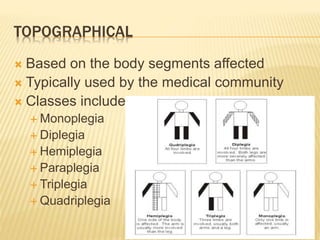
 Based on the body segments affected
 Typically used by the medical community
 Classes include:
 Monoplegia
 Diplegia
 Hemiplegia
 Paraplegia
 Triplegia
 Quadriplegia
NEUROMOTOR
 American Academy for
CP and Developmental
Medicine
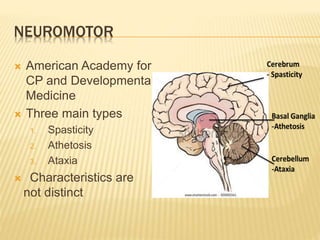
 Three main types
1. Spasticity
2. Athetosis
3. Ataxia
 Characteristics are
not distinct
NEUROMOTOR: SPASTICITY
 Results from damage to motor areas of the
cerebrum
 Characterized by increased muscle tone
 Strong exaggerated muscle contractions are
common
 Associated with hyperactive stretch reflex
NEUROMOTOR: ATHETOSIS
 Caused by damage to the basal ganglia
 Results in an overflow of motor impulses to
the muscles
 Also known as dyskinetic CP
 Muscle tone fluctuates, especially in muscles
that control the head and neck.
 Lordotic standing posture
 Aphasia and articulation difficulties
NEUROMOTOR: ATAXIA
 Caused by damage to the cerebellum
 Hypotonicity
 Usually not diagnosed until child attempts to
walk
 Wide-based gait is typical
 Nystagmus is also commonly observed
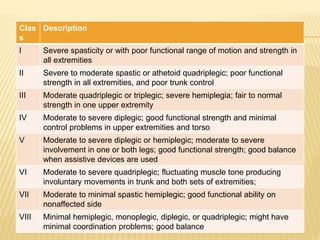
FUNCTIONAL
 Used in the field of education
 Based on ability due to the severity of the
disability
 Important implications for physical education
and sport
Clas
s
Description
I Severe spasticity or with poor functional range of motion and strength in
all extremities
II Severe to moderate spastic or athetoid quadriplegic; poor functional
strength in all extremities, and poor trunk control
III Moderate quadriplegic or triplegic; severe hemiplegia; fair to normal
strength in one upper extremity
IV Moderate to severe diplegic; good functional strength and minimal
control problems in upper extremities and torso
V Moderate to severe diplegic or hemiplegic; moderate to severe
involvement in one or both legs; good functional strength; good balance
when assistive devices are used
VI Moderate to severe quadriplegic; fluctuating muscle tone producing
involuntary movements in trunk and both sets of extremities;
VII Moderate to minimal spastic hemiplegic; good functional ability on
nonaffected side
VIII Minimal hemiplegic, monoplegic, diplegic, or quadriplegic; might have
minimal coordination problems; good balance
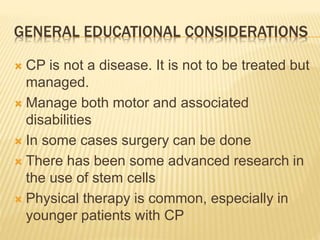
GENERAL EDUCATIONAL CONSIDERATIONS
 CP is not a disease. It is not to be treated but
managed.
 Manage both motor and associated
disabilities
 In some cases surgery can be done
 There has been some advanced research in
the use of stem cells
 Physical therapy is common, especially in
younger patients with CP
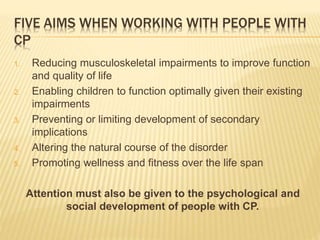
FIVE AIMS WHEN WORKING WITH PEOPLE WITH
CP
1. Reducing musculoskeletal impairments to improve function
and quality of life
2. Enabling children to function optimally given their existing
impairments
3. Preventing or limiting development of secondary
implications
4. Altering the natural course of the disorder
5. Promoting wellness and fitness over the life span
Attention must also be given to the psychological and
social development of people with CP.

Cerebral Palsy Presentation

  • 1.
    CEREBRAL PALSY, STROKE,AND TRAUMATIC BRAIN INJURY Chapter 14
  • 2.
    INTRODUCTION  Cerebral Palsy,Stroke, and Traumatic Brain Injury  Different causes, similar results: brain damage  Still encouraged to participate in physical activity
  • 3.
    CEREBRAL PALSY  Refersto a group of permanent disabling symptoms resulting from damage to the motor control areas of the brain  Nonprogressive  Originates before, during, or shortly after birth  Symptoms vary widely, ranging from severe to mild  Other impairments and secondary medical complications
  • 4.
    CAUSES OF CP Pre-natal, Natal, and Post-natal causes  Rubella, Rh incompatibility, prematurity, birth trauma, anoxia, meningitis, poisoning, brain hemorrhages or tumors, and other forms of brain injury  Results from causal pathways rather than any single factor
  • 5.
    INCIDENCE  Estimated 800,000children and adults in the US with CP  Only about 10% of those cases are acquired  The number of new cases has increased by 25% over the last decade  8,000 babies and infants diagnosed each year  1,200 to 1,500 preschool aged
  • 6.
    CLASSIFICATIONS  The degreeand location of the brain damage affects the symptoms that are displayed  Because of the variety of symptoms, classification systems have been put in place. 1. Topographical 2. Neuromotor 3. Functional
  • 7.
    TOPOGRAPHICAL  Based onthe body segments affected  Typically used by the medical community  Classes include:  Monoplegia  Diplegia  Hemiplegia  Paraplegia  Triplegia  Quadriplegia
  • 8.
    NEUROMOTOR  American Academyfor CP and Developmental Medicine  Three main types 1. Spasticity 2. Athetosis 3. Ataxia  Characteristics are not distinct
  • 9.
    NEUROMOTOR: SPASTICITY  Resultsfrom damage to motor areas of the cerebrum  Characterized by increased muscle tone  Strong exaggerated muscle contractions are common  Associated with hyperactive stretch reflex
  • 10.
    NEUROMOTOR: ATHETOSIS  Causedby damage to the basal ganglia  Results in an overflow of motor impulses to the muscles  Also known as dyskinetic CP  Muscle tone fluctuates, especially in muscles that control the head and neck.  Lordotic standing posture  Aphasia and articulation difficulties
  • 11.
    NEUROMOTOR: ATAXIA  Causedby damage to the cerebellum  Hypotonicity  Usually not diagnosed until child attempts to walk  Wide-based gait is typical  Nystagmus is also commonly observed
  • 12.
    FUNCTIONAL  Used inthe field of education  Based on ability due to the severity of the disability  Important implications for physical education and sport
  • 13.
    Clas s Description I Severe spasticityor with poor functional range of motion and strength in all extremities II Severe to moderate spastic or athetoid quadriplegic; poor functional strength in all extremities, and poor trunk control III Moderate quadriplegic or triplegic; severe hemiplegia; fair to normal strength in one upper extremity IV Moderate to severe diplegic; good functional strength and minimal control problems in upper extremities and torso V Moderate to severe diplegic or hemiplegic; moderate to severe involvement in one or both legs; good functional strength; good balance when assistive devices are used VI Moderate to severe quadriplegic; fluctuating muscle tone producing involuntary movements in trunk and both sets of extremities; VII Moderate to minimal spastic hemiplegic; good functional ability on nonaffected side VIII Minimal hemiplegic, monoplegic, diplegic, or quadriplegic; might have minimal coordination problems; good balance
  • 14.
    GENERAL EDUCATIONAL CONSIDERATIONS CP is not a disease. It is not to be treated but managed.  Manage both motor and associated disabilities  In some cases surgery can be done  There has been some advanced research in the use of stem cells  Physical therapy is common, especially in younger patients with CP
  • 15.
    FIVE AIMS WHENWORKING WITH PEOPLE WITH CP 1. Reducing musculoskeletal impairments to improve function and quality of life 2. Enabling children to function optimally given their existing impairments 3. Preventing or limiting development of secondary implications 4. Altering the natural course of the disorder 5. Promoting wellness and fitness over the life span Attention must also be given to the psychological and social development of people with CP.