CEREBRAL DYSFUNCTION IN
CRITICALLY ILL PATIENTS
REZA NEJAT, M. D.,
ANESTHESIOLOGIST, FCCM,
FORMER ASSISTANT PROFESSOR, SBMU,
BAZARGANAN HOSPITAL,
TEHRAN, IRAN
CEREBRAL DYSFUNCTION IN CRITICALLY ILL
PATIENTS
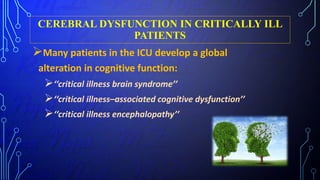
Many patients in the ICU develop a global
alteration in cognitive function:
‘‘critical illness brain syndrome’’
‘‘critical illness–associated cognitive dysfunction’’
‘‘critical illness encephalopathy’’
CEREBRAL DYSFUNCTION IN CRITICALLY ILL
PATIENTS
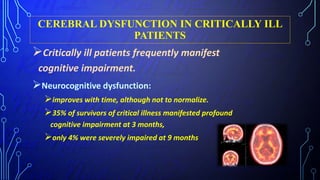
Critically ill patients frequently manifest
cognitive impairment.
Neurocognitive dysfunction:
improves with time, although not to normalize.
35% of survivors of critical illness manifested profound
cognitive impairment at 3 months,
only 4% were severely impaired at 9 months
CEREBRAL DYSFUNCTION IN CRITICALLY ILL
PATIENTS
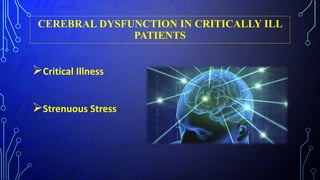
Critical Illness
Strenuous Stress
CEREBRAL DYSFUNCTION IN CRITICALLY ILL
PATIENTS
Stress Response:
Tries to maintain homeostasis in
the face of derangement of
physiological phenomena:
Injury, trauma, ….
CEREBRAL DYSFUNCTION IN CRITICALLY ILL
PATIENTS
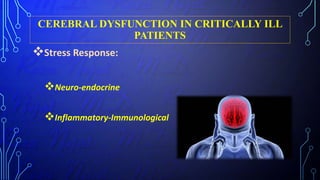
Stress Response:
Neuro-endocrine
Inflammatory-Immunological
CEREBRAL DYSFUNCTION IN CRITICALLY ILL
PATIENTS
Stress Response:
Various degree of illness severity
HPA axis?
Symapatho-Adrenal System
In critically ill patients:
High and Low ACTH,
High Glucocorticoids:
Functional deficiency
CEREBRAL DYSFUNCTION IN CRITICALLY ILL
PATIENTS
Stress Response:
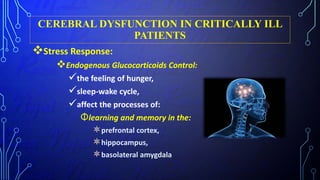
Endogenous Glucocorticoids Control:
the feeling of hunger,
sleep-wake cycle,
affect the processes of:
Φlearning and memory in the:
prefrontal cortex,
hippocampus,
basolateral amygdala
CEREBRAL DYSFUNCTION IN CRITICALLY ILL
PATIENTS
 High levels of circulating glucocorticoids:
 allow dopamine to suppress the function
of hypothalamic ANF neurons through D2
receptor activation.
Endocrinology. 1995 Dec;136(12):5570-6
 renders dopamine to act as a potent
suppressor of neurons both through D5
and D2 receptors
Mol Psychiatry. 2000 May;5(3):332-6
CEREBRAL DYSFUNCTION IN CRITICALLY ILL
PATIENTS
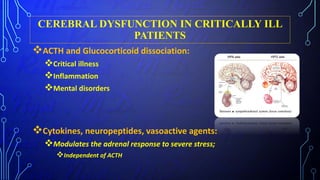
ACTH and Glucocorticoid dissociation:
Critical illness
Inflammation
Mental disorders
Cytokines, neuropeptides, vasoactive agents:
Modulates the adrenal response to severe stress;
Independent of ACTH
CEREBRAL DYSFUNCTION IN CRITICALLY ILL
PATIENTS
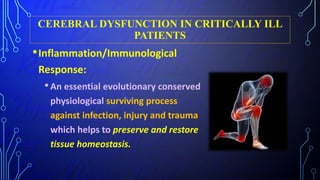
•Inflammation/Immunological
Response:
•An essential evolutionary conserved
physiological surviving process
against infection, injury and trauma
which helps to preserve and restore
tissue homeostasis.
CEREBRAL DYSFUNCTION IN CRITICALLY ILL
PATIENTS
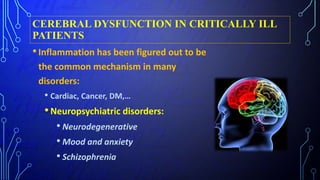
•Inflammation has been figured out to be
the common mechanism in many
disorders:
• Cardiac, Cancer, DM,…
•Neuropsychiatric disorders:
• Neurodegenerative
• Mood and anxiety
• Schizophrenia
CEREBRAL DYSFUNCTION IN CRITICALLY ILL
PATIENTS
•Inflammation/Immunological
Response:
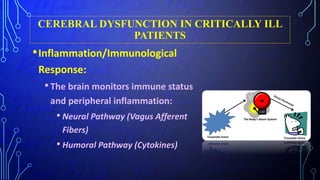
•The brain monitors immune status
and peripheral inflammation:
• Neural Pathway (Vagus Afferent
Fibers)
• Humoral Pathway (Cytokines)
CEREBRAL DYSFUNCTION IN CRITICALLY ILL
PATIENTS
•Inflammation:
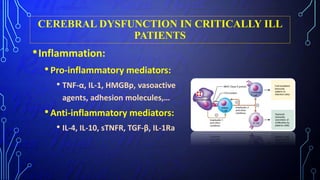
•Pro-inflammatory mediators:
• TNF-α, IL-1, HMGBp, vasoactive
agents, adhesion molecules,…
•Anti-inflammatory mediators:
• IL-4, IL-10, sTNFR, TGF-β, IL-1Ra
CEREBRAL DYSFUNCTION IN CRITICALLY ILL
PATIENTS
•Inflammation:
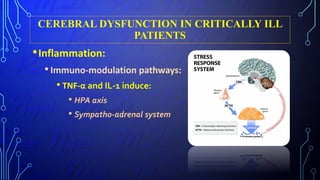
•Immuno-modulation pathways:
• TNF-α and IL-1 induce:
• HPA axis
• Sympatho-adrenal system
CEREBRAL DYSFUNCTION IN CRITICALLY ILL
PATIENTS
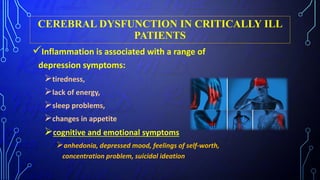
Inflammation is associated with a range of
depression symptoms:
tiredness,
lack of energy,
sleep problems,
changes in appetite
cognitive and emotional symptoms
anhedonia, depressed mood, feelings of self-worth,
concentration problem, suicidal ideation
CEREBRAL DYSFUNCTION IN CRITICALLY ILL
PATIENTS
Patients with sepsis may acquire
neurological damage during hospitalization
through:
Cerebral ischemia,
Metabolic derangements,
Neuro-inflammation
Sepsis:
an independent risk factor of stress disorders
after critical illness
CEREBRAL DYSFUNCTION IN CRITICALLY ILL
PATIENTS
•Inflammatory signaling:
• a contributor to the short- and
long-term modulation of
mood and cognition
CEREBRAL DYSFUNCTION IN CRITICALLY ILL
PATIENTS
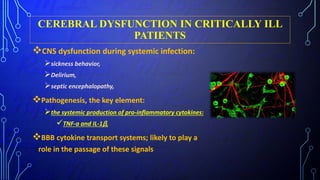
CNS dysfunction during systemic infection:
sickness behavior,
Delirium,
septic encephalopathy,
Pathogenesis, the key element:
the systemic production of pro-inflammatory cytokines:
TNF-a and IL-1β,
BBB cytokine transport systems; likely to play a
role in the passage of these signals
CEREBRAL DYSFUNCTION IN CRITICALLY ILL
PATIENTS
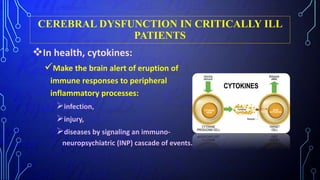
In health, cytokines:
Make the brain alert of eruption of
immune responses to peripheral
inflammatory processes:
infection,
injury,
diseases by signaling an immuno-
neuropsychiatric (INP) cascade of events.
CEREBRAL DYSFUNCTION IN CRITICALLY ILL
PATIENTS
• Cytokines participate in the modulation of the
Central Nervous System (CNS) physiology and
behavior:
• cognition
• memory modulation
• temperature regulation,
• appetite,
• drinking,
• analgesia,
• release of hormones from the hypothalamus,
• locomotor activity
CEREBRAL DYSFUNCTION IN CRITICALLY ILL
PATIENTS
•Activating inflammatory response may
provoke neuropsychiatric disorders:
• IFN-α (in hepatitis C and cancer)
• Depression and anxiety,
• ameliorated with SSRI.
• Administration of endotoxin or typhoid
vaccination to healthy volunteers:
• symptoms of depression and anxiety
CEREBRAL DYSFUNCTION IN CRITICALLY ILL
PATIENTS
•a subpopulation of patients with major
depression exhibit features of:
• ⇈ inflammatory cytokines:
• Blood and CSF:
• (IL-6, TNF-α, CRP, among the others)
• ⇈ blood level of :
• Acute phase reactant,
• Chemokines
• Adhesion molecules
CEREBRAL DYSFUNCTION IN CRITICALLY ILL
PATIENTS
•⇈ inflammatory mediators was shown in:
•PTSD (NF-κB)
•Panic attacks
•Obsessive-compulsive disorders
•Anxiety-related personality
dimensions
CEREBRAL DYSFUNCTION IN CRITICALLY ILL
PATIENTS
• Inhibition of inflammatory cytokines
ameliorates depression and anxiety:
• Etanercept (anti-cytokine)
• improvement of depressive symptoms
• Infliximab (anti-cytokine)
• Reducing depression and anxiety in patients with
high CRP
• acetylsalicylic acid (anti-inflammatory agents)
• antidepressant efficacy
CEREBRAL DYSFUNCTION IN CRITICALLY ILL
PATIENTS
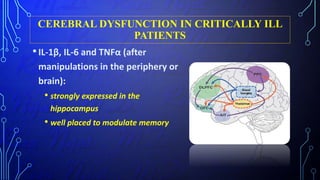
•IL-1β, IL-6 and TNFα (after
manipulations in the periphery or
brain):
• strongly expressed in the
hippocampus
• well placed to modulate memory
CEREBRAL DYSFUNCTION IN CRITICALLY ILL
PATIENTS
• IL-1β:
• is required for hippocampal dependent
plasticity and learning
• chronic overexpression in the hippocampus:
• leads to impairments of spatial memory and
context fear conditioning! (age dependent)
• application: (age dependent)
• impairs induction and maintenance of LTP
• induces deficit in hippocampal memory
processes.
CEREBRAL DYSFUNCTION IN CRITICALLY ILL
PATIENTS
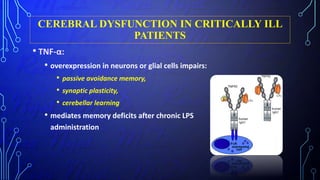
• TNF-α:
• overexpression in neurons or glial cells impairs:
• passive avoidance memory,
• synaptic plasticity,
• cerebellar learning
• mediates memory deficits after chronic LPS
administration
CEREBRAL DYSFUNCTION IN CRITICALLY ILL
PATIENTS
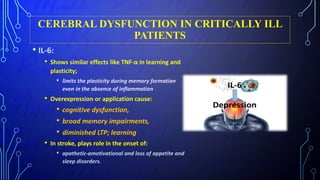
• IL-6:
• Shows similar effects like TNF-α in learning and
plasticity;
• limits the plasticity during memory formation
even in the absence of inflammation
• Overexpression or application cause:
• cognitive dysfunction,
• broad memory impairments,
• diminished LTP; learning
• In stroke, plays role in the onset of:
• apathetic-amotivational and loss of appetite and
sleep disorders.
CEREBRAL DYSFUNCTION IN CRITICALLY ILL
PATIENTS
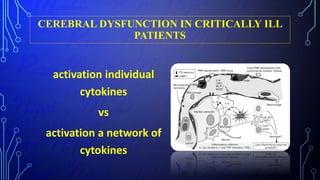
activation individual
cytokines
vs
activation a network of
cytokines
CEREBRAL DYSFUNCTION IN CRITICALLY ILL
PATIENTS
•IL-1β, TNF-α, and IL-6:
• exert their effects directly and at the same
time indirectly via network of inflammatory
signaling:
• IL-1β:
• does not increase in isolation,
• leads to increases in TNFα, IL-6, IL-1 family
proteins, and cytokine receptors across multiple
brain regions
• TNF-α or IL-6 may change the expression of
other inflammatory cytokines
CEREBRAL DYSFUNCTION IN CRITICALLY ILL
PATIENTS
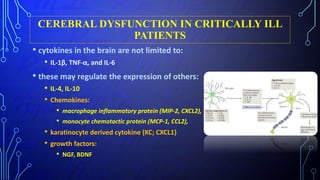
• cytokines in the brain are not limited to:
• IL-1β, TNF-α, and IL-6
• these may regulate the expression of others:
• IL-4, IL-10
• Chemokines:
• macrophage inflammatory protein (MIP-2, CXCL2),
• monocyte chemotactic protein (MCP-1, CCL2),
• karatinocyte derived cytokine (KC; CXCL1)
• growth factors:
• NGF, BDNF
CEREBRAL DYSFUNCTION IN CRITICALLY ILL
PATIENTS
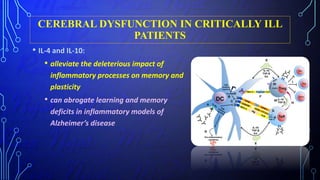
• IL-4 and IL-10:
• alleviate the deleterious impact of
inflammatory processes on memory and
plasticity
• can abrogate learning and memory
deficits in inflammatory models of
Alzheimer’s disease
CEREBRAL DYSFUNCTION IN CRITICALLY ILL
PATIENTS
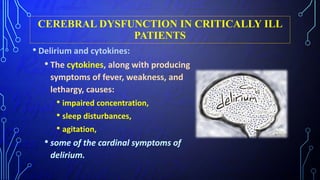
• Delirium and cytokines:
• The cytokines, along with producing
symptoms of fever, weakness, and
lethargy, causes:
• impaired concentration,
• sleep disturbances,
• agitation,
• some of the cardinal symptoms of
delirium.
CEREBRAL DYSFUNCTION IN CRITICALLY ILL
PATIENTS
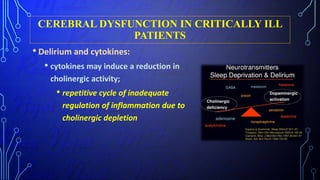
• Delirium and cytokines:
• cytokines may induce a reduction in
cholinergic activity;
• repetitive cycle of inadequate
regulation of inflammation due to
cholinergic depletion
CEREBRAL DYSFUNCTION IN CRITICALLY ILL
PATIENTS
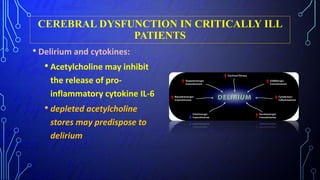
• Delirium and cytokines:
• Acetylcholine may inhibit
the release of pro-
inflammatory cytokine IL-6
• depleted acetylcholine
stores may predispose to
delirium
CEREBRAL DYSFUNCTION IN CRITICALLY ILL
PATIENTS
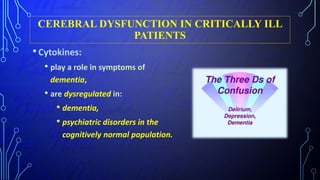
•Cytokines:
• play a role in symptoms of
dementia,
• are dysregulated in:
• dementia,
• psychiatric disorders in the
cognitively normal population.
CEREBRAL DYSFUNCTION IN CRITICALLY ILL
PATIENTS
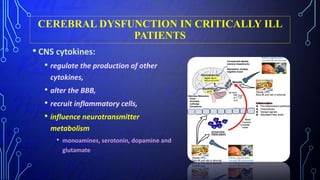
• CNS cytokines:
• regulate the production of other
cytokines,
• alter the BBB,
• recruit inflammatory cells,
• influence neurotransmitter
metabolism
• monoamines, serotonin, dopamine and
glutamate
CEREBRAL DYSFUNCTION IN CRITICALLY ILL
PATIENTS
•Dopamine:
• big role in motivation and reward.
•Serotonin:
• (low levels) believed to be related to
depression,
• but it is really not the case:
• SSRIs have an anti-inflammatory effect.
CEREBRAL DYSFUNCTION IN CRITICALLY ILL
PATIENTS
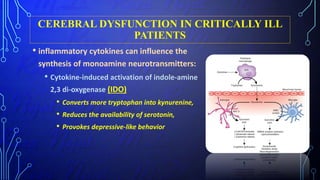
• inflammatory cytokines can influence the
synthesis of monoamine neurotransmitters:
• Cytokine-induced activation of indole-amine
2,3 di-oxygenase (IDO)
• Converts more tryptophan into kynurenine,
• Reduces the availability of serotonin,
• Provokes depressive-like behavior
CEREBRAL DYSFUNCTION IN CRITICALLY ILL
PATIENTS
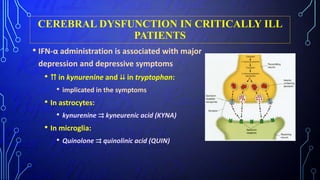
• IFN-α administration is associated with major
depression and depressive symptoms
• ⇈ in kynurenine and ⇊ in tryptophan:
• implicated in the symptoms
• In astrocytes:
• kynurenine ⇉ kyneurenic acid (KYNA)
• In microglia:
• Quinolone ⇉ quinolinic acid (QUIN)
CEREBRAL DYSFUNCTION IN CRITICALLY ILL
PATIENTS
• IFN-α administration:
• associated with major depression and
depressive symptoms
• KYNA and QUIN level in CSF increases in
patients receiving IFN- α
• QUIN level in CSF correlates significantly with
depressive symptoms
CEREBRAL DYSFUNCTION IN CRITICALLY ILL
PATIENTS
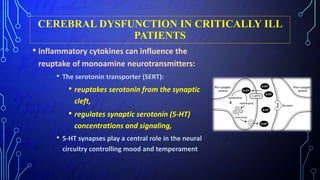
• inflammatory cytokines can influence the
reuptake of monoamine neurotransmitters:
• The serotonin transporter (SERT):
• reuptakes serotonin from the synaptic
cleft,
• regulates synaptic serotonin (5-HT)
concentrations and signaling,
• 5-HT synapses play a central role in the neural
circuitry controlling mood and temperament
CEREBRAL DYSFUNCTION IN CRITICALLY ILL
PATIENTS
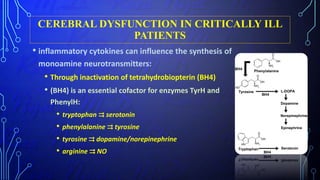
• inflammatory cytokines can influence the synthesis of
monoamine neurotransmitters:
• Through inactivation of tetrahydrobiopterin (BH4)
• (BH4) is an essential cofactor for enzymes TyrH and
PhenylH:
• tryptophan ⇉ serotonin
• phenylalanine ⇉ tyrosine
• tyrosine ⇉ dopamine/norepinephrine
• arginine ⇉ NO
CEREBRAL DYSFUNCTION IN CRITICALLY ILL
PATIENTS
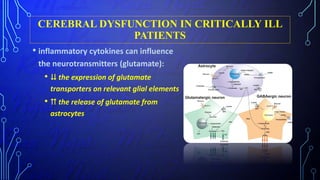
• inflammatory cytokines can influence
the neurotransmitters (glutamate):
• ⇊ the expression of glutamate
transporters on relevant glial elements
• ⇈ the release of glutamate from
astrocytes
CEREBRAL DYSFUNCTION IN CRITICALLY ILL
PATIENTS
CEREBRAL DYSFUNCTION IN CRITICALLY ILL
PATIENTS
• ANY QUESTION?
• rezanejat.com
• icuaticu.com
• 2icuedu.com
• rezanejat@yahoo.com

Cerebral dysfunction21

  • 1.
    CEREBRAL DYSFUNCTION IN CRITICALLYILL PATIENTS REZA NEJAT, M. D., ANESTHESIOLOGIST, FCCM, FORMER ASSISTANT PROFESSOR, SBMU, BAZARGANAN HOSPITAL, TEHRAN, IRAN
  • 2.
    CEREBRAL DYSFUNCTION INCRITICALLY ILL PATIENTS Many patients in the ICU develop a global alteration in cognitive function: ‘‘critical illness brain syndrome’’ ‘‘critical illness–associated cognitive dysfunction’’ ‘‘critical illness encephalopathy’’
  • 3.
    CEREBRAL DYSFUNCTION INCRITICALLY ILL PATIENTS Critically ill patients frequently manifest cognitive impairment. Neurocognitive dysfunction: improves with time, although not to normalize. 35% of survivors of critical illness manifested profound cognitive impairment at 3 months, only 4% were severely impaired at 9 months
  • 4.
    CEREBRAL DYSFUNCTION INCRITICALLY ILL PATIENTS Critical Illness Strenuous Stress
  • 5.
    CEREBRAL DYSFUNCTION INCRITICALLY ILL PATIENTS Stress Response: Tries to maintain homeostasis in the face of derangement of physiological phenomena: Injury, trauma, ….
  • 6.
    CEREBRAL DYSFUNCTION INCRITICALLY ILL PATIENTS Stress Response: Neuro-endocrine Inflammatory-Immunological
  • 7.
    CEREBRAL DYSFUNCTION INCRITICALLY ILL PATIENTS Stress Response: Various degree of illness severity HPA axis? Symapatho-Adrenal System In critically ill patients: High and Low ACTH, High Glucocorticoids: Functional deficiency
  • 8.
    CEREBRAL DYSFUNCTION INCRITICALLY ILL PATIENTS Stress Response: Endogenous Glucocorticoids Control: the feeling of hunger, sleep-wake cycle, affect the processes of: Φlearning and memory in the: prefrontal cortex, hippocampus, basolateral amygdala
  • 9.
    CEREBRAL DYSFUNCTION INCRITICALLY ILL PATIENTS  High levels of circulating glucocorticoids:  allow dopamine to suppress the function of hypothalamic ANF neurons through D2 receptor activation. Endocrinology. 1995 Dec;136(12):5570-6  renders dopamine to act as a potent suppressor of neurons both through D5 and D2 receptors Mol Psychiatry. 2000 May;5(3):332-6
  • 10.
    CEREBRAL DYSFUNCTION INCRITICALLY ILL PATIENTS ACTH and Glucocorticoid dissociation: Critical illness Inflammation Mental disorders Cytokines, neuropeptides, vasoactive agents: Modulates the adrenal response to severe stress; Independent of ACTH
  • 11.
    CEREBRAL DYSFUNCTION INCRITICALLY ILL PATIENTS •Inflammation/Immunological Response: •An essential evolutionary conserved physiological surviving process against infection, injury and trauma which helps to preserve and restore tissue homeostasis.
  • 12.
    CEREBRAL DYSFUNCTION INCRITICALLY ILL PATIENTS •Inflammation has been figured out to be the common mechanism in many disorders: • Cardiac, Cancer, DM,… •Neuropsychiatric disorders: • Neurodegenerative • Mood and anxiety • Schizophrenia
  • 13.
    CEREBRAL DYSFUNCTION INCRITICALLY ILL PATIENTS •Inflammation/Immunological Response: •The brain monitors immune status and peripheral inflammation: • Neural Pathway (Vagus Afferent Fibers) • Humoral Pathway (Cytokines)
  • 14.
    CEREBRAL DYSFUNCTION INCRITICALLY ILL PATIENTS •Inflammation: •Pro-inflammatory mediators: • TNF-α, IL-1, HMGBp, vasoactive agents, adhesion molecules,… •Anti-inflammatory mediators: • IL-4, IL-10, sTNFR, TGF-β, IL-1Ra
  • 15.
    CEREBRAL DYSFUNCTION INCRITICALLY ILL PATIENTS •Inflammation: •Immuno-modulation pathways: • TNF-α and IL-1 induce: • HPA axis • Sympatho-adrenal system
  • 16.
    CEREBRAL DYSFUNCTION INCRITICALLY ILL PATIENTS Inflammation is associated with a range of depression symptoms: tiredness, lack of energy, sleep problems, changes in appetite cognitive and emotional symptoms anhedonia, depressed mood, feelings of self-worth, concentration problem, suicidal ideation
  • 17.
    CEREBRAL DYSFUNCTION INCRITICALLY ILL PATIENTS Patients with sepsis may acquire neurological damage during hospitalization through: Cerebral ischemia, Metabolic derangements, Neuro-inflammation Sepsis: an independent risk factor of stress disorders after critical illness
  • 18.
    CEREBRAL DYSFUNCTION INCRITICALLY ILL PATIENTS •Inflammatory signaling: • a contributor to the short- and long-term modulation of mood and cognition
  • 19.
    CEREBRAL DYSFUNCTION INCRITICALLY ILL PATIENTS CNS dysfunction during systemic infection: sickness behavior, Delirium, septic encephalopathy, Pathogenesis, the key element: the systemic production of pro-inflammatory cytokines: TNF-a and IL-1β, BBB cytokine transport systems; likely to play a role in the passage of these signals
  • 20.
    CEREBRAL DYSFUNCTION INCRITICALLY ILL PATIENTS In health, cytokines: Make the brain alert of eruption of immune responses to peripheral inflammatory processes: infection, injury, diseases by signaling an immuno- neuropsychiatric (INP) cascade of events.
  • 21.
    CEREBRAL DYSFUNCTION INCRITICALLY ILL PATIENTS • Cytokines participate in the modulation of the Central Nervous System (CNS) physiology and behavior: • cognition • memory modulation • temperature regulation, • appetite, • drinking, • analgesia, • release of hormones from the hypothalamus, • locomotor activity
  • 22.
    CEREBRAL DYSFUNCTION INCRITICALLY ILL PATIENTS •Activating inflammatory response may provoke neuropsychiatric disorders: • IFN-α (in hepatitis C and cancer) • Depression and anxiety, • ameliorated with SSRI. • Administration of endotoxin or typhoid vaccination to healthy volunteers: • symptoms of depression and anxiety
  • 23.
    CEREBRAL DYSFUNCTION INCRITICALLY ILL PATIENTS •a subpopulation of patients with major depression exhibit features of: • ⇈ inflammatory cytokines: • Blood and CSF: • (IL-6, TNF-α, CRP, among the others) • ⇈ blood level of : • Acute phase reactant, • Chemokines • Adhesion molecules
  • 24.
    CEREBRAL DYSFUNCTION INCRITICALLY ILL PATIENTS •⇈ inflammatory mediators was shown in: •PTSD (NF-κB) •Panic attacks •Obsessive-compulsive disorders •Anxiety-related personality dimensions
  • 25.
    CEREBRAL DYSFUNCTION INCRITICALLY ILL PATIENTS • Inhibition of inflammatory cytokines ameliorates depression and anxiety: • Etanercept (anti-cytokine) • improvement of depressive symptoms • Infliximab (anti-cytokine) • Reducing depression and anxiety in patients with high CRP • acetylsalicylic acid (anti-inflammatory agents) • antidepressant efficacy
  • 26.
    CEREBRAL DYSFUNCTION INCRITICALLY ILL PATIENTS •IL-1β, IL-6 and TNFα (after manipulations in the periphery or brain): • strongly expressed in the hippocampus • well placed to modulate memory
  • 27.
    CEREBRAL DYSFUNCTION INCRITICALLY ILL PATIENTS • IL-1β: • is required for hippocampal dependent plasticity and learning • chronic overexpression in the hippocampus: • leads to impairments of spatial memory and context fear conditioning! (age dependent) • application: (age dependent) • impairs induction and maintenance of LTP • induces deficit in hippocampal memory processes.
  • 28.
    CEREBRAL DYSFUNCTION INCRITICALLY ILL PATIENTS • TNF-α: • overexpression in neurons or glial cells impairs: • passive avoidance memory, • synaptic plasticity, • cerebellar learning • mediates memory deficits after chronic LPS administration
  • 29.
    CEREBRAL DYSFUNCTION INCRITICALLY ILL PATIENTS • IL-6: • Shows similar effects like TNF-α in learning and plasticity; • limits the plasticity during memory formation even in the absence of inflammation • Overexpression or application cause: • cognitive dysfunction, • broad memory impairments, • diminished LTP; learning • In stroke, plays role in the onset of: • apathetic-amotivational and loss of appetite and sleep disorders.
  • 30.
    CEREBRAL DYSFUNCTION INCRITICALLY ILL PATIENTS activation individual cytokines vs activation a network of cytokines
  • 31.
    CEREBRAL DYSFUNCTION INCRITICALLY ILL PATIENTS •IL-1β, TNF-α, and IL-6: • exert their effects directly and at the same time indirectly via network of inflammatory signaling: • IL-1β: • does not increase in isolation, • leads to increases in TNFα, IL-6, IL-1 family proteins, and cytokine receptors across multiple brain regions • TNF-α or IL-6 may change the expression of other inflammatory cytokines
  • 32.
    CEREBRAL DYSFUNCTION INCRITICALLY ILL PATIENTS • cytokines in the brain are not limited to: • IL-1β, TNF-α, and IL-6 • these may regulate the expression of others: • IL-4, IL-10 • Chemokines: • macrophage inflammatory protein (MIP-2, CXCL2), • monocyte chemotactic protein (MCP-1, CCL2), • karatinocyte derived cytokine (KC; CXCL1) • growth factors: • NGF, BDNF
  • 33.
    CEREBRAL DYSFUNCTION INCRITICALLY ILL PATIENTS • IL-4 and IL-10: • alleviate the deleterious impact of inflammatory processes on memory and plasticity • can abrogate learning and memory deficits in inflammatory models of Alzheimer’s disease
  • 34.
    CEREBRAL DYSFUNCTION INCRITICALLY ILL PATIENTS • Delirium and cytokines: • The cytokines, along with producing symptoms of fever, weakness, and lethargy, causes: • impaired concentration, • sleep disturbances, • agitation, • some of the cardinal symptoms of delirium.
  • 35.
    CEREBRAL DYSFUNCTION INCRITICALLY ILL PATIENTS • Delirium and cytokines: • cytokines may induce a reduction in cholinergic activity; • repetitive cycle of inadequate regulation of inflammation due to cholinergic depletion
  • 36.
    CEREBRAL DYSFUNCTION INCRITICALLY ILL PATIENTS • Delirium and cytokines: • Acetylcholine may inhibit the release of pro- inflammatory cytokine IL-6 • depleted acetylcholine stores may predispose to delirium
  • 37.
    CEREBRAL DYSFUNCTION INCRITICALLY ILL PATIENTS •Cytokines: • play a role in symptoms of dementia, • are dysregulated in: • dementia, • psychiatric disorders in the cognitively normal population.
  • 38.
    CEREBRAL DYSFUNCTION INCRITICALLY ILL PATIENTS • CNS cytokines: • regulate the production of other cytokines, • alter the BBB, • recruit inflammatory cells, • influence neurotransmitter metabolism • monoamines, serotonin, dopamine and glutamate
  • 39.
    CEREBRAL DYSFUNCTION INCRITICALLY ILL PATIENTS •Dopamine: • big role in motivation and reward. •Serotonin: • (low levels) believed to be related to depression, • but it is really not the case: • SSRIs have an anti-inflammatory effect.
  • 40.
    CEREBRAL DYSFUNCTION INCRITICALLY ILL PATIENTS • inflammatory cytokines can influence the synthesis of monoamine neurotransmitters: • Cytokine-induced activation of indole-amine 2,3 di-oxygenase (IDO) • Converts more tryptophan into kynurenine, • Reduces the availability of serotonin, • Provokes depressive-like behavior
  • 41.
    CEREBRAL DYSFUNCTION INCRITICALLY ILL PATIENTS • IFN-α administration is associated with major depression and depressive symptoms • ⇈ in kynurenine and ⇊ in tryptophan: • implicated in the symptoms • In astrocytes: • kynurenine ⇉ kyneurenic acid (KYNA) • In microglia: • Quinolone ⇉ quinolinic acid (QUIN)
  • 42.
    CEREBRAL DYSFUNCTION INCRITICALLY ILL PATIENTS • IFN-α administration: • associated with major depression and depressive symptoms • KYNA and QUIN level in CSF increases in patients receiving IFN- α • QUIN level in CSF correlates significantly with depressive symptoms
  • 43.
    CEREBRAL DYSFUNCTION INCRITICALLY ILL PATIENTS • inflammatory cytokines can influence the reuptake of monoamine neurotransmitters: • The serotonin transporter (SERT): • reuptakes serotonin from the synaptic cleft, • regulates synaptic serotonin (5-HT) concentrations and signaling, • 5-HT synapses play a central role in the neural circuitry controlling mood and temperament
  • 44.
    CEREBRAL DYSFUNCTION INCRITICALLY ILL PATIENTS • inflammatory cytokines can influence the synthesis of monoamine neurotransmitters: • Through inactivation of tetrahydrobiopterin (BH4) • (BH4) is an essential cofactor for enzymes TyrH and PhenylH: • tryptophan ⇉ serotonin • phenylalanine ⇉ tyrosine • tyrosine ⇉ dopamine/norepinephrine • arginine ⇉ NO
  • 45.
    CEREBRAL DYSFUNCTION INCRITICALLY ILL PATIENTS • inflammatory cytokines can influence the neurotransmitters (glutamate): • ⇊ the expression of glutamate transporters on relevant glial elements • ⇈ the release of glutamate from astrocytes
  • 46.
    CEREBRAL DYSFUNCTION INCRITICALLY ILL PATIENTS
  • 47.
    CEREBRAL DYSFUNCTION INCRITICALLY ILL PATIENTS • ANY QUESTION? • rezanejat.com • icuaticu.com • 2icuedu.com • rezanejat@yahoo.com