Material Testing Laboratory
Major Instruments
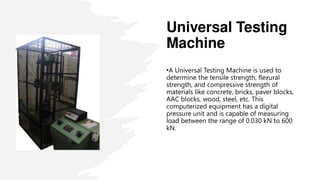
Universal Testing
Machine
•A Universal Testing Machine is used to
determine the tensile strength, flexural
strength, and compressive strength of
materials like concrete, bricks, paver blocks,
AAC blocks, wood, steel, etc. This
computerized equipment has a digital
pressure unit and is capable of measuring
load between the range of 0.030 kN to 600
kN.
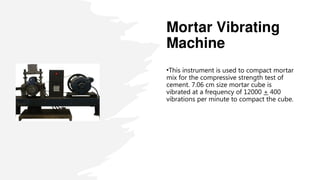
Mortar Vibrating
Machine
•This instrument is used to compact mortar
mix for the compressive strength test of
cement. 7.06 cm size mortar cube is
vibrated at a frequency of 12000 + 400
vibrations per minute to compact the cube.
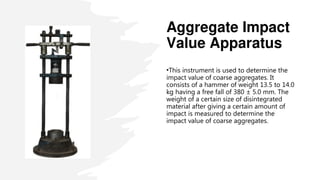
Aggregate Impact
Value Apparatus
•This instrument is used to determine the
impact value of coarse aggregates. It
consists of a hammer of weight 13.5 to 14.0
kg having a free fall of 380 ± 5.0 mm. The
weight of a certain size of disintegrated
material after giving a certain amount of
impact is measured to determine the
impact value of coarse aggregates.
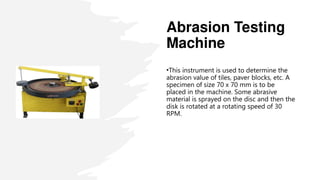
Abrasion Testing
Machine
•This instrument is used to determine the
abrasion value of tiles, paver blocks, etc. A
specimen of size 70 x 70 mm is to be
placed in the machine. Some abrasive
material is sprayed on the disc and then the
disk is rotated at a rotating speed of 30
RPM.
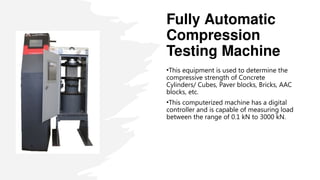
Fully Automatic
Compression
Testing Machine
•This equipment is used to determine the
compressive strength of Concrete
Cylinders/ Cubes, Paver blocks, Bricks, AAC
blocks, etc.
•This computerized machine has a digital
controller and is capable of measuring load
between the range of 0.1 kN to 3000 kN.
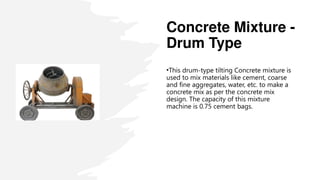
Concrete Mixture -
Drum Type
•This drum-type tilting Concrete mixture is
used to mix materials like cement, coarse
and fine aggregates, water, etc. to make a
concrete mix as per the concrete mix
design. The capacity of this mixture
machine is 0.75 cement bags.
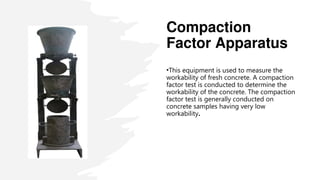
Compaction
Factor Apparatus
•This equipment is used to measure the
workability of fresh concrete. A compaction
factor test is conducted to determine the
workability of the concrete. The compaction
factor test is generally conducted on
concrete samples having very low
workability.
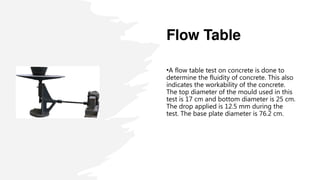
Flow Table
•A flow table test on concrete is done to
determine the fluidity of concrete. This also
indicates the workability of the concrete.
The top diameter of the mould used in this
test is 17 cm and bottom diameter is 25 cm.
The drop applied is 12.5 mm during the
test. The base plate diameter is 76.2 cm.
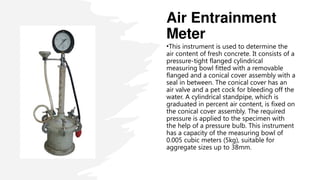
Air Entrainment
Meter
•This instrument is used to determine the
air content of fresh concrete. It consists of a
pressure-tight flanged cylindrical
measuring bowl fitted with a removable
flanged and a conical cover assembly with a
seal in between. The conical cover has an
air valve and a pet cock for bleeding off the
water. A cylindrical standpipe, which is
graduated in percent air content, is fixed on
the conical cover assembly. The required
pressure is applied to the specimen with
the help of a pressure bulb. This instrument
has a capacity of the measuring bowl of
0.005 cubic meters (5kg), suitable for
aggregate sizes up to 38mm.
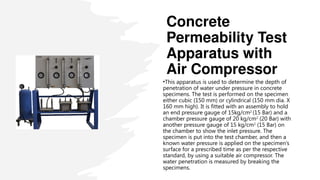
Concrete
Permeability Test
Apparatus with
Air Compressor
•This apparatus is used to determine the depth of
penetration of water under pressure in concrete
specimens. The test is performed on the specimen
either cubic (150 mm) or cylindrical (150 mm dia. X
160 mm high). It is fitted with an assembly to hold
an end pressure gauge of 15kg/cm2
(15 Bar) and a
chamber pressure gauge of 20 kg/cm2
(20 Bar) with
another pressure gauge of 15 kg/cm2
(15 Bar) on
the chamber to show the inlet pressure. The
specimen is put into the test chamber, and then a
known water pressure is applied on the specimen’s
surface for a prescribed time as per the respective
standard, by using a suitable air compressor. The
water penetration is measured by breaking the
specimens.
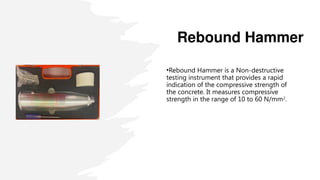
Rebound Hammer
•Rebound Hammer is a Non-destructive
testing instrument that provides a rapid
indication of the compressive strength of
the concrete. It measures compressive
strength in the range of 10 to 60 N/mm2
.
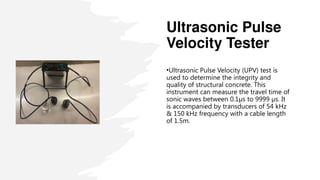
Ultrasonic Pulse
Velocity Tester
•Ultrasonic Pulse Velocity (UPV) test is
used to determine the integrity and
quality of structural concrete. This
instrument can measure the travel time of
sonic waves between 0.1µs to 9999 µs. It
is accompanied by transducers of 54 kHz
& 150 kHz frequency with a cable length
of 1.5m.
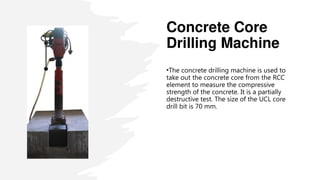
Concrete Core
Drilling Machine
•The concrete drilling machine is used to
take out the concrete core from the RCC
element to measure the compressive
strength of the concrete. It is a partially
destructive test. The size of the UCL core
drill bit is 70 mm.
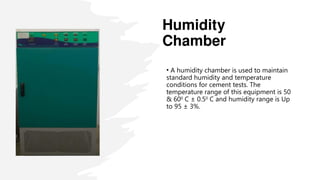
Humidity
Chamber
• A humidity chamber is used to maintain
standard humidity and temperature
conditions for cement tests. The
temperature range of this equipment is 50
& 600
C ± 0.50
C and humidity range is Up
to 95 ± 3%.
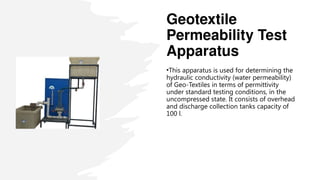
Geotextile
Permeability Test
Apparatus
•This apparatus is used for determining the
hydraulic conductivity (water permeability)
of Geo Textiles in terms of permittivity
‑
under standard testing conditions, in the
uncompressed state. It consists of overhead
and discharge collection tanks capacity of
100 l.

CEPT University | Material Testing Laboratory

  • 1.
  • 2.
    Universal Testing Machine •A UniversalTesting Machine is used to determine the tensile strength, flexural strength, and compressive strength of materials like concrete, bricks, paver blocks, AAC blocks, wood, steel, etc. This computerized equipment has a digital pressure unit and is capable of measuring load between the range of 0.030 kN to 600 kN.
  • 3.
    Mortar Vibrating Machine •This instrumentis used to compact mortar mix for the compressive strength test of cement. 7.06 cm size mortar cube is vibrated at a frequency of 12000 + 400 vibrations per minute to compact the cube.
  • 4.
    Aggregate Impact Value Apparatus •Thisinstrument is used to determine the impact value of coarse aggregates. It consists of a hammer of weight 13.5 to 14.0 kg having a free fall of 380 ± 5.0 mm. The weight of a certain size of disintegrated material after giving a certain amount of impact is measured to determine the impact value of coarse aggregates.
  • 5.
    Abrasion Testing Machine •This instrumentis used to determine the abrasion value of tiles, paver blocks, etc. A specimen of size 70 x 70 mm is to be placed in the machine. Some abrasive material is sprayed on the disc and then the disk is rotated at a rotating speed of 30 RPM.
  • 6.
    Fully Automatic Compression Testing Machine •Thisequipment is used to determine the compressive strength of Concrete Cylinders/ Cubes, Paver blocks, Bricks, AAC blocks, etc. •This computerized machine has a digital controller and is capable of measuring load between the range of 0.1 kN to 3000 kN.
  • 7.
    Concrete Mixture - DrumType •This drum-type tilting Concrete mixture is used to mix materials like cement, coarse and fine aggregates, water, etc. to make a concrete mix as per the concrete mix design. The capacity of this mixture machine is 0.75 cement bags.
  • 8.
    Compaction Factor Apparatus •This equipmentis used to measure the workability of fresh concrete. A compaction factor test is conducted to determine the workability of the concrete. The compaction factor test is generally conducted on concrete samples having very low workability.
  • 9.
    Flow Table •A flowtable test on concrete is done to determine the fluidity of concrete. This also indicates the workability of the concrete. The top diameter of the mould used in this test is 17 cm and bottom diameter is 25 cm. The drop applied is 12.5 mm during the test. The base plate diameter is 76.2 cm.
  • 10.
    Air Entrainment Meter •This instrumentis used to determine the air content of fresh concrete. It consists of a pressure-tight flanged cylindrical measuring bowl fitted with a removable flanged and a conical cover assembly with a seal in between. The conical cover has an air valve and a pet cock for bleeding off the water. A cylindrical standpipe, which is graduated in percent air content, is fixed on the conical cover assembly. The required pressure is applied to the specimen with the help of a pressure bulb. This instrument has a capacity of the measuring bowl of 0.005 cubic meters (5kg), suitable for aggregate sizes up to 38mm.
  • 11.
    Concrete Permeability Test Apparatus with AirCompressor •This apparatus is used to determine the depth of penetration of water under pressure in concrete specimens. The test is performed on the specimen either cubic (150 mm) or cylindrical (150 mm dia. X 160 mm high). It is fitted with an assembly to hold an end pressure gauge of 15kg/cm2 (15 Bar) and a chamber pressure gauge of 20 kg/cm2 (20 Bar) with another pressure gauge of 15 kg/cm2 (15 Bar) on the chamber to show the inlet pressure. The specimen is put into the test chamber, and then a known water pressure is applied on the specimen’s surface for a prescribed time as per the respective standard, by using a suitable air compressor. The water penetration is measured by breaking the specimens.
  • 12.
    Rebound Hammer •Rebound Hammeris a Non-destructive testing instrument that provides a rapid indication of the compressive strength of the concrete. It measures compressive strength in the range of 10 to 60 N/mm2 .
  • 13.
    Ultrasonic Pulse Velocity Tester •UltrasonicPulse Velocity (UPV) test is used to determine the integrity and quality of structural concrete. This instrument can measure the travel time of sonic waves between 0.1µs to 9999 µs. It is accompanied by transducers of 54 kHz & 150 kHz frequency with a cable length of 1.5m.
  • 14.
    Concrete Core Drilling Machine •Theconcrete drilling machine is used to take out the concrete core from the RCC element to measure the compressive strength of the concrete. It is a partially destructive test. The size of the UCL core drill bit is 70 mm.
  • 15.
    Humidity Chamber • A humiditychamber is used to maintain standard humidity and temperature conditions for cement tests. The temperature range of this equipment is 50 & 600 C ± 0.50 C and humidity range is Up to 95 ± 3%.
  • 16.
    Geotextile Permeability Test Apparatus •This apparatusis used for determining the hydraulic conductivity (water permeability) of Geo Textiles in terms of permittivity ‑ under standard testing conditions, in the uncompressed state. It consists of overhead and discharge collection tanks capacity of 100 l.