PRESENTED BY,
Ahmed Abdullah
 A central line (or central venous catheter) is like
an intravenous iv line, But it is much longer than a
regular IV and goes all the way up to a vein near
the heart or just inside the heart.
 A patient can get,
 Fluids, Medicine
 Blood
 It also can be used to draw blood.
 It may stay in place for weeks or months and helps
avoid the need for repeated needle sticks.
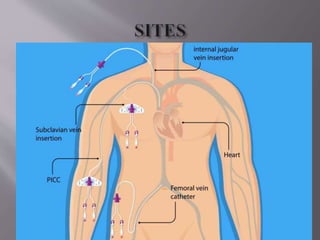
A central venous catheter is a thin, flexible tube
that is inserted into a vein, usually below the right
collarbone, and guided (threaded) into a large
vein above the right side of the heart called the
superior vena cava.
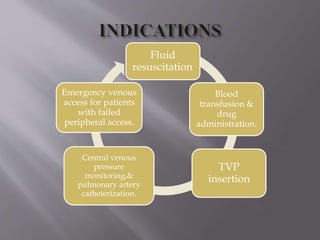
Fluid
resuscitation,
Blood
transfusion &
drug
administration.
TVP
insertion
Central venous
pressure
monitoring,&
pulmonary artery
catheterization.
Emergency venous
access for patients
with failed
peripheral access.
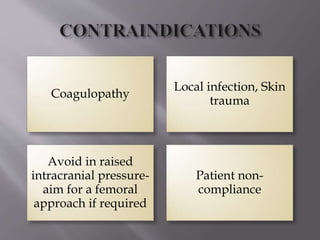
Coagulopathy
Local infection, Skin
trauma
Avoid in raised
intracranial pressure-
aim for a femoral
approach if required
Patient non-
compliance
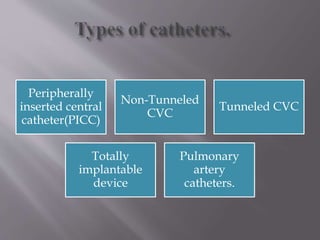
Peripherally
inserted central
catheter(PICC)
Non-Tunneled
CVC
Tunneled CVC
Totally
implantable
device
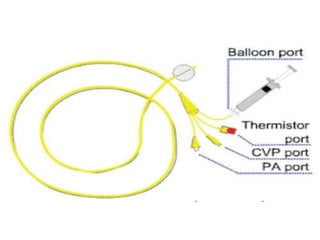
Pulmonary
artery
catheters.
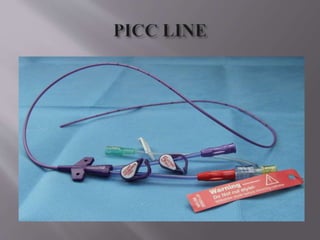
Provides an alternative to subclavian or
jugular vein catheterization. Inserted via the
peripheral vein into the superior vena cava,
usually by way of cephalic or basilic veins.
Preffered if iv therapy is expected to exceed 6
days.
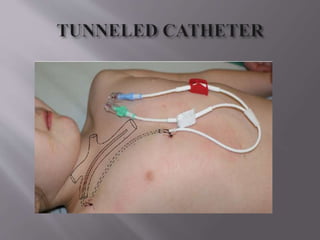
 Surgically implanted CVC with the tunneled
portion under the skin and a Dacron cuff just
inside the exit site.
 The cuff inhibits migration of organisms into
the catheter tract by stimulating growth of
surrounding tissue,thus sealing the catheter
tract used to provide vascular access to patients
who require prolonged iv therapy,home
infusion therapy or hemodialysis.(eg.Hickman,
Quinton catheter).
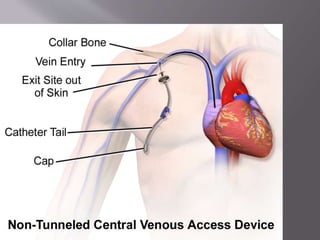
 A non-tunneled central line is a type of short-
term IV catheter& most common type of CVC
also it is accountable for 90% of CLABSI.
 The risk of infection depends on the site of
insertion femoral>internal jugular>subclavian
veins.
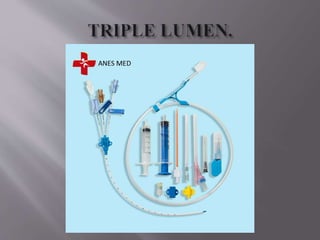
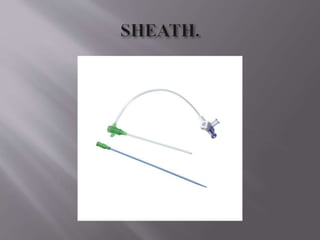
 Examples are PICC line, Sheaths ,Triple lumen
etc.
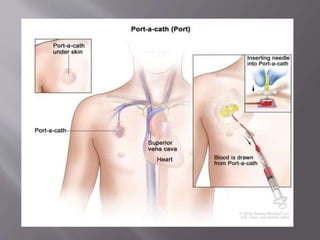
 A subcutaneous port or reservoir with self-
sealing septum is tunneled beneath the skin
and is accessed by a needle through intact
skin(eg. Port-a-cath).
 It has a low rate of infection. Preferred for
patients who require long term, intermittent
vascular access.
 Inserted through a Teflon introducer and
typically remains in place for an average
duration of only 3 days.
 Most catheters are heparin bonded to reduce
catheter thrombosis and microbial adherence to
the catheter.
 Ultrasound
 Sterile trolley
 Sterile field, gloves, gown and mask
 Puncture needle.
 Saline flush
 Chlorhexidine 2% with 70% alcohol
 Lignocaine
 Suture
 Scalpel
 Sterile dressing
 Pressure bag to attach to monitoring
 Transducer
Pre-procedure
 Consent the patient if conscious and it should
include complications.
 Set up sterile trolley
 Position the patient according to site. If it is
neck, head facing away from side of insertion
This ensures maximum venous filling
 Ultrasound if needed.
 A central line insertion bundle must be filled up during
insertion and follow asceptic techniques
 Use the bedside ultrasound to identify the target vein.
 Advanced the needle according to the site.
 Once venous blood is aspirated, stop advancing the
needle and insert guide wire.
 Advance the CVL over the guide wire. Make sure the
distal lumen of the central line is uncapped to facilitate
passage of the guide wire.
 Once the CVL is in place, remove the guide wire. Next,
flush and aspirate all ports with the sterile saline.
 Secure the CVL in place with the suture and place a
sterile dressing over the site.
 Attach central line to pressure bag to allow
CVP monitoring
 Run a blood gas to ensure a venous sample
 Chest x-ray to confirm placement and to check
for pneumothorax
 Clear documentation(CLABSI BUNDLE) of
date of insertion and monitor for infection
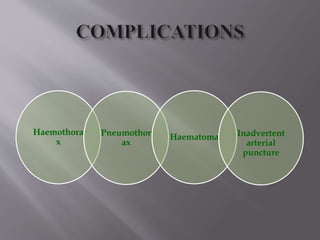
Haemothora
x
Pneumothor
ax
Haematoma Inadvertent
arterial
puncture
1. Hand Hygiene
2. Proper Dressing Change
3. Aseptic technique for accessing
and changing needleless connector
4. Standardize tubing change
5. Daily review of catheter necessity
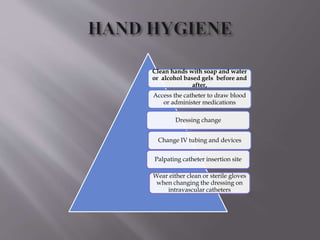
Clean hands with soap and water
or alcohol based gels before and
after,
Access the catheter to draw blood
or administer medications
Dressing change
Change IV tubing and devices
Palpating catheter insertion site
Wear either clean or sterile gloves
when changing the dressing on
intravascular catheters
 2% chlorhexidine with 70% alcohol based preparation
is the preferred agent
 Scrub for 30 seconds using back and forth motion &
allow to dry completely
 Use either sterile gauze or sterile, transparent, semi
permeable dressing to cover the catheter site
 Dressing shall be replaced every 48 hours for gauze
dressing or earlier when catheter/needle is changed, or
when dressing become damp, loosened or visibly
soiled.
 7 days for transparent dressing
Assess the site for redness, tenderness,
pain, swollen, dysfunction, infection or exudate
every shift
 If IV site is judged to be infected,
1.Discontinue the device
2.Swab exudate for culture & sensitivity
3.Notify the physician
4.Document in patient chart
5.Do OVR and refer to IV nurse
 Catheter Hubs and Needless Connectors are
Known sources of CLABSI and recognized
sites of bacterial contamination
 Minimize contamination risk by scrubbing the
access port with an appropriate antiseptic
(chlorhexidine 2%with 70% alcohol) and
accessing the port only with sterile devices.
 Replace administration sets that are
continuously used, including secondary sets no
more frequently than at 96-hour intervals.
 Replace tubing used to administer blood &
blood products every 4 hours.
 TPN/Intra lipids 24 hours of initiating the
infusions.
 Chemotherapy tubing after each
administration.
 Propofol every 6-12 hours & when vial
changed.
 Perform a daily review of the necessity of the
central catheter
 Document that the review has been
performed.
 Remove the catheter if no longer needed
So far we have discussed about,
 central line
 Types
 Indications
 Contra indications
 Complications
 Procedure for insertion and
 Maintenence & care.
 We have understood the necessity of central
line in hospital especially on critical areas. As
same like maintenance and care of this also
taking a huge part to prevent CLABSI.so lets
hands together to promote a infection less
treatments and improve the wellbeing of the
patients.
“PREVENTION IS BETTER
THAN CURE”
 POLICY CODE-IPP-IPC-054
Infection control for intravenous catheters and therapy.
CENTRAL LINE INSERTION AND CARE.pptx

CENTRAL LINE INSERTION AND CARE.pptx

  • 1.
  • 2.
     A centralline (or central venous catheter) is like an intravenous iv line, But it is much longer than a regular IV and goes all the way up to a vein near the heart or just inside the heart.  A patient can get,  Fluids, Medicine  Blood  It also can be used to draw blood.  It may stay in place for weeks or months and helps avoid the need for repeated needle sticks.
  • 3.
    A central venouscatheter is a thin, flexible tube that is inserted into a vein, usually below the right collarbone, and guided (threaded) into a large vein above the right side of the heart called the superior vena cava.
  • 4.
    Fluid resuscitation, Blood transfusion & drug administration. TVP insertion Central venous pressure monitoring,& pulmonaryartery catheterization. Emergency venous access for patients with failed peripheral access.
  • 5.
    Coagulopathy Local infection, Skin trauma Avoidin raised intracranial pressure- aim for a femoral approach if required Patient non- compliance
  • 6.
  • 7.
    Provides an alternativeto subclavian or jugular vein catheterization. Inserted via the peripheral vein into the superior vena cava, usually by way of cephalic or basilic veins. Preffered if iv therapy is expected to exceed 6 days.
  • 9.
     Surgically implantedCVC with the tunneled portion under the skin and a Dacron cuff just inside the exit site.  The cuff inhibits migration of organisms into the catheter tract by stimulating growth of surrounding tissue,thus sealing the catheter tract used to provide vascular access to patients who require prolonged iv therapy,home infusion therapy or hemodialysis.(eg.Hickman, Quinton catheter).
  • 11.
     A non-tunneledcentral line is a type of short- term IV catheter& most common type of CVC also it is accountable for 90% of CLABSI.  The risk of infection depends on the site of insertion femoral>internal jugular>subclavian veins.  Examples are PICC line, Sheaths ,Triple lumen etc.
  • 15.
     A subcutaneousport or reservoir with self- sealing septum is tunneled beneath the skin and is accessed by a needle through intact skin(eg. Port-a-cath).  It has a low rate of infection. Preferred for patients who require long term, intermittent vascular access.
  • 17.
     Inserted througha Teflon introducer and typically remains in place for an average duration of only 3 days.  Most catheters are heparin bonded to reduce catheter thrombosis and microbial adherence to the catheter.
  • 20.
     Ultrasound  Steriletrolley  Sterile field, gloves, gown and mask  Puncture needle.  Saline flush  Chlorhexidine 2% with 70% alcohol  Lignocaine  Suture  Scalpel  Sterile dressing  Pressure bag to attach to monitoring  Transducer
  • 21.
    Pre-procedure  Consent thepatient if conscious and it should include complications.  Set up sterile trolley  Position the patient according to site. If it is neck, head facing away from side of insertion This ensures maximum venous filling  Ultrasound if needed.
  • 22.
     A centralline insertion bundle must be filled up during insertion and follow asceptic techniques  Use the bedside ultrasound to identify the target vein.  Advanced the needle according to the site.  Once venous blood is aspirated, stop advancing the needle and insert guide wire.  Advance the CVL over the guide wire. Make sure the distal lumen of the central line is uncapped to facilitate passage of the guide wire.  Once the CVL is in place, remove the guide wire. Next, flush and aspirate all ports with the sterile saline.  Secure the CVL in place with the suture and place a sterile dressing over the site.
  • 23.
     Attach centralline to pressure bag to allow CVP monitoring  Run a blood gas to ensure a venous sample  Chest x-ray to confirm placement and to check for pneumothorax  Clear documentation(CLABSI BUNDLE) of date of insertion and monitor for infection
  • 24.
  • 25.
    1. Hand Hygiene 2.Proper Dressing Change 3. Aseptic technique for accessing and changing needleless connector 4. Standardize tubing change 5. Daily review of catheter necessity
  • 26.
    Clean hands withsoap and water or alcohol based gels before and after, Access the catheter to draw blood or administer medications Dressing change Change IV tubing and devices Palpating catheter insertion site Wear either clean or sterile gloves when changing the dressing on intravascular catheters
  • 27.
     2% chlorhexidinewith 70% alcohol based preparation is the preferred agent  Scrub for 30 seconds using back and forth motion & allow to dry completely  Use either sterile gauze or sterile, transparent, semi permeable dressing to cover the catheter site  Dressing shall be replaced every 48 hours for gauze dressing or earlier when catheter/needle is changed, or when dressing become damp, loosened or visibly soiled.  7 days for transparent dressing
  • 28.
    Assess the sitefor redness, tenderness, pain, swollen, dysfunction, infection or exudate every shift  If IV site is judged to be infected, 1.Discontinue the device 2.Swab exudate for culture & sensitivity 3.Notify the physician 4.Document in patient chart 5.Do OVR and refer to IV nurse
  • 29.
     Catheter Hubsand Needless Connectors are Known sources of CLABSI and recognized sites of bacterial contamination  Minimize contamination risk by scrubbing the access port with an appropriate antiseptic (chlorhexidine 2%with 70% alcohol) and accessing the port only with sterile devices.
  • 30.
     Replace administrationsets that are continuously used, including secondary sets no more frequently than at 96-hour intervals.  Replace tubing used to administer blood & blood products every 4 hours.  TPN/Intra lipids 24 hours of initiating the infusions.  Chemotherapy tubing after each administration.  Propofol every 6-12 hours & when vial changed.
  • 31.
     Perform adaily review of the necessity of the central catheter  Document that the review has been performed.  Remove the catheter if no longer needed
  • 32.
    So far wehave discussed about,  central line  Types  Indications  Contra indications  Complications  Procedure for insertion and  Maintenence & care.
  • 33.
     We haveunderstood the necessity of central line in hospital especially on critical areas. As same like maintenance and care of this also taking a huge part to prevent CLABSI.so lets hands together to promote a infection less treatments and improve the wellbeing of the patients. “PREVENTION IS BETTER THAN CURE”
  • 34.
     POLICY CODE-IPP-IPC-054 Infectioncontrol for intravenous catheters and therapy.