PANAGDAIT
OBJECTIVES:
At the end of the lesson, the students can;
a.explain the major parts of the cell,
b.describe the structures and functions of
subcellular organelles,
c.Label the parts of cell organelles.
3 major parts of the cell
1. cell membrane- outermost part of the cell, has the role of
protecting the cell and its content.
2. cytoplasm-area of the cell where the organelles are located.
It is the middle layer where most of the activities of the cell
takes place.
3. nucleus- serve as the brain of the cell and directs all of the
cell’s activities.
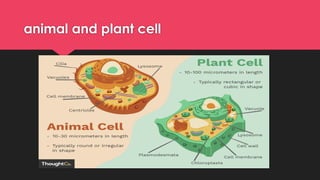
animal and plant cell
3 major types of organelles
1.Endomembrane system
2.Mitochondria
3.chloroplast
Endomembrane system- is made up of
organelles that move materials across the
membrane, such as the endoplasmic
reticulum, ribosomes, lysosomes,
peroxisomes, centrosomes, and golgi
apparatus, vacoules.
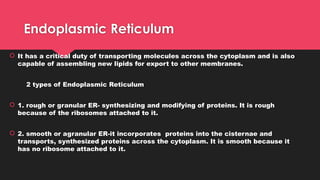
Endoplasmic Reticulum
 It has a critical duty of transporting molecules across the cytoplasm and is also
capable of assembling new lipids for export to other membranes.
2 types of Endoplasmic Reticulum
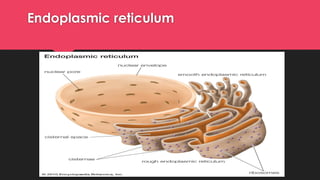
 1. rough or granular ER- synthesizing and modifying of proteins. It is rough
because of the ribosomes attached to it.
 2. smooth or agranular ER-it incorporates proteins into the cisternae and
transports, synthesized proteins across the cytoplasm. It is smooth because it
has no ribosome attached to it.
Endoplasmic reticulum
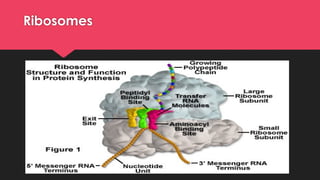
Ribosomes
Involved in providing a frame for protein
synthesis; hence, they are sites of
protein production
It is present in both prokaryotic and
eukaryotic cells.
Ribosomes
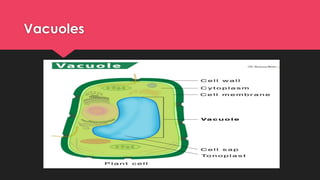
Vacoules
It is a fluid-filled vesicle enclosed by a
membrane. This organelle has a
selective membrane freely allowing
water passage but retaining smaller
molecules within it, and stores
chemicals with in the cell.
Vacuoles
Lysosomes
 It serve as digestion slots for cellular materials that are
due for expiration or no longer useful.
 Peroxisomes –are similar in morphology to lysosome. They
are assembled from proteins and synthesized on free
ribosomes.
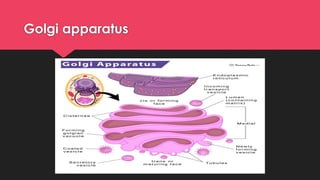
Golgi Apparatus
Functioning as the manufacturer and the shipping
center of the cell, the golgi apparatus modifies,
sorts, and packages the macromolecules
synthesized by the cell.
Golgi apparatus
Centrosome
 This can found in all eukaryotic cells,assist in arranging
microtubules(hollow tubes of proteins) to be utilized during cell
division.
 Mitochondria – the power house of the cell, where its role is to
produce energy through cellular respiration.
 Chloroplast- only found in plant cell and in photosynthetic
protist. It is serves as the site of energy conversion in plant cell.
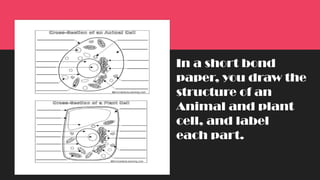
Assignment
In a short bond
paper, you draw the
structure of an
Animal and plant
cell, and label
each part.

cell structure presentation for grade 11

  • 1.
  • 2.
    OBJECTIVES: At the endof the lesson, the students can; a.explain the major parts of the cell, b.describe the structures and functions of subcellular organelles, c.Label the parts of cell organelles.
  • 3.
    3 major partsof the cell 1. cell membrane- outermost part of the cell, has the role of protecting the cell and its content. 2. cytoplasm-area of the cell where the organelles are located. It is the middle layer where most of the activities of the cell takes place. 3. nucleus- serve as the brain of the cell and directs all of the cell’s activities.
  • 4.
  • 5.
    3 major typesof organelles 1.Endomembrane system 2.Mitochondria 3.chloroplast
  • 6.
    Endomembrane system- ismade up of organelles that move materials across the membrane, such as the endoplasmic reticulum, ribosomes, lysosomes, peroxisomes, centrosomes, and golgi apparatus, vacoules.
  • 7.
    Endoplasmic Reticulum  Ithas a critical duty of transporting molecules across the cytoplasm and is also capable of assembling new lipids for export to other membranes. 2 types of Endoplasmic Reticulum  1. rough or granular ER- synthesizing and modifying of proteins. It is rough because of the ribosomes attached to it.  2. smooth or agranular ER-it incorporates proteins into the cisternae and transports, synthesized proteins across the cytoplasm. It is smooth because it has no ribosome attached to it.
  • 8.
  • 9.
    Ribosomes Involved in providinga frame for protein synthesis; hence, they are sites of protein production It is present in both prokaryotic and eukaryotic cells.
  • 10.
  • 11.
    Vacoules It is afluid-filled vesicle enclosed by a membrane. This organelle has a selective membrane freely allowing water passage but retaining smaller molecules within it, and stores chemicals with in the cell.
  • 12.
  • 13.
    Lysosomes  It serveas digestion slots for cellular materials that are due for expiration or no longer useful.  Peroxisomes –are similar in morphology to lysosome. They are assembled from proteins and synthesized on free ribosomes.
  • 14.
    Golgi Apparatus Functioning asthe manufacturer and the shipping center of the cell, the golgi apparatus modifies, sorts, and packages the macromolecules synthesized by the cell.
  • 15.
  • 16.
    Centrosome  This canfound in all eukaryotic cells,assist in arranging microtubules(hollow tubes of proteins) to be utilized during cell division.  Mitochondria – the power house of the cell, where its role is to produce energy through cellular respiration.  Chloroplast- only found in plant cell and in photosynthetic protist. It is serves as the site of energy conversion in plant cell.

  • 17.
  • 18.
    In a shortbond paper, you draw the structure of an Animal and plant cell, and label each part.