ANIMAL CELL
ANIMAL CELL
ANIMAL CELL
ANIMAL CELL
PLANT CELL
PLANT CELL
PLANT CELL
PLANT CELL
CYTOSKELETON
CYTOSKELETON
CYTOSKELETON
CYTOSKELETON
Structure: Network of protein
filaments and tubules
Function: Transports organelles
within cell; maintains cell shape;
basis for flagella/ cilia; connects
adjacent cells
Plants and animals have them
Structure: Network of protein
filaments and tubules
Function: Transports organelles
within cell; maintains cell shape;
basis for flagella/ cilia; connects
adjacent cells
Plants and animals have them
Structure: Network of protein
filaments and tubules
Function: Transports organelles
within cell; maintains cell shape;
basis for flagella/ cilia; connects
adjacent cells
Plants and animals have them
Structure: Network of protein
filaments and tubules
Function: Transports organelles
within cell; maintains cell shape;
basis for flagella/ cilia; connects
adjacent cells
Plants and animals have them
GOLGI
APPARATUS
GOLGI
APPARATUS
GOLGI
APPARATUS
GOLGI
APPARATUS
Structure: Stacks of flat,
membranous sacs
Function: Packages materials to
be secreted; produces lysosomes
Plants and animals have them
Structure: Stacks of flat,
membranous sacs
Function: Packages materials to
be secreted; produces lysosomes
Plants and animals have them
Structure: Stacks of flat,
membranous sacs
Function: Packages materials to
be secreted; produces lysosomes
Plants and animals have them
Structure: Stacks of flat,
membranous sacs
Function: Packages materials to
be secreted; produces lysosomes
Plants and animals have them
LYSOSOM
E
LYSOSOM
E
LYSOSOM
E
LYSOSOM
E
Structure: Sac containing digestive
enzymes; surrounded by a single
membrane
Function: Dismantles and recycles
components of food, debris, captured
bacteria, and worn out organelles
Plants rarely have them
Animals have them
Structure: Sac containing digestive
enzymes; surrounded by a single
membrane
Function: Dismantles and recycles
components of food, debris, captured
bacteria, and worn out organelles
Plants rarely have them
Animals have them
Structure: Sac containing digestive
enzymes; surrounded by a single
membrane
Function: Dismantles and recycles
components of food, debris, captured
bacteria, and worn out organelles
Plants rarely have them
Animals have them
Structure: Sac containing digestive
enzymes; surrounded by a single
membrane
Function: Dismantles and recycles
components of food, debris, captured
bacteria, and worn out organelles
Plants rarely have them
Animals have them
MITOCHONDRION
MITOCHONDRION
MITOCHONDRION
MITOCHONDRION
Structure: Two membranes; inner
membrane is folded into enzyme-
studded cristae; contains DNA
and ribosomes
Function: Releases energy from
food by cellular respiration
Plants and animals have them
Structure: Two membranes; inner
membrane is folded into enzyme-
studded cristae; contains DNA
and ribosomes
Function: Releases energy from
food by cellular respiration
Plants and animals have them
Structure: Two membranes; inner
membrane is folded into enzyme-
studded cristae; contains DNA
and ribosomes
Function: Releases energy from
food by cellular respiration
Plants and animals have them
Structure: Two membranes; inner
membrane is folded into enzyme-
studded cristae; contains DNA
and ribosomes
Function: Releases energy from
food by cellular respiration
Plants and animals have them
NUCLEUS
NUCLEUS
NUCLEUS
NUCLEUS
Structure: Perforated sac containing
DNA, proteins, and RNA; surrounded
by double membrane
Function: Separates DNA from the rest
of the cell; site of the first step in
protein synthesis; produces ribosomal
subunits
Plants and animals have them
Structure: Perforated sac containing
DNA, proteins, and RNA; surrounded
by double membrane
Function: Separates DNA from the rest
of the cell; site of the first step in
protein synthesis; produces ribosomal
subunits
Plants and animals have them
Structure: Perforated sac containing
DNA, proteins, and RNA; surrounded
by double membrane
Function: Separates DNA from the rest
of the cell; site of the first step in
protein synthesis; produces ribosomal
subunits
Plants and animals have them
Structure: Perforated sac containing
DNA, proteins, and RNA; surrounded
by double membrane
Function: Separates DNA from the rest
of the cell; site of the first step in
protein synthesis; produces ribosomal
subunits
Plants and animals have them
PEROXISOME
PEROXISOME
PEROXISOME
PEROXISOME
Structure: Sac containing enzymes,
often forming visible protein crystals;
surrounded by single membrane
Function: Disposes of toxins; breaks
down fatty acids; eliminates hydrogen
peroxides
Plants and animals have them
Structure: Sac containing enzymes,
often forming visible protein crystals;
surrounded by single membrane
Function: Disposes of toxins; breaks
down fatty acids; eliminates hydrogen
peroxides
Plants and animals have them
Structure: Sac containing enzymes,
often forming visible protein crystals;
surrounded by single membrane
Function: Disposes of toxins; breaks
down fatty acids; eliminates hydrogen
peroxides
Plants and animals have them
Structure: Sac containing enzymes,
often forming visible protein crystals;
surrounded by single membrane
Function: Disposes of toxins; breaks
down fatty acids; eliminates hydrogen
peroxides
Plants and animals have them
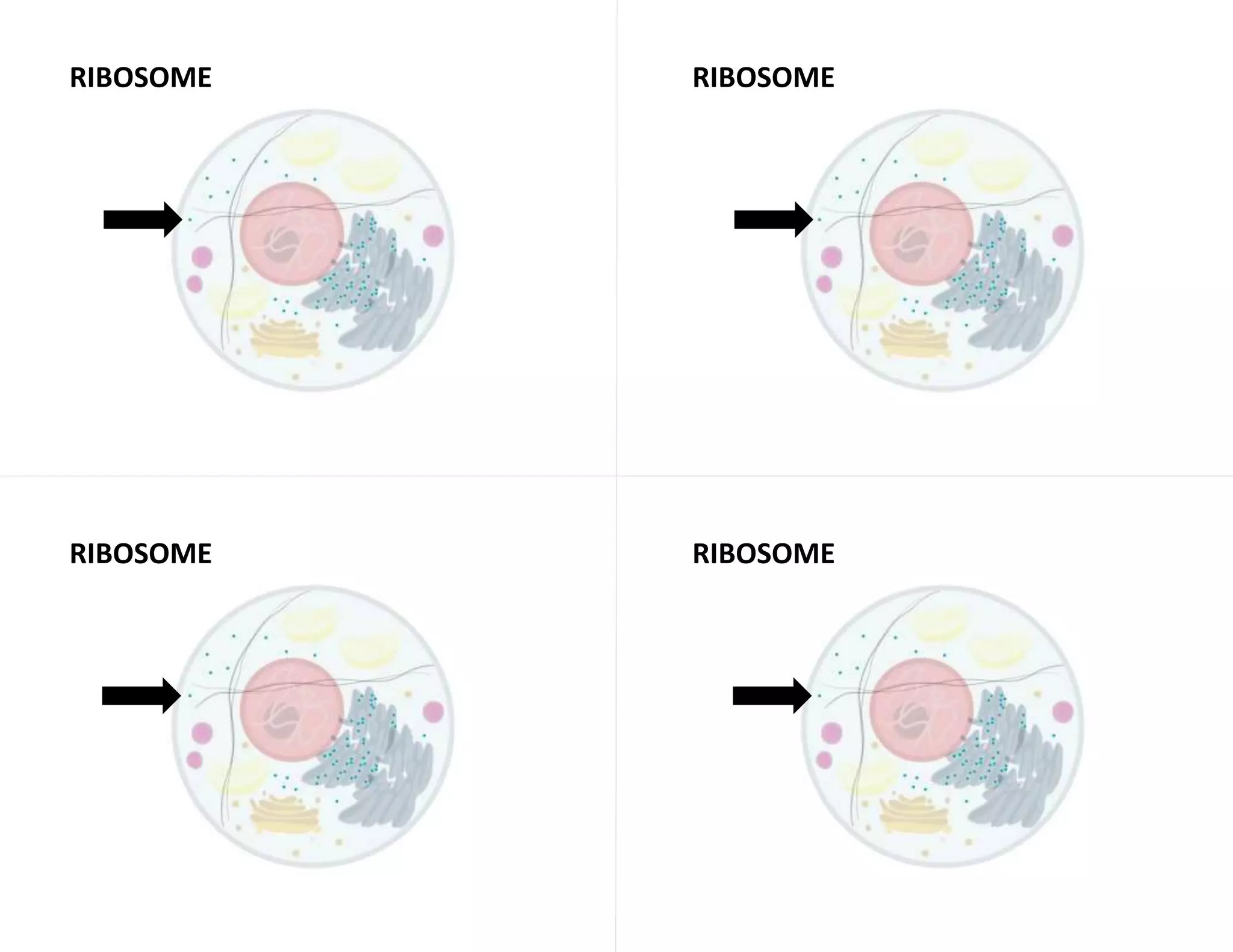
RIBOSOME
RIBOSOME
RIBOSOME
RIBOSOME
Structure: Two globular subunits
composed of RNA and protein
Function: Location of protein
synthesis
Plants and animals have them
Structure: Two globular subunits
composed of RNA and protein
Function: Location of protein
synthesis
Plants and animals have them
Structure: Two globular subunits
composed of RNA and protein
Function: Location of protein
synthesis
Plants and animals have them
Structure: Two globular subunits
composed of RNA and protein
Function: Location of protein
synthesis
Plants and animals have them
ROUGH ENDOPLASMIC
RETICULUM
ROUGH ENDOPLASMIC
RETICULUM
ROUGH ENDOPLASMIC
RETICULUM
ROUGH ENDOPLASMIC
RETICULUM
Structure: Membrane network
studded with ribosomes
Function: produces proteins
destined for secretion from the
cell
Plants and animals have them
Structure: Membrane network
studded with ribosomes
Function: produces proteins
destined for secretion from the
cell
Plants and animals have them
Structure: Membrane network
studded with ribosomes
Function: produces proteins
destined for secretion from the
cell
Plants and animals have them
Structure: Membrane network
studded with ribosomes
Function: produces proteins
destined for secretion from the
cell
Plants and animals have them
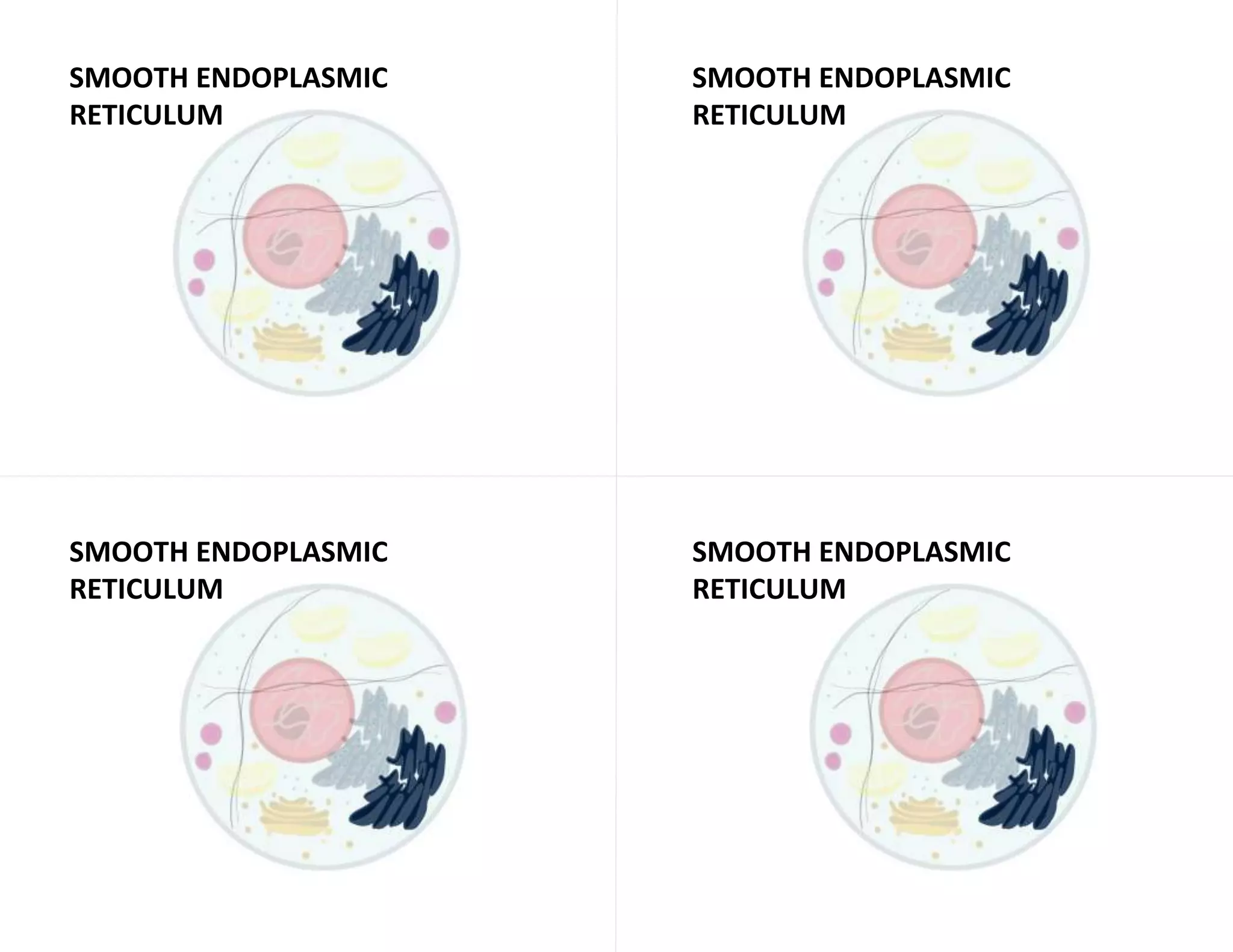
SMOOTH ENDOPLASMIC
RETICULUM
SMOOTH ENDOPLASMIC
RETICULUM
SMOOTH ENDOPLASMIC
RETICULUM
SMOOTH ENDOPLASMIC
RETICULUM
Structure: Membrane network
without ribosomes
Function: involved in phospholipid
synthesis; molecules destined for
secretion from the cell pass
through
Plants and animals have them
Structure: Membrane network
without ribosomes
Function: involved in phospholipid
synthesis; molecules destined for
secretion from the cell pass
through
Plants and animals have them
Structure: Membrane network
without ribosomes
Function: involved in phospholipid
synthesis; molecules destined for
secretion from the cell pass
through
Plants and animals have them
Structure: Membrane network
without ribosomes
Function: involved in phospholipid
synthesis; molecules destined for
secretion from the cell pass
through
Plants and animals have them
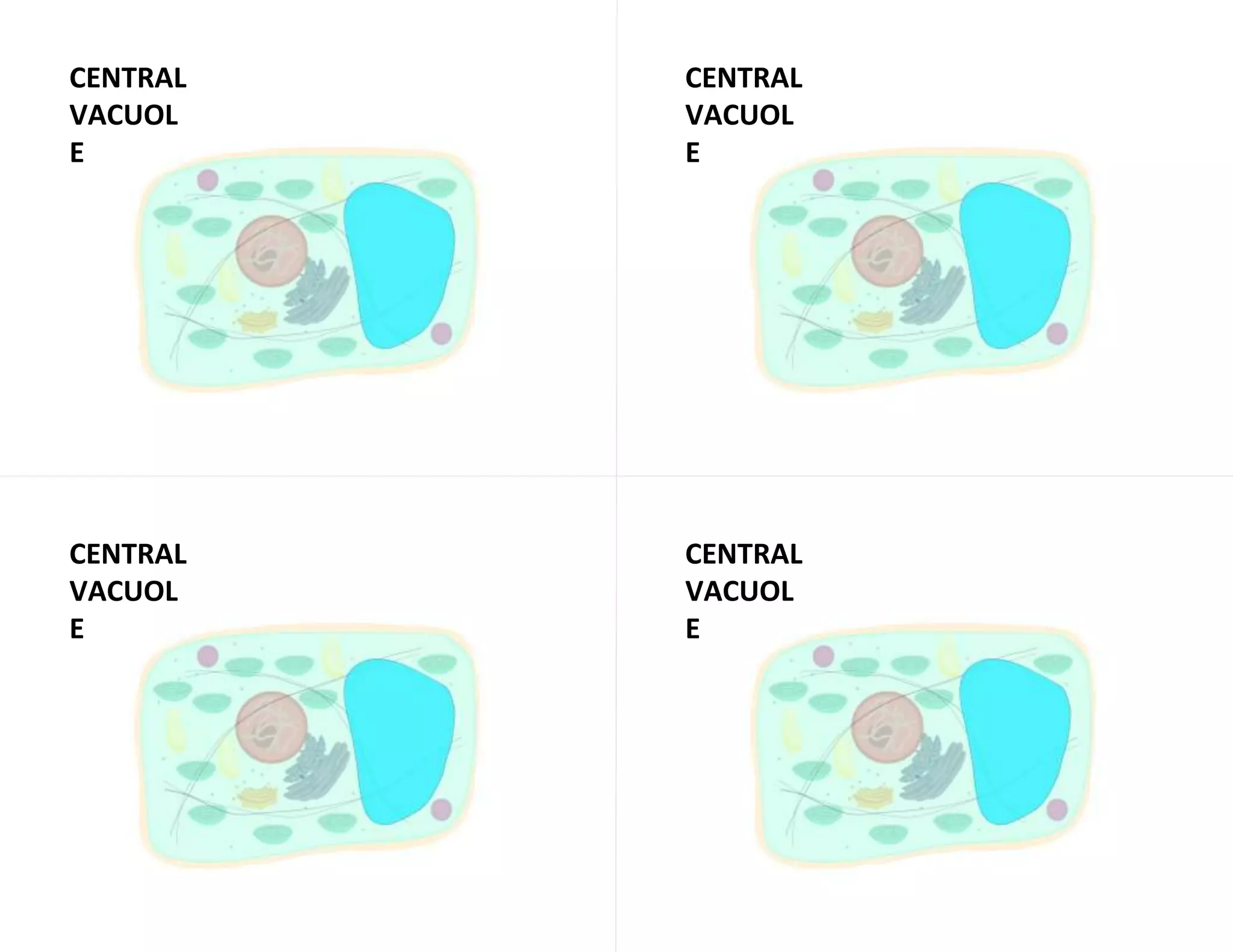
CENTRAL
VACUOL
E
CENTRAL
VACUOL
E
CENTRAL
VACUOL
E
CENTRAL
VACUOL
E
Structure: Sac containing enzymes,
acids, water-soluble pigments, and
other solutes; surrounded by single
membrane
Function: Produces turgor pressure;
recycles cell contents, contains
pigments
Plants have them
Animals do not have them
Structure: Sac containing enzymes,
acids, water-soluble pigments, and
other solutes; surrounded by single
membrane
Function: Produces turgor pressure;
recycles cell contents, contains
pigments
Plants have them
Animals do not have them
Structure: Sac containing enzymes,
acids, water-soluble pigments, and
other solutes; surrounded by single
membrane
Function: Produces turgor pressure;
recycles cell contents, contains
pigments
Plants have them
Animals do not have them
Structure: Sac containing enzymes,
acids, water-soluble pigments, and
other solutes; surrounded by single
membrane
Function: Produces turgor pressure;
recycles cell contents, contains
pigments
Plants have them
Animals do not have them
CHLOROPLAST
CHLOROPLAST
CHLOROPLAST
CHLOROPLAST
Structure: Two membranes enclosing
stacks of membrane sacs, which
contain photosynthetic pigments and
enzymes; contains DNA and
ribosomes
Function: Produces food (glucose) by
photosynthesis
Plants have them
Animals do not have them
Structure: Two membranes enclosing
stacks of membrane sacs, which
contain photosynthetic pigments and
enzymes; contains DNA and
ribosomes
Function: Produces food (glucose) by
photosynthesis
Plants have them
Animals do not have them
Structure: Two membranes enclosing
stacks of membrane sacs, which
contain photosynthetic pigments and
enzymes; contains DNA and
ribosomes
Function: Produces food (glucose) by
photosynthesis
Plants have them
Animals do not have them
Structure: Two membranes enclosing
stacks of membrane sacs, which
contain photosynthetic pigments and
enzymes; contains DNA and
ribosomes
Function: Produces food (glucose) by
photosynthesis
Plants have them
Animals do not have them
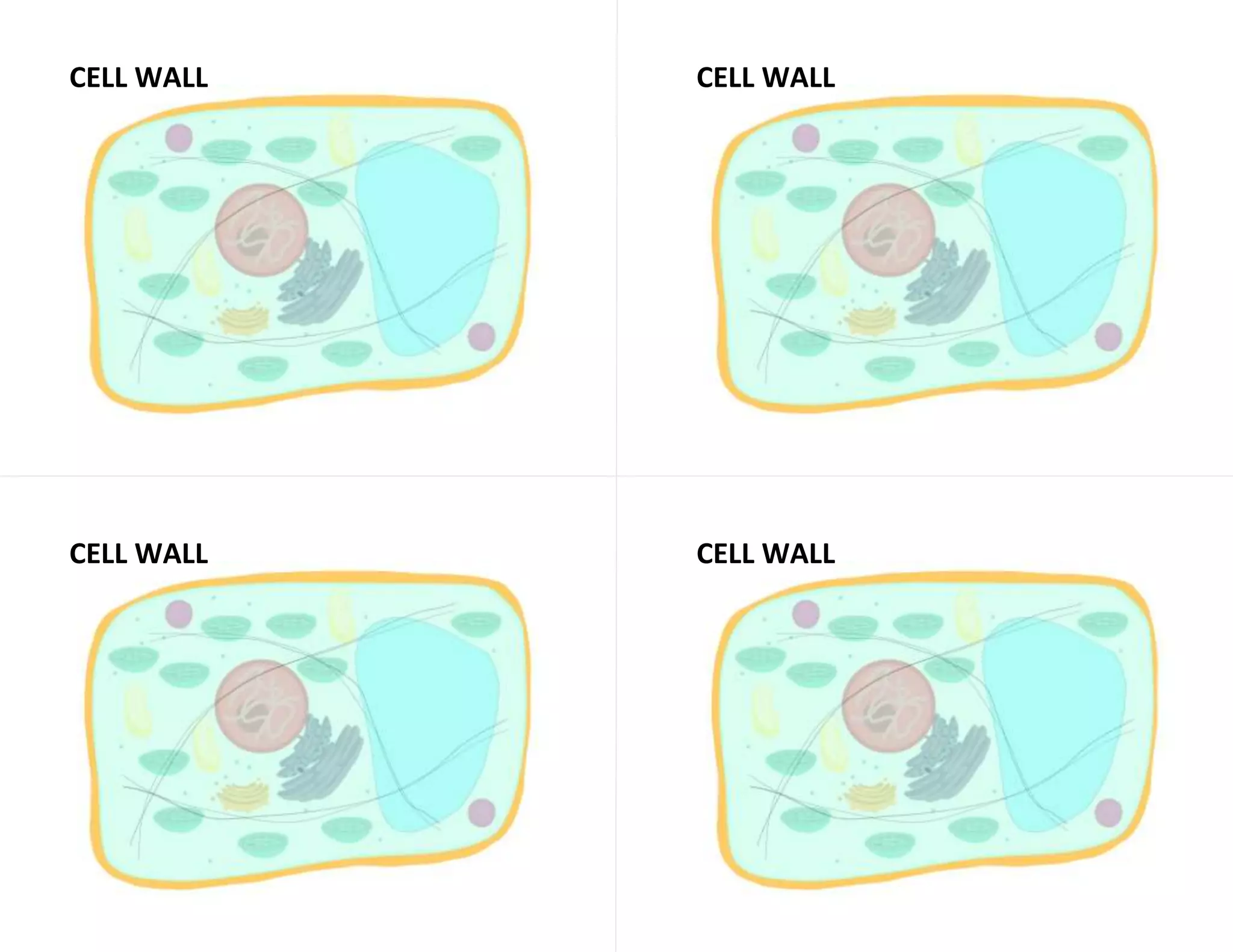
CELL WALL
CELL WALL
CELL WALL
CELL WALL
Structure: Porous barrier of
cellulose and other substances (in
plants)
Function: Protects cell; provides
shape; connects adjacent cells
Plants have them
Animals do not have them
Structure: Porous barrier of
cellulose and other substances (in
plants)
Function: Protects cell; provides
shape; connects adjacent cells
Plants have them
Animals do not have them
Structure: Porous barrier of
cellulose and other substances (in
plants)
Function: Protects cell; provides
shape; connects adjacent cells
Plants have them
Animals do not have them
Structure: Porous barrier of
cellulose and other substances (in
plants)
Function: Protects cell; provides
shape; connects adjacent cells
Plants have them
Animals do not have them

Cell structure organelle cards

  • 1.
  • 2.
  • 3.
  • 4.
    Structure: Network ofprotein filaments and tubules Function: Transports organelles within cell; maintains cell shape; basis for flagella/ cilia; connects adjacent cells Plants and animals have them Structure: Network of protein filaments and tubules Function: Transports organelles within cell; maintains cell shape; basis for flagella/ cilia; connects adjacent cells Plants and animals have them Structure: Network of protein filaments and tubules Function: Transports organelles within cell; maintains cell shape; basis for flagella/ cilia; connects adjacent cells Plants and animals have them Structure: Network of protein filaments and tubules Function: Transports organelles within cell; maintains cell shape; basis for flagella/ cilia; connects adjacent cells Plants and animals have them
  • 5.
  • 6.
    Structure: Stacks offlat, membranous sacs Function: Packages materials to be secreted; produces lysosomes Plants and animals have them Structure: Stacks of flat, membranous sacs Function: Packages materials to be secreted; produces lysosomes Plants and animals have them Structure: Stacks of flat, membranous sacs Function: Packages materials to be secreted; produces lysosomes Plants and animals have them Structure: Stacks of flat, membranous sacs Function: Packages materials to be secreted; produces lysosomes Plants and animals have them
  • 7.
  • 8.
    Structure: Sac containingdigestive enzymes; surrounded by a single membrane Function: Dismantles and recycles components of food, debris, captured bacteria, and worn out organelles Plants rarely have them Animals have them Structure: Sac containing digestive enzymes; surrounded by a single membrane Function: Dismantles and recycles components of food, debris, captured bacteria, and worn out organelles Plants rarely have them Animals have them Structure: Sac containing digestive enzymes; surrounded by a single membrane Function: Dismantles and recycles components of food, debris, captured bacteria, and worn out organelles Plants rarely have them Animals have them Structure: Sac containing digestive enzymes; surrounded by a single membrane Function: Dismantles and recycles components of food, debris, captured bacteria, and worn out organelles Plants rarely have them Animals have them
  • 9.
  • 10.
    Structure: Two membranes;inner membrane is folded into enzyme- studded cristae; contains DNA and ribosomes Function: Releases energy from food by cellular respiration Plants and animals have them Structure: Two membranes; inner membrane is folded into enzyme- studded cristae; contains DNA and ribosomes Function: Releases energy from food by cellular respiration Plants and animals have them Structure: Two membranes; inner membrane is folded into enzyme- studded cristae; contains DNA and ribosomes Function: Releases energy from food by cellular respiration Plants and animals have them Structure: Two membranes; inner membrane is folded into enzyme- studded cristae; contains DNA and ribosomes Function: Releases energy from food by cellular respiration Plants and animals have them
  • 11.
  • 12.
    Structure: Perforated saccontaining DNA, proteins, and RNA; surrounded by double membrane Function: Separates DNA from the rest of the cell; site of the first step in protein synthesis; produces ribosomal subunits Plants and animals have them Structure: Perforated sac containing DNA, proteins, and RNA; surrounded by double membrane Function: Separates DNA from the rest of the cell; site of the first step in protein synthesis; produces ribosomal subunits Plants and animals have them Structure: Perforated sac containing DNA, proteins, and RNA; surrounded by double membrane Function: Separates DNA from the rest of the cell; site of the first step in protein synthesis; produces ribosomal subunits Plants and animals have them Structure: Perforated sac containing DNA, proteins, and RNA; surrounded by double membrane Function: Separates DNA from the rest of the cell; site of the first step in protein synthesis; produces ribosomal subunits Plants and animals have them
  • 13.
  • 14.
    Structure: Sac containingenzymes, often forming visible protein crystals; surrounded by single membrane Function: Disposes of toxins; breaks down fatty acids; eliminates hydrogen peroxides Plants and animals have them Structure: Sac containing enzymes, often forming visible protein crystals; surrounded by single membrane Function: Disposes of toxins; breaks down fatty acids; eliminates hydrogen peroxides Plants and animals have them Structure: Sac containing enzymes, often forming visible protein crystals; surrounded by single membrane Function: Disposes of toxins; breaks down fatty acids; eliminates hydrogen peroxides Plants and animals have them Structure: Sac containing enzymes, often forming visible protein crystals; surrounded by single membrane Function: Disposes of toxins; breaks down fatty acids; eliminates hydrogen peroxides Plants and animals have them
  • 15.
  • 16.
    Structure: Two globularsubunits composed of RNA and protein Function: Location of protein synthesis Plants and animals have them Structure: Two globular subunits composed of RNA and protein Function: Location of protein synthesis Plants and animals have them Structure: Two globular subunits composed of RNA and protein Function: Location of protein synthesis Plants and animals have them Structure: Two globular subunits composed of RNA and protein Function: Location of protein synthesis Plants and animals have them
  • 17.
    ROUGH ENDOPLASMIC RETICULUM ROUGH ENDOPLASMIC RETICULUM ROUGHENDOPLASMIC RETICULUM ROUGH ENDOPLASMIC RETICULUM
  • 18.
    Structure: Membrane network studdedwith ribosomes Function: produces proteins destined for secretion from the cell Plants and animals have them Structure: Membrane network studded with ribosomes Function: produces proteins destined for secretion from the cell Plants and animals have them Structure: Membrane network studded with ribosomes Function: produces proteins destined for secretion from the cell Plants and animals have them Structure: Membrane network studded with ribosomes Function: produces proteins destined for secretion from the cell Plants and animals have them
  • 19.
    SMOOTH ENDOPLASMIC RETICULUM SMOOTH ENDOPLASMIC RETICULUM SMOOTHENDOPLASMIC RETICULUM SMOOTH ENDOPLASMIC RETICULUM
  • 20.
    Structure: Membrane network withoutribosomes Function: involved in phospholipid synthesis; molecules destined for secretion from the cell pass through Plants and animals have them Structure: Membrane network without ribosomes Function: involved in phospholipid synthesis; molecules destined for secretion from the cell pass through Plants and animals have them Structure: Membrane network without ribosomes Function: involved in phospholipid synthesis; molecules destined for secretion from the cell pass through Plants and animals have them Structure: Membrane network without ribosomes Function: involved in phospholipid synthesis; molecules destined for secretion from the cell pass through Plants and animals have them
  • 21.
  • 22.
    Structure: Sac containingenzymes, acids, water-soluble pigments, and other solutes; surrounded by single membrane Function: Produces turgor pressure; recycles cell contents, contains pigments Plants have them Animals do not have them Structure: Sac containing enzymes, acids, water-soluble pigments, and other solutes; surrounded by single membrane Function: Produces turgor pressure; recycles cell contents, contains pigments Plants have them Animals do not have them Structure: Sac containing enzymes, acids, water-soluble pigments, and other solutes; surrounded by single membrane Function: Produces turgor pressure; recycles cell contents, contains pigments Plants have them Animals do not have them Structure: Sac containing enzymes, acids, water-soluble pigments, and other solutes; surrounded by single membrane Function: Produces turgor pressure; recycles cell contents, contains pigments Plants have them Animals do not have them
  • 23.
  • 24.
    Structure: Two membranesenclosing stacks of membrane sacs, which contain photosynthetic pigments and enzymes; contains DNA and ribosomes Function: Produces food (glucose) by photosynthesis Plants have them Animals do not have them Structure: Two membranes enclosing stacks of membrane sacs, which contain photosynthetic pigments and enzymes; contains DNA and ribosomes Function: Produces food (glucose) by photosynthesis Plants have them Animals do not have them Structure: Two membranes enclosing stacks of membrane sacs, which contain photosynthetic pigments and enzymes; contains DNA and ribosomes Function: Produces food (glucose) by photosynthesis Plants have them Animals do not have them Structure: Two membranes enclosing stacks of membrane sacs, which contain photosynthetic pigments and enzymes; contains DNA and ribosomes Function: Produces food (glucose) by photosynthesis Plants have them Animals do not have them
  • 25.
  • 26.
    Structure: Porous barrierof cellulose and other substances (in plants) Function: Protects cell; provides shape; connects adjacent cells Plants have them Animals do not have them Structure: Porous barrier of cellulose and other substances (in plants) Function: Protects cell; provides shape; connects adjacent cells Plants have them Animals do not have them Structure: Porous barrier of cellulose and other substances (in plants) Function: Protects cell; provides shape; connects adjacent cells Plants have them Animals do not have them Structure: Porous barrier of cellulose and other substances (in plants) Function: Protects cell; provides shape; connects adjacent cells Plants have them Animals do not have them