Smartphones and Mobile
  Phone Technology
 Andrew Chang, Naeun Choi, Nicholas Delrose, Charlotte Gilmore,
                      Silvia Manolache
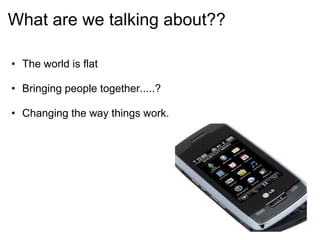
What are we talking about??

• The world is flat

• Bringing people together.....?

• Changing the way things work.
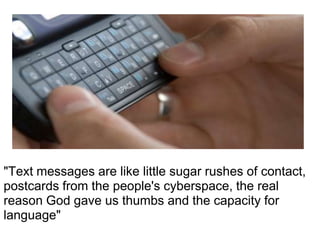
"Text messages are like little sugar rushes of contact,
postcards from the people's cyberspace, the real
reason God gave us thumbs and the capacity for
language"
History
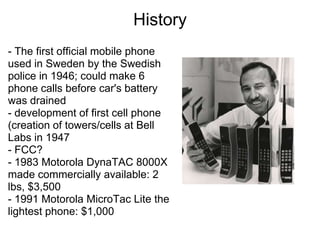
- The first official mobile phone
used in Sweden by the Swedish
police in 1946; could make 6
phone calls before car's battery
was drained
- development of first cell phone
(creation of towers/cells at Bell
Labs in 1947
- FCC?
- 1983 Motorola DynaTAC 8000X
made commercially available: 2
lbs, $3,500
- 1991 Motorola MicroTac Lite the
lightest phone: $1,000
History cont.
- 2nd generation: from the early
1990's
- smaller, better batteries, huge
increase in popularity
- 3rd generation: include 2
Megabits of maximum data rate
indoors and 384 kbits for
outdoor use
- include internet access and
other modern innovations
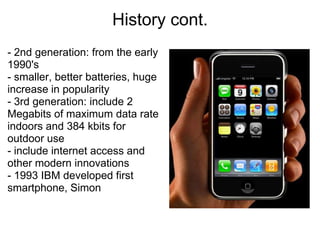
- 1993 IBM developed first
smartphone, Simon
Uses
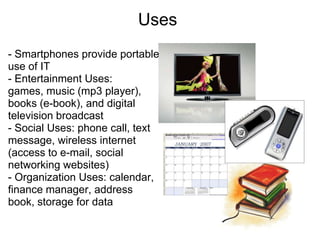
- Smartphones provide portable
use of IT
- Entertainment Uses:
games, music (mp3 player),
books (e-book), and digital
television broadcast
- Social Uses: phone call, text
message, wireless internet
(access to e-mail, social
networking websites)
- Organization Uses: calendar,
finance manager, address
book, storage for data
Uses cont.

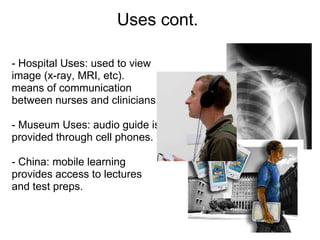
- Hospital Uses: used to view
image (x-ray, MRI, etc).
means of communication
between nurses and clinicians.

- Museum Uses: audio guide is
provided through cell phones.

- China: mobile learning
provides access to lectures
and test preps.
Benefits

• Mobile technology is key to
  keeping in touch in the
  modern world.
• Text messaging
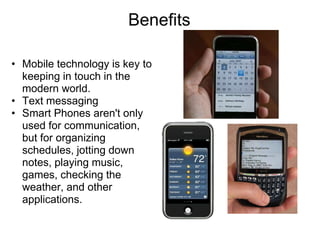
• Smart Phones aren't only
  used for communication,
  but for organizing
  schedules, jotting down
  notes, playing music,
  games, checking the
  weather, and other
  applications.
Benefits Cont.
                 • Cell Phones
                   "revolutionized long
                   distance calling", making it
                   much more inexpensive for
                   long distance
                   communication.
                 • Cell phone logs have also
                   been helpful in court cases
                   where they can be used as
                   evidence.      (You may
                   also consider this a
                   disadvantage)
Criticisms
- negative health affects
(increases resting blood
pressure, reduces production
of melatonin, related to
Altzeimers's Disease, linked
to cancer)
- increased stress level
(fatigue, headache, difficulty
in concentration, disturbance
in sleep)
- male infertility
- effect on children; the
"blackberry father"
- risk in driving
- reduced privacy
- effects on language
Summary/Opinion

• Mobile technology and
  smart phones play a major
  role in every day life, and
  their importance is
  expected to continue, and
  even increase in the
  future.
Bibliography

1. "The Benefits of Cell Phones." Cell Phone and Wireless Service Plan Buying Guide (2008) 20
   Sep 2008 http://www.wirelessguide.org/basics/benefits.php.
2. "Mobile Phone Exposure Causes Brain Damage in Rats." EHP: Environmental Health
   Perspectives. 1-29-03. 9-19-08. www.ehponline.org
3. "Excessive Mobile Phone Use Affects Sleep In teens, Study Finds." Science Daily. 6-9-08. 9-
   19-08. www.sciencedaily.com
4. "Is Txt Mightier Than the Word." BBCNews. 3-4-03. 9-19-08. www.news.bbc.co.news
5. "7 Disadvantages of Cell Phones." ControlYourImpact. 4-17-08. 9-19-08.
   www.controlyourimpact.com

Cell Phone Evolution: The Mobile Phone Technology

  • 1.
    Smartphones and Mobile Phone Technology Andrew Chang, Naeun Choi, Nicholas Delrose, Charlotte Gilmore, Silvia Manolache
  • 2.
    What are wetalking about?? • The world is flat • Bringing people together.....? • Changing the way things work.
  • 3.
    "Text messages arelike little sugar rushes of contact, postcards from the people's cyberspace, the real reason God gave us thumbs and the capacity for language"
  • 4.
    History - The firstofficial mobile phone used in Sweden by the Swedish police in 1946; could make 6 phone calls before car's battery was drained - development of first cell phone (creation of towers/cells at Bell Labs in 1947 - FCC? - 1983 Motorola DynaTAC 8000X made commercially available: 2 lbs, $3,500 - 1991 Motorola MicroTac Lite the lightest phone: $1,000
  • 5.
    History cont. - 2ndgeneration: from the early 1990's - smaller, better batteries, huge increase in popularity - 3rd generation: include 2 Megabits of maximum data rate indoors and 384 kbits for outdoor use - include internet access and other modern innovations - 1993 IBM developed first smartphone, Simon
  • 6.
    Uses - Smartphones provideportable use of IT - Entertainment Uses: games, music (mp3 player), books (e-book), and digital television broadcast - Social Uses: phone call, text message, wireless internet (access to e-mail, social networking websites) - Organization Uses: calendar, finance manager, address book, storage for data
  • 7.
    Uses cont. - HospitalUses: used to view image (x-ray, MRI, etc). means of communication between nurses and clinicians. - Museum Uses: audio guide is provided through cell phones. - China: mobile learning provides access to lectures and test preps.
  • 8.
    Benefits • Mobile technologyis key to keeping in touch in the modern world. • Text messaging • Smart Phones aren't only used for communication, but for organizing schedules, jotting down notes, playing music, games, checking the weather, and other applications.
  • 9.
    Benefits Cont. • Cell Phones "revolutionized long distance calling", making it much more inexpensive for long distance communication. • Cell phone logs have also been helpful in court cases where they can be used as evidence. (You may also consider this a disadvantage)
  • 10.
    Criticisms - negative healthaffects (increases resting blood pressure, reduces production of melatonin, related to Altzeimers's Disease, linked to cancer) - increased stress level (fatigue, headache, difficulty in concentration, disturbance in sleep) - male infertility - effect on children; the "blackberry father" - risk in driving - reduced privacy - effects on language
  • 11.
    Summary/Opinion • Mobile technologyand smart phones play a major role in every day life, and their importance is expected to continue, and even increase in the future.
  • 12.
    Bibliography 1. "The Benefitsof Cell Phones." Cell Phone and Wireless Service Plan Buying Guide (2008) 20 Sep 2008 http://www.wirelessguide.org/basics/benefits.php. 2. "Mobile Phone Exposure Causes Brain Damage in Rats." EHP: Environmental Health Perspectives. 1-29-03. 9-19-08. www.ehponline.org 3. "Excessive Mobile Phone Use Affects Sleep In teens, Study Finds." Science Daily. 6-9-08. 9- 19-08. www.sciencedaily.com 4. "Is Txt Mightier Than the Word." BBCNews. 3-4-03. 9-19-08. www.news.bbc.co.news 5. "7 Disadvantages of Cell Phones." ControlYourImpact. 4-17-08. 9-19-08. www.controlyourimpact.com