SUBCULTURES


CCCS
Definitions by David Reisman in 1950


  Mainstream: audiences who “passively accept
   commercially provided styles and meanings”
  Subcultures: audiences who “actively sought a
   minority style (hot jazz at the time) and
   interpreted it in accordance with subversive
   values. Thus the audience...manipulates the
   product to symbolise their values.
Key Thinkers and Ideas

• Stuart Hall
• Wrote ‘Resistance through Ritual’
• Main idea: young people who feel
  alienated from society or cut off
  from opportunities (because of
  class, age or ethnicity) will
  attempt to ‘resist’ the mainstream
  through ‘rituals’: crime, dress,
  music, art etc.
Phil Cohen
• Applied Marxism to subcultural theory
• Studied young men in 1970s East End
• Said that subcultures form in reaction to social divisions and
  loss of community
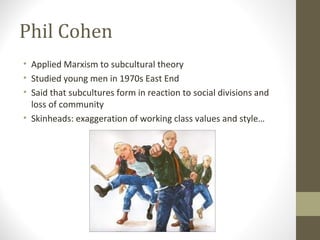
• Skinheads: exaggeration of working class values and style…
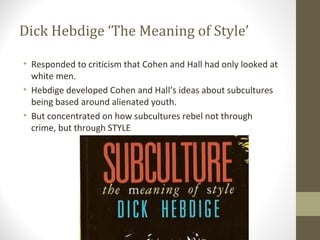
Dick Hebdige ‘The Meaning of Style’

• Responded to criticism that Cohen and Hall had only looked at
  white men.
• Hebdige developed Cohen and Hall’s ideas about subcultures
  being based around alienated youth.
• But concentrated on how subcultures rebel not through
  crime, but through STYLE
‘Subculture – the meaning of style’
• Style as ‘cultural crime’ – something to disturb the status quo,
  upset the norm.
• The ‘silent majority’ conform to the dominant values/styles,
  and assume everyone else in society does, too.
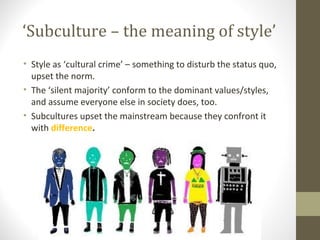
• Subcultures upset the mainstream because they confront it
  with difference.
Punks and Dreads
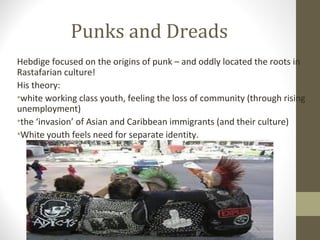
Hebdige focused on the origins of punk – and oddly located the roots in
Rastafarian culture!
His theory:
•white working class youth, feeling the loss of community (through rising
unemployment)
•the ‘invasion’ of Asian and Caribbean immigrants (and their culture)
•White youth feels need for separate identity.
Punks and Dreads
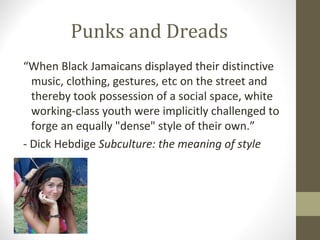
“When Black Jamaicans displayed their distinctive
  music, clothing, gestures, etc on the street and
  thereby took possession of a social space, white
  working-class youth were implicitly challenged to
  forge an equally "dense" style of their own.”
- Dick Hebdige Subculture: the meaning of style
What does this mean?
• Despite huge differences in values
  and style, ‘Dreads’ set a template
  for cultural identity;
• Disempowered whites were to
  use the same template: forge a
  new identity using dress-codes,
  music, slang, gestures,
  behaviours.
So…
• Subcultures aren’t that different from their
  ‘parent’ culture. Mostly they react against or
  continue some of the values or styles of the
  parent culture – even if that ‘parent’ is actually a
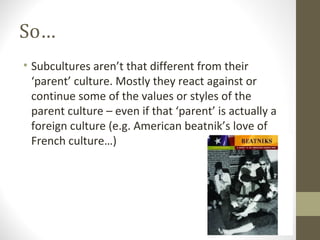
  foreign culture (e.g. American beatnik’s love of
  French culture…)
Commidification = the death
of a subculture?
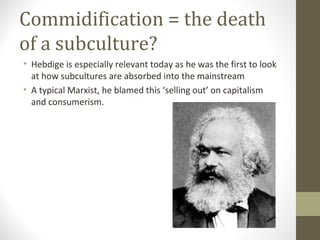
• Hebdige is especially relevant today as he was the first to look
  at how subcultures are absorbed into the mainstream
• A typical Marxist, he blamed this ‘selling out’ on capitalism
  and consumerism.
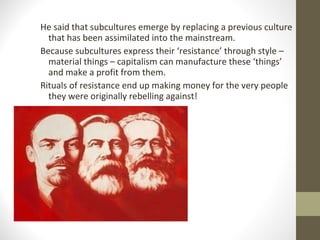
He said that subcultures emerge by replacing a previous culture
  that has been assimilated into the mainstream.
Because subcultures express their ‘resistance’ through style –
  material things – capitalism can manufacture these ‘things’
  and make a profit from them.
Rituals of resistance end up making money for the very people
  they were originally rebelling against!
Or, as Hebdige puts it:
“the conversion of subcultural signs (dress, music
  etc.) into mass-produced objects (i.e. the
  commodity form)”

As one subculture gets assimilated – punk dress
 style used by Vivienne Westwood to make
 expensive designer clothes – another rises to
 ‘resist’ the mainstream in a similar way and
 fulfilling the same need.
The need to resist the mainstream.

Cccs (1)

  • 1.
  • 2.
    Definitions by DavidReisman in 1950 Mainstream: audiences who “passively accept commercially provided styles and meanings” Subcultures: audiences who “actively sought a minority style (hot jazz at the time) and interpreted it in accordance with subversive values. Thus the audience...manipulates the product to symbolise their values.
  • 3.
    Key Thinkers andIdeas • Stuart Hall • Wrote ‘Resistance through Ritual’ • Main idea: young people who feel alienated from society or cut off from opportunities (because of class, age or ethnicity) will attempt to ‘resist’ the mainstream through ‘rituals’: crime, dress, music, art etc.
  • 4.
    Phil Cohen • AppliedMarxism to subcultural theory • Studied young men in 1970s East End • Said that subcultures form in reaction to social divisions and loss of community • Skinheads: exaggeration of working class values and style…
  • 5.
    Dick Hebdige ‘TheMeaning of Style’ • Responded to criticism that Cohen and Hall had only looked at white men. • Hebdige developed Cohen and Hall’s ideas about subcultures being based around alienated youth. • But concentrated on how subcultures rebel not through crime, but through STYLE
  • 6.
    ‘Subculture – themeaning of style’ • Style as ‘cultural crime’ – something to disturb the status quo, upset the norm. • The ‘silent majority’ conform to the dominant values/styles, and assume everyone else in society does, too. • Subcultures upset the mainstream because they confront it with difference.
  • 7.
    Punks and Dreads Hebdigefocused on the origins of punk – and oddly located the roots in Rastafarian culture! His theory: •white working class youth, feeling the loss of community (through rising unemployment) •the ‘invasion’ of Asian and Caribbean immigrants (and their culture) •White youth feels need for separate identity.
  • 8.
    Punks and Dreads “WhenBlack Jamaicans displayed their distinctive music, clothing, gestures, etc on the street and thereby took possession of a social space, white working-class youth were implicitly challenged to forge an equally "dense" style of their own.” - Dick Hebdige Subculture: the meaning of style
  • 9.
    What does thismean? • Despite huge differences in values and style, ‘Dreads’ set a template for cultural identity; • Disempowered whites were to use the same template: forge a new identity using dress-codes, music, slang, gestures, behaviours.
  • 10.
    So… • Subcultures aren’tthat different from their ‘parent’ culture. Mostly they react against or continue some of the values or styles of the parent culture – even if that ‘parent’ is actually a foreign culture (e.g. American beatnik’s love of French culture…)
  • 11.
    Commidification = thedeath of a subculture? • Hebdige is especially relevant today as he was the first to look at how subcultures are absorbed into the mainstream • A typical Marxist, he blamed this ‘selling out’ on capitalism and consumerism.
  • 12.
    He said thatsubcultures emerge by replacing a previous culture that has been assimilated into the mainstream. Because subcultures express their ‘resistance’ through style – material things – capitalism can manufacture these ‘things’ and make a profit from them. Rituals of resistance end up making money for the very people they were originally rebelling against!
  • 13.
    Or, as Hebdigeputs it: “the conversion of subcultural signs (dress, music etc.) into mass-produced objects (i.e. the commodity form)” As one subculture gets assimilated – punk dress style used by Vivienne Westwood to make expensive designer clothes – another rises to ‘resist’ the mainstream in a similar way and fulfilling the same need. The need to resist the mainstream.