

Domain 1 - Security Principles
1.1: Concepts of InfoSec
1.2: Risk management process
1.3: Understand security controls
1.4: Understand (ISC)² Code of Ethics
1.5: Governance processes
Waleed Elnaggar
https://www.youtube.com/naggaracademy
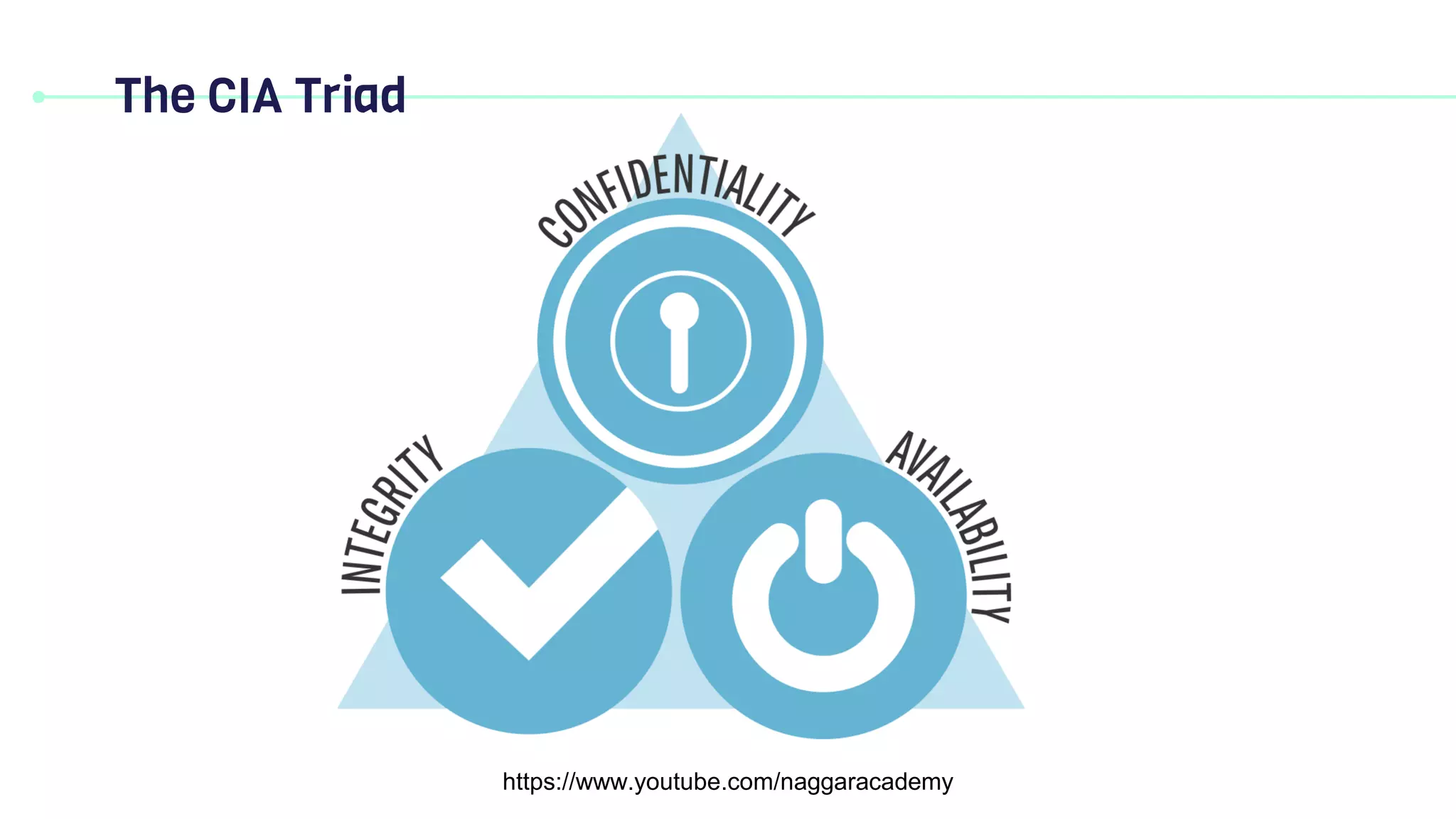
The CIA Triad
https://www.youtube.com/naggaracademy
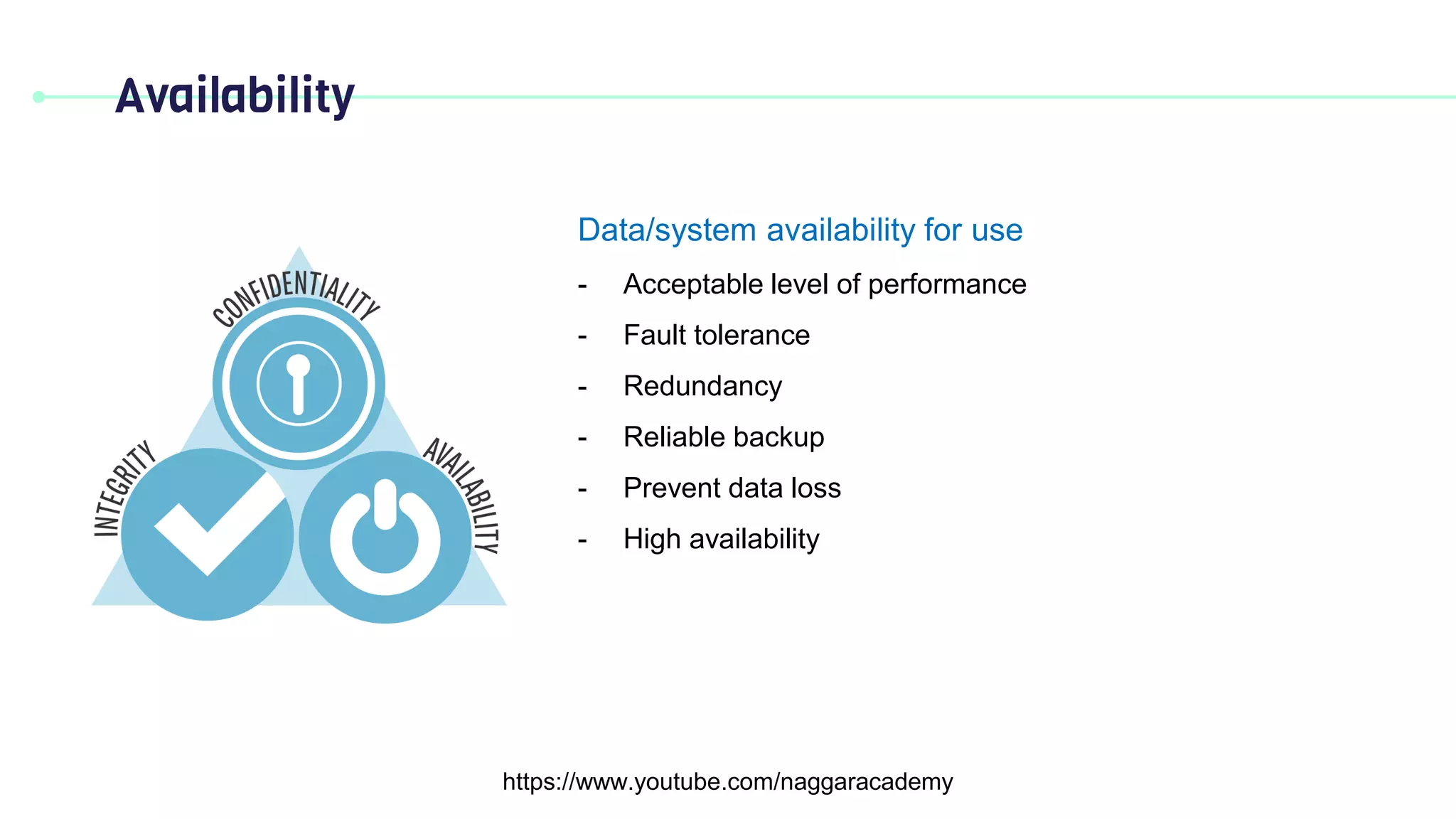
Availability
https://www.youtube.com/naggaracademy
Data/system availability for use
- Acceptable level of performance
- Fault tolerance
- Redundancy
- Reliable backup
- Prevent data loss
- High availability
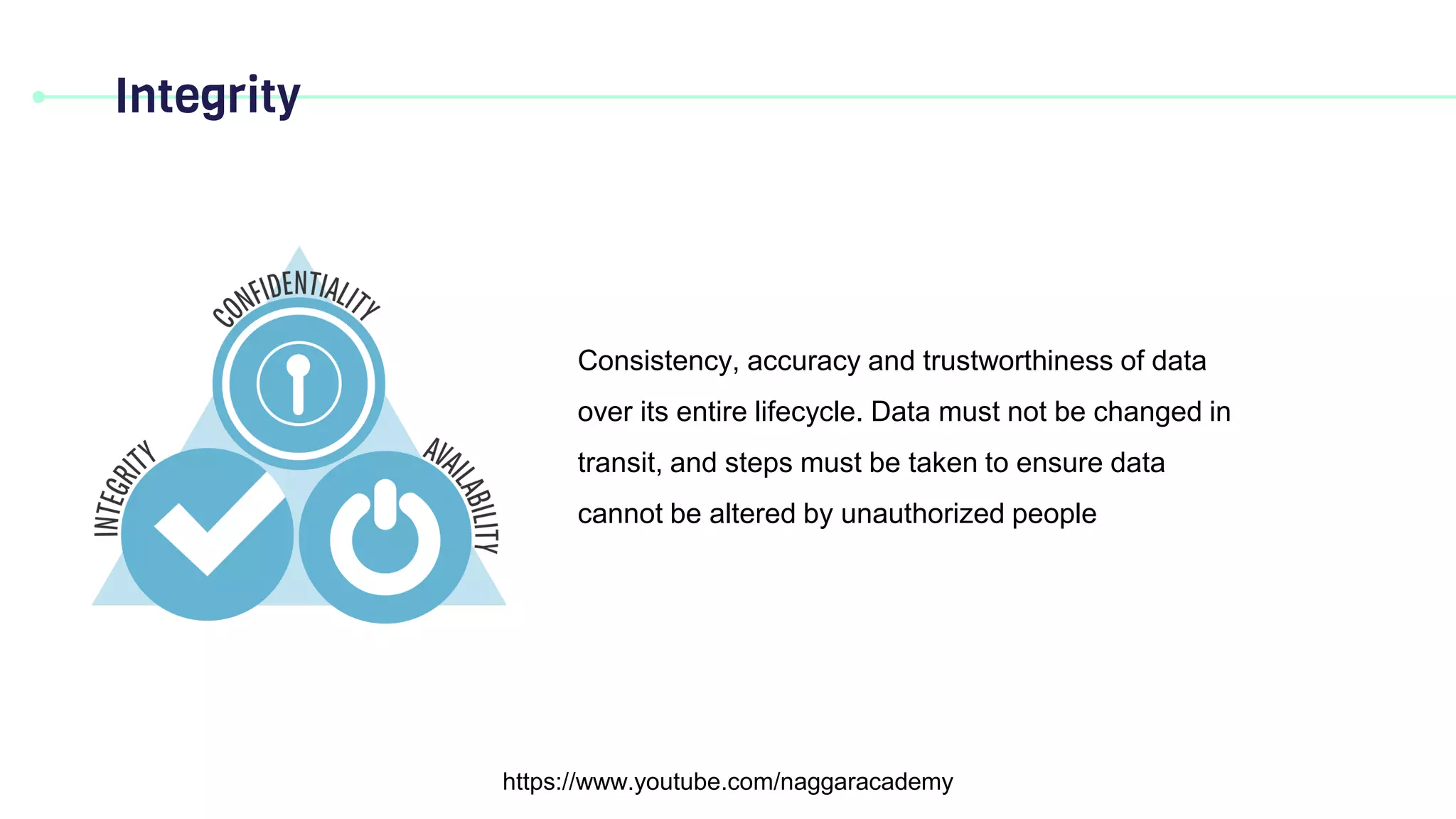
Integrity
https://www.youtube.com/naggaracademy
Consistency, accuracy and trustworthiness of data
over its entire lifecycle. Data must not be changed in
transit, and steps must be taken to ensure data
cannot be altered by unauthorized people
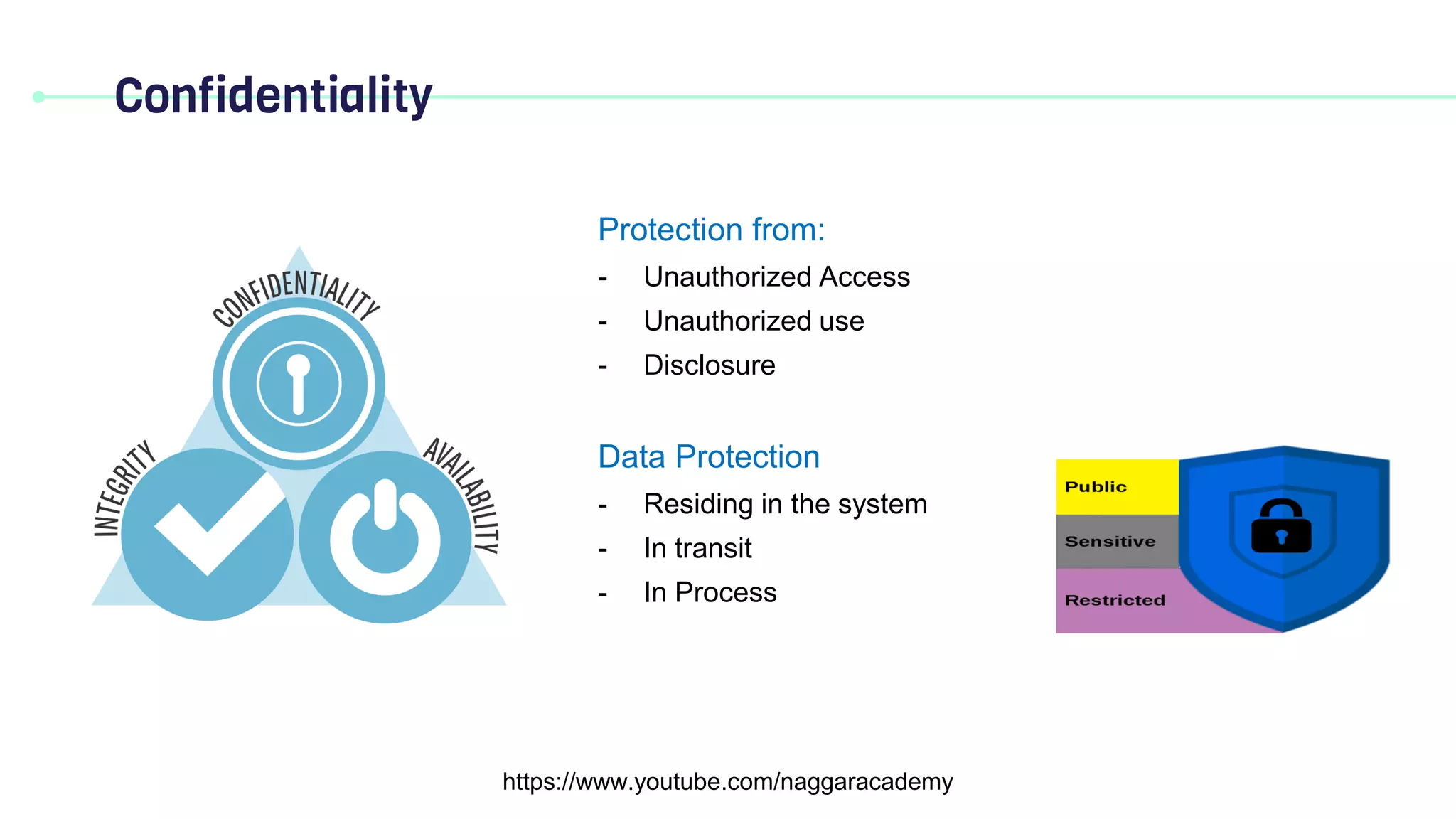
Confidentiality
https://www.youtube.com/naggaracademy
Protection from:
- Unauthorized Access
- Unauthorized use
- Disclosure
Data Protection
- Residing in the system
- In transit
- In Process
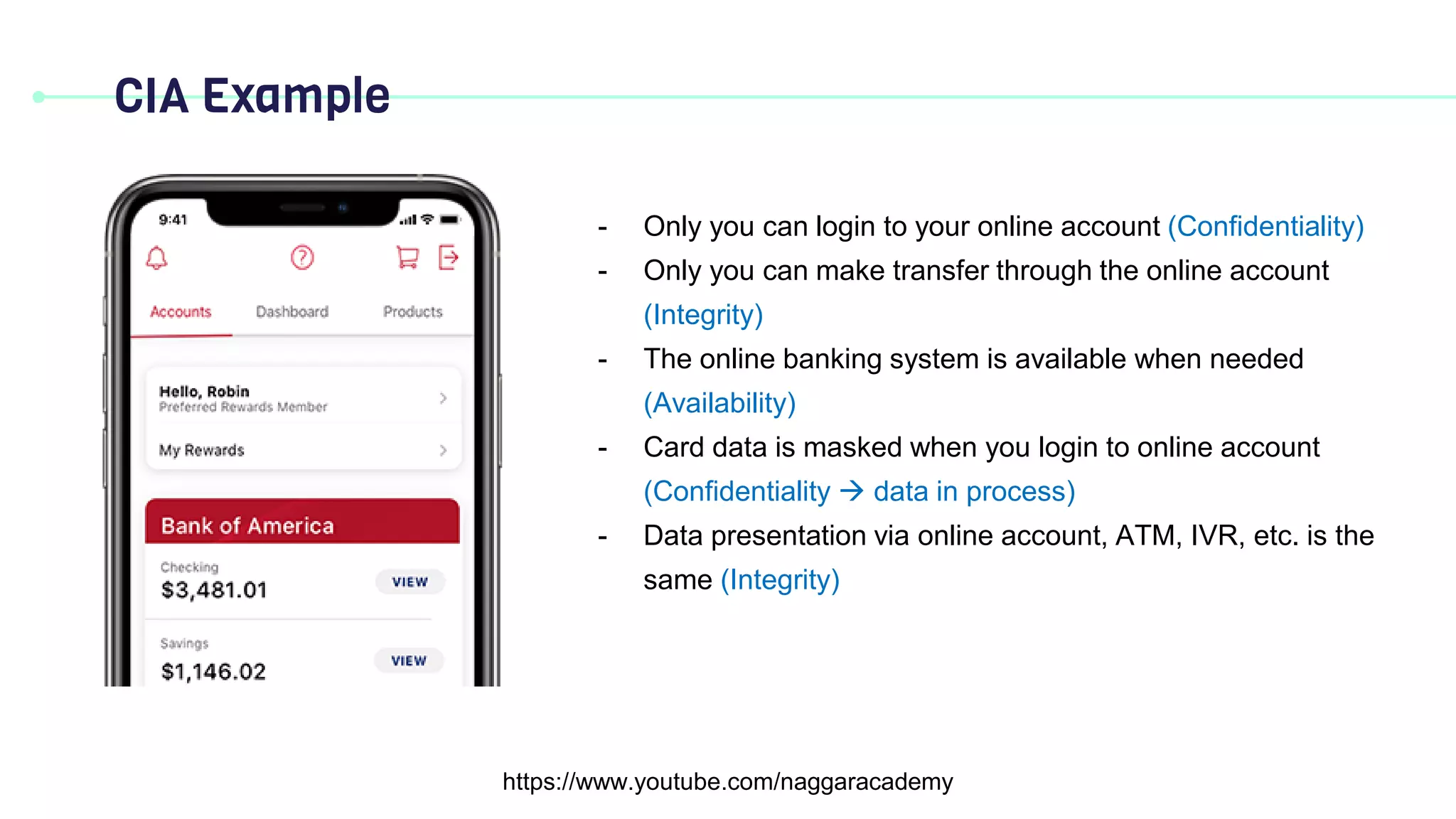
CIA Example
https://www.youtube.com/naggaracademy
- Only you can login to your online account (Confidentiality)
- Only you can make transfer through the online account
(Integrity)
- The online banking system is available when needed
(Availability)
- Card data is masked when you login to online account
(Confidentiality  data in process)
- Data presentation via online account, ATM, IVR, etc. is the
same (Integrity)
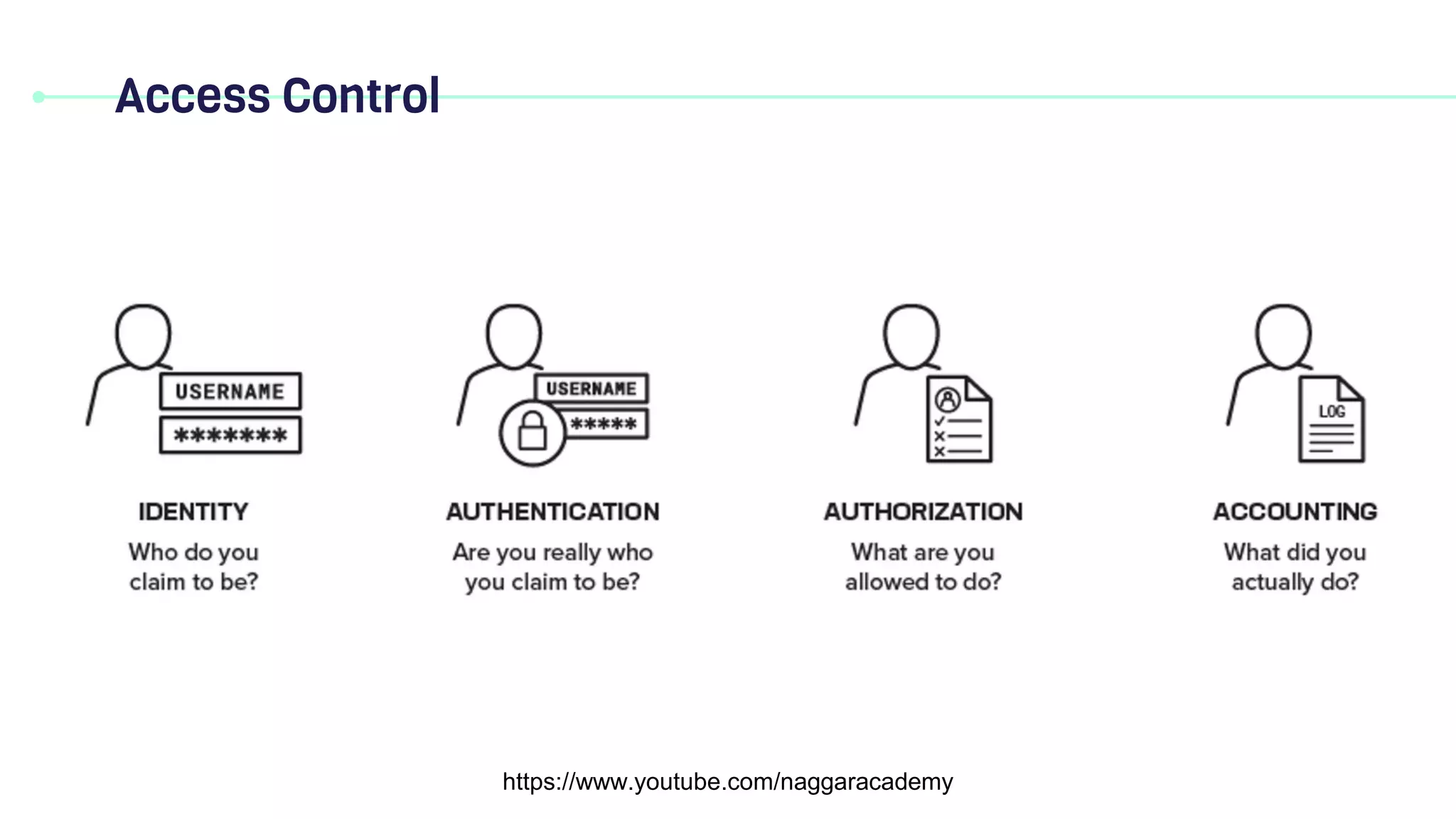
Access Control
https://www.youtube.com/naggaracademy
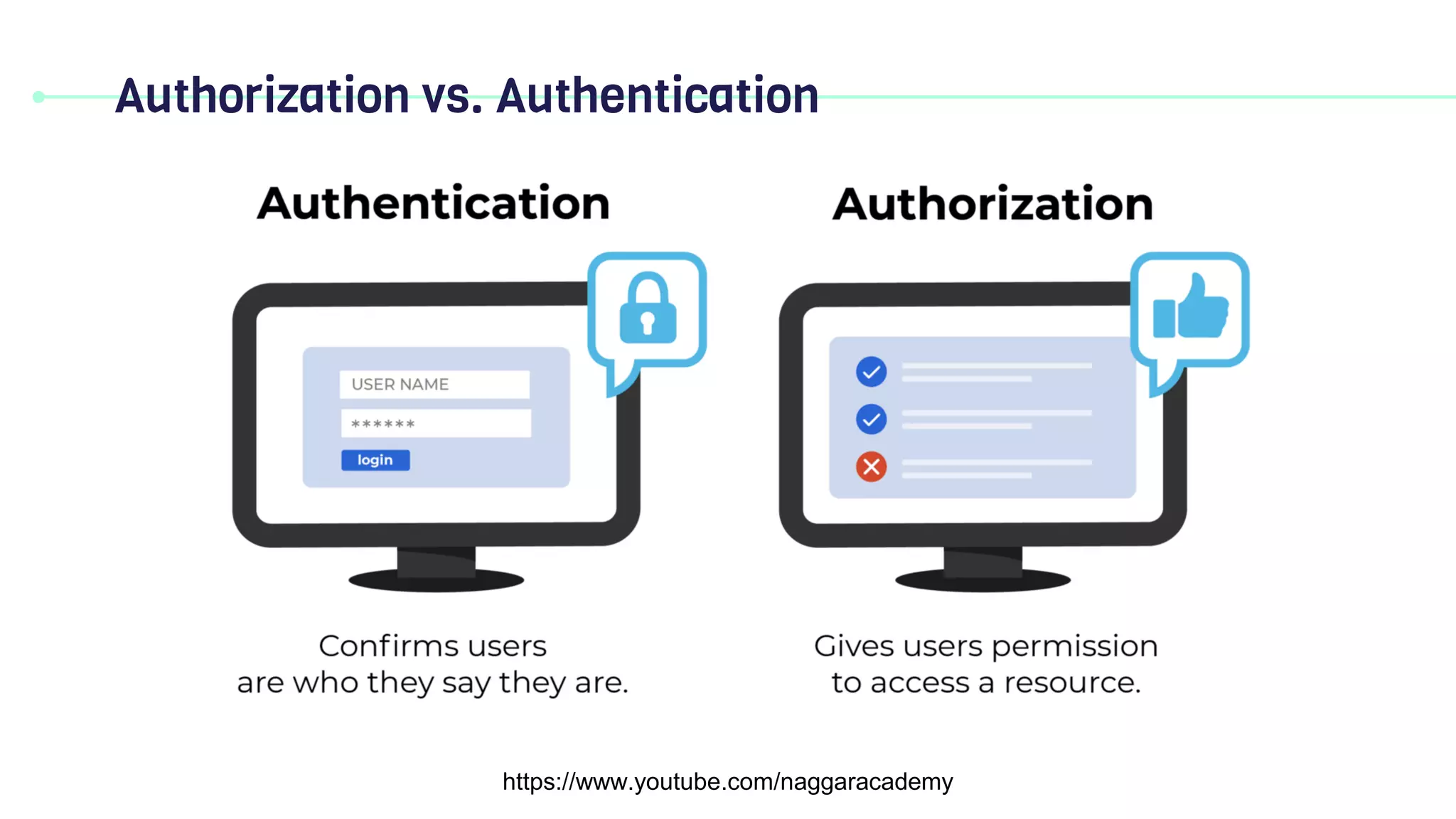
Authorization vs. Authentication
https://www.youtube.com/naggaracademy
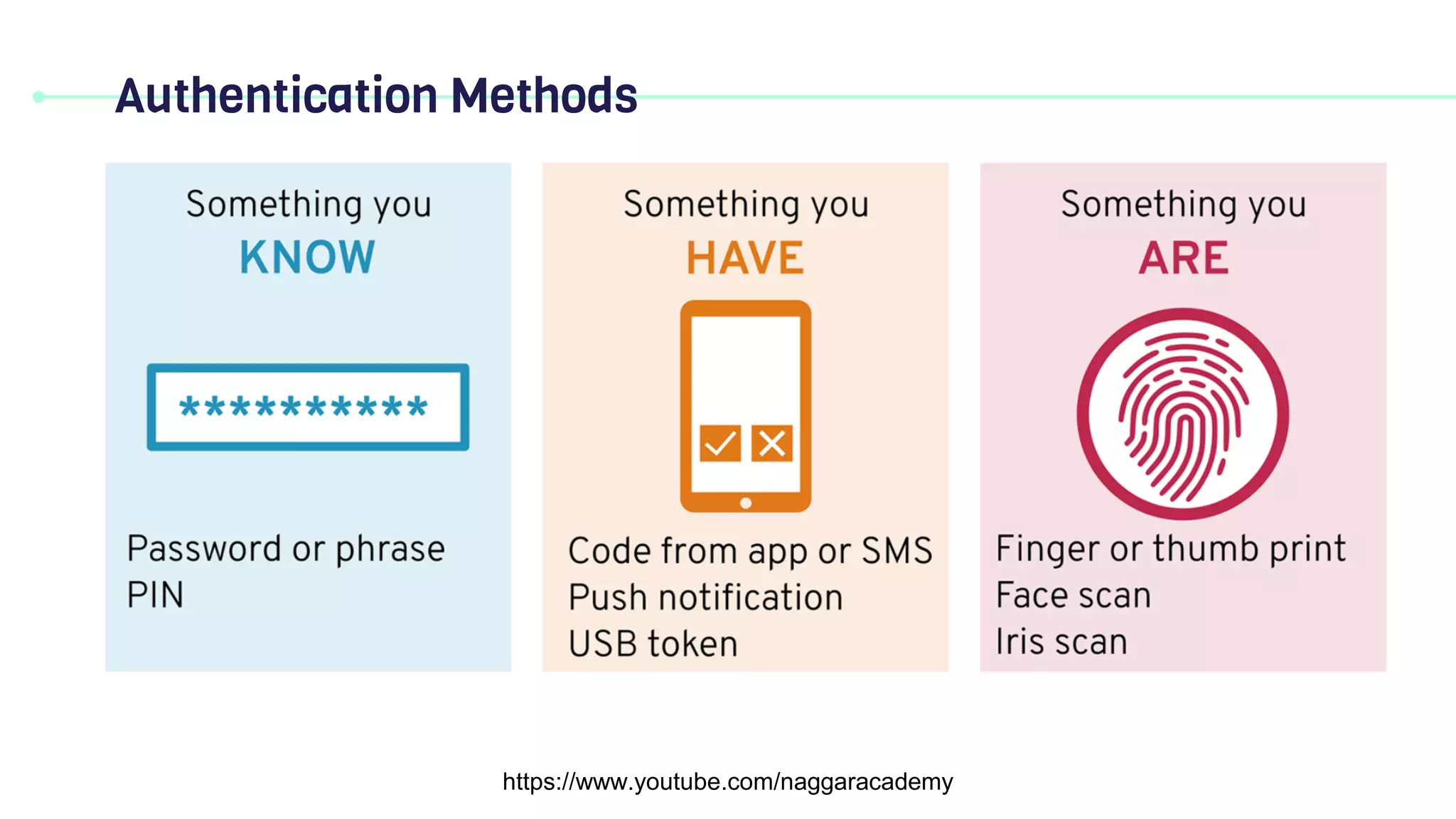
Authentication Methods
https://www.youtube.com/naggaracademy
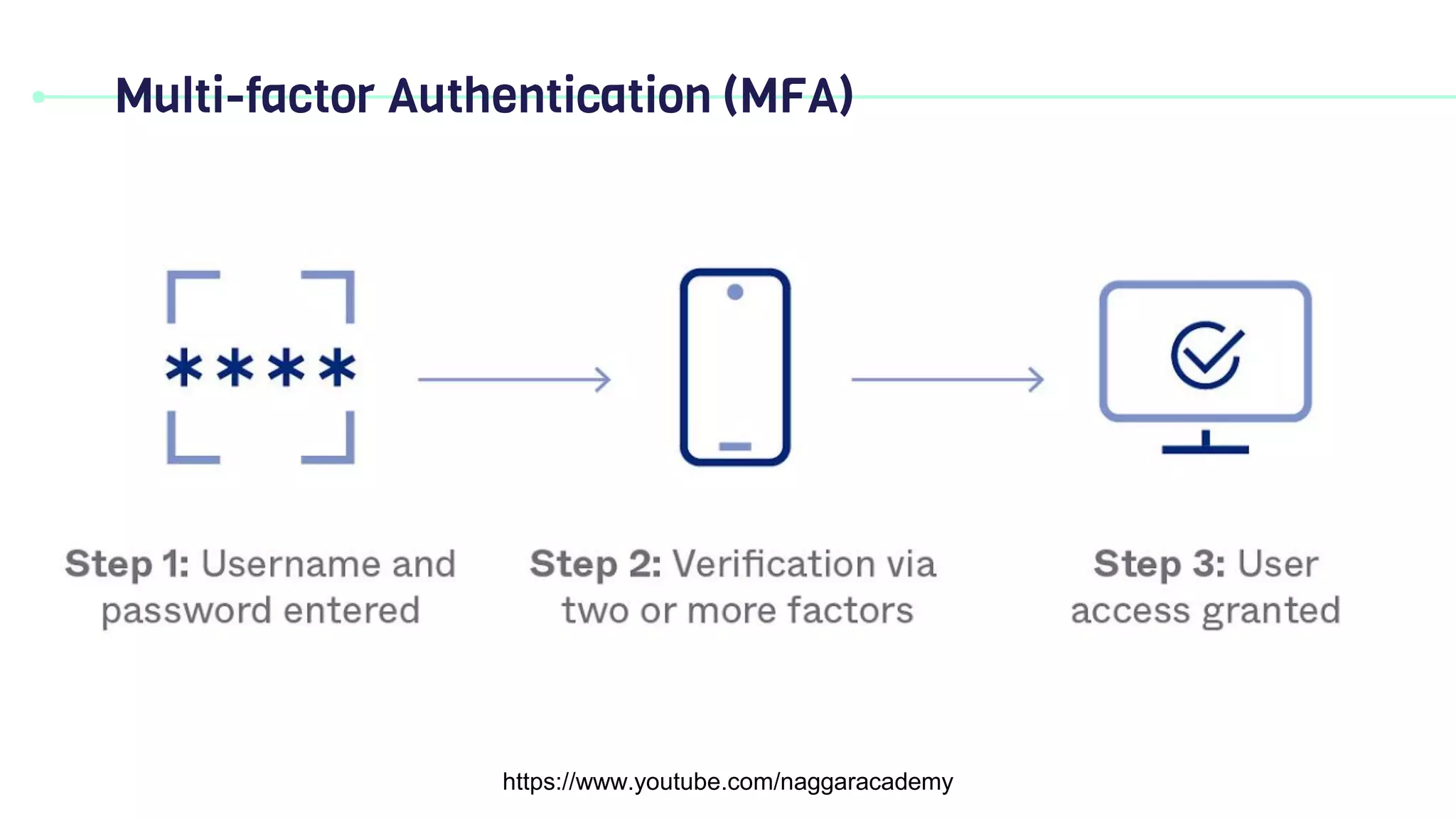
Multi-factor Authentication (MFA)
https://www.youtube.com/naggaracademy
Multi-factor Authentication (MFA)
https://www.youtube.com/naggaracademy
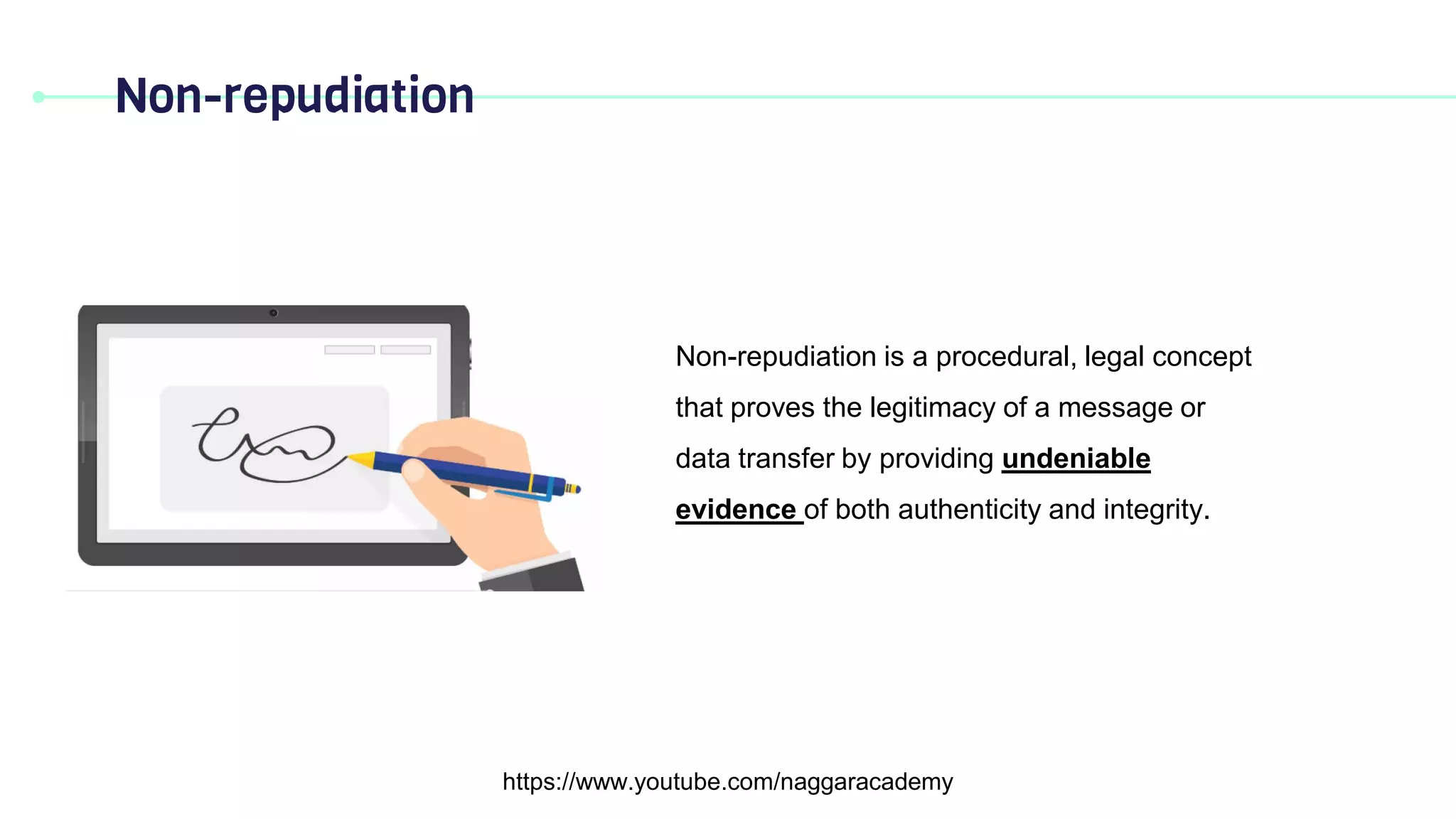
Non-repudiation
https://www.youtube.com/naggaracademy
Non-repudiation is a procedural, legal concept
that proves the legitimacy of a message or
data transfer by providing undeniable
evidence of both authenticity and integrity.
https://www.youtube.com/naggaracademy

CC 1-1 Concepts of InfoSec.pdf