CAUX ROUND TABLE 
Presented By: 
Ritu Agrawal 11303 
Srusti Bhavsar 11305 
Siddharth Sankhala 11317 
Chetanprakash Jain 11319 
Maitry Thakkar 11347
WHAT IS CAUX ROUND TABLE(CRT)?? 
 Its an international organization of senior business 
executives aiming to promote ethical business practice
WHY SUCH NAME?? 
 Original initiative in 1986 at Caux, Switzerland 
NEED FOR CRT 
 Japanese dumping products in western market 
 Resulting fear of trade war 
 Trust building between international executives and CSR 
practices
PURPOSE OF CRT 
 The CRT seeks to improve the outcomes of the 
market economy and globalization through ethical 
conduct and CSR 
 “The challenge of moral capitalism is to tip the 
balance of wealth creation toward humanity’s more 
noble possibilities and away from the dynamics of 
more brutish behavior.” –Stephen Young, Executive 
Director of CRT
FOUNDERS 
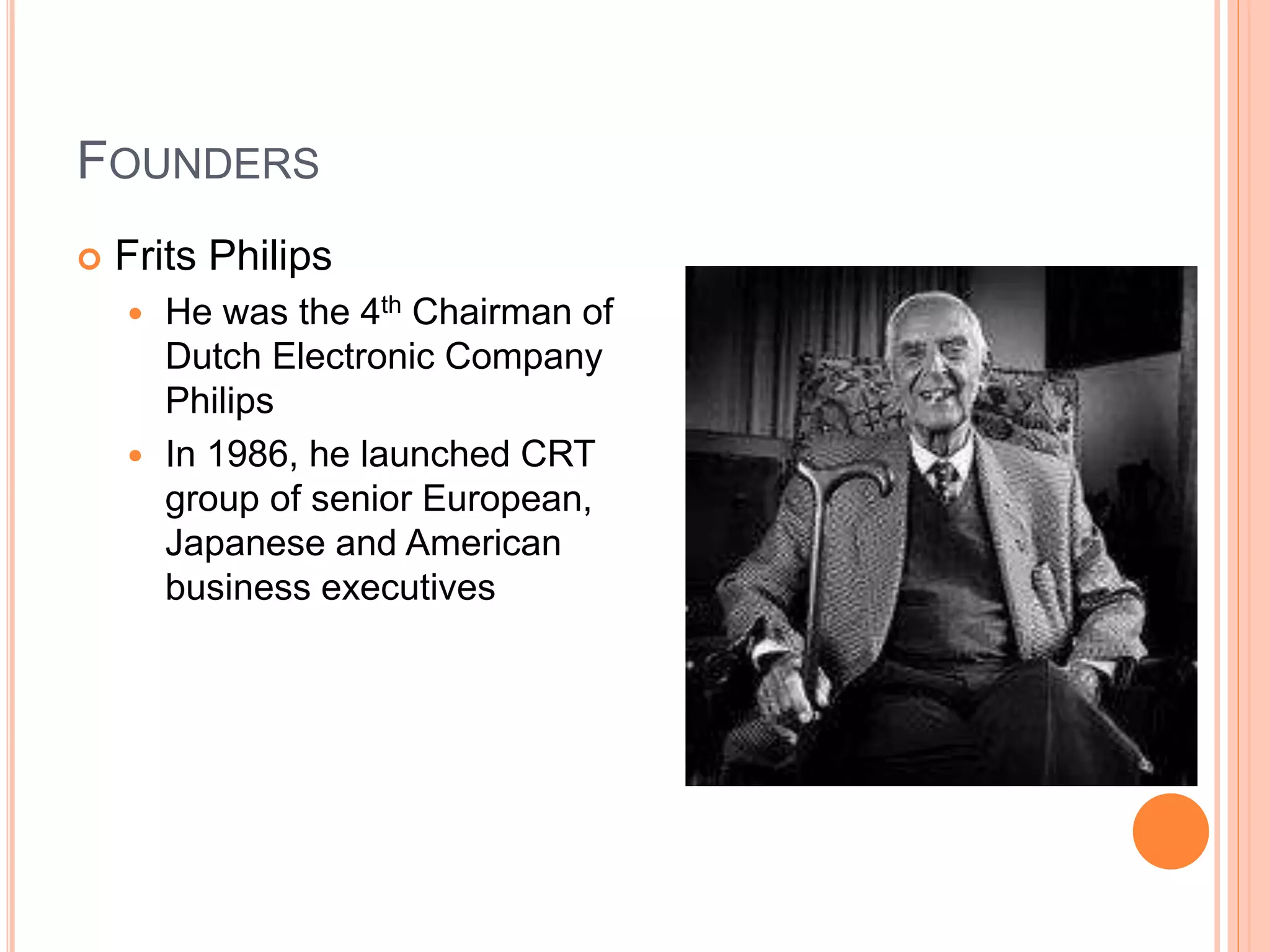
 Frits Philips 
 He was the 4th Chairman of 
Dutch Electronic Company 
Philips 
 In 1986, he launched CRT 
group of senior European, 
Japanese and American 
business executives
FOUNDERS 
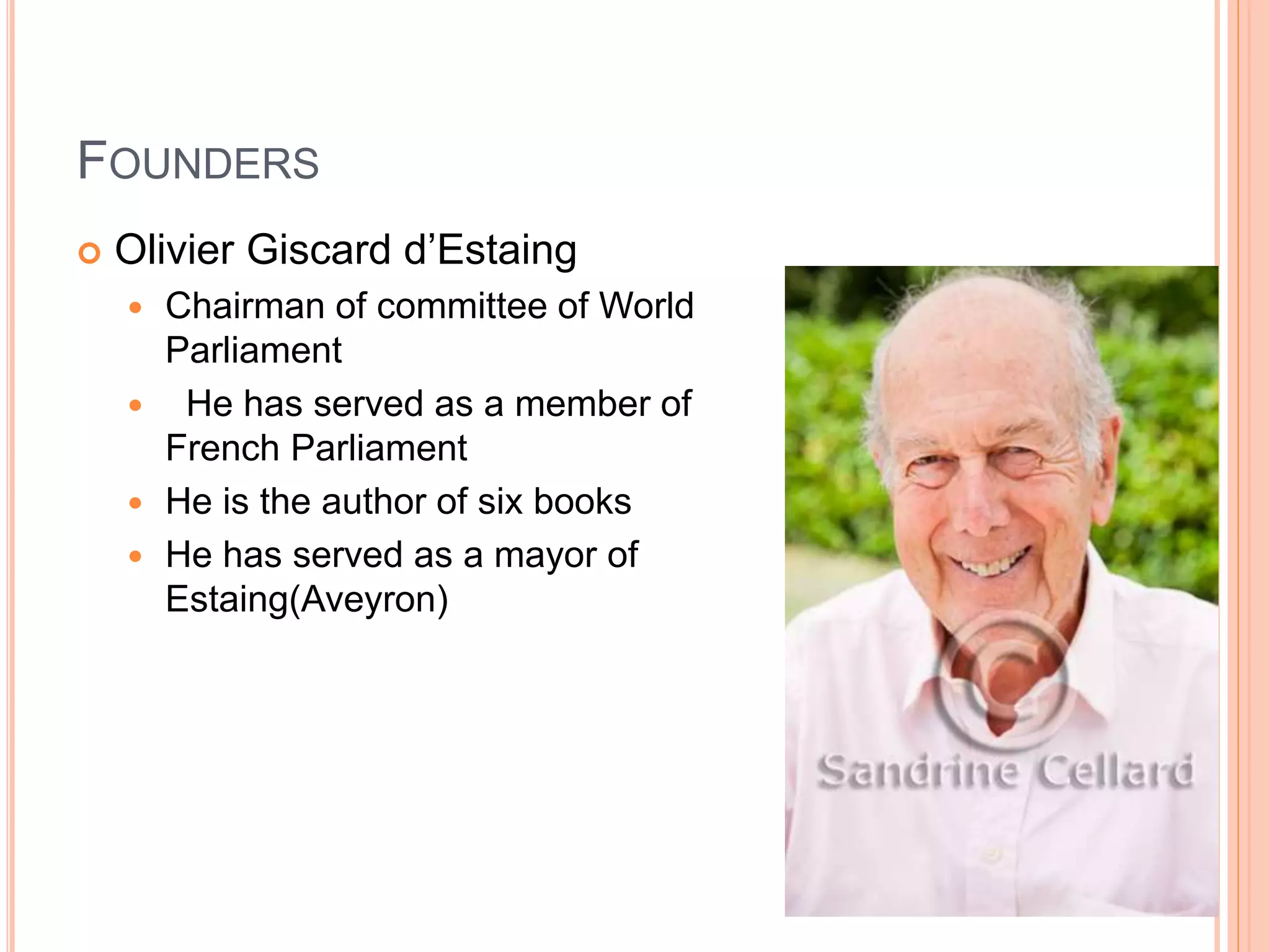
 Olivier Giscard d’Estaing 
 Chairman of committee of World 
Parliament 
 He has served as a member of 
French Parliament 
 He is the author of six books 
 He has served as a mayor of 
Estaing(Aveyron)
FOUNDATION VALUES 
 Kyosei 
 Means living and working together for common good 
 Human Dignity 
 Means all humans should treat each other with love and 
respect
HEADQUARTERS 
 Caux, Switzerland 
 Minnesota, United States 
AREA SERVED 
 The whole world
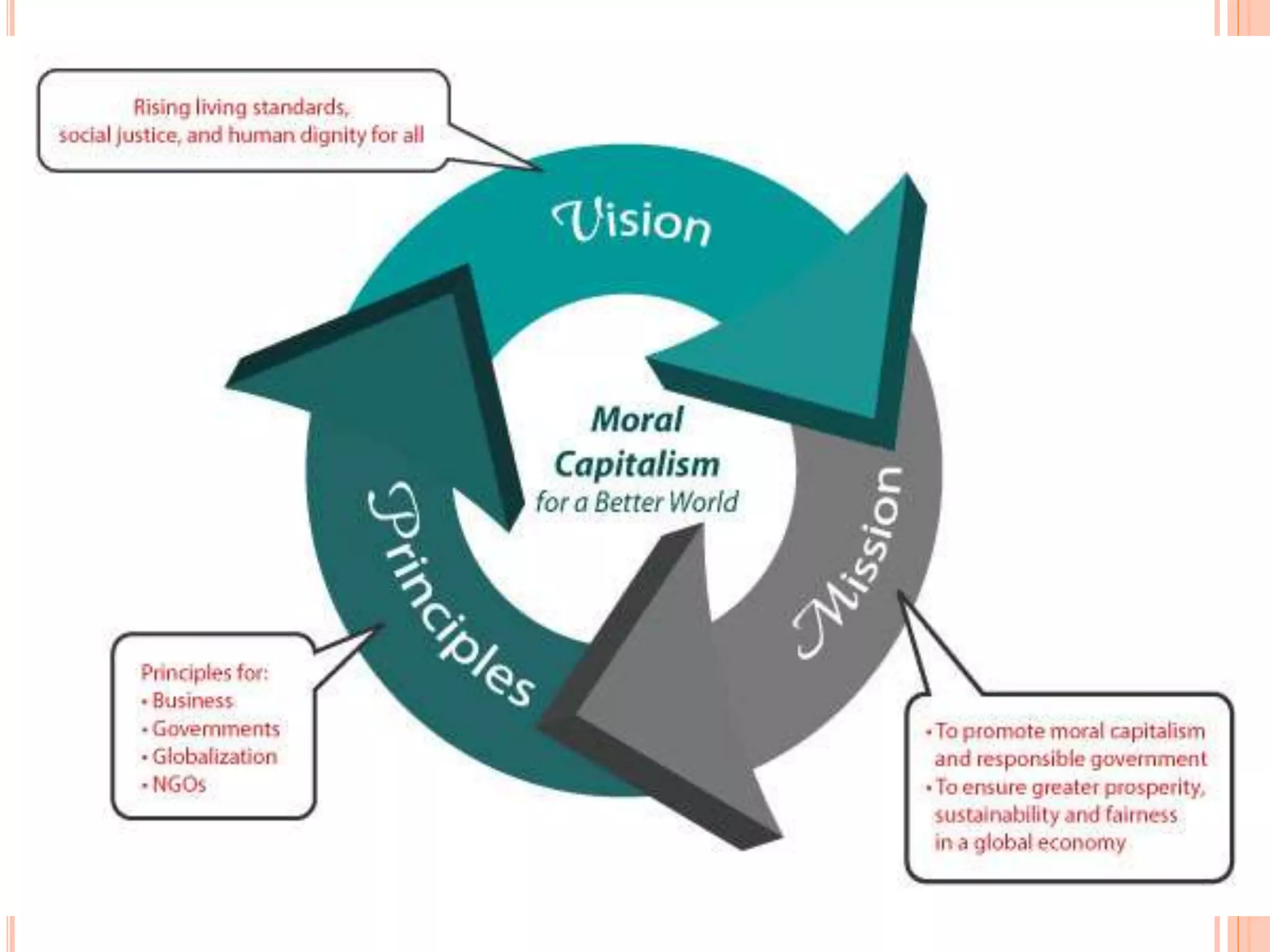
WHAT IS MORAL CAPITALIZATION?? 
 Moral Capitalism is a field theory that integrates 
intangible moral considerations with traditional 
micro and macroeconomic motives 
 In sum, Moral Capitalism asserts that interest and 
virtue are not necessarily in conflict; that virtue is an 
extension of interest rightly understood
PRINCIPLES FOR RESPONSIBLE BUSINESS 
 Ethical norms for acceptable business behavior 
1. Respect Stakeholders beyond Shareholders 
2. Contribute to Economic, Social and Environmental 
Development 
3. Build Trust by going beyond the letter of the law 
4. Respect rules and conventions 
5. Support responsible Globalization 
6. Respect the Environment 
7. Avoid illicit Activities
PRINCIPLE 1:RESPECT STAKEHOLDERS BEYOND 
SHAREHOLDERS 
 Duty to contribute value to society through 
 the wealth 
 employment it creates 
 the products and services it provides to consumers. 
 Economic health and viability for shareholders and 
stakeholders. 
 Honesty and fairness towards its, 
 customers 
 employees 
 suppliers 
 competitors and 
 the broader community.
PRINCIPLE 2: CONTRIBUTE TO ECONOMIC, SOCIAL AND 
ENVIRONMENTAL DEVELOPMENT 
 Business cannot sustainably prosper in societies that are 
failing or lacking in economic development. 
 It contributes to the economic, social and environmental 
development of the communities in which it operates, in 
order to build goodwill. 
 Enhances society through effective and prudent use of 
resources, free and fair competition, and innovation in 
technology and business practices.
PRINCIPLE-3:BUILD TRUST BY GOING BEYOND THE 
LETTER OF THE LAW 
 Some business behaviors though legal can have 
adverse consequences for stakeholders. 
 A responsible business adheres to the spirit and 
intent behind the law, which requires conduct that 
goes beyond minimum legal obligations. 
 A responsible business always operates with 
candor, truthfulness, and transparency, and keeps 
its promises.
PRINCIPLE 4: RESPECT RULES AND 
CONVENTIONS 
 A responsible business respects the local cultures 
and traditions in the communities in which it 
operates, consistent with fundamental principles of 
fairness and equality 
 To avoid Trade frictions and to promote the free 
trade and equal conditions for competitors as well 
as participants it should respect International and 
domestic rules.
PRINCIPLE 5: SUPPORT RESPONSIBLE 
GLOBALIZATION 
 A responsible business, as a participant in the 
global marketplace, supports open and fair 
multilateral trade system of World Trade 
Organization. 
 A responsible business supports reform of domestic 
rules and regulations where domestic measures 
unreasonably hinder global commerce.
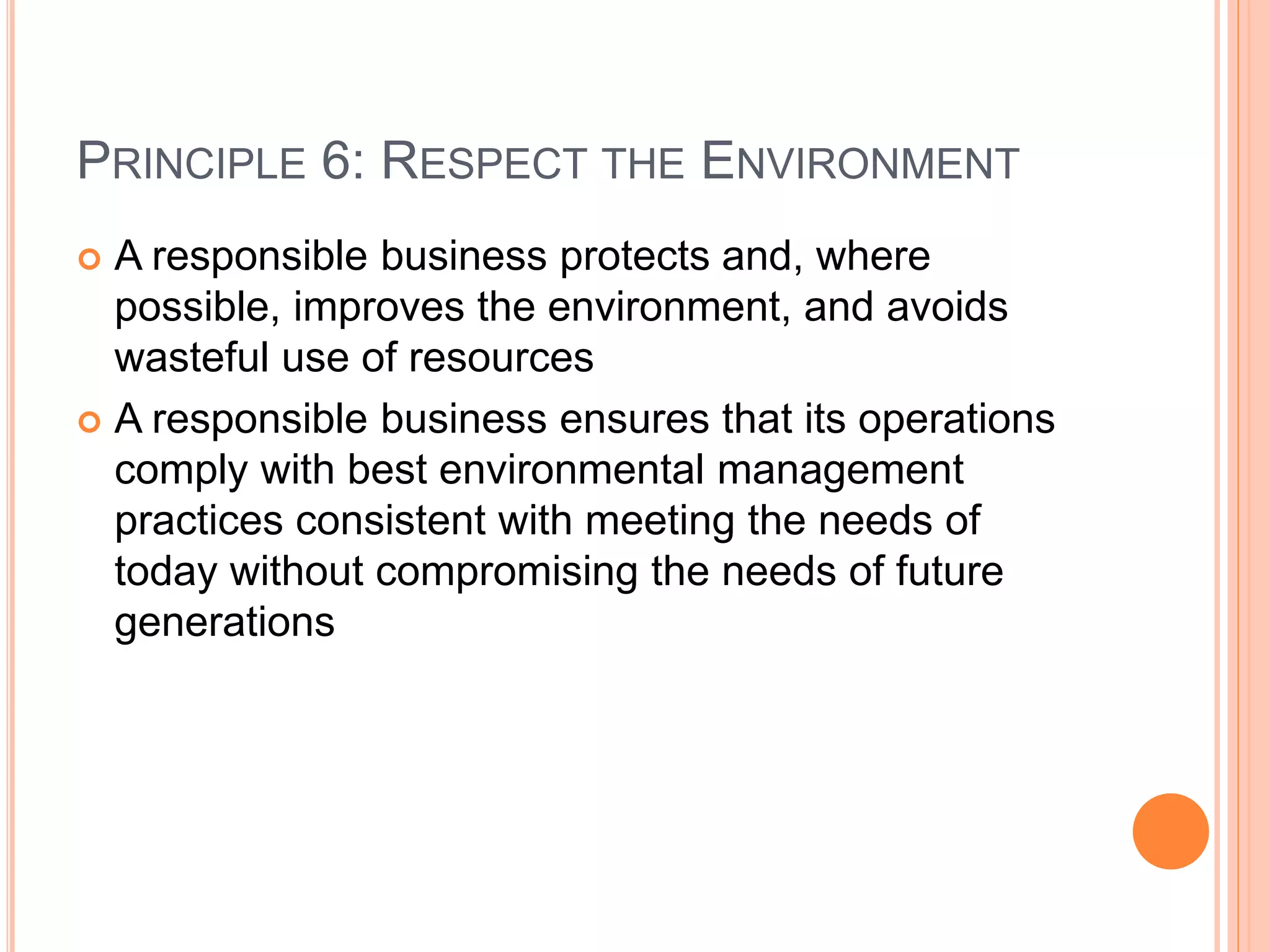
PRINCIPLE 6: RESPECT THE ENVIRONMENT 
 A responsible business protects and, where 
possible, improves the environment, and avoids 
wasteful use of resources 
 A responsible business ensures that its operations 
comply with best environmental management 
practices consistent with meeting the needs of 
today without compromising the needs of future 
generations
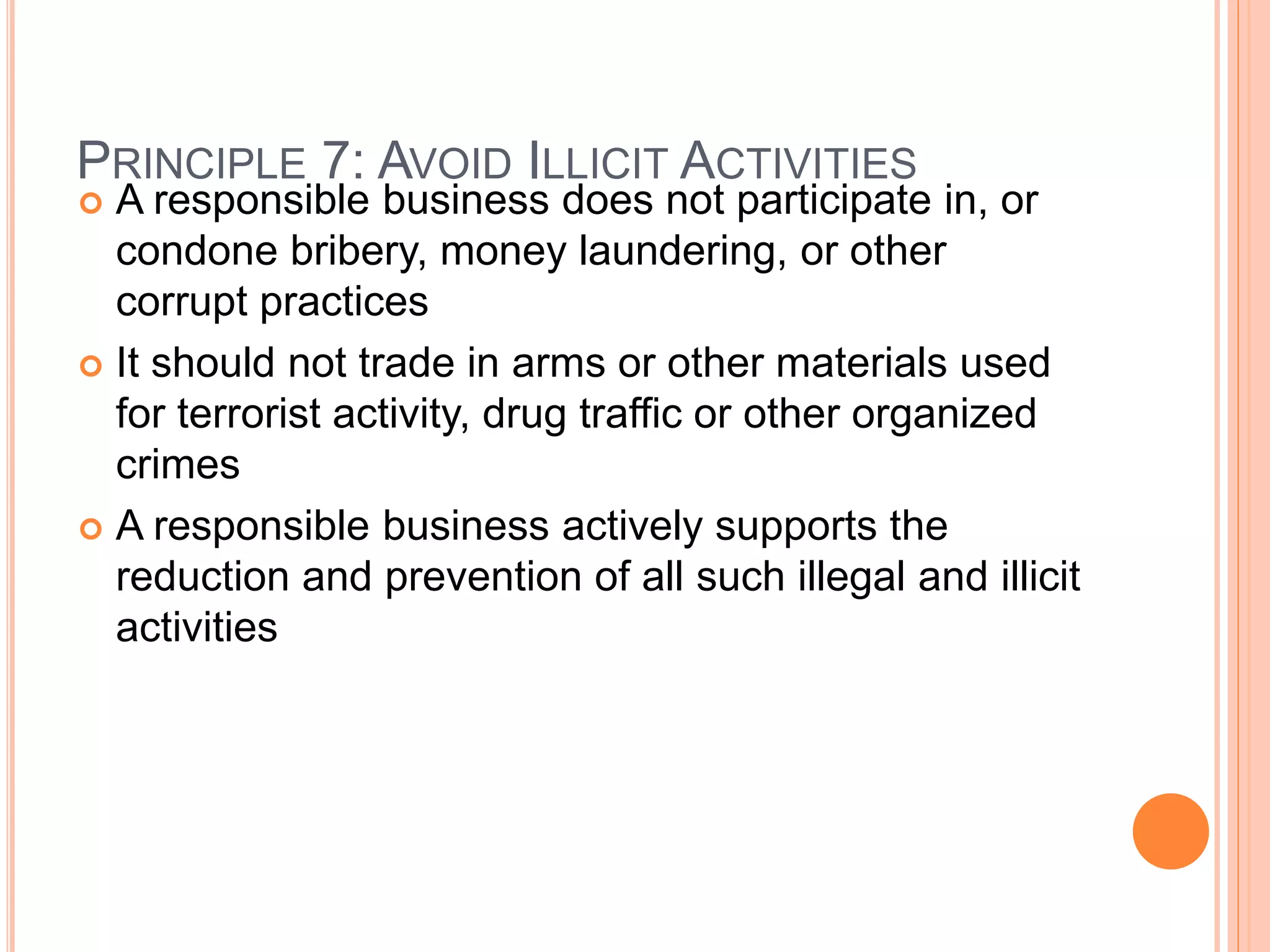
PRINCIPLE 7: AVOID ILLICIT ACTIVITIES 
 A responsible business does not participate in, or 
condone bribery, money laundering, or other 
corrupt practices 
 It should not trade in arms or other materials used 
for terrorist activity, drug traffic or other organized 
crimes 
 A responsible business actively supports the 
reduction and prevention of all such illegal and illicit 
activities
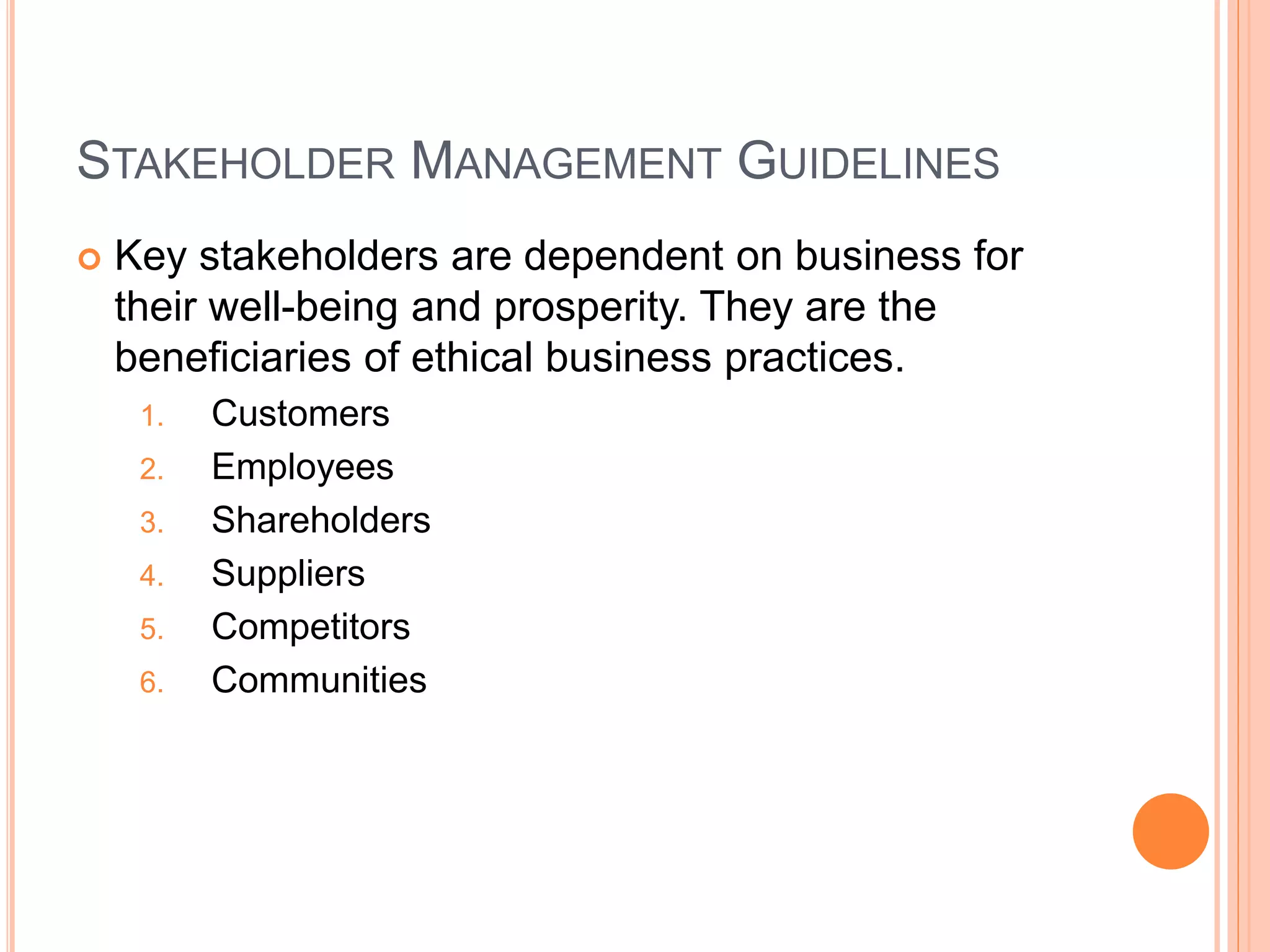
STAKEHOLDER MANAGEMENT GUIDELINES 
 Key stakeholders are dependent on business for 
their well-being and prosperity. They are the 
beneficiaries of ethical business practices. 
1. Customers 
2. Employees 
3. Shareholders 
4. Suppliers 
5. Competitors 
6. Communities
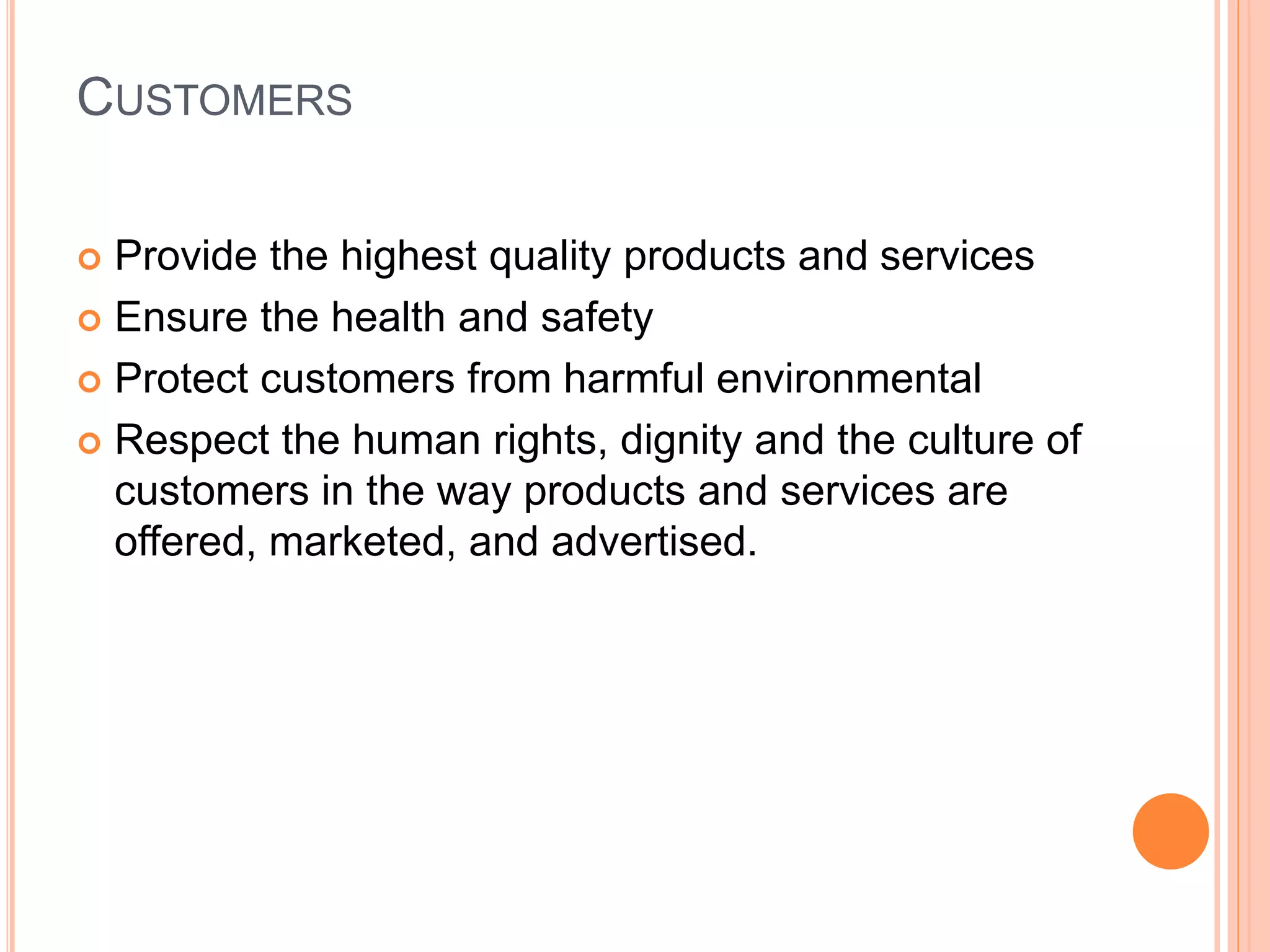
CUSTOMERS 
 Provide the highest quality products and services 
 Ensure the health and safety 
 Protect customers from harmful environmental 
 Respect the human rights, dignity and the culture of 
customers in the way products and services are 
offered, marketed, and advertised.
EMPLOYEES 
 Jobs and compensation 
 Working conditions 
 Encourage and assist all employees 
 Avoid discriminatory practices and provide equal 
treatment 
 Avoid illicit or abusive child labor practices.
SHAREHOLDERS 
 Apply professional and diligent management 
 Disclose relevant information to shareholders 
 Conserve, protect, and increase shareholder wealth 
 Respect shareholder views, complaints, and formal 
resolutions.
SUPPLIERS 
 Treat suppliers and subcontractors with fairness, 
truthfulness and mutual respect 
 Share information with suppliers 
 Seek, encourage and prefer suppliers and 
subcontractors whose: 
 Employment practices respect human rights and dignity 
 Environmental practices meet best practice standards
COMPETITORS 
 Promote competitive behavior that is socially and 
environmentally responsible 
 Open markets for trade and investment 
 Respect both tangible and intellectual property 
rights
COMMUNITIES 
 Respect human rights and democratic institutions 
 Recognize government’s legitimate obligation and 
support public policies and practices 
 Support peace, security and the rule of law
CSR BY DIFFERENT ORGANIZATIONS - 
INFOSYS 
 Rakum School for the visually challenged: 
 Mitr, the local CSR team, visited the Rakum School for 
the visually challenged. Mobility, an exercise in which 
team members walked blindfolded using canes, helped 
them empathize with the children. The team organized 
games and distributed chocolates and stationery. 
 Notebook distribution: 
 The Infinite Smiles CSR distributes books and 
stationery to underprivileged children across Karnataka 
since 2001. 
 In 2009, the team touched more than 45,000 lives, 
including the tribal community.
WIPRO 
 MISSION 10X 
 Mission 10X aims at enhancing employability of our 
engineering graduates by empowering faculty members. 
Having thus far trained over 10,000 faculty members 
across 20 states, the initiative intends to now reach out to 
over 25,000 additional engineering faculty in the near 
future. 
 Eco Eye 
 To strike a balance with environment, WIPRO formed Eco 
Eye a few years ago to bring all our green initiatives under 
one banner, and to incorporate better ecological balance in 
every project we execute.
AFFILIATED ORGANISATIONS 
 Some of the affiliated organizations with CRT are 
1. United nations global compact(UNGC) 
2. The centre for ethical business culture(CEBC) 
3. Corporate social responsibility Europe 
4. Institute of business ethics 
5. The international business forum 
6. Initiatives of change
CURRENT HONORS BY CRT: 
 Marilyn Carlson Nelson for 
outstanding citizenship 
 She is the chairperson of the Carlson 
companies, a global company in the 
hospitality industry (Radison Hotels) 
 She is a co-founder of Women 
Leader’s Program of the forum and 
founded the Center for Integrative 
Leadership at University of Minnesota 
 Under her leadership, Carlson was the 
first North American company who 
took stands against the sexual 
exploitation of children in the tourism 
industry
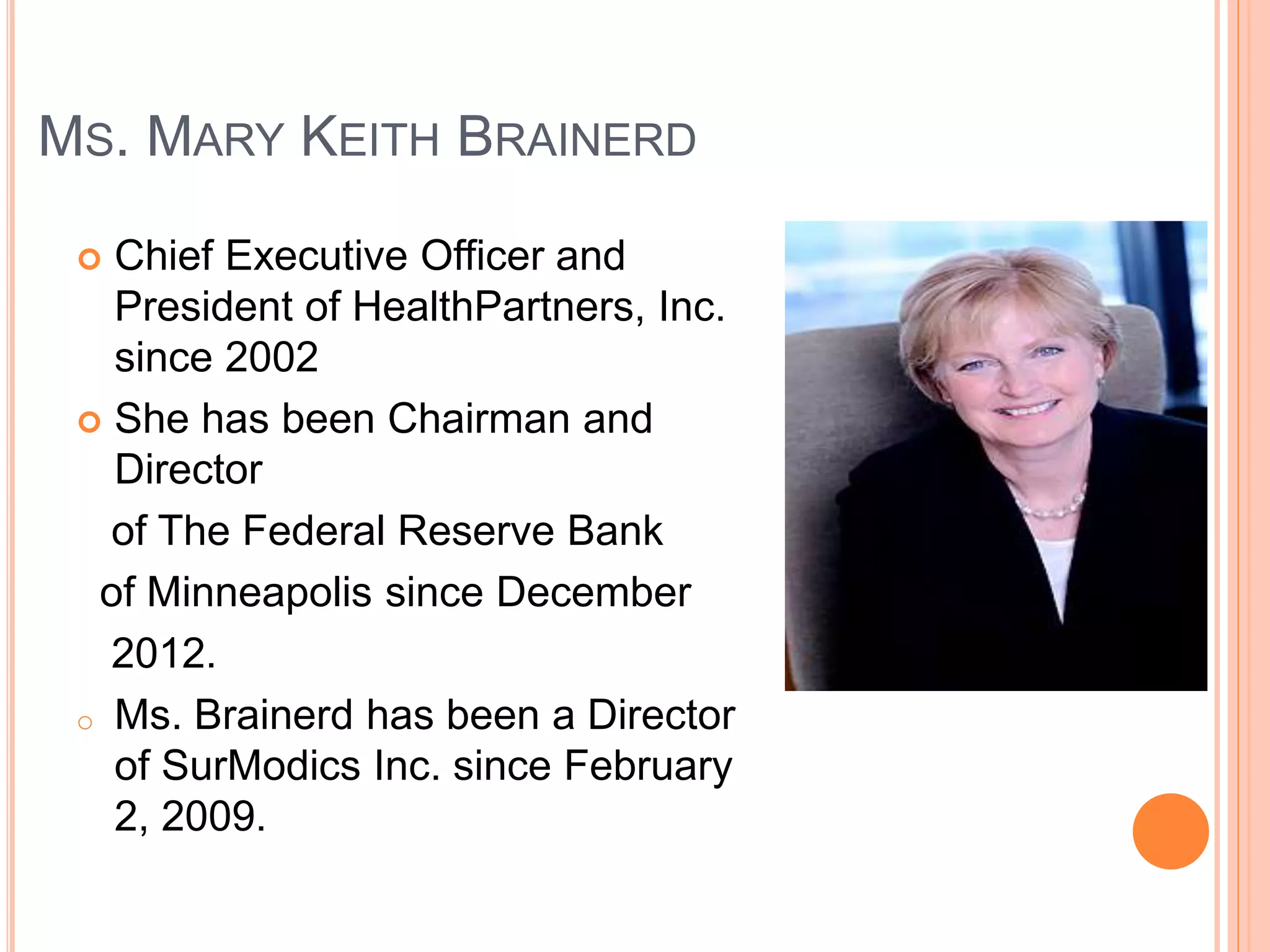
MS. MARY KEITH BRAINERD 
 Chief Executive Officer and 
President of HealthPartners, Inc. 
since 2002 
 She has been Chairman and 
Director 
of The Federal Reserve Bank 
of Minneapolis since December 
2012. 
o Ms. Brainerd has been a Director 
of SurModics Inc. since February 
2, 2009.
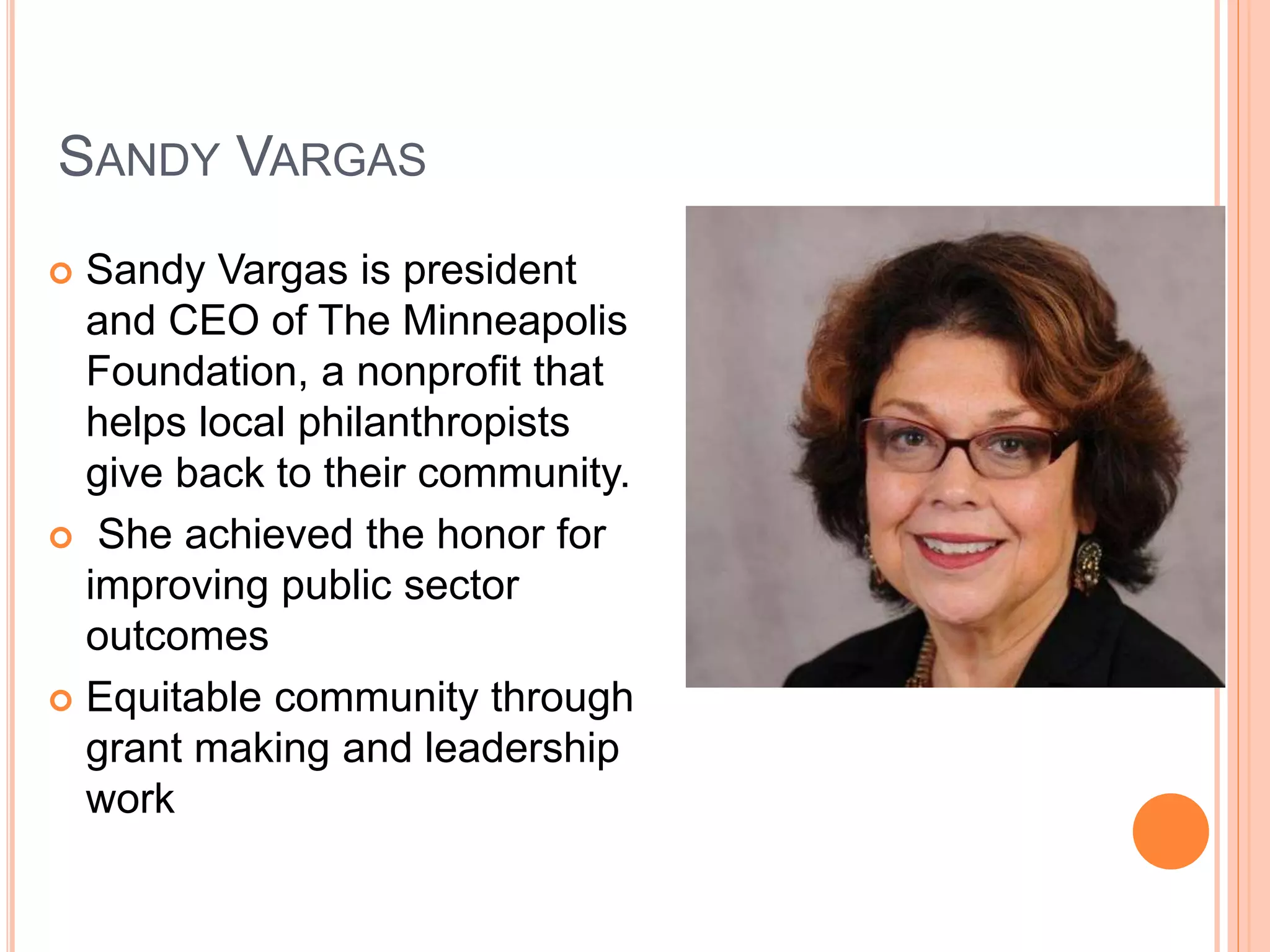
SANDY VARGAS 
 Sandy Vargas is president 
and CEO of The Minneapolis 
Foundation, a nonprofit that 
helps local philanthropists 
give back to their community. 
 She achieved the honor for 
improving public sector 
outcomes 
 Equitable community through 
grant making and leadership 
work
ANY QUESTIONS??
Caux round table

Caux round table

  • 1.
    CAUX ROUND TABLE Presented By: Ritu Agrawal 11303 Srusti Bhavsar 11305 Siddharth Sankhala 11317 Chetanprakash Jain 11319 Maitry Thakkar 11347
  • 2.
    WHAT IS CAUXROUND TABLE(CRT)??  Its an international organization of senior business executives aiming to promote ethical business practice
  • 3.
    WHY SUCH NAME??  Original initiative in 1986 at Caux, Switzerland NEED FOR CRT  Japanese dumping products in western market  Resulting fear of trade war  Trust building between international executives and CSR practices
  • 4.
    PURPOSE OF CRT  The CRT seeks to improve the outcomes of the market economy and globalization through ethical conduct and CSR  “The challenge of moral capitalism is to tip the balance of wealth creation toward humanity’s more noble possibilities and away from the dynamics of more brutish behavior.” –Stephen Young, Executive Director of CRT
  • 5.
    FOUNDERS  FritsPhilips  He was the 4th Chairman of Dutch Electronic Company Philips  In 1986, he launched CRT group of senior European, Japanese and American business executives
  • 6.
    FOUNDERS  OlivierGiscard d’Estaing  Chairman of committee of World Parliament  He has served as a member of French Parliament  He is the author of six books  He has served as a mayor of Estaing(Aveyron)
  • 7.
    FOUNDATION VALUES Kyosei  Means living and working together for common good  Human Dignity  Means all humans should treat each other with love and respect
  • 8.
    HEADQUARTERS  Caux,Switzerland  Minnesota, United States AREA SERVED  The whole world
  • 9.
    WHAT IS MORALCAPITALIZATION??  Moral Capitalism is a field theory that integrates intangible moral considerations with traditional micro and macroeconomic motives  In sum, Moral Capitalism asserts that interest and virtue are not necessarily in conflict; that virtue is an extension of interest rightly understood
  • 11.
    PRINCIPLES FOR RESPONSIBLEBUSINESS  Ethical norms for acceptable business behavior 1. Respect Stakeholders beyond Shareholders 2. Contribute to Economic, Social and Environmental Development 3. Build Trust by going beyond the letter of the law 4. Respect rules and conventions 5. Support responsible Globalization 6. Respect the Environment 7. Avoid illicit Activities
  • 12.
    PRINCIPLE 1:RESPECT STAKEHOLDERSBEYOND SHAREHOLDERS  Duty to contribute value to society through  the wealth  employment it creates  the products and services it provides to consumers.  Economic health and viability for shareholders and stakeholders.  Honesty and fairness towards its,  customers  employees  suppliers  competitors and  the broader community.
  • 13.
    PRINCIPLE 2: CONTRIBUTETO ECONOMIC, SOCIAL AND ENVIRONMENTAL DEVELOPMENT  Business cannot sustainably prosper in societies that are failing or lacking in economic development.  It contributes to the economic, social and environmental development of the communities in which it operates, in order to build goodwill.  Enhances society through effective and prudent use of resources, free and fair competition, and innovation in technology and business practices.
  • 14.
    PRINCIPLE-3:BUILD TRUST BYGOING BEYOND THE LETTER OF THE LAW  Some business behaviors though legal can have adverse consequences for stakeholders.  A responsible business adheres to the spirit and intent behind the law, which requires conduct that goes beyond minimum legal obligations.  A responsible business always operates with candor, truthfulness, and transparency, and keeps its promises.
  • 15.
    PRINCIPLE 4: RESPECTRULES AND CONVENTIONS  A responsible business respects the local cultures and traditions in the communities in which it operates, consistent with fundamental principles of fairness and equality  To avoid Trade frictions and to promote the free trade and equal conditions for competitors as well as participants it should respect International and domestic rules.
  • 16.
    PRINCIPLE 5: SUPPORTRESPONSIBLE GLOBALIZATION  A responsible business, as a participant in the global marketplace, supports open and fair multilateral trade system of World Trade Organization.  A responsible business supports reform of domestic rules and regulations where domestic measures unreasonably hinder global commerce.
  • 17.
    PRINCIPLE 6: RESPECTTHE ENVIRONMENT  A responsible business protects and, where possible, improves the environment, and avoids wasteful use of resources  A responsible business ensures that its operations comply with best environmental management practices consistent with meeting the needs of today without compromising the needs of future generations
  • 18.
    PRINCIPLE 7: AVOIDILLICIT ACTIVITIES  A responsible business does not participate in, or condone bribery, money laundering, or other corrupt practices  It should not trade in arms or other materials used for terrorist activity, drug traffic or other organized crimes  A responsible business actively supports the reduction and prevention of all such illegal and illicit activities
  • 19.
    STAKEHOLDER MANAGEMENT GUIDELINES  Key stakeholders are dependent on business for their well-being and prosperity. They are the beneficiaries of ethical business practices. 1. Customers 2. Employees 3. Shareholders 4. Suppliers 5. Competitors 6. Communities
  • 20.
    CUSTOMERS  Providethe highest quality products and services  Ensure the health and safety  Protect customers from harmful environmental  Respect the human rights, dignity and the culture of customers in the way products and services are offered, marketed, and advertised.
  • 21.
    EMPLOYEES  Jobsand compensation  Working conditions  Encourage and assist all employees  Avoid discriminatory practices and provide equal treatment  Avoid illicit or abusive child labor practices.
  • 22.
    SHAREHOLDERS  Applyprofessional and diligent management  Disclose relevant information to shareholders  Conserve, protect, and increase shareholder wealth  Respect shareholder views, complaints, and formal resolutions.
  • 23.
    SUPPLIERS  Treatsuppliers and subcontractors with fairness, truthfulness and mutual respect  Share information with suppliers  Seek, encourage and prefer suppliers and subcontractors whose:  Employment practices respect human rights and dignity  Environmental practices meet best practice standards
  • 24.
    COMPETITORS  Promotecompetitive behavior that is socially and environmentally responsible  Open markets for trade and investment  Respect both tangible and intellectual property rights
  • 25.
    COMMUNITIES  Respecthuman rights and democratic institutions  Recognize government’s legitimate obligation and support public policies and practices  Support peace, security and the rule of law
  • 26.
    CSR BY DIFFERENTORGANIZATIONS - INFOSYS  Rakum School for the visually challenged:  Mitr, the local CSR team, visited the Rakum School for the visually challenged. Mobility, an exercise in which team members walked blindfolded using canes, helped them empathize with the children. The team organized games and distributed chocolates and stationery.  Notebook distribution:  The Infinite Smiles CSR distributes books and stationery to underprivileged children across Karnataka since 2001.  In 2009, the team touched more than 45,000 lives, including the tribal community.
  • 27.
    WIPRO  MISSION10X  Mission 10X aims at enhancing employability of our engineering graduates by empowering faculty members. Having thus far trained over 10,000 faculty members across 20 states, the initiative intends to now reach out to over 25,000 additional engineering faculty in the near future.  Eco Eye  To strike a balance with environment, WIPRO formed Eco Eye a few years ago to bring all our green initiatives under one banner, and to incorporate better ecological balance in every project we execute.
  • 28.
    AFFILIATED ORGANISATIONS Some of the affiliated organizations with CRT are 1. United nations global compact(UNGC) 2. The centre for ethical business culture(CEBC) 3. Corporate social responsibility Europe 4. Institute of business ethics 5. The international business forum 6. Initiatives of change
  • 29.
    CURRENT HONORS BYCRT:  Marilyn Carlson Nelson for outstanding citizenship  She is the chairperson of the Carlson companies, a global company in the hospitality industry (Radison Hotels)  She is a co-founder of Women Leader’s Program of the forum and founded the Center for Integrative Leadership at University of Minnesota  Under her leadership, Carlson was the first North American company who took stands against the sexual exploitation of children in the tourism industry
  • 30.
    MS. MARY KEITHBRAINERD  Chief Executive Officer and President of HealthPartners, Inc. since 2002  She has been Chairman and Director of The Federal Reserve Bank of Minneapolis since December 2012. o Ms. Brainerd has been a Director of SurModics Inc. since February 2, 2009.
  • 31.
    SANDY VARGAS Sandy Vargas is president and CEO of The Minneapolis Foundation, a nonprofit that helps local philanthropists give back to their community.  She achieved the honor for improving public sector outcomes  Equitable community through grant making and leadership work
  • 32.