Role Of Ethics;
Values And
Morality In
Business
Management
BY RUCHIKA KHANDELWAL
MEANING
ETHICS- Ethics is a set of rules that define right and
wrong conduct.
VALUES-Value denotes the degree of importance of
some thing or action. values are standards of conduct
that a company wants each member of the organization
to follow.
MORALITY- Morality is the differentiation of
intentions, decisions and actions between those that are
distinguished as proper and those that are improper.
2
BETTER
UNDERSTANDING
A person who knows the difference
between right and wrong and
chooses right is moral. A person whose
morality is reflected in his willingness to do
the right thing – even if it is hard or
dangerous – is ethical. Ethics are moral
values in action.
3
7 PRINCIPLES OF
ADMIRABLE
BUSINESS ETHICS
“1. BE TRUSTFUL
2. KEEP AN OPEN MIND
3. MEET OBLIGATIONS
4. HAVE CLEAR DOCUMENTS
5. BECOME COMMUNITY INVOLVED
6. MAINTAIN ACCOUNTING CONTROL
7. BE RESPECTFUL
5
6
Ethics is the Measurable Differentiator
QUOTES ON
BUSINESS
ETHICS
“A BUSINESS THAT MAKES NOTHING BUT
MONEY IS A POOR KIND OF BUSINESS.”
-HENRY FORD
“IF YOU WANT TO WALK FAST, WALK
ALONE. BUT IF YOU WANT TO WALK FAR,
WALK TOGETHER.”
-RATAN TATA
7
(Chairman of the Tata Group)
(American captain of industry)
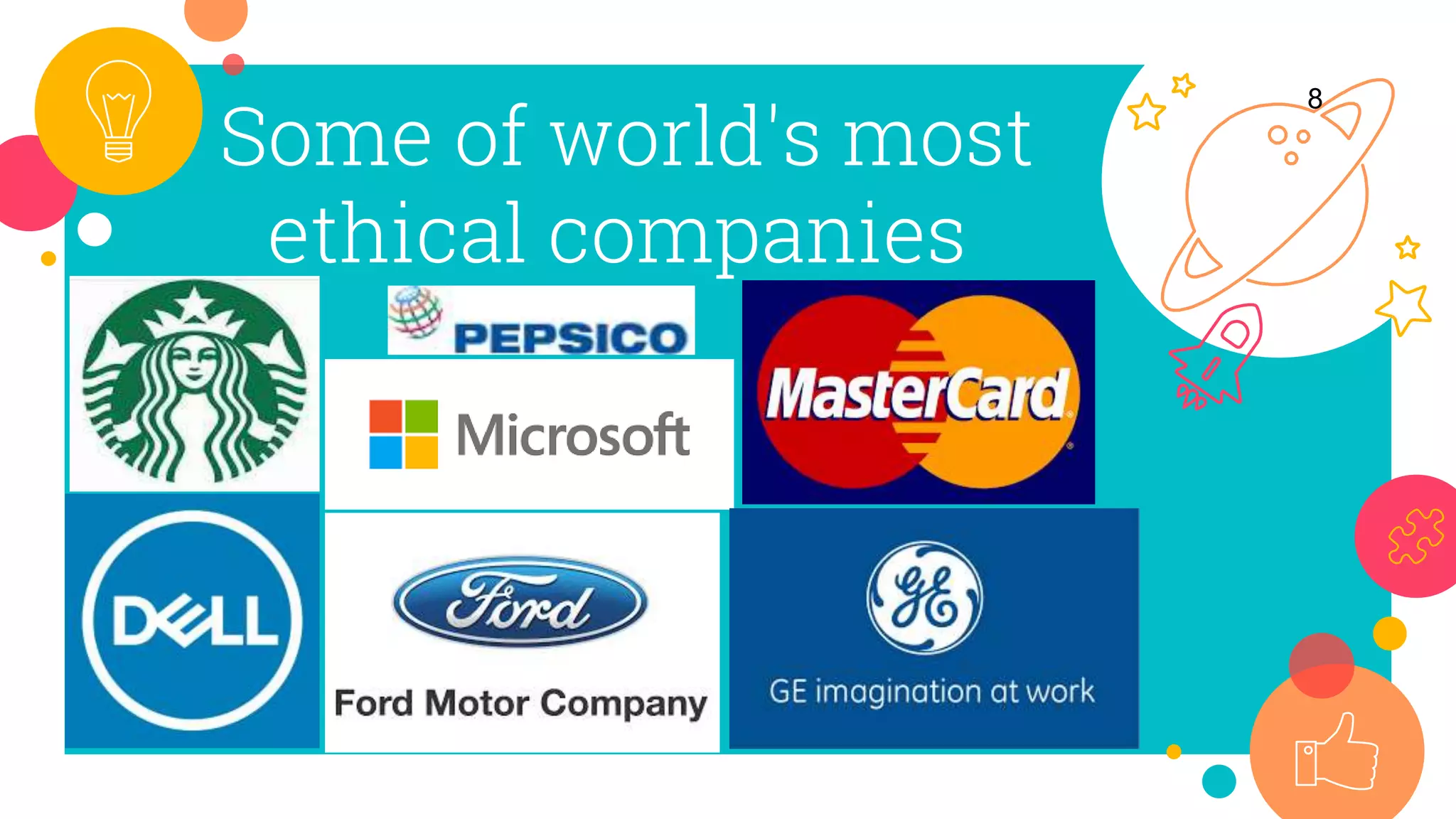
Some of world's most
ethical companies
8
Stakeholder
Theory published
in 1983 in San
Francisco.
9Is a theory of organizational management and business
ethics that addresses morals and values in managing an
organization.
Unethical
Advertisement
10
SOME MYTHS
11
MYTH 1: WE LEARN ETHICS AS LITTLE KIDS, NOT AS ADULTS
WRONG: Ethical maturity grows with cognitive maturity.
- Making ethical decisions requires
brainpower
- Successful leaders tend to have
more advanced ethical reasoning
skills.
12
MYTH 2: WE ALL KNOW WHAT’S RIGHT. IT’S
JUST A MATTER OF DOING IT.
THEN WHY DO WE
DISAGREE ALL THE
TIME?
13
ETHICS IS JUST A MATTER OF
OPINION.
MYTH 3:
- THERE ARE NO OBJECTIVE STANDS
- ONLY PERSONAL VALUESS.
TRY TO REMEMBER THIS THE NEXT
TIME YOU ARE MUGGED
14
core
values
15
Innovation – Pursuing new creative ideas that have the potential to change the
world.
Integrity – Acting with honesty and honor without compromising the truth
Accountability – Acknowledging and assuming
responsibility for actions, products, decisions, and policies.
Commitment – Committing to great product, service, and
other initiatives that impact lives within and outside the
organization.
Community –Contributing to society and demonstrating
corporate social responsibility.
Diversity – respecting the diversity and giving the best of
composition. Establishing an employee equity program.
Empowerment – Encouraging employees to take initiative and give the best.
16
CONCLUSION
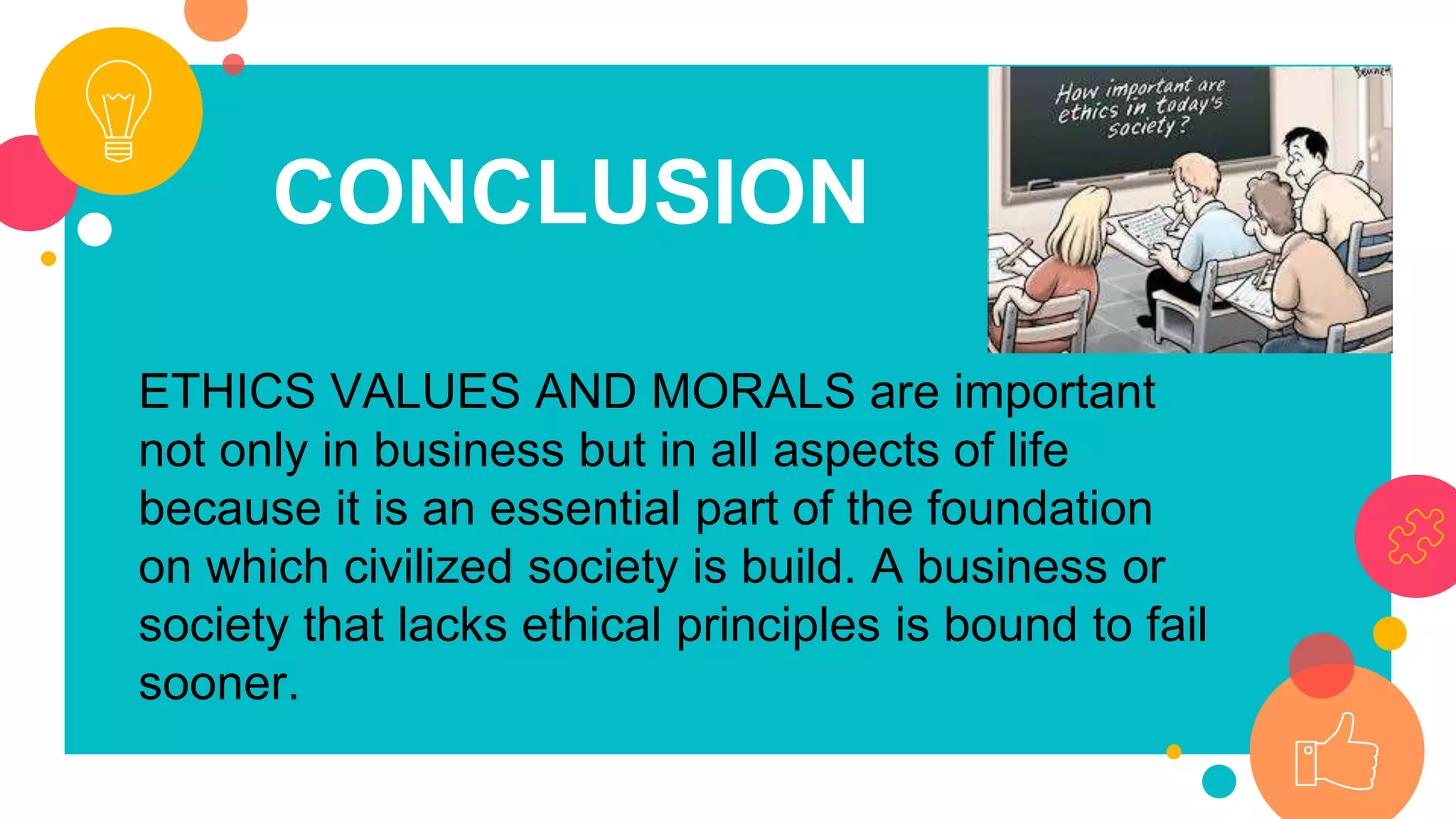
ETHICS VALUES AND MORALS are important
not only in business but in all aspects of life
because it is an essential part of the foundation
on which civilized society is build. A business or
society that lacks ethical principles is bound to fail
sooner.
Thank You!
17

Role Of Ethics; Values And Morality In Business Management

  • 1.
    Role Of Ethics; ValuesAnd Morality In Business Management BY RUCHIKA KHANDELWAL
  • 2.
    MEANING ETHICS- Ethics isa set of rules that define right and wrong conduct. VALUES-Value denotes the degree of importance of some thing or action. values are standards of conduct that a company wants each member of the organization to follow. MORALITY- Morality is the differentiation of intentions, decisions and actions between those that are distinguished as proper and those that are improper. 2
  • 3.
    BETTER UNDERSTANDING A person whoknows the difference between right and wrong and chooses right is moral. A person whose morality is reflected in his willingness to do the right thing – even if it is hard or dangerous – is ethical. Ethics are moral values in action. 3
  • 4.
  • 5.
    “1. BE TRUSTFUL 2.KEEP AN OPEN MIND 3. MEET OBLIGATIONS 4. HAVE CLEAR DOCUMENTS 5. BECOME COMMUNITY INVOLVED 6. MAINTAIN ACCOUNTING CONTROL 7. BE RESPECTFUL 5
  • 6.
    6 Ethics is theMeasurable Differentiator
  • 7.
    QUOTES ON BUSINESS ETHICS “A BUSINESSTHAT MAKES NOTHING BUT MONEY IS A POOR KIND OF BUSINESS.” -HENRY FORD “IF YOU WANT TO WALK FAST, WALK ALONE. BUT IF YOU WANT TO WALK FAR, WALK TOGETHER.” -RATAN TATA 7 (Chairman of the Tata Group) (American captain of industry)
  • 8.
    Some of world'smost ethical companies 8
  • 9.
    Stakeholder Theory published in 1983in San Francisco. 9Is a theory of organizational management and business ethics that addresses morals and values in managing an organization.
  • 10.
  • 11.
    SOME MYTHS 11 MYTH 1:WE LEARN ETHICS AS LITTLE KIDS, NOT AS ADULTS WRONG: Ethical maturity grows with cognitive maturity. - Making ethical decisions requires brainpower - Successful leaders tend to have more advanced ethical reasoning skills.
  • 12.
    12 MYTH 2: WEALL KNOW WHAT’S RIGHT. IT’S JUST A MATTER OF DOING IT. THEN WHY DO WE DISAGREE ALL THE TIME?
  • 13.
    13 ETHICS IS JUSTA MATTER OF OPINION. MYTH 3: - THERE ARE NO OBJECTIVE STANDS - ONLY PERSONAL VALUESS. TRY TO REMEMBER THIS THE NEXT TIME YOU ARE MUGGED
  • 14.
  • 15.
    core values 15 Innovation – Pursuingnew creative ideas that have the potential to change the world. Integrity – Acting with honesty and honor without compromising the truth Accountability – Acknowledging and assuming responsibility for actions, products, decisions, and policies. Commitment – Committing to great product, service, and other initiatives that impact lives within and outside the organization. Community –Contributing to society and demonstrating corporate social responsibility. Diversity – respecting the diversity and giving the best of composition. Establishing an employee equity program. Empowerment – Encouraging employees to take initiative and give the best.
  • 16.
    16 CONCLUSION ETHICS VALUES ANDMORALS are important not only in business but in all aspects of life because it is an essential part of the foundation on which civilized society is build. A business or society that lacks ethical principles is bound to fail sooner.
  • 17.