Church Reform & Religious Communities
Council of Trent
 1545-1547; 1551-1552; 1562-1563
 Paul III; Julius III; Pius IV
 Lutheran split 1530; Anglican split 1534
 Respond to Reformers, clarify doctrine,
  strengthen church from within, enhance
  uniformity and appeal
 Anathema sit … Let him be condemned!
Walls, yes … bridges, no
Response to Reformers
   Sola Scriptura
     Scripture AND Tradition
     Church alone can interpret scripture
     Latin Vulgate is the ideal translation
     “And for anyone who says scripture and
      tradition are not equal, let him be
      anathema.”
Justification/Salvation
   Salvation Through Grace By Faith
     Without grace, we are doomed …
      ○ BUT … we must cooperate with grace
      ○ Grace is only the beginning
     Devotions and good works affirmed, but
     abuses (like selling indulgences) stopped
   Faith AND works
Priesthood of All Believers
 Hierarchy still stands
 The “character” of orders is indelible
  (permanent, unchangeable, inerasable)
 However … the clergy needs reform
     Seminary in every diocese
     Bishops must live in diocese
     Priests and bishops must preach
     Priestly celibacy
Other Results
   Publications
     Catechism
     Breviary
     Missal
 Index of Forbidden Books
 New religious orders; reform within others
 Bulk of the changes/teachings/publications
  hold solid until 1960s, with Vatican II
Society of Jesus (Jesuits)
 Ignatius of Loyola (1491-1556)
 Injured as soldier  Soldier for Christ
 Military background  chain of command
     Fourth Vow– absolute personal obedience to
      Pope
 “The Spiritual Exercises”
 Intellectuals, theologians, missionaries
     Practical, this-world … not withdrawal, sacrifice
     Task for “soldiers”: Combat Protestantism
Spiritual/Mystics
   Teresa of Avila (1515-1582)
     Doctor of the Church
     “The Interior Castle”
     Discalced Carmelites
   John of the Cross
Vincentians/Charitys
   Vincent de Paul (1581-1660)
     Focus on the poor; preach to, teach
     commoners
   Louise de Marillac  Daughters of
    Charity
     Bypass cloister rules by taking private
     annual vows
Christian Brothers
   John Baptist de La Salle (1652-1719)
     Educate poor children  escape poverty,
      crime
     Began classroom teaching (not private
      tutors)
     Considered a founder of modern education
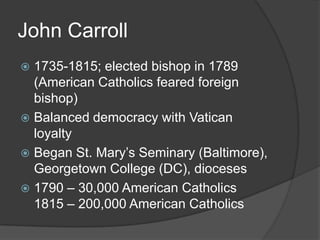
John Carroll
 1735-1815; elected bishop in 1789
  (American Catholics feared foreign
  bishop)
 Balanced democracy with Vatican
  loyalty
 Began St. Mary’s Seminary (Baltimore),
  Georgetown College (DC), dioceses
 1790 – 30,000 American Catholics
  1815 – 200,000 American Catholics
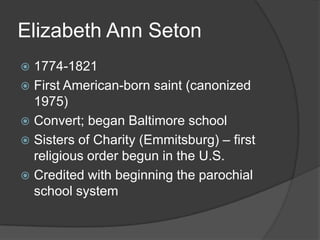
Elizabeth Ann Seton
 1774-1821
 First American-born saint (canonized
  1975)
 Convert; began Baltimore school
 Sisters of Charity (Emmitsburg) – first
  religious order begun in the U.S.
 Credited with beginning the parochial
  school system
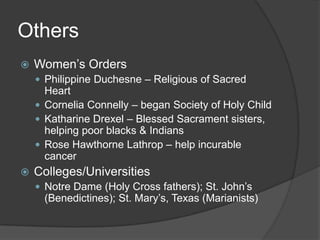
Others
   Women’s Orders
     Philippine Duchesne – Religious of Sacred
      Heart
     Cornelia Connelly – began Society of Holy Child
     Katharine Drexel – Blessed Sacrament sisters,
      helping poor blacks & Indians
     Rose Hawthorne Lathrop – help incurable
      cancer
   Colleges/Universities
     Notre Dame (Holy Cross fathers); St. John’s
     (Benedictines); St. Mary’s, Texas (Marianists)

Catholic reform

  • 1.
    Church Reform &Religious Communities
  • 2.
    Council of Trent 1545-1547; 1551-1552; 1562-1563  Paul III; Julius III; Pius IV  Lutheran split 1530; Anglican split 1534  Respond to Reformers, clarify doctrine, strengthen church from within, enhance uniformity and appeal  Anathema sit … Let him be condemned!
  • 3.
    Walls, yes …bridges, no
  • 4.
    Response to Reformers  Sola Scriptura  Scripture AND Tradition  Church alone can interpret scripture  Latin Vulgate is the ideal translation  “And for anyone who says scripture and tradition are not equal, let him be anathema.”
  • 5.
    Justification/Salvation  Salvation Through Grace By Faith  Without grace, we are doomed … ○ BUT … we must cooperate with grace ○ Grace is only the beginning  Devotions and good works affirmed, but abuses (like selling indulgences) stopped  Faith AND works
  • 6.
    Priesthood of AllBelievers  Hierarchy still stands  The “character” of orders is indelible (permanent, unchangeable, inerasable)  However … the clergy needs reform  Seminary in every diocese  Bishops must live in diocese  Priests and bishops must preach  Priestly celibacy
  • 7.
    Other Results  Publications  Catechism  Breviary  Missal  Index of Forbidden Books  New religious orders; reform within others  Bulk of the changes/teachings/publications hold solid until 1960s, with Vatican II
  • 9.
    Society of Jesus(Jesuits)  Ignatius of Loyola (1491-1556)  Injured as soldier  Soldier for Christ  Military background  chain of command  Fourth Vow– absolute personal obedience to Pope  “The Spiritual Exercises”  Intellectuals, theologians, missionaries  Practical, this-world … not withdrawal, sacrifice  Task for “soldiers”: Combat Protestantism
  • 10.
    Spiritual/Mystics  Teresa of Avila (1515-1582)  Doctor of the Church  “The Interior Castle”  Discalced Carmelites  John of the Cross
  • 11.
    Vincentians/Charitys  Vincent de Paul (1581-1660)  Focus on the poor; preach to, teach commoners  Louise de Marillac  Daughters of Charity  Bypass cloister rules by taking private annual vows
  • 12.
    Christian Brothers  John Baptist de La Salle (1652-1719)  Educate poor children  escape poverty, crime  Began classroom teaching (not private tutors)  Considered a founder of modern education
  • 14.
    John Carroll  1735-1815;elected bishop in 1789 (American Catholics feared foreign bishop)  Balanced democracy with Vatican loyalty  Began St. Mary’s Seminary (Baltimore), Georgetown College (DC), dioceses  1790 – 30,000 American Catholics 1815 – 200,000 American Catholics
  • 15.
    Elizabeth Ann Seton 1774-1821  First American-born saint (canonized 1975)  Convert; began Baltimore school  Sisters of Charity (Emmitsburg) – first religious order begun in the U.S.  Credited with beginning the parochial school system
  • 16.
    Others  Women’s Orders  Philippine Duchesne – Religious of Sacred Heart  Cornelia Connelly – began Society of Holy Child  Katharine Drexel – Blessed Sacrament sisters, helping poor blacks & Indians  Rose Hawthorne Lathrop – help incurable cancer  Colleges/Universities  Notre Dame (Holy Cross fathers); St. John’s (Benedictines); St. Mary’s, Texas (Marianists)