

 Andropause is the gradual but progressive decline in serum testosterone with
aging.
 Andropause is sometimes referred to as “Male Menopause”.
 Andropause is not simply “Male Menopause”
 Men are more dependent on testosterone than women
 Decline is slow, not sudden
 Symptoms are more subtle
 Culturally and medically, Andropause is either brushed off as “mid-life-crisis” or ignored
 A clinical & biochemical syndrome associated with advancing age & characterized by
a deficiency in serum androgen levels with or without a decrease in genomic
sensitivity to androgens.
 It may result in significant alterations in the quality of life & adversely affect the
function of multiple organ systems.
 PADAM – Partial Androgen Deficiency of Aging Male
 ADAM - Androgen Deficiency of Aging Male
 MALE CLIMECTERIC
 VIROPAUSE
 RELATIVE HYPOGONADISM
 MANOPAUSE
 LOH – Late Onset Hypogonadism
 Similar to women, Andropause is related in part to fertility needs and virility
 However, unlike women, men are constantly producing new sperm throughout
their adult lives
 With advancing age, the need for a high amount of androgens declines
 What makes andropause more complicated is the relationship of testosterone with
sex hormone binding globulin, androgen receptors and estrogen
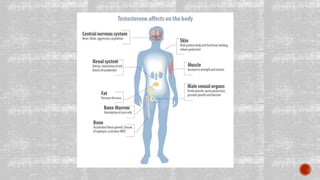
 CNS – Libido, Energy, Spatial cognition, Well being, Memory.
 Larynx – Lower voice.
 Liver – Lower SHBG and HDL.
 Kidneys – Raises erythropoietin.
 Prostate – Increase size and secretion.
 Genitals – Development, Erection, Spermatogenesis.
 Skin – Increase facial and body hair and sebum production.
 Blood – Increase haematocrit (PCV).
 Adipose tissue – Increase lipolysis, decrease abdominal fat.
 Bone – Increase bone mineral density.
 Muscle mass – Increase lean mass strength.
Decreasing levels of bioavailable testosterone due to :
 Decrease rate of production by testes.
 Reduction in size and weight of testes.
 Critical illness.
 Increased level of stress.
 Testicular trauma.
 Genetic and metabolic disorder.
 Chronic illness (DM, CRF, HIV, COPD).
 Medications : (Corticosteroids, opiates, oestrogen, antioestrogen)
 Obesity.
 Malnutrition.
 Chronic substance abuse.
 Physical stress (burn injury).
 Previous surgery.
 Reduced energy.
 Decrease sense of well being.
 Fatigue.
 Decreased libido and erectile dysfunction.
 Changes in ejaculation.
 Decrease in strength and lean body mass.
 Loss of height, body hair.
 Increase in body fat.
 Hot flashes, sweating, insomnia, anxiety.
 Irritable mood, tiredness, lethargy.
 Lack of motivation, low mental energy.
 Depression, low self-esteem.
Signs and/or symptoms of androgen
deficiency.
A reproducibly low measurements of
serum testosterone or its biological
active component.
 Many methods : Direct immunoassays, radio-immunoassay after column and
extraction, mass spectrometry after HPLC.
 For diagnosis of testosterone deficiency in men, all of these methods may be
adequate, but note marked variation from lab to lab.
HPLC = high-performance liquid chromatography
 Draw blood for measurement of serum testosterone in the morning between 7 to
10 am.
 Di-urinal variation of serum testosterone occurs in younger men where the
laboratory reference ranges are obtained.
 Clinicians need to know the reference range for the laboratory and the method
they are using.
 Each laboratory should develop it’s own reference range.
Assuming normal reference range for adult men is 300-1000 ng/dL (10.4-35nmol/L)
 If serum total testosterone (T) > 350 ng/dL (12.2 nmol/L), patient is not hypo-
gonadal,
 If serum total T between 250 to 350 ng/dL, repeat a morning serum total T level,
 If repeat serum total T <250 ng/dL (8.7 nmol/l), patient is likely to be hypo-
gonadal; investigate other causes and treat.
 The most common treatment option includes making healthier lifestyle choices
especially for people who are obese.
 This habit may increase your overall health. Dr. may suggests –
 Eat a healthy diet
 Regular exercise
 Get enough sleep
 Reduce your stress
 Dr. will refer to a psychologist who may prescribe antidepressants, behavioural
therapy or both if you are experiencing depression.
 Hormonal Replacement Therapy
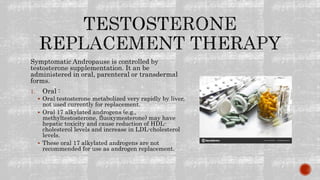
Symptomatic Andropause is controlled by
testosterone supplementation. It an be
administered in oral, parenteral or transdermal
forms.
1. Oral :
 Oral testosterone metabolized very rapidly by liver,
not used currently for replacement.
 Oral 17 alkylated androgens (e.g.,
methyltestosterone, fluoxymesterone) may have
hepatic toxicity and cause reduction of HDL-
cholesterol levels and increase in LDL-cholesterol
levels.
 These oral 17 alkylated androgens are not
recommended for use as androgen replacement.
 Buccal Testosterone Delivery System :
 Buccal tablets applied to gum at 12-hour intervals and they swells and adheres to gums.
Local irritation not reposted to be a problem.
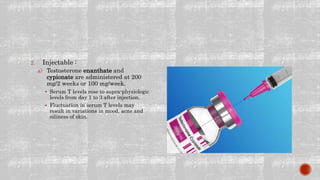
2. Injectable :
a) Testosterone enanthate and
cypionate are administered at 200
mg/2 weeks or 100 mg/week.
 Serum T levels rose to supra-physiologic
levels from day 1 to 3 after injection.
 Fluctuation in serum T levels may
result in variations in mood, acne and
oiliness of skin.
a) T undecanoate :
 Intramuscular injections in tea seed oil available in China since 1995; administered as 500 mg
every 4-6 weeks.
 Available in Europe as of late 2004; administered at 1000 mg in castor oil once every 12 weeks.
 Serum T levels within physiologic range after an initial peak.
 Studies are ongoing in U. S.
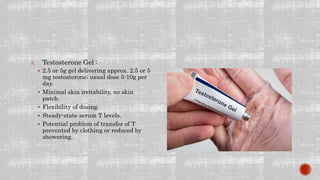
3. Testosterone Gel :
 2.5 or 5g gel delivering approx. 2.5 or 5
mg testosterone; usual dose 5-10g per
day.
 Minimal skin irritability, no skin
patch.
 Flexibility of dosing.
 Steady-state serum T levels.
 Potential problem of transfer of T
prevented by clothing or reduced by
showering.
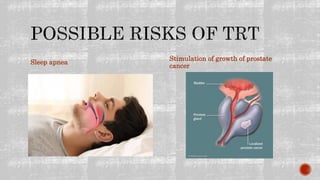
Sleep apnea
Stimulation of growth of prostate
cancer
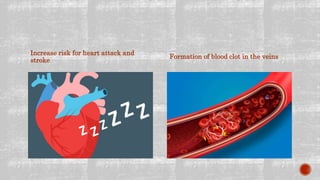
Increase risk for heart attack and
stroke
Formation of blood clot in the veins
Andropause

Andropause

  • 2.
     Andropause isthe gradual but progressive decline in serum testosterone with aging.  Andropause is sometimes referred to as “Male Menopause”.  Andropause is not simply “Male Menopause”  Men are more dependent on testosterone than women  Decline is slow, not sudden  Symptoms are more subtle  Culturally and medically, Andropause is either brushed off as “mid-life-crisis” or ignored
  • 3.
     A clinical& biochemical syndrome associated with advancing age & characterized by a deficiency in serum androgen levels with or without a decrease in genomic sensitivity to androgens.  It may result in significant alterations in the quality of life & adversely affect the function of multiple organ systems.
  • 4.
     PADAM –Partial Androgen Deficiency of Aging Male  ADAM - Androgen Deficiency of Aging Male  MALE CLIMECTERIC  VIROPAUSE  RELATIVE HYPOGONADISM  MANOPAUSE  LOH – Late Onset Hypogonadism
  • 5.
     Similar towomen, Andropause is related in part to fertility needs and virility  However, unlike women, men are constantly producing new sperm throughout their adult lives  With advancing age, the need for a high amount of androgens declines  What makes andropause more complicated is the relationship of testosterone with sex hormone binding globulin, androgen receptors and estrogen
  • 7.
     CNS –Libido, Energy, Spatial cognition, Well being, Memory.  Larynx – Lower voice.  Liver – Lower SHBG and HDL.  Kidneys – Raises erythropoietin.  Prostate – Increase size and secretion.  Genitals – Development, Erection, Spermatogenesis.  Skin – Increase facial and body hair and sebum production.  Blood – Increase haematocrit (PCV).  Adipose tissue – Increase lipolysis, decrease abdominal fat.
  • 8.
     Bone –Increase bone mineral density.  Muscle mass – Increase lean mass strength.
  • 9.
    Decreasing levels ofbioavailable testosterone due to :  Decrease rate of production by testes.  Reduction in size and weight of testes.  Critical illness.  Increased level of stress.  Testicular trauma.  Genetic and metabolic disorder.  Chronic illness (DM, CRF, HIV, COPD).  Medications : (Corticosteroids, opiates, oestrogen, antioestrogen)
  • 10.
     Obesity.  Malnutrition. Chronic substance abuse.  Physical stress (burn injury).  Previous surgery.
  • 11.
     Reduced energy. Decrease sense of well being.  Fatigue.  Decreased libido and erectile dysfunction.  Changes in ejaculation.  Decrease in strength and lean body mass.  Loss of height, body hair.  Increase in body fat.  Hot flashes, sweating, insomnia, anxiety.
  • 12.
     Irritable mood,tiredness, lethargy.  Lack of motivation, low mental energy.  Depression, low self-esteem.
  • 13.
    Signs and/or symptomsof androgen deficiency. A reproducibly low measurements of serum testosterone or its biological active component.
  • 14.
     Many methods: Direct immunoassays, radio-immunoassay after column and extraction, mass spectrometry after HPLC.  For diagnosis of testosterone deficiency in men, all of these methods may be adequate, but note marked variation from lab to lab. HPLC = high-performance liquid chromatography
  • 15.
     Draw bloodfor measurement of serum testosterone in the morning between 7 to 10 am.  Di-urinal variation of serum testosterone occurs in younger men where the laboratory reference ranges are obtained.  Clinicians need to know the reference range for the laboratory and the method they are using.  Each laboratory should develop it’s own reference range.
  • 16.
    Assuming normal referencerange for adult men is 300-1000 ng/dL (10.4-35nmol/L)  If serum total testosterone (T) > 350 ng/dL (12.2 nmol/L), patient is not hypo- gonadal,  If serum total T between 250 to 350 ng/dL, repeat a morning serum total T level,  If repeat serum total T <250 ng/dL (8.7 nmol/l), patient is likely to be hypo- gonadal; investigate other causes and treat.
  • 18.
     The mostcommon treatment option includes making healthier lifestyle choices especially for people who are obese.  This habit may increase your overall health. Dr. may suggests –  Eat a healthy diet  Regular exercise  Get enough sleep  Reduce your stress  Dr. will refer to a psychologist who may prescribe antidepressants, behavioural therapy or both if you are experiencing depression.  Hormonal Replacement Therapy
  • 19.
    Symptomatic Andropause iscontrolled by testosterone supplementation. It an be administered in oral, parenteral or transdermal forms. 1. Oral :  Oral testosterone metabolized very rapidly by liver, not used currently for replacement.  Oral 17 alkylated androgens (e.g., methyltestosterone, fluoxymesterone) may have hepatic toxicity and cause reduction of HDL- cholesterol levels and increase in LDL-cholesterol levels.  These oral 17 alkylated androgens are not recommended for use as androgen replacement.
  • 20.
     Buccal TestosteroneDelivery System :  Buccal tablets applied to gum at 12-hour intervals and they swells and adheres to gums. Local irritation not reposted to be a problem.
  • 21.
    2. Injectable : a)Testosterone enanthate and cypionate are administered at 200 mg/2 weeks or 100 mg/week.  Serum T levels rose to supra-physiologic levels from day 1 to 3 after injection.  Fluctuation in serum T levels may result in variations in mood, acne and oiliness of skin.
  • 22.
    a) T undecanoate:  Intramuscular injections in tea seed oil available in China since 1995; administered as 500 mg every 4-6 weeks.  Available in Europe as of late 2004; administered at 1000 mg in castor oil once every 12 weeks.  Serum T levels within physiologic range after an initial peak.  Studies are ongoing in U. S.
  • 23.
    3. Testosterone Gel:  2.5 or 5g gel delivering approx. 2.5 or 5 mg testosterone; usual dose 5-10g per day.  Minimal skin irritability, no skin patch.  Flexibility of dosing.  Steady-state serum T levels.  Potential problem of transfer of T prevented by clothing or reduced by showering.
  • 24.
    Sleep apnea Stimulation ofgrowth of prostate cancer
  • 25.
    Increase risk forheart attack and stroke Formation of blood clot in the veins