Our
Classroom
Pet
By:
Kristina Tolley

Carmela Heal
Katie Weber

Chelsea Griffin
Sarah Teichmer
Alicia Poe
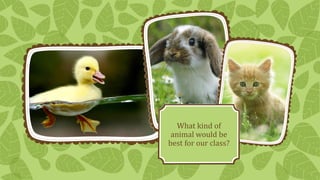
What kind of
animal would be
best for our class?
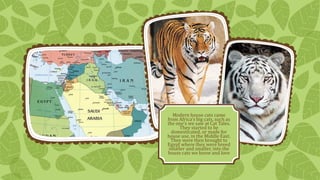
Modern house cats came
from Africa’s big cats, such as
the one’s we saw at Cat Tales.
They started to be
domesticated, or made for
house use, in the Middle East.
They were then brought to
Egypt where they were breed
smaller and smaller, into the
house cats we know and love
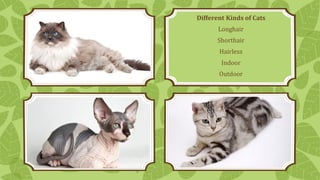
Different Kinds of Cats
Longhair

Shorthair
Hairless
Indoor

Outdoor
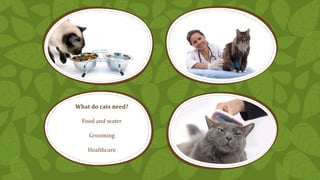
What do cats need?
Food and water
Grooming
Healthcare
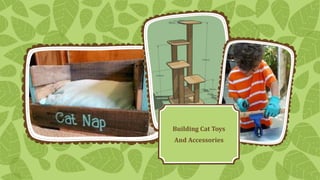
Building Cat Toys
And Accessories
Math:
•Use measuring tools in play
•Describe objects using size words
Safety:
•followed safety rules inside and out
Social behavior
•Listen to what other children want and make plans that take these desires into account
Problem Solving:
•make decisions and solve problems with help from other children with adult help
Science:
•Investigate the properties of things in nature. Begin to understand what various life forms need
in order to grow and live.
•Take responsibility in taking care of living things such as feeding fish, watering plants etc.
Language development
•Know when to ask questions and who to ask
•Use words to describe actions and emotions
•Remember and follow 2 and 3 step directions
•Listen to others and respond in a group discussion for a short period
Knowledge:
•ask adults questions to get information
•Understand ideas of same and different
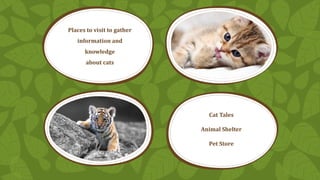
Places to visit to gather

information and
knowledge
about cats

Cat Tales
Animal Shelter
Pet Store
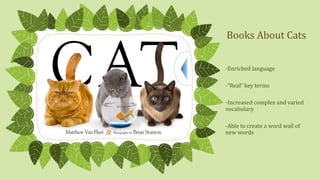
Books About Cats
-Enriched language
-“Real” key terms

-Increased complex and varied
vocabulary
-Able to create a word wall of
new words
What Makes Someone Allergic to Cats?

-What part of the animal are people allergic to?
People that are allergic to animals are often allergic to the
dander (dead skin that is continually shed), the saliva, or the
urine.

-What are the symptoms?
People with multiple allergies are well aware that when their
allergies are acting up, they will suffer from itchy eyes, runny
nose, asthma symptoms, red itchy skin or a rash.
-Are there any hypoallergenic cats?
There are no hypoallergenic cats, nor are there any cats that do
not shed. All cats shed, but some have a much denser hair coat
than others and shed a larger quantity of hair than those with a
thin hair coat. But since the dander and not the hair is the
problem, shedding is not that important in allergy control.
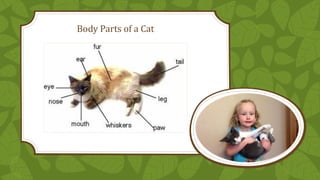
Body Parts of a Cat
Culmination of Project

•Social and Emotional skills
•Classroom pets make a classroom feel safe
and warm
•Improves
Empathy and social skills
Relationships
Coping skills
Self-esteem
Responsibility
Stress relief
Caption
Cat power point
Cat power point
Cat power point
Cat power point
Cat power point
Cat power point
Cat power point
Cat power point

Cat power point

  • 1.
    Our Classroom Pet By: Kristina Tolley Carmela Heal KatieWeber Chelsea Griffin Sarah Teichmer Alicia Poe
  • 2.
    What kind of animalwould be best for our class?
  • 3.
    Modern house catscame from Africa’s big cats, such as the one’s we saw at Cat Tales. They started to be domesticated, or made for house use, in the Middle East. They were then brought to Egypt where they were breed smaller and smaller, into the house cats we know and love
  • 4.
    Different Kinds ofCats Longhair Shorthair Hairless Indoor Outdoor
  • 5.
    What do catsneed? Food and water Grooming Healthcare
  • 6.
  • 7.
    Math: •Use measuring toolsin play •Describe objects using size words Safety: •followed safety rules inside and out Social behavior •Listen to what other children want and make plans that take these desires into account Problem Solving: •make decisions and solve problems with help from other children with adult help Science: •Investigate the properties of things in nature. Begin to understand what various life forms need in order to grow and live. •Take responsibility in taking care of living things such as feeding fish, watering plants etc. Language development •Know when to ask questions and who to ask •Use words to describe actions and emotions •Remember and follow 2 and 3 step directions •Listen to others and respond in a group discussion for a short period Knowledge: •ask adults questions to get information •Understand ideas of same and different
  • 8.
    Places to visitto gather information and knowledge about cats Cat Tales Animal Shelter Pet Store
  • 9.
    Books About Cats -Enrichedlanguage -“Real” key terms -Increased complex and varied vocabulary -Able to create a word wall of new words
  • 10.
    What Makes SomeoneAllergic to Cats? -What part of the animal are people allergic to? People that are allergic to animals are often allergic to the dander (dead skin that is continually shed), the saliva, or the urine. -What are the symptoms? People with multiple allergies are well aware that when their allergies are acting up, they will suffer from itchy eyes, runny nose, asthma symptoms, red itchy skin or a rash. -Are there any hypoallergenic cats? There are no hypoallergenic cats, nor are there any cats that do not shed. All cats shed, but some have a much denser hair coat than others and shed a larger quantity of hair than those with a thin hair coat. But since the dander and not the hair is the problem, shedding is not that important in allergy control.
  • 11.
  • 14.
    Culmination of Project •Socialand Emotional skills •Classroom pets make a classroom feel safe and warm •Improves Empathy and social skills Relationships Coping skills Self-esteem Responsibility Stress relief
  • 16.