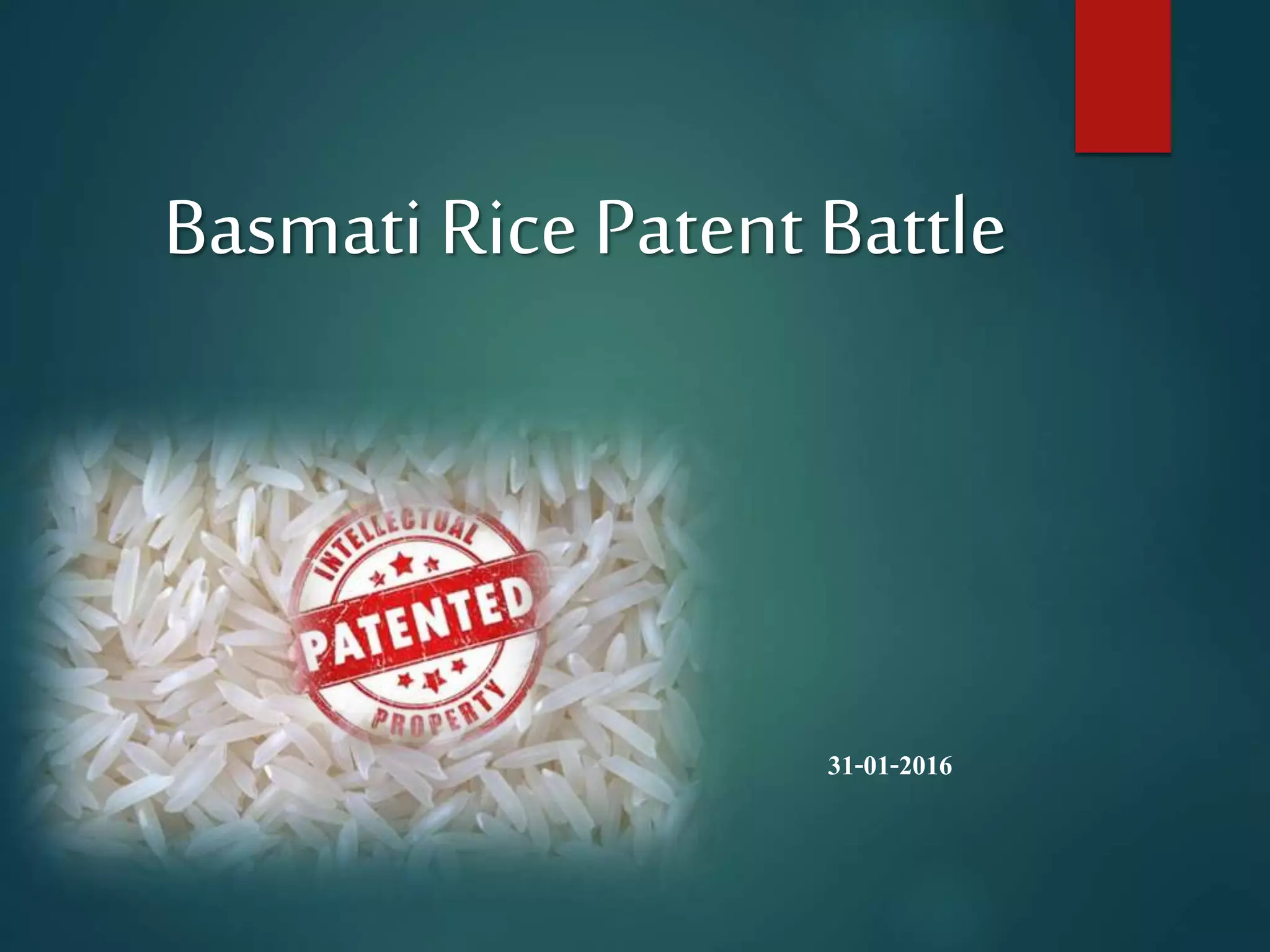
Basmati Rice Patent Battle
31-01-2016
Intellectual Property
 Intellectual property (IP) is a legal concept
which refers to creations of mind for which
exclusive rights are recognized.
 Under intellectual property law, owners are
granted certain exclusive rights to their
tangible and intangible assets.
Basmati Rice Patent Case
 CASE NUMBER: 493
 CASE MNEMONIC: Basmati
 CASE NAME: India-US Basmati Rice Dispute
 Patent number: US5663484 A
 Publication type: Grant
 Application number: US 08/272,353
 Publication date: Sep 2, 1997
 Filing date: Jul 8, 1994
Basmati Rice and Asia
 Rice is an important aspect of life in the Southeast and other
parts of Asia.
 For centuries, it has been the cornerstone of their food and
culture.
 Basmati has been grown in the foothills of the Himalayas for
thousands of years.
 Basmati rice is being grown in subcontinent for centuries.
 Its flavour and aroma has been developed through selective
breeding for thousands of years.
 It is common knowledge that what Champagne is to France,
Basmati is to subcontinent (Pakistan and India).
Basmati Rice
 Basmati means the “queen of fragrance or the
perfumed one”.
 Origin: Pakistan and India
 Indian varieties are Safidon, Haryana, Kasturi (Baran,
Rajasthan), Basmati 198, Basmati 217, Basmati 370,
Kasturi, Mahi Suganda.
 Pakistani varieties Basmati 370, Super Basmati, Pak
(Kernal) Basmati, Basmati 386, Basmati 385 and
Basmati 198.
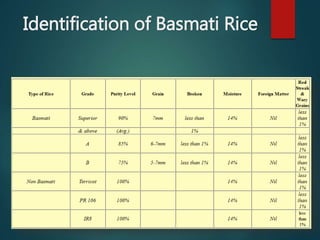
Identification of Basmati Rice
The Case Issue
In the late 1997, when an American company RiceTec Inc. was granted a
patent by the US patent office to call the aromatic rice grown outside India
"Basmati", India objected to it. India has been one of the major exporters of
Basmati to several countries and such a grant by the US patent office was
likely to affect its trade. Since Basmati rice is traditionally grown in India
and Pakistan, it was opined that granting patent to RiceTec violated the
Geographical Indications Act under the TRIPS agreement. A geographical
indication (sometimes abbreviated to GI) is a name or sign used on certain
products which corresponds to a specific geographical location or origin
(e.g.. a town, region, or country). The use of a GI may act as a certification
that the product possesses certain qualities, or enjoys a certain reputation,
due to its geographical origin. RiceTec's usage of the name Basmati for rice
which was derived from Indian rice but not grown in India, and hence not
of the same quality as Basmati, would have lead to the violation of the
concept of GI and would have been a deception to the consumers.
RiceTec Company Details
 Owned by Prince Hans-Adam of
Liechtenstein.
 120 company employees.
 Annual sales 10 million US Dollars.
 Rice developed by RiceTec are: Bas 867, RT
1117, RT 112.
Company’s Words
“We are absolutely confident in our patent and viability
and legality. There is no basis for challenging the patent”.
RiceTec Inc. Patent Claims
RiceTec put 20 claims about their product from which few
ones are:
 semi-dwarf in stature
 substantially photoperiod insensitive
 high yield
 Having characteristics similar or superior to those of good quality
basmati rice
 The invention provides a method for breeding these novel lines
 Starch index (SI) of a rice grain can predict the grain's cooking and
starch properties
 Claiming that “Aroma” has been developed by
RiceTech Inc. is misleading
 RiceTech Inc. claimed that it tool them 10
years to develop the Aroma in their rice line
 Branding a Basmati lookalike as Basmati
 They used inbreeding of ordinary american
rice with sub continental Basmati rice and
patented this hybrid as Basmati
RiceTec Inc. Patent Claims
(Contd…)
Patent Advantage to
RiceTech
 RiceTec able to not only call its aromatic rice
Basmati within the US, but also label it Basmati
for its exports.
 Captures the whole US trade market.
 Exclusive use of the term “basmati”.
 Monopoly on breeding 22 farmer-bred Pakistani
basmati varieties with any other varieties in the
Western Hemisphere.
 Proprietary rights on the seeds and grains from
any crosses.
Disadvantage of Patent to
India and Pakistan
 Economic loses.
 Global trade losses.
 Both countries lose their global market share.
Why the Name Basmati
 Brand Association
 Reputation
 Market share
 Superior features/characteristics
 Confusing the customers into buying
their product (Passing Off)
Government of India
Response to Patent
 Government of India under severe
pressure from its exporters and farmers
logged an appeal with USPTO.
 They submitted the evidence to
USPTO.
 India exports about 400,000 - 500,000
metric tons of Basmati annually. In
1996-97, India exported approximately
523,000 tonnes of Basmati to Europe.
Government of Pakistan
Response
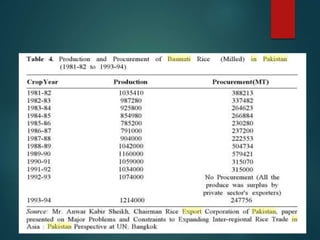
 No official response was given to the
situation.
 It is speculated that because share of
Indian Basmati is more in International
Market, hence, the more severe
response from them.
 So do you think Pakistani Government
and Exporters need more education in
IPRs?
Result
 RiceTec Inc. took back 15 claims out of
20
 They also took back its claim on the
name “Basmati”.
THANK YOU

Case Study on Basamati Rice Patent Battle

  • 1.
    Basmati Rice PatentBattle 31-01-2016
  • 2.
    Intellectual Property  Intellectualproperty (IP) is a legal concept which refers to creations of mind for which exclusive rights are recognized.  Under intellectual property law, owners are granted certain exclusive rights to their tangible and intangible assets.
  • 3.
    Basmati Rice PatentCase  CASE NUMBER: 493  CASE MNEMONIC: Basmati  CASE NAME: India-US Basmati Rice Dispute  Patent number: US5663484 A  Publication type: Grant  Application number: US 08/272,353  Publication date: Sep 2, 1997  Filing date: Jul 8, 1994
  • 4.
    Basmati Rice andAsia  Rice is an important aspect of life in the Southeast and other parts of Asia.  For centuries, it has been the cornerstone of their food and culture.  Basmati has been grown in the foothills of the Himalayas for thousands of years.  Basmati rice is being grown in subcontinent for centuries.  Its flavour and aroma has been developed through selective breeding for thousands of years.  It is common knowledge that what Champagne is to France, Basmati is to subcontinent (Pakistan and India).
  • 5.
    Basmati Rice  Basmatimeans the “queen of fragrance or the perfumed one”.  Origin: Pakistan and India  Indian varieties are Safidon, Haryana, Kasturi (Baran, Rajasthan), Basmati 198, Basmati 217, Basmati 370, Kasturi, Mahi Suganda.  Pakistani varieties Basmati 370, Super Basmati, Pak (Kernal) Basmati, Basmati 386, Basmati 385 and Basmati 198.
  • 6.
  • 7.
    The Case Issue Inthe late 1997, when an American company RiceTec Inc. was granted a patent by the US patent office to call the aromatic rice grown outside India "Basmati", India objected to it. India has been one of the major exporters of Basmati to several countries and such a grant by the US patent office was likely to affect its trade. Since Basmati rice is traditionally grown in India and Pakistan, it was opined that granting patent to RiceTec violated the Geographical Indications Act under the TRIPS agreement. A geographical indication (sometimes abbreviated to GI) is a name or sign used on certain products which corresponds to a specific geographical location or origin (e.g.. a town, region, or country). The use of a GI may act as a certification that the product possesses certain qualities, or enjoys a certain reputation, due to its geographical origin. RiceTec's usage of the name Basmati for rice which was derived from Indian rice but not grown in India, and hence not of the same quality as Basmati, would have lead to the violation of the concept of GI and would have been a deception to the consumers.
  • 8.
    RiceTec Company Details Owned by Prince Hans-Adam of Liechtenstein.  120 company employees.  Annual sales 10 million US Dollars.  Rice developed by RiceTec are: Bas 867, RT 1117, RT 112.
  • 9.
    Company’s Words “We areabsolutely confident in our patent and viability and legality. There is no basis for challenging the patent”.
  • 10.
    RiceTec Inc. PatentClaims RiceTec put 20 claims about their product from which few ones are:  semi-dwarf in stature  substantially photoperiod insensitive  high yield  Having characteristics similar or superior to those of good quality basmati rice  The invention provides a method for breeding these novel lines  Starch index (SI) of a rice grain can predict the grain's cooking and starch properties
  • 11.
     Claiming that“Aroma” has been developed by RiceTech Inc. is misleading  RiceTech Inc. claimed that it tool them 10 years to develop the Aroma in their rice line  Branding a Basmati lookalike as Basmati  They used inbreeding of ordinary american rice with sub continental Basmati rice and patented this hybrid as Basmati RiceTec Inc. Patent Claims (Contd…)
  • 12.
    Patent Advantage to RiceTech RiceTec able to not only call its aromatic rice Basmati within the US, but also label it Basmati for its exports.  Captures the whole US trade market.  Exclusive use of the term “basmati”.  Monopoly on breeding 22 farmer-bred Pakistani basmati varieties with any other varieties in the Western Hemisphere.  Proprietary rights on the seeds and grains from any crosses.
  • 13.
    Disadvantage of Patentto India and Pakistan  Economic loses.  Global trade losses.  Both countries lose their global market share.
  • 14.
    Why the NameBasmati  Brand Association  Reputation  Market share  Superior features/characteristics  Confusing the customers into buying their product (Passing Off)
  • 15.
    Government of India Responseto Patent  Government of India under severe pressure from its exporters and farmers logged an appeal with USPTO.  They submitted the evidence to USPTO.
  • 16.
     India exportsabout 400,000 - 500,000 metric tons of Basmati annually. In 1996-97, India exported approximately 523,000 tonnes of Basmati to Europe.
  • 17.
    Government of Pakistan Response No official response was given to the situation.  It is speculated that because share of Indian Basmati is more in International Market, hence, the more severe response from them.  So do you think Pakistani Government and Exporters need more education in IPRs?
  • 19.
    Result  RiceTec Inc.took back 15 claims out of 20  They also took back its claim on the name “Basmati”.
  • 20.

Editor's Notes

  • #2 veenagn@msrit.edu