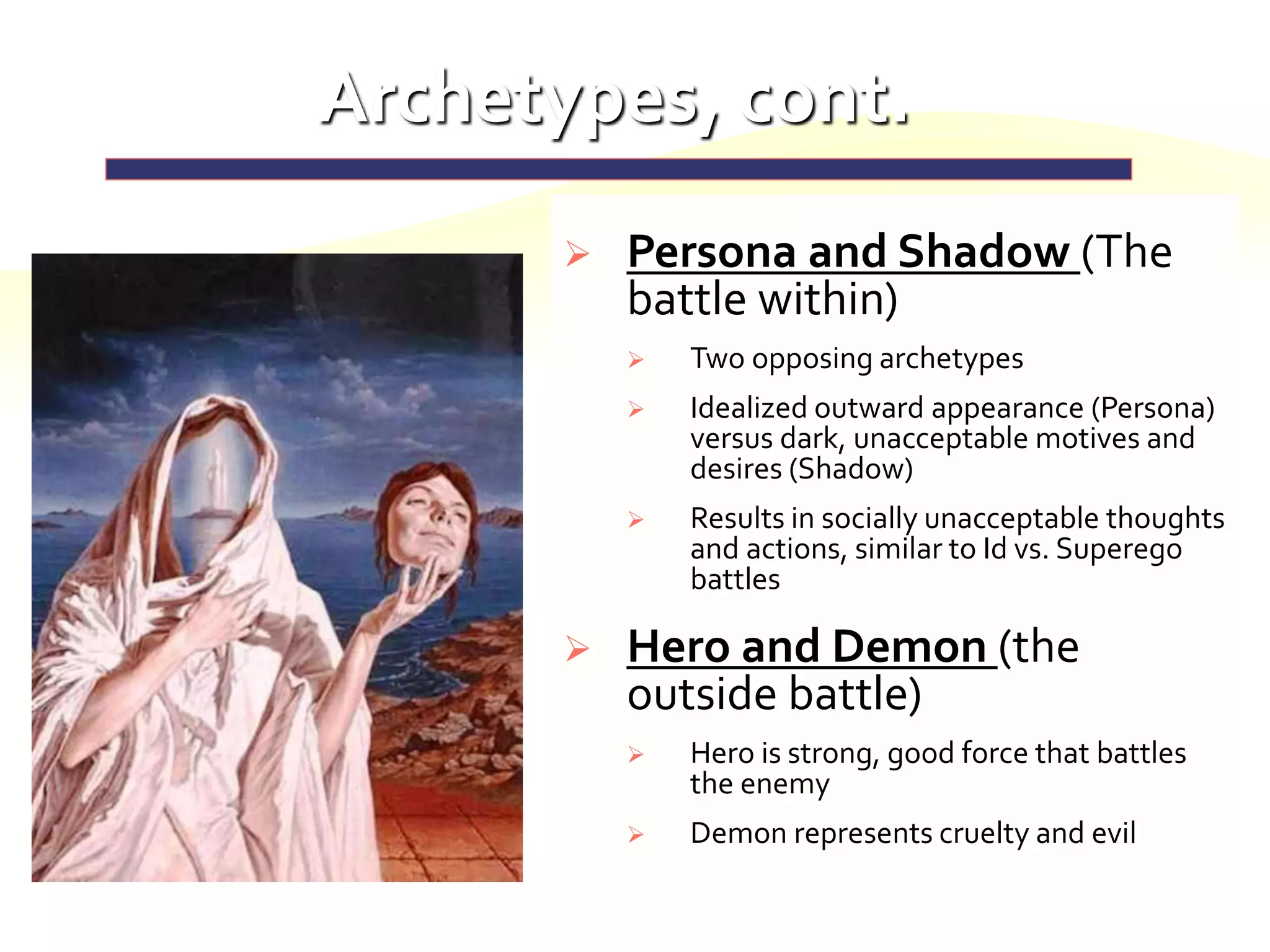
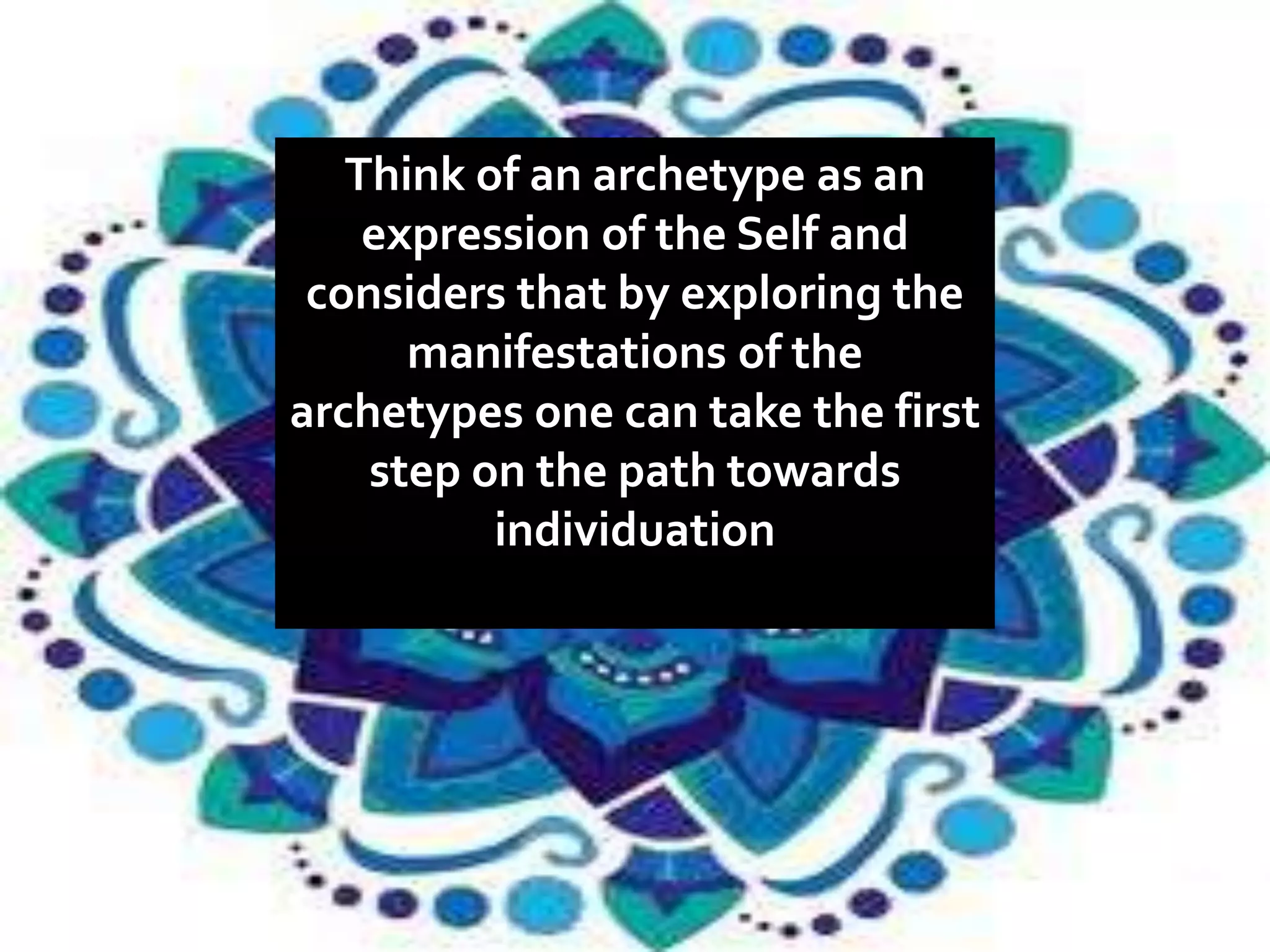
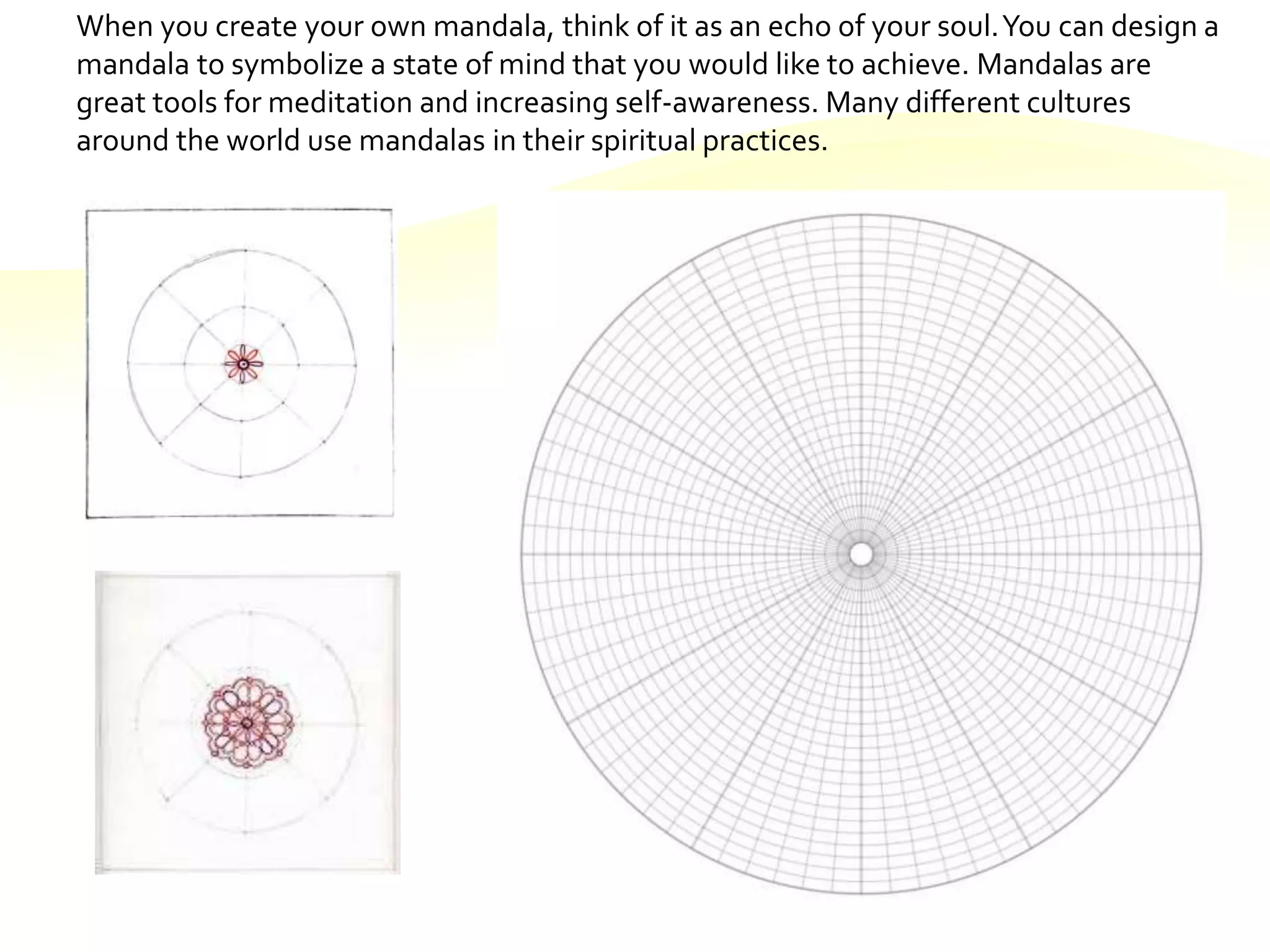
Carl Jung developed concepts like the collective unconscious and archetypes that differed from Freud's theories by focusing less on sexuality and more on human history and spirituality. Jung believed that all people share a collective unconscious containing universal images and myths. He identified common archetypes like persona/shadow, anima/animus, and hero/demon that represent parts of the human psyche. Jung developed a topographical model of the mind with levels including the conscious, unconscious, and collective unconscious, where battles between opposing archetypes like persona and shadow take place. Mandalas were used by Jung as a way for people to explore and express their unconscious selves.










![Carl Jung - Analytical Theory [Autosaved].pptx](https://cdn.slidesharecdn.com/ss_thumbnails/carljung-analyticaltheoryautosaved-251013021002-dd33466e-thumbnail.jpg?width=640&height=640&fit=bounds)


