C A R I N G F O R T H E C A R E R S : P R O M O T I N G
M E N TA L H E A LT H A N D W E L L B E I N G
ROWENA U. SALVADOR
Social Welfare Officer III
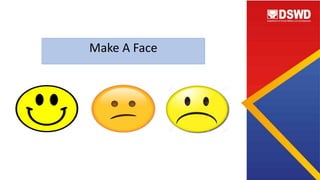
Make A Face
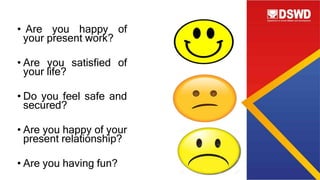
• Are you happy of
your present work?
• Are you satisfied of
your life?
• Do you feel safe and
secured?
• Are you happy of your
present relationship?
• Are you having fun?
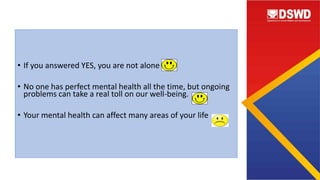
• If you answered YES, you are not alone
• No one has perfect mental health all the time, but ongoing
problems can take a real toll on our well-being.
• Your mental health can affect many areas of your life
STRESSORS…
• work and workload
• the work pattern and the work environment
• role ambiguity
• Work- life balance issues
• Family matters
• poor relationship with co-workers
It is very common for those with caring
responsibilities to neglect their own needs
while they care others.
If not responded, this could result to
mental and physical health problems
A reality that one has to overcome.
Studies show that carers need to re-discover own
personal difficulties, reflect upon stress management
and relaxation strategies and become more effective in
handling everyday pressures in a sustainable way.
In order to maintain the EQUILIBRIUM required thus
help them achieve OPTIMUM level of functioning
So we are here….
Caring for the Carers: Promoting
Mental Health and Well-Being
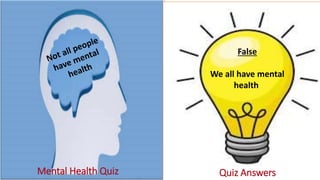
Mental Health Quiz Quiz Answers
False
We all have mental
health
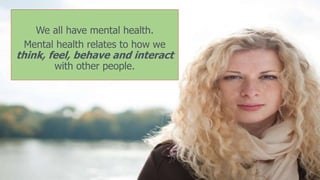
We all have mental health.
Mental health relates to how we
think, feel, behave and interact
with other people.
Mental Health Quiz Quiz Answers
False
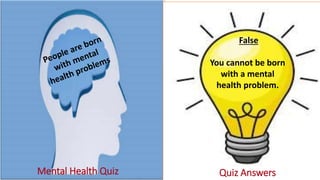
You cannot be born
with a mental
health problem.
Mental health is just as important to our lives as our
physical health and like our bodies, our minds can become
unwell.
Mental Health Quiz
False
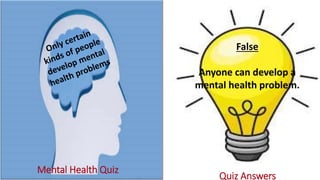
Anyone can develop a
mental health problem.
Quiz Answers
Just as we can develop problems with our physical health, mental
health problems will be experienced by many of us over the course
of our lives.
Mental Health Quiz
False
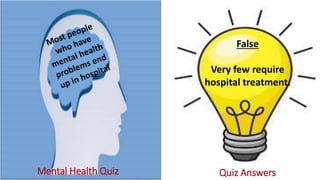
Very few require
hospital treatment.
Quiz Answers
Mental Health Quiz Quiz Answers
False
The majority of people
who experience a
mental health problem
do with help, make a
complete recovery.
Mental Health Quiz Quiz Answers
False
You cannot “see” a
mental health
problem.
Mental Health Quiz
True
There are many
different types of
mental health
problems.
Quiz Answers
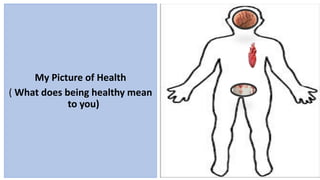
My Picture of Health
( What does being healthy mean
to you)
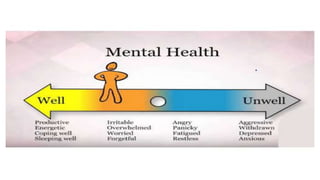
Mental Health is a state of mind in which
an individual is able to realize his or her own
abilities, cope with the normal stresses of
life, can work productively and fruitfully,
and is able to make a contribution to his or
her community.’
Mental health is not the same thing as the absence of a
Mental illness
Mental Health Quiz Quiz Answers
True
Support is a positive
factor in preventing
mental health
problems and
promoting recovery.
It’s important to talk about mental health and get help early if
things don’t feel right, just like we would for our physical
health.
Remember……
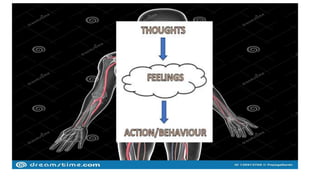
• It's how we think about events that determine our
feelings.
• "There (is) nothing either good or bad but thinking
makes it so.“ William Shakespeare
• Simply recognizing that thinking influences emotions
is a very important step on the road leading to a
happier and healthier life.
• Negative thoughts can be challenged and changed.
This, in turn, leads to more positive feelings and
emotions.
• Feelings and emotions are experienced daily and
change regularly in response to life events.
• Recognizing and expressing feelings appropriately
is an essential part of managing mental and
emotional well-being
How would you
define wellbeing?
There are a whole range of ways that we can
improve our wellbeing and resilience.
Improving wellbeing
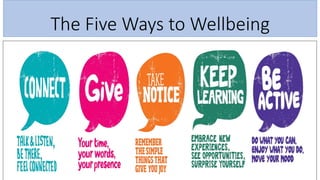
Connect…
With the people around you. With
family, friends, colleagues and
neighbors. At home, work, school
or in your local community. Think
of these as the cornerstones of
your life and invest time in
developing them. Building these
connections will support and enrich
you every day.
Be active…
Go for a walk or run. Step outside.
Cycle. Play a game. Garden.
Dance. Exercising makes you feel
good. Most importantly, discover
a physical activity you enjoy and
that suits your level of mobility
and fitness.
Take notice…
Be curious. Catch sight of the beautiful.
Remark on the unusual. Notice the changing
seasons. Savour the moment, whether you
are walking to work, eating lunch or talking
to friends. Be aware of the world around you
and what you are feeling. Reflecting on your
experiences will help you appreciate what
matters to you.
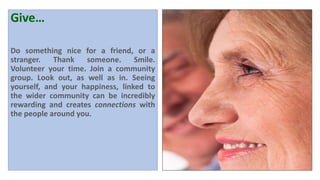
Give…
Do something nice for a friend, or a
stranger. Thank someone. Smile.
Volunteer your time. Join a community
group. Look out, as well as in. Seeing
yourself, and your happiness, linked to
the wider community can be incredibly
rewarding and creates connections with
the people around you.
Keep learning…
Try something new. Rediscover an old
interest. Sign up for that course. Take on a
different responsibility at work. Fix a bike.
Learn to play an instrument or how to cook
your favorite food. Set a challenge you will
enjoy achieving. Learning new things will
make you more confident as well as being
fun.
The Five Ways to Wellbeing
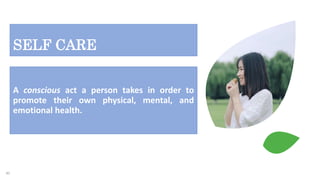
SELF CARE
A conscious act a person takes in order to
promote their own physical, mental, and
emotional health.
45
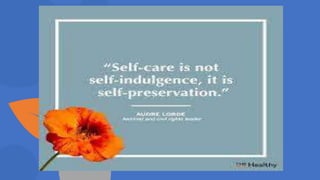
SELF CARE
Self-care is vital for building RESELIENCE
toward those stressors in life that you can't
eliminate.
When you've taken steps to care for your
mind and body, you'll be better equipped
to live your best life.
46
“Self Care is a Priority
and Necessity “
Thank
you!
Promote Mental Health
Preserve Well Being
Build Resilience
Caring for the Carers: Promoting Mental
Health and Well-Being
C A R I N G F O R T H E C A R E R S : P R O M O T I N G
M E N TA L H E A LT H A N D W E L L B E I N G
ROWENA U. SALVADOR
Social Welfare Officer III

Caring-for-the-Carers-ppt.pptx

  • 1.
    C A RI N G F O R T H E C A R E R S : P R O M O T I N G M E N TA L H E A LT H A N D W E L L B E I N G ROWENA U. SALVADOR Social Welfare Officer III
  • 2.
  • 3.
    • Are youhappy of your present work? • Are you satisfied of your life? • Do you feel safe and secured? • Are you happy of your present relationship? • Are you having fun?
  • 4.
    • If youanswered YES, you are not alone • No one has perfect mental health all the time, but ongoing problems can take a real toll on our well-being. • Your mental health can affect many areas of your life
  • 5.
    STRESSORS… • work andworkload • the work pattern and the work environment • role ambiguity • Work- life balance issues • Family matters • poor relationship with co-workers
  • 6.
    It is verycommon for those with caring responsibilities to neglect their own needs while they care others. If not responded, this could result to mental and physical health problems A reality that one has to overcome.
  • 7.
    Studies show thatcarers need to re-discover own personal difficulties, reflect upon stress management and relaxation strategies and become more effective in handling everyday pressures in a sustainable way.
  • 8.
    In order tomaintain the EQUILIBRIUM required thus help them achieve OPTIMUM level of functioning
  • 9.
    So we arehere….
  • 10.
    Caring for theCarers: Promoting Mental Health and Well-Being
  • 11.
    Mental Health QuizQuiz Answers False We all have mental health
  • 12.
    We all havemental health. Mental health relates to how we think, feel, behave and interact with other people.
  • 13.
    Mental Health QuizQuiz Answers False You cannot be born with a mental health problem.
  • 14.
    Mental health isjust as important to our lives as our physical health and like our bodies, our minds can become unwell.
  • 15.
    Mental Health Quiz False Anyonecan develop a mental health problem. Quiz Answers
  • 16.
    Just as wecan develop problems with our physical health, mental health problems will be experienced by many of us over the course of our lives.
  • 17.
    Mental Health Quiz False Veryfew require hospital treatment. Quiz Answers
  • 18.
    Mental Health QuizQuiz Answers False The majority of people who experience a mental health problem do with help, make a complete recovery.
  • 19.
    Mental Health QuizQuiz Answers False You cannot “see” a mental health problem.
  • 20.
    Mental Health Quiz True Thereare many different types of mental health problems. Quiz Answers
  • 22.
    My Picture ofHealth ( What does being healthy mean to you)
  • 23.
    Mental Health isa state of mind in which an individual is able to realize his or her own abilities, cope with the normal stresses of life, can work productively and fruitfully, and is able to make a contribution to his or her community.’
  • 24.
    Mental health isnot the same thing as the absence of a Mental illness
  • 25.
    Mental Health QuizQuiz Answers True Support is a positive factor in preventing mental health problems and promoting recovery.
  • 26.
    It’s important totalk about mental health and get help early if things don’t feel right, just like we would for our physical health.
  • 27.
    Remember…… • It's howwe think about events that determine our feelings. • "There (is) nothing either good or bad but thinking makes it so.“ William Shakespeare • Simply recognizing that thinking influences emotions is a very important step on the road leading to a happier and healthier life. • Negative thoughts can be challenged and changed. This, in turn, leads to more positive feelings and emotions.
  • 28.
    • Feelings andemotions are experienced daily and change regularly in response to life events. • Recognizing and expressing feelings appropriately is an essential part of managing mental and emotional well-being
  • 30.
  • 31.
    There are awhole range of ways that we can improve our wellbeing and resilience. Improving wellbeing
  • 32.
    Connect… With the peoplearound you. With family, friends, colleagues and neighbors. At home, work, school or in your local community. Think of these as the cornerstones of your life and invest time in developing them. Building these connections will support and enrich you every day.
  • 33.
    Be active… Go fora walk or run. Step outside. Cycle. Play a game. Garden. Dance. Exercising makes you feel good. Most importantly, discover a physical activity you enjoy and that suits your level of mobility and fitness.
  • 34.
    Take notice… Be curious.Catch sight of the beautiful. Remark on the unusual. Notice the changing seasons. Savour the moment, whether you are walking to work, eating lunch or talking to friends. Be aware of the world around you and what you are feeling. Reflecting on your experiences will help you appreciate what matters to you.
  • 35.
    Give… Do something nicefor a friend, or a stranger. Thank someone. Smile. Volunteer your time. Join a community group. Look out, as well as in. Seeing yourself, and your happiness, linked to the wider community can be incredibly rewarding and creates connections with the people around you.
  • 36.
    Keep learning… Try somethingnew. Rediscover an old interest. Sign up for that course. Take on a different responsibility at work. Fix a bike. Learn to play an instrument or how to cook your favorite food. Set a challenge you will enjoy achieving. Learning new things will make you more confident as well as being fun.
  • 37.
    The Five Waysto Wellbeing
  • 38.
    SELF CARE A consciousact a person takes in order to promote their own physical, mental, and emotional health. 45
  • 39.
    SELF CARE Self-care isvital for building RESELIENCE toward those stressors in life that you can't eliminate. When you've taken steps to care for your mind and body, you'll be better equipped to live your best life. 46
  • 41.
    “Self Care isa Priority and Necessity “
  • 49.
  • 50.
    Promote Mental Health PreserveWell Being Build Resilience
  • 51.
    Caring for theCarers: Promoting Mental Health and Well-Being
  • 52.
    C A RI N G F O R T H E C A R E R S : P R O M O T I N G M E N TA L H E A LT H A N D W E L L B E I N G ROWENA U. SALVADOR Social Welfare Officer III

Editor's Notes

  • #2 Promoting mental health and well-being Strengthening mental fitness and emotional wellness
  • #18 Just as we can develop problems with our physical health, mental health problems will be experienced by many of us over the course of our lives. Mental health problems range from the worries we all experience as a part of our everyday life, to serious long term conditions that can be difficult to manage One in four people will experience a mental health problem each year
  • #20 Just as we can develop problems with our physical health, mental health problems will be experienced by many of us over the course of our lives. Mental health problems range from the worries we all experience as a part of our everyday life, to serious long term conditions that can be difficult to manage One in four people will experience a mental health problem each year
  • #29 Just as we can develop problems with our physical health, mental health problems will be experienced by many of us over the course of our lives. Mental health problems range from the worries we all experience as a part of our everyday life, to serious long term conditions that can be difficult to manage One in four people will experience a mental health problem each year
  • #32 Just as we can develop problems with our physical health, mental health problems will be experienced by many of us over the course of our lives. Mental health problems range from the worries we all experience as a part of our everyday life, to serious long term conditions that can be difficult to manage One in four people will experience a mental health problem each year
  • #38 Discussion point: how would you define wellbeing? - Try to gather first thoughts on the key concepts, thoughts and feelings that the group associates with wellbeing
  • #60 Promoting mental health and well-being Strengthening mental fitness and emotional wellness