1
CLME - IMS/REMP
Paul Geerders
Project leader IMS/REMP
pgeerders@clmeproject.org
paul@pgcons.nl
1
2
Contents
 Summary of main issues and results up to now
 Time frame
 Obstacles found
 Lessons learnt
 Future activities
2
3
IMS/REMP
 IMS – Information Management System
 internet-based reference to sources of data and
information (metadata directory)
 REMP – Regional Environmental Monitoring Program
 monitoring of ecosystems, environment and related
issues
 monitoring of project progress and impact of SAP
implementation
4
Results
 Beta version IMS/REMP (http://clmeims.gcfi.org/)
 Indicators (3 x 3 matrix)
 Data Policy draft
 Network of contacts in CLME countries
 Contacts with stakeholder organisations
 Contacts with other LME’s
4
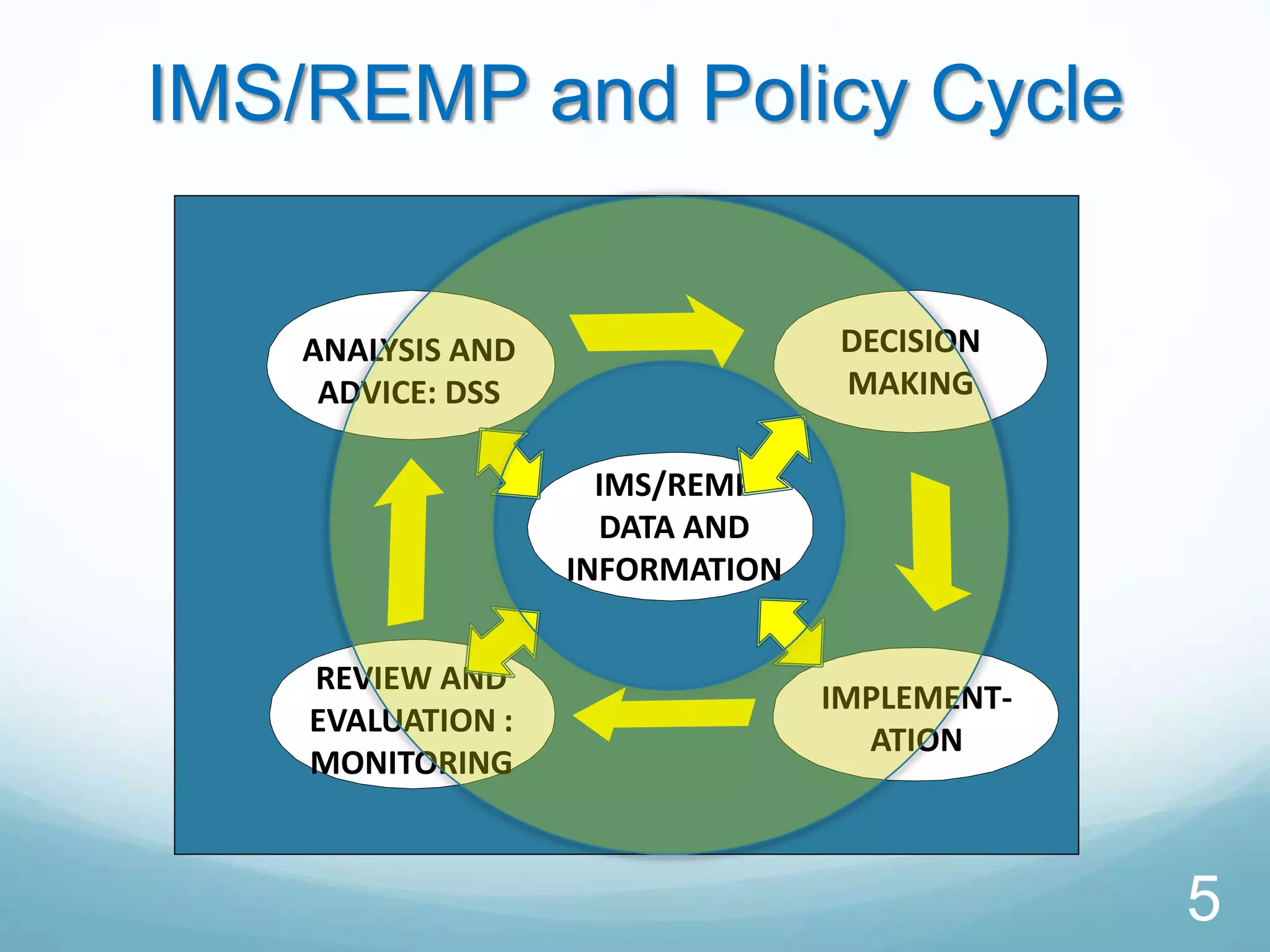
IMS/REMP
DATA AND
INFORMATION
ANALYSIS AND
ADVICE: DSS
REVIEW AND
EVALUATION :
MONITORING
IMPLEMENT-
ATION
DECISION
MAKING
IMS/REMP and Policy Cycle
5
6
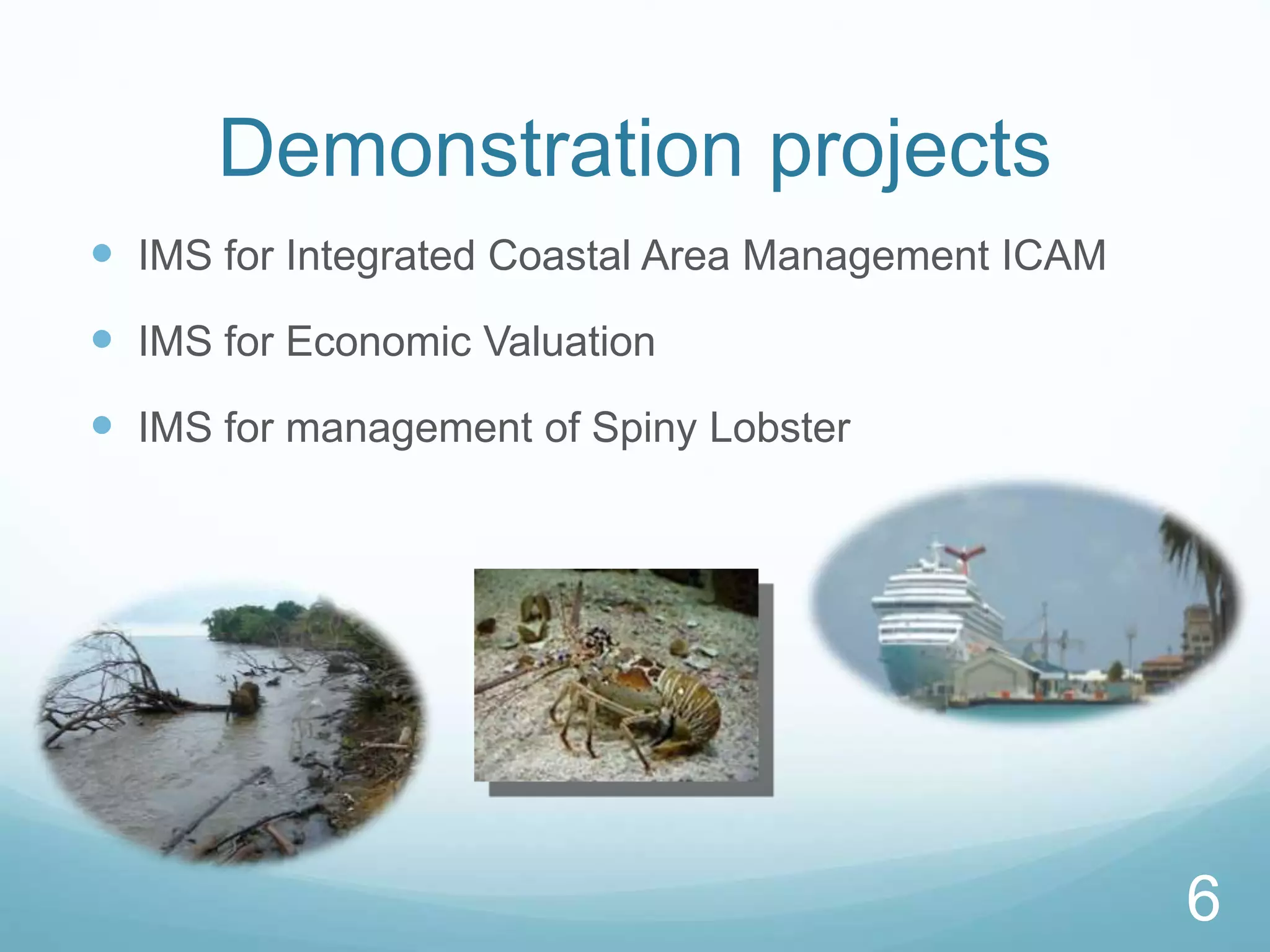
Demonstration projects
 IMS for Integrated Coastal Area Management ICAM
 IMS for Economic Valuation
 IMS for management of Spiny Lobster
6
7
Lessons learnt
 Need for harmonized monitoring of marine-coastal ecosystems and
environment, including basins, beaches, mangroves and wetlands
 Need for harmonized monitoring of fisheries industry and effort
(including white, grey and black market), and of fish stocks
 Strengthening of data and information management, from institutional
to regional
 Development of suitable numerical models for forecasts and simulation
as part of DSS
 Development of dedicated expert/knowledge systems as part of DSS
 Regional agreement on common data policy as basis for sharing of data
and information
7
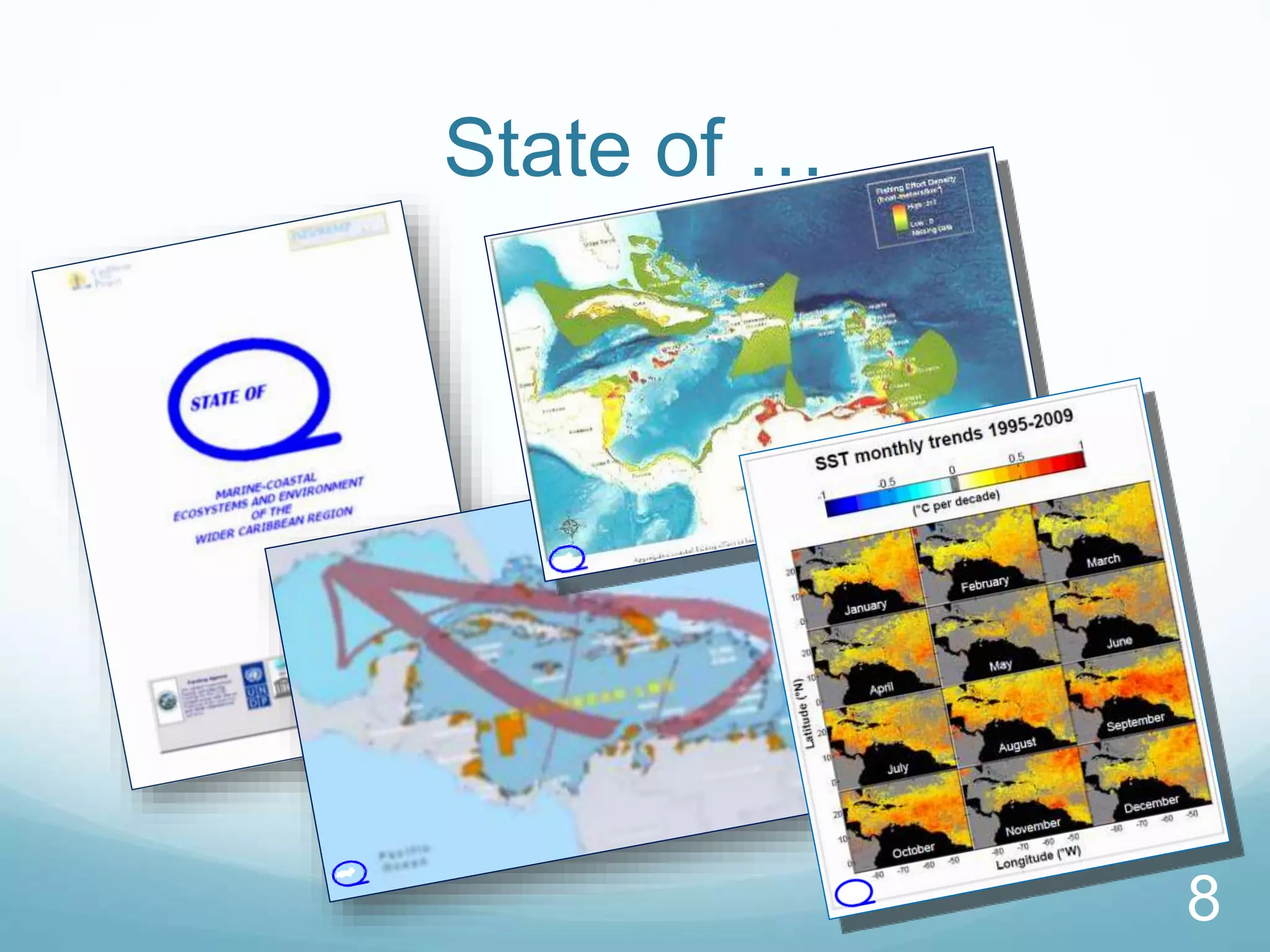
State of …
8
9
Foreseen activities
 Further development of IMS/REMP and expansion with new
themes
 Cooperation on data and information issues with other LME’s
 Assistance and advice to CLME countries on data/information
issues
 Archaeology and rescue of historical data archives
 Crowd sourcing of data and information
 Ferrybox concept for monitoring
Relation with CLME SAP
 Enhance the data and information collection (monitoring and
surveillance), management and reporting capacity at regional, sub-
regional and national levels, including through the establishment of public-
private partnerships
 Facilitate the uptake of lessons learnt, and of the results of monitoring and
research in (sub)regional and national science-policy processes through
dedicated data and information products (including indicators) and
services (IMS/REMP)
 Operationalise and further enhance interlinked, (sub)regional decision
support systems (DSS) for the relevant fisheries sectors
 Develop and adopt a regional policy for data and information
harmonization and sharing
10
11
Conclusions
 IMS/REMP helps to locate the data and information
needed for decision making
 IMS/REMP helps to ensure the access to data and
information required to generate indicators
 IMS/REMP promotes and supports the good
management of data and information
 IMS/REMP promotes the sharing of data and
information
11
Thank you !
12

Caribbean LME Project Information Management System/Regional Environmental Monitoring Program

  • 1.
    1 CLME - IMS/REMP PaulGeerders Project leader IMS/REMP pgeerders@clmeproject.org paul@pgcons.nl 1
  • 2.
    2 Contents  Summary ofmain issues and results up to now  Time frame  Obstacles found  Lessons learnt  Future activities 2
  • 3.
    3 IMS/REMP  IMS –Information Management System  internet-based reference to sources of data and information (metadata directory)  REMP – Regional Environmental Monitoring Program  monitoring of ecosystems, environment and related issues  monitoring of project progress and impact of SAP implementation
  • 4.
    4 Results  Beta versionIMS/REMP (http://clmeims.gcfi.org/)  Indicators (3 x 3 matrix)  Data Policy draft  Network of contacts in CLME countries  Contacts with stakeholder organisations  Contacts with other LME’s 4
  • 5.
    IMS/REMP DATA AND INFORMATION ANALYSIS AND ADVICE:DSS REVIEW AND EVALUATION : MONITORING IMPLEMENT- ATION DECISION MAKING IMS/REMP and Policy Cycle 5
  • 6.
    6 Demonstration projects  IMSfor Integrated Coastal Area Management ICAM  IMS for Economic Valuation  IMS for management of Spiny Lobster 6
  • 7.
    7 Lessons learnt  Needfor harmonized monitoring of marine-coastal ecosystems and environment, including basins, beaches, mangroves and wetlands  Need for harmonized monitoring of fisheries industry and effort (including white, grey and black market), and of fish stocks  Strengthening of data and information management, from institutional to regional  Development of suitable numerical models for forecasts and simulation as part of DSS  Development of dedicated expert/knowledge systems as part of DSS  Regional agreement on common data policy as basis for sharing of data and information 7
  • 8.
  • 9.
    9 Foreseen activities  Furtherdevelopment of IMS/REMP and expansion with new themes  Cooperation on data and information issues with other LME’s  Assistance and advice to CLME countries on data/information issues  Archaeology and rescue of historical data archives  Crowd sourcing of data and information  Ferrybox concept for monitoring
  • 10.
    Relation with CLMESAP  Enhance the data and information collection (monitoring and surveillance), management and reporting capacity at regional, sub- regional and national levels, including through the establishment of public- private partnerships  Facilitate the uptake of lessons learnt, and of the results of monitoring and research in (sub)regional and national science-policy processes through dedicated data and information products (including indicators) and services (IMS/REMP)  Operationalise and further enhance interlinked, (sub)regional decision support systems (DSS) for the relevant fisheries sectors  Develop and adopt a regional policy for data and information harmonization and sharing 10
  • 11.
    11 Conclusions  IMS/REMP helpsto locate the data and information needed for decision making  IMS/REMP helps to ensure the access to data and information required to generate indicators  IMS/REMP promotes and supports the good management of data and information  IMS/REMP promotes the sharing of data and information 11
  • 12.

Editor's Notes