Carbon Neutrality
Initiative
Madhav University
Abu Road-Pindwra, Sirohi, Rajasthan
Introduction
 Carbon Neutrality:
 Carbon neutrality refers to achieving net-zero carbon dioxide emissions by
balancing human induced carbon dioxide emissions with removal (often
through carbon offsetting or carbon sink) and/or simply eliminating
anthropogenic carbon dioxide emissions over a specified period.
Why Educational Institutes?
 The campuses of educational institutes are the spaces where students’ minds
get moulded, and their ambitions are shaped. Emission reductions and
offsetting the residual emissions if practised in the campus would serve as
Campus Determined Contributions for reducing global warming. This would
trigger actionable awareness. More than that, it would be the skill-
development for students towards a carbon neutral future.
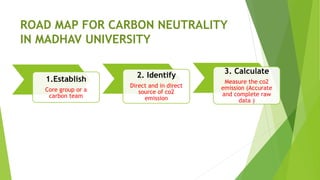
ROAD MAP FOR CARBON NEUTRALITY
IN MADHAV UNIVERSITY
1.Establish
Core group or a
carbon team
2. Identify
Direct and in direct
source of co2
emission
3. Calculate
Measure the co2
emission (Accurate
and complete raw
data )
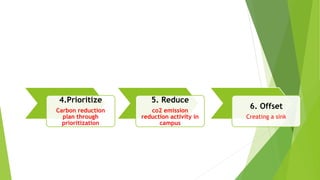
4.Prioritize
Carbon reduction
plan through
prioritization
5. Reduce
co2 emission
reduction activity in
campus
6. Offset
Creating a sink
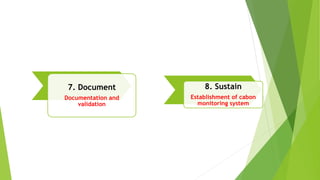
7. Document
Documentation and
validation
8. Sustain
Establishment of cabon
monitoring system
Steps to reduce campus Co2 emissions
1. Educate, Engage, and Encourage:
 Form a group of students to map out the Carbon Neutral Campus.
 Conduct an Energy and Carbon Audit.
 Educate students and staff on the harmful effects of GHG emissions and
approaches to reduce them.
 Engage students and staff in moving to a greener lifestyle.
 Encourage carbon footprint reduction with incentives such as a monthly
contest.
2. Choose Energy-Efficient Appliances:
 Prepare instructions and advice for energy-saving behaviors.
 Aim to replace old appliances with energy-efficient alternatives.
 Purchase BEE - Energy Star label appliances.
 Take advantage of natural light as much as possible to save energy.
3. Switch to Low-Carbon Energy provider:
 Sign up to get electricity from clean energy through a local utility or a
certified renewable energy provider.
 Invest in On-Site clean energy or Off-Site large scale renewable energy.
 Consider Waste-to-Energy Project. (Bio-gas)
4. Travel Less and Wisely:
 Choose for train travel over plane travel.
 Choose a holiday destination closer to home.
 Coordinate carpooling between employees.
 Replace unnecessary air travel with virtual meetings and online training
sessions.
5. Consider Alternative Mode of Transport:
 Ride a bike to work (also helps to improve health).
 Choose public transport or switch to an electric or hybrid vehicle.
 Work from home if able to do so.
6. Use Less Water : (This will save energy needed for pumping)
 Use low-flow water fixtures.
 Turn off the taps to avoid water running.
 Adopt rainwater harvesting techniques.
 Monitor the water consumption and any leakages.
7. Eating more Plant-based Food:
 Giving up meat for one day of the week.
 Replacing one meal a day with a plant-based option.
 Aim to eat things that are as low as possible on the food chain.
 Grow vegetables and fruits in the garden.
8. Rethink Consumption Patterns:
 Buy clothing from companies that are eco-friendly and/or organically
certified.
 Consider buying second-hand clothes or joining a clothing swap group.
 Practice consumption patterns that emit minimal CO2.

Carbon Neutrality MU.pptx

  • 1.
  • 2.
    Introduction  Carbon Neutrality: Carbon neutrality refers to achieving net-zero carbon dioxide emissions by balancing human induced carbon dioxide emissions with removal (often through carbon offsetting or carbon sink) and/or simply eliminating anthropogenic carbon dioxide emissions over a specified period.
  • 3.
    Why Educational Institutes? The campuses of educational institutes are the spaces where students’ minds get moulded, and their ambitions are shaped. Emission reductions and offsetting the residual emissions if practised in the campus would serve as Campus Determined Contributions for reducing global warming. This would trigger actionable awareness. More than that, it would be the skill- development for students towards a carbon neutral future.
  • 4.
    ROAD MAP FORCARBON NEUTRALITY IN MADHAV UNIVERSITY 1.Establish Core group or a carbon team 2. Identify Direct and in direct source of co2 emission 3. Calculate Measure the co2 emission (Accurate and complete raw data )
  • 5.
    4.Prioritize Carbon reduction plan through prioritization 5.Reduce co2 emission reduction activity in campus 6. Offset Creating a sink
  • 6.
    7. Document Documentation and validation 8.Sustain Establishment of cabon monitoring system
  • 7.
    Steps to reducecampus Co2 emissions 1. Educate, Engage, and Encourage:  Form a group of students to map out the Carbon Neutral Campus.  Conduct an Energy and Carbon Audit.  Educate students and staff on the harmful effects of GHG emissions and approaches to reduce them.  Engage students and staff in moving to a greener lifestyle.  Encourage carbon footprint reduction with incentives such as a monthly contest.
  • 8.
    2. Choose Energy-EfficientAppliances:  Prepare instructions and advice for energy-saving behaviors.  Aim to replace old appliances with energy-efficient alternatives.  Purchase BEE - Energy Star label appliances.  Take advantage of natural light as much as possible to save energy.
  • 9.
    3. Switch toLow-Carbon Energy provider:  Sign up to get electricity from clean energy through a local utility or a certified renewable energy provider.  Invest in On-Site clean energy or Off-Site large scale renewable energy.  Consider Waste-to-Energy Project. (Bio-gas)
  • 10.
    4. Travel Lessand Wisely:  Choose for train travel over plane travel.  Choose a holiday destination closer to home.  Coordinate carpooling between employees.  Replace unnecessary air travel with virtual meetings and online training sessions.
  • 11.
    5. Consider AlternativeMode of Transport:  Ride a bike to work (also helps to improve health).  Choose public transport or switch to an electric or hybrid vehicle.  Work from home if able to do so.
  • 12.
    6. Use LessWater : (This will save energy needed for pumping)  Use low-flow water fixtures.  Turn off the taps to avoid water running.  Adopt rainwater harvesting techniques.  Monitor the water consumption and any leakages.
  • 13.
    7. Eating morePlant-based Food:  Giving up meat for one day of the week.  Replacing one meal a day with a plant-based option.  Aim to eat things that are as low as possible on the food chain.  Grow vegetables and fruits in the garden.
  • 14.
    8. Rethink ConsumptionPatterns:  Buy clothing from companies that are eco-friendly and/or organically certified.  Consider buying second-hand clothes or joining a clothing swap group.  Practice consumption patterns that emit minimal CO2.