Multi-Tenant SOA Middleware for
        Cloud Computing


                    July 2010
                    Srinath Perera, Ph.D.,
                    Architect, WSO2 Inc.
Outline
●   What does a Cloud Native Platform needs?
●   Multi-tenancy
●   Challenges of Multi-tenancy
●   Carbon Platform
●   Multi-tenancy Architecture
●   Stratos
●   Conclusion
Outsourcing IT through Cloud


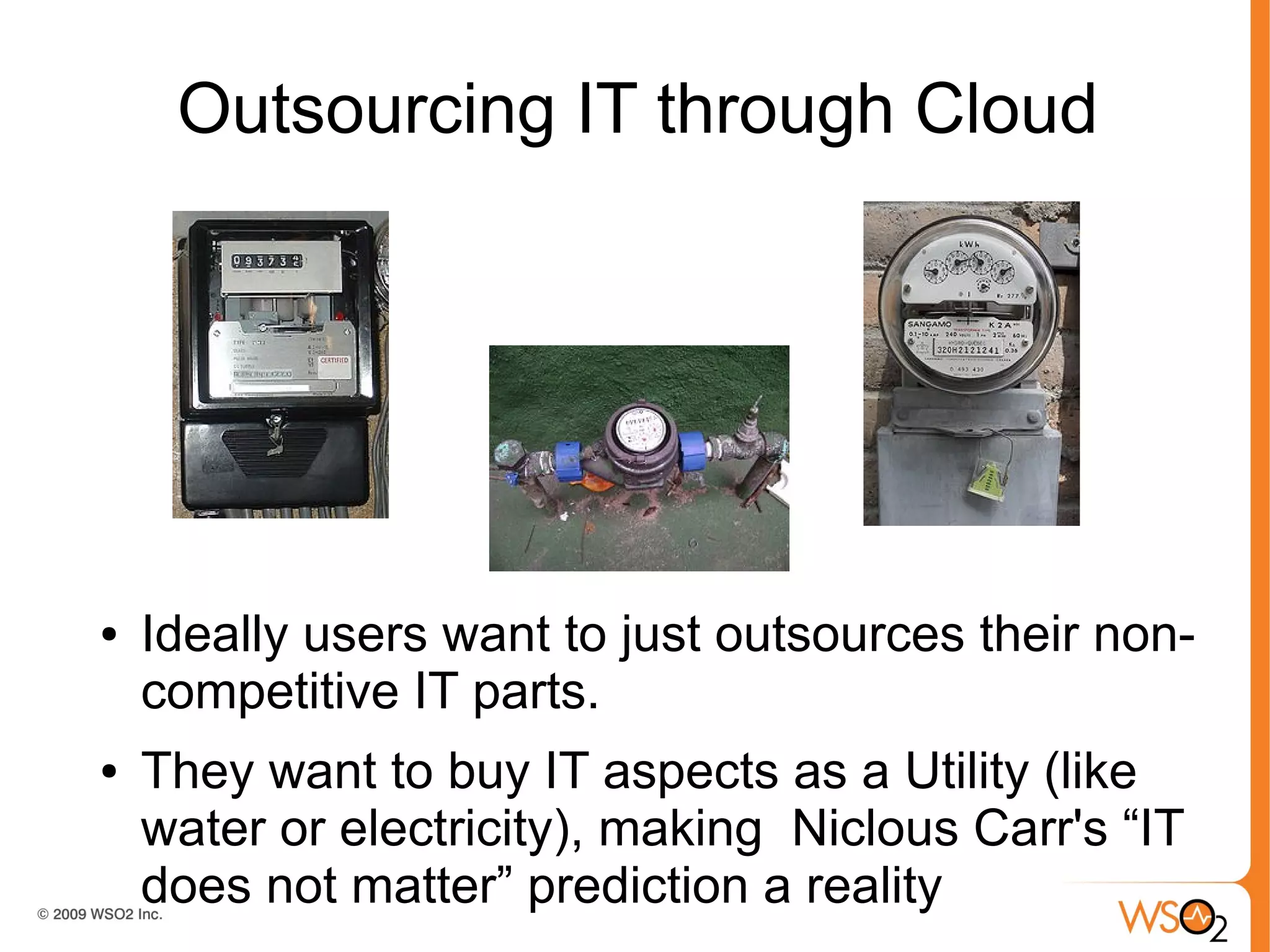
●   Ideally users want to just outsources their non-
    competitive IT parts.
●   They want to buy IT aspects as a Utility (like
    water or electricity), making Niclous Carr's “IT
    does not matter” prediction a reality
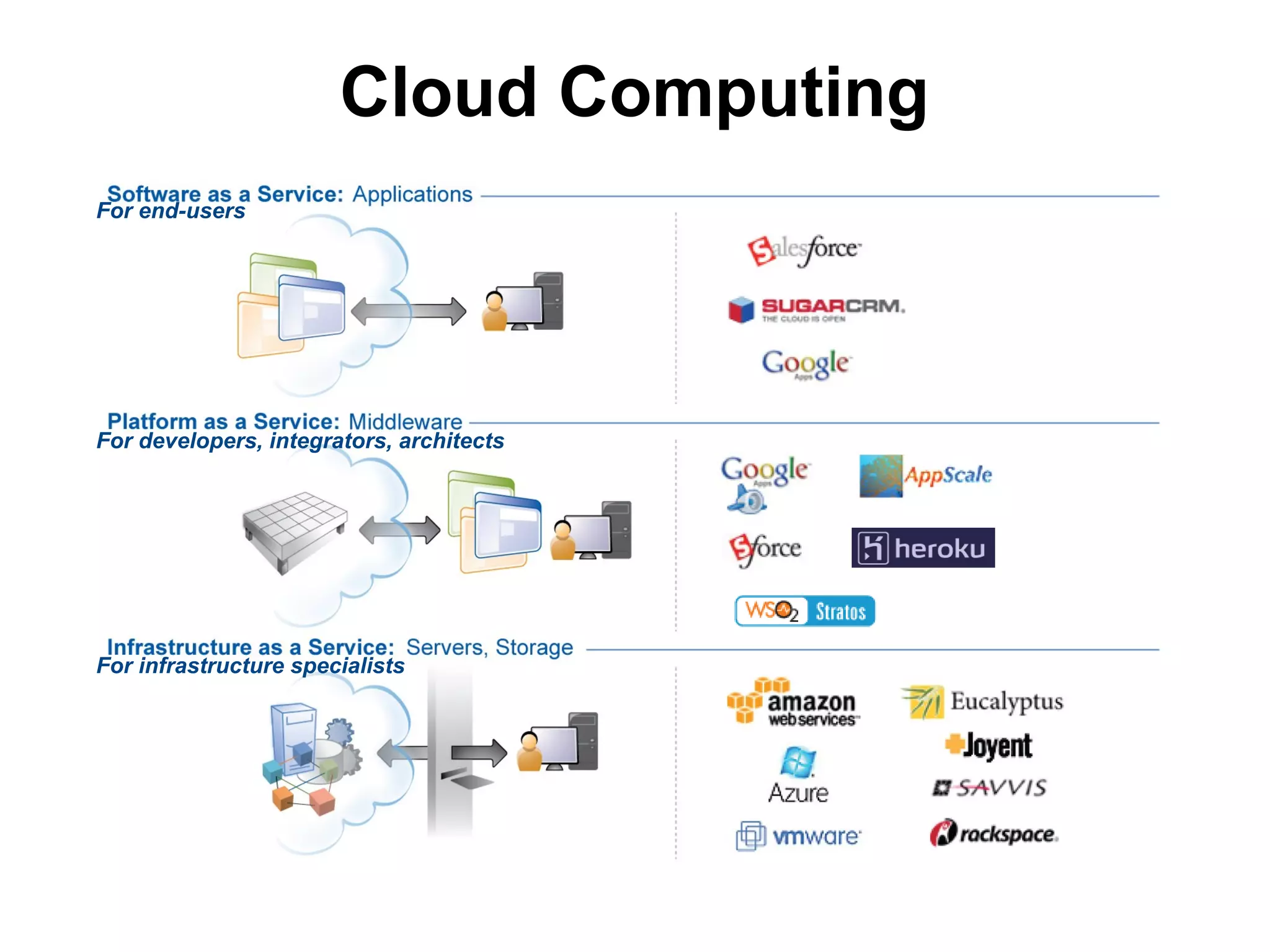
Cloud Computing
For end-users


For developers, integrators, architects


For infrastructure specialists
What does Cloud a Native Platform
                  Needs(1/2)?
●   Distributed/Dynamically Wired (works properly in
    the cloud)
    –   Supports deploying in a dynamically sized cluster
    –   Finds services across applications even when they
        move
●   Elastic (Uses the cloud efficiently)
    –   Scales up and down as needed
    –   Works with the underlying IaaS
●   Multi-tenant (Only costs when you use it)
    –   Virtual isolated instances with near zero incremental
        cost
    –   Implies you have a proper identity model
What does Cloud a Native Platform
                  Needs(1/2)?
●   Self-service (in the hands of users)
    –   De-centralized creaton and management of tenants
    – Automated Governance across tenants
●   Granularly Billed and Metered (pay for just what
    you use)
    –  Allocate costs to exactly who uses them
●   Incrementally Deployed and Tested (seamless live
    upgrades)
    –   Supports contnuous update, side-by-side operaton, in-
        place testng and incremental producton
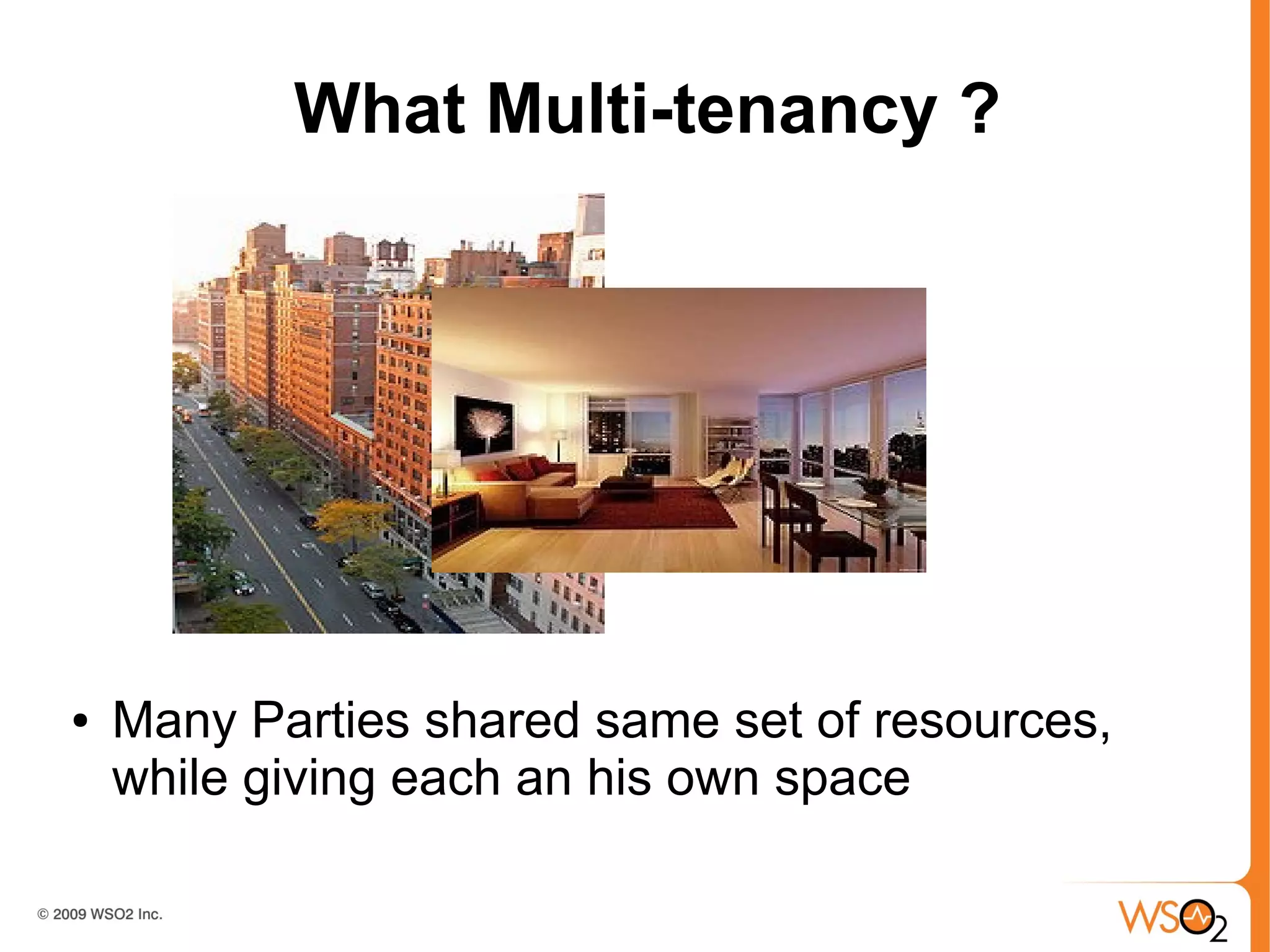
What Multi-tenancy ?


●   Many Parties shared same set of resources,
    while giving each an his own space
Multi-tenancy is for Maximizing
            Resource Sharing
●   Possible SaaS Implementations
       –   First generation: Machine for User
       –   Second Generation: VM per User
       –   Third Generation: Using multi-tenancy to share
            same server/machine/VM across users.
                                                    rd
●
    Efficient implementations of SaaS needs 3
    generation multi-tenancy
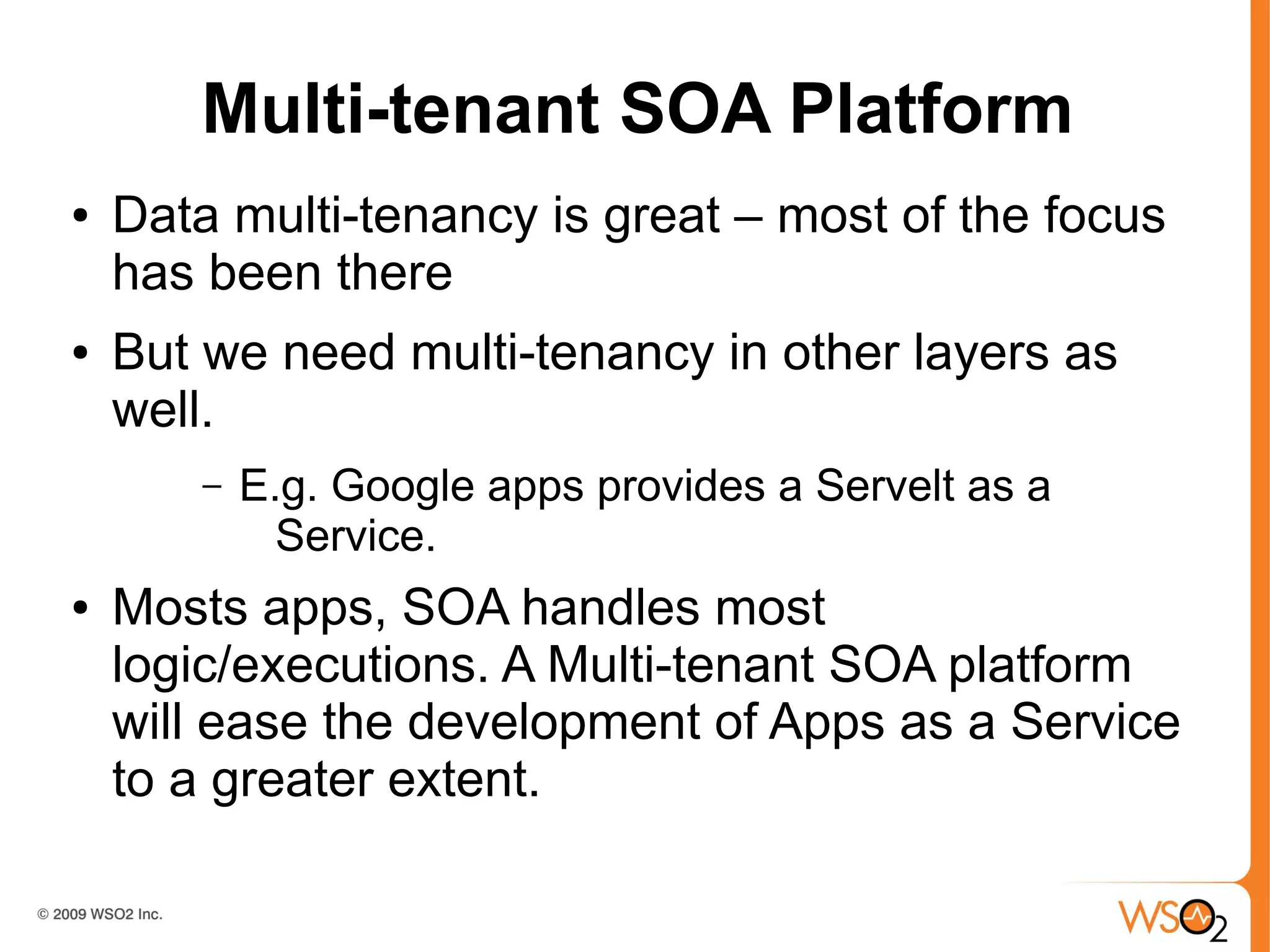
Multi-tenant SOA Platform
●   Data multi-tenancy is great – most of the focus
    has been there
●   But we need multi-tenancy in other layers as
    well.
        –   E.g. Google apps provides a Servelt as a
              Service.
●   Mosts apps, SOA handles most
    logic/executions. A Multi-tenant SOA platform
    will ease the development of Apps as a Service
    to a greater extent.
To Understand Multi-tenant SOA
   platform, you have to first
 understand Our SOA Platform
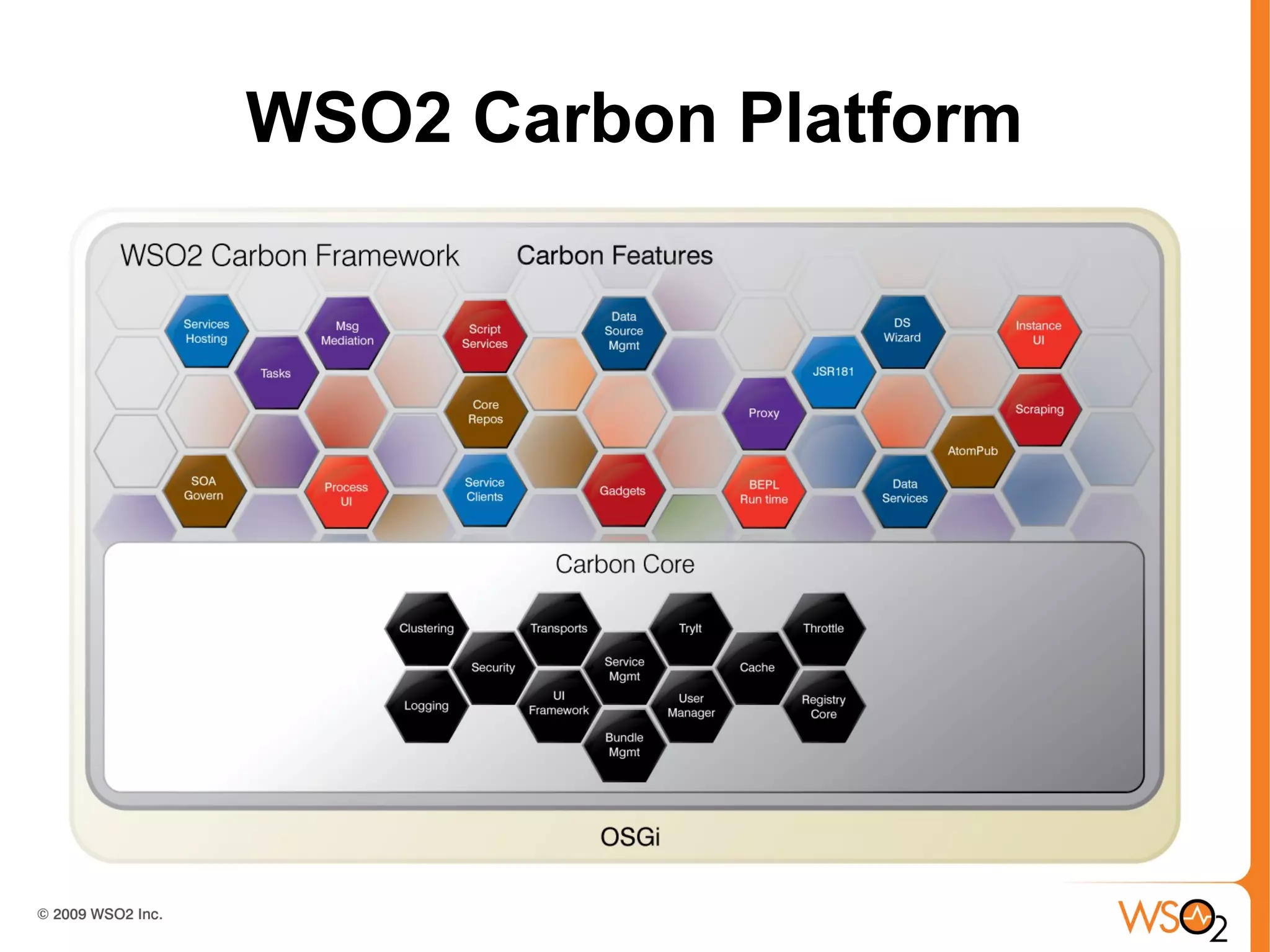
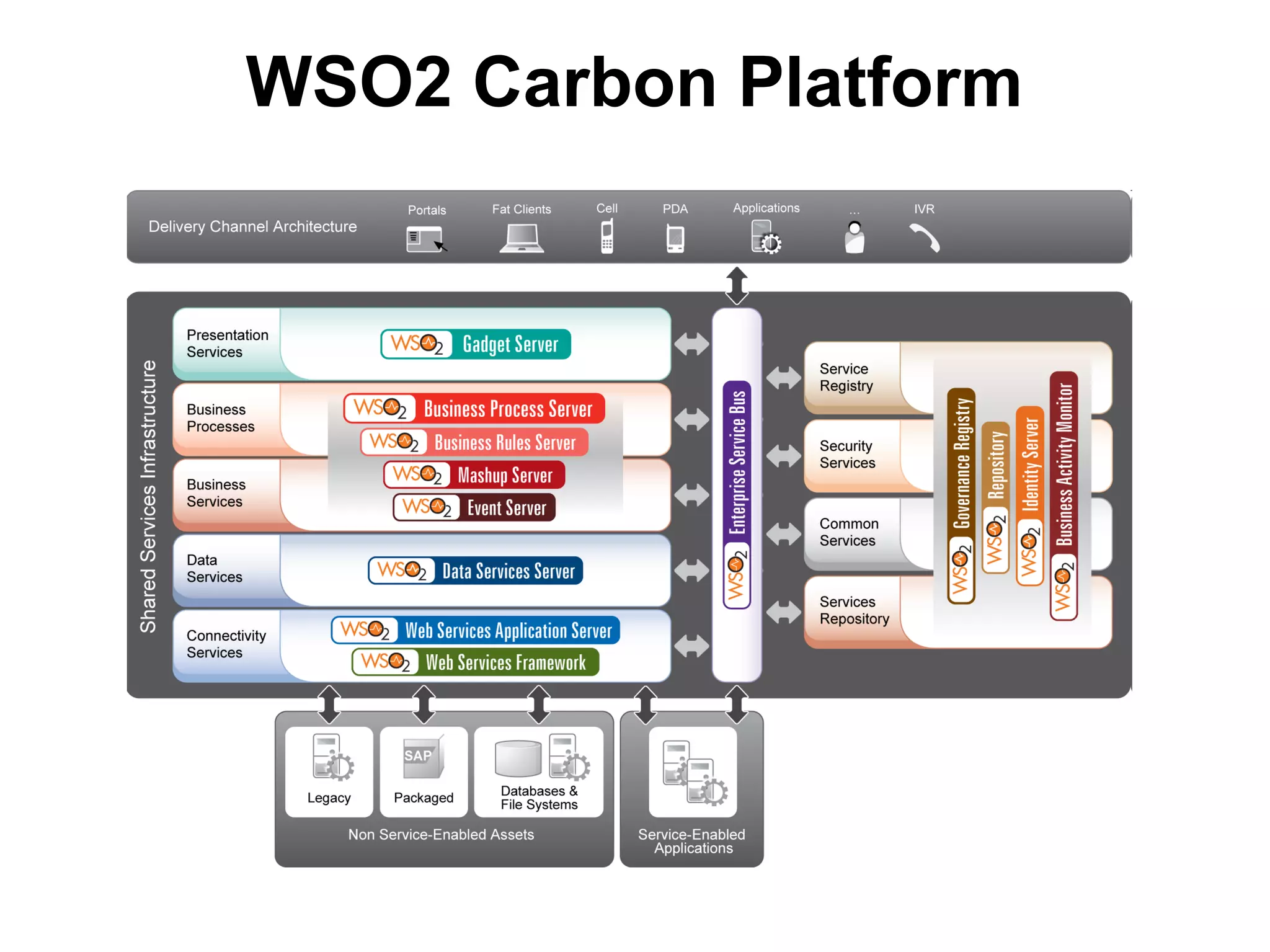
WSO2 Carbon Platform
Our Goal
●   Developing an architecture to provide SOA
    Container (s)/ Platform as a Service.
●   Let users run their single tenet apps (Services,
    Business processes, Web applications,
    Mediation logic, Rules etc. ) in this multi-tenant
    environment without any change.
Understanding Multi-tenancy
●   Goal of multi-tenancy is to provide different users
    of the system (which we shall call tenants)
    isolation in each of these spaces while
    maximizing resource sharing.
●   Resource sharing and isolation are a tradeoff.
●   Furthermore, Chang et al. [4] has proposed three
    properties for multi-tenancy in addition to
    isolation:
        –   Scalable,
        –   Multi-tenant-efficient: same instance hosts
             multiple tenants
        –   configurable.
Challenges of Multi-tenancy
●   Isolation between tenants
●   Admin view vs tenants views and programming
    model, maximum configuration without
    compromising isolation.
●   Scalability: multi-tenancy tend to accumulate
    load so it has to be scalable.
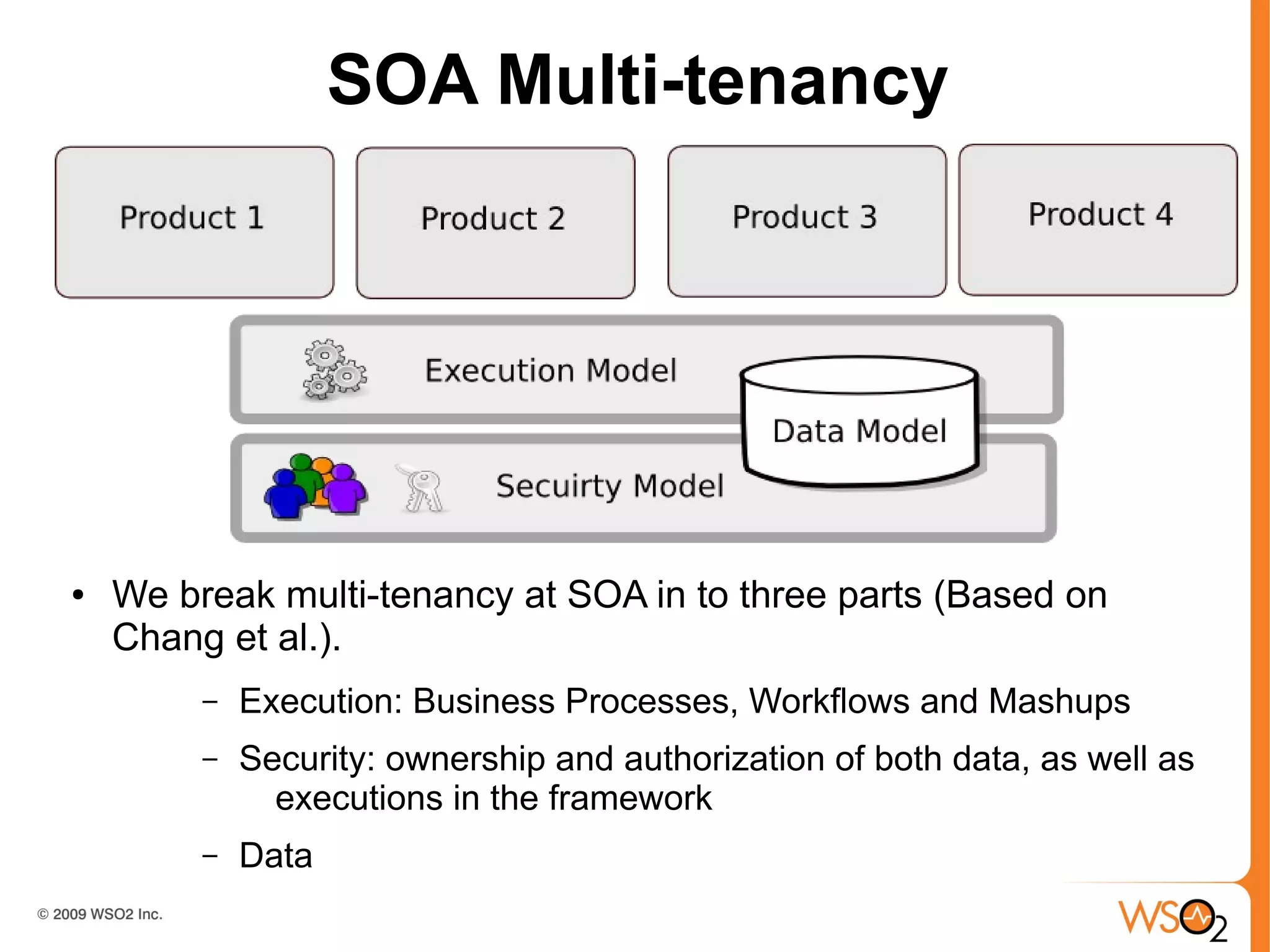
SOA Multi-tenancy


●   We break multi-tenancy at SOA in to three parts (Based on
    Chang et al.).
         –   Execution: Business Processes, Workflows and Mashups
         –   Security: ownership and authorization of both data, as well as
               executions in the framework
         –   Data
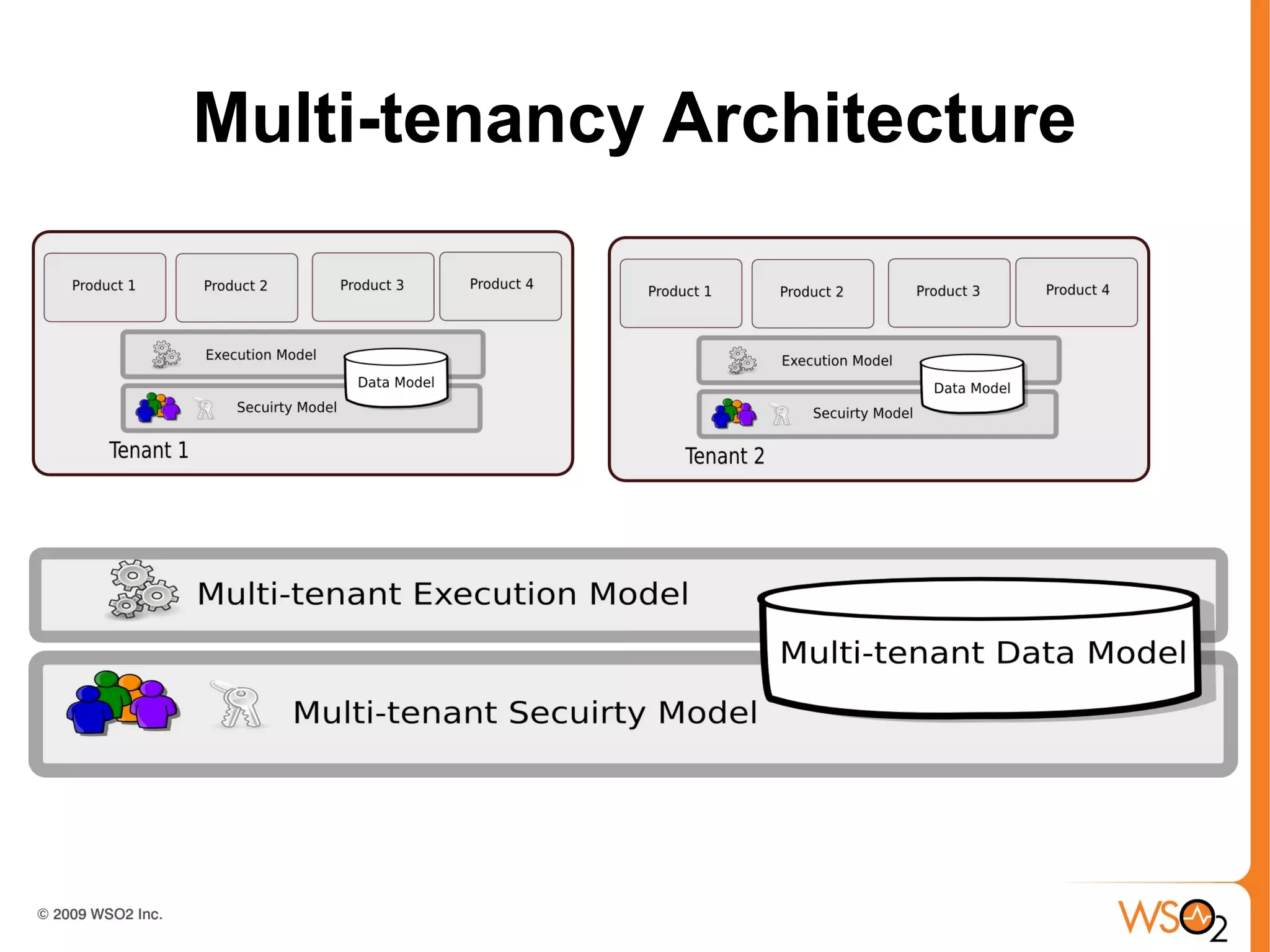
Multi-tenancy Architecture
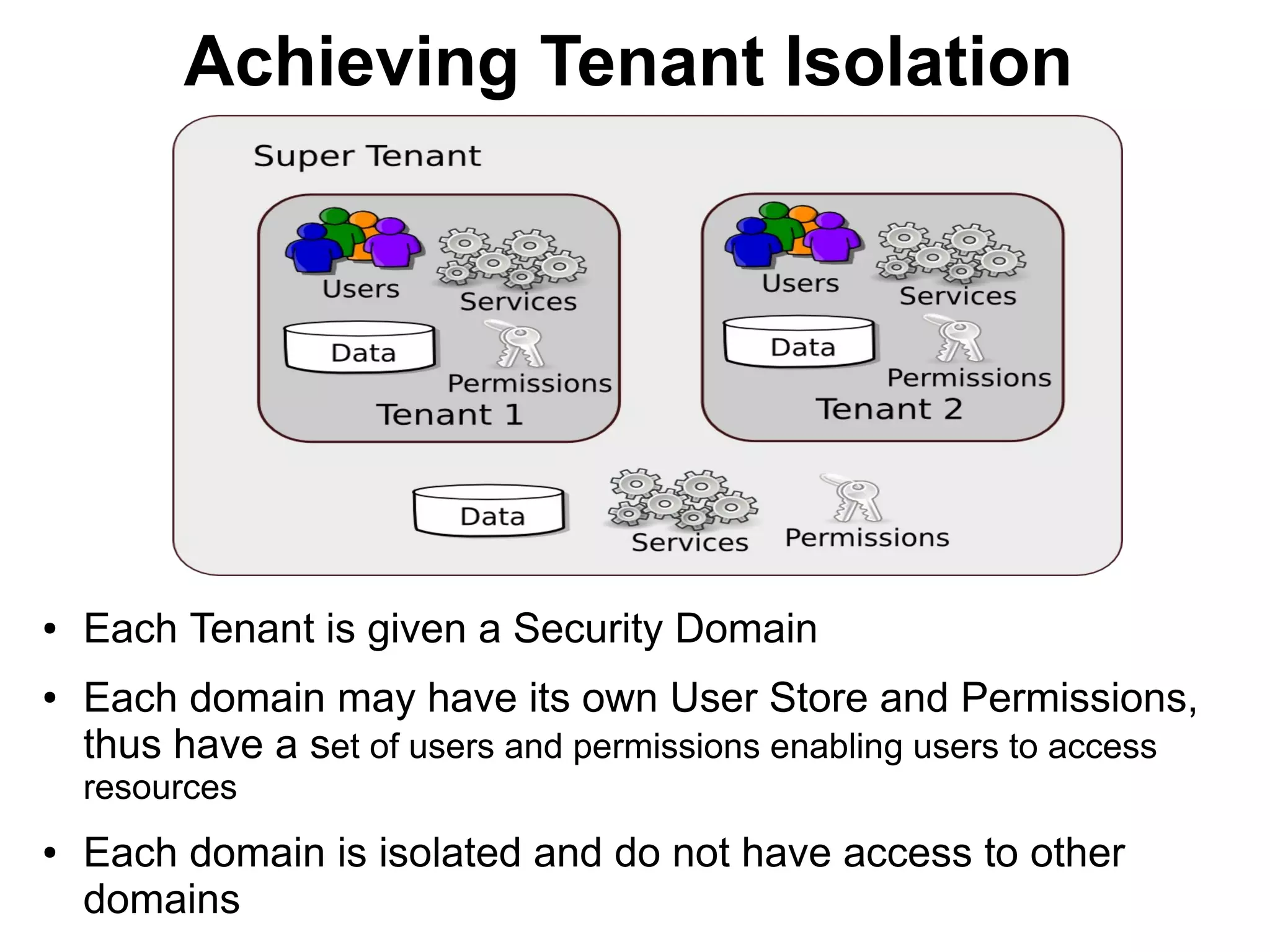
Achieving Tenant Isolation


●   Each Tenant is given a Security Domain
●   Each domain may have its own User Store and Permissions,
    thus have a set of users and permissions enabling users to access
    resources
●   Each domain is isolated and do not have access to other
    domains
Achieving Data Isolation
●   All data access to the Carbon platform is done
    through Registry interface.
●   At Multi-tenant environments, system loads with
    multi-tenant implementation of the registry,
    which enforces isolation
●   Multi-tenancy options at Database level
    ●   Separate database
    ●   Separate tables
    ●   Shared tables ** [We use this]
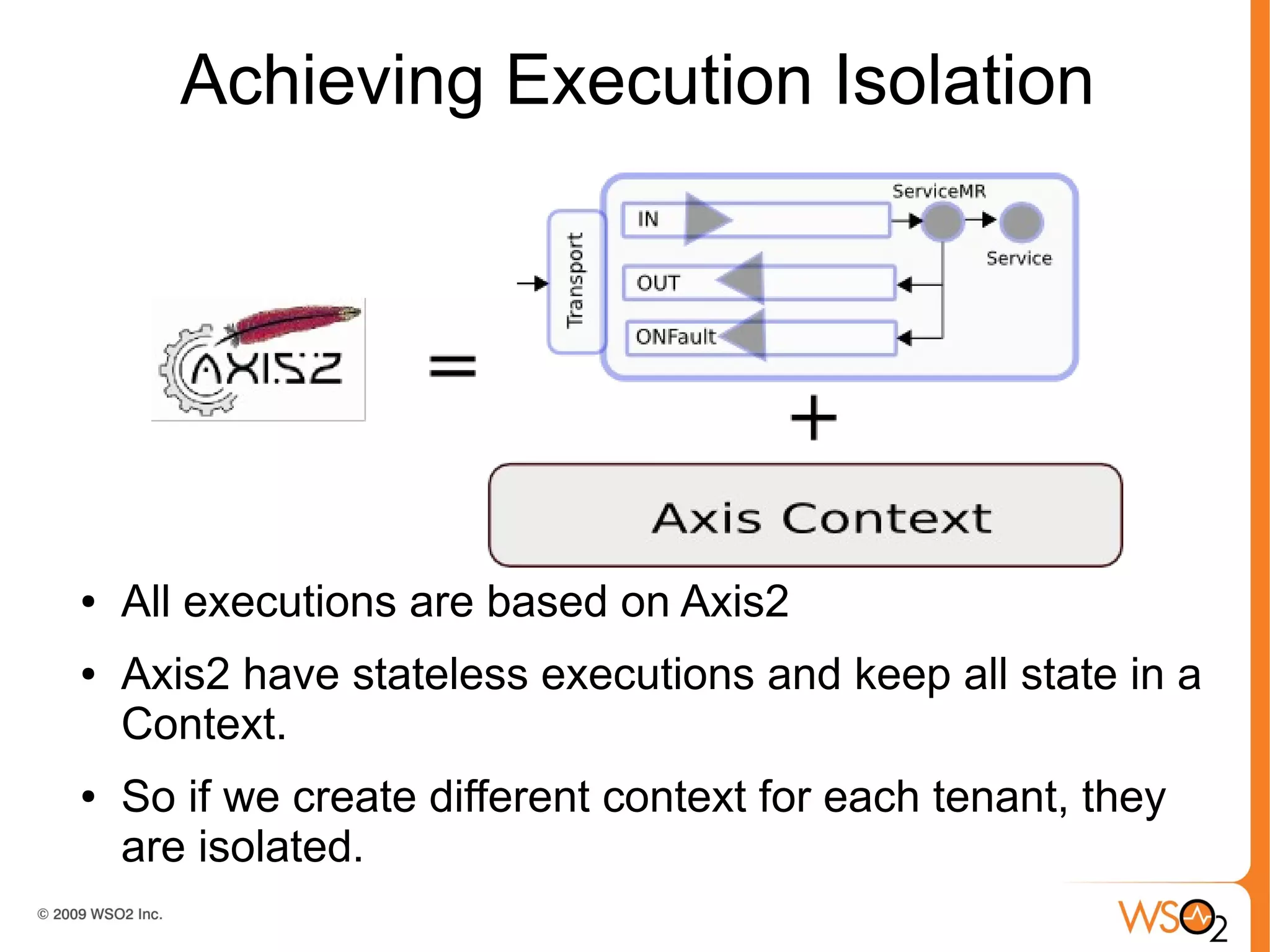
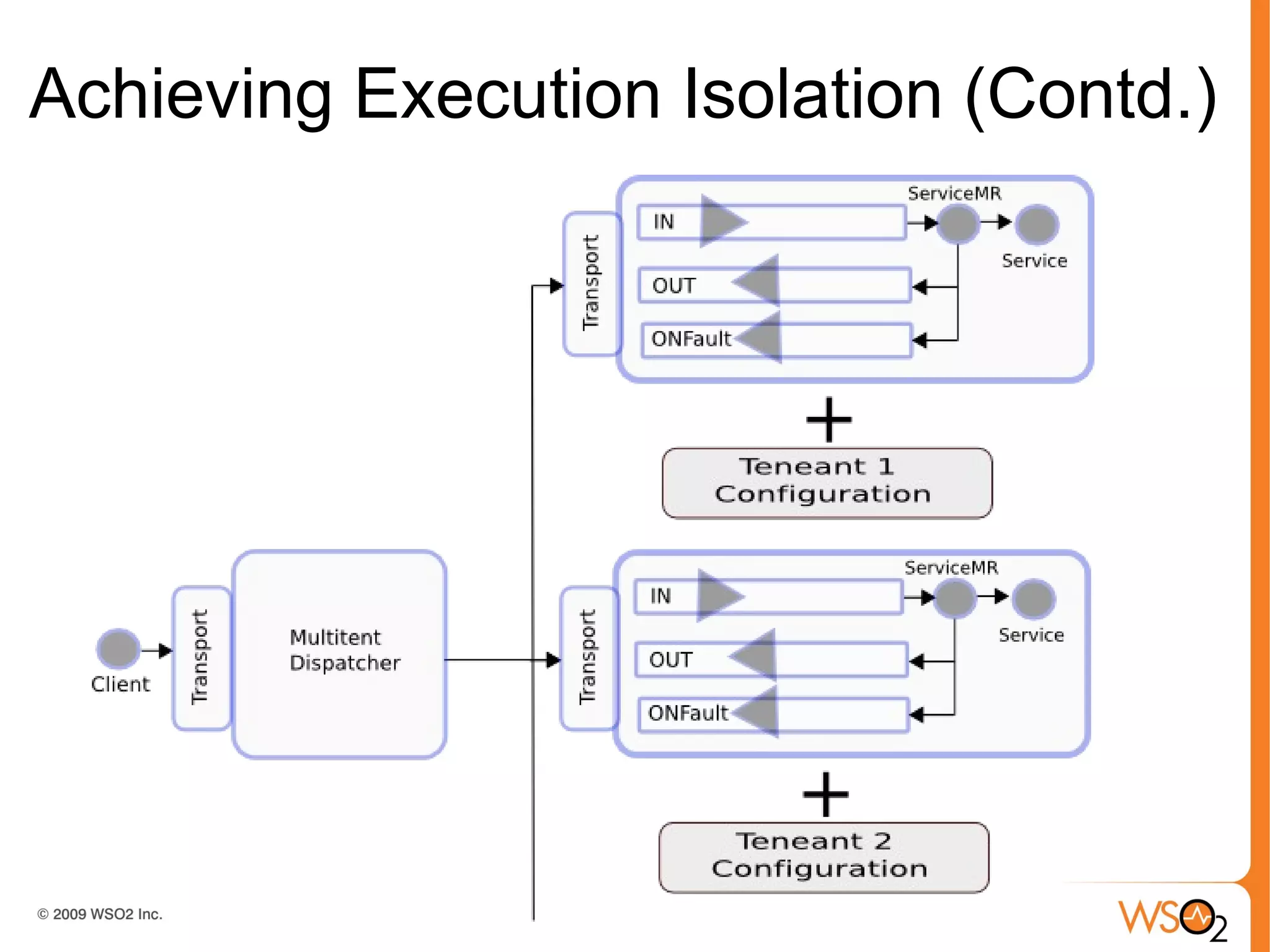
Achieving Execution Isolation


●   All executions are based on Axis2
●   Axis2 have stateless executions and keep all state in a
    Context.
●   So if we create different context for each tenant, they
    are isolated.
Achieving Execution Isolation (Contd.)
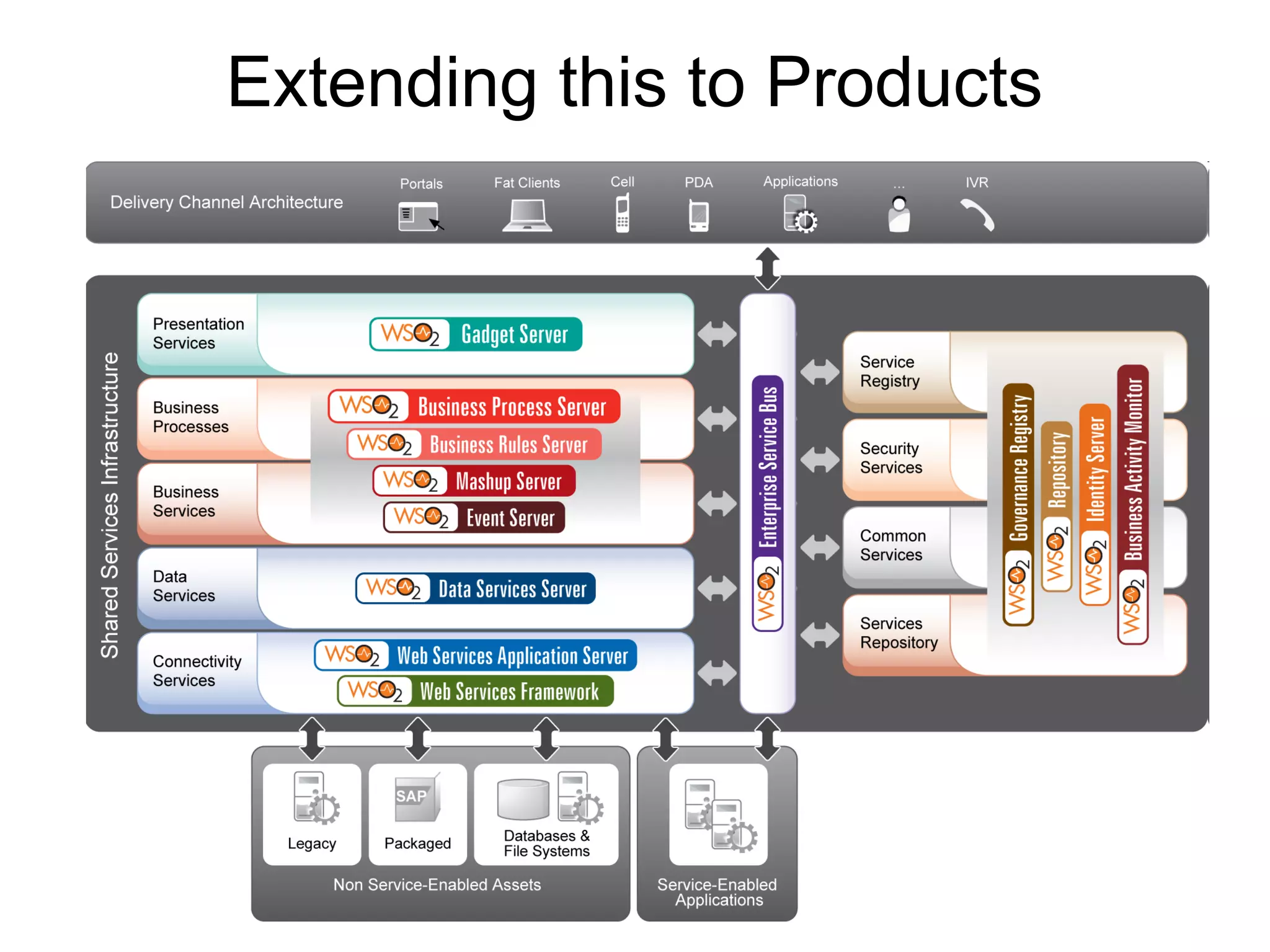
Extending this to Products
●   WSAS (Web Services Application Server) ,
    Registry, Identity Server directly get Multi-
    tenancy once security, data, and execution,
●   BPS keeps all the data either in Context or in
    registry, and each tenet see a specific view.
●   Some products need some work, but in general
    they are implemented using registry for data
    and services for executions So the
    aforementioned model covers most usecases.
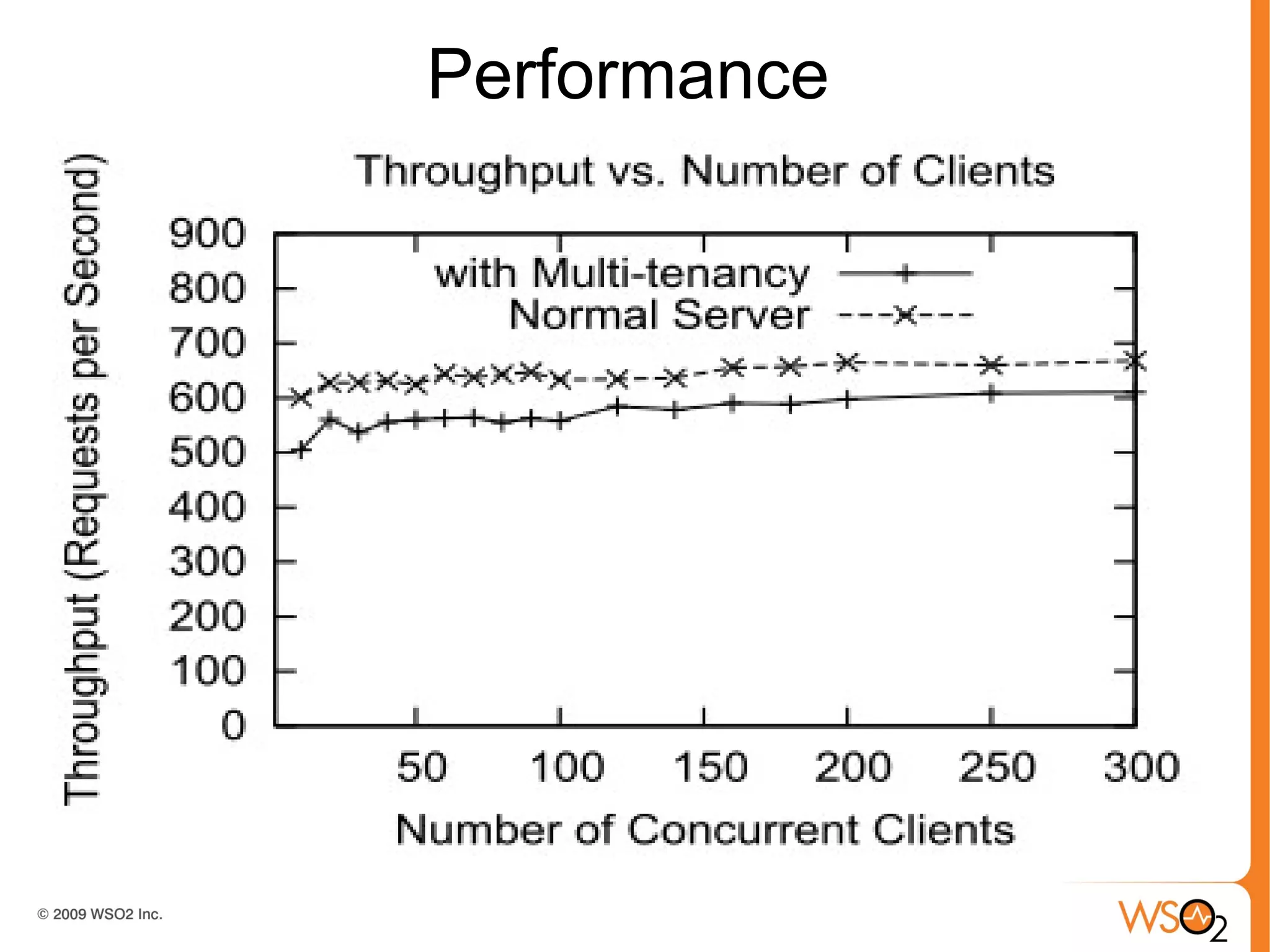
Performance
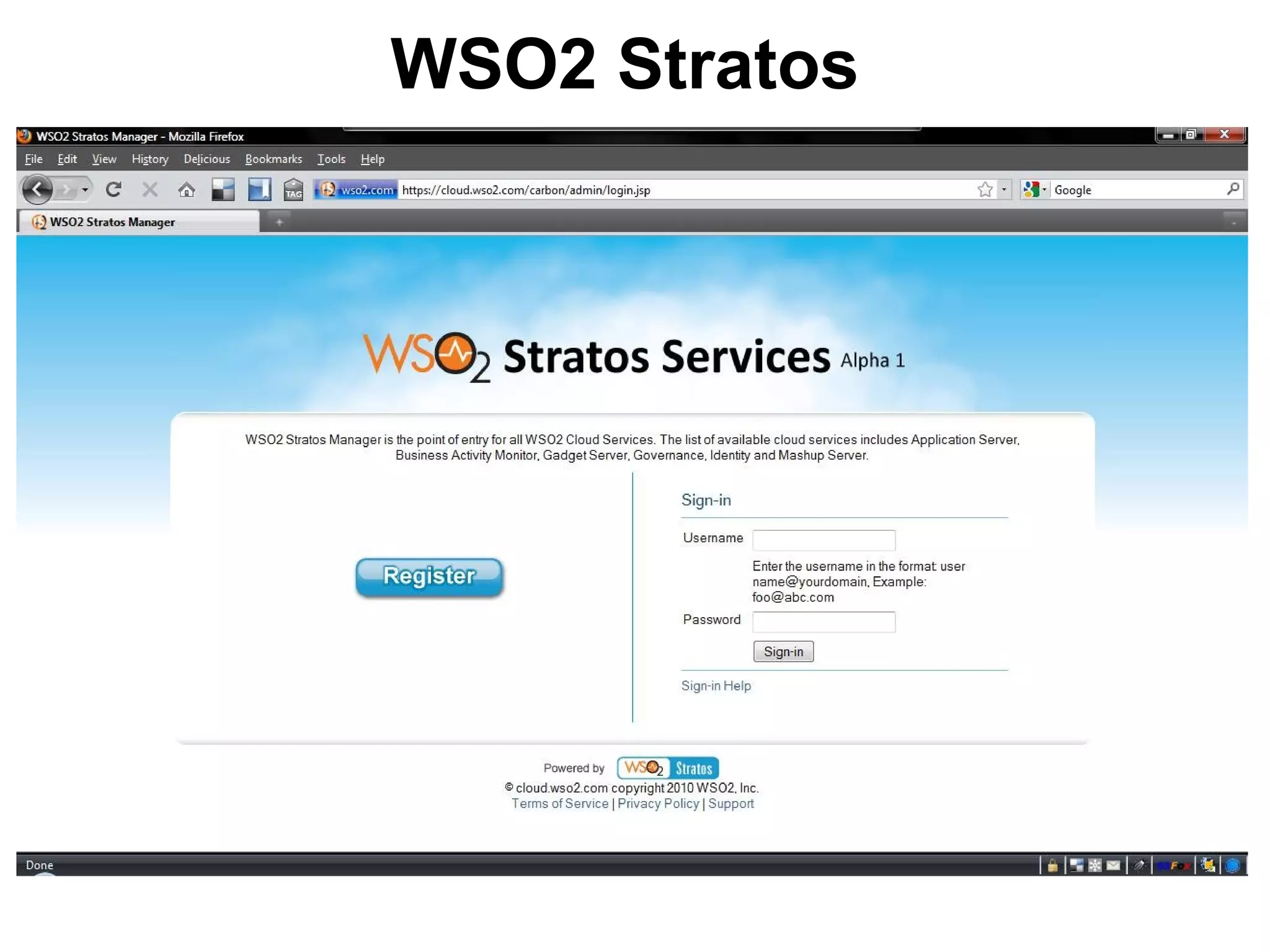
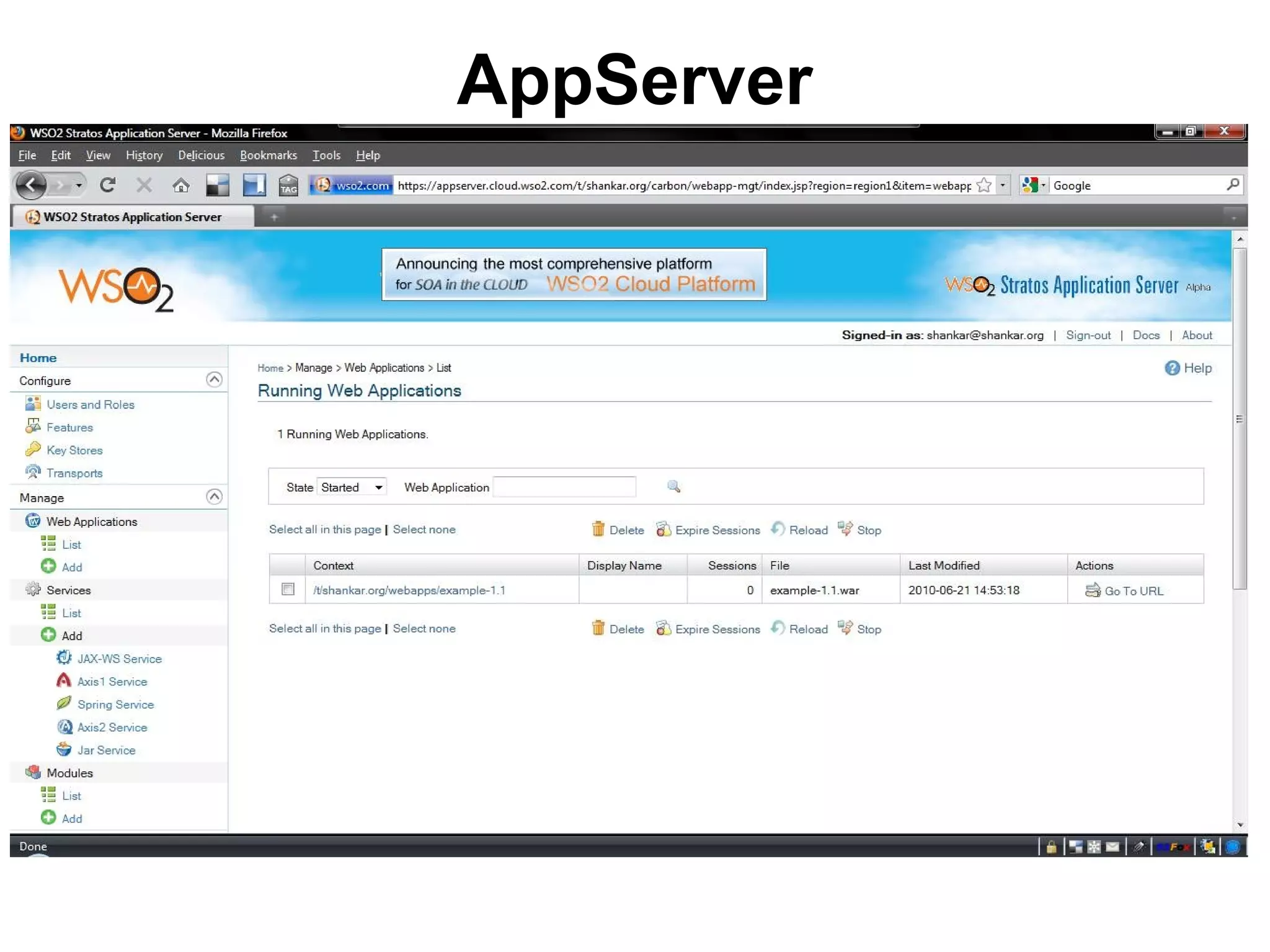
WSO2 Stratos
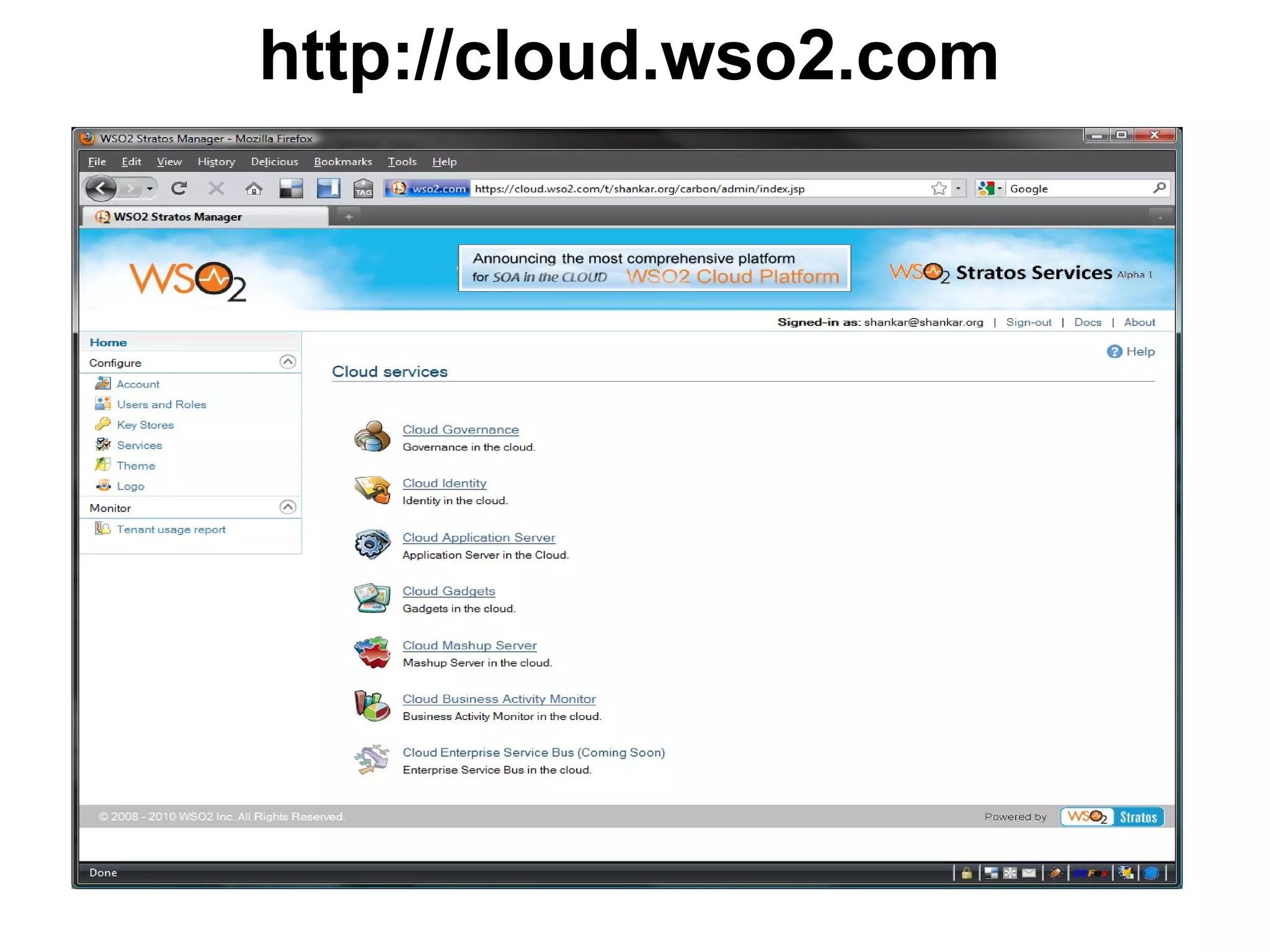
http://cloud.wso2.com
AppServer
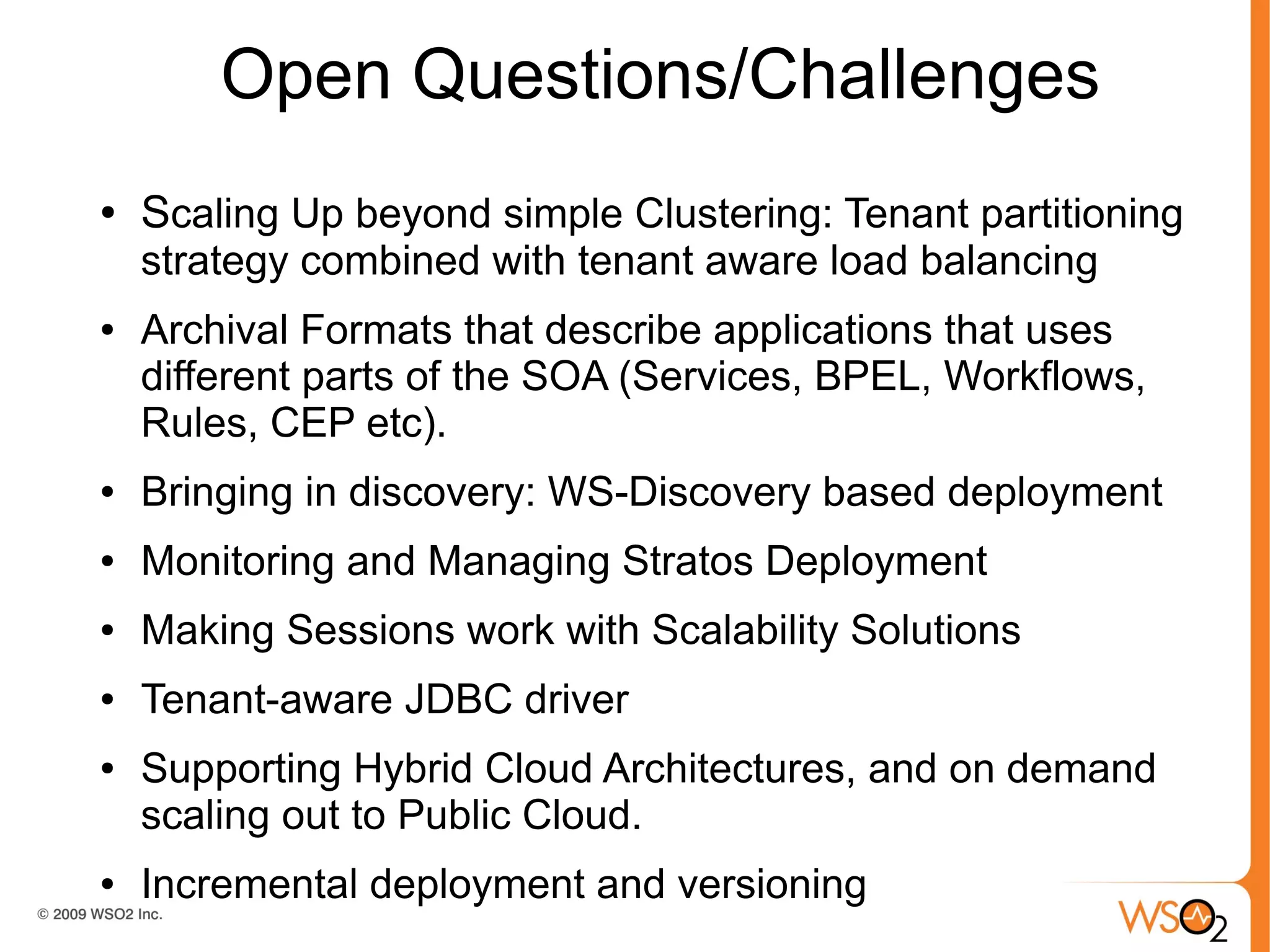
Open Questions/Challenges
●   Scaling Up beyond simple Clustering: Tenant partitioning
    strategy combined with tenant aware load balancing
●   Archival Formats that describe applications that uses
    different parts of the SOA (Services, BPEL, Workflows,
    Rules, CEP etc).
●   Bringing in discovery: WS-Discovery based deployment
●   Monitoring and Managing Stratos Deployment
●   Making Sessions work with Scalability Solutions
●   Tenant-aware JDBC driver
●   Supporting Hybrid Cloud Architectures, and on demand
    scaling out to Public Cloud.
●   Incremental deployment and versioning
Conclusion
●   We discussed an architecture to enable multi-
    tenancy in an SOA platform
●   We discussed how architecture handle three
    aspects, Security, data, and execution and how
    those three aspects can yield a Multi-tenet SOA
    platform
More Info
   Corporate website: http://wso2.com


   Developer portal: http://wso2.org


   Business development team: bizdev@wso2.com
   srinath@wso2.com

Multi-Tenant SOA Middleware for Cloud Computing

  • 1.
    Multi-Tenant SOA Middlewarefor Cloud Computing July 2010 Srinath Perera, Ph.D., Architect, WSO2 Inc.
  • 2.
    Outline ● What does a Cloud Native Platform needs? ● Multi-tenancy ● Challenges of Multi-tenancy ● Carbon Platform ● Multi-tenancy Architecture ● Stratos ● Conclusion
  • 3.
    Outsourcing IT throughCloud ● Ideally users want to just outsources their non- competitive IT parts. ● They want to buy IT aspects as a Utility (like water or electricity), making Niclous Carr's “IT does not matter” prediction a reality
  • 4.
    Cloud Computing For end-users Fordevelopers, integrators, architects For infrastructure specialists
  • 5.
    What does Clouda Native Platform Needs(1/2)? ● Distributed/Dynamically Wired (works properly in the cloud) – Supports deploying in a dynamically sized cluster – Finds services across applications even when they move ● Elastic (Uses the cloud efficiently) – Scales up and down as needed – Works with the underlying IaaS ● Multi-tenant (Only costs when you use it) – Virtual isolated instances with near zero incremental cost – Implies you have a proper identity model
  • 6.
    What does Clouda Native Platform Needs(1/2)? ● Self-service (in the hands of users) – De-centralized creaton and management of tenants – Automated Governance across tenants ● Granularly Billed and Metered (pay for just what you use) – Allocate costs to exactly who uses them ● Incrementally Deployed and Tested (seamless live upgrades) – Supports contnuous update, side-by-side operaton, in- place testng and incremental producton
  • 7.
    What Multi-tenancy ? ● Many Parties shared same set of resources, while giving each an his own space
  • 8.
    Multi-tenancy is forMaximizing Resource Sharing ● Possible SaaS Implementations – First generation: Machine for User – Second Generation: VM per User – Third Generation: Using multi-tenancy to share same server/machine/VM across users. rd ● Efficient implementations of SaaS needs 3 generation multi-tenancy
  • 9.
    Multi-tenant SOA Platform ● Data multi-tenancy is great – most of the focus has been there ● But we need multi-tenancy in other layers as well. – E.g. Google apps provides a Servelt as a Service. ● Mosts apps, SOA handles most logic/executions. A Multi-tenant SOA platform will ease the development of Apps as a Service to a greater extent.
  • 10.
    To Understand Multi-tenantSOA platform, you have to first understand Our SOA Platform
  • 11.
  • 12.
  • 13.
    Our Goal ● Developing an architecture to provide SOA Container (s)/ Platform as a Service. ● Let users run their single tenet apps (Services, Business processes, Web applications, Mediation logic, Rules etc. ) in this multi-tenant environment without any change.
  • 14.
    Understanding Multi-tenancy ● Goal of multi-tenancy is to provide different users of the system (which we shall call tenants) isolation in each of these spaces while maximizing resource sharing. ● Resource sharing and isolation are a tradeoff. ● Furthermore, Chang et al. [4] has proposed three properties for multi-tenancy in addition to isolation: – Scalable, – Multi-tenant-efficient: same instance hosts multiple tenants – configurable.
  • 15.
    Challenges of Multi-tenancy ● Isolation between tenants ● Admin view vs tenants views and programming model, maximum configuration without compromising isolation. ● Scalability: multi-tenancy tend to accumulate load so it has to be scalable.
  • 16.
    SOA Multi-tenancy ● We break multi-tenancy at SOA in to three parts (Based on Chang et al.). – Execution: Business Processes, Workflows and Mashups – Security: ownership and authorization of both data, as well as executions in the framework – Data
  • 17.
  • 18.
    Achieving Tenant Isolation ● Each Tenant is given a Security Domain ● Each domain may have its own User Store and Permissions, thus have a set of users and permissions enabling users to access resources ● Each domain is isolated and do not have access to other domains
  • 19.
    Achieving Data Isolation ● All data access to the Carbon platform is done through Registry interface. ● At Multi-tenant environments, system loads with multi-tenant implementation of the registry, which enforces isolation ● Multi-tenancy options at Database level ● Separate database ● Separate tables ● Shared tables ** [We use this]
  • 20.
    Achieving Execution Isolation ● All executions are based on Axis2 ● Axis2 have stateless executions and keep all state in a Context. ● So if we create different context for each tenant, they are isolated.
  • 21.
  • 22.
  • 23.
    Extending this toProducts ● WSAS (Web Services Application Server) , Registry, Identity Server directly get Multi- tenancy once security, data, and execution, ● BPS keeps all the data either in Context or in registry, and each tenet see a specific view. ● Some products need some work, but in general they are implemented using registry for data and services for executions So the aforementioned model covers most usecases.
  • 24.
  • 25.
  • 26.
  • 27.
  • 28.
    Open Questions/Challenges ● Scaling Up beyond simple Clustering: Tenant partitioning strategy combined with tenant aware load balancing ● Archival Formats that describe applications that uses different parts of the SOA (Services, BPEL, Workflows, Rules, CEP etc). ● Bringing in discovery: WS-Discovery based deployment ● Monitoring and Managing Stratos Deployment ● Making Sessions work with Scalability Solutions ● Tenant-aware JDBC driver ● Supporting Hybrid Cloud Architectures, and on demand scaling out to Public Cloud. ● Incremental deployment and versioning
  • 29.
    Conclusion ● We discussed an architecture to enable multi- tenancy in an SOA platform ● We discussed how architecture handle three aspects, Security, data, and execution and how those three aspects can yield a Multi-tenet SOA platform
  • 30.
    More Info  Corporate website: http://wso2.com  Developer portal: http://wso2.org  Business development team: bizdev@wso2.com  srinath@wso2.com