How an Internal Developer
Platform Lets Developers
Focus on Code
Joseph Fonseka
Vice President & Distinguished Engineer
WSO2
Manjula Rathnayake
Director of Engineering
WSO2
Navigating the Roles: Platform
Engineer & Developer Journeys
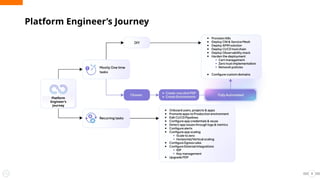
Platform Engineer’s Journey
3
Platform
Engineer’s
Journey
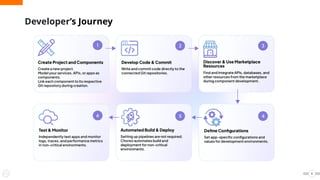
Developer’s Journey
4
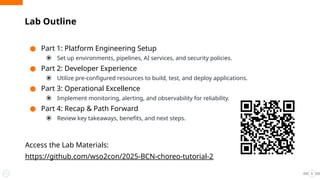
● Part 1: Platform Engineering Setup
⦿ Set up environments, pipelines, AI services, and security policies.
● Part 2: Developer Experience
⦿ Utilize pre-configured resources to build, test, and deploy applications.
● Part 3: Operational Excellence
⦿ Implement monitoring, alerting, and observability for reliability.
● Part 4: Recap & Path Forward
⦿ Review key takeaways, benefits, and next steps.
Access the Lab Materials:
https://github.com/wso2con/2025-BCN-choreo-tutorial-2
Lab Outline
5
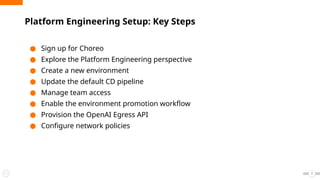
Part 1: Platform Engineering Setup
● Sign up for Choreo
● Explore the Platform Engineering perspective
● Create a new environment
● Update the default CD pipeline
● Manage team access
● Enable the environment promotion workflow
● Provision the OpenAI Egress API
● Configure network policies
Platform Engineering Setup: Key Steps
7
Part 2: Developer Experience
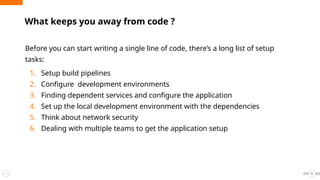
What keeps you away from code ?
Before you can start writing a single line of code, there’s a long list of setup
tasks:
1. Setup build pipelines
2. Configure development environments
3. Finding dependent services and configure the application
4. Set up the local development environment with the dependencies
5. Think about network security
6. Dealing with multiple teams to get the application setup
9
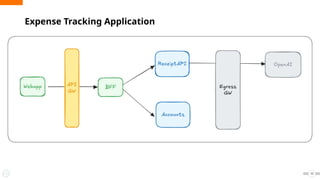
Expense Tracking Application
10
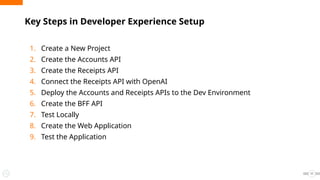
1. Create a New Project
2. Create the Accounts API
3. Create the Receipts API
4. Connect the Receipts API with OpenAI
5. Deploy the Accounts and Receipts APIs to the Dev Environment
6. Create the BFF API
7. Test Locally
8. Create the Web Application
9. Test the Application
Key Steps in Developer Experience Setup
11
Part 3: Operational Excellence
● Promote the application to a higher environment
● Monitor system performance & observability
● Configure latency alert rule
Key Steps in Operational Excellence
13
Part 4: Recap & Path Forward
● Platform Engineering Setup – Configured environments, pipelines, security
policies, and governance.
● Developer Experience – Built and deployed APIs, connected services, and
created the web application.
● Operational Excellence – Monitored system performance, analyzed
observability data, and set up alerts.
Recap of What We Covered
15
● For platform engineers:
⦿ Integrate an external identity provider for secure authentication and access control.
⦿ Deploy workloads on another private data plane to enhance flexibility.
● For developers:
⦿ Enhance web application security with managed authentication.
● Stay in touch & keep building!
⦿ Reach out with questions, feedback, or ideas.
⦿ Explore advanced features and integrations.
⦿ Let’s continue the journey together!!
Path Forward
16
Thank you!

WSO2Con 2025 - How an Internal Developer Platform Lets Developers Focus on Code

  • 1.
    How an InternalDeveloper Platform Lets Developers Focus on Code Joseph Fonseka Vice President & Distinguished Engineer WSO2 Manjula Rathnayake Director of Engineering WSO2
  • 2.
    Navigating the Roles:Platform Engineer & Developer Journeys
  • 3.
  • 4.
  • 5.
    ● Part 1:Platform Engineering Setup ⦿ Set up environments, pipelines, AI services, and security policies. ● Part 2: Developer Experience ⦿ Utilize pre-configured resources to build, test, and deploy applications. ● Part 3: Operational Excellence ⦿ Implement monitoring, alerting, and observability for reliability. ● Part 4: Recap & Path Forward ⦿ Review key takeaways, benefits, and next steps. Access the Lab Materials: https://github.com/wso2con/2025-BCN-choreo-tutorial-2 Lab Outline 5
  • 6.
    Part 1: PlatformEngineering Setup
  • 7.
    ● Sign upfor Choreo ● Explore the Platform Engineering perspective ● Create a new environment ● Update the default CD pipeline ● Manage team access ● Enable the environment promotion workflow ● Provision the OpenAI Egress API ● Configure network policies Platform Engineering Setup: Key Steps 7
  • 8.
  • 9.
    What keeps youaway from code ? Before you can start writing a single line of code, there’s a long list of setup tasks: 1. Setup build pipelines 2. Configure development environments 3. Finding dependent services and configure the application 4. Set up the local development environment with the dependencies 5. Think about network security 6. Dealing with multiple teams to get the application setup 9
  • 10.
  • 11.
    1. Create aNew Project 2. Create the Accounts API 3. Create the Receipts API 4. Connect the Receipts API with OpenAI 5. Deploy the Accounts and Receipts APIs to the Dev Environment 6. Create the BFF API 7. Test Locally 8. Create the Web Application 9. Test the Application Key Steps in Developer Experience Setup 11
  • 12.
  • 13.
    ● Promote theapplication to a higher environment ● Monitor system performance & observability ● Configure latency alert rule Key Steps in Operational Excellence 13
  • 14.
    Part 4: Recap& Path Forward
  • 15.
    ● Platform EngineeringSetup – Configured environments, pipelines, security policies, and governance. ● Developer Experience – Built and deployed APIs, connected services, and created the web application. ● Operational Excellence – Monitored system performance, analyzed observability data, and set up alerts. Recap of What We Covered 15
  • 16.
    ● For platformengineers: ⦿ Integrate an external identity provider for secure authentication and access control. ⦿ Deploy workloads on another private data plane to enhance flexibility. ● For developers: ⦿ Enhance web application security with managed authentication. ● Stay in touch & keep building! ⦿ Reach out with questions, feedback, or ideas. ⦿ Explore advanced features and integrations. ⦿ Let’s continue the journey together!! Path Forward 16
  • 17.

Editor's Notes

  • #3 Key Messages in Order Platform Engineers build the platform based on the needs of your organization. It could be multiple environments and pipelines, which data center to deploy apps Custom CI and CD pipelines.. This Platform is built to serve the Developers and Architects Architects need to see the live architecture diagram of their applications Developers needs to have a self serviceable platform to do their development. 1. Platform Engineers Build with Passion Platform engineers love building platforms, utilizing various technologies across cloud and on-premise solutions. 2. The Real Goal: Serving Developers and Architects A platform is only successful if it meets the needs of developers and architects. If it doesn't, it will be rejected. 3. Building the Platform is Just the Beginning The first step is designing and setting up the platform, but its true value comes when developers can easily adopt and use it. 4. The Continuous Operational Journey Beyond building, platform engineers handle ongoing operational tasks to ensure reliability, scalability, and security.
  • #7 Choreo is ready to use from day one—right after signing up. As platform engineers, we don’t need to build the entire foundation from scratch. Instead, what we do here is configure it to fit our organization's needs. This setup gives us complete autonomy to enforce security policies, governance rules, and best practices while ensuring developers have a seamless experience. In this lab, we'll walk through the key steps to tailor the platform—from setting up environments and pipelines to managing access, enforcing governance, and integrating external services.
  • #13 **"Developers have successfully onboarded their applications, and now it's our responsibility as platform engineers to ensure these applications run securely and efficiently in a production-grade environment. To achieve this, we need to promote the application to a higher environment, monitor its performance through observability tools, and configure alerts to detect and respond to potential issues proactively. This ensures reliability, scalability, and a seamless experience for both developers and end users."**