Capturing Conceptual Change with Concept Mapping Freeware Bradley Bergey, M.S.Ed pastimperfect.wordpress.com  [email_address] www.bfischool.org
Capturing  Change
Where we’re heading Relevant Research Defining Concept Maps Free Software Research Questions Student Examples Ideas for Application Evaluating Concept Maps
Relevant  Research Findings
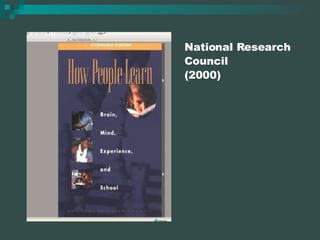
National Research Council (2000) National Research Council  (2000)
Expert/Novice Studies How do  experts think  about topics and/or solve problems  differently than novices ?
Not  a list of facts, formulas, names, dates, etc. (National Research Council, 2000) (though experts know more  of these than novices)
Experts  organize  their thinking differently than novices . (National Research Council, 2000)
Experts organize their thinking around  big ideas and In  chunks (National Research Council, 2000)
organization  matters
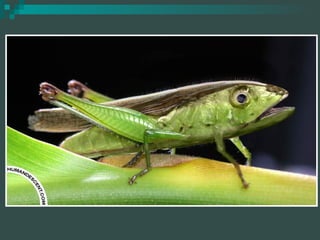
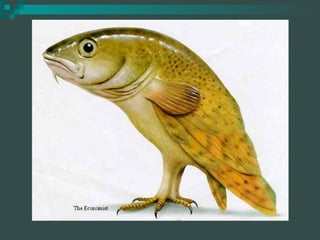
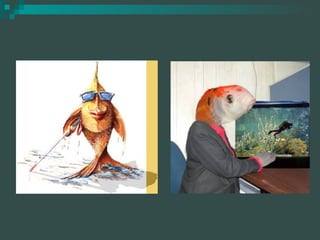
Existing schema is used to build new knowledge Constructivism:
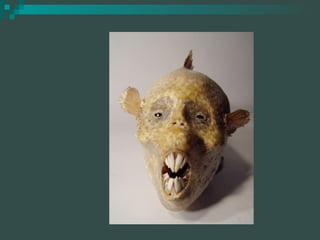
fish is  fish


Anais Nin: “ We see things not as they are but as we are”
Initial conceptualization  matters
organization  matters initial conceptualization  matters
Conceptualize To have a mental model that includes the components and relationships that make up an idea.   Often held   tacitly
Making students’ thinking   transparent
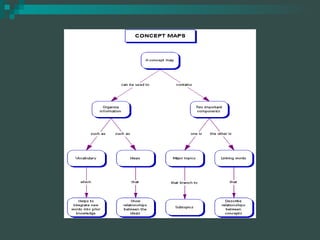
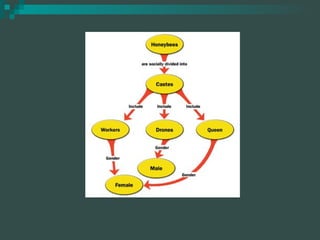
concept map a visual organization of concepts in which components and relationships are demonstrated spatially
 
 
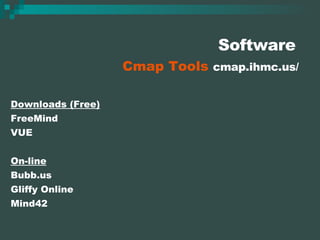
Software Cmap Tools  cmap.ihmc.us/ Downloads (Free) FreeMind VUE On-line Bubb.us  Gliffy Online Mind42
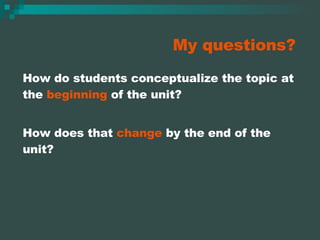
My questions? How do students conceptualize the topic at the  beginning  of the unit? How does that  change  by the end of the unit?
Middle Ages   [grade 7] Iraq  [grade 10]
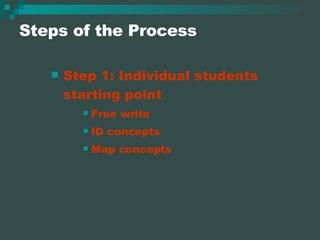
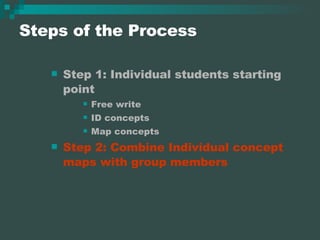
Steps of the Process Step 1: Individual students starting point Free write ID concepts Map concepts
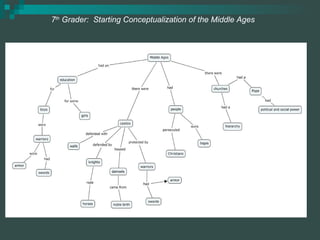
7 th  Grader:  Starting Conceptualization of the Middle Ages
Steps of the Process Step 1: Individual students starting point Free write ID concepts Map concepts Step 2: Combine Individual concept maps with group members
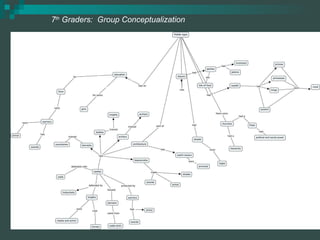
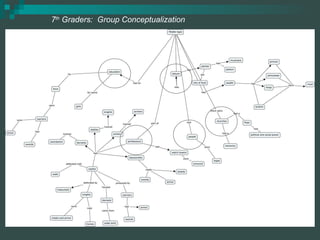
7 th  Graders:  Group Conceptualization
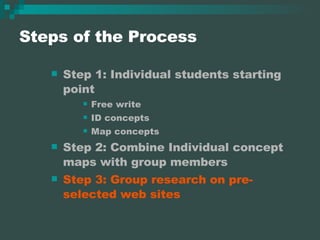
Steps of the Process Step 1: Individual students starting point Free write ID concepts Map concepts Step 2: Combine Individual concept maps with group members Step 3: Group research on pre-selected web sites
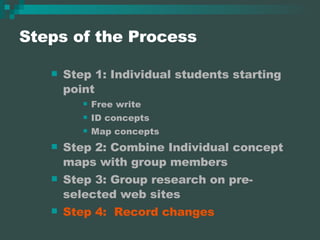
Steps of the Process Step 1: Individual students starting point Free write ID concepts Map concepts Step 2: Combine Individual concept maps with group members Step 3: Group research on pre-selected web sites Step 4:  Record changes
let’s take a  look
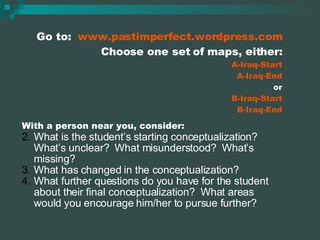
Go to:  www.pastimperfect.wordpress.com Choose one set of maps, either: A-Iraq-Start A-Iraq-End or B-Iraq-Start B-Iraq-End With a person near you, consider: What is the student’s starting conceptualization?  What’s unclear?  What misunderstood?  What’s missing? What has changed in the conceptualization? What further questions do you have for the student about their final conceptualization?  What areas would you encourage him/her to pursue further?
Convergent &  Divergent thinking
applying  it Collaborate Reflect Document
qualitative  feedback Elaboration How much does the student know? Organization How does the student organize his/her thinking? Change How does the conceptual organization change over time?
[email_address] www.pastimperfect.wordpress.com www.bfischool.org

Capturing Conceptual Change

  • 1.
    Capturing Conceptual Changewith Concept Mapping Freeware Bradley Bergey, M.S.Ed pastimperfect.wordpress.com [email_address] www.bfischool.org
  • 2.
  • 3.
    Where we’re headingRelevant Research Defining Concept Maps Free Software Research Questions Student Examples Ideas for Application Evaluating Concept Maps
  • 4.
  • 5.
    National Research Council(2000) National Research Council (2000)
  • 6.
    Expert/Novice Studies Howdo experts think about topics and/or solve problems differently than novices ?
  • 7.
    Not alist of facts, formulas, names, dates, etc. (National Research Council, 2000) (though experts know more of these than novices)
  • 8.
    Experts organize their thinking differently than novices . (National Research Council, 2000)
  • 9.
    Experts organize theirthinking around big ideas and In chunks (National Research Council, 2000)
  • 10.
  • 11.
    Existing schema isused to build new knowledge Constructivism:
  • 12.
  • 13.
  • 14.
  • 15.
  • 16.
  • 17.
  • 18.
  • 19.
    Anais Nin: “We see things not as they are but as we are”
  • 20.
  • 21.
    organization mattersinitial conceptualization matters
  • 22.
    Conceptualize To havea mental model that includes the components and relationships that make up an idea. Often held tacitly
  • 23.
  • 24.
    concept map avisual organization of concepts in which components and relationships are demonstrated spatially
  • 25.
  • 26.
  • 27.
    Software Cmap Tools cmap.ihmc.us/ Downloads (Free) FreeMind VUE On-line Bubb.us Gliffy Online Mind42
  • 28.
    My questions? Howdo students conceptualize the topic at the beginning of the unit? How does that change by the end of the unit?
  • 29.
    Middle Ages [grade 7] Iraq [grade 10]
  • 30.
    Steps of theProcess Step 1: Individual students starting point Free write ID concepts Map concepts
  • 31.
    7 th Grader: Starting Conceptualization of the Middle Ages
  • 32.
    Steps of theProcess Step 1: Individual students starting point Free write ID concepts Map concepts Step 2: Combine Individual concept maps with group members
  • 33.
    7 th Graders: Group Conceptualization
  • 34.
    7 th Graders: Group Conceptualization
  • 35.
    Steps of theProcess Step 1: Individual students starting point Free write ID concepts Map concepts Step 2: Combine Individual concept maps with group members Step 3: Group research on pre-selected web sites
  • 36.
    Steps of theProcess Step 1: Individual students starting point Free write ID concepts Map concepts Step 2: Combine Individual concept maps with group members Step 3: Group research on pre-selected web sites Step 4: Record changes
  • 37.
  • 38.
    Go to: www.pastimperfect.wordpress.com Choose one set of maps, either: A-Iraq-Start A-Iraq-End or B-Iraq-Start B-Iraq-End With a person near you, consider: What is the student’s starting conceptualization? What’s unclear? What misunderstood? What’s missing? What has changed in the conceptualization? What further questions do you have for the student about their final conceptualization? What areas would you encourage him/her to pursue further?
  • 39.
    Convergent & Divergent thinking
  • 40.
    applying itCollaborate Reflect Document
  • 41.
    qualitative feedbackElaboration How much does the student know? Organization How does the student organize his/her thinking? Change How does the conceptual organization change over time?
  • 42.

Editor's Notes

  • #2 1. List of 31 things to check out Not this session. You get ONE tool Address application on this tool based on some research Where’ the audience at: Teachers? Administrators? Used concept mapping/mind mapping software? How was it used?