Capitalization


A Bite-Sized Bit of EOC Prep
Capitalization
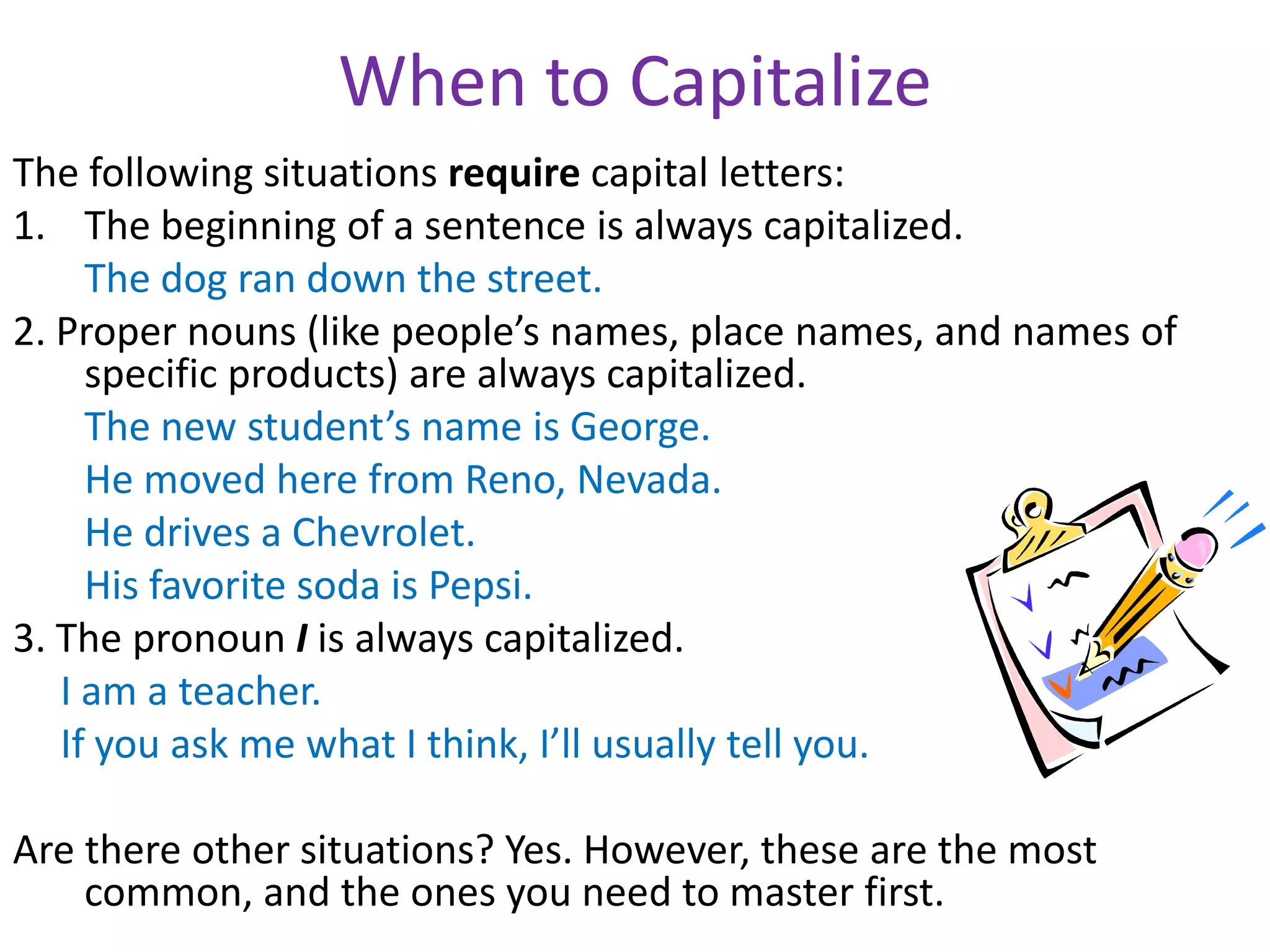
The world we live in is full of chances to write
  informally.
This means we get a lot of practice writing in
  ways that may not include proper grammar
  and punctuation.
Capitalization is often the first thing to get
  ignored in informal writing.
When to Capitalize
The following situations require capital letters:
1. The beginning of a sentence is always capitalized.
     The dog ran down the street.
2. Proper nouns (like people’s names, place names, and names of
     specific products) are always capitalized.
     The new student’s name is George.
     He moved here from Reno, Nevada.
     He drives a Chevrolet.
     His favorite soda is Pepsi.
3. The pronoun I is always capitalized.
   I am a teacher.
   If you ask me what I think, I’ll usually tell you.

Are there other situations? Yes. However, these are the most
    common, and the ones you need to master first.
Tricky Situations
Sometimes you’ll encounter tricky situations, but you can figure them out if you think
  them through.

For example:
   This is my mom.
   Hey, Mom, can you bring me a soda?
Why is the word mom capitalized in one sentence and not the other?
Hint: If in the second sentence the speaker called his mother by her name instead of
by the word mom would it be capitalized or not?

Here’s another example:
   Please pass me a cotton swab.
   Please pass me a Q-tip.
A cotton swab and a Q-tip are the same thing. Why is Q-tip capitalized but cotton swab
   isn’t?
Hint: Go back to the rule about proper nouns.
How to Answer These Questions
              Correctly
1. Learn the rules: First word of a sentence,
   proper nouns, the pronoun I…always
   capitalized.
2. If you see a period, question mark, or
   exclamation point, it means a new sentence
   is about to start…look for a capital letter.
3. Ask yourself, is this referring to a thing in
   general or in particular to figure out if
   something is a proper noun. (the mall vs.
   South Square Mall)

Capitalization 120325190815-phpapp02

  • 1.
  • 2.
    Capitalization The world welive in is full of chances to write informally. This means we get a lot of practice writing in ways that may not include proper grammar and punctuation. Capitalization is often the first thing to get ignored in informal writing.
  • 3.
    When to Capitalize Thefollowing situations require capital letters: 1. The beginning of a sentence is always capitalized. The dog ran down the street. 2. Proper nouns (like people’s names, place names, and names of specific products) are always capitalized. The new student’s name is George. He moved here from Reno, Nevada. He drives a Chevrolet. His favorite soda is Pepsi. 3. The pronoun I is always capitalized. I am a teacher. If you ask me what I think, I’ll usually tell you. Are there other situations? Yes. However, these are the most common, and the ones you need to master first.
  • 4.
    Tricky Situations Sometimes you’llencounter tricky situations, but you can figure them out if you think them through. For example: This is my mom. Hey, Mom, can you bring me a soda? Why is the word mom capitalized in one sentence and not the other? Hint: If in the second sentence the speaker called his mother by her name instead of by the word mom would it be capitalized or not? Here’s another example: Please pass me a cotton swab. Please pass me a Q-tip. A cotton swab and a Q-tip are the same thing. Why is Q-tip capitalized but cotton swab isn’t? Hint: Go back to the rule about proper nouns.
  • 5.
    How to AnswerThese Questions Correctly 1. Learn the rules: First word of a sentence, proper nouns, the pronoun I…always capitalized. 2. If you see a period, question mark, or exclamation point, it means a new sentence is about to start…look for a capital letter. 3. Ask yourself, is this referring to a thing in general or in particular to figure out if something is a proper noun. (the mall vs. South Square Mall)