


CAP 233 Organization of
Information (Databases)
Attendance
What are we doing?
Quiz 2!

In-class group activity!

Talk about database organization!

If we have time we'll look at some
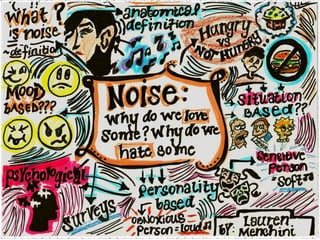
of your mind maps
Quiz 2
Go to Blackboard, 'Content' link on
left side, Week 4 folder!

Click on Quiz 2!

When you're done turn off your
monitor (not your computer) so I can
know when to continue with class.
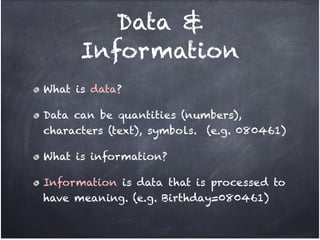
Data &
      Information
What is data?!

Data can be quantities (numbers),
characters (text), symbols. (e.g. 080461)!

What is information?!

Information is data that is processed to
have meaning. (e.g. Birthday=080461)
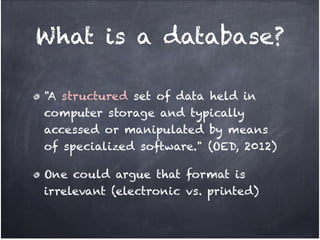
What is a database?

"A structured set of data held in
computer storage and typically
accessed or manipulated by means
of specialized software." (OED, 2012)!

One could argue that format is
irrelevant (electronic vs. printed)
In-class Group
      Activity
Follow the link for your group in the
class announcements in Blackboard!

Discuss with your group & organize
the information!

Share with the class why you
organized the way you did
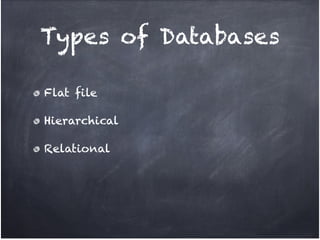
Types of Databases

Flat file!

Hierarchical!

Relational
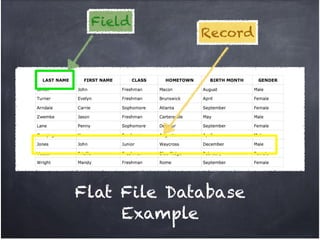
Field
             Record


Flat File Database
     Example
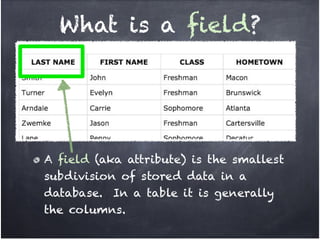
What is a field?


A field (aka attribute) is the smallest
subdivision of stored data in a
database. In a table it is generally
the columns.
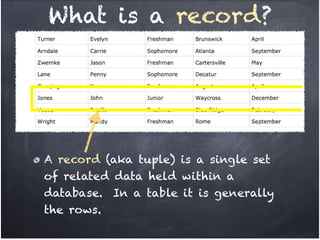
What is a record?


A record (aka tuple) is a single set
of related data held within a
database. In a table it is generally
the rows.
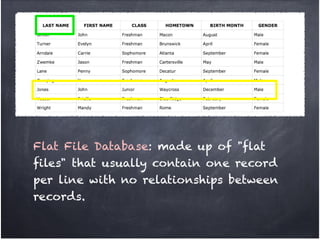
Flat File Database: made up of "flat
files" that usually contain one record
per line with no relationships between
records.
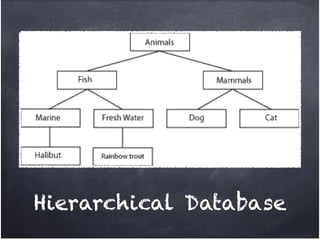
Hierarchical Database
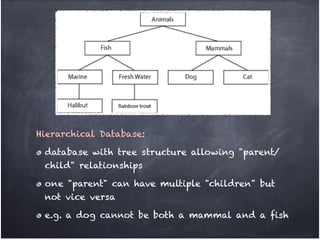
Hierarchical Database: !

 database with tree structure allowing "parent/
 child" relationships!

 one "parent" can have multiple "children" but
 not vice versa!

 e.g. a dog cannot be both a mammal and a fish
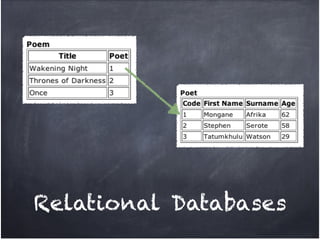
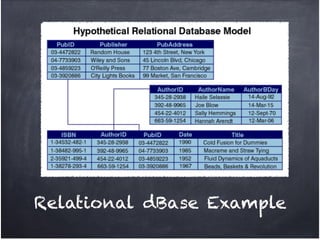
Relational Databases
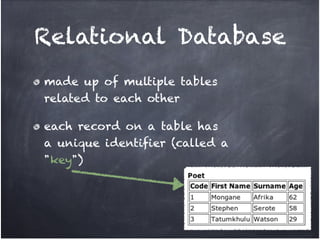
Relational Database
made up of multiple tables
related to each other!

each record on a table has
a unique identifier (called a
"key")
Advantages of
Relational Databases
Overcomes the "parent/child" of
having only one "parent"!

Prevents errors because one record is
allowed to apply to any other table in
the database!

allows access to database from
multiple access points
Relational dBase Example
Examples of
      Databases
Amazon!

Facebook (1 million Gb)!

Academic Search Premier (Full text
for over 4,700 journals)
So, why should you
       care?
Understanding how databases are
organized can help guide your
search strategy!

Perhaps it will alleviate SOME
frustration when searching
What you need to
 do this week...
Go to Blackboard, 'Content' link on
left side, Week 4 folder!

Zotero (create acct, download
program, watch video, accept email
invite to CAP 233 group)!

Start Phase 1 of your Final Project
(Instructions will be forthcoming)

Cap 233 info retrieval

  • 1.
    CAP 233 Organizationof Information (Databases)
  • 2.
  • 3.
    What are wedoing? Quiz 2! In-class group activity! Talk about database organization! If we have time we'll look at some of your mind maps
  • 4.
    Quiz 2 Go toBlackboard, 'Content' link on left side, Week 4 folder! Click on Quiz 2! When you're done turn off your monitor (not your computer) so I can know when to continue with class.
  • 5.
    Data & Information What is data?! Data can be quantities (numbers), characters (text), symbols. (e.g. 080461)! What is information?! Information is data that is processed to have meaning. (e.g. Birthday=080461)
  • 6.
    What is adatabase? "A structured set of data held in computer storage and typically accessed or manipulated by means of specialized software." (OED, 2012)! One could argue that format is irrelevant (electronic vs. printed)
  • 7.
    In-class Group Activity Follow the link for your group in the class announcements in Blackboard! Discuss with your group & organize the information! Share with the class why you organized the way you did
  • 8.
    Types of Databases Flatfile! Hierarchical! Relational
  • 9.
    Field Record Flat File Database Example
  • 10.
    What is afield? A field (aka attribute) is the smallest subdivision of stored data in a database. In a table it is generally the columns.
  • 11.
    What is arecord? A record (aka tuple) is a single set of related data held within a database. In a table it is generally the rows.
  • 12.
    Flat File Database:made up of "flat files" that usually contain one record per line with no relationships between records.
  • 13.
  • 14.
    Hierarchical Database: ! database with tree structure allowing "parent/ child" relationships! one "parent" can have multiple "children" but not vice versa! e.g. a dog cannot be both a mammal and a fish
  • 15.
  • 16.
    Relational Database made upof multiple tables related to each other! each record on a table has a unique identifier (called a "key")
  • 17.
    Advantages of Relational Databases Overcomesthe "parent/child" of having only one "parent"! Prevents errors because one record is allowed to apply to any other table in the database! allows access to database from multiple access points
  • 18.
  • 19.
    Examples of Databases Amazon! Facebook (1 million Gb)! Academic Search Premier (Full text for over 4,700 journals)
  • 20.
    So, why shouldyou care? Understanding how databases are organized can help guide your search strategy! Perhaps it will alleviate SOME frustration when searching
  • 22.
    What you needto do this week... Go to Blackboard, 'Content' link on left side, Week 4 folder! Zotero (create acct, download program, watch video, accept email invite to CAP 233 group)! Start Phase 1 of your Final Project (Instructions will be forthcoming)