Why Does Voting Matter?
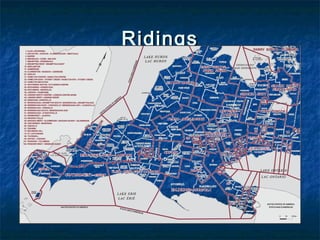
Ridings 
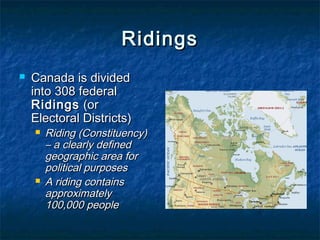
 Canada is divided into 
308 federal Ridings 
(or Electoral Districts) 
 Riding (Constituency) 
– a clearly defined 
geographic area for 
political purposes 
 A riding contains 
approximately 100,000 
people
Ridings 
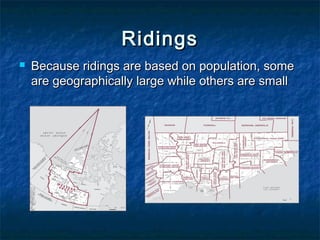
 Because ridings are based on population, some are 
geographically large while others are small
Ridings
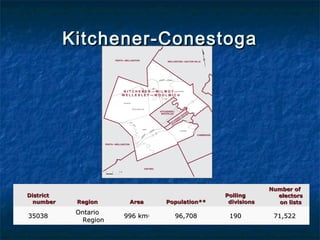
Kitchener-Conestoga 
District 
number Region Area Population** 
Polling 
divisions 
Number of 
electors 
on lists 
35038 
Ontario 
Region 
996 km2 96,708 190 71,522
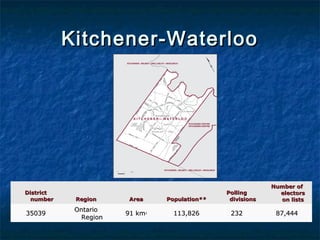
Kitchener-Waterloo 
District 
number Region Area Population** 
Polling 
divisions 
Number of 
electors 
on lists 
35039 
Ontario 
Region 
91 km2 113,826 232 87,444
Elections 
 During an election, voting 
citizens elect one candidate 
to represent each riding 
 Candidates usually 
represent a political party, 
but may also run 
independently 
 The candidate with the most 
votes (plurality) wins
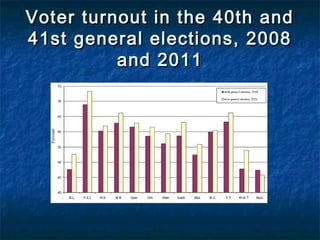
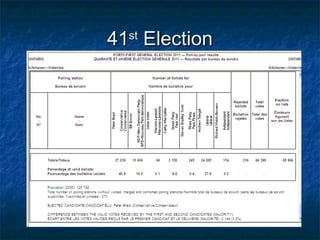
Voter turnout in the 40th and 41st general 
elections, 2008 and 2011
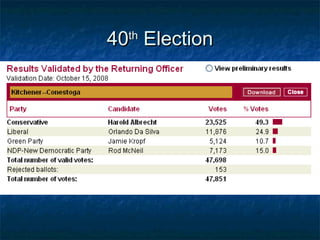
40th Election
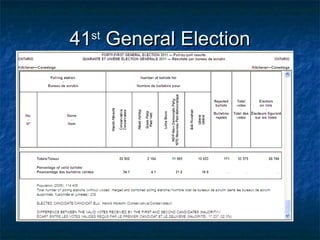
41st General Election
40th Election
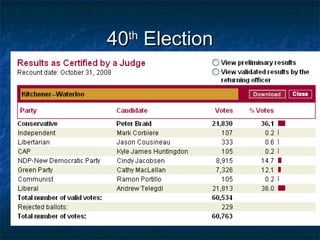
41st Election
Elections 
 The winning candidate becomes the Member of 
Parliament for their riding 
 Each Member of Parliament (MP) has a seat in the 
House of Commons (until the next election) and will 
represent the interests of their constituency 
 Most MPs also sit as a member of a particular political 
party 
 When voting in Parliament, each MP has one (1) vote
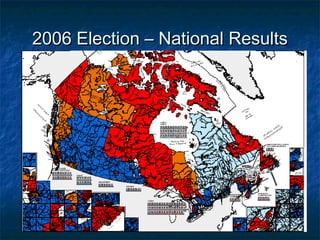
2006 Election – National Results
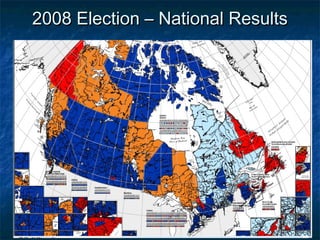
2008 Election – National Results
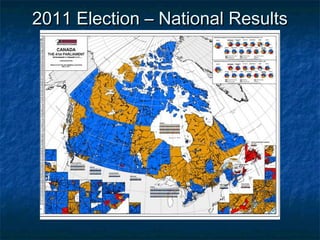
2011 Election – National Results
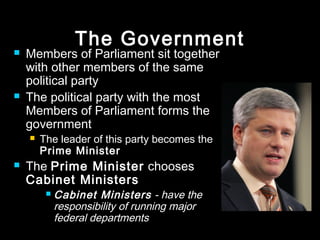
The Government 
 Members of Parliament sit together 
with other members of the same 
political party 
 The political party with the most 
Members of Parliament forms the 
government 
 The leader of this party becomes the 
Prime Minister 
 The Prime Minister chooses 
Cabinet Ministers 
 Cabinet Ministers - have the responsibility 
of running major federal departments
The Opposition 
 All other parties become 
opposition parties, but the 
party with the second most 
seats becomes the Official 
Opposition 
 Some members of the Official 
Opposition also form a Shadow 
Cabinet headed by the Leader 
of the Official Opposition 
 This group is responsible for 
criticizing and challenging the 
Cabinet 
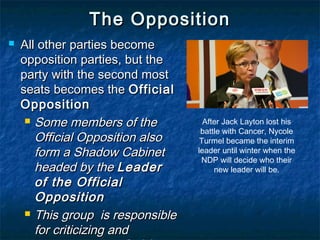
After Jack Layton lost his 
battle with Cancer, Thomas 
Mulcair won the NDP 
leadership bid.
The Government 
 There can only be three types of government in 
Canada 
1. Majority Government 
2. Minority Government 
3. Coalition Government
Majority Government 
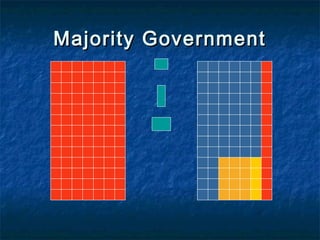
 When a political party wins more than half (155) 
of the ridings in the election 
 The leader of this party becomes the prime 
minister 
 The party in power will have little difficulty 
passing legislation
Majority Government
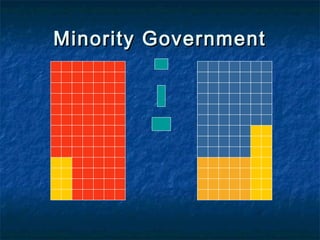
Minority Government 
 When a political party wins more ridings than any 
other party, but does not win more than half (155) 
 The leader of this party becomes the prime minister 
 The party in power depends on support from other 
parties to pass legislation
Minority Government
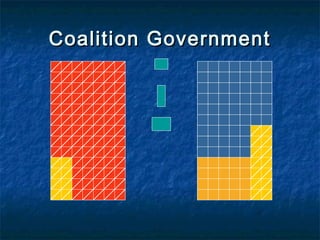
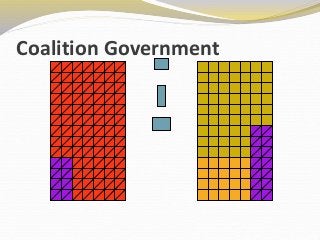
Coalition Government 
 Occurs when there is a minority government 
 Two parties join together to form a minority or 
majority government 
 The Leader of one of these parties becomes the prime 
minister
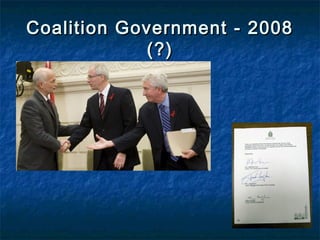
Coalition Government - 2008 (?)
Coalition Government
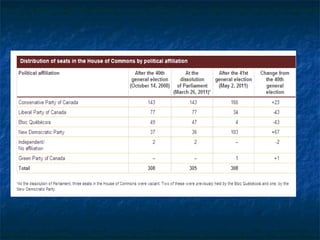
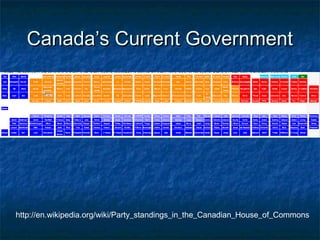
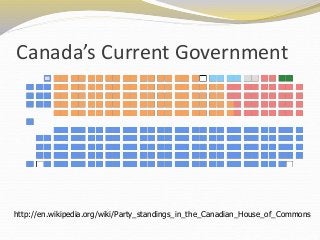
Canada’s Current Government 
http://en.wikipedia.org/wiki/Party_standings_in_the_Canadian_House_of_Commons

Canada’s electoral system nov update

  • 2.
  • 4.
    Ridings  Canadais divided into 308 federal Ridings (or Electoral Districts)  Riding (Constituency) – a clearly defined geographic area for political purposes  A riding contains approximately 100,000 people
  • 5.
    Ridings  Becauseridings are based on population, some are geographically large while others are small
  • 6.
  • 7.
    Kitchener-Conestoga District numberRegion Area Population** Polling divisions Number of electors on lists 35038 Ontario Region 996 km2 96,708 190 71,522
  • 8.
    Kitchener-Waterloo District numberRegion Area Population** Polling divisions Number of electors on lists 35039 Ontario Region 91 km2 113,826 232 87,444
  • 9.
    Elections  Duringan election, voting citizens elect one candidate to represent each riding  Candidates usually represent a political party, but may also run independently  The candidate with the most votes (plurality) wins
  • 10.
    Voter turnout inthe 40th and 41st general elections, 2008 and 2011
  • 11.
  • 12.
  • 13.
  • 14.
  • 15.
    Elections  Thewinning candidate becomes the Member of Parliament for their riding  Each Member of Parliament (MP) has a seat in the House of Commons (until the next election) and will represent the interests of their constituency  Most MPs also sit as a member of a particular political party  When voting in Parliament, each MP has one (1) vote
  • 16.
    2006 Election –National Results
  • 17.
    2008 Election –National Results
  • 18.
    2011 Election –National Results
  • 20.
    The Government Members of Parliament sit together with other members of the same political party  The political party with the most Members of Parliament forms the government  The leader of this party becomes the Prime Minister  The Prime Minister chooses Cabinet Ministers  Cabinet Ministers - have the responsibility of running major federal departments
  • 21.
    The Opposition All other parties become opposition parties, but the party with the second most seats becomes the Official Opposition  Some members of the Official Opposition also form a Shadow Cabinet headed by the Leader of the Official Opposition  This group is responsible for criticizing and challenging the Cabinet After Jack Layton lost his battle with Cancer, Thomas Mulcair won the NDP leadership bid.
  • 22.
    The Government There can only be three types of government in Canada 1. Majority Government 2. Minority Government 3. Coalition Government
  • 23.
    Majority Government When a political party wins more than half (155) of the ridings in the election  The leader of this party becomes the prime minister  The party in power will have little difficulty passing legislation
  • 24.
  • 25.
    Minority Government When a political party wins more ridings than any other party, but does not win more than half (155)  The leader of this party becomes the prime minister  The party in power depends on support from other parties to pass legislation
  • 26.
  • 27.
    Coalition Government Occurs when there is a minority government  Two parties join together to form a minority or majority government  The Leader of one of these parties becomes the prime minister
  • 28.
  • 29.
  • 30.
    Canada’s Current Government http://en.wikipedia.org/wiki/Party_standings_in_the_Canadian_House_of_Commons