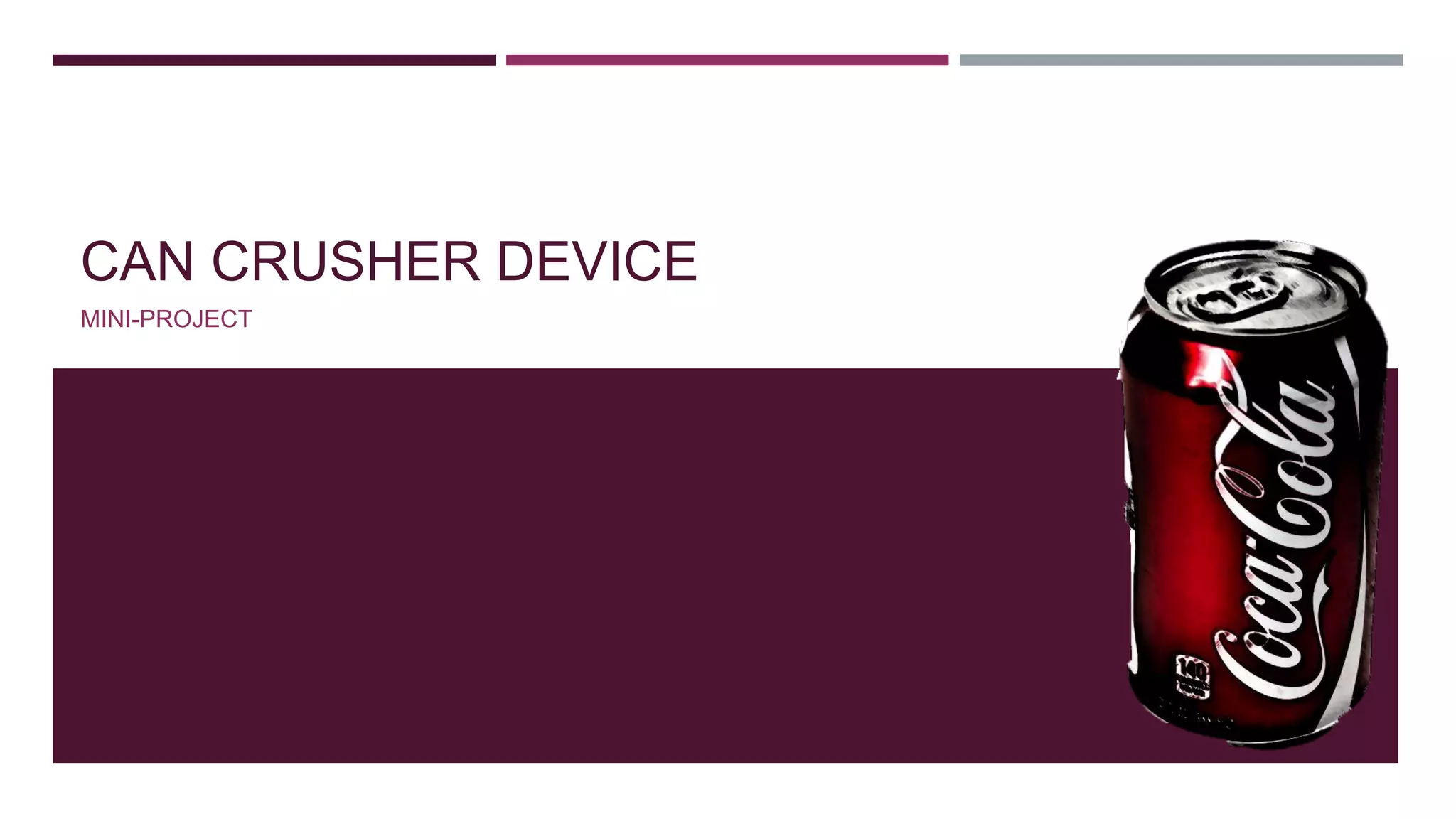
CAN CRUSHER DEVICE
MINI-PROJECT
OUTLINES
 Problem statement and background
 Project Planning.
 Research, Brainstorming and Generate Ideas
 Mechanism Synthesis and Analysis
 3D-Model Simulation (SolidWorks).
 Motion Simulation (Matlab).
 Summary
PROBLEM STATEMENT
The Question
How can we apply what we know about “Theory of Machines”
to our everyday life ?
PROBLEM DEFINITION
Issue
 Sustainability
Solution
 Recycling
 Engineers responsibility
 Uncrushed cans waste space
 Small volume-more cans recycled efficiently
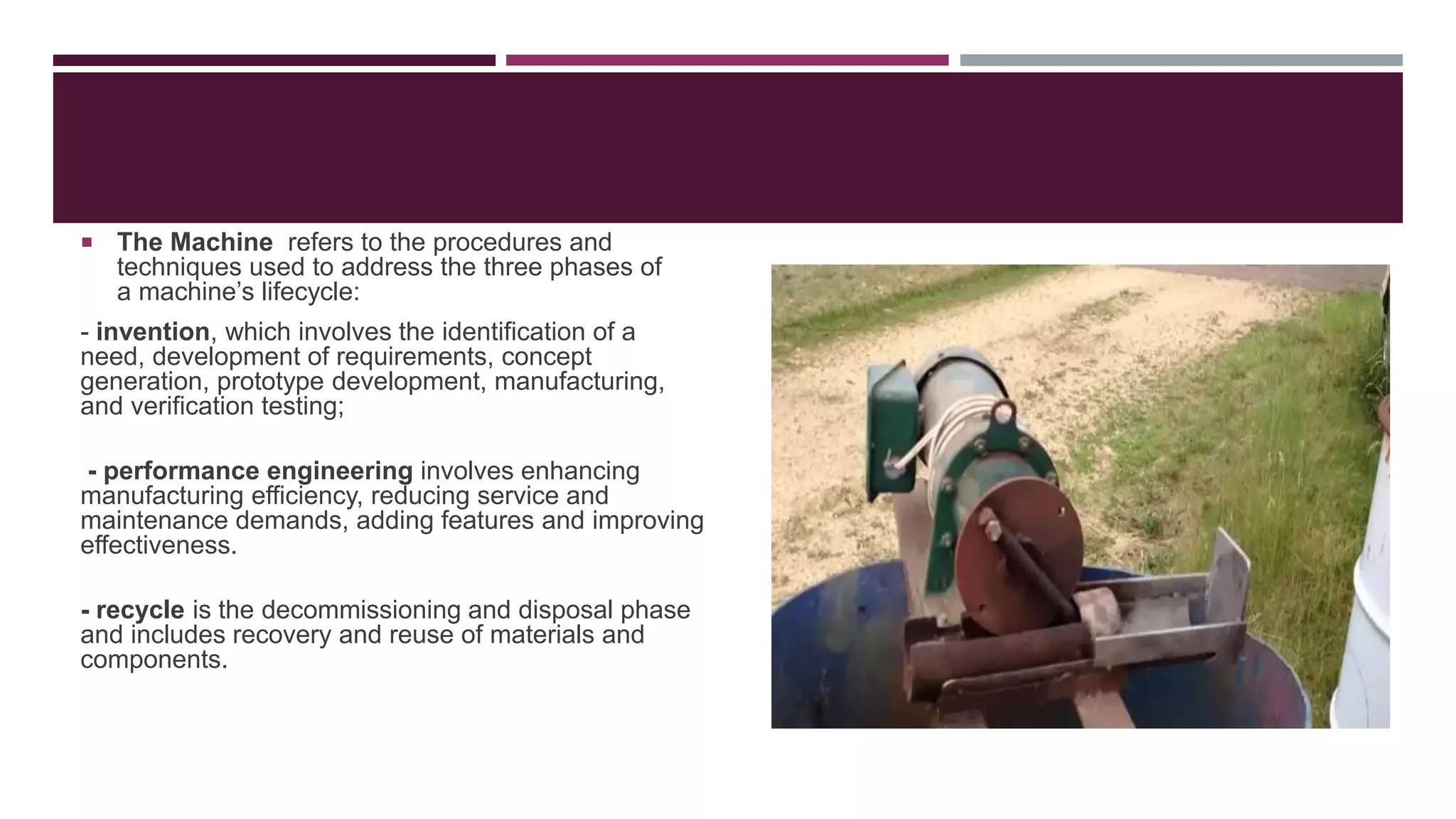
 The Machine refers to the procedures and
techniques used to address the three phases of
a machine’s lifecycle:
- invention, which involves the identification of a
need, development of requirements, concept
generation, prototype development, manufacturing,
and verification testing;
- performance engineering involves enhancing
manufacturing efficiency, reducing service and
maintenance demands, adding features and improving
effectiveness.
- recycle is the decommissioning and disposal phase
and includes recovery and reuse of materials and
components.
PROBLEM DEFINITION
We contribute to a more sustainable world by helping people to
recycle materials into valuable products.
ORIGIN OF CAN CRUSHER
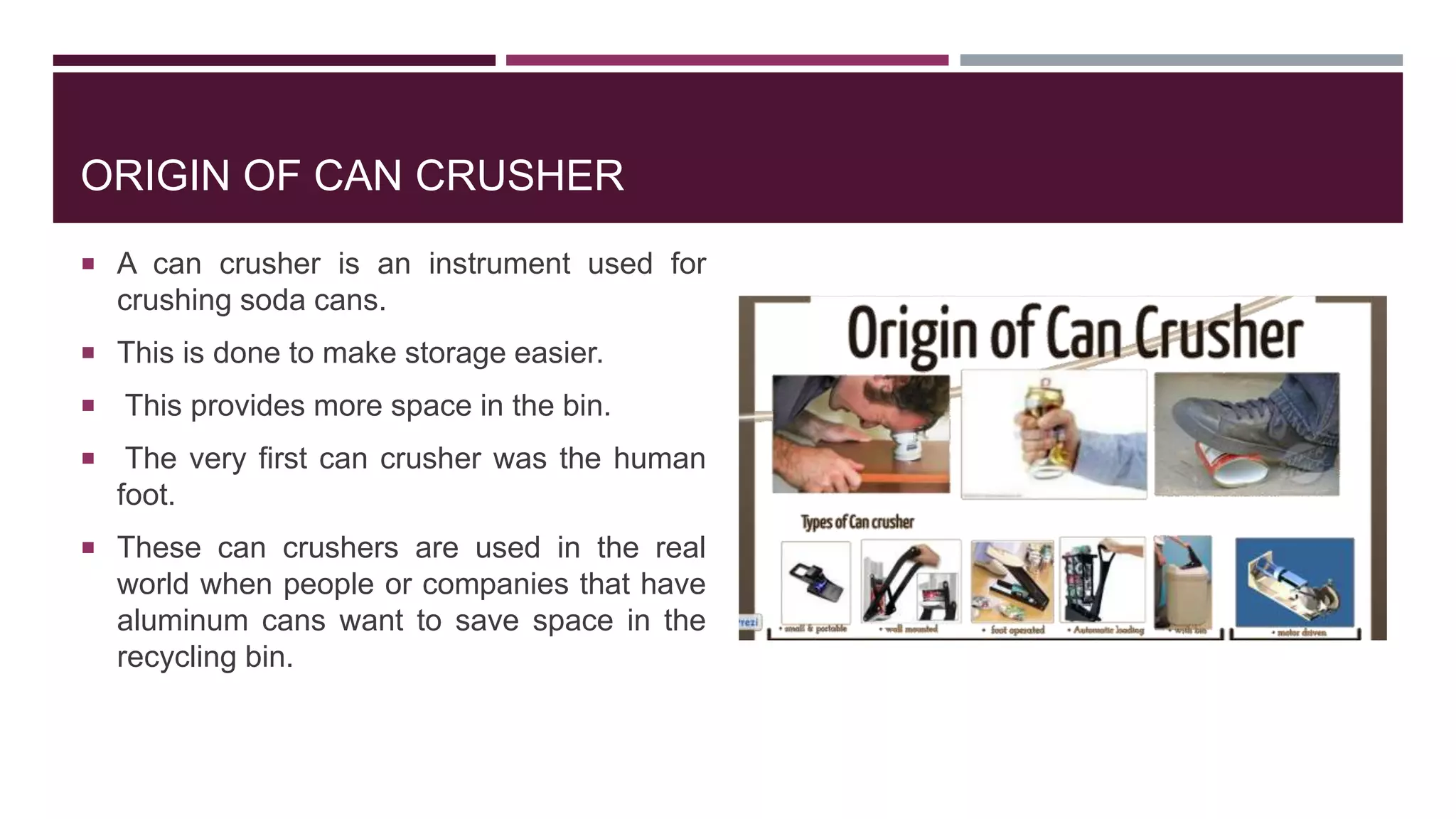
 A can crusher is an instrument used for
crushing soda cans.
 This is done to make storage easier.
 This provides more space in the bin.
 The very first can crusher was the human
foot.
 These can crushers are used in the real
world when people or companies that have
aluminum cans want to save space in the
recycling bin.
BACKGROUND
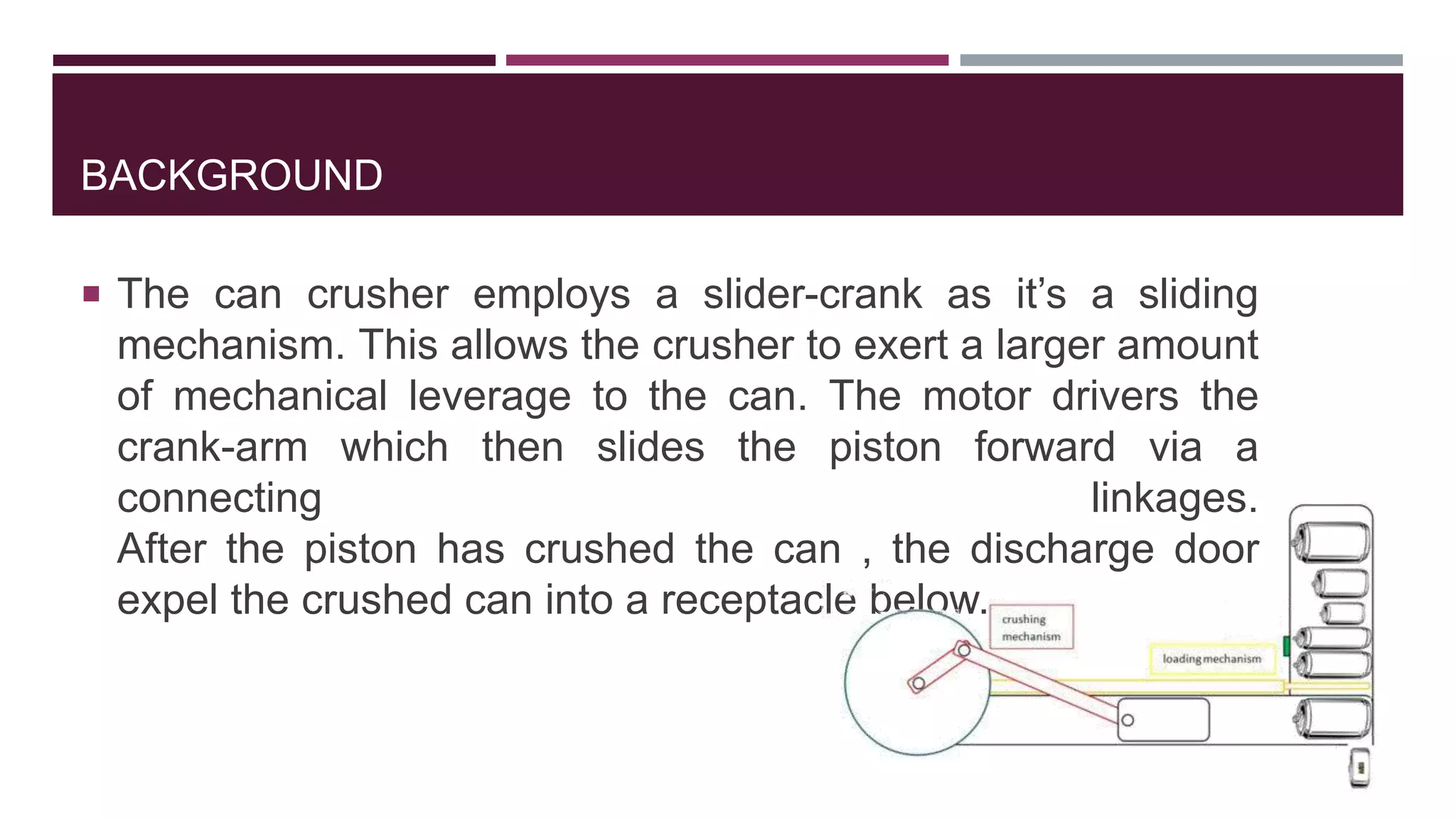
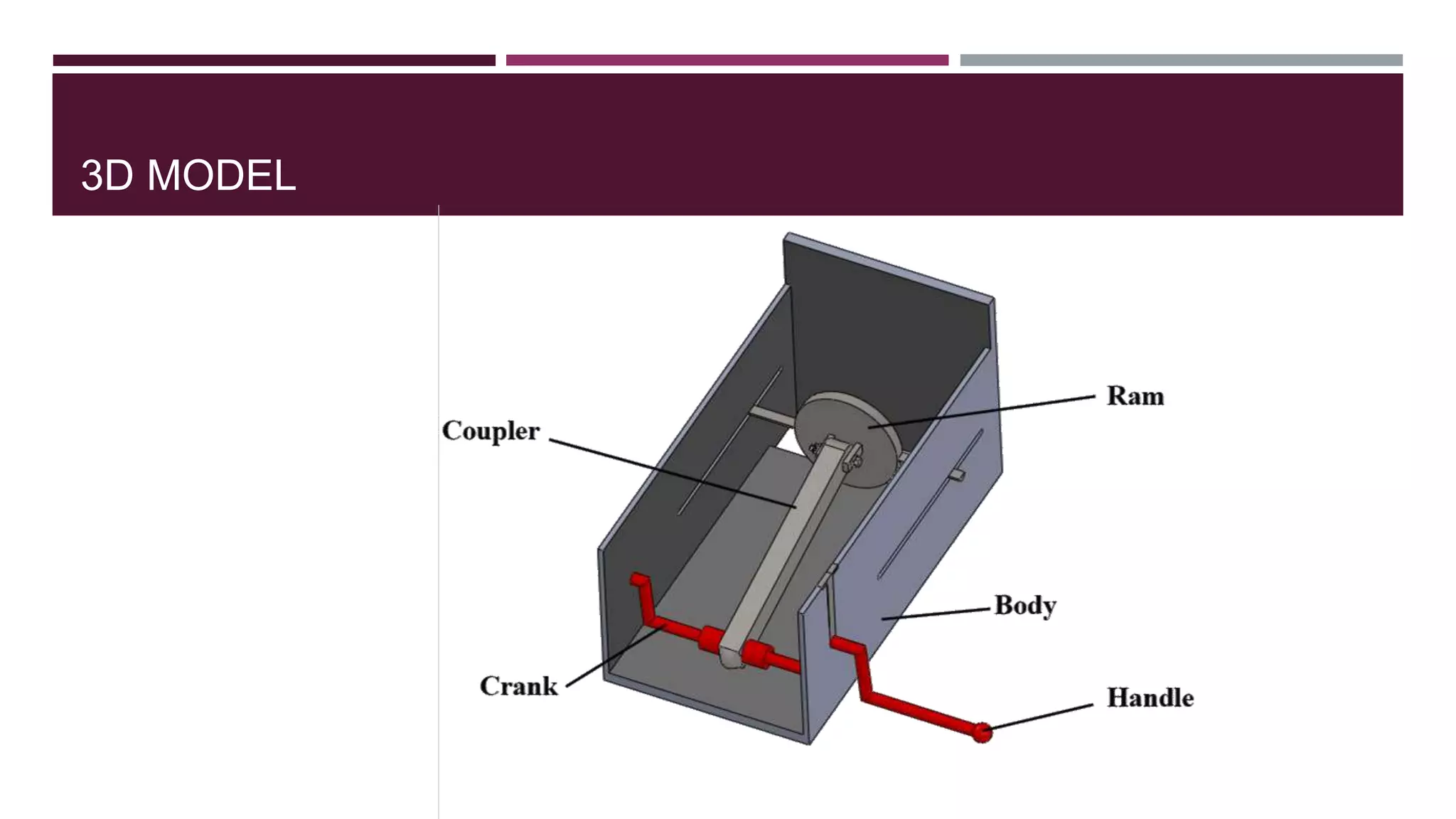
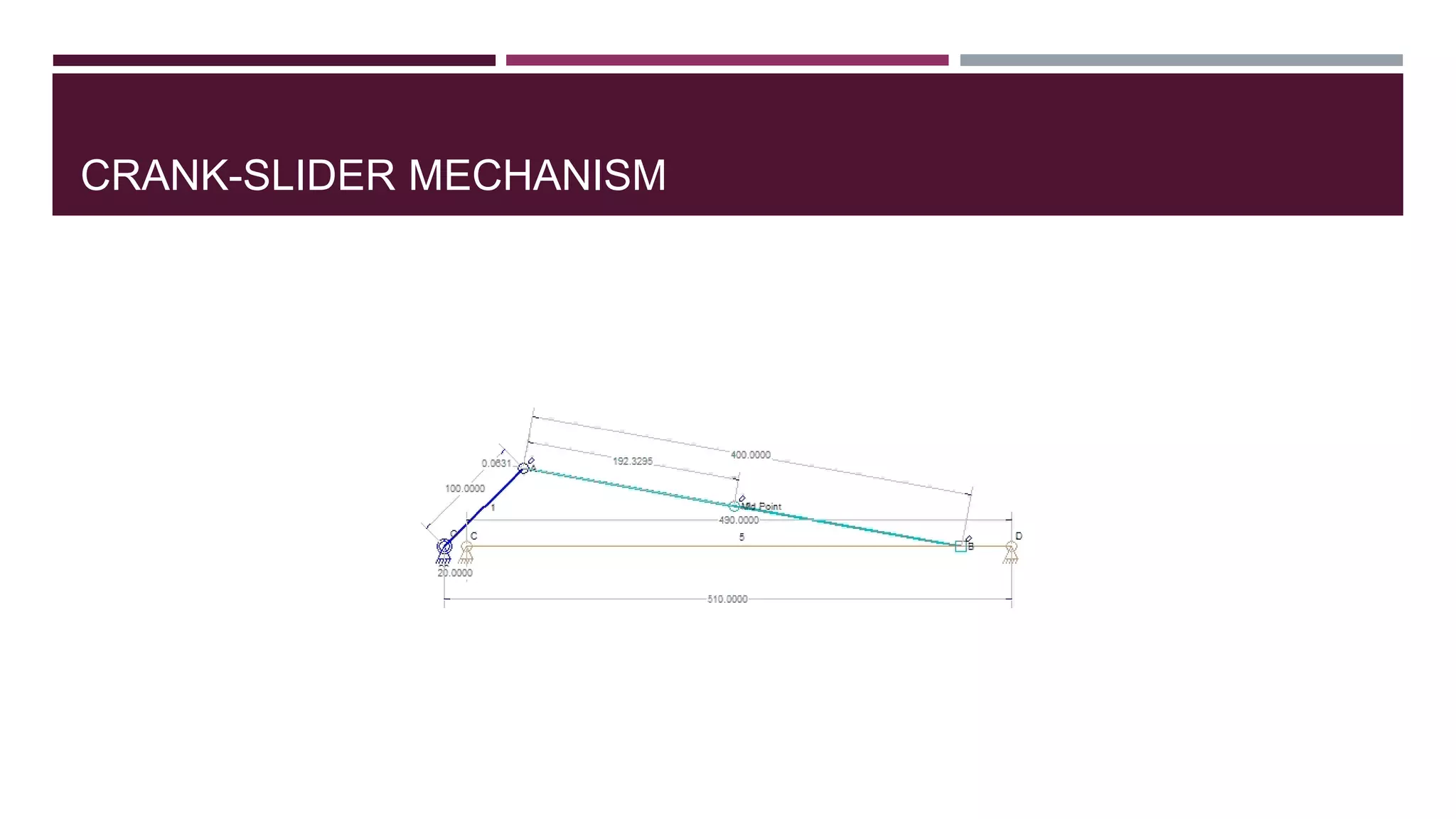
 The can crusher employs a slider-crank as it’s a sliding
mechanism. This allows the crusher to exert a larger amount
of mechanical leverage to the can. The motor drivers the
crank-arm which then slides the piston forward via a
connecting linkages.
After the piston has crushed the can , the discharge door
expel the crushed can into a receptacle below.
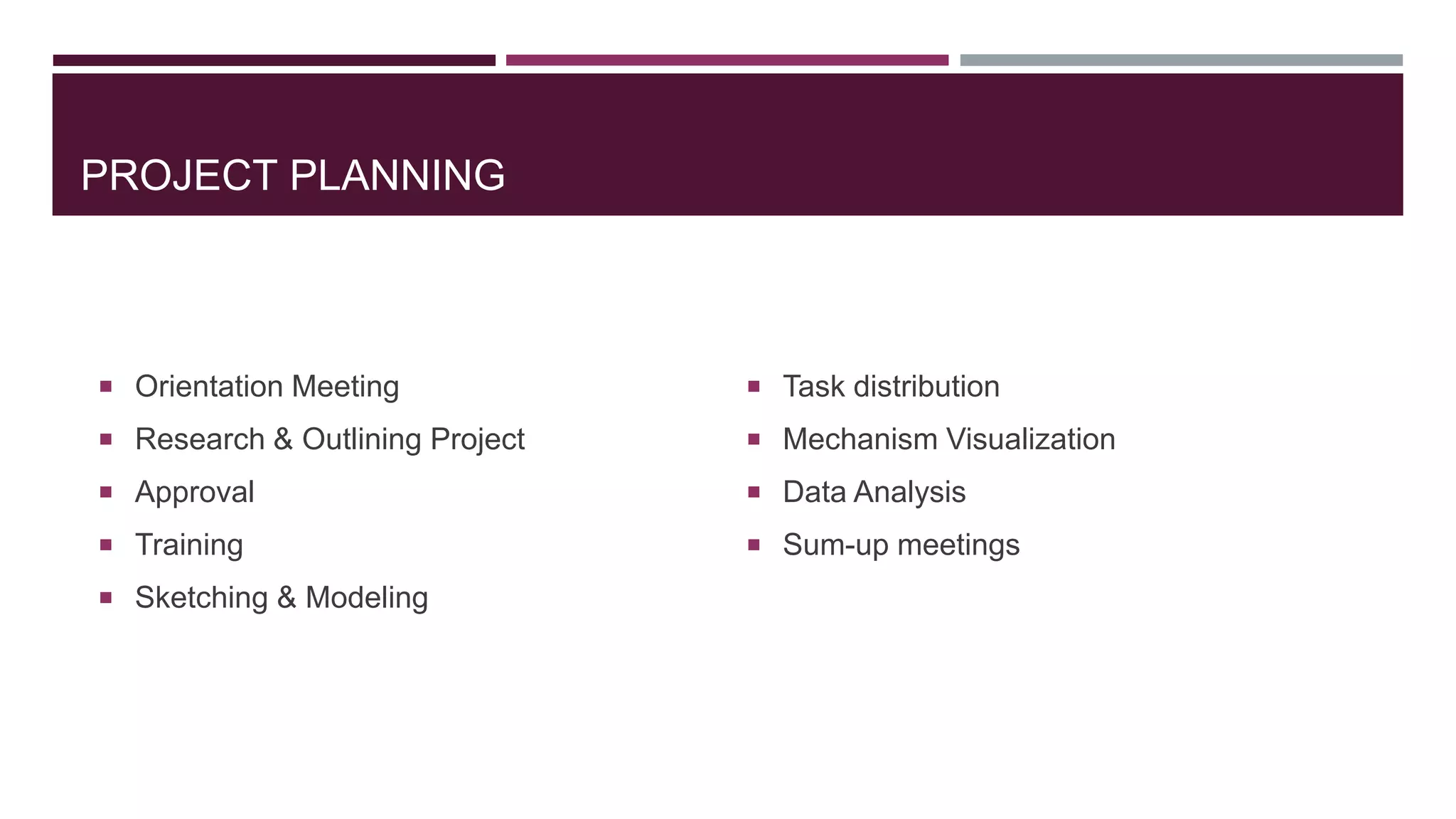
PROJECT PLANNING
 Orientation Meeting
 Research & Outlining Project
 Approval
 Training
 Sketching & Modeling
 Task distribution
 Mechanism Visualization
 Data Analysis
 Sum-up meetings
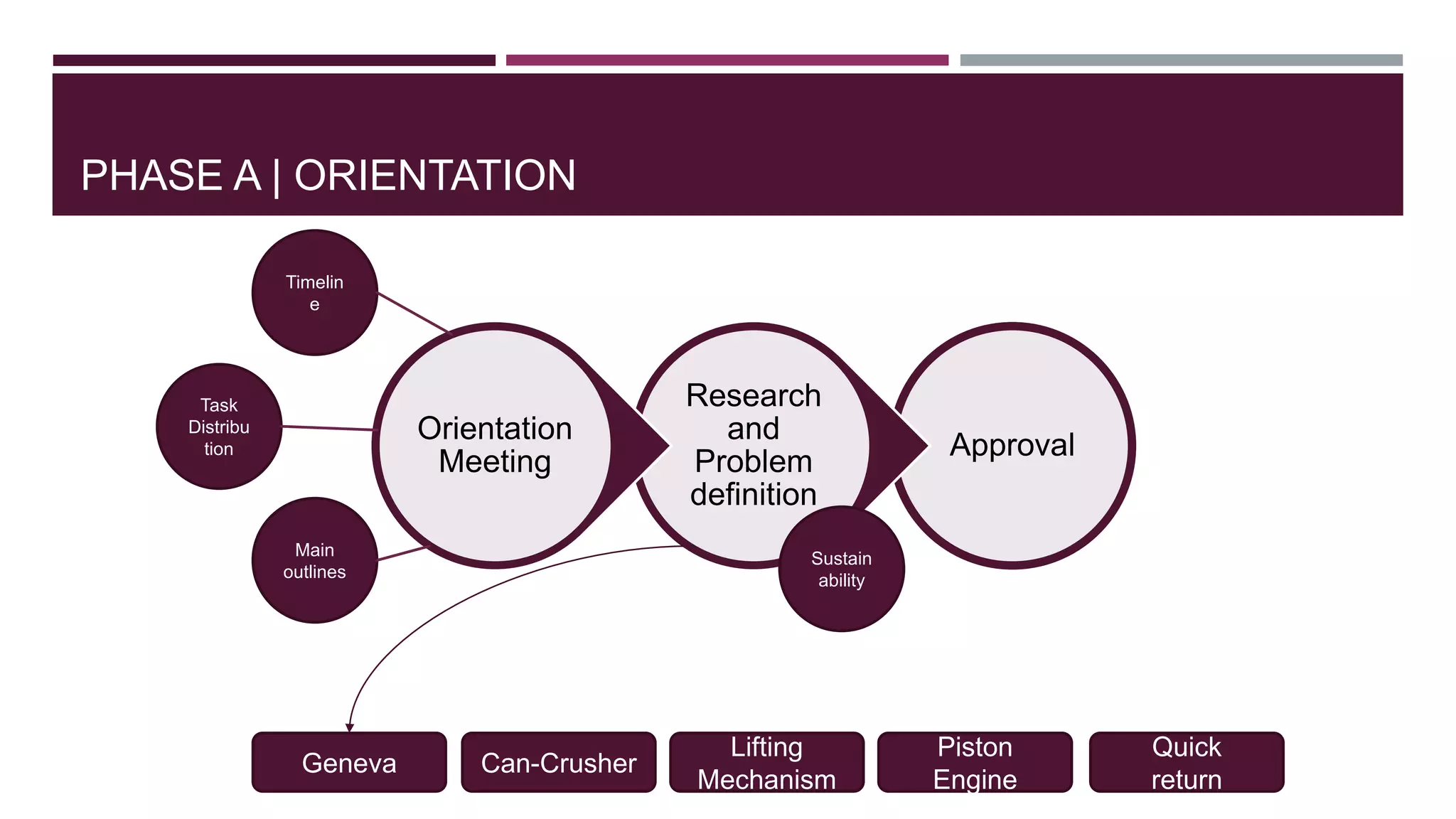
PHASE A | ORIENTATION
Approval
Research
and
Problem
definition
Orientation
Meeting
Main
outlines
Task
Distribu
tion
Timelin
e
Sustain
ability
Can-Crusher
Lifting
Mechanism
Piston
Engine
Geneva
Quick
return
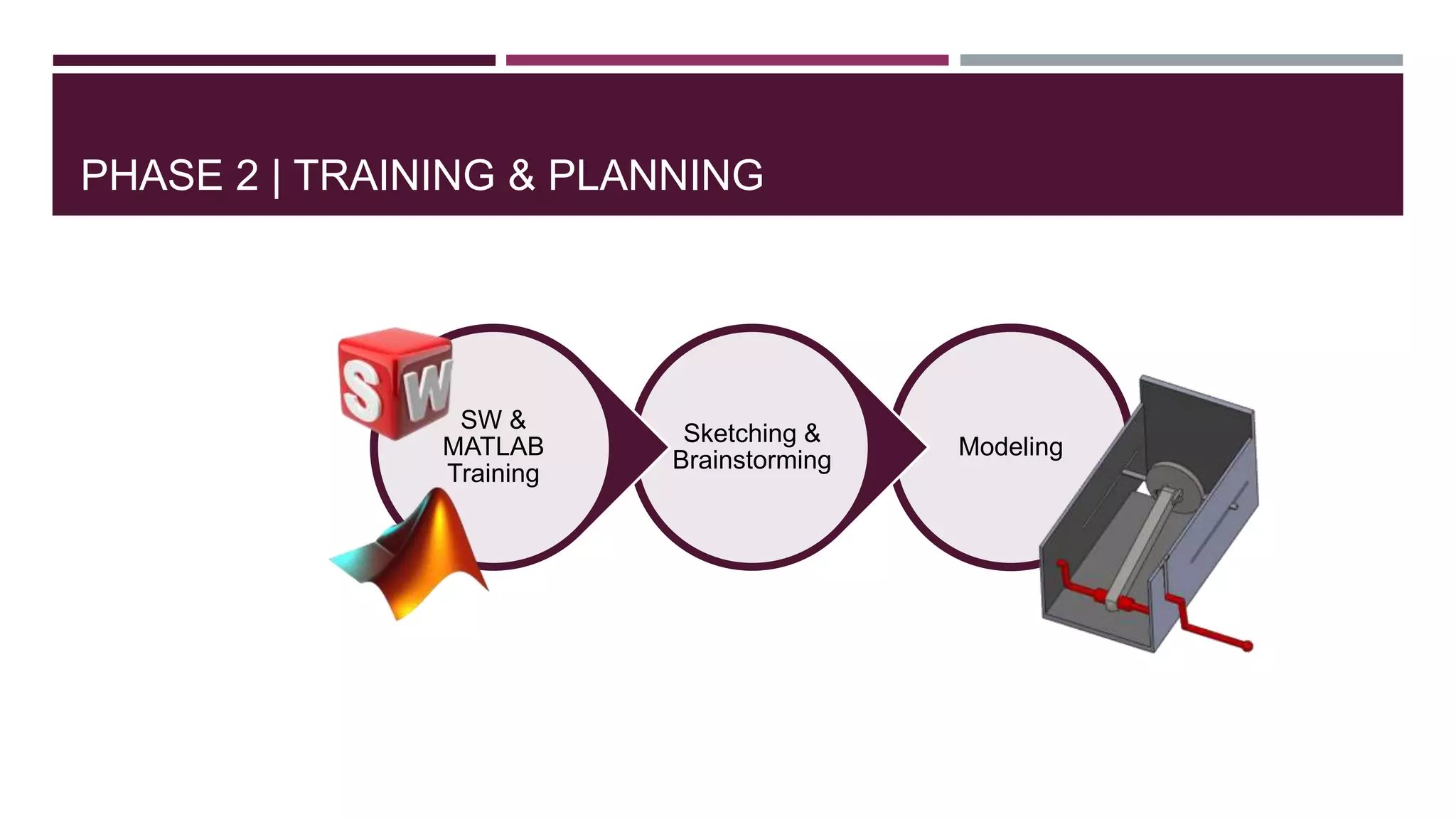
PHASE 2 | TRAINING & PLANNING
Modeling
Sketching &
Brainstorming
SW &
MATLAB
Training
BRAINSTORMING
 Ideas presented
 Discussion for positives and negatives
 Vote
 plan
PHASE 3 | IMPLEMENTATION
Team A Team B
• Mechanism
sketching
• Visual modeling
• Visual testing
• Data Analysis
• Equations and graphing
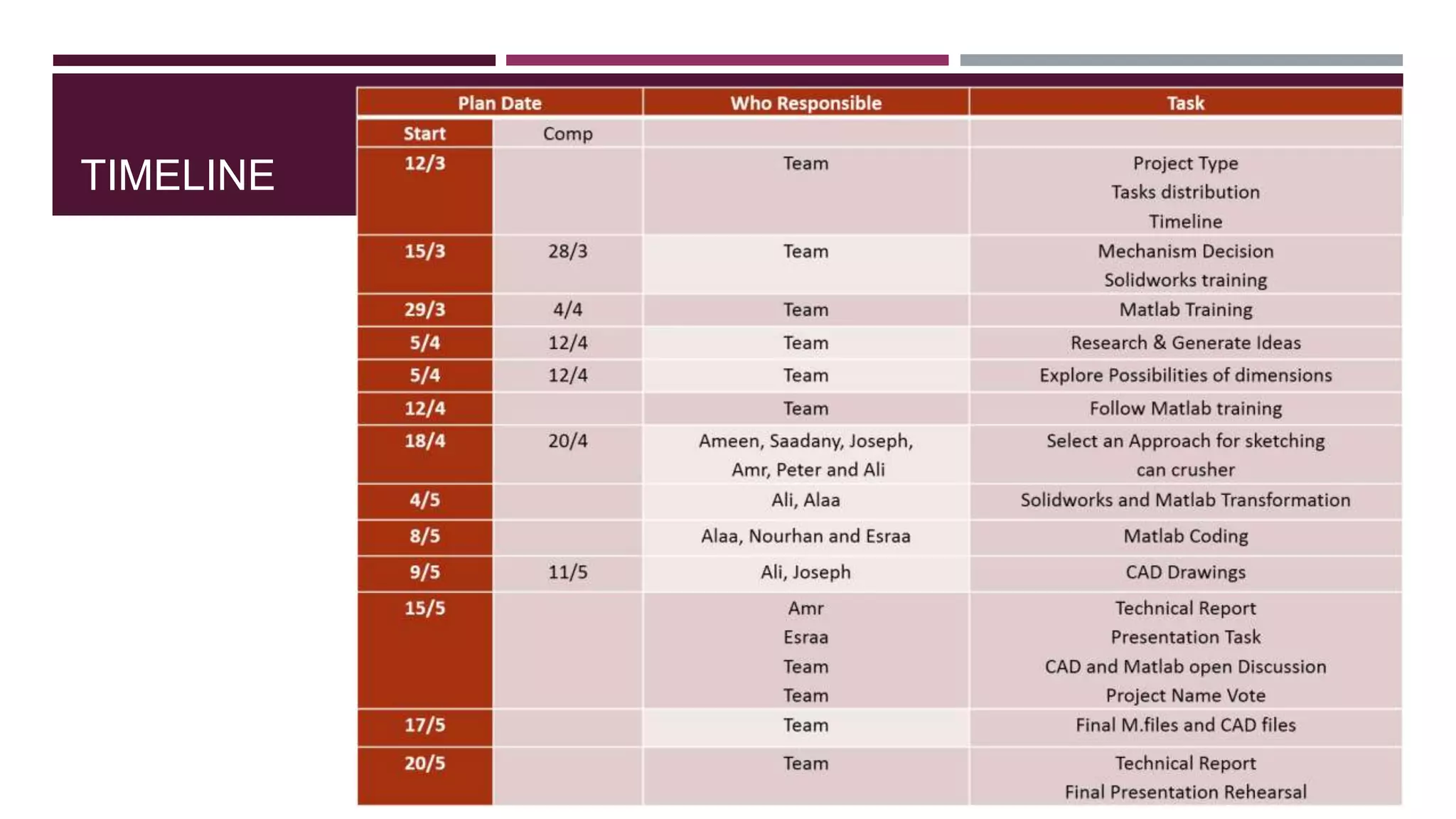
TIMELINE
MECHANISM SYNTHESIS AND ANALYSIS
 Synthesis : design a mechanism to perform a
desired function.
 Analysis : given a mechanism, perform kinematics and
kinetics analysis
(Graphical techniques and Analytical methods)
MECHANISM SYNTHESIS
 The drawings are diving into two categories, which are:
1) Sketching: all the ideals for tin can crusher are sketched on the paper to
ensure that ideas selection can be made after the selected design choose.
2) Solid Works Application: The design or concept sketched is transfer to solid
modeling and drawing using Solid Work Application.
1) Sketching:
all the ideals for tin can crusher are sketched on the paper
to ensure that ideas selection can be made after the selected design choose.
 Explore Possibilities
 Select an Approach
 Develop a Design Proposal
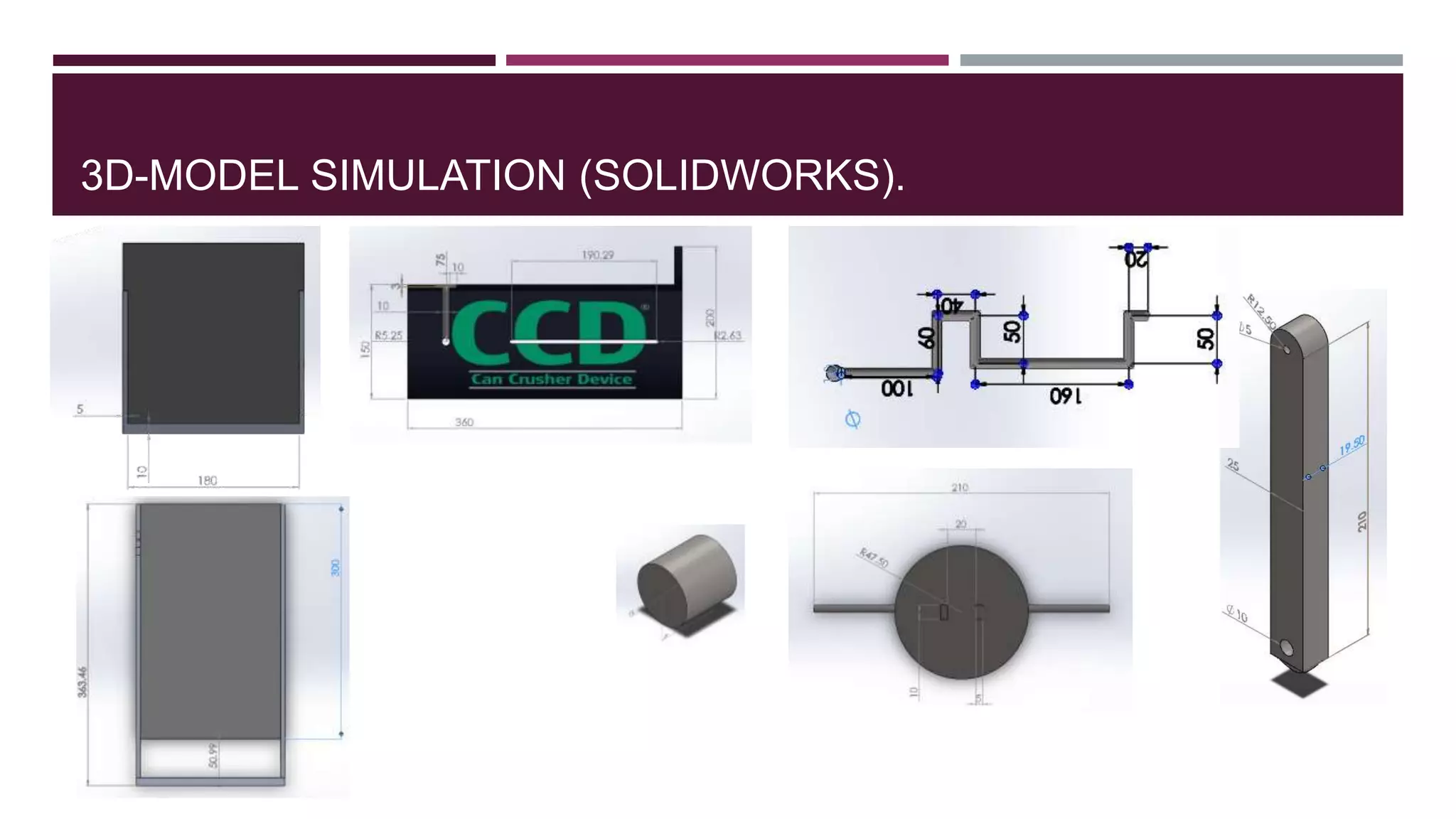
2) Simulating the 3D Model | Criteria and Constraints
 Maximum space: 200x350x180 mm
 Volume must be 70% less than originally
 At least 1 simple machine
 Manually operated
3D-MODEL SIMULATION (SOLIDWORKS).
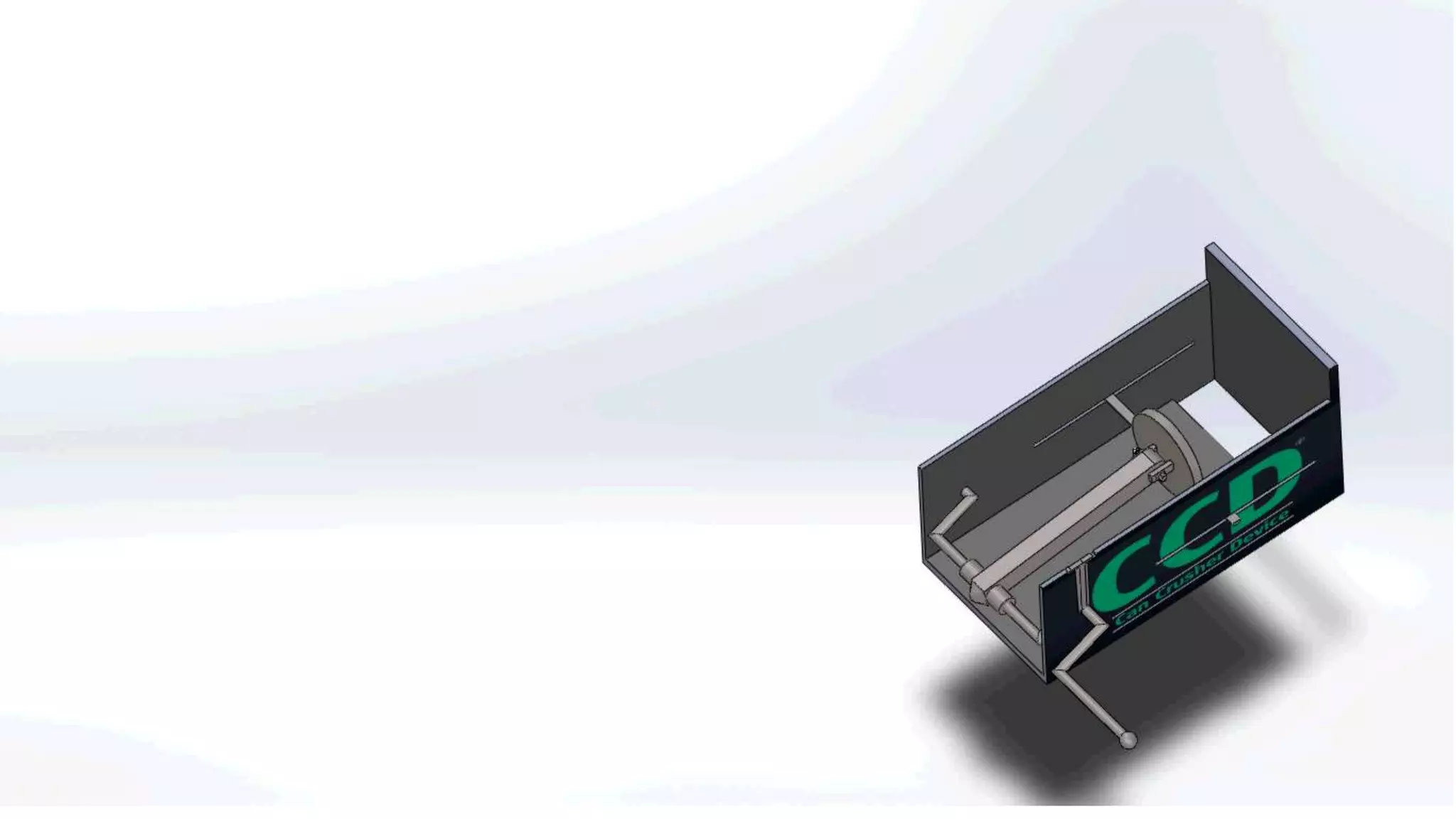
3D MODEL
MECHANISM MOTION ANALYSIS
It is divided into two categories, which are:
 MATLAB Application: The Mechanism virtual prototype calculations
Displacement, velocity and acceleration equations’ is transfer to MATLAB
modeling.
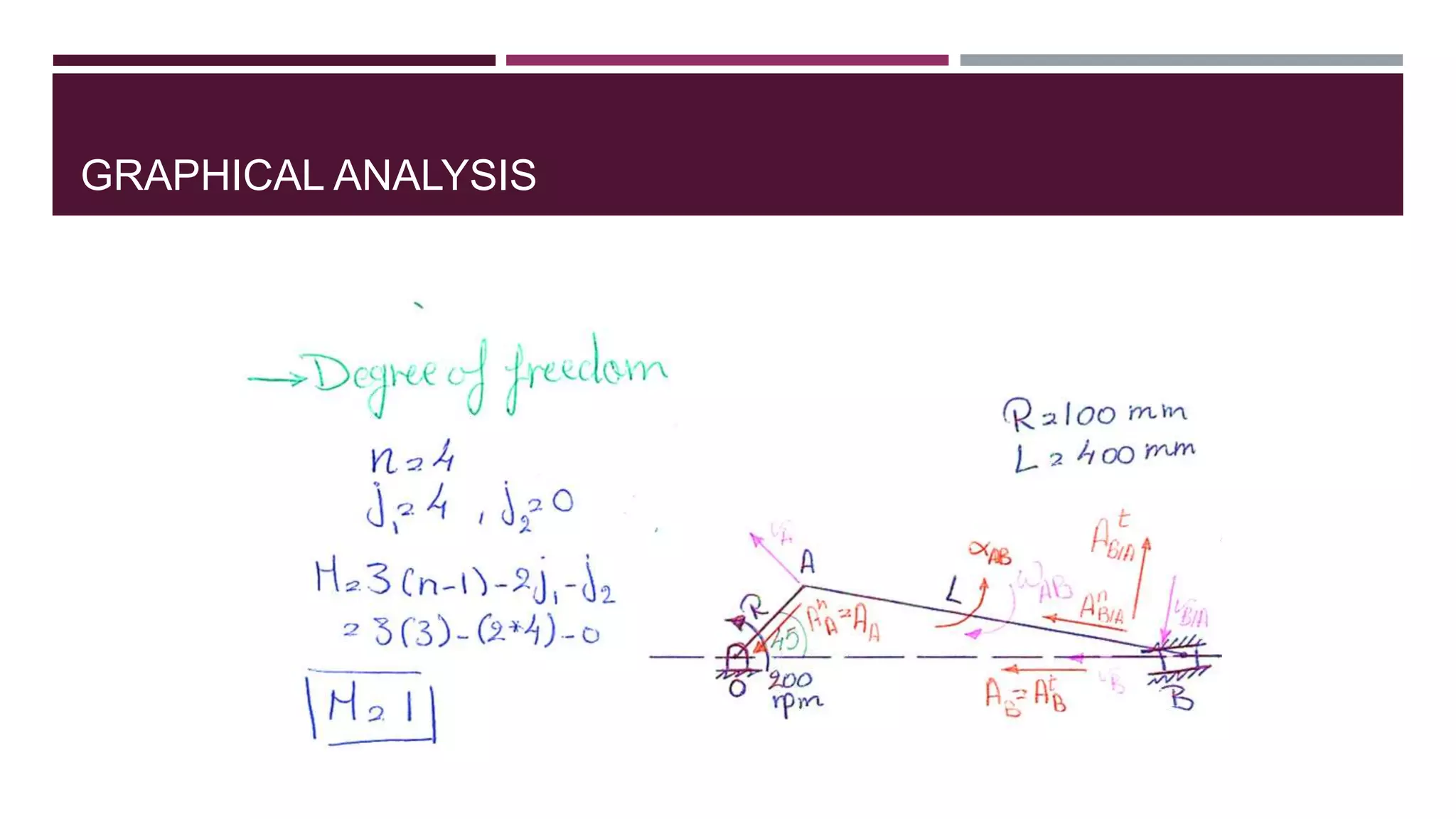
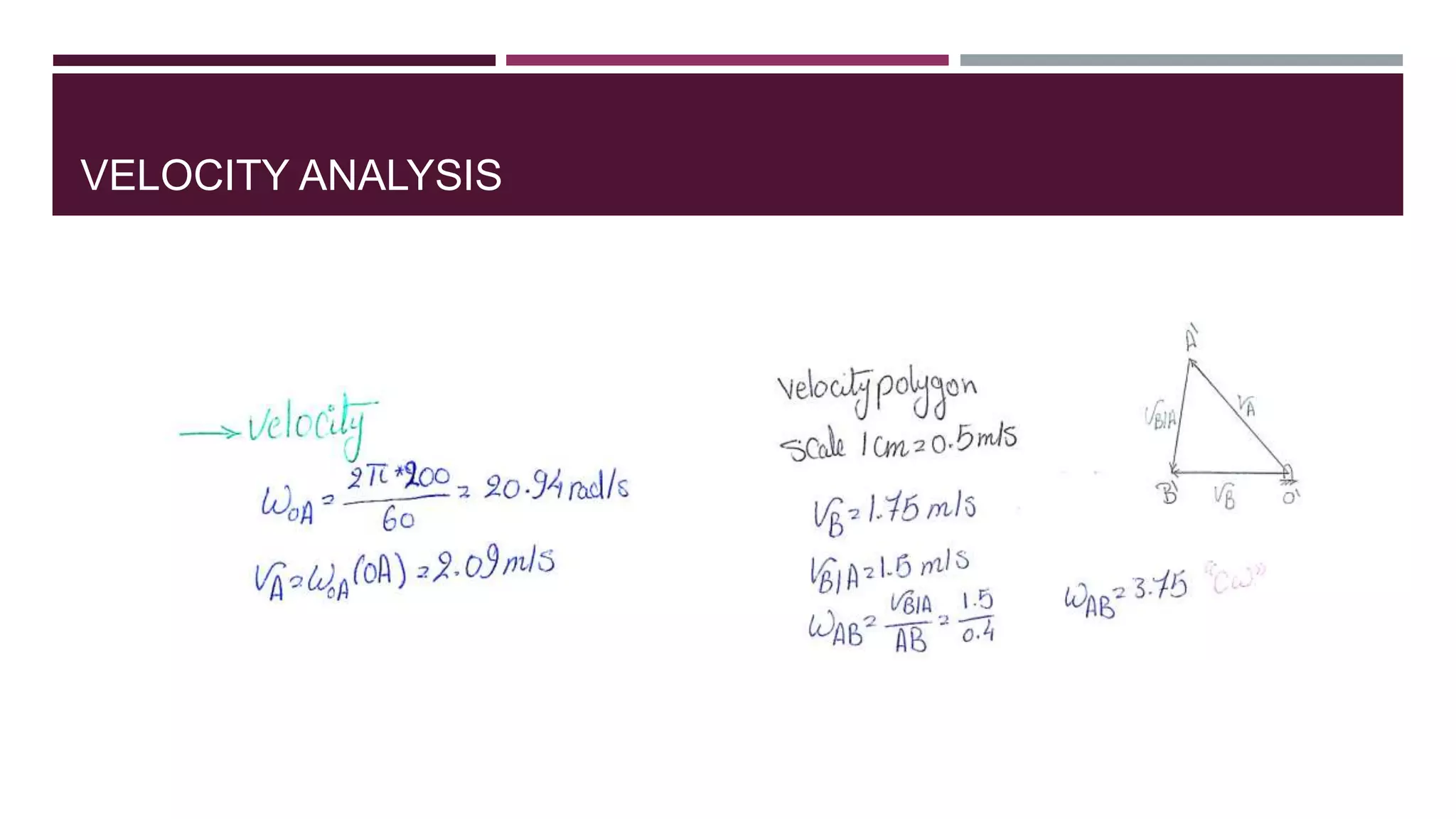
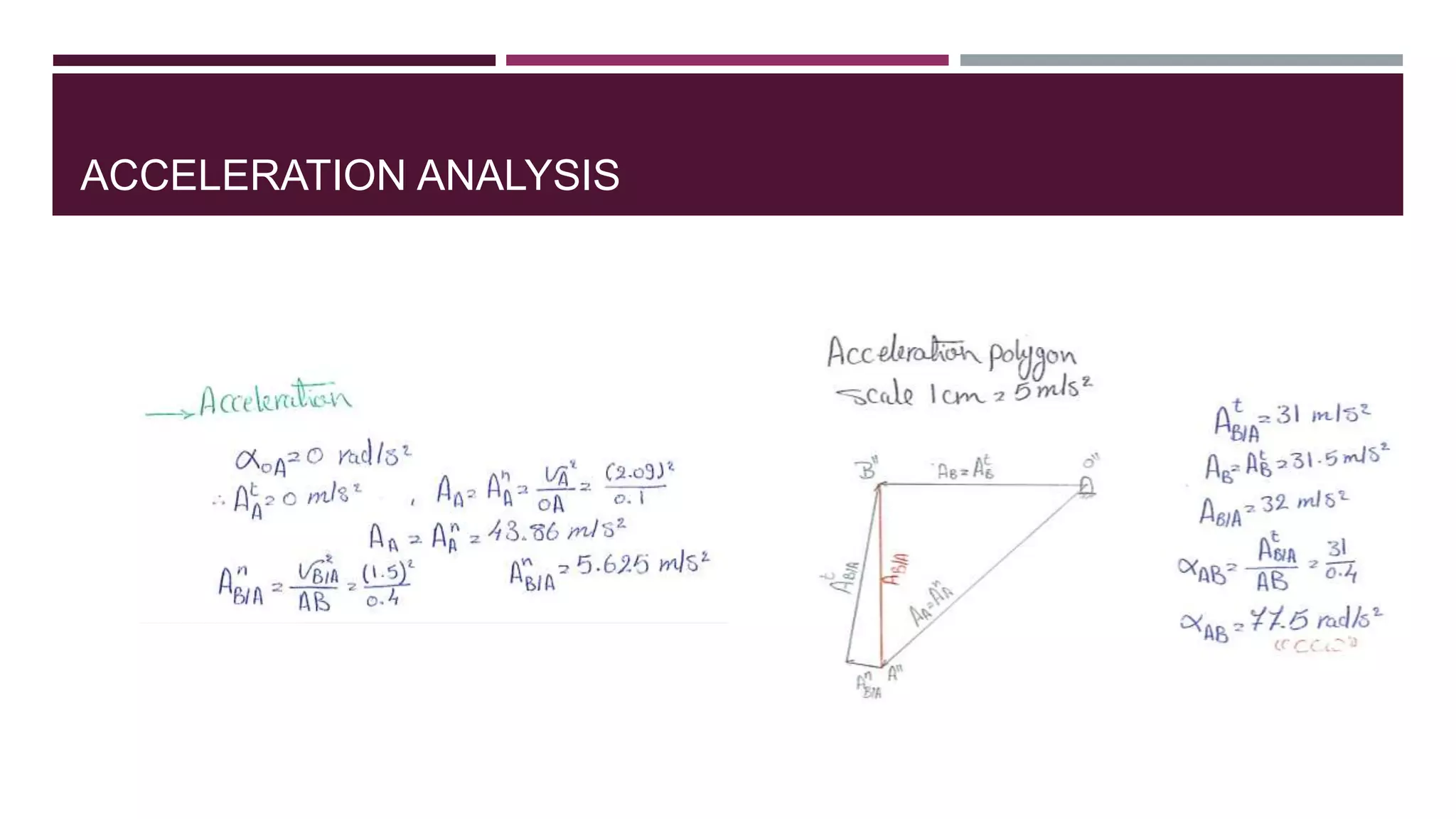
 Calculations of mechanisms’ degree of freedom, position, velocity and
acceleration of mechanism.
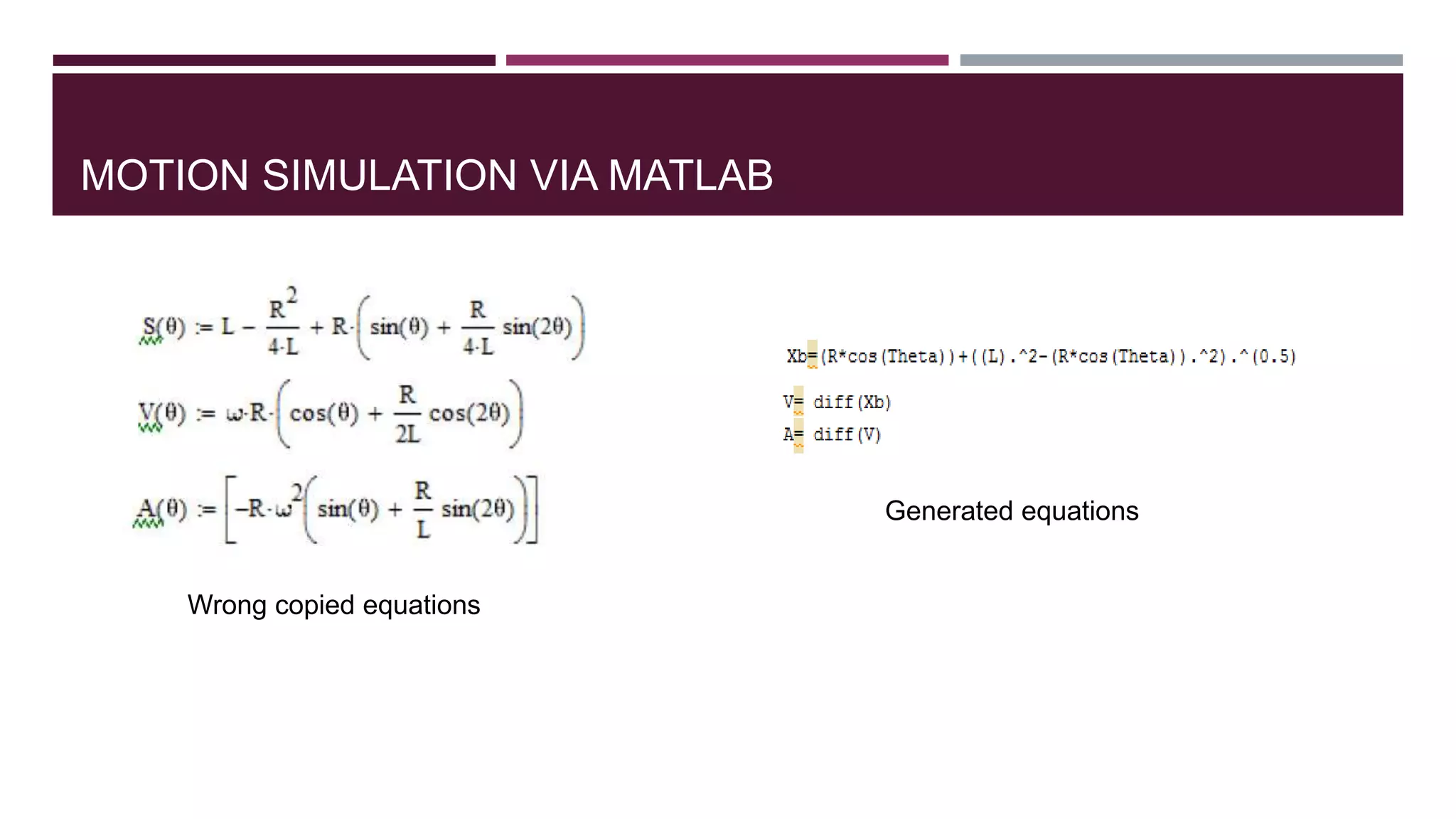
MOTION SIMULATION VIA MATLAB
Wrong copied equations
Generated equations
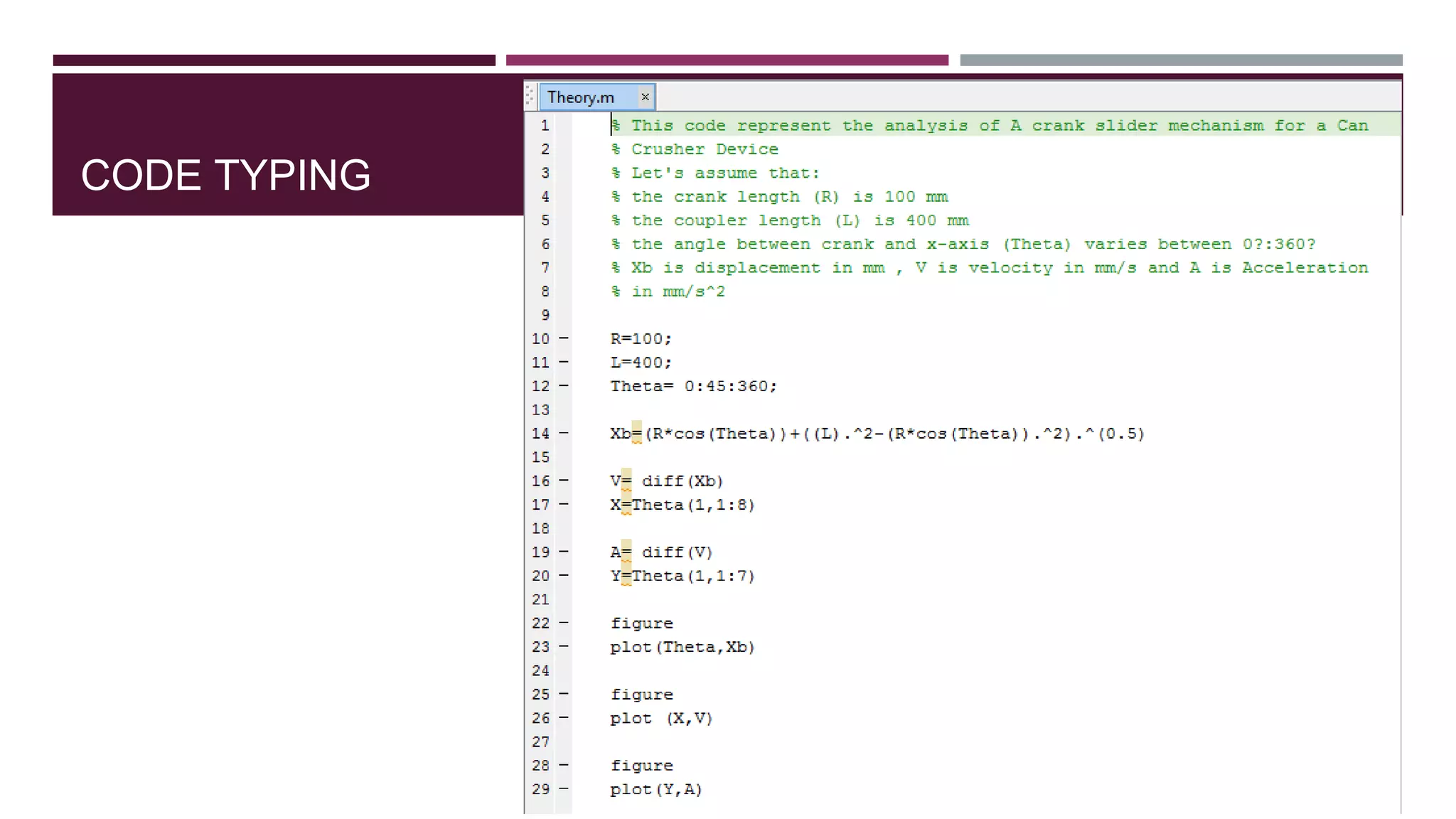
CODE TYPING
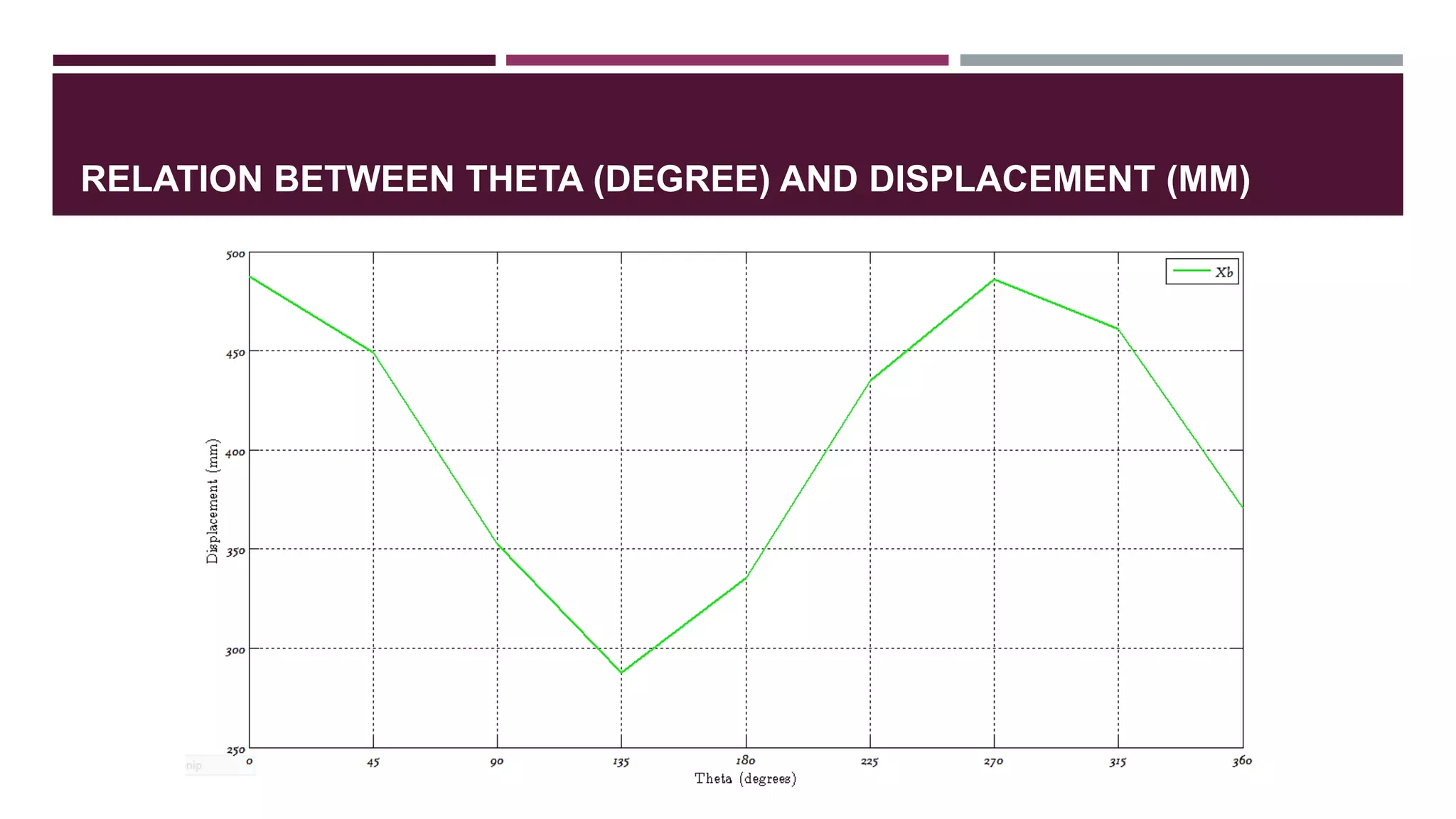
RELATION BETWEEN THETA (DEGREE) AND DISPLACEMENT (MM)
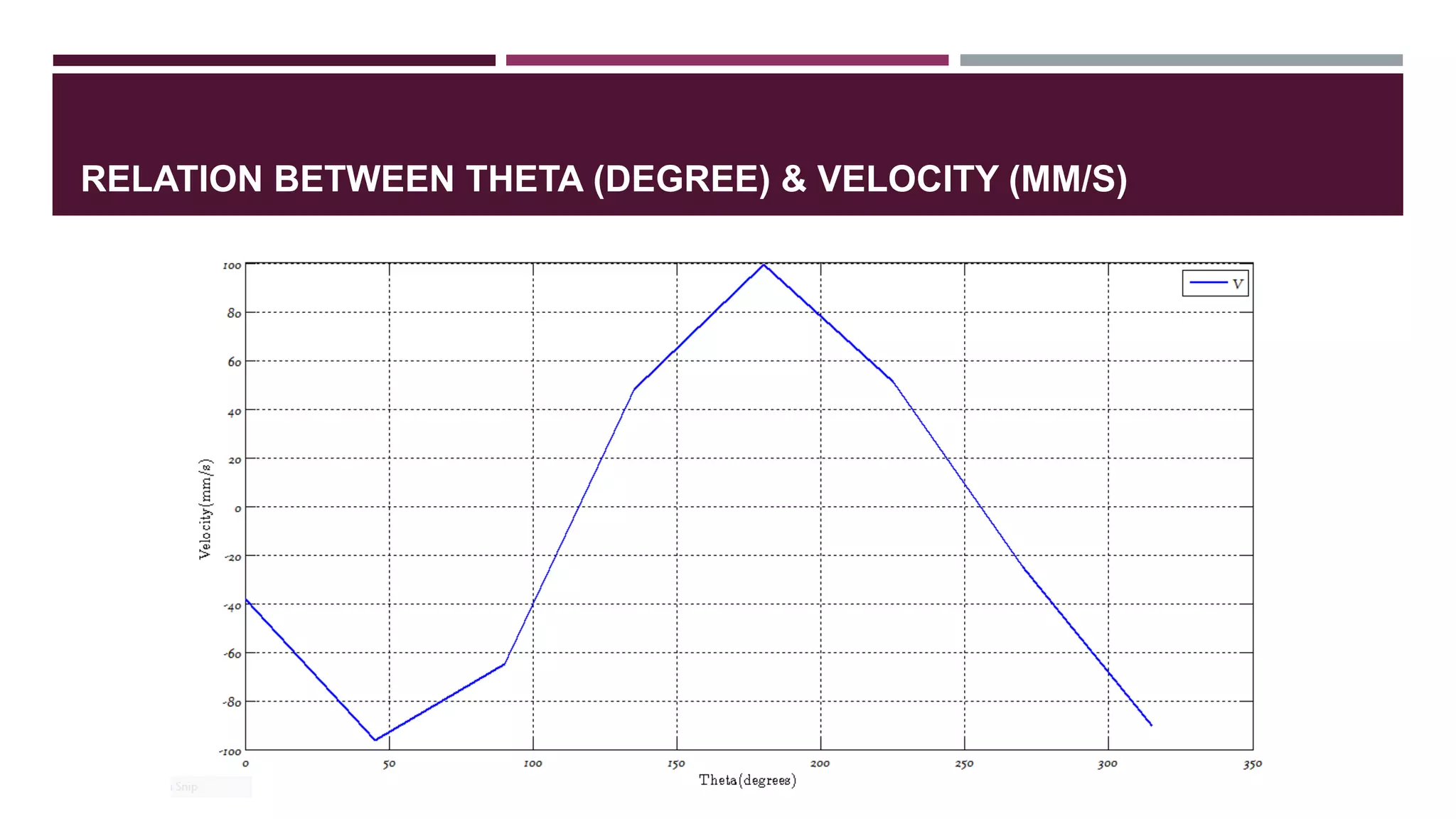
RELATION BETWEEN THETA (DEGREE) & VELOCITY (MM/S)
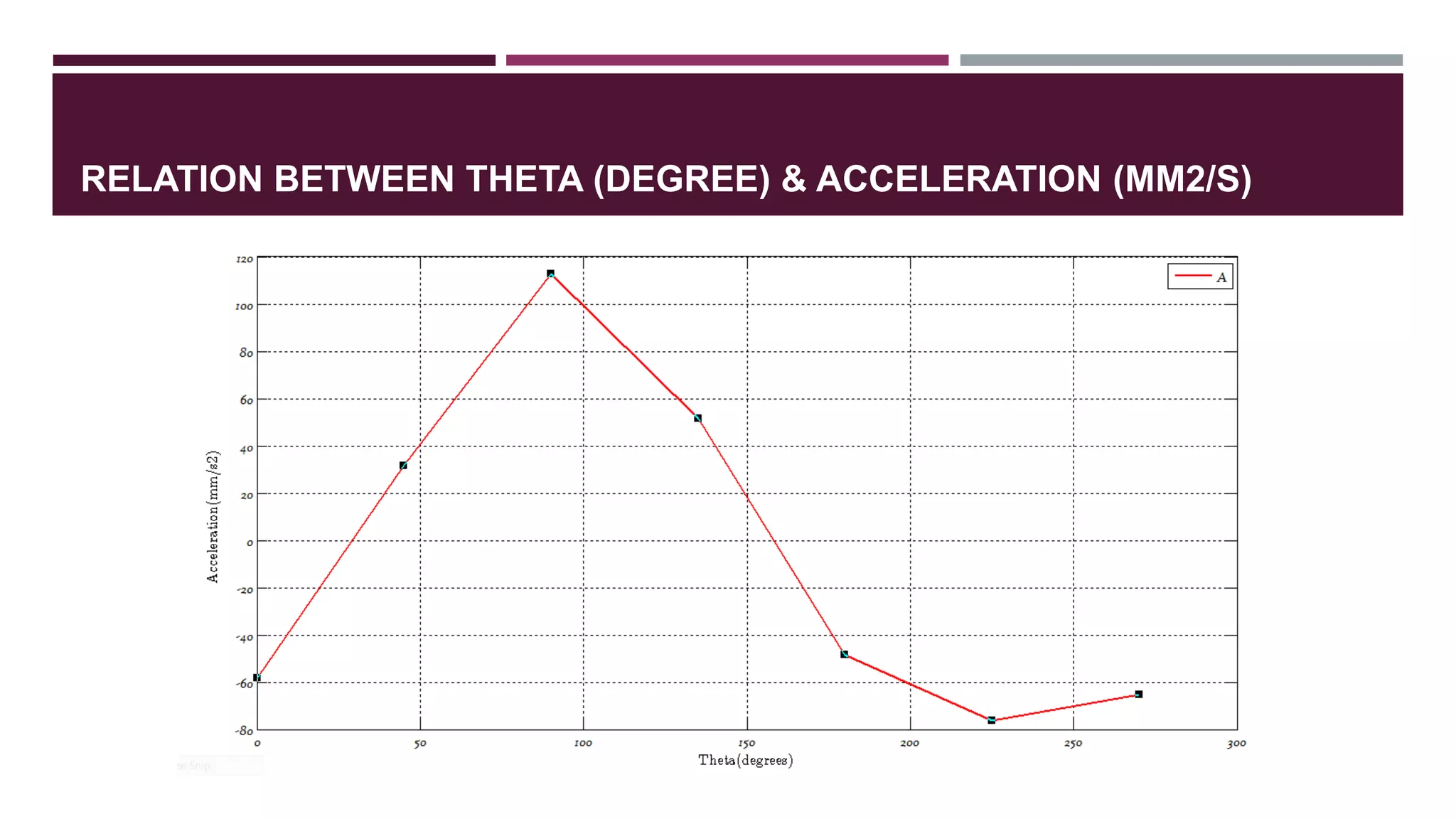
RELATION BETWEEN THETA (DEGREE) & ACCELERATION (MM2/S)
GRAPHICAL ANALYSIS
CRANK-SLIDER MECHANISM
VELOCITY ANALYSIS
ACCELERATION ANALYSIS
SUMMARY
TEAM MEMBERS
 Alaa Farag
 Esraa Fathy
 Joseph Maged
 Ali Rawash
 Ahmed Ibrahim
 Ahmed Amin
 Amr Elganainy
 Mohamed Saadany
 Nourhan Hany
 Peter Adel
Can Crusher Device - Theory of Machines Mini-Project

  • 1.
  • 2.
    OUTLINES  Problem statementand background  Project Planning.  Research, Brainstorming and Generate Ideas  Mechanism Synthesis and Analysis  3D-Model Simulation (SolidWorks).  Motion Simulation (Matlab).  Summary
  • 3.
    PROBLEM STATEMENT The Question Howcan we apply what we know about “Theory of Machines” to our everyday life ?
  • 4.
    PROBLEM DEFINITION Issue  Sustainability Solution Recycling  Engineers responsibility  Uncrushed cans waste space  Small volume-more cans recycled efficiently
  • 5.
     The Machinerefers to the procedures and techniques used to address the three phases of a machine’s lifecycle: - invention, which involves the identification of a need, development of requirements, concept generation, prototype development, manufacturing, and verification testing; - performance engineering involves enhancing manufacturing efficiency, reducing service and maintenance demands, adding features and improving effectiveness. - recycle is the decommissioning and disposal phase and includes recovery and reuse of materials and components.
  • 6.
    PROBLEM DEFINITION We contributeto a more sustainable world by helping people to recycle materials into valuable products.
  • 7.
    ORIGIN OF CANCRUSHER  A can crusher is an instrument used for crushing soda cans.  This is done to make storage easier.  This provides more space in the bin.  The very first can crusher was the human foot.  These can crushers are used in the real world when people or companies that have aluminum cans want to save space in the recycling bin.
  • 8.
    BACKGROUND  The cancrusher employs a slider-crank as it’s a sliding mechanism. This allows the crusher to exert a larger amount of mechanical leverage to the can. The motor drivers the crank-arm which then slides the piston forward via a connecting linkages. After the piston has crushed the can , the discharge door expel the crushed can into a receptacle below.
  • 9.
    PROJECT PLANNING  OrientationMeeting  Research & Outlining Project  Approval  Training  Sketching & Modeling  Task distribution  Mechanism Visualization  Data Analysis  Sum-up meetings
  • 10.
    PHASE A |ORIENTATION Approval Research and Problem definition Orientation Meeting Main outlines Task Distribu tion Timelin e Sustain ability Can-Crusher Lifting Mechanism Piston Engine Geneva Quick return
  • 11.
    PHASE 2 |TRAINING & PLANNING Modeling Sketching & Brainstorming SW & MATLAB Training
  • 12.
    BRAINSTORMING  Ideas presented Discussion for positives and negatives  Vote  plan
  • 13.
    PHASE 3 |IMPLEMENTATION Team A Team B • Mechanism sketching • Visual modeling • Visual testing • Data Analysis • Equations and graphing
  • 14.
  • 15.
    MECHANISM SYNTHESIS ANDANALYSIS  Synthesis : design a mechanism to perform a desired function.  Analysis : given a mechanism, perform kinematics and kinetics analysis (Graphical techniques and Analytical methods)
  • 16.
    MECHANISM SYNTHESIS  Thedrawings are diving into two categories, which are: 1) Sketching: all the ideals for tin can crusher are sketched on the paper to ensure that ideas selection can be made after the selected design choose. 2) Solid Works Application: The design or concept sketched is transfer to solid modeling and drawing using Solid Work Application.
  • 17.
    1) Sketching: all theideals for tin can crusher are sketched on the paper to ensure that ideas selection can be made after the selected design choose.  Explore Possibilities  Select an Approach  Develop a Design Proposal 2) Simulating the 3D Model | Criteria and Constraints  Maximum space: 200x350x180 mm  Volume must be 70% less than originally  At least 1 simple machine  Manually operated
  • 18.
  • 19.
  • 21.
    MECHANISM MOTION ANALYSIS Itis divided into two categories, which are:  MATLAB Application: The Mechanism virtual prototype calculations Displacement, velocity and acceleration equations’ is transfer to MATLAB modeling.  Calculations of mechanisms’ degree of freedom, position, velocity and acceleration of mechanism.
  • 22.
    MOTION SIMULATION VIAMATLAB Wrong copied equations Generated equations
  • 23.
  • 24.
    RELATION BETWEEN THETA(DEGREE) AND DISPLACEMENT (MM)
  • 25.
    RELATION BETWEEN THETA(DEGREE) & VELOCITY (MM/S)
  • 26.
    RELATION BETWEEN THETA(DEGREE) & ACCELERATION (MM2/S)
  • 27.
  • 28.
  • 29.
  • 30.
  • 31.
  • 32.
    TEAM MEMBERS  AlaaFarag  Esraa Fathy  Joseph Maged  Ali Rawash  Ahmed Ibrahim  Ahmed Amin  Amr Elganainy  Mohamed Saadany  Nourhan Hany  Peter Adel