Rural and Urban
Settlement: A Comparative
Study
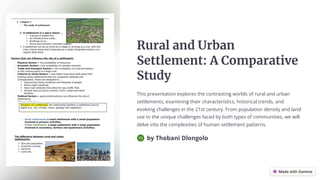
This presentation explores the contrasting worlds of rural and urban
settlements, examining their characteristics, historical trends, and
evolving challenges in the 21st century. From population density and land
use to the unique challenges faced by both types of communities, we will
delve into the complexities of human settlement patterns.
by Thobani Dlongolo
TD
Defining Rural and Urban Areas
Rural Areas
Characterized by low population density and sprawling land
use. Rural areas often feature agriculture, forestry, and
natural resources.
Urban Areas
Defined by high population density and concentrated
infrastructure. Urban areas typically have a significant focus
on commerce, industry, and services.
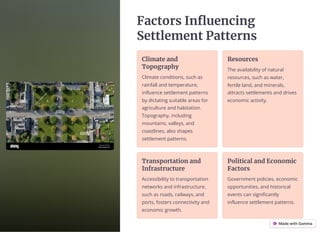
Factors Influencing
Settlement Patterns
Climate and
Topography
Climate conditions, such as
rainfall and temperature,
influence settlement patterns
by dictating suitable areas for
agriculture and habitation.
Topography, including
mountains, valleys, and
coastlines, also shapes
settlement patterns.
Resources
The availability of natural
resources, such as water,
fertile land, and minerals,
attracts settlements and drives
economic activity.
Transportation and
Infrastructure
Accessibility to transportation
networks and infrastructure,
such as roads, railways, and
ports, fosters connectivity and
economic growth.
Political and Economic
Factors
Government policies, economic
opportunities, and historical
events can significantly
influence settlement patterns.
Historical Settlement Trends
1
Early Settlements
Humans initially settled in rural areas for
agriculture and resource access. Urban
centers began to emerge as trade and social
complexity increased.
2
Industrial Revolution
The Industrial Revolution led to rapid
urbanization as factories and jobs
concentrated in cities. Rural areas
experienced decline as people migrated to
urban centers.
3
Post-Industrial Era
Urbanization continues, but the pace slows
down. Suburbanization and exurbanization
emerge as people seek a balance between
urban amenities and rural space.
4
Globalization and Technology
Globalization and technology have fostered
new forms of settlement patterns, with rural
areas becoming more connected to global
markets and experiencing renewed growth in
some sectors.
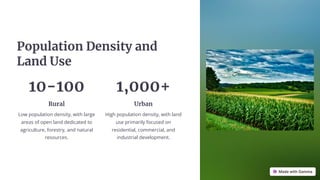
Population Density and
Land Use
10-100
Rural
Low population density, with large
areas of open land dedicated to
agriculture, forestry, and natural
resources.
1,000+
Urban
High population density, with land
use primarily focused on
residential, commercial, and
industrial development.
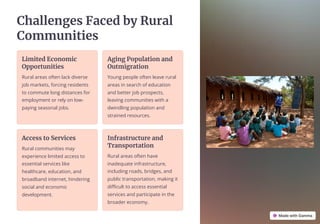
Challenges Faced by Rural
Communities
Limited Economic
Opportunities
Rural areas often lack diverse
job markets, forcing residents
to commute long distances for
employment or rely on low-
paying seasonal jobs.
Aging Population and
Outmigration
Young people often leave rural
areas in search of education
and better job prospects,
leaving communities with a
dwindling population and
strained resources.
Access to Services
Rural communities may
experience limited access to
essential services like
healthcare, education, and
broadband internet, hindering
social and economic
development.
Infrastructure and
Transportation
Rural areas often have
inadequate infrastructure,
including roads, bridges, and
public transportation, making it
difficult to access essential
services and participate in the
broader economy.
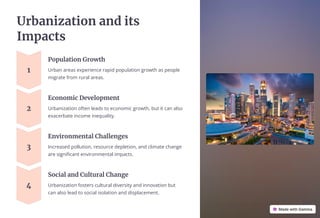
Urbanization and its
Impacts
1
Population Growth
Urban areas experience rapid population growth as people
migrate from rural areas.
2
Economic Development
Urbanization often leads to economic growth, but it can also
exacerbate income inequality.
3
Environmental Challenges
Increased pollution, resource depletion, and climate change
are significant environmental impacts.
4
Social and Cultural Change
Urbanization fosters cultural diversity and innovation but
can also lead to social isolation and displacement.
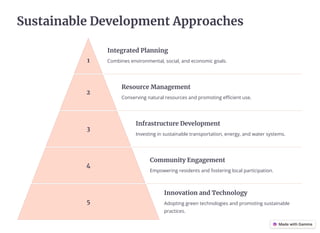
Sustainable Development Approaches
1
Integrated Planning
Combines environmental, social, and economic goals.
2
Resource Management
Conserving natural resources and promoting efficient use.
3
Infrastructure Development
Investing in sustainable transportation, energy, and water systems.
4
Community Engagement
Empowering residents and fostering local participation.
5
Innovation and Technology
Adopting green technologies and promoting sustainable
practices.

Rural-and-Urban-Settlement-A-Comparative-Study.pdf

  • 1.
    Rural and Urban Settlement:A Comparative Study This presentation explores the contrasting worlds of rural and urban settlements, examining their characteristics, historical trends, and evolving challenges in the 21st century. From population density and land use to the unique challenges faced by both types of communities, we will delve into the complexities of human settlement patterns. by Thobani Dlongolo TD
  • 2.
    Defining Rural andUrban Areas Rural Areas Characterized by low population density and sprawling land use. Rural areas often feature agriculture, forestry, and natural resources. Urban Areas Defined by high population density and concentrated infrastructure. Urban areas typically have a significant focus on commerce, industry, and services.
  • 3.
    Factors Influencing Settlement Patterns Climateand Topography Climate conditions, such as rainfall and temperature, influence settlement patterns by dictating suitable areas for agriculture and habitation. Topography, including mountains, valleys, and coastlines, also shapes settlement patterns. Resources The availability of natural resources, such as water, fertile land, and minerals, attracts settlements and drives economic activity. Transportation and Infrastructure Accessibility to transportation networks and infrastructure, such as roads, railways, and ports, fosters connectivity and economic growth. Political and Economic Factors Government policies, economic opportunities, and historical events can significantly influence settlement patterns.
  • 4.
    Historical Settlement Trends 1 EarlySettlements Humans initially settled in rural areas for agriculture and resource access. Urban centers began to emerge as trade and social complexity increased. 2 Industrial Revolution The Industrial Revolution led to rapid urbanization as factories and jobs concentrated in cities. Rural areas experienced decline as people migrated to urban centers. 3 Post-Industrial Era Urbanization continues, but the pace slows down. Suburbanization and exurbanization emerge as people seek a balance between urban amenities and rural space. 4 Globalization and Technology Globalization and technology have fostered new forms of settlement patterns, with rural areas becoming more connected to global markets and experiencing renewed growth in some sectors.
  • 5.
    Population Density and LandUse 10-100 Rural Low population density, with large areas of open land dedicated to agriculture, forestry, and natural resources. 1,000+ Urban High population density, with land use primarily focused on residential, commercial, and industrial development.
  • 6.
    Challenges Faced byRural Communities Limited Economic Opportunities Rural areas often lack diverse job markets, forcing residents to commute long distances for employment or rely on low- paying seasonal jobs. Aging Population and Outmigration Young people often leave rural areas in search of education and better job prospects, leaving communities with a dwindling population and strained resources. Access to Services Rural communities may experience limited access to essential services like healthcare, education, and broadband internet, hindering social and economic development. Infrastructure and Transportation Rural areas often have inadequate infrastructure, including roads, bridges, and public transportation, making it difficult to access essential services and participate in the broader economy.
  • 7.
    Urbanization and its Impacts 1 PopulationGrowth Urban areas experience rapid population growth as people migrate from rural areas. 2 Economic Development Urbanization often leads to economic growth, but it can also exacerbate income inequality. 3 Environmental Challenges Increased pollution, resource depletion, and climate change are significant environmental impacts. 4 Social and Cultural Change Urbanization fosters cultural diversity and innovation but can also lead to social isolation and displacement.
  • 8.
    Sustainable Development Approaches 1 IntegratedPlanning Combines environmental, social, and economic goals. 2 Resource Management Conserving natural resources and promoting efficient use. 3 Infrastructure Development Investing in sustainable transportation, energy, and water systems. 4 Community Engagement Empowering residents and fostering local participation. 5 Innovation and Technology Adopting green technologies and promoting sustainable practices.