Contextualisation, collaboration, constructivism and
     smartphones for teaching mathematics


Brendan Tangney, Patricia O’Hanlon, Stefan Weber, Elizabeth Oldham
   Centre for Research in IT in Education, School of Education and School of Computer Science & Statistics, Trinity College
   Dublin, Ireland


David Knowles, Jennifer Munnelly, Ronan Watson
    National Digital Research Centre, Crane St, The Digital Hub, Dublin 8, Ireland


                                      /www.slideshare.net/tangney
                                           tangney@tcd.ie


                                                                                                                              p-1
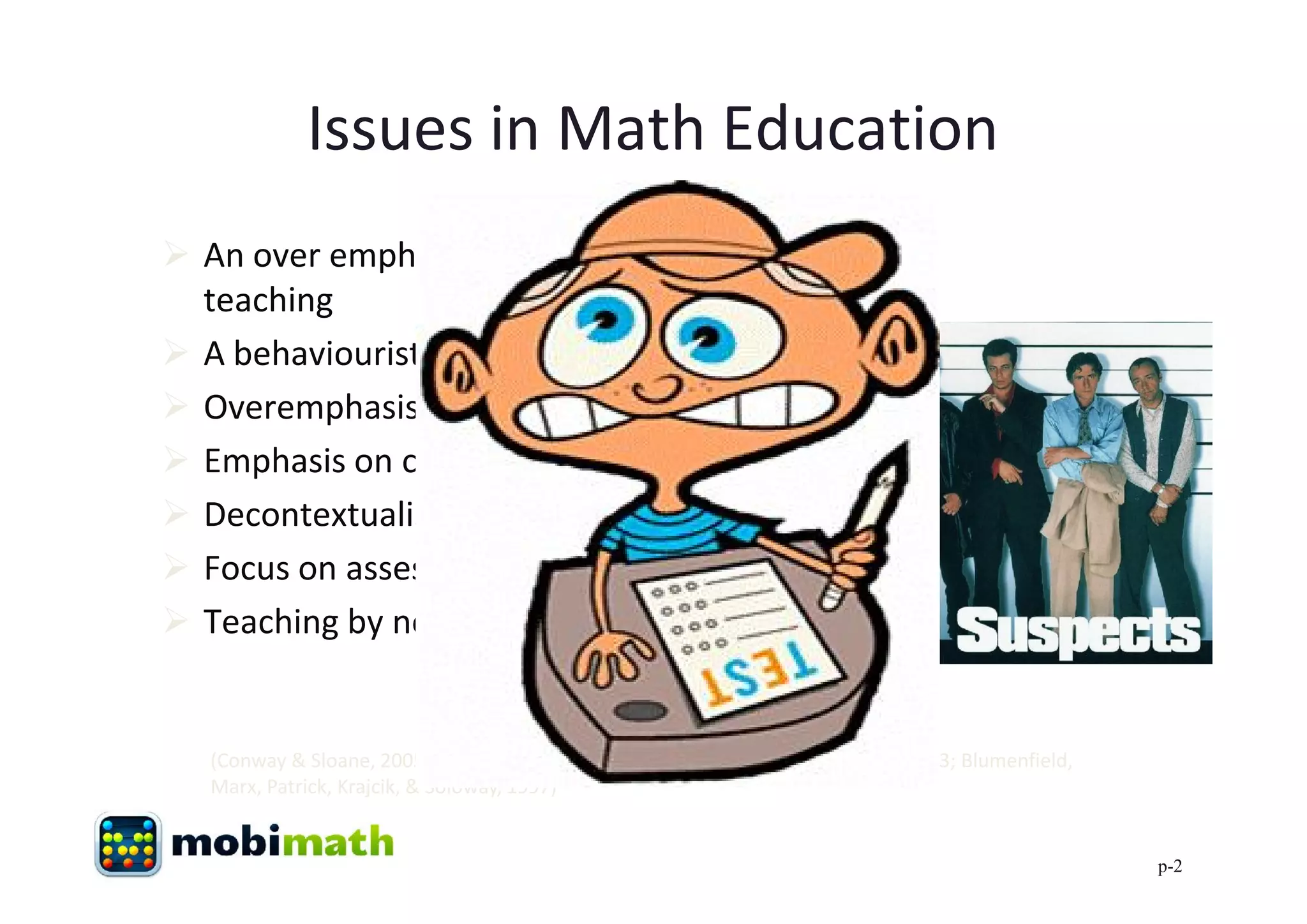
Issues in Math Education
 An over emphasis on didactic
  teaching
 A behaviourist approach to learning
 Overemphasis on procedure
 Emphasis on content over literacy
 Decontextualisation
 Focus on assessment
 Teaching by non specialist teachers


   (Conway & Sloane, 2005; Lyons, Lynch, Close, Sheerin, & Boland, 2003; Papert, 1993; Blumenfield,
   Marx, Patrick, Krajcik, & Soloway, 1997)


                                                                                                      p-2
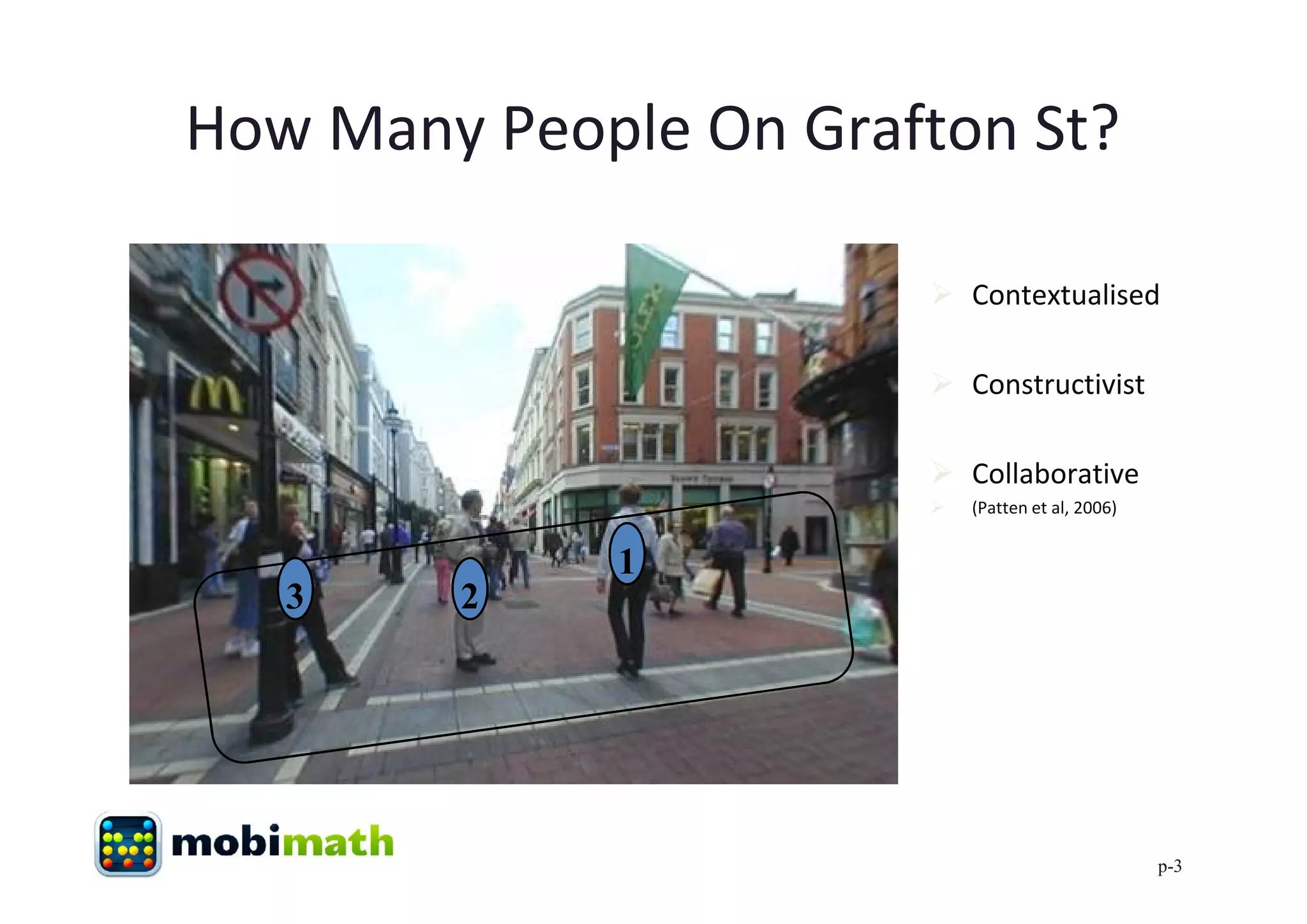
How Many People On Grafton St?

                        Contextualised

                        Constructivist

                        Collaborative
                          (Patten et al, 2006)


             1
   3    2


                                                  p-3
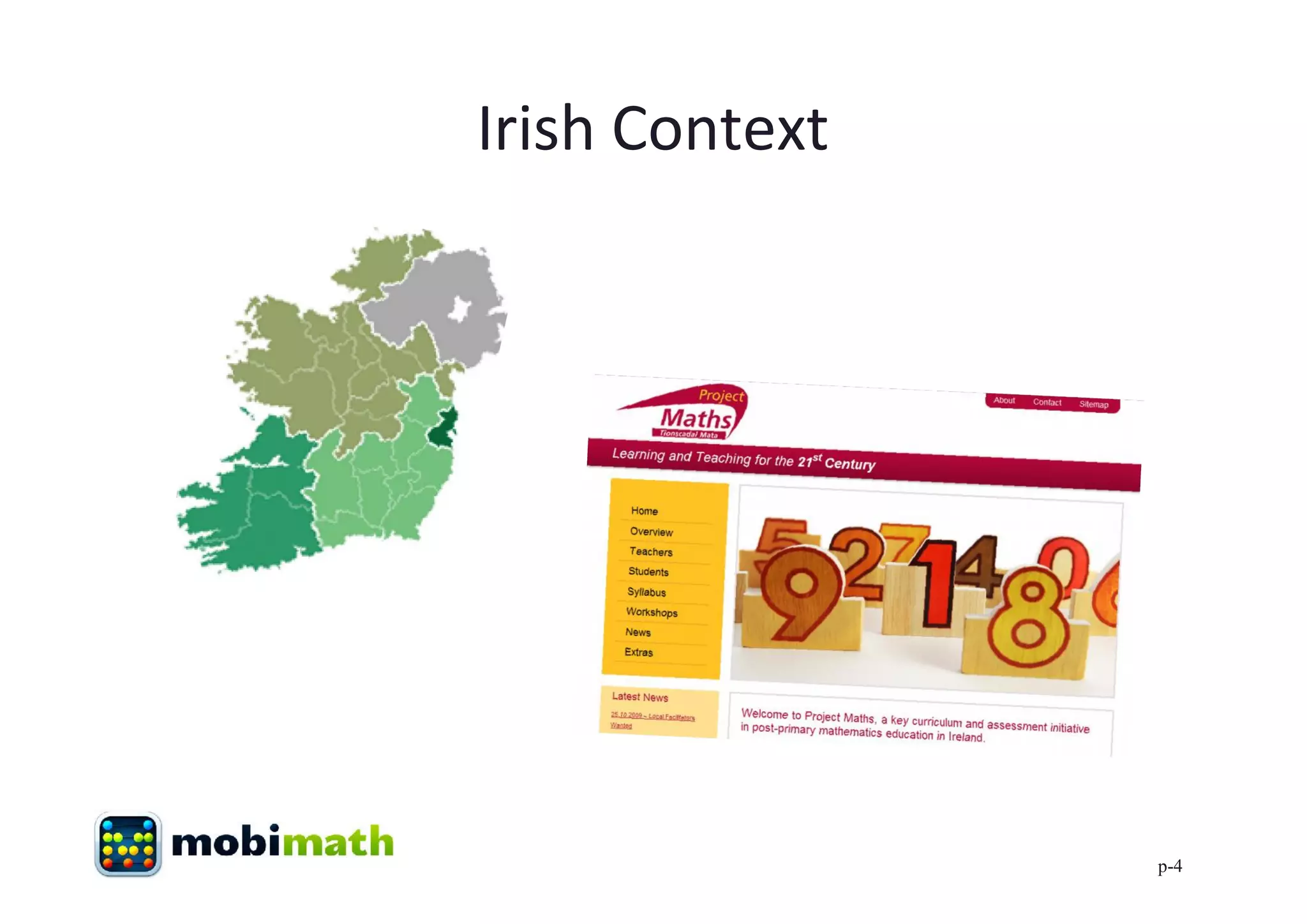
Irish Context


                p-4
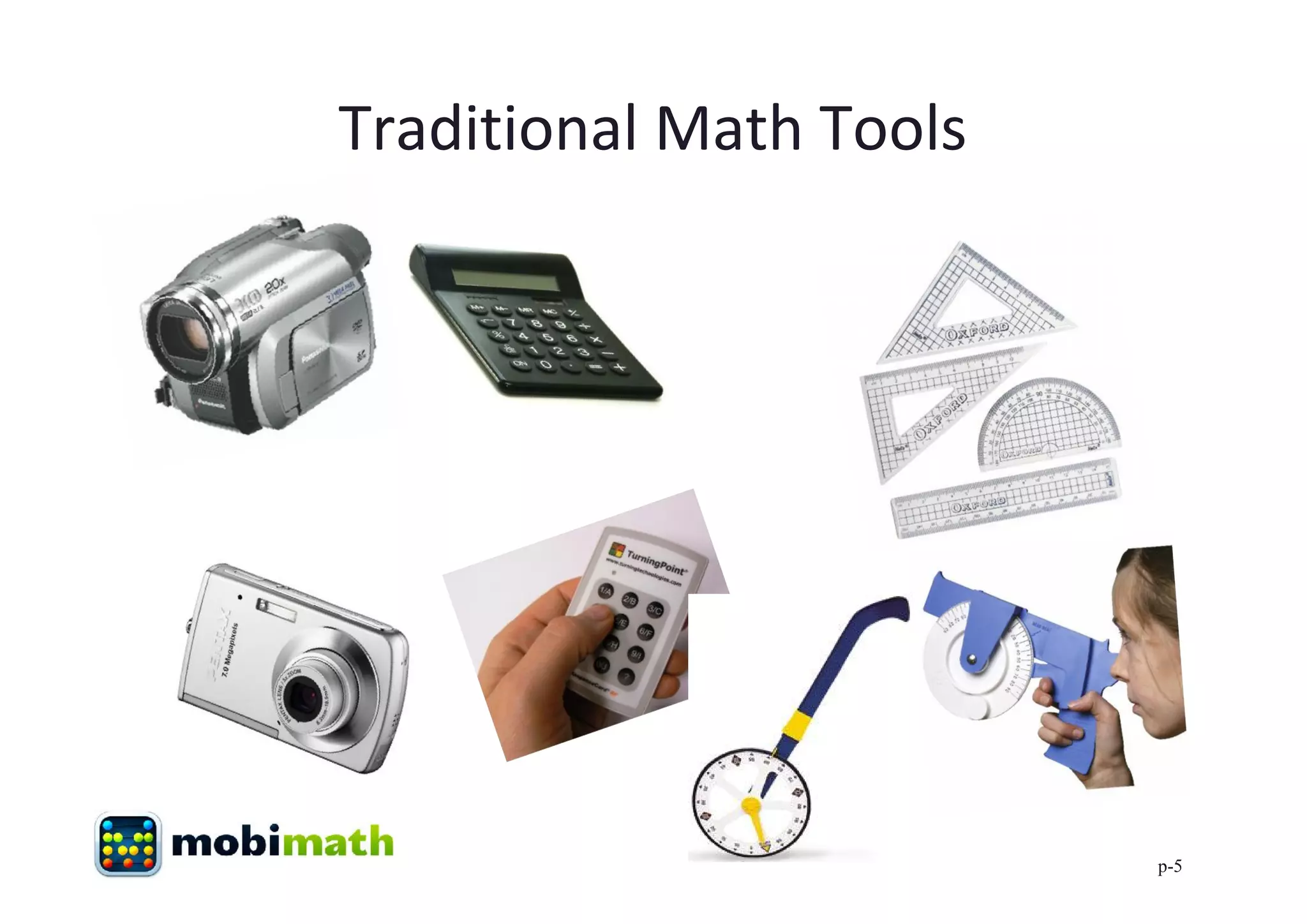
Traditional Math Tools


                         p-5
Mobimath Toolkit


                   p-6
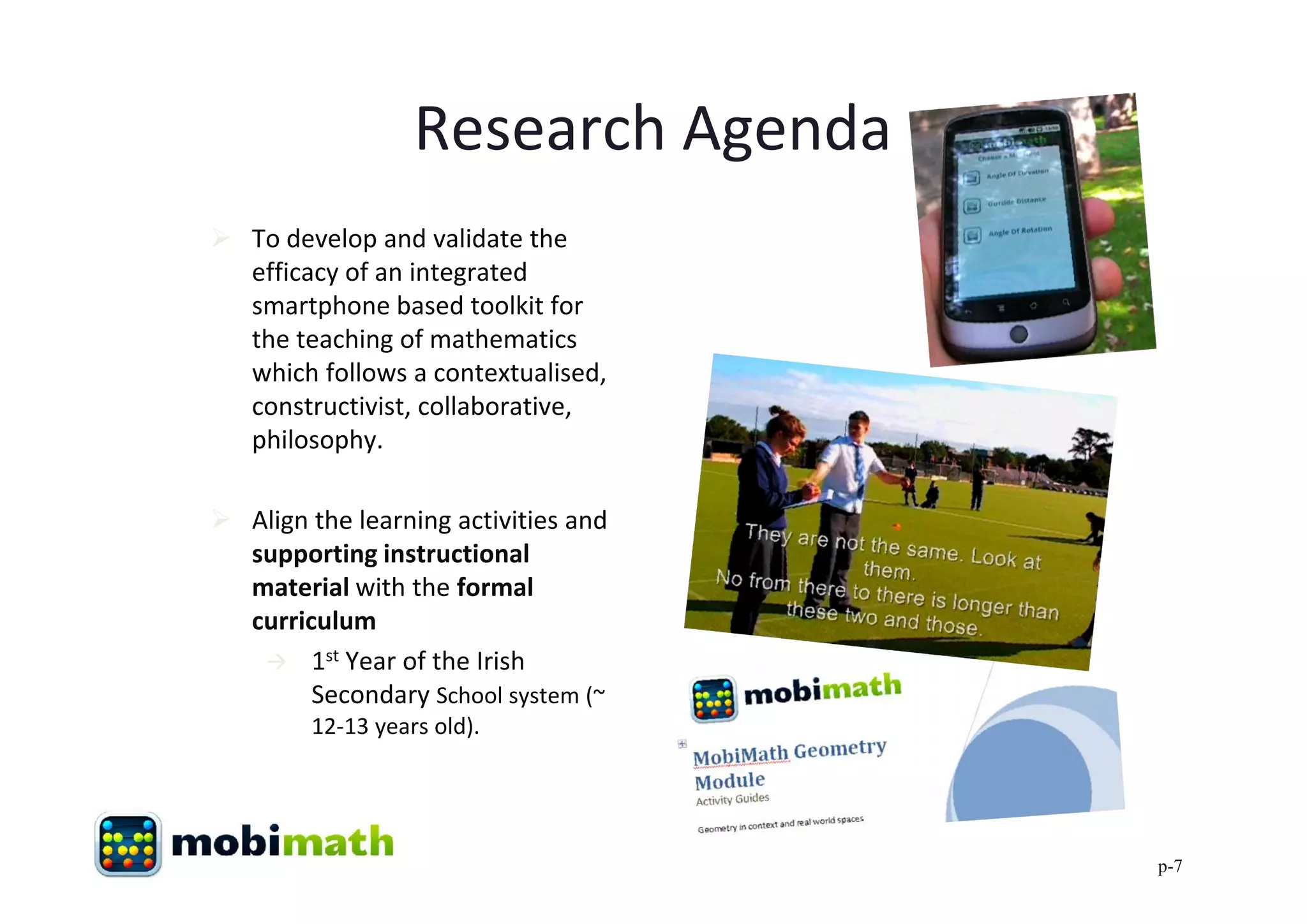
Research Agenda
 To develop and validate the
  efficacy of an integrated
  smartphone based toolkit for
  the teaching of mathematics
  which follows a contextualised,
  constructivist, collaborative,
  philosophy.

 Align the learning activities and
  supporting instructional
  material with the formal
  curriculum
    1st Year of the Irish
        Secondary School system (~
        12-13 years old).


                                      p-7
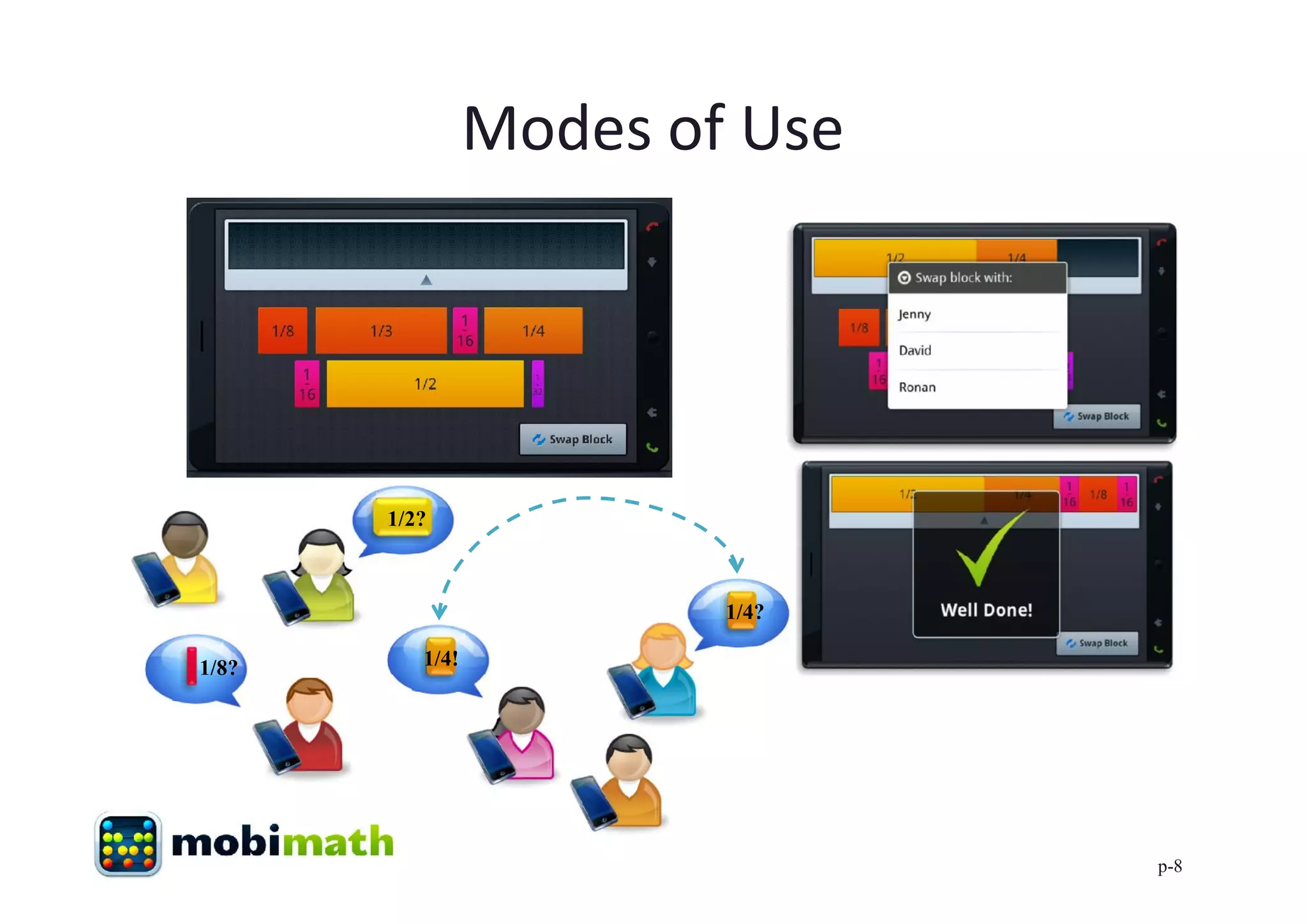
Modes of Use


       1/2?


                         1/4?

1/8?      1/4!


                                p-8
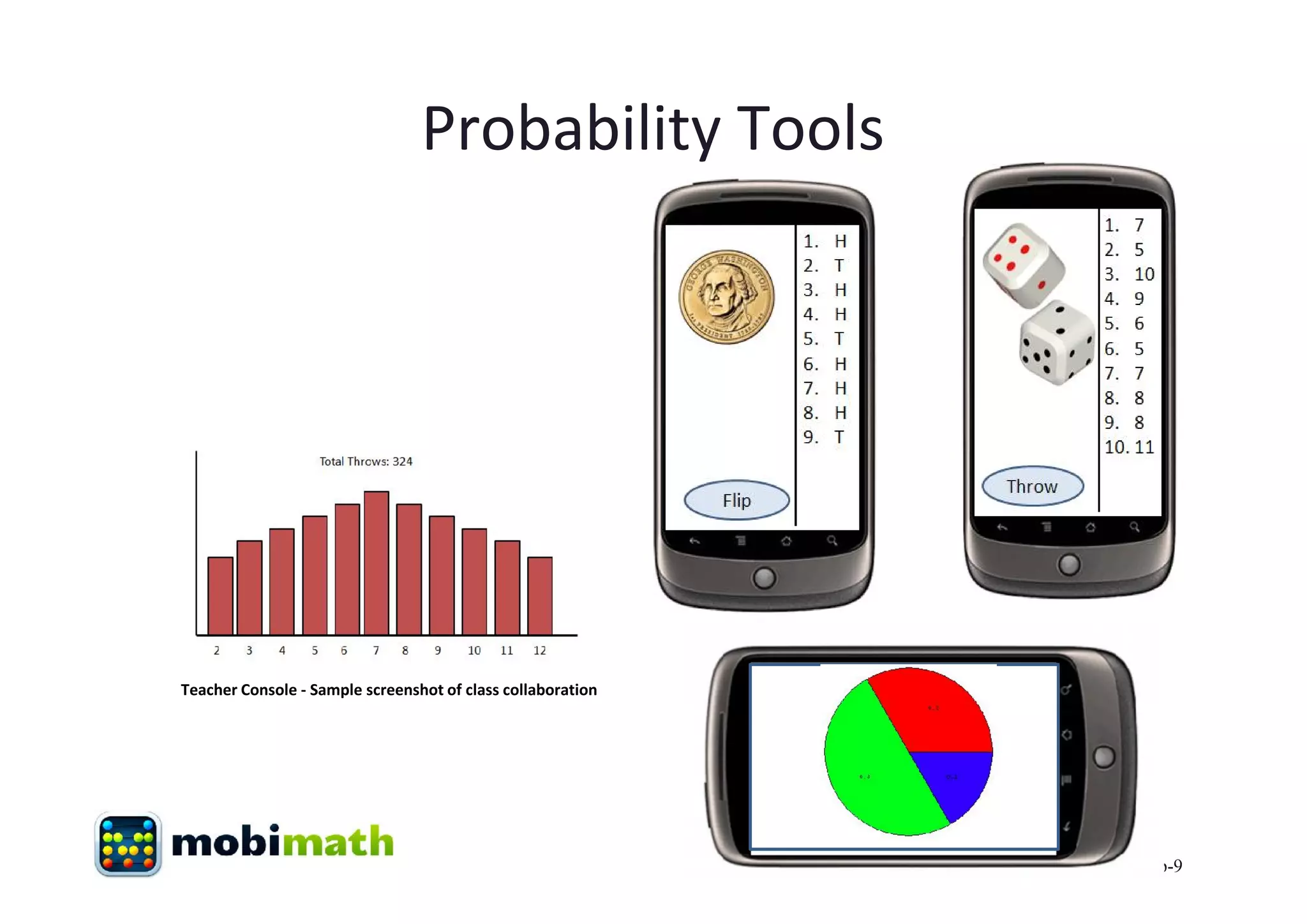
Probability Tools


Teacher Console - Sample screenshot of class collaboration


                                                             p-9
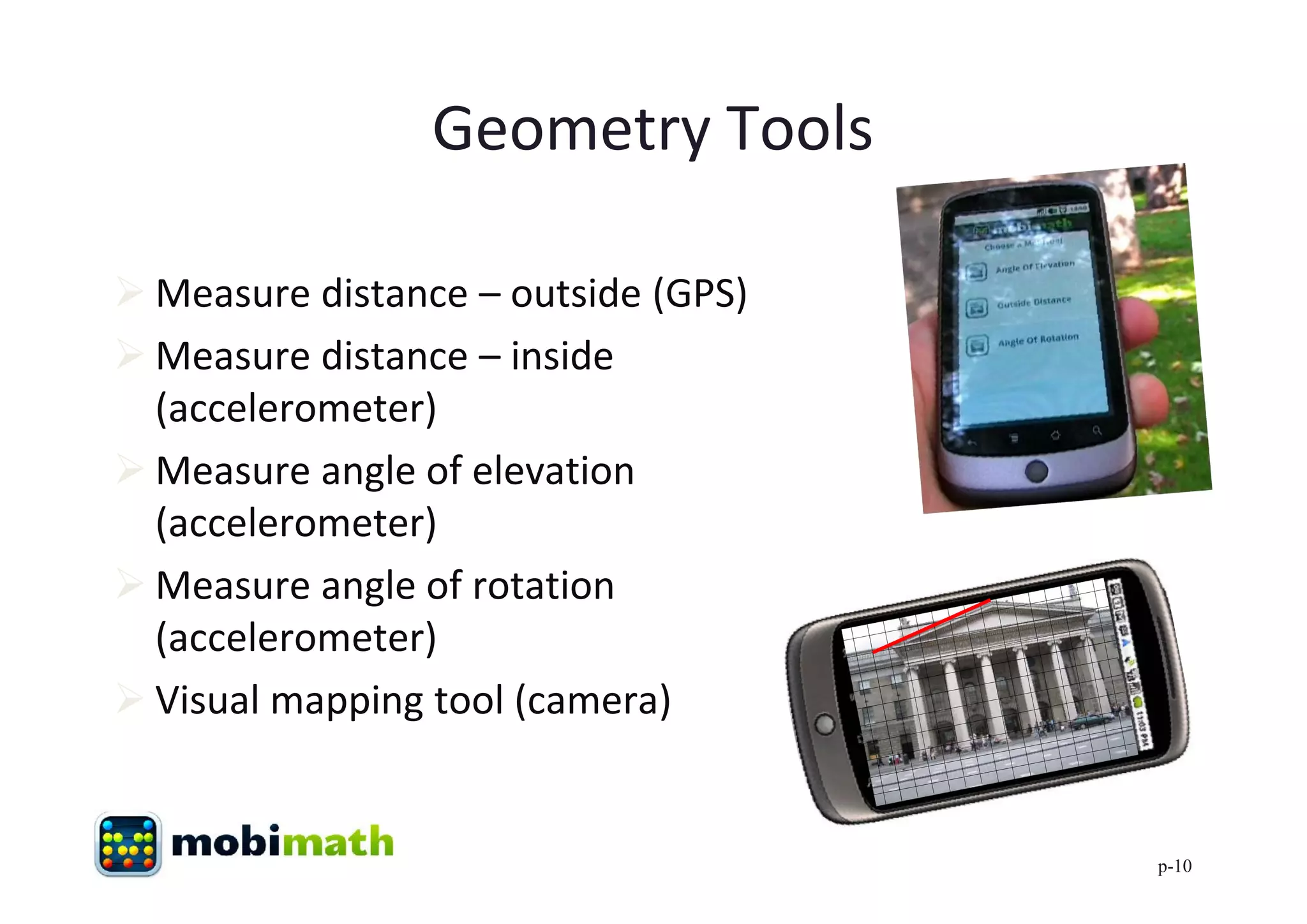
Geometry Tools

 Measure distance – outside (GPS)
 Measure distance – inside
  (accelerometer)
 Measure angle of elevation
  (accelerometer)
 Measure angle of rotation
  (accelerometer)
 Visual mapping tool (camera)


                                     p-10
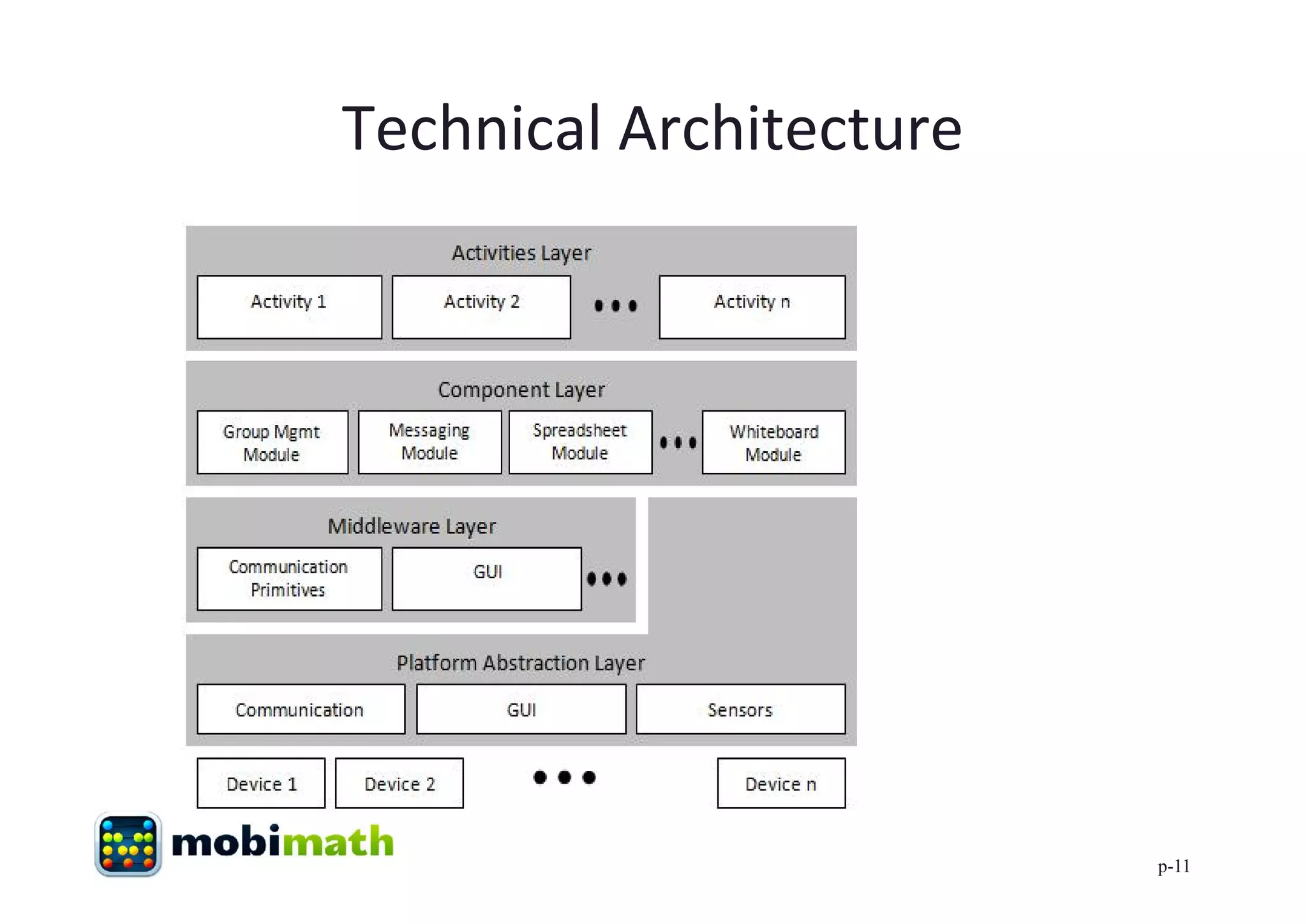
Technical Architecture


                         p-11
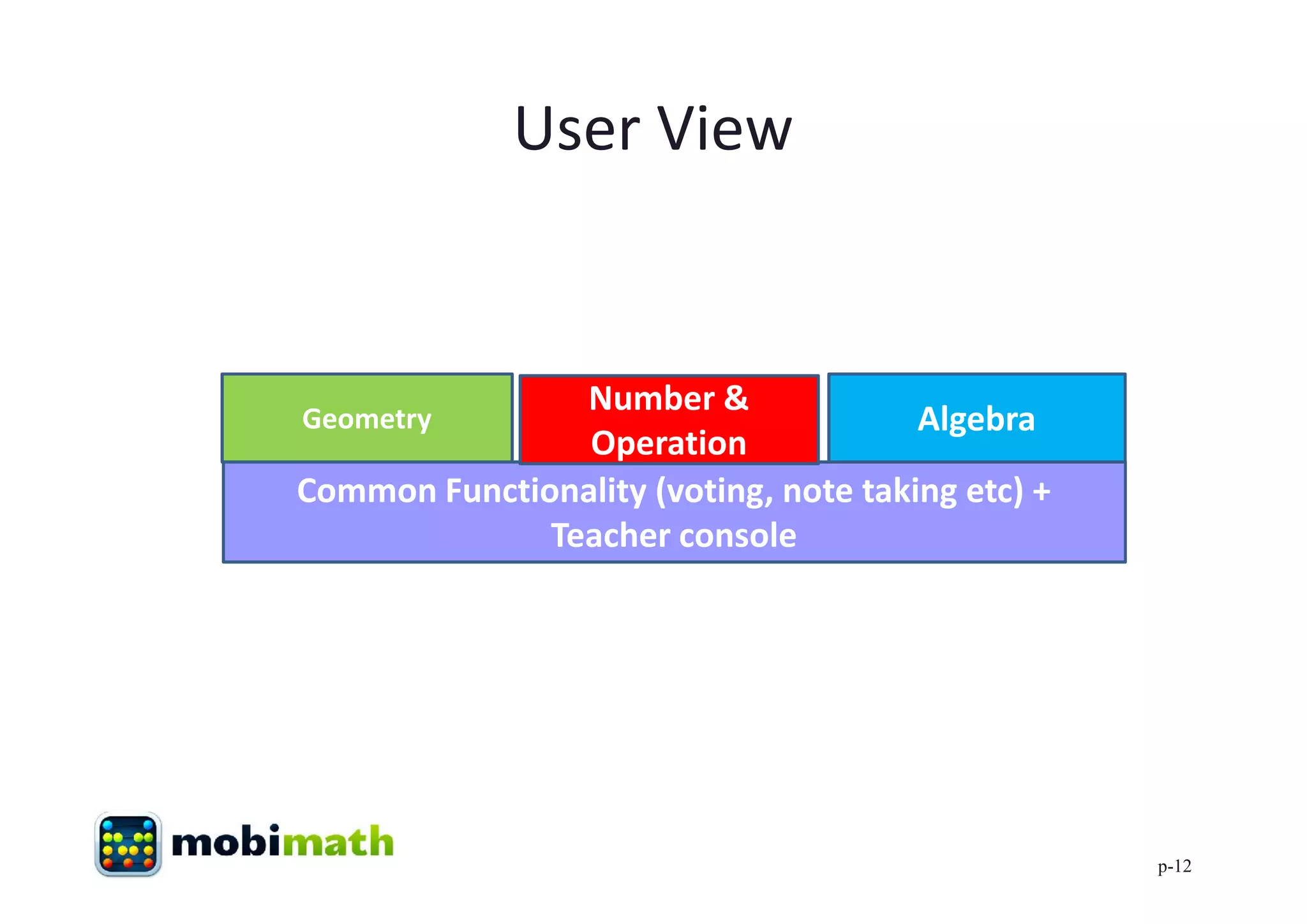
User View


                Number &
Geometry                               Algebra
                Operation
Common Functionality (voting, note taking etc) +
              Teacher console


                                                   p-12
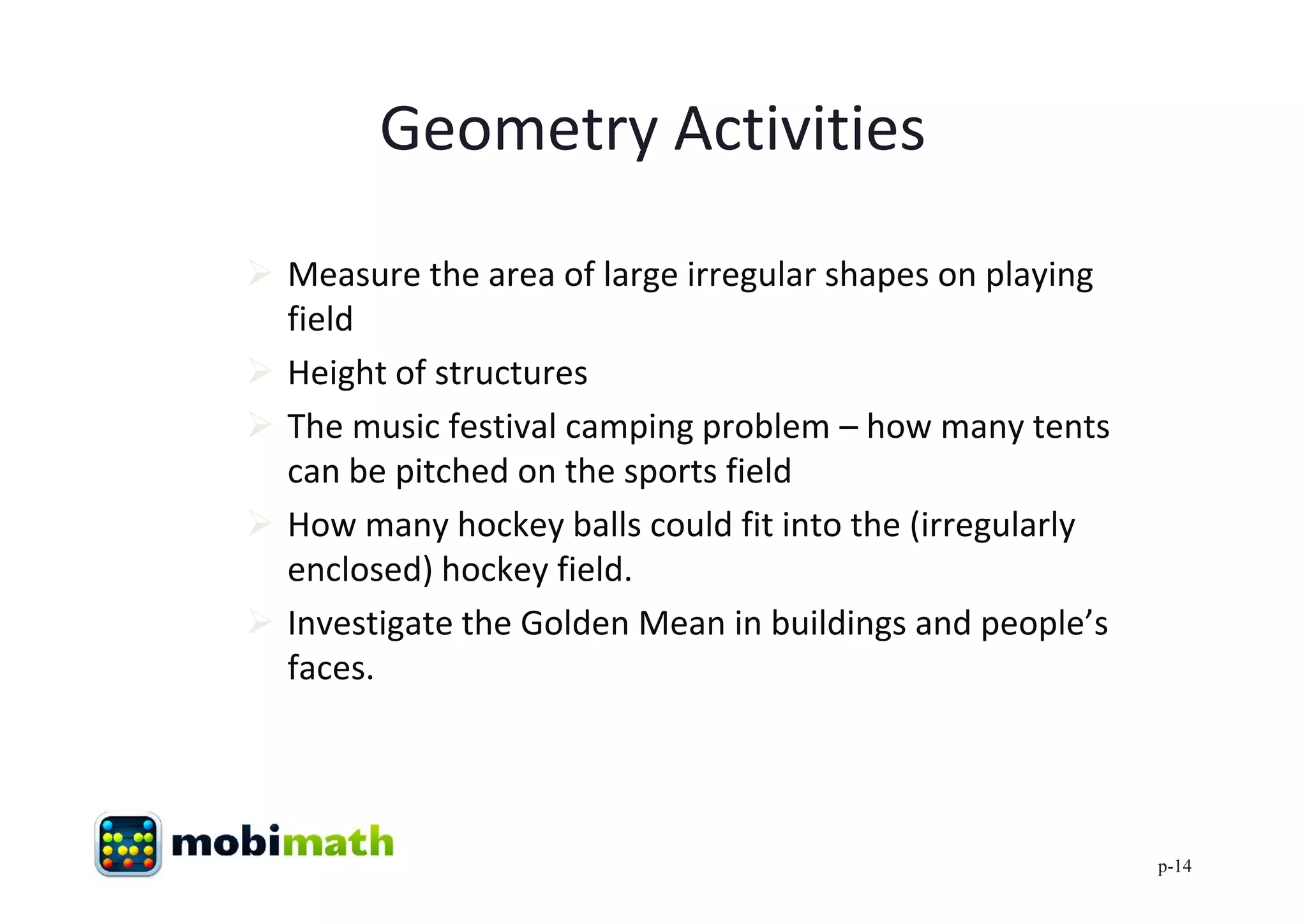
In School Trial

20 students, 5 activities, 2 hours per activity


                                                  p-13
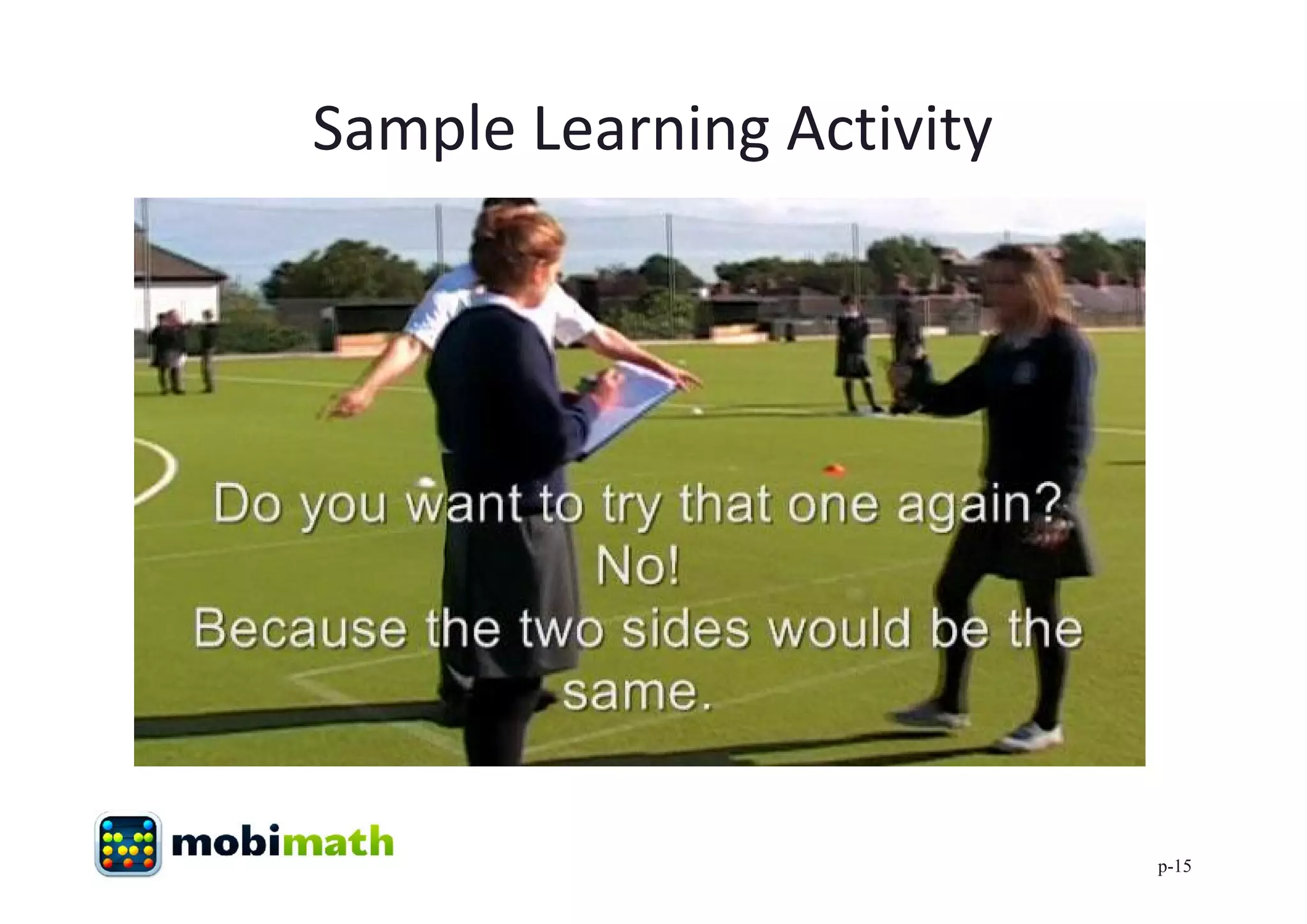
Geometry Activities
 Measure the area of large irregular shapes on playing
  field
 Height of structures
 The music festival camping problem – how many tents
  can be pitched on the sports field
 How many hockey balls could fit into the (irregularly
  enclosed) hockey field.
 Investigate the Golden Mean in buildings and people’s
  faces.


                                                          p-14
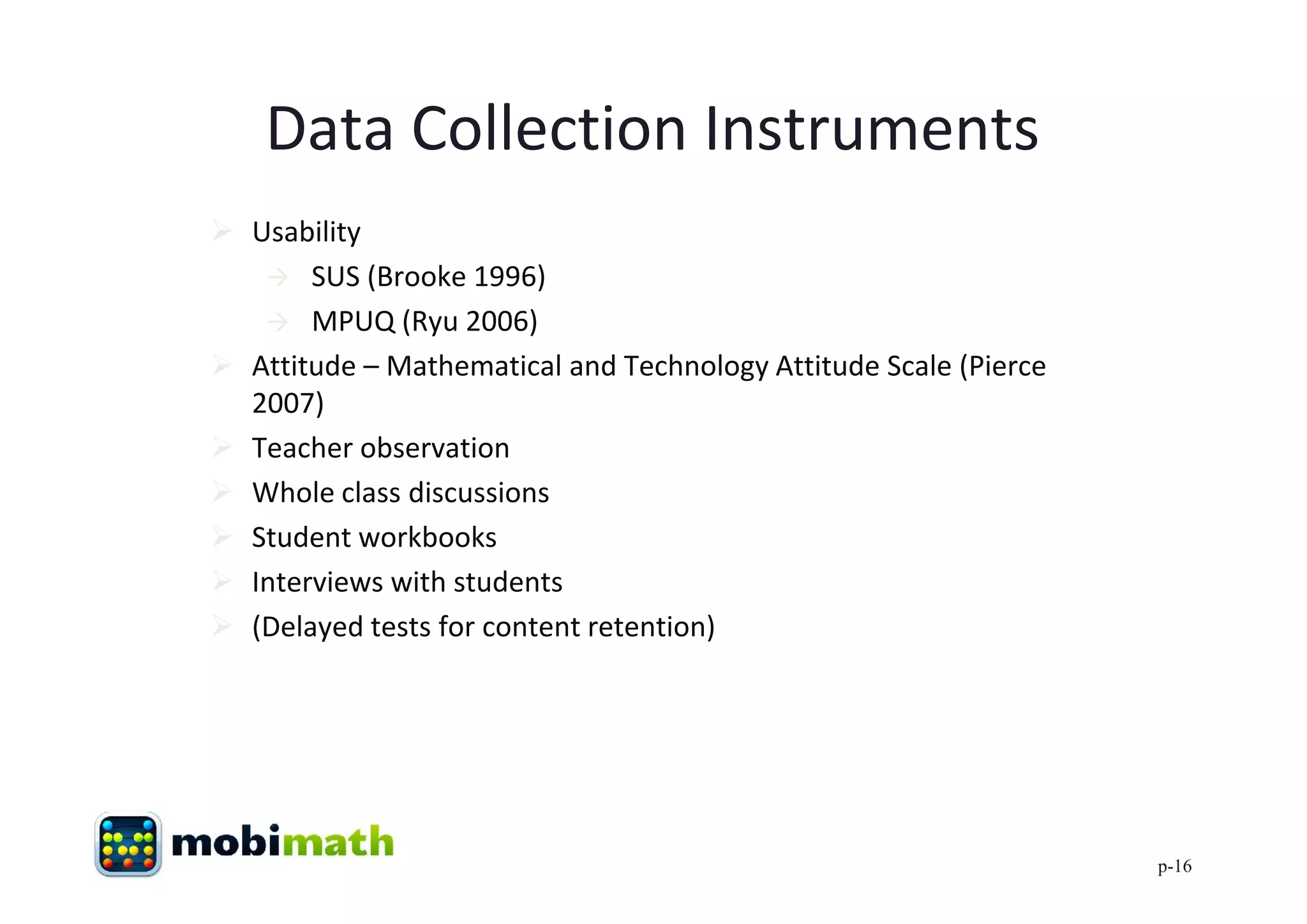
Sample Learning Activity


                           p-15
Data Collection Instruments
 Usability
    SUS (Brooke 1996)
    MPUQ (Ryu 2006)
 Attitude – Mathematical and Technology Attitude Scale (Pierce
  2007)
 Teacher observation
 Whole class discussions
 Student workbooks
 Interviews with students
 (Delayed tests for content retention)


                                                                  p-16
Sample Comments
  “You are involved in the question, you are actually doing something, you are more
  engaged”
 “If you were working from the textbook, you get into a rhythm of doing the same sums
  every time, but out there you have to think about it more.”
 ‘It’s weird the question was a trig problem. Like one minute I was using sin, cos, tan and
  the next minute I was working out the average distance reading on my calculator-that’s not
  trig. It was good to see how different types of maths links together!’

 “This is the way to do maths I felt I could calculate the height of anything”

 “We weren’t working from a book with pretend numbers; we were outside actually finding
  the numbers to solve the problem-it was more realistic this way”.
 “When you are doing it you can see it more clearly what it’s for rather than just working
  with triangles in the textbook.”
 “3 (problems tackled) outside (the classroom) was better than 10 in the book, because
  (with the book) you just repeat what you did rather than think about what you are doing.”
 “The hardest part was working out the way you had to do it....”


 ”It was funner but it wasn’t necessarily easier!”


                                                                                               p-17
Emerging Themes
   Exercising mathematical problem solving skills;
    ‘Real world’ mathematics awareness;
   Improved attitudes to mathematics;
   Smartphone affordances;
   Benefit of collaborative learning.


                                                      p-18
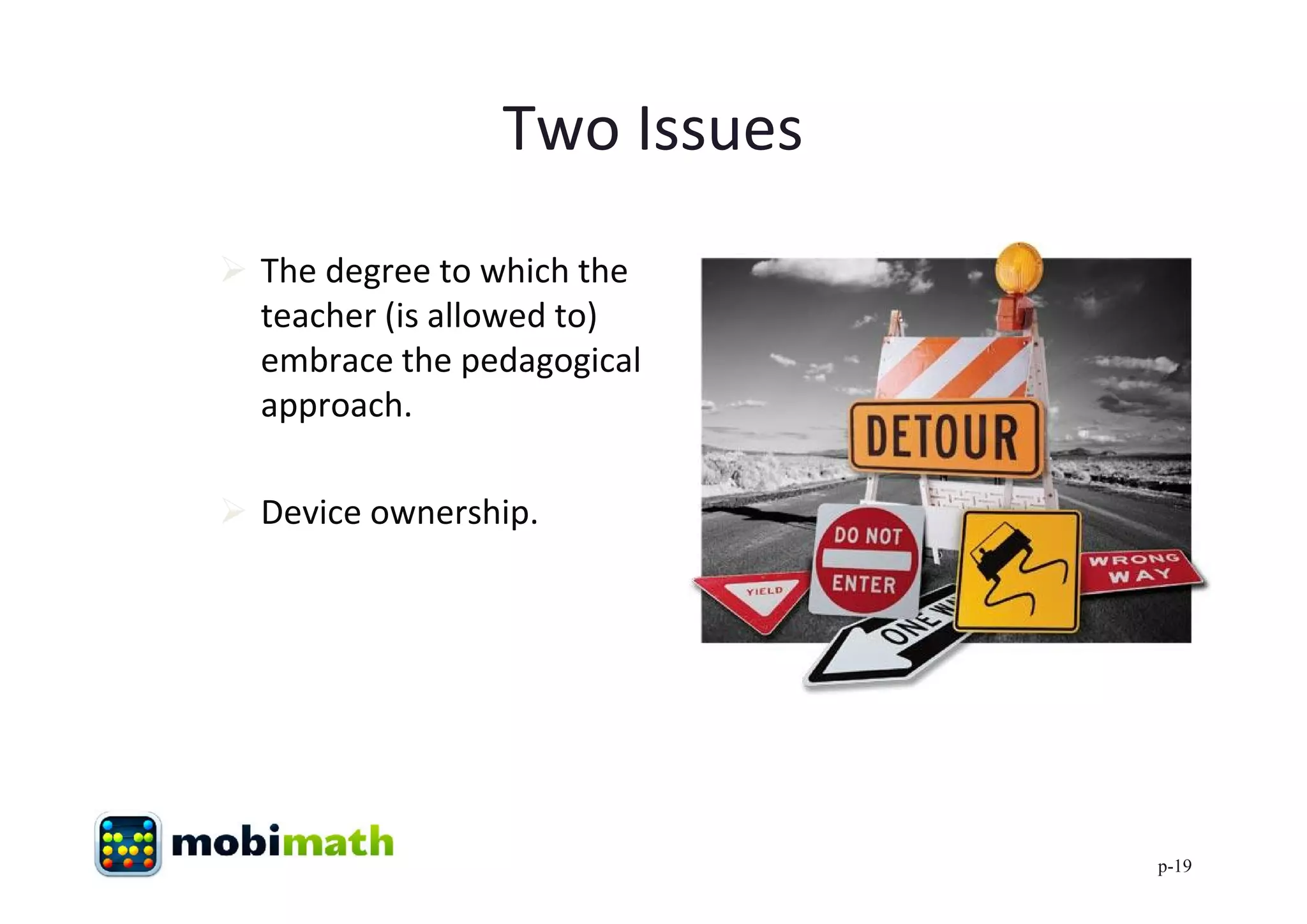
Two Issues
 The degree to which the
  teacher (is allowed to)
  embrace the pedagogical
  approach.

 Device ownership.


                             p-19
Selected Bibliography
 Brooke, J. (1996). "SUS: a "quick and dirty" usability scale". In P. W. Jordan, B. Thomas, B. A. Weerdmeester, & A. L. McClelland. Usability Evaluation in Industry.
  London: Taylor and Francis. http://www.usabilitynet.org/trump/documents/Suschapt.doc.
 Cobb, P., Yackel, E., & Wood, T. (1992). Constructivist Alternative To The Representational View Of Mind In Mathematics Education. Research in Mathematics
  Education, 23(1), 2-33.
 Conway, P. F., & Sloane, F. C. (2005). International Trends in Post-Primary Mathematics Education. Retrieved. from
  http://www.ncca.ie/uploadedfiles/mathsreview/intpaperoct.pdf
 Cuoco, A. (2001). Mathematics for Teaching. Notices of the American Mathematical Society, 48(2), 168-174.
 Daher, W. (2009). Students’ Perceptions of Learning Mathematics with Cellular Phones and Applets International Journal of Emerging Technologies in Learning,
  4(1).
 Ferrini-Mundy, J., & Schmidt, W. H. (2003). International Comparative Studies in Mathematics Education: Opportunities for Collaboration and Challenges for
  Researchers. Journal for Research in Mathematics Education, 36(3), 164-174.
 Goos, M. (2004). Learning Mathematics in a Classroom Community of Inquiry. Journal for Research in Mathematics Education, 35, 258-291.
 Lyons, M., Lynch, K., Close, S., Sheerin, E., & Boland, P. (2003). Inside classrooms : the teaching and learning of mathematics in social context. Dublin: Institute of
  Public Administration.
 Donald Norman, (1998) The Psychology of Everyday Things.
 Monaghan, J., & Sheryn, L. (2006). How do Secondary Teachers make Mathematics More Applicable. Journal of Mathematics in School(September 2006).
 Patten, B., Arnedillo Sánchez, I., N., Tangney, B. Designing collaborative, constructionist and contextual applications for handheld devices. Computers & Education,
  Volume 46, Issue 3, pages 294-308, April 2006.
 Pierce Robyn, Stacey Kaye, and Barkatsas Anastasios, A scale for monitoring students' attitudes to learning mathematics with technology. Computers & Education,
  2007, 48(2): p. 285-300.
 Papert, S. (1993). Mindstorms Children ,Computers and Powerful Ideas (2nd ed.). New York: Basic Books.
 Ryu, Y. S., and Smith-Jackon, T. L. 2006. Reliability and Validity of the Mobile Phone Usability Questionnaire (MPUQ). Journal of Usability Studies, 2, 1, 39--53.
 Tangney B., et al., MobiMaths: An approach to utilising smartphones in teaching mathematics, in Mlearn2010 - 9th world conference on mobile and contextual
  learning. 2010: Malta. p. 9-15.
 Voogt, J., & Pelgrum, H. (2005). ICT and curriculum change. Human Technology; an Interdisciplinary Journal on Humans in ICT Environments, 1(2), 157–175.
 Wijers, M., Jonker, V., Kerstens, K. (2008), MobileMath: the Phone, the Game and the Math 2nd European Conference on Game Based Learning, pp
   507-516.


                                                                                                                                                                     p-20

Cal11 Mobi Maths

  • 1.
    Contextualisation, collaboration, constructivismand smartphones for teaching mathematics Brendan Tangney, Patricia O’Hanlon, Stefan Weber, Elizabeth Oldham Centre for Research in IT in Education, School of Education and School of Computer Science & Statistics, Trinity College Dublin, Ireland David Knowles, Jennifer Munnelly, Ronan Watson National Digital Research Centre, Crane St, The Digital Hub, Dublin 8, Ireland /www.slideshare.net/tangney tangney@tcd.ie p-1
  • 2.
    Issues in MathEducation  An over emphasis on didactic teaching  A behaviourist approach to learning  Overemphasis on procedure  Emphasis on content over literacy  Decontextualisation  Focus on assessment  Teaching by non specialist teachers (Conway & Sloane, 2005; Lyons, Lynch, Close, Sheerin, & Boland, 2003; Papert, 1993; Blumenfield, Marx, Patrick, Krajcik, & Soloway, 1997) p-2
  • 3.
    How Many PeopleOn Grafton St?  Contextualised  Constructivist  Collaborative  (Patten et al, 2006) 1 3 2 p-3
  • 4.
  • 5.
  • 6.
  • 7.
    Research Agenda  Todevelop and validate the efficacy of an integrated smartphone based toolkit for the teaching of mathematics which follows a contextualised, constructivist, collaborative, philosophy.  Align the learning activities and supporting instructional material with the formal curriculum  1st Year of the Irish Secondary School system (~ 12-13 years old). p-7
  • 8.
    Modes of Use 1/2? 1/4? 1/8? 1/4! p-8
  • 9.
    Probability Tools Teacher Console- Sample screenshot of class collaboration p-9
  • 10.
    Geometry Tools  Measuredistance – outside (GPS)  Measure distance – inside (accelerometer)  Measure angle of elevation (accelerometer)  Measure angle of rotation (accelerometer)  Visual mapping tool (camera) p-10
  • 11.
  • 12.
    User View Number & Geometry Algebra Operation Common Functionality (voting, note taking etc) + Teacher console p-12
  • 13.
    In School Trial 20students, 5 activities, 2 hours per activity p-13
  • 14.
    Geometry Activities  Measurethe area of large irregular shapes on playing field  Height of structures  The music festival camping problem – how many tents can be pitched on the sports field  How many hockey balls could fit into the (irregularly enclosed) hockey field.  Investigate the Golden Mean in buildings and people’s faces. p-14
  • 15.
  • 16.
    Data Collection Instruments Usability  SUS (Brooke 1996)  MPUQ (Ryu 2006)  Attitude – Mathematical and Technology Attitude Scale (Pierce 2007)  Teacher observation  Whole class discussions  Student workbooks  Interviews with students  (Delayed tests for content retention) p-16
  • 17.
    Sample Comments  “You are involved in the question, you are actually doing something, you are more engaged”  “If you were working from the textbook, you get into a rhythm of doing the same sums every time, but out there you have to think about it more.”  ‘It’s weird the question was a trig problem. Like one minute I was using sin, cos, tan and the next minute I was working out the average distance reading on my calculator-that’s not trig. It was good to see how different types of maths links together!’  “This is the way to do maths I felt I could calculate the height of anything”  “We weren’t working from a book with pretend numbers; we were outside actually finding the numbers to solve the problem-it was more realistic this way”.  “When you are doing it you can see it more clearly what it’s for rather than just working with triangles in the textbook.”  “3 (problems tackled) outside (the classroom) was better than 10 in the book, because (with the book) you just repeat what you did rather than think about what you are doing.”  “The hardest part was working out the way you had to do it....”  ”It was funner but it wasn’t necessarily easier!” p-17
  • 18.
    Emerging Themes  Exercising mathematical problem solving skills;  ‘Real world’ mathematics awareness;  Improved attitudes to mathematics;  Smartphone affordances;  Benefit of collaborative learning. p-18
  • 19.
    Two Issues  Thedegree to which the teacher (is allowed to) embrace the pedagogical approach.  Device ownership. p-19
  • 20.
    Selected Bibliography  Brooke,J. (1996). "SUS: a "quick and dirty" usability scale". In P. W. Jordan, B. Thomas, B. A. Weerdmeester, & A. L. McClelland. Usability Evaluation in Industry. London: Taylor and Francis. http://www.usabilitynet.org/trump/documents/Suschapt.doc.  Cobb, P., Yackel, E., & Wood, T. (1992). Constructivist Alternative To The Representational View Of Mind In Mathematics Education. Research in Mathematics Education, 23(1), 2-33.  Conway, P. F., & Sloane, F. C. (2005). International Trends in Post-Primary Mathematics Education. Retrieved. from http://www.ncca.ie/uploadedfiles/mathsreview/intpaperoct.pdf  Cuoco, A. (2001). Mathematics for Teaching. Notices of the American Mathematical Society, 48(2), 168-174.  Daher, W. (2009). Students’ Perceptions of Learning Mathematics with Cellular Phones and Applets International Journal of Emerging Technologies in Learning, 4(1).  Ferrini-Mundy, J., & Schmidt, W. H. (2003). International Comparative Studies in Mathematics Education: Opportunities for Collaboration and Challenges for Researchers. Journal for Research in Mathematics Education, 36(3), 164-174.  Goos, M. (2004). Learning Mathematics in a Classroom Community of Inquiry. Journal for Research in Mathematics Education, 35, 258-291.  Lyons, M., Lynch, K., Close, S., Sheerin, E., & Boland, P. (2003). Inside classrooms : the teaching and learning of mathematics in social context. Dublin: Institute of Public Administration.  Donald Norman, (1998) The Psychology of Everyday Things.  Monaghan, J., & Sheryn, L. (2006). How do Secondary Teachers make Mathematics More Applicable. Journal of Mathematics in School(September 2006).  Patten, B., Arnedillo Sánchez, I., N., Tangney, B. Designing collaborative, constructionist and contextual applications for handheld devices. Computers & Education, Volume 46, Issue 3, pages 294-308, April 2006.  Pierce Robyn, Stacey Kaye, and Barkatsas Anastasios, A scale for monitoring students' attitudes to learning mathematics with technology. Computers & Education, 2007, 48(2): p. 285-300.  Papert, S. (1993). Mindstorms Children ,Computers and Powerful Ideas (2nd ed.). New York: Basic Books.  Ryu, Y. S., and Smith-Jackon, T. L. 2006. Reliability and Validity of the Mobile Phone Usability Questionnaire (MPUQ). Journal of Usability Studies, 2, 1, 39--53.  Tangney B., et al., MobiMaths: An approach to utilising smartphones in teaching mathematics, in Mlearn2010 - 9th world conference on mobile and contextual learning. 2010: Malta. p. 9-15.  Voogt, J., & Pelgrum, H. (2005). ICT and curriculum change. Human Technology; an Interdisciplinary Journal on Humans in ICT Environments, 1(2), 157–175.  Wijers, M., Jonker, V., Kerstens, K. (2008), MobileMath: the Phone, the Game and the Math 2nd European Conference on Game Based Learning, pp 507-516. p-20