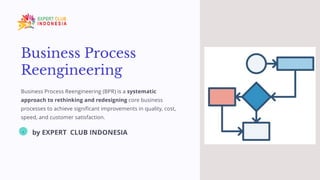
Business Process
Reengineering
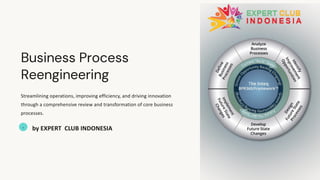
Business Process Reengineering (BPR) is a systematic
approach to rethinking and redesigning core business
processes to achieve significant improvements in quality, cost,
speed, and customer satisfaction.
EI
by EXPERT CLUB INDONESIA
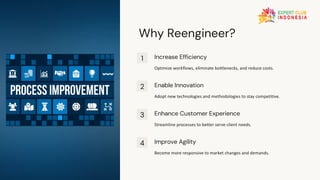
Why Reengineer?
1 Increase Efficiency
Optimize workflows, eliminate bottlenecks, and reduce costs.
2 Enable Innovation
Adopt new technologies and methodologies to stay competitive.
3 Enhance Customer Experience
Streamline processes to better serve client needs.
4 Improve Agility
Become more responsive to market changes and demands.
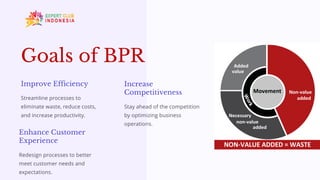
Goals of BPR
Improve Efficiency
Streamline processes to
eliminate waste, reduce costs,
and increase productivity.
Enhance Customer
Experience
Redesign processes to better
meet customer needs and
expectations.
Increase
Competitiveness
Stay ahead of the competition
by optimizing business
operations.
Key Principles of BPR
1 Focus on Processes
Examine end-to-end business workflows, not
just individual tasks.
2 Radical Redesign
Completely rethink processes rather than just
making incremental improvements.
3 Cross-Functional Collaboration
Involve stakeholders from different departments
to get a holistic view.
4 Customer-Centric Approach
Design processes to maximize value and
satisfaction for customers.
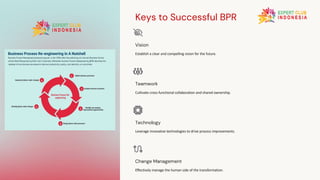
Keys to Successful BPR
Vision
Establish a clear and compelling vision for the future.
Teamwork
Cultivate cross-functional collaboration and shared ownership.
Technology
Leverage innovative technologies to drive process improvements.
Change Management
Effectively manage the human side of the transformation.
Business Process
Reengineering
Streamlining operations, improving efficiency, and driving innovation
through a comprehensive review and transformation of core business
processes.
EI
by EXPERT CLUB INDONESIA
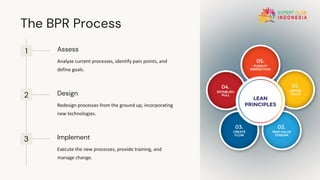
The BPR Process
1 Assess
Analyze current processes, identify pain points, and
define goals.
2 Design
Redesign processes from the ground up, incorporating
new technologies.
3 Implement
Execute the new processes, provide training, and
manage change.
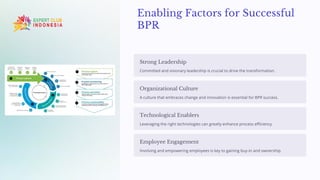
Enabling Factors for Successful
BPR
Strong Leadership
Committed and visionary leadership is crucial to drive the transformation.
Organizational Culture
A culture that embraces change and innovation is essential for BPR success.
Technological Enablers
Leveraging the right technologies can greatly enhance process efficiency.
Employee Engagement
Involving and empowering employees is key to gaining buy-in and ownership.
Challenges in BPR
Resistance to Change
People may be reluctant to adopt new processes and ways of working.
Budget Constraints
BPR initiatives can require significant upfront investment and resources.
Cross-Functional Coordination
Aligning stakeholders from different departments can be complex.
Lack of Data
Insufficient data or insights can hinder the redesign of processes.
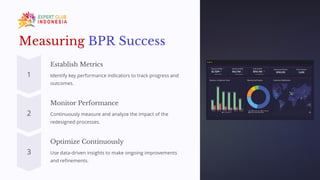
Measuring BPR Success
Establish Metrics
Identify key performance indicators to track progress and
outcomes.
Monitor Performance
Continuously measure and analyze the impact of the
redesigned processes.
Optimize Continuously
Use data-driven insights to make ongoing improvements
and refinements.
Critical Success Factors
Executive Commitment
Strong leadership and buy-in is
crucial for successful transformation.
Cross-Functional
Collaboration
Engage stakeholders across the
organization for a holistic view.
Employee Empowerment
Empower employees to own and
drive the change process.
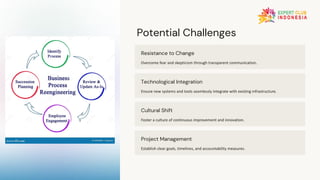
Potential Challenges
Resistance to Change
Overcome fear and skepticism through transparent communication.
Technological Integration
Ensure new systems and tools seamlessly integrate with existing infrastructure.
Cultural Shift
Foster a culture of continuous improvement and innovation.
Project Management
Establish clear goals, timelines, and accountability measures.
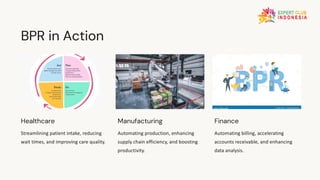
BPR in Action
Healthcare
Streamlining patient intake, reducing
wait times, and improving care quality.
Manufacturing
Automating production, enhancing
supply chain efficiency, and boosting
productivity.
Finance
Automating billing, accelerating
accounts receivable, and enhancing
data analysis.
Conclusion
BPR is a
powerful
approach
to transform
business
operations
and drive long-
term
competitiveness.
By rethinking
processes
and
leveraging the
right tools
and
technologies,
organizations
can
achieve
significant
improvements
in efficiency,
customer
experience,
and overall
business
performance.
Business Process Re Engineering - Intro ECI.pdf

Business Process Re Engineering - Intro ECI.pdf

  • 1.
    Business Process Reengineering Business ProcessReengineering (BPR) is a systematic approach to rethinking and redesigning core business processes to achieve significant improvements in quality, cost, speed, and customer satisfaction. EI by EXPERT CLUB INDONESIA
  • 2.
    Why Reengineer? 1 IncreaseEfficiency Optimize workflows, eliminate bottlenecks, and reduce costs. 2 Enable Innovation Adopt new technologies and methodologies to stay competitive. 3 Enhance Customer Experience Streamline processes to better serve client needs. 4 Improve Agility Become more responsive to market changes and demands.
  • 3.
    Goals of BPR ImproveEfficiency Streamline processes to eliminate waste, reduce costs, and increase productivity. Enhance Customer Experience Redesign processes to better meet customer needs and expectations. Increase Competitiveness Stay ahead of the competition by optimizing business operations.
  • 4.
    Key Principles ofBPR 1 Focus on Processes Examine end-to-end business workflows, not just individual tasks. 2 Radical Redesign Completely rethink processes rather than just making incremental improvements. 3 Cross-Functional Collaboration Involve stakeholders from different departments to get a holistic view. 4 Customer-Centric Approach Design processes to maximize value and satisfaction for customers.
  • 5.
    Keys to SuccessfulBPR Vision Establish a clear and compelling vision for the future. Teamwork Cultivate cross-functional collaboration and shared ownership. Technology Leverage innovative technologies to drive process improvements. Change Management Effectively manage the human side of the transformation.
  • 6.
    Business Process Reengineering Streamlining operations,improving efficiency, and driving innovation through a comprehensive review and transformation of core business processes. EI by EXPERT CLUB INDONESIA
  • 7.
    The BPR Process 1Assess Analyze current processes, identify pain points, and define goals. 2 Design Redesign processes from the ground up, incorporating new technologies. 3 Implement Execute the new processes, provide training, and manage change.
  • 8.
    Enabling Factors forSuccessful BPR Strong Leadership Committed and visionary leadership is crucial to drive the transformation. Organizational Culture A culture that embraces change and innovation is essential for BPR success. Technological Enablers Leveraging the right technologies can greatly enhance process efficiency. Employee Engagement Involving and empowering employees is key to gaining buy-in and ownership.
  • 9.
    Challenges in BPR Resistanceto Change People may be reluctant to adopt new processes and ways of working. Budget Constraints BPR initiatives can require significant upfront investment and resources. Cross-Functional Coordination Aligning stakeholders from different departments can be complex. Lack of Data Insufficient data or insights can hinder the redesign of processes.
  • 10.
    Measuring BPR Success EstablishMetrics Identify key performance indicators to track progress and outcomes. Monitor Performance Continuously measure and analyze the impact of the redesigned processes. Optimize Continuously Use data-driven insights to make ongoing improvements and refinements.
  • 11.
    Critical Success Factors ExecutiveCommitment Strong leadership and buy-in is crucial for successful transformation. Cross-Functional Collaboration Engage stakeholders across the organization for a holistic view. Employee Empowerment Empower employees to own and drive the change process.
  • 12.
    Potential Challenges Resistance toChange Overcome fear and skepticism through transparent communication. Technological Integration Ensure new systems and tools seamlessly integrate with existing infrastructure. Cultural Shift Foster a culture of continuous improvement and innovation. Project Management Establish clear goals, timelines, and accountability measures.
  • 13.
    BPR in Action Healthcare Streamliningpatient intake, reducing wait times, and improving care quality. Manufacturing Automating production, enhancing supply chain efficiency, and boosting productivity. Finance Automating billing, accelerating accounts receivable, and enhancing data analysis.
  • 14.
    Conclusion BPR is a powerful approach totransform business operations and drive long- term competitiveness. By rethinking processes and leveraging the right tools and technologies, organizations can achieve significant improvements in efficiency, customer experience, and overall business performance.