> > > > > > > >
 Explain the concepts of business ethics and social
responsibility.
 Analyze and judge common ethical dilemmas in the
workplace using case studies.
 Identify the factors that influence ethical and unethical
business practices.
 Describe the stages in the development of ethical
standards.
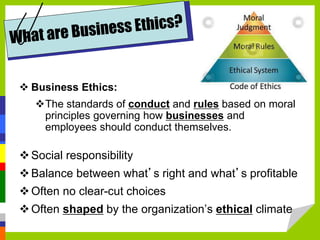
 Business Ethics:
The standards of conduct and rules based on moral
principles governing how businesses and
employees should conduct themselves.
Social responsibility
Balance between what’s right and what’s profitable
Often no clear-cut choices
Often shaped by the organization’s ethical climate
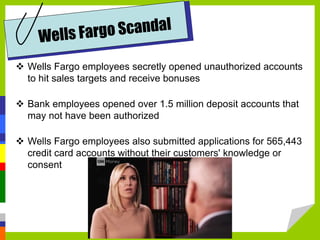
 Wells Fargo employees secretly opened unauthorized accounts
to hit sales targets and receive bonuses
 Bank employees opened over 1.5 million deposit accounts that
may not have been authorized
 Wells Fargo employees also submitted applications for 565,443
credit card accounts without their customers' knowledge or
consent
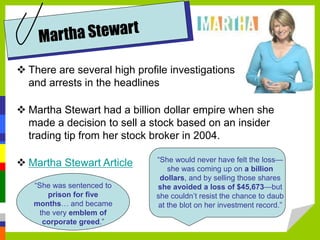
 There are several high profile investigations
and arrests in the headlines
 Martha Stewart had a billion dollar empire when she
made a decision to sell a stock based on an insider
trading tip from her stock broker in 2004.
 Martha Stewart Article “She would never have felt the loss—
she was coming up on a billion
dollars, and by selling those shares
she avoided a loss of $45,673—but
she couldn’t resist the chance to daub
at the blot on her investment record.”
“She was sentenced to
prison for five
months… and became
the very emblem of
corporate greed.”
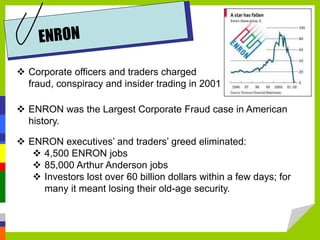
 Corporate officers and traders charged with
fraud, conspiracy and insider trading in 2001
 ENRON was the Largest Corporate Fraud case in American
history.
 ENRON executives’ and traders’ greed eliminated:
 4,500 ENRON jobs
 85,000 Arthur Anderson jobs
 Investors lost over 60 billion dollars within a few days; for
many it meant losing their old-age security.
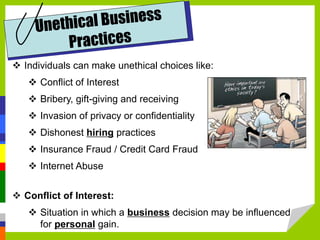
 Individuals can make unethical choices like:
 Conflict of Interest
 Bribery, gift-giving and receiving
 Invasion of privacy or confidentiality
 Dishonest hiring practices
 Insurance Fraud / Credit Card Fraud
 Internet Abuse
 Conflict of Interest:
 Situation in which a business decision may be influenced
for personal gain.
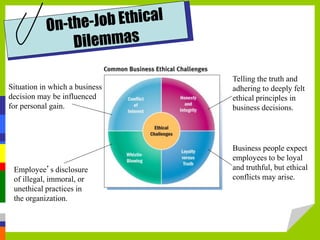
Situation in which a business
decision may be influenced
for personal gain.
Telling the truth and
adhering to deeply felt
ethical principles in
business decisions.
Business people expect
employees to be loyal
and truthful, but ethical
conflicts may arise.
Employee’s disclosure
of illegal, immoral, or
unethical practices in
the organization.
 Code of Ethics/Conduct:
 A formal set of guidelines for maintaining ethics in the
workplace.
 Codes of Ethics cannot detail a solution for every ethical
situation, so corporations provide training in ethical reasoning
along with a Code of Ethics.
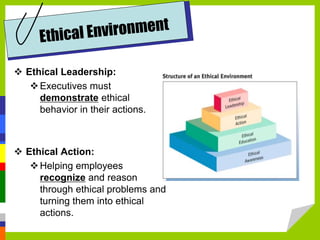
 Ethical Leadership:
Executives must
demonstrate ethical
behavior in their actions.
 Ethical Action:
Helping employees
recognize and reason
through ethical problems and
turning them into ethical
actions.
https://www.youtube.com/watch?v=lnmvXSYt98c
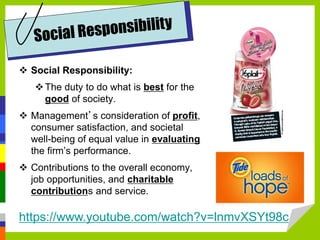
 Social Responsibility:
The duty to do what is best for the
good of society.
 Management’s consideration of profit,
consumer satisfaction, and societal
well-being of equal value in evaluating
the firm’s performance.
 Contributions to the overall economy,
job opportunities, and charitable
contributions and service.
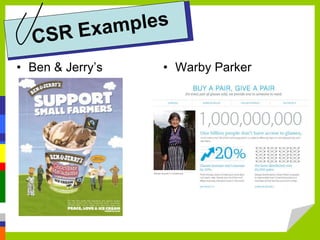
• Ben & Jerry’s • Warby Parker
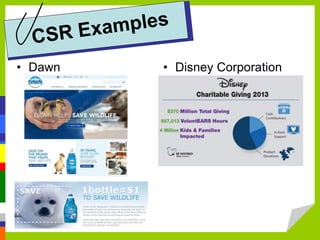
• Dawn • Disney Corporation
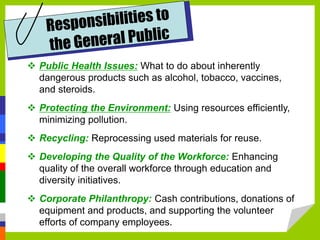
 Public Health Issues: What to do about inherently
dangerous products such as alcohol, tobacco, vaccines,
and steroids.
 Protecting the Environment: Using resources efficiently,
minimizing pollution.
 Recycling: Reprocessing used materials for reuse.
 Developing the Quality of the Workforce: Enhancing
quality of the overall workforce through education and
diversity initiatives.
 Corporate Philanthropy: Cash contributions, donations of
equipment and products, and supporting the volunteer
efforts of company employees.
 The Right to Be Safe: Safe operation of products, avoiding
product liability.
 The Right to Be Informed: Avoiding false or misleading
advertising and providing effective customer service.
 The Right to Choose: Ability of consumers to choose the
products and services they want.
 The Right to Be Heard: Ability of consumers to
express legitimate complaints to the appropriate parties.
 Workplace Safety: Monitored by
(OSHA) Occupational Safety and
Health Administration.
 Quality-of-Life Issues:
Balancing work and family
through flexible work schedules,
subsidized child care, and
regulation such as the Family
and Medical Leave Act of 1993.
 Ensuring Equal Opportunity
on the Job: Providing equal
opportunities to all employees
without discrimination; many
aspects regulated by law.
 US Equal Employment
Opportunity Commission
(EEOC): Discrimination by
Type protected by EEOC -
Protects workers against many
different types of
discrimination.
 Sexual Harassment and
Sexism: Avoiding unwelcome
actions of a sexual nature;
equal pay for equal work
without regard to gender.
 Obligation to make profits for shareholders.
 Expectation of ethical and moral behavior.
 Investors protected by regulation by the Securities and
Exchange Commission and state regulations.
We will go to the computer lab to look at
three different Business Ethics Case
Studies.
You will use the website provided to read
the case studies and answer the following
questions:
1. What is the ethical issue?
2. What ethical action should be taken?
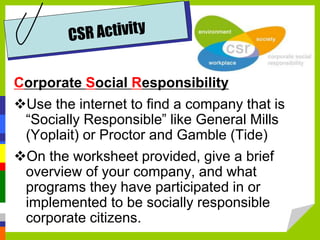
Corporate Social Responsibility
Use the internet to find a company that is
“Socially Responsible” like General Mills
(Yoplait) or Proctor and Gamble (Tide)
On the worksheet provided, give a brief
overview of your company, and what
programs they have participated in or
implemented to be socially responsible
corporate citizens.

Business Ethics.ppt

  • 1.
    > > >> > > > >
  • 2.
     Explain theconcepts of business ethics and social responsibility.  Analyze and judge common ethical dilemmas in the workplace using case studies.  Identify the factors that influence ethical and unethical business practices.  Describe the stages in the development of ethical standards.
  • 3.
     Business Ethics: Thestandards of conduct and rules based on moral principles governing how businesses and employees should conduct themselves. Social responsibility Balance between what’s right and what’s profitable Often no clear-cut choices Often shaped by the organization’s ethical climate
  • 4.
     Wells Fargoemployees secretly opened unauthorized accounts to hit sales targets and receive bonuses  Bank employees opened over 1.5 million deposit accounts that may not have been authorized  Wells Fargo employees also submitted applications for 565,443 credit card accounts without their customers' knowledge or consent
  • 5.
     There areseveral high profile investigations and arrests in the headlines  Martha Stewart had a billion dollar empire when she made a decision to sell a stock based on an insider trading tip from her stock broker in 2004.  Martha Stewart Article “She would never have felt the loss— she was coming up on a billion dollars, and by selling those shares she avoided a loss of $45,673—but she couldn’t resist the chance to daub at the blot on her investment record.” “She was sentenced to prison for five months… and became the very emblem of corporate greed.”
  • 6.
     Corporate officersand traders charged with fraud, conspiracy and insider trading in 2001  ENRON was the Largest Corporate Fraud case in American history.  ENRON executives’ and traders’ greed eliminated:  4,500 ENRON jobs  85,000 Arthur Anderson jobs  Investors lost over 60 billion dollars within a few days; for many it meant losing their old-age security.
  • 7.
     Individuals canmake unethical choices like:  Conflict of Interest  Bribery, gift-giving and receiving  Invasion of privacy or confidentiality  Dishonest hiring practices  Insurance Fraud / Credit Card Fraud  Internet Abuse  Conflict of Interest:  Situation in which a business decision may be influenced for personal gain.
  • 8.
    Situation in whicha business decision may be influenced for personal gain. Telling the truth and adhering to deeply felt ethical principles in business decisions. Business people expect employees to be loyal and truthful, but ethical conflicts may arise. Employee’s disclosure of illegal, immoral, or unethical practices in the organization.
  • 9.
     Code ofEthics/Conduct:  A formal set of guidelines for maintaining ethics in the workplace.  Codes of Ethics cannot detail a solution for every ethical situation, so corporations provide training in ethical reasoning along with a Code of Ethics.
  • 10.
     Ethical Leadership: Executivesmust demonstrate ethical behavior in their actions.  Ethical Action: Helping employees recognize and reason through ethical problems and turning them into ethical actions.
  • 11.
    https://www.youtube.com/watch?v=lnmvXSYt98c  Social Responsibility: Theduty to do what is best for the good of society.  Management’s consideration of profit, consumer satisfaction, and societal well-being of equal value in evaluating the firm’s performance.  Contributions to the overall economy, job opportunities, and charitable contributions and service.
  • 12.
    • Ben &Jerry’s • Warby Parker
  • 13.
    • Dawn •Disney Corporation
  • 14.
     Public HealthIssues: What to do about inherently dangerous products such as alcohol, tobacco, vaccines, and steroids.  Protecting the Environment: Using resources efficiently, minimizing pollution.  Recycling: Reprocessing used materials for reuse.  Developing the Quality of the Workforce: Enhancing quality of the overall workforce through education and diversity initiatives.  Corporate Philanthropy: Cash contributions, donations of equipment and products, and supporting the volunteer efforts of company employees.
  • 15.
     The Rightto Be Safe: Safe operation of products, avoiding product liability.  The Right to Be Informed: Avoiding false or misleading advertising and providing effective customer service.  The Right to Choose: Ability of consumers to choose the products and services they want.  The Right to Be Heard: Ability of consumers to express legitimate complaints to the appropriate parties.
  • 16.
     Workplace Safety:Monitored by (OSHA) Occupational Safety and Health Administration.  Quality-of-Life Issues: Balancing work and family through flexible work schedules, subsidized child care, and regulation such as the Family and Medical Leave Act of 1993.  Ensuring Equal Opportunity on the Job: Providing equal opportunities to all employees without discrimination; many aspects regulated by law.  US Equal Employment Opportunity Commission (EEOC): Discrimination by Type protected by EEOC - Protects workers against many different types of discrimination.  Sexual Harassment and Sexism: Avoiding unwelcome actions of a sexual nature; equal pay for equal work without regard to gender.
  • 17.
     Obligation tomake profits for shareholders.  Expectation of ethical and moral behavior.  Investors protected by regulation by the Securities and Exchange Commission and state regulations.
  • 18.
    We will goto the computer lab to look at three different Business Ethics Case Studies. You will use the website provided to read the case studies and answer the following questions: 1. What is the ethical issue? 2. What ethical action should be taken?
  • 19.
    Corporate Social Responsibility Usethe internet to find a company that is “Socially Responsible” like General Mills (Yoplait) or Proctor and Gamble (Tide) On the worksheet provided, give a brief overview of your company, and what programs they have participated in or implemented to be socially responsible corporate citizens.