Bus Depot Design
Guidelines
SGArchitects
November, 2016
The need …..
CURRENT SCENARIO
• STUs carry approx. 70 million passengers everyday
• 20 to 40% of all vehicular trips in cities are made by buses
• Public bus fleets haven’t been augmented for two decades
• Ridership declining rapidly due to acute shortage in fleet
and supporting infrastructure like terminals & depots
DESIRED SITUATION
• Double the market share of bus systems by 2025 (UITP)
KEY BARRIERS
• The limited funding available is mostly directed towards
fleet augmentation – support infrastructure ignored
• Lack of capacity in STUs leading to improper planning and
execution of PPP projects
‘Bus Depot Design Guideline’ aimed to provide
capacity building support to STUs
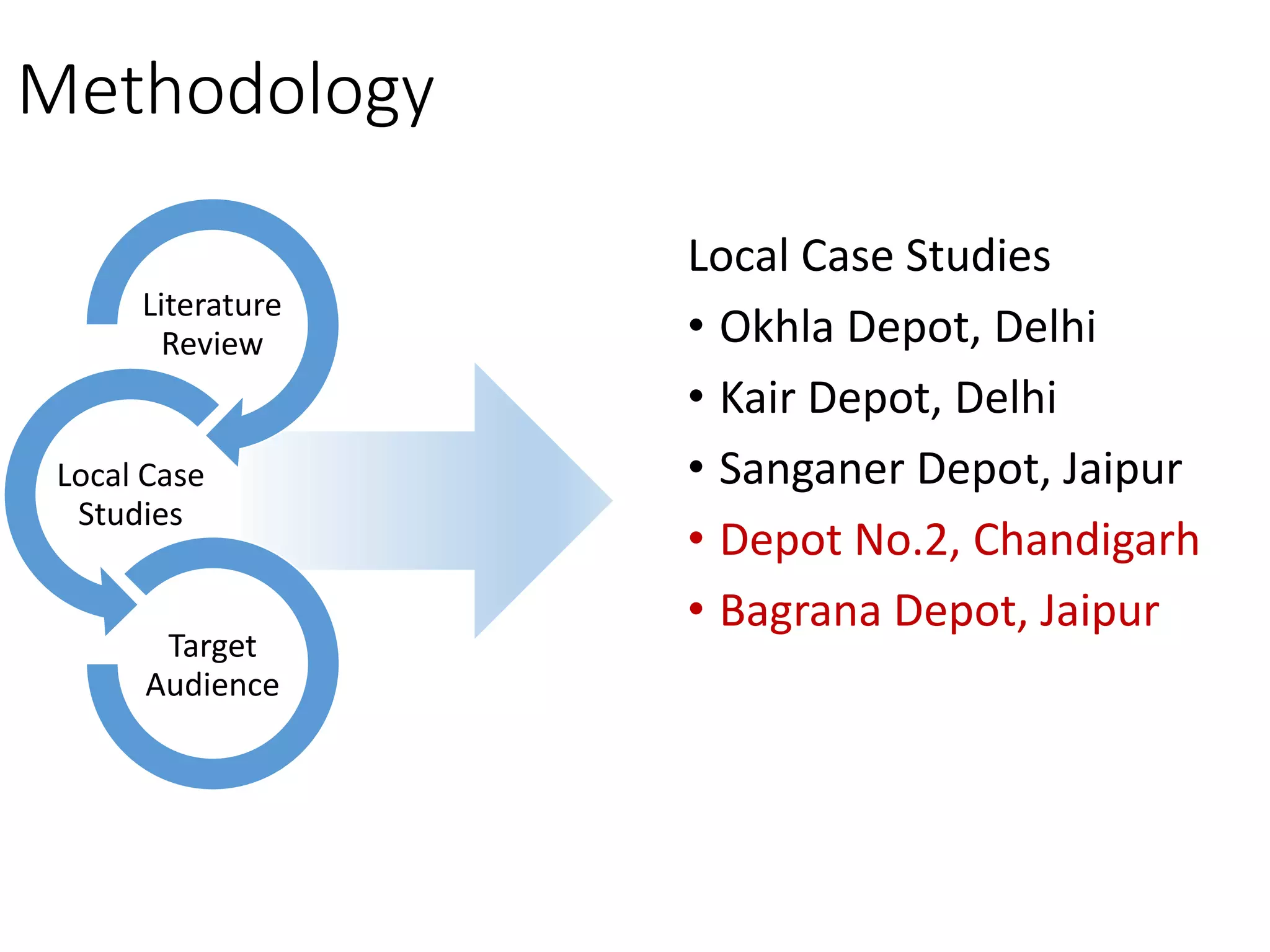
Methodology
Literature
Review
Local Case
Studies
Target
Audience
Local Case Studies
• Okhla Depot, Delhi
• Kair Depot, Delhi
• Sanganer Depot, Jaipur
• Depot No.2, Chandigarh
• Bagrana Depot, Jaipur
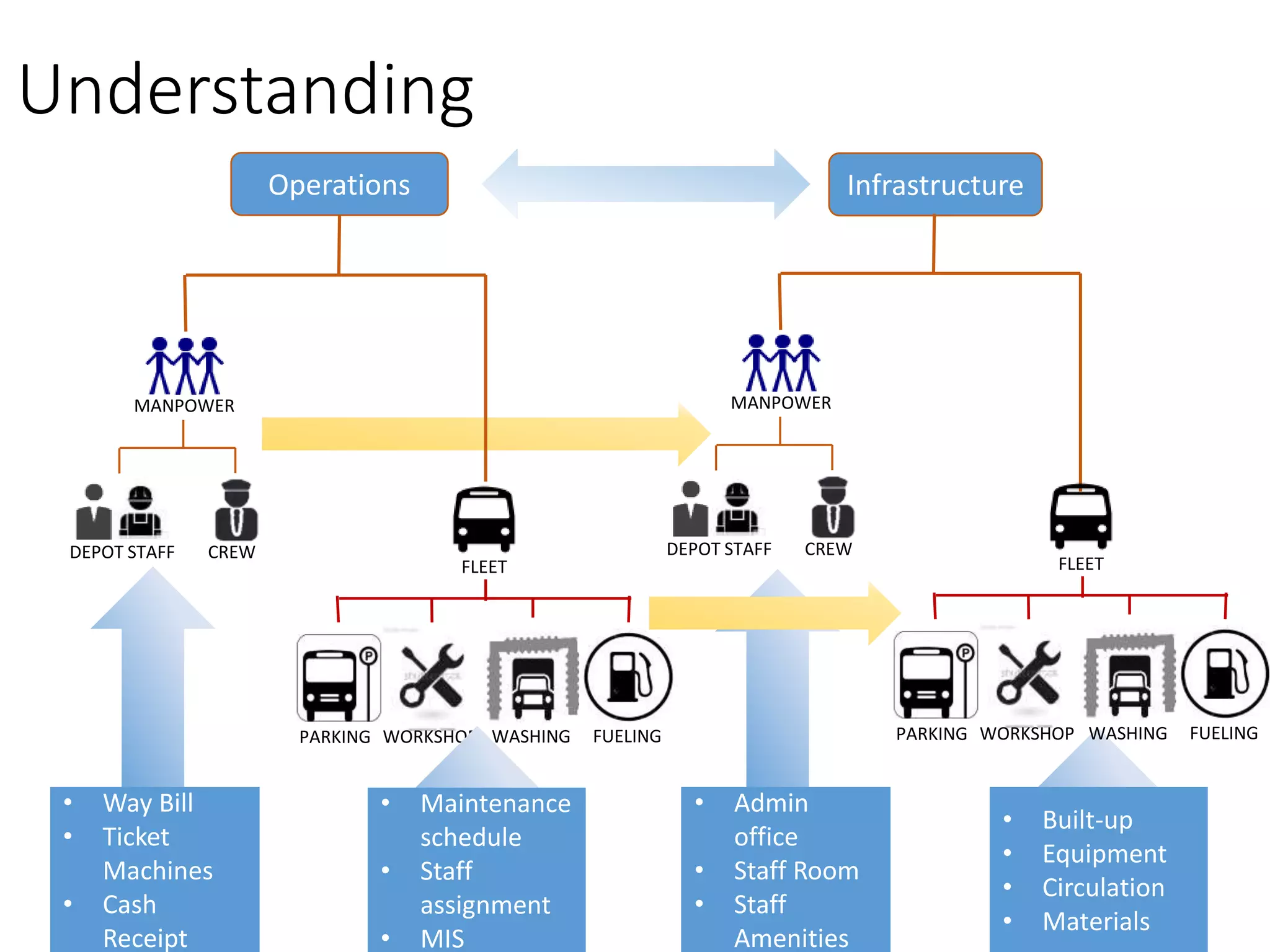
Understanding
Operations Infrastructure
MANPOWER
FLEET
DEPOT STAFF CREW
PARKING WORKSHOP WASHING FUELING
• Admin
office
• Staff Room
• Staff
Amenities
• Maintenance
schedule
• Staff
assignment
• MIS
• Built-up
• Equipment
• Circulation
• Materials
MANPOWER
FLEET
DEPOT STAFF CREW
PARKING WORKSHOP WASHING FUELING
• Way Bill
• Ticket
Machines
• Cash
Receipt
Content Depot Design Guideline
• Planning
• Design Aspects
• Design Illustrations
• Financing
Demand
• Fleet
Size
Functional
Requirements
• Manpower
• Infra.
• Preventive
Maint.
• Breakdown
• Unit Area
Requirement
• Layout
• Circulation
Functional
Area
Requirement
Site Layout,
Area & Cost
Requirement
Planning Functional Requirements
A
B
In shedding Process
Conductor
Driver
C
D
Conductor
Driver
Out shedding Process
Driver and Conductor Activities
In shedding Process
(Conductors and Drivers )
Out shedding Process
(Conductors and Drivers )
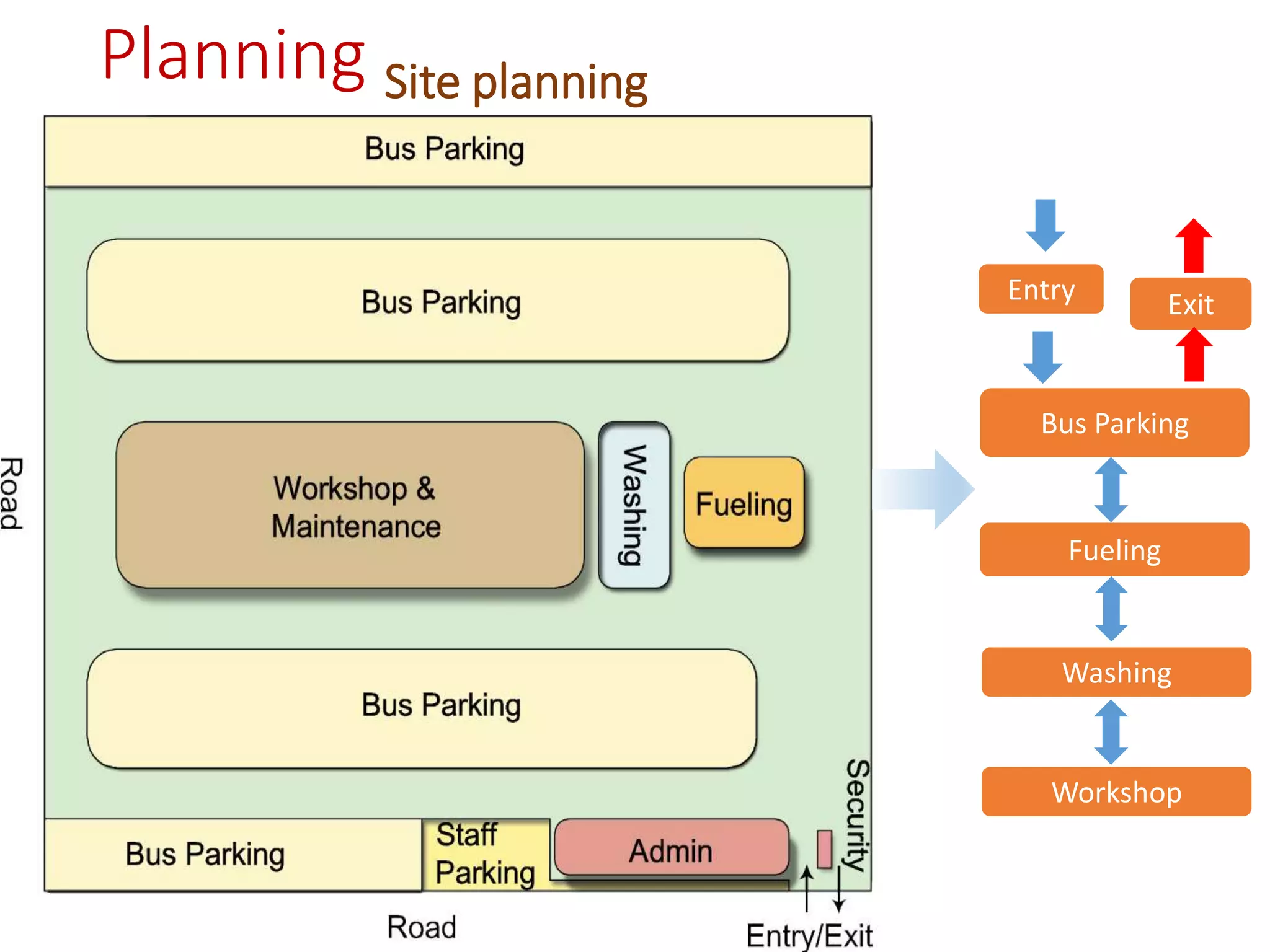
Planning Site planning
Bus Parking
Fueling
Washing
Workshop
ExitEntry
Design Aspects Design Considerations
• Differently Abled Access
• Security
• Material and Finishes
• Building Systems
• Green Concepts
• Equipment's and specifications
Building systems and Green Concepts
Equipment's
Workshop Equipment's Prefabricated Pits
Diaphragm Pumps Air Compressor
Wheel Alignment Machine
Washing Equipment Fueling Equipment
Design Aspects Design Standards
• Entry and Exit
• Parking
• Fuelling
• Washing
• Workshop
• Storage areas
Bus Parking Bay Detail
Fueling Area Detail Washing Area Detail
Design Aspects Functional & Spatial Requirements
• Entry and Exit
• Parking
• Fuelling
• Washing
• Workshop
• Storage areas
Fueling area
Avg. time/bus
for fueling /
dispenser (min)
No. of buses /
hour/dispenser
Daily
working
hours
Catering
capacity/
dispenser
(for 8 hrs.) (a)
No. of
dispensers
required for
diesel buses
[per 100 buses]
(total buses/a)
5min 12 buses 8hrs 96 buses 100 / 96
= 1
Dispenser Island area 2 sq.m (2m x 1m)
[Minimum]
Other requirements for fueling area
Particulars Area
Administration Office 12 sq.m
Staff Office 15 sq.m
Toilet 9 sq.m
Storage 20 sq.m
Underground tank Capacity (100
buses)
13200 gallons
Total km/bus/day 240 km
Litre consume/day/bus 160 litre
Functional & Spatial
Requirements for Fueling
area is provided in tabular
format with diagram
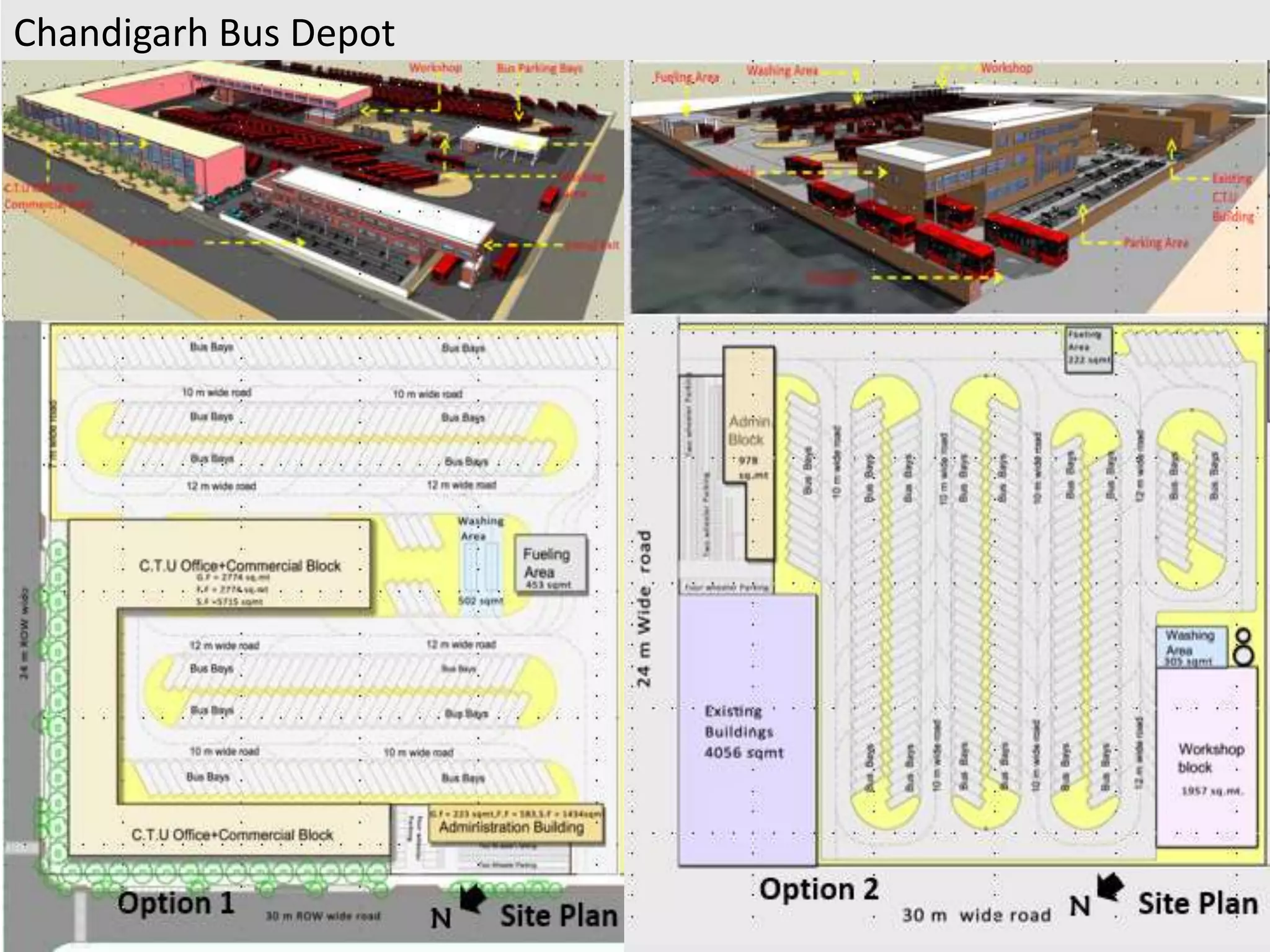
Chandigarh Bus Depot
Bagrana Bus Depot, Jaipur
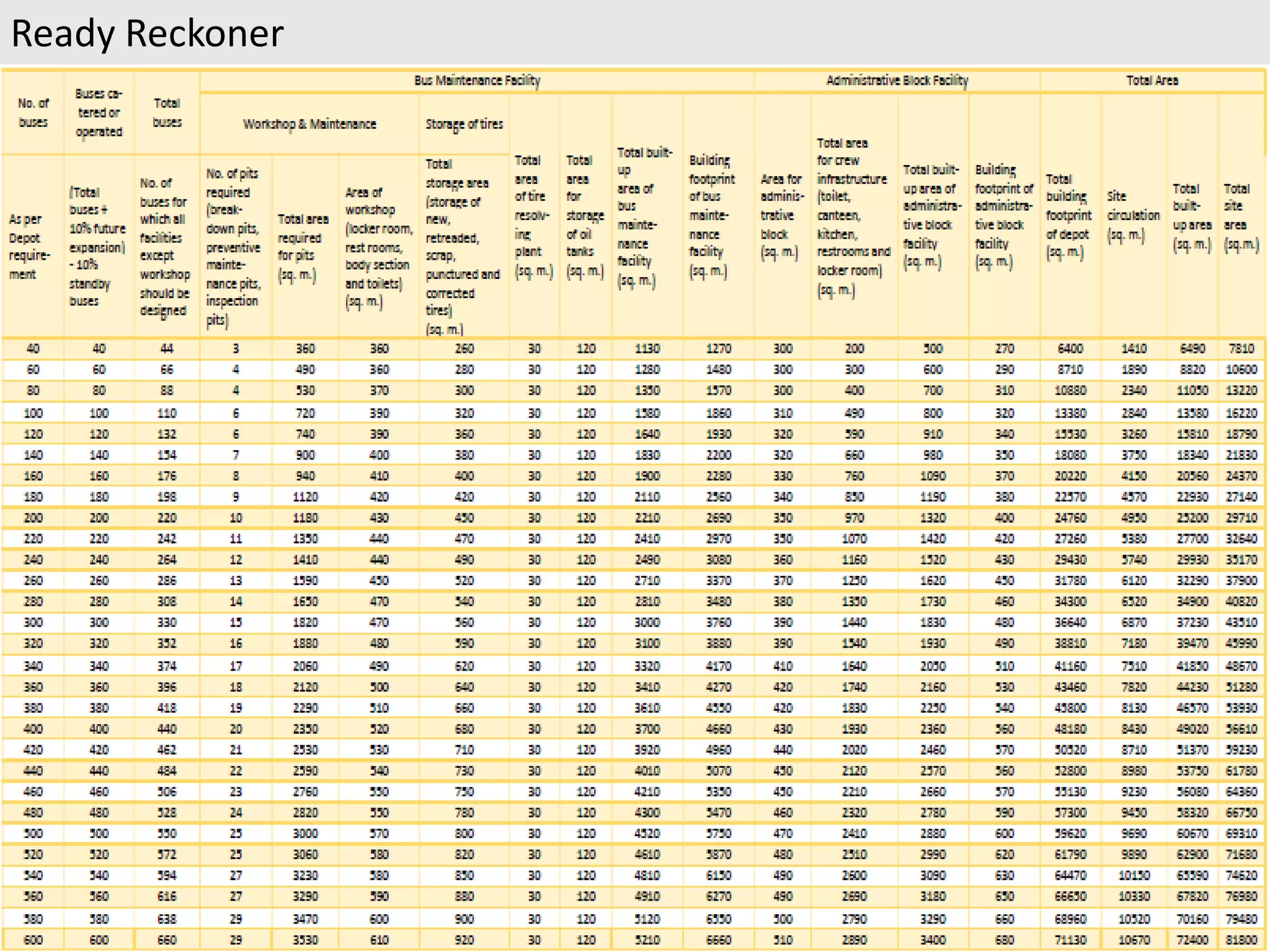
Ready Reckoner
Financing Depots
Funding Mechanism
•Authority acquires land, provides specifications for the design and layout of the Bus Depot, FAR,
product mix
•Hires a private player to construct the BD, operate it over the concession period and then transfer it
to the Authority
•Construction and operational costs borne by private player, revenues accrue to the private player
BOT model
Cost and Revenue Generation.
 Land as an Asset – Commercial Spaces, Parking lots, Parking rentals from the
private operators.
 Revised Institutional arrangements - Creation of dedicated Depot funds
through SPV
 Reducing tax burdens such as relaxation on property tax etc.
 Controlling prodigality through depot operations – Reducing Cost of
operations, Dead Mileages,
 Increasing fuel Efficiency and Inducing driver trainings
Build Operate Transfer(BOT)Private Funding
Public funding
Concession Period – 25 -30 years
 STU sole funder,
operator &Developer
 Involves long technical
O&M Component
 Lack Of funds and
support
 Lack of attractiveness
Findings
0
50
100
150
200
250
0 100 200 300 400 500 600
AreaperBus(Sqm)
Number of Buses
-
5.00
10.00
15.00
20.00
25.00
30.00
0 100 200 300 400 500 600
DevelopmentCostPerBus(Lakhs)
Number of Buses
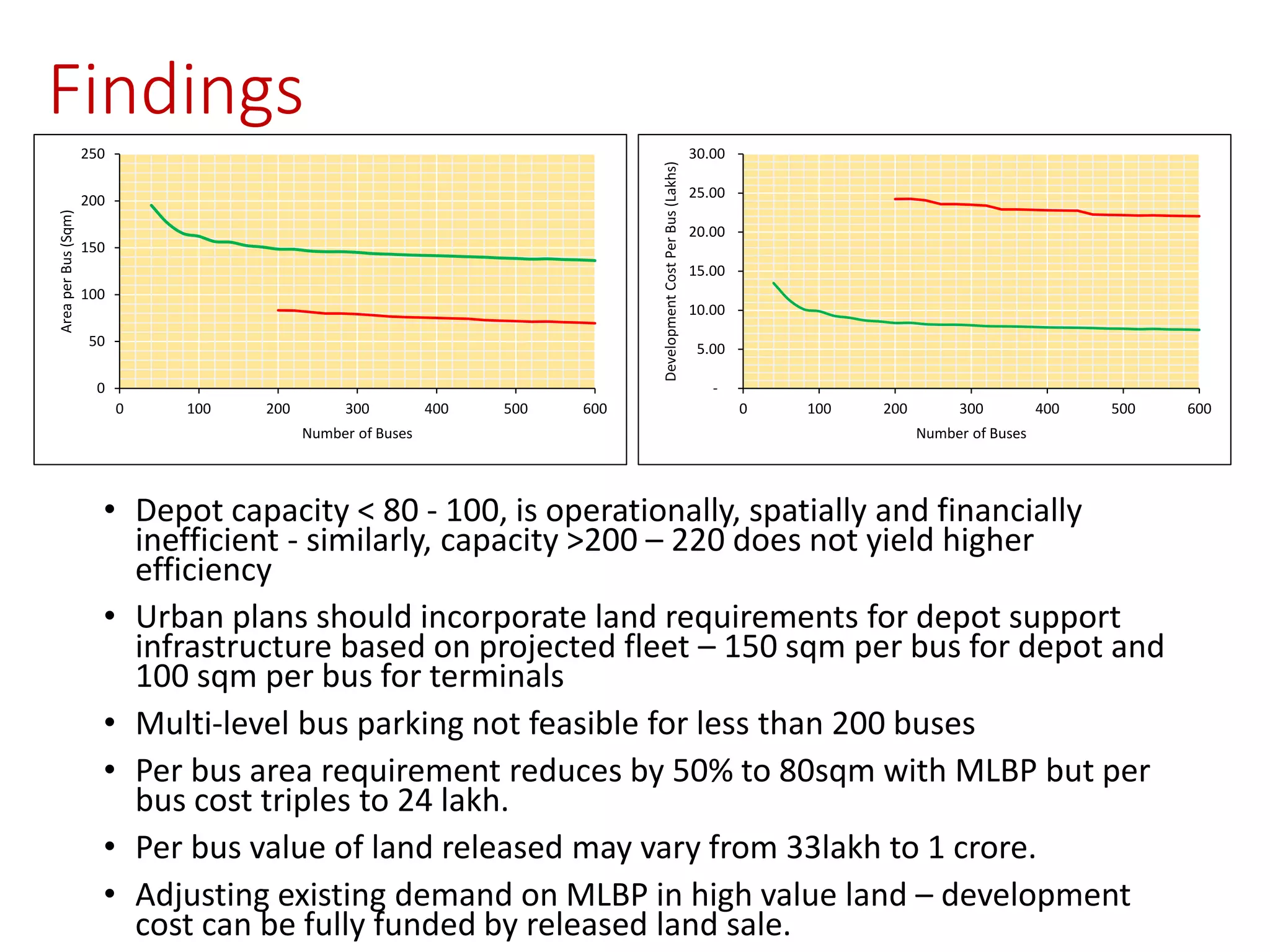
• Depot capacity < 80 - 100, is operationally, spatially and financially
inefficient - similarly, capacity >200 – 220 does not yield higher
efficiency
• Urban plans should incorporate land requirements for depot support
infrastructure based on projected fleet – 150 sqm per bus for depot and
100 sqm per bus for terminals
• Multi-level bus parking not feasible for less than 200 buses
• Per bus area requirement reduces by 50% to 80sqm with MLBP but per
bus cost triples to 24 lakh.
• Per bus value of land released may vary from 33lakh to 1 crore.
• Adjusting existing demand on MLBP in high value land – development
cost can be fully funded by released land sale.

Bus Karo: Bus Depot Design Guideline

  • 1.
  • 2.
    The need ….. CURRENTSCENARIO • STUs carry approx. 70 million passengers everyday • 20 to 40% of all vehicular trips in cities are made by buses • Public bus fleets haven’t been augmented for two decades • Ridership declining rapidly due to acute shortage in fleet and supporting infrastructure like terminals & depots DESIRED SITUATION • Double the market share of bus systems by 2025 (UITP) KEY BARRIERS • The limited funding available is mostly directed towards fleet augmentation – support infrastructure ignored • Lack of capacity in STUs leading to improper planning and execution of PPP projects ‘Bus Depot Design Guideline’ aimed to provide capacity building support to STUs
  • 3.
    Methodology Literature Review Local Case Studies Target Audience Local CaseStudies • Okhla Depot, Delhi • Kair Depot, Delhi • Sanganer Depot, Jaipur • Depot No.2, Chandigarh • Bagrana Depot, Jaipur
  • 4.
    Understanding Operations Infrastructure MANPOWER FLEET DEPOT STAFFCREW PARKING WORKSHOP WASHING FUELING • Admin office • Staff Room • Staff Amenities • Maintenance schedule • Staff assignment • MIS • Built-up • Equipment • Circulation • Materials MANPOWER FLEET DEPOT STAFF CREW PARKING WORKSHOP WASHING FUELING • Way Bill • Ticket Machines • Cash Receipt
  • 5.
    Content Depot DesignGuideline • Planning • Design Aspects • Design Illustrations • Financing Demand • Fleet Size Functional Requirements • Manpower • Infra. • Preventive Maint. • Breakdown • Unit Area Requirement • Layout • Circulation Functional Area Requirement Site Layout, Area & Cost Requirement
  • 6.
    Planning Functional Requirements A B Inshedding Process Conductor Driver C D Conductor Driver Out shedding Process
  • 7.
    Driver and ConductorActivities In shedding Process (Conductors and Drivers ) Out shedding Process (Conductors and Drivers )
  • 8.
    Planning Site planning BusParking Fueling Washing Workshop ExitEntry
  • 9.
    Design Aspects DesignConsiderations • Differently Abled Access • Security • Material and Finishes • Building Systems • Green Concepts • Equipment's and specifications Building systems and Green Concepts Equipment's Workshop Equipment's Prefabricated Pits Diaphragm Pumps Air Compressor Wheel Alignment Machine Washing Equipment Fueling Equipment
  • 10.
    Design Aspects DesignStandards • Entry and Exit • Parking • Fuelling • Washing • Workshop • Storage areas Bus Parking Bay Detail Fueling Area Detail Washing Area Detail
  • 11.
    Design Aspects Functional& Spatial Requirements • Entry and Exit • Parking • Fuelling • Washing • Workshop • Storage areas Fueling area Avg. time/bus for fueling / dispenser (min) No. of buses / hour/dispenser Daily working hours Catering capacity/ dispenser (for 8 hrs.) (a) No. of dispensers required for diesel buses [per 100 buses] (total buses/a) 5min 12 buses 8hrs 96 buses 100 / 96 = 1 Dispenser Island area 2 sq.m (2m x 1m) [Minimum] Other requirements for fueling area Particulars Area Administration Office 12 sq.m Staff Office 15 sq.m Toilet 9 sq.m Storage 20 sq.m Underground tank Capacity (100 buses) 13200 gallons Total km/bus/day 240 km Litre consume/day/bus 160 litre Functional & Spatial Requirements for Fueling area is provided in tabular format with diagram
  • 12.
  • 13.
  • 14.
  • 15.
    Financing Depots Funding Mechanism •Authorityacquires land, provides specifications for the design and layout of the Bus Depot, FAR, product mix •Hires a private player to construct the BD, operate it over the concession period and then transfer it to the Authority •Construction and operational costs borne by private player, revenues accrue to the private player BOT model Cost and Revenue Generation.  Land as an Asset – Commercial Spaces, Parking lots, Parking rentals from the private operators.  Revised Institutional arrangements - Creation of dedicated Depot funds through SPV  Reducing tax burdens such as relaxation on property tax etc.  Controlling prodigality through depot operations – Reducing Cost of operations, Dead Mileages,  Increasing fuel Efficiency and Inducing driver trainings Build Operate Transfer(BOT)Private Funding Public funding Concession Period – 25 -30 years  STU sole funder, operator &Developer  Involves long technical O&M Component  Lack Of funds and support  Lack of attractiveness
  • 16.
    Findings 0 50 100 150 200 250 0 100 200300 400 500 600 AreaperBus(Sqm) Number of Buses - 5.00 10.00 15.00 20.00 25.00 30.00 0 100 200 300 400 500 600 DevelopmentCostPerBus(Lakhs) Number of Buses • Depot capacity < 80 - 100, is operationally, spatially and financially inefficient - similarly, capacity >200 – 220 does not yield higher efficiency • Urban plans should incorporate land requirements for depot support infrastructure based on projected fleet – 150 sqm per bus for depot and 100 sqm per bus for terminals • Multi-level bus parking not feasible for less than 200 buses • Per bus area requirement reduces by 50% to 80sqm with MLBP but per bus cost triples to 24 lakh. • Per bus value of land released may vary from 33lakh to 1 crore. • Adjusting existing demand on MLBP in high value land – development cost can be fully funded by released land sale.