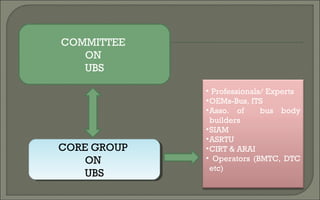
COMMITTEE 
ON 
UBS 
CORE GROUP 
CORE GROUP 
ON 
UBS 
ON 
UBS 
• Professionals/ Experts 
•OEMs-Bus, ITS 
•Asso. of bus body 
builders 
•SIAM 
•ASRTU 
•CIRT & ARAI 
• Operators (BMTC, DTC 
etc)
 Comfortable & Safe for Passenger 
 Accessible for PWD’s 
 Better Driving Conditions 
 Standardization of common specifications 
• Regular and BRTS services 
 Technological advancements 
 ITS enabled 
 Value for money
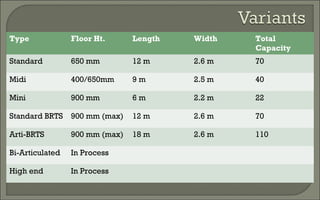
Type Floor Ht. Length Width Total 
Capacity 
Standard 650 mm 12 m 2.6 m 70 
Midi 400/650mm 9 m 2.5 m 40 
Mini 900 mm 6 m 2.2 m 22 
Standard BRTS 900 mm (max) 12 m 2.6 m 70 
Arti-BRTS 900 mm (max) 18 m 2.6 m 110 
Bi-Articulated In Process 
High end In Process
 Pneumatic controlled wider doors 
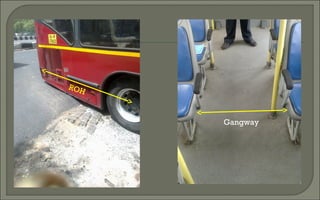
 Wider gangway ≥ 700mm 
 Higher acceleration ≥ 0.8m/s/s 
 Engine location & fuel: optional 
 ROH ≤ 50% of Wheel base 
 Approach & departure angle: 8.5˚ & 9˚ 
 Life cycle: 10 years & 750,000 kms
Gangway ROH
 Transmission system 
 Standards for driver’s area 
• Noise 
• Vibration and 
• Heat
 Mandatory door closure for movement of 
bus 
 Disc brakes 
 Design Type approval: Roll over test
To be evolved for 
650/900mm floor ht ???
 Multiplex wiring 
 Vehicle Health Monitoring system 
 Driver Console 
 PIS inside and outside integrated with 
audio announcement system 
 Camera (inside & rear)
1. Floor inside the bus should be uniform inside 
the vehicle without any steps inside vehicle 
2. Floor Height of the Vehicle 
a) 400, 650 and 900 mm if meets criteria above 1.
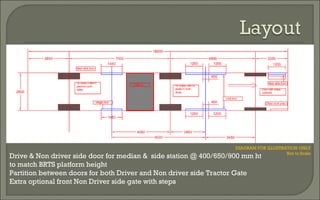
DIAGRAM FOR ILLUSTRATION ONLY 
Drive & Non driver side door for median & side station @ 400/650/900 mm ht 
to match BRTS platform height 
Partition between doors for both Driver and Non driver side Tractor Gate 
Extra optional front Non Driver side gate with steps 
Not to Scale
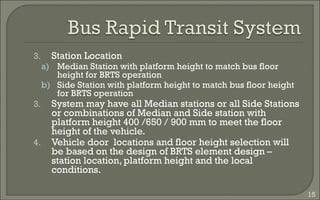
3. Station Location 
a) Median Station with platform height to match bus floor 
height for BRTS operation 
b) Side Station with platform height to match bus floor height 
for BRTS operation 
3. System may have all Median stations or all Side Stations 
or combinations of Median and Side station with 
platform height 400 /650 / 900 mm to meet the floor 
height of the vehicle. 
4. Vehicle door locations and floor height selection will 
be based on the design of BRTS element design – 
station location, platform height and the local 
conditions. 
15
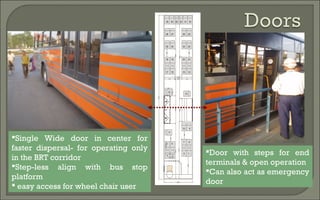
Door with steps for end 
terminals & open operation 
Can also act as emergency 
door 
Single Wide door in center for 
faster dispersal- for operating only 
in the BRT corridor 
Step-less align with bus stop 
platform 
 easy access for wheel chair user
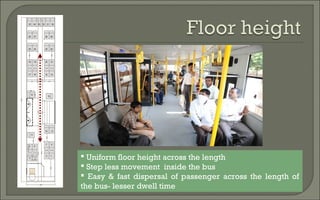
 Uniform floor height across the length 
 Step less movement inside the bus 
 Easy & fast dispersal of passenger across the length of 
the bus- lesser dwell time
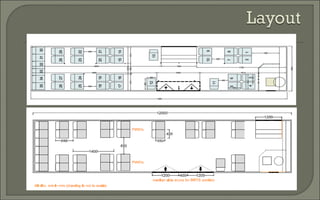
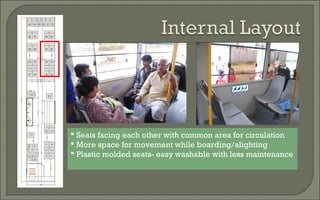
 Seats facing each other with common area for circulation 
 More space for movement while boarding/alighting 
 Plastic molded seats- easy washable with less maintenance
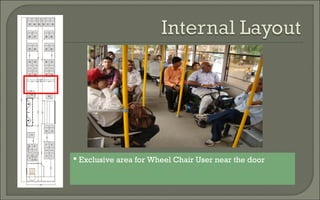
 Exclusive area for Wheel Chair User near the door
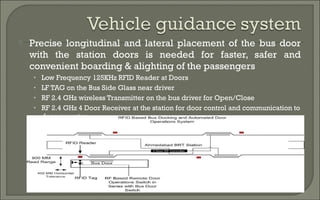
 Precise longitudinal and lateral placement of the bus door 
with the station doors is needed for faster, safer and 
convenient boarding & alighting of the passengers 
• Low Frequency 125KHz RFID Reader at Doors 
• LF TAG on the Bus Side Glass near driver 
• RF 2.4 GHz wireless Transmitter on the bus driver for Open/Close 
• RF 2.4 GHz 4 Door Receiver at the station for door control and communication to 
door operator
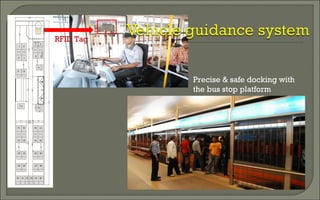
RFID Tag 
Precise & safe docking with 
the bus stop platform
 Limited Bus Manufacturers 
 Capacity for maintenance 
 Unaffordable AMC 
 No standards on fuel efficiency of buses 
 ARAI approval is limited to ‘chassis’ only 
 No standards to check on performance of AC 
buses 
 Standardization Station layout wrt door 
locations
27. urban bus specifications

27. urban bus specifications

  • 2.
    COMMITTEE ON UBS CORE GROUP CORE GROUP ON UBS ON UBS • Professionals/ Experts •OEMs-Bus, ITS •Asso. of bus body builders •SIAM •ASRTU •CIRT & ARAI • Operators (BMTC, DTC etc)
  • 3.
     Comfortable &Safe for Passenger  Accessible for PWD’s  Better Driving Conditions  Standardization of common specifications • Regular and BRTS services  Technological advancements  ITS enabled  Value for money
  • 4.
    Type Floor Ht.Length Width Total Capacity Standard 650 mm 12 m 2.6 m 70 Midi 400/650mm 9 m 2.5 m 40 Mini 900 mm 6 m 2.2 m 22 Standard BRTS 900 mm (max) 12 m 2.6 m 70 Arti-BRTS 900 mm (max) 18 m 2.6 m 110 Bi-Articulated In Process High end In Process
  • 5.
     Pneumatic controlledwider doors  Wider gangway ≥ 700mm  Higher acceleration ≥ 0.8m/s/s  Engine location & fuel: optional  ROH ≤ 50% of Wheel base  Approach & departure angle: 8.5˚ & 9˚  Life cycle: 10 years & 750,000 kms
  • 6.
  • 8.
     Transmission system  Standards for driver’s area • Noise • Vibration and • Heat
  • 9.
     Mandatory doorclosure for movement of bus  Disc brakes  Design Type approval: Roll over test
  • 10.
    To be evolvedfor 650/900mm floor ht ???
  • 11.
     Multiplex wiring  Vehicle Health Monitoring system  Driver Console  PIS inside and outside integrated with audio announcement system  Camera (inside & rear)
  • 12.
    1. Floor insidethe bus should be uniform inside the vehicle without any steps inside vehicle 2. Floor Height of the Vehicle a) 400, 650 and 900 mm if meets criteria above 1.
  • 14.
    DIAGRAM FOR ILLUSTRATIONONLY Drive & Non driver side door for median & side station @ 400/650/900 mm ht to match BRTS platform height Partition between doors for both Driver and Non driver side Tractor Gate Extra optional front Non Driver side gate with steps Not to Scale
  • 15.
    3. Station Location a) Median Station with platform height to match bus floor height for BRTS operation b) Side Station with platform height to match bus floor height for BRTS operation 3. System may have all Median stations or all Side Stations or combinations of Median and Side station with platform height 400 /650 / 900 mm to meet the floor height of the vehicle. 4. Vehicle door locations and floor height selection will be based on the design of BRTS element design – station location, platform height and the local conditions. 15
  • 16.
    Door with stepsfor end terminals & open operation Can also act as emergency door Single Wide door in center for faster dispersal- for operating only in the BRT corridor Step-less align with bus stop platform  easy access for wheel chair user
  • 17.
     Uniform floorheight across the length  Step less movement inside the bus  Easy & fast dispersal of passenger across the length of the bus- lesser dwell time
  • 18.
     Seats facingeach other with common area for circulation  More space for movement while boarding/alighting  Plastic molded seats- easy washable with less maintenance
  • 19.
     Exclusive areafor Wheel Chair User near the door
  • 20.
     Precise longitudinaland lateral placement of the bus door with the station doors is needed for faster, safer and convenient boarding & alighting of the passengers • Low Frequency 125KHz RFID Reader at Doors • LF TAG on the Bus Side Glass near driver • RF 2.4 GHz wireless Transmitter on the bus driver for Open/Close • RF 2.4 GHz 4 Door Receiver at the station for door control and communication to door operator
  • 21.
    RFID Tag Precise& safe docking with the bus stop platform
  • 22.
     Limited BusManufacturers  Capacity for maintenance  Unaffordable AMC  No standards on fuel efficiency of buses  ARAI approval is limited to ‘chassis’ only  No standards to check on performance of AC buses  Standardization Station layout wrt door locations