BURN DRESSING
PREDENTED BY,
GAURAV KARANJEKAR
INTRODUCTION
• The skin is the largest organ in the human body , A break in the
continuity of the skin surface is the first step in the formation of a
wound and provide a potential portal of entry for the infection, burn
of the skin due to some reason damage the tissue .there for wound
healing is one of the major concerns for the burn patient .
• Cleaning a burn wound with the normal saline using anti septic
technique for the removal of exudates and applying anti bacterial agent
PURPOSES :
•
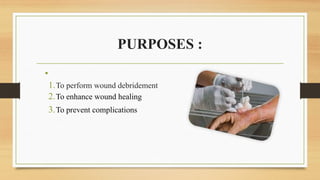
1.To perform wound debridement
2.To enhance wound healing
3.To prevent complications
Principles of wound dressing :
1. Micro organism are present in the environment , on the articles and the skin .pathogenic
organism are transmitted from the source to the new host directly or indirectly .
2. Bacteria travels along with the dust particles.
3. Cleaning an area were there is less no of organism , before cleaning an area were there is
more no of organism , minimize the spread of organism to the clean area.
4. A break in the skin and mucus membrane acts as the portal of the entry for the pathogenic
organism
5. Respiratory tract harbours micro organism that can enter the wound
6. Moisture facilitaes growth and movement of micro organism
TYPES OF WOUND DRESSING :
1.Open method
2.Closed method
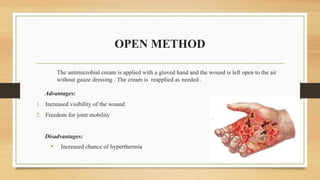
OPEN METHOD
The antimicrobial cream is applied with a gloved hand and the wound is left open to the air
without gauze dressing . The cream is reapplied as needed .
Advantages:
1. Increased visibility of the wound
2. Freedom for joint mobility
Disadvantages:
• Increased chance of hyperthermia
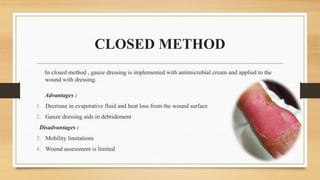
CLOSED METHOD
In closed method , gauze dressing is implemented with antimicrobial cream and applied to the
wound with dressing.
Advantages :
1. Decrease in evaporative fluid and heat loss from the wound surface
2. Gauze dressing aids in debridement
Disadvantages :
3. Mobility limitations
4. Wound assessment is limited
ASSESSMENT
 Client allergies to wound cleaning agents
 The appearance and size of the burn
 The amount and character of exudates
 Client complaints of discomfort
 The time of the last pain medications
• Signs of systematic infection (elevated body temperature, malaise)
PROCEDURE
ARTICLES
• Dressing trolley with………….
1.Sterile bandages
2.Sterile dressing pads
3.Sterile Paraffin gauze
4.Silver sulfadiazine 1%
5.Sterile normal saline
6.Forceps
7.Adhesive tape
8.Sterile scissors
9. Receptacle for waste
Steps of procedure
1. Explain the client what you are going to do,
2. wash hands before procedure
3. Provide for client privacy
4. scrub hands and don sterile gown and gloves , put on mask and cap
5. Administer analgesic about 20 minutes before procedure as per physicians order it helps to
minimized the pain during dressing
6. Soak previous dressing with normal Saline ,moistening adherent dressing reduces discomfort when
removed
7. provide hydrotherapy / shower bath which Helps in cleansing of wound.
8. Regular temperature of the room at 24 degrees centigrade and humidity at 40 to 50%
Cont…
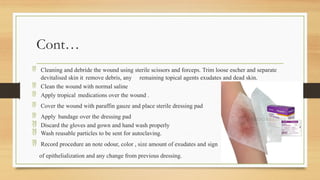
 Cleaning and debride the wound using sterile scissors and forceps. Trim loose escher and separate
devitalised skin it remove debris, any remaining topical agents exudates and dead skin.
 Clean the wound with normal saline
 Apply tropical medications over the wound .
 Cover the wound with paraffin gauze and place sterile dressing pad
 Apply bandage over the dressing pad
 Discard the gloves and gown and hand wash properly
 Wash reusable particles to be sent for autoclaving.
 Record procedure an note odour, color , size amount of exudates and sign
of epithelialization and any change from previous dressing.
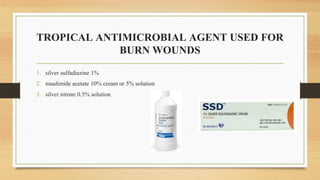
TROPICAL ANTIMICROBIAL AGENT USED FOR
BURN WOUNDS
1. silver sulfadiazine 1%
2. muafenide acetate 10% cream or 5% solution
3. silver nitrate 0.5% solution
Nursing Responsibilities for Applying Dressings
• Open wound = sterile procedure
• • Handwashing
• Gloves should always be worn
•monitor odour, color, size and healing process of wound
• Vital sign
• Give correct information to patient.
• documentation
THANK
YOU !

BURN DRESSING, demonstration with step by step

  • 1.
  • 2.
    INTRODUCTION • The skinis the largest organ in the human body , A break in the continuity of the skin surface is the first step in the formation of a wound and provide a potential portal of entry for the infection, burn of the skin due to some reason damage the tissue .there for wound healing is one of the major concerns for the burn patient . • Cleaning a burn wound with the normal saline using anti septic technique for the removal of exudates and applying anti bacterial agent
  • 3.
    PURPOSES : • 1.To performwound debridement 2.To enhance wound healing 3.To prevent complications
  • 4.
    Principles of wounddressing : 1. Micro organism are present in the environment , on the articles and the skin .pathogenic organism are transmitted from the source to the new host directly or indirectly . 2. Bacteria travels along with the dust particles. 3. Cleaning an area were there is less no of organism , before cleaning an area were there is more no of organism , minimize the spread of organism to the clean area. 4. A break in the skin and mucus membrane acts as the portal of the entry for the pathogenic organism 5. Respiratory tract harbours micro organism that can enter the wound 6. Moisture facilitaes growth and movement of micro organism
  • 5.
    TYPES OF WOUNDDRESSING : 1.Open method 2.Closed method
  • 6.
    OPEN METHOD The antimicrobialcream is applied with a gloved hand and the wound is left open to the air without gauze dressing . The cream is reapplied as needed . Advantages: 1. Increased visibility of the wound 2. Freedom for joint mobility Disadvantages: • Increased chance of hyperthermia
  • 7.
    CLOSED METHOD In closedmethod , gauze dressing is implemented with antimicrobial cream and applied to the wound with dressing. Advantages : 1. Decrease in evaporative fluid and heat loss from the wound surface 2. Gauze dressing aids in debridement Disadvantages : 3. Mobility limitations 4. Wound assessment is limited
  • 8.
    ASSESSMENT  Client allergiesto wound cleaning agents  The appearance and size of the burn  The amount and character of exudates  Client complaints of discomfort  The time of the last pain medications • Signs of systematic infection (elevated body temperature, malaise)
  • 9.
  • 10.
    ARTICLES • Dressing trolleywith…………. 1.Sterile bandages 2.Sterile dressing pads 3.Sterile Paraffin gauze 4.Silver sulfadiazine 1% 5.Sterile normal saline 6.Forceps 7.Adhesive tape 8.Sterile scissors 9. Receptacle for waste
  • 11.
    Steps of procedure 1.Explain the client what you are going to do, 2. wash hands before procedure 3. Provide for client privacy 4. scrub hands and don sterile gown and gloves , put on mask and cap 5. Administer analgesic about 20 minutes before procedure as per physicians order it helps to minimized the pain during dressing 6. Soak previous dressing with normal Saline ,moistening adherent dressing reduces discomfort when removed 7. provide hydrotherapy / shower bath which Helps in cleansing of wound. 8. Regular temperature of the room at 24 degrees centigrade and humidity at 40 to 50%
  • 12.
    Cont…  Cleaning anddebride the wound using sterile scissors and forceps. Trim loose escher and separate devitalised skin it remove debris, any remaining topical agents exudates and dead skin.  Clean the wound with normal saline  Apply tropical medications over the wound .  Cover the wound with paraffin gauze and place sterile dressing pad  Apply bandage over the dressing pad  Discard the gloves and gown and hand wash properly  Wash reusable particles to be sent for autoclaving.  Record procedure an note odour, color , size amount of exudates and sign of epithelialization and any change from previous dressing.
  • 13.
    TROPICAL ANTIMICROBIAL AGENTUSED FOR BURN WOUNDS 1. silver sulfadiazine 1% 2. muafenide acetate 10% cream or 5% solution 3. silver nitrate 0.5% solution
  • 14.
    Nursing Responsibilities forApplying Dressings • Open wound = sterile procedure • • Handwashing • Gloves should always be worn •monitor odour, color, size and healing process of wound • Vital sign • Give correct information to patient. • documentation
  • 15.