Building and Running an
   Online Community


      Webcontent 2010
Ben Brown

 @benbrown

www.xoxco.com
"Online Community"
"Online Community"


 Community is not...
"Online Community"


 Community is not...
"Online Community"


 Community is not...


       Forums
"Online Community"


 Community is not...


       Forums
User Generated Content
"Online Community"


 Community is not...


       Forums
User Generated Content
Social media campaigns
Community is


People
  Talking and
 Doing Things


Together
I run a content site,
why should I worry about community?
• Engage your audience
• Create more content for your site
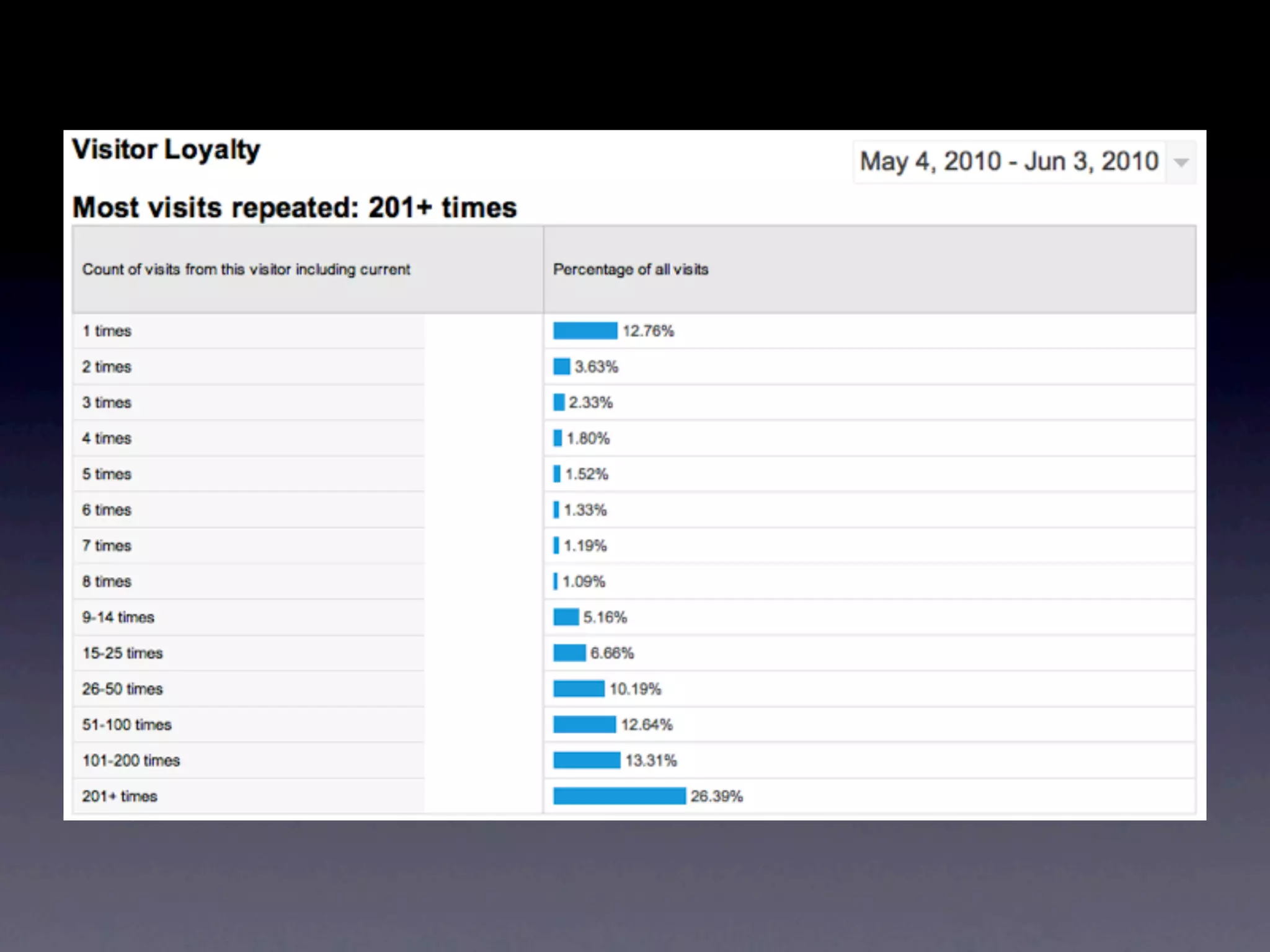
• Increase views, loyalty, and time on site
• Get direct feedback from your audience
• Have more control over the conversation
• Learn about what your audience wants and needs
Member Created Art
When should I open my site to
  member contributions?
• Lots of off-topic chatter in your comment threads
• Overwhelmed by comments
• Are you a trending #topic on twitter? Does your Facebook
  page have 10,000 followers?
• Lots of off-topic chatter in your comment threads
• Overwhelmed by comments
• Are you a trending #topic on twitter? Does your Facebook
  page have 10,000 followers?
• Lots of off-topic chatter in your comment threads
• Overwhelmed by comments
• Are you a trending #topic on twitter? Does your Facebook
  page have 10,000 followers?


• Is there something your readers could help you with?
• Is there a way for readers to help each other?
What kind of features does
 your community need?
People like to talk to other people.
Let your community tell you what it
needs.
How do I set and enforce
 community guidelines?
Create a culture.
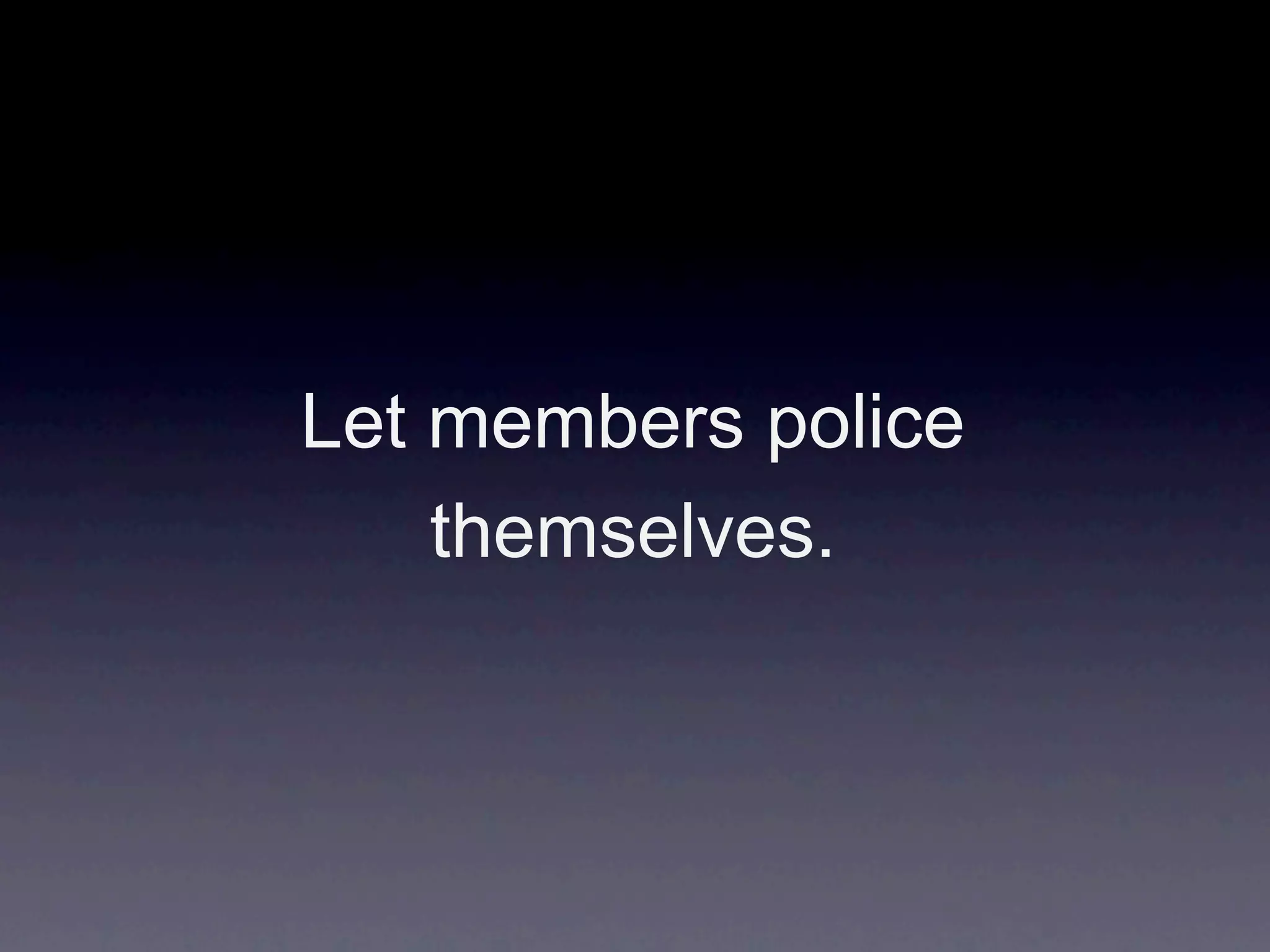
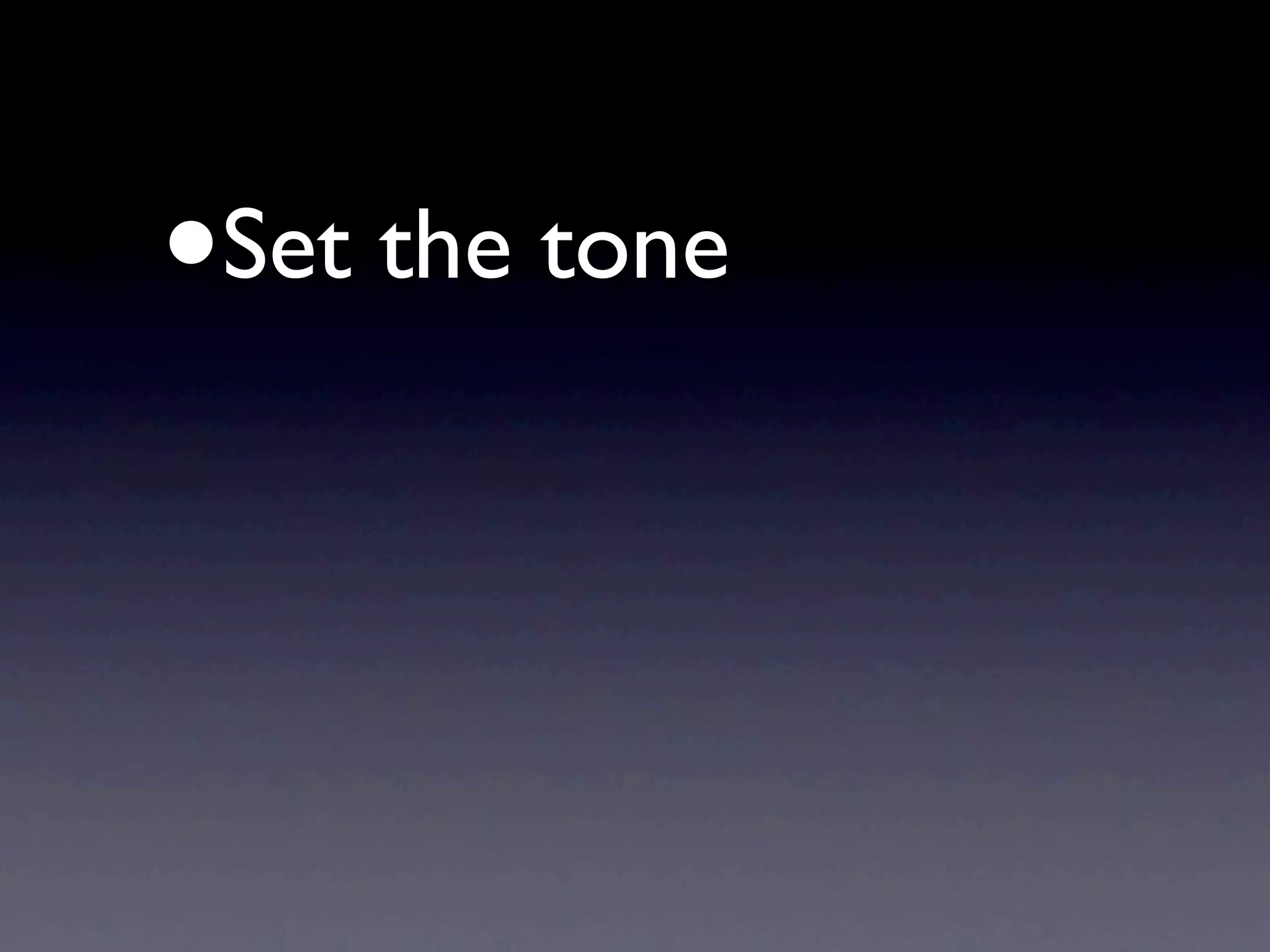
•   Set the tone
•   Set the tone
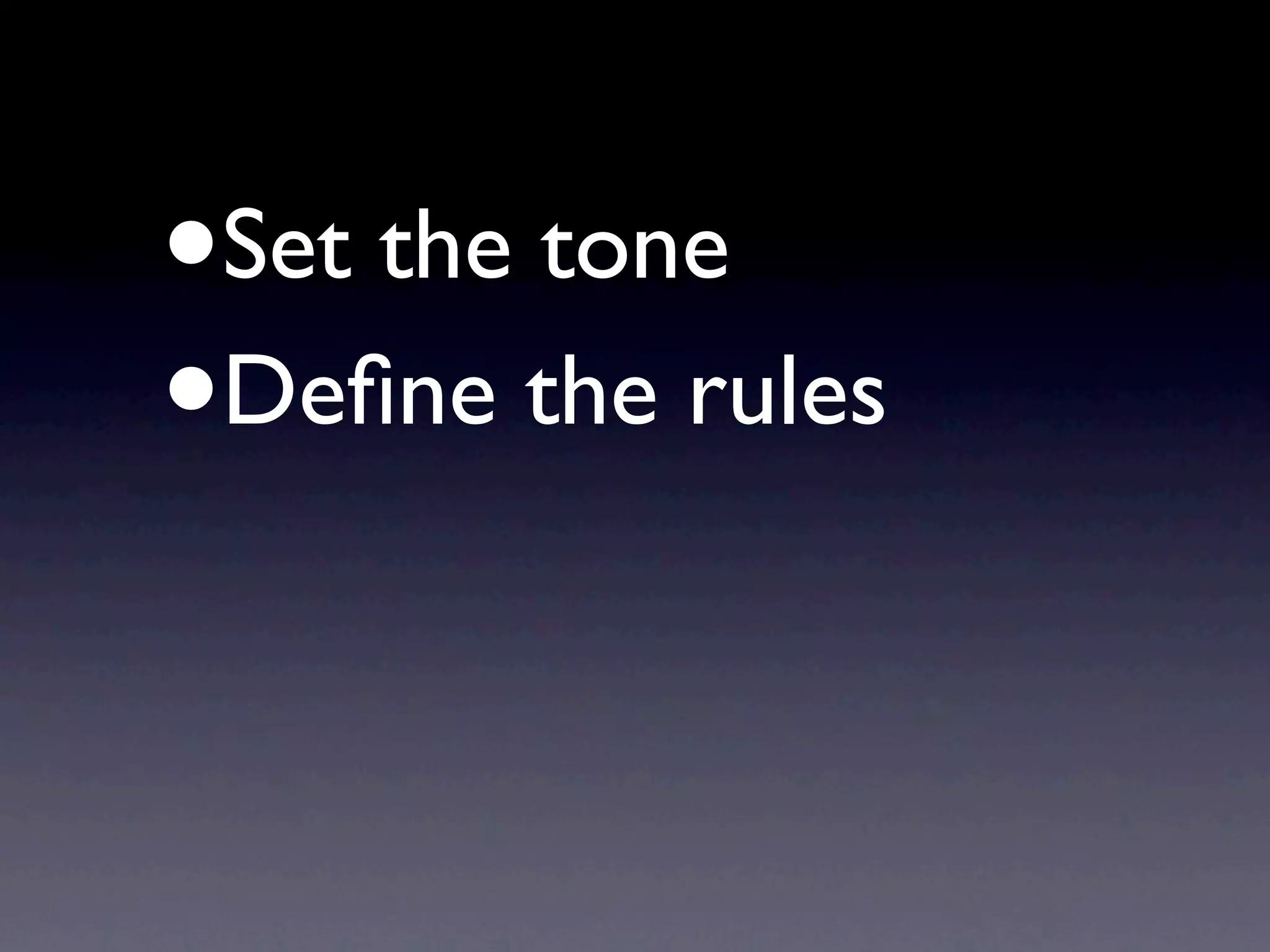
•   Define the rules
•
Set the tone
•
Define the rules
•
Communicate
expectations
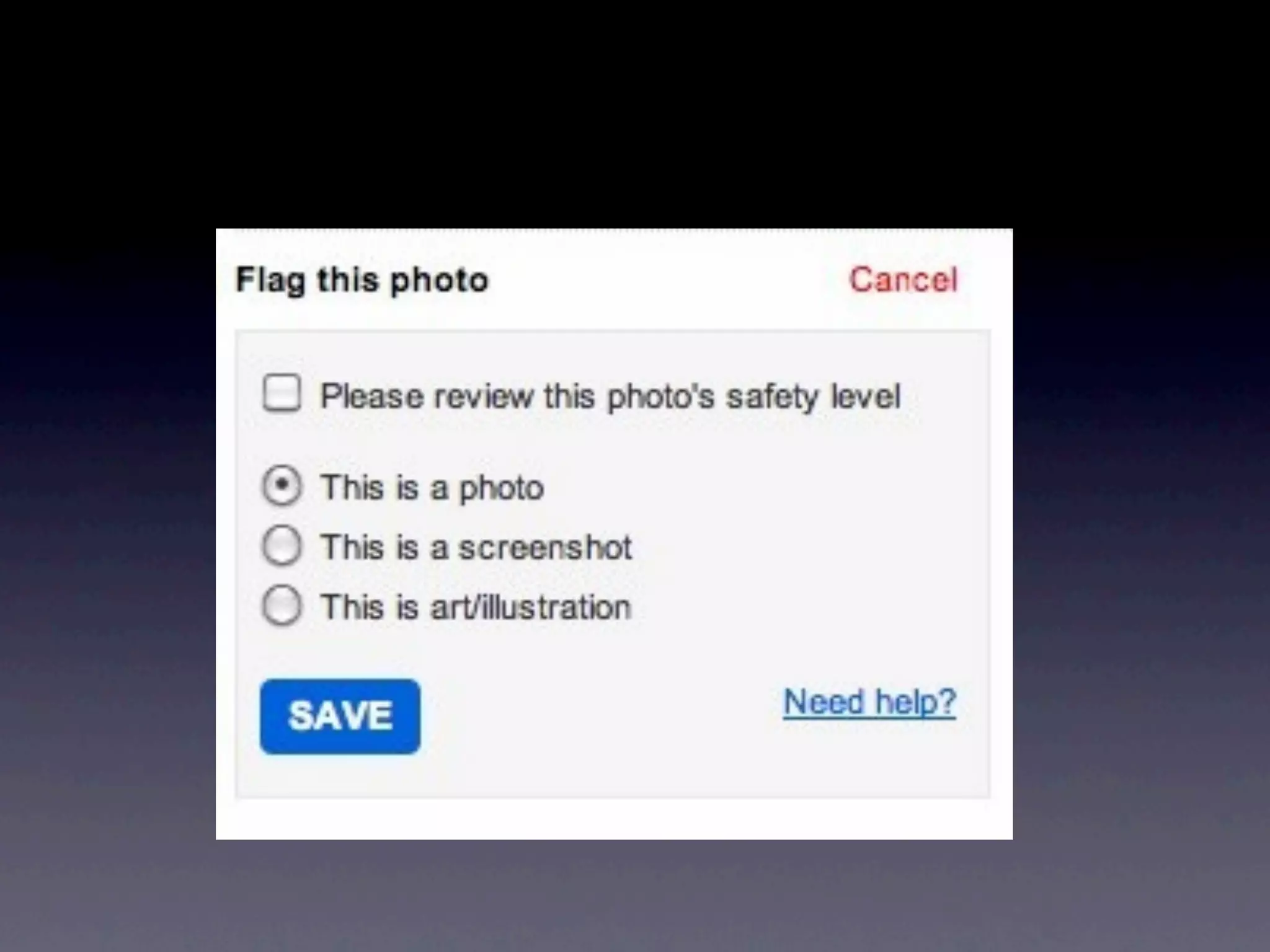
Let members police
    themselves.
How not to design
an incentive system
Your best users
 are sometimes
your worst users
Cut and Paste
 Community
GetSatisfaction
Twitter search widget
     Facebook
       Disqus


    PeoplePods
       Drupal
Thanks!

Building and Running an Online Community

Editor's Notes

  • #10 A lot of the time, we see our sites sort of like a digital printing press.   The content goes in, it gets managed, and out it comes as the latest edition of your website.  And every day or every week, you put out a new edition of the site. That shit is magical. But if you have an audience, you have a community.  They may not have a way to speak to you or contribute to the site, but rest assured they are talking amongst themselves about you.
  • #12 When "users" become "members," you are sharing the ownership and management responsibilities of the site with them.   Your most loyal members will be with you on launch day, they'll help you through redesigns, and they'll mourn the passing of each feature that doesn't quite make it out of beta. 
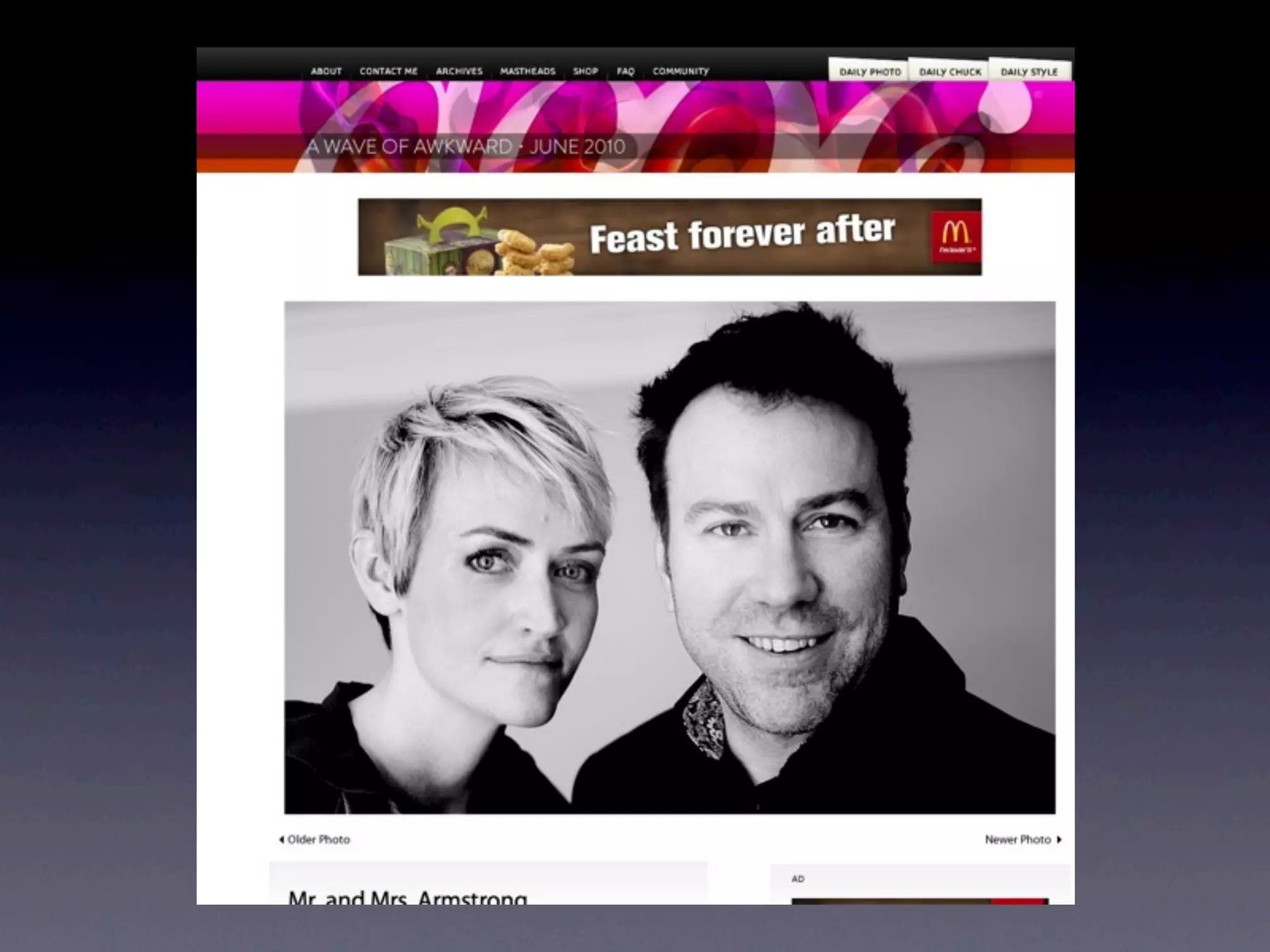
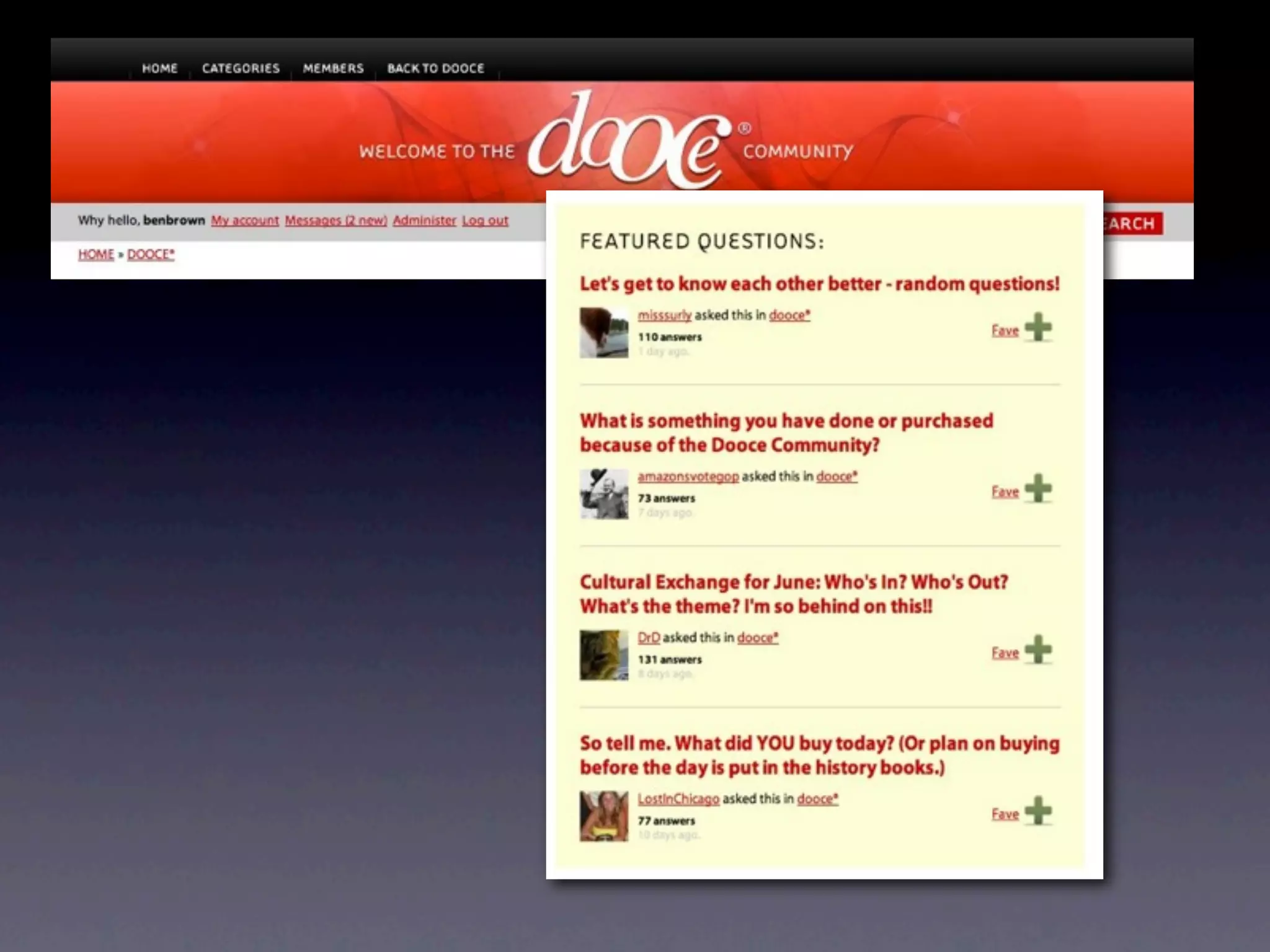
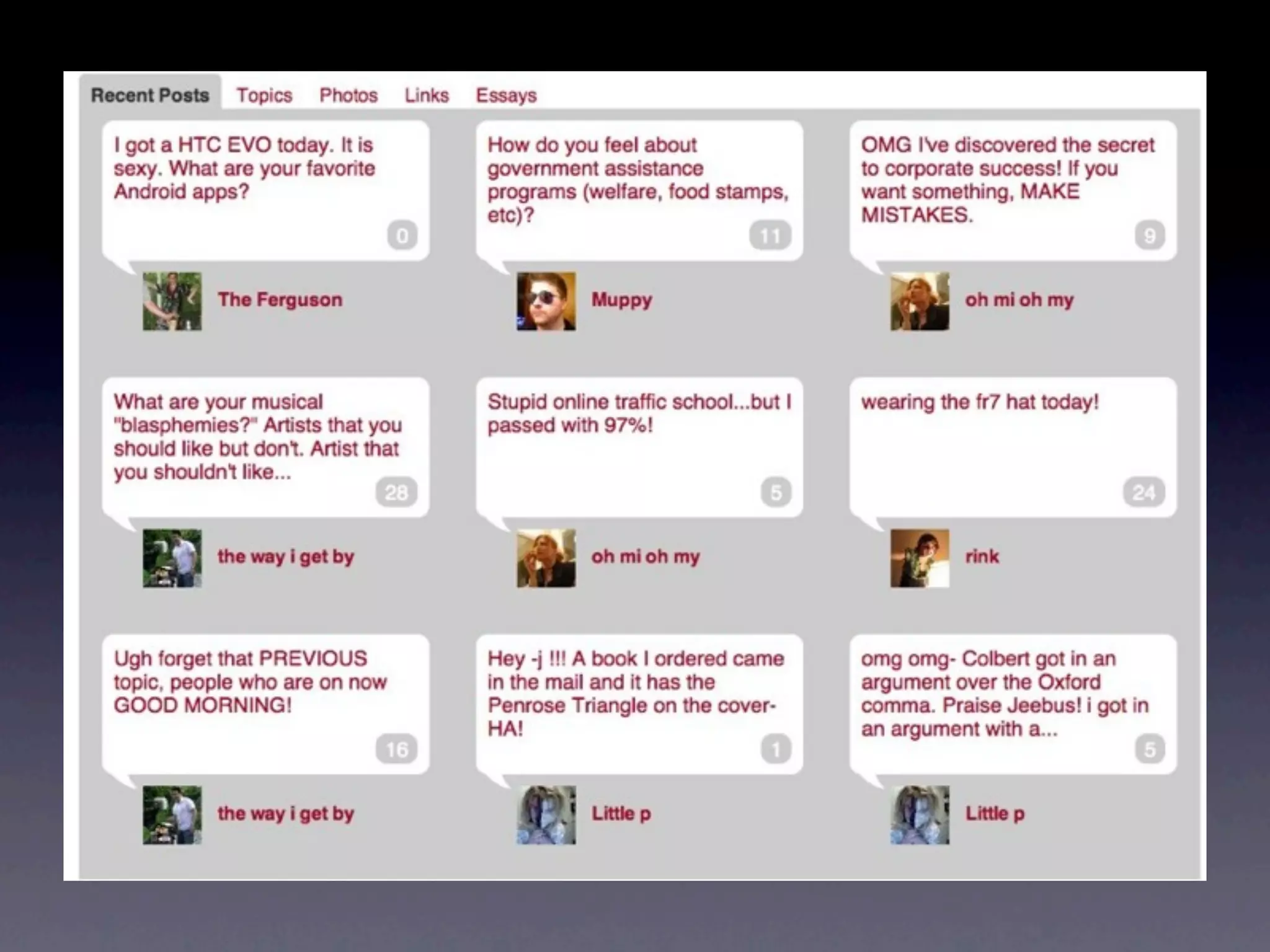
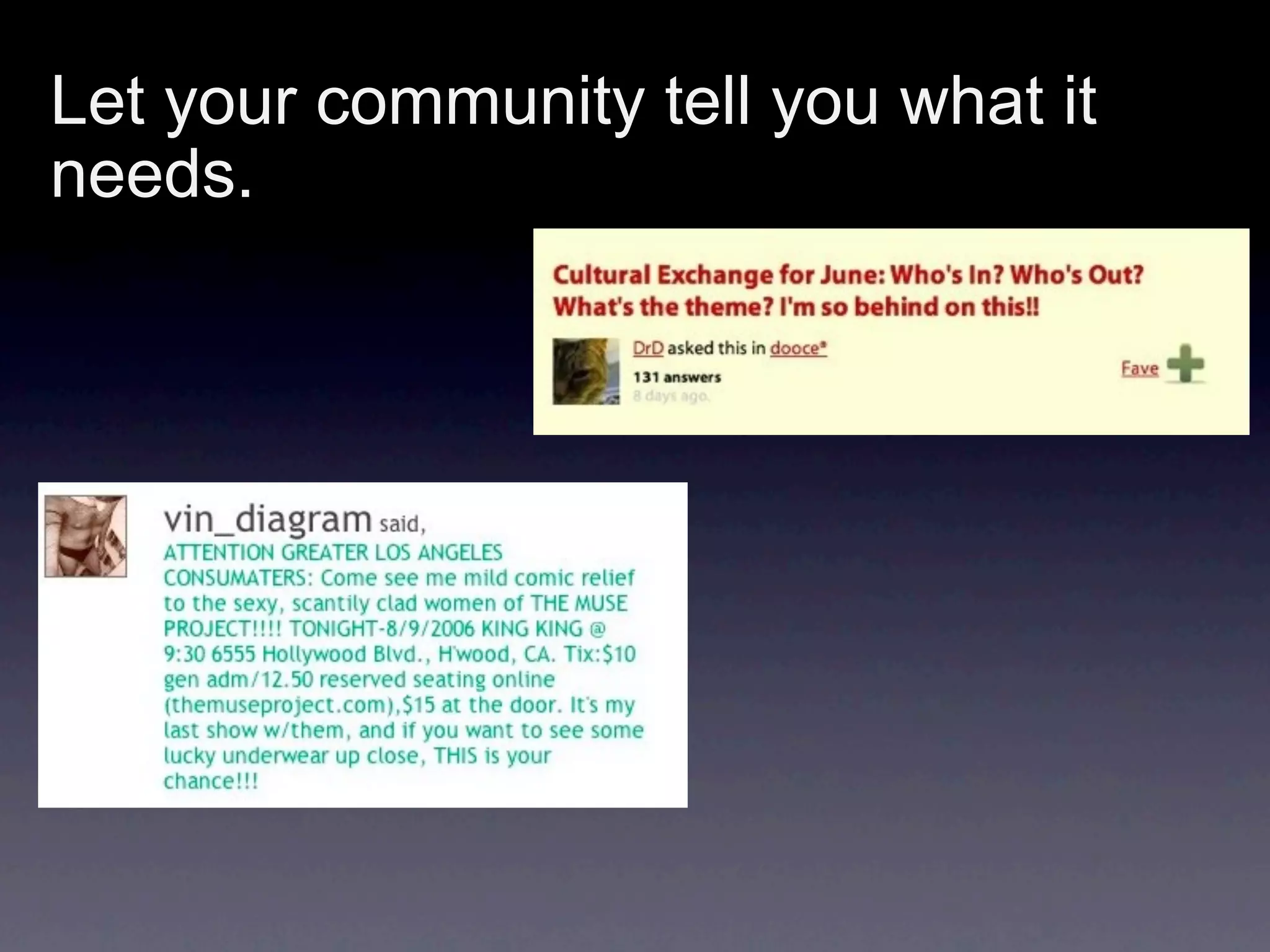
  • #22 Even though Dooce's site is "question" themed, the users use the tools to talk about all sorts of stuff.
  • #23 quietly churns out 100,000 pageviews a month.
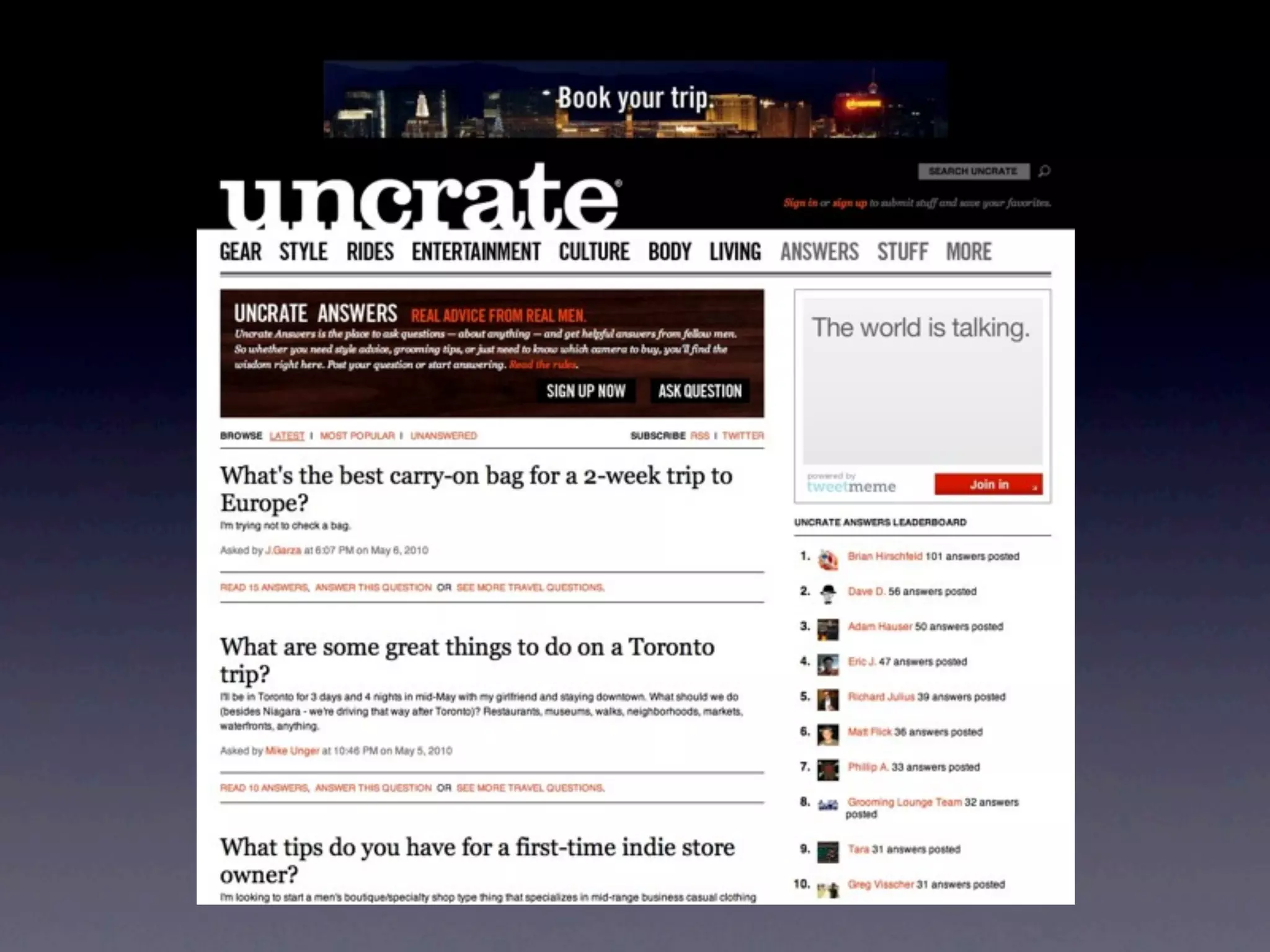
  • #24 Real Advice from Real Men
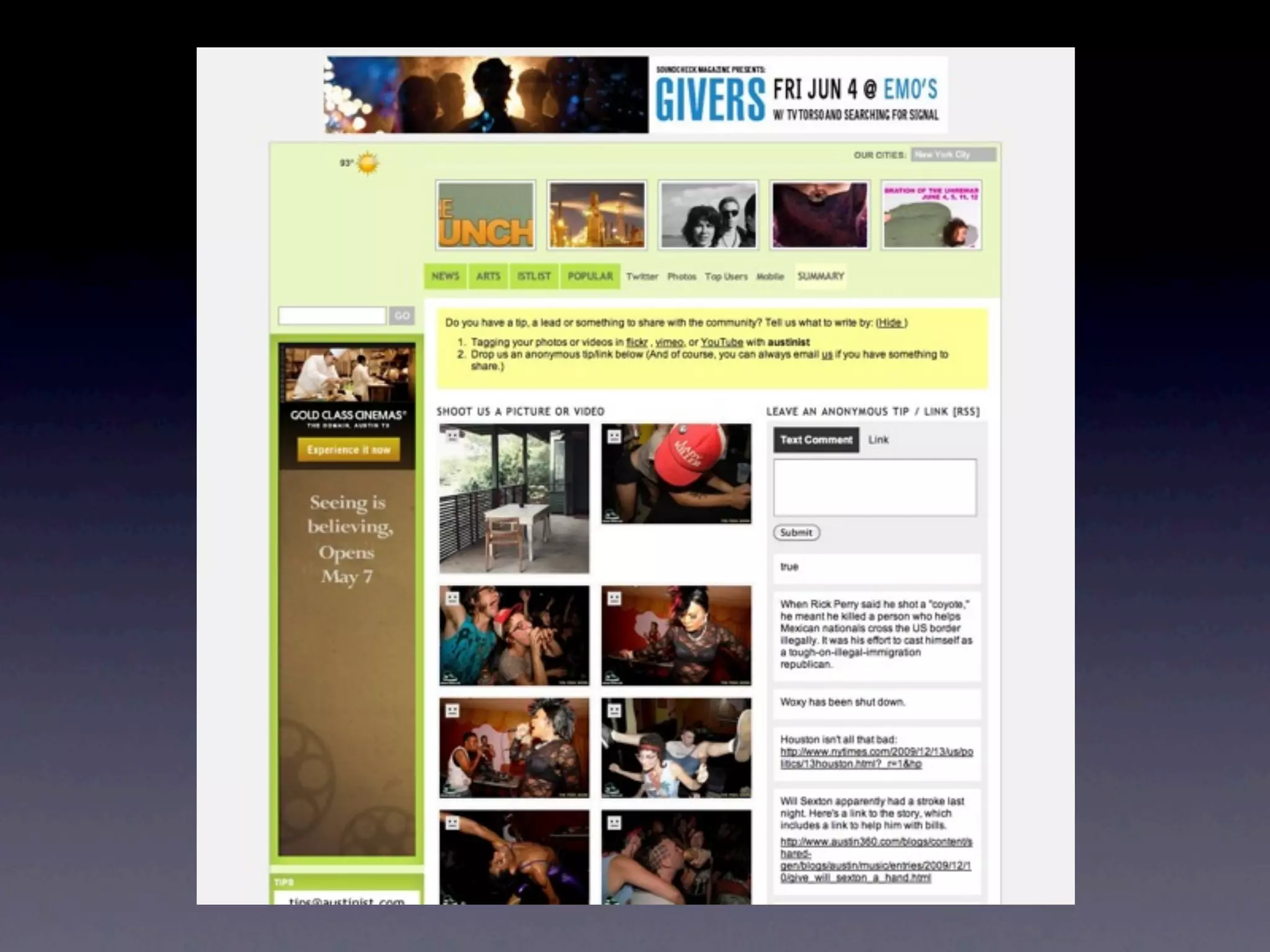
  • #25 Austinist allows its readers to become roving reporters without any sort of sign in or membership. They use existing social services like Flickr and Youtube, and aggregate it on the site. This creates a virtuous cycle, where users are rewarded for their contributions to Austinist by getting new followers and hits to their existing sites.
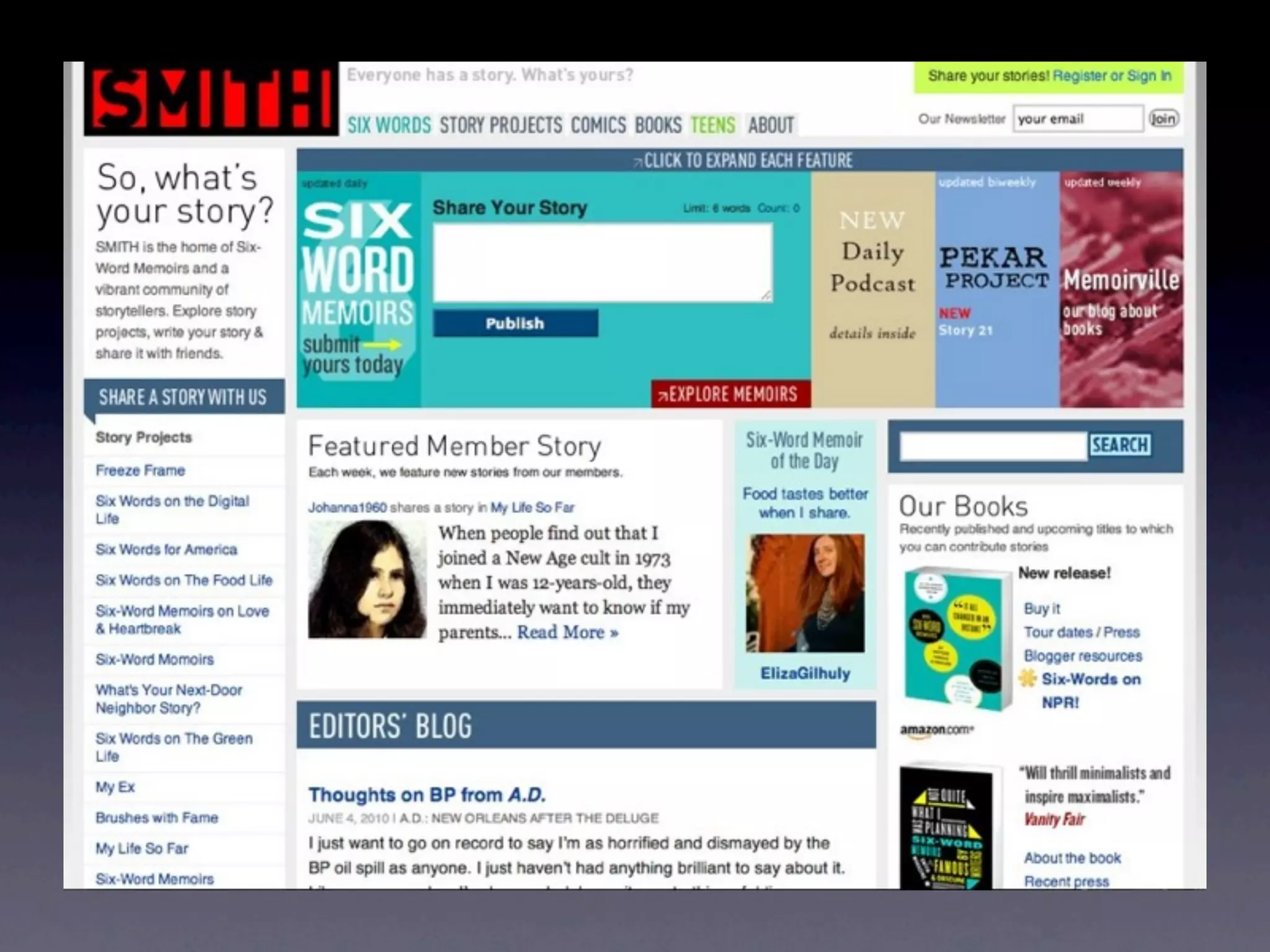
  • #26 SMITH Magazine is a site driven by user submissions. Six Word Memoirs started as a twitter meme, and became a site where half a million six word memoirs have been published. This has lead to 3 best selling novels and a pretty good business for SMITH
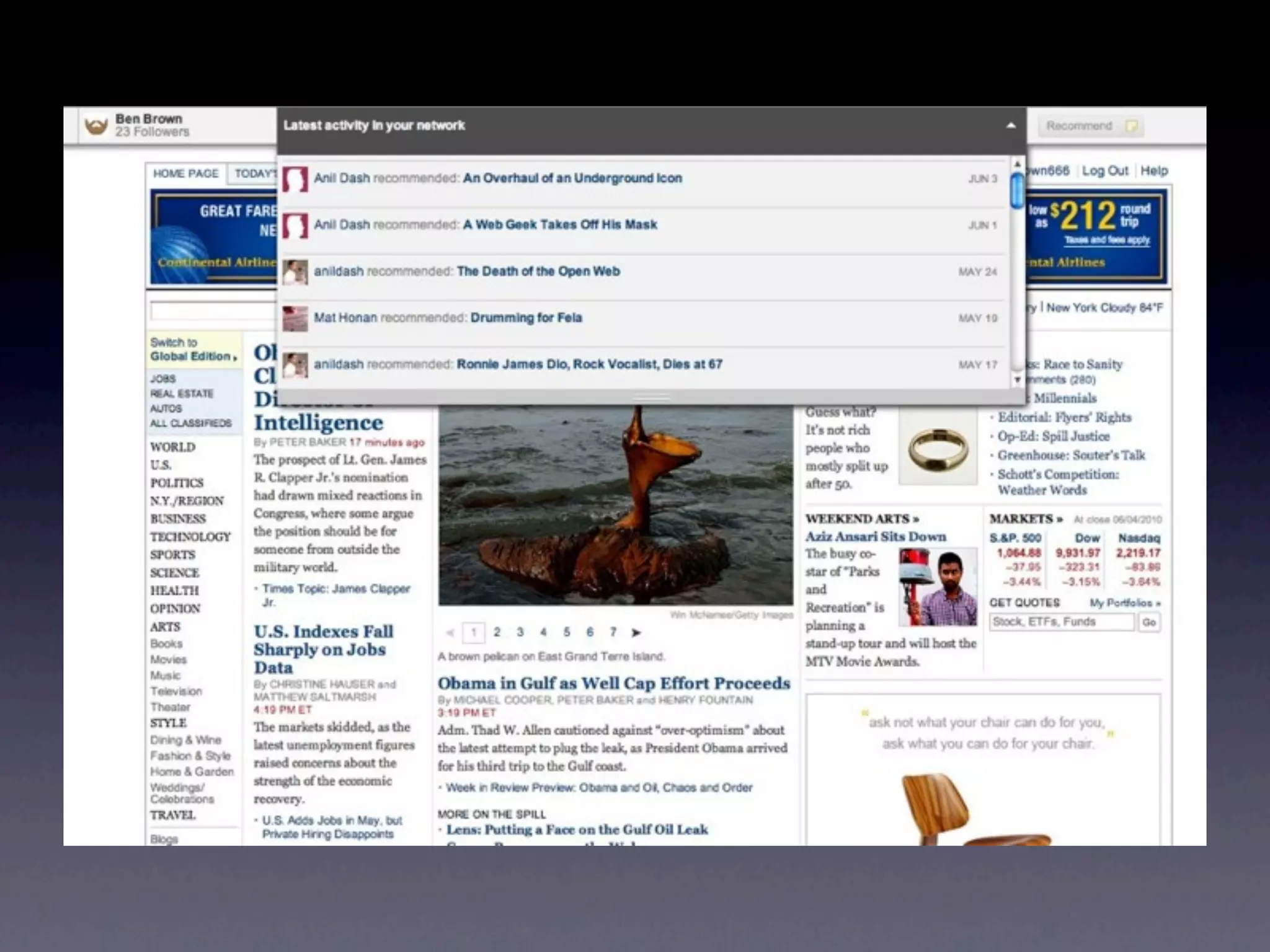
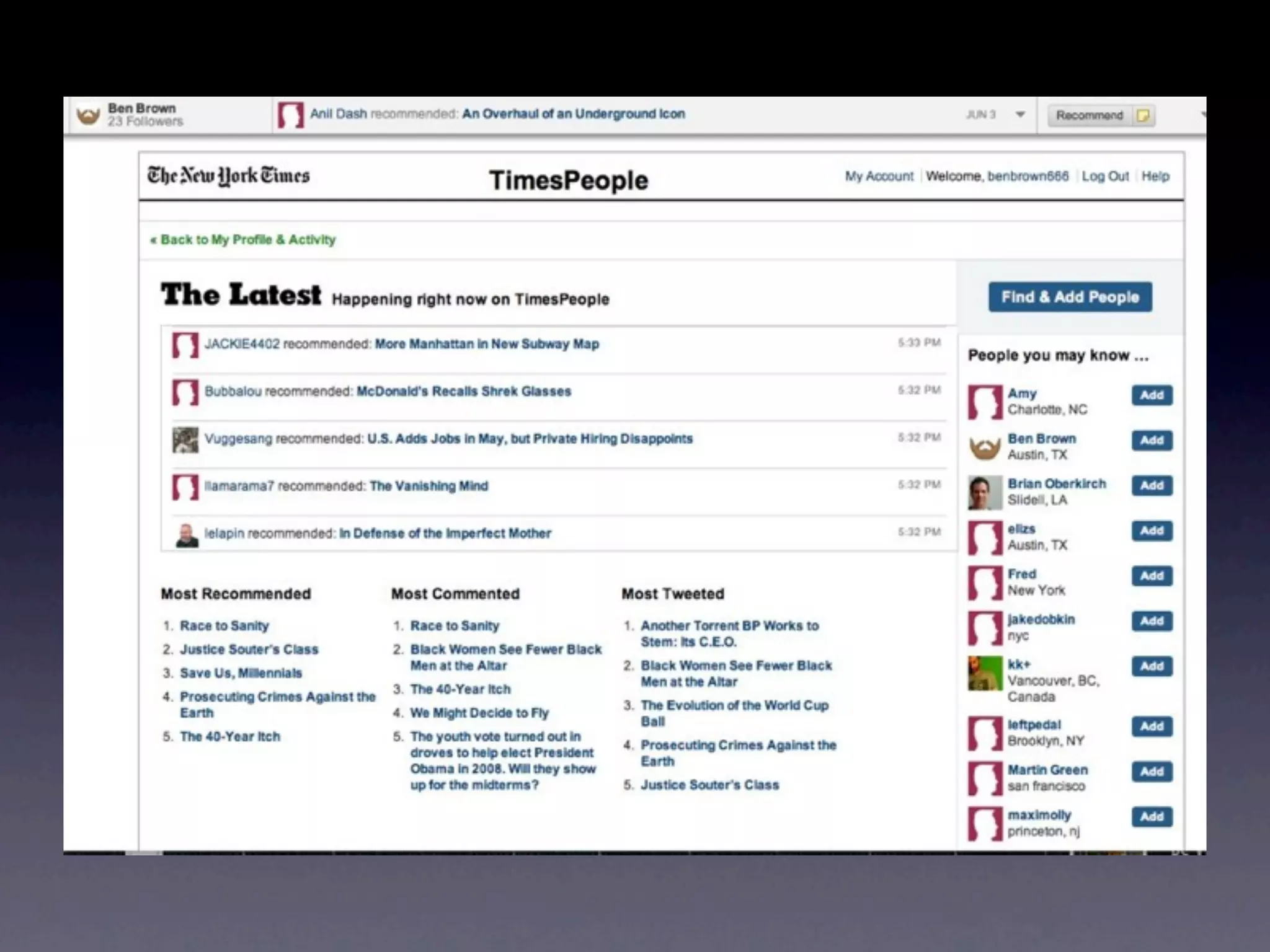
  • #27 Times People doesn’t ask its members to do anything besides recommend articles to their friends. This is something that people were already doing, but now it happens on-site, and NYT can benefit from having access to the information these recommendations generate.
  • #28 Even though there is no original content being created here, there is a feeling of community and liveliness that all this activity creates
  • #29 On the dooce community, where we’ve had a quarter million comments in six months, the users have started organizing group activities like the cultural exchange, and regional groups. We’re going to start experimenting with group functionality soon! On Consumating, people started organizing casual group get togethers which lead to “proms,” and the creation of an event planning system.
  • #30 Your community is essentially a 24 hour, global party.  Guess what, you are the host! How do you make sure that everyone behaves?
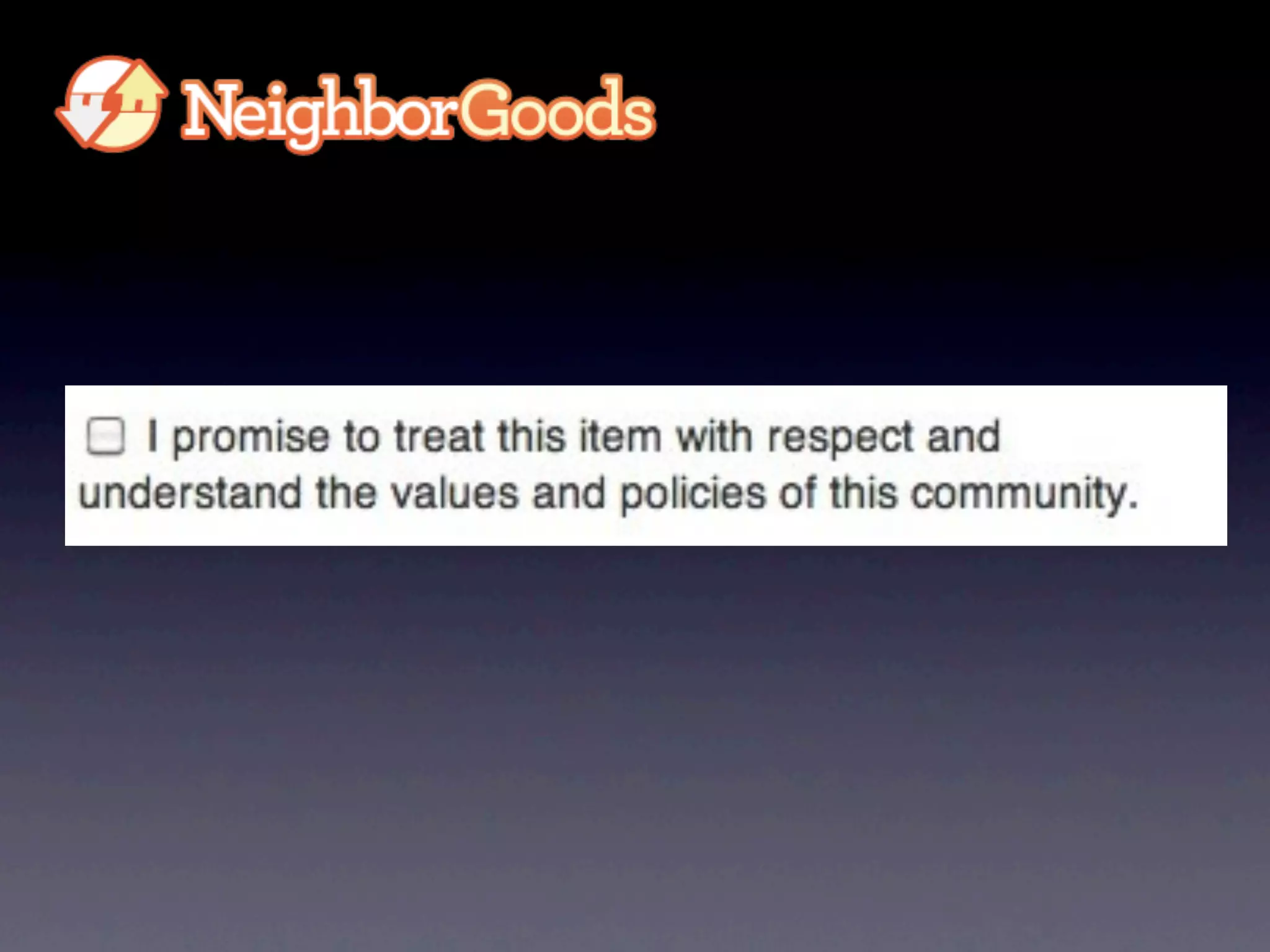
  • #31 The culture is in everything - what you call a member, what the button says, how you describe the relationship between members. People tend to believe what you tell them.
  • #34  TONE What is this site for?  Be specific and concise. How is the purpose going to be conveyed through the language on the site? Who are the moderators? Introduce them and explain their role on the site. DEFINE THE RULES Ask yourself what you'd like to see in your community and work from there to establish rules.  What sort of post should elicit a response from the moderator? What sort of posts will be deleted immediately? COMMUNICATE THE RULES Consider where you'd like to post the rules of the community. We recommend putting them front and center as members sign up. And keep them on a page that is linked to persistently across the site. Re-enforce the rules using positive feedback.  Highlight good users and good behavior instead of punishing bad behavior.  Every time you ban a user or delete a comment, users will take notice. Remember, different users have different feelings about what is and isn't appropriate.  Some people may be sympathetic to "the bad guy," especially if the bad guy is otherwise popular. Do not engage in public arguments about how or why the rules have been enforced.  Use private messaging, or better yet, direct email messages to the involved parties. Keep in mind that as the community grows, the rules may change somewhat. The members might use the site in a way we hadn't anticipated. 
  • #35  TONE What is this site for?  Be specific and concise. How is the purpose going to be conveyed through the language on the site? Who are the moderators? Introduce them and explain their role on the site. DEFINE THE RULES Ask yourself what you'd like to see in your community and work from there to establish rules.  What sort of post should elicit a response from the moderator? What sort of posts will be deleted immediately? COMMUNICATE THE RULES Consider where you'd like to post the rules of the community. We recommend putting them front and center as members sign up. And keep them on a page that is linked to persistently across the site. Re-enforce the rules using positive feedback.  Highlight good users and good behavior instead of punishing bad behavior.  Every time you ban a user or delete a comment, users will take notice. Remember, different users have different feelings about what is and isn't appropriate.  Some people may be sympathetic to "the bad guy," especially if the bad guy is otherwise popular. Do not engage in public arguments about how or why the rules have been enforced.  Use private messaging, or better yet, direct email messages to the involved parties. Keep in mind that as the community grows, the rules may change somewhat. The members might use the site in a way we hadn't anticipated. 
  • #36  TONE What is this site for?  Be specific and concise. How is the purpose going to be conveyed through the language on the site? Who are the moderators? Introduce them and explain their role on the site. DEFINE THE RULES Ask yourself what you'd like to see in your community and work from there to establish rules.  What sort of post should elicit a response from the moderator? What sort of posts will be deleted immediately? COMMUNICATE THE RULES Consider where you'd like to post the rules of the community. We recommend putting them front and center as members sign up. And keep them on a page that is linked to persistently across the site. Re-enforce the rules using positive feedback.  Highlight good users and good behavior instead of punishing bad behavior.  Every time you ban a user or delete a comment, users will take notice. Remember, different users have different feelings about what is and isn't appropriate.  Some people may be sympathetic to "the bad guy," especially if the bad guy is otherwise popular. Do not engage in public arguments about how or why the rules have been enforced.  Use private messaging, or better yet, direct email messages to the involved parties. Keep in mind that as the community grows, the rules may change somewhat. The members might use the site in a way we hadn't anticipated. 
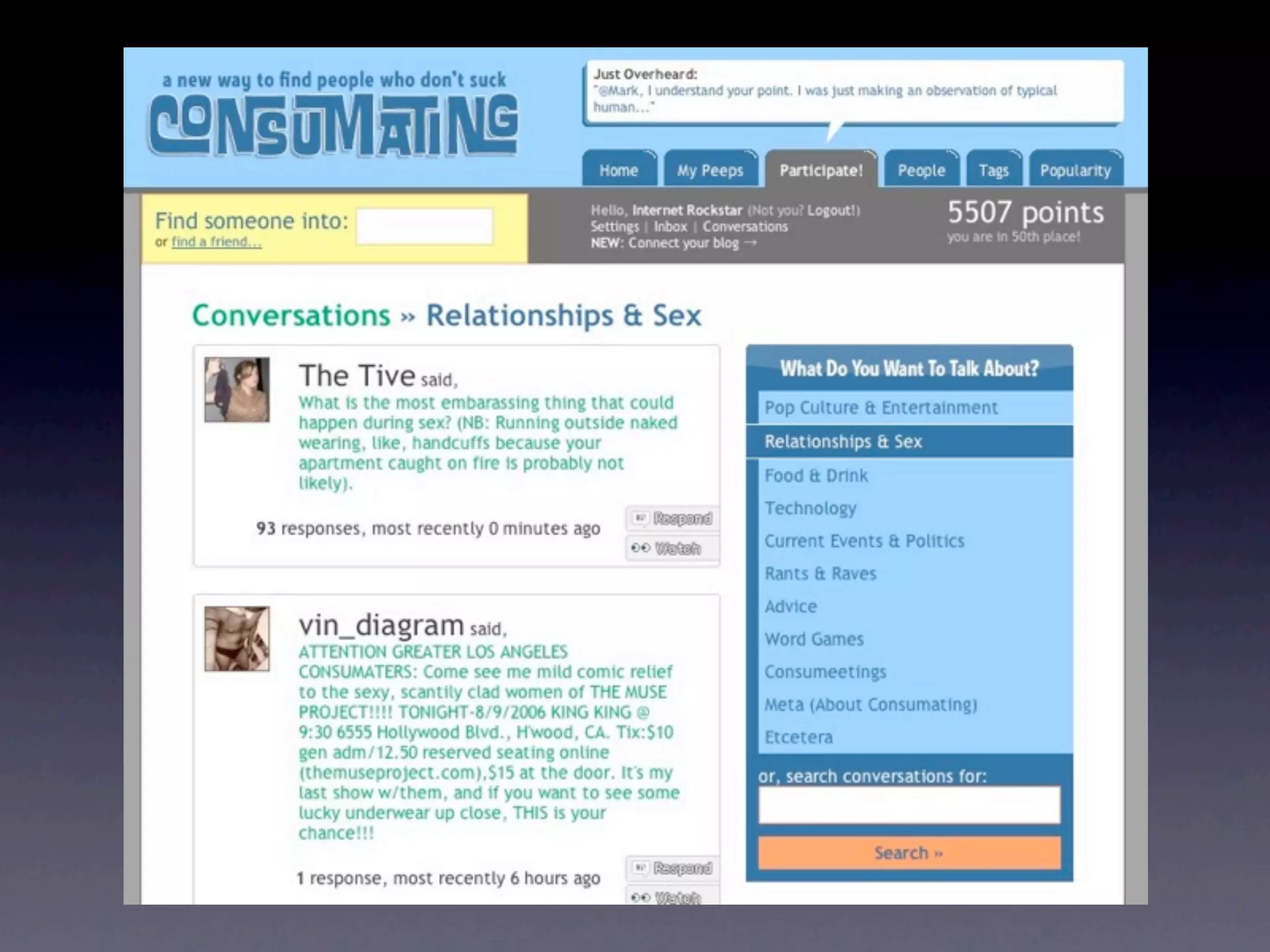
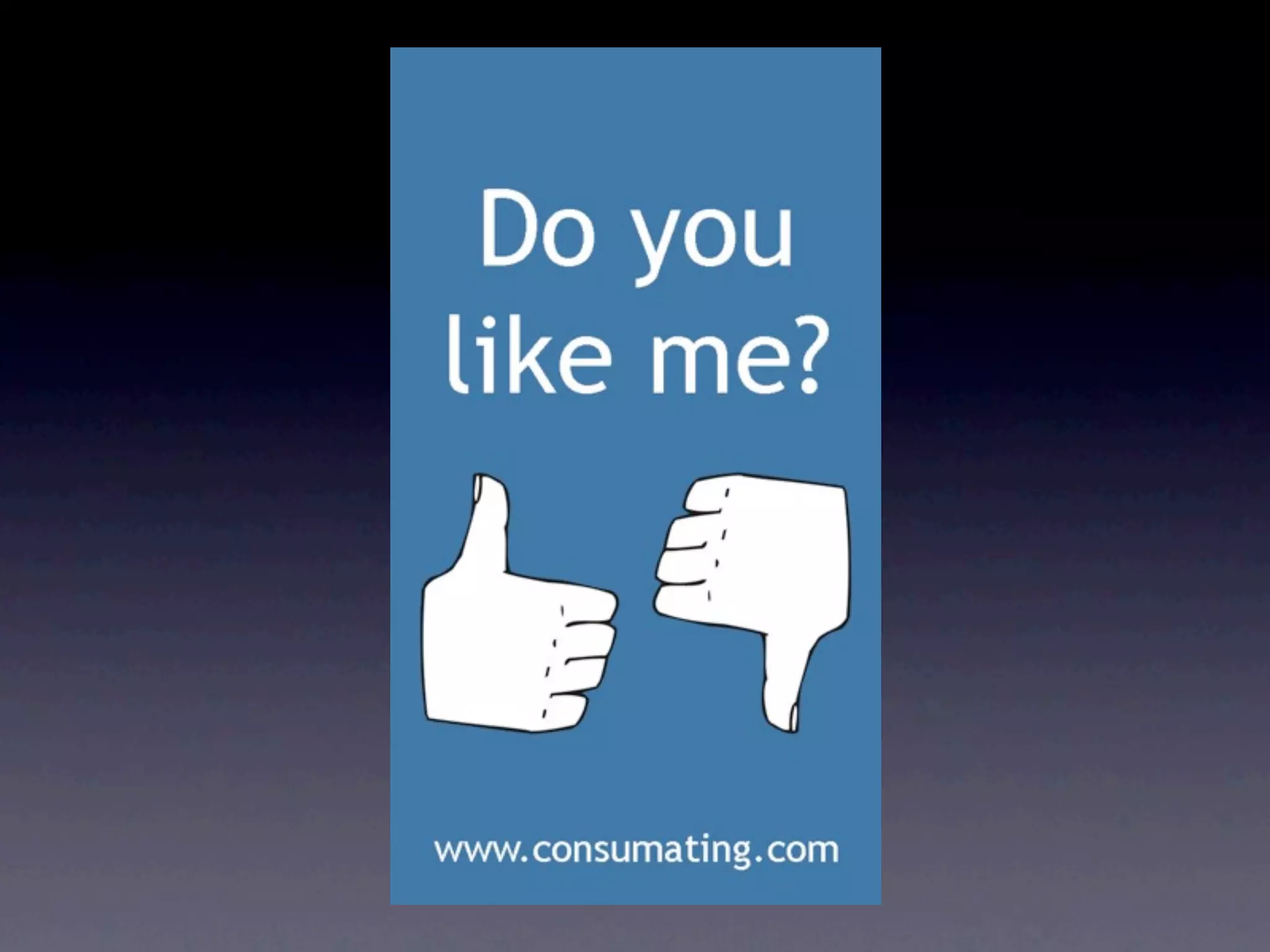
  • #40 Consumating had a system where users could give each other thumbs up when they liked something, or thumbs down when they didn’t. The idea was, users would learn what worked and what didn’t, and that we’d be able to make better and better dating recommendations based on this info. There were 2 critical flaws. Users earned points when they got a thumbs up, and LOST points when they got a thumbs down. This lead to a very negative behavior! People ganged up on each other and “thumb bombed” People would also use it to punish other users The popularity system also created unimpeachable popular users. Once you were popular, you would ALWAYS be popular. LESSONS LEARNED: * Negative functions are no good. users shouldn’t be able to attack one another! * If you are going to build some sort of ranking, it needs to calculate ranks on a rolling basis * you have to make sure that you are incentivizing some behavior that is valuable to you. Consumating’s system essentially incentivized gangs of thugs! That was no good for anyone!
  • #41 your best users will be dedicated and helpful. they will help you moderate your site, give you the best kind of feedback, and help you through the tough times. it is a really good idea to cultivate a group of super users to help you launch new features and redesigns. they can test for you, but they can also advocate for the changes you are making. however, you have to be careful! the same passion that makes them a good user can also make them dangerous!