Building a Citizen Engaged
Research Project
Case Study: Humanitarian OpenStreetMap Team
Heather Leson
ESA Earth Observation Summer School
Frascati, Italy August 4, 2016
About
Free, up-to-date maps are a critical
resource when relief organizations are
responding to disasters or political
crises. The Humanitarian
OpenStreetMap Team (HOT) creates
and provides those maps.
HOT provides community driven
mapping, technical tools and training to
support the use of OSM for humanitarian
and economic development purposes.
Missing Maps is an open,
collaborative project in which you
can help to map areas where
humanitarian organisations are
trying to meet the needs of
vulnerable people.
Partners include American Red
Cross, British Red Cross,
Medicine San Frontieres,
CartoONG, Dutch Red Cross
and HOT.
www.DigitalHumanitarians.com
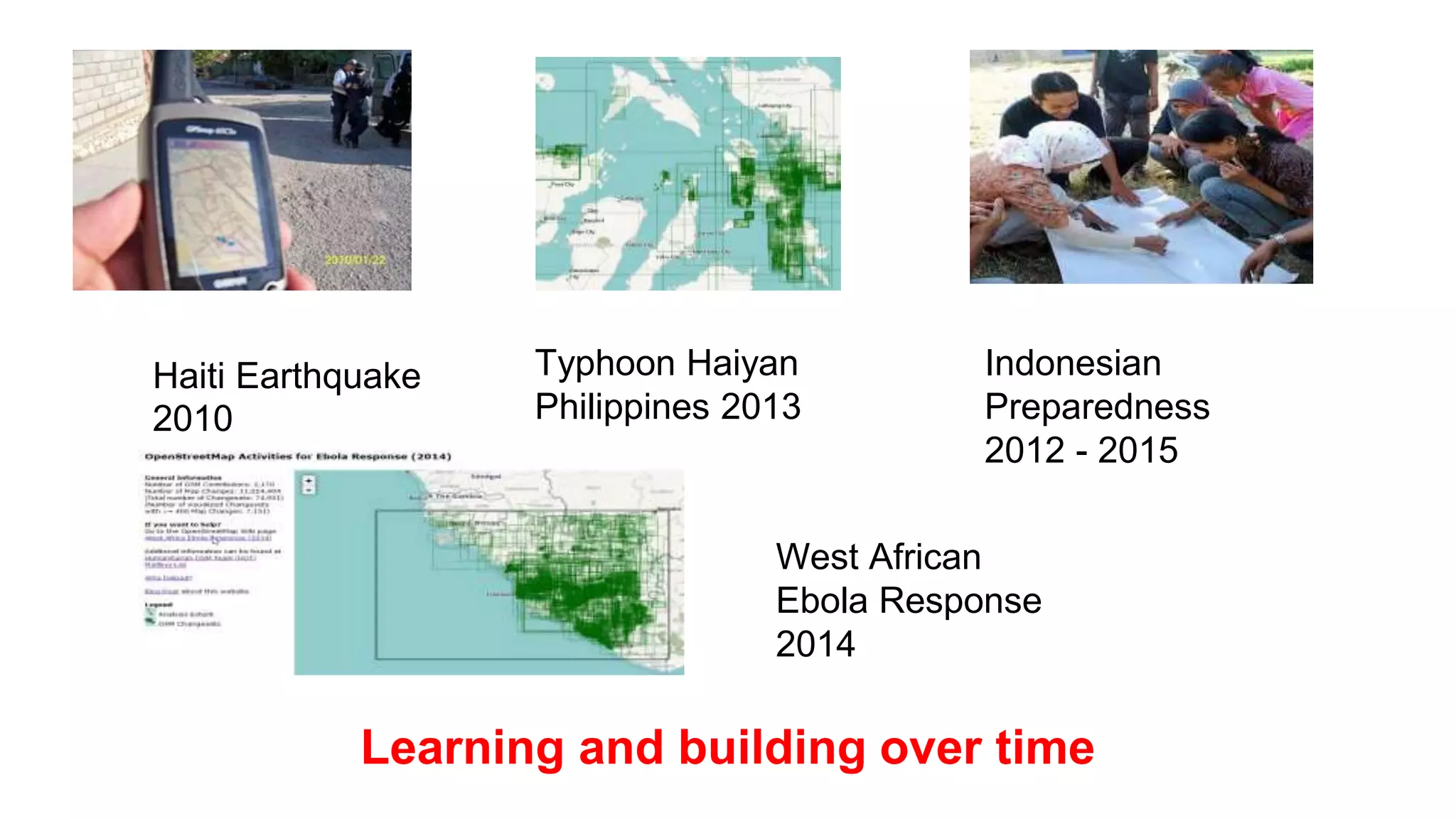
Learning and building over time
Haiti Earthquake
2010
Typhoon Haiyan
Philippines 2013
Indonesian
Preparedness
2012 - 2015
West African
Ebola Response
2014
OpenStreetMap and HOT’s tools are built with large open source
tools, software and products.
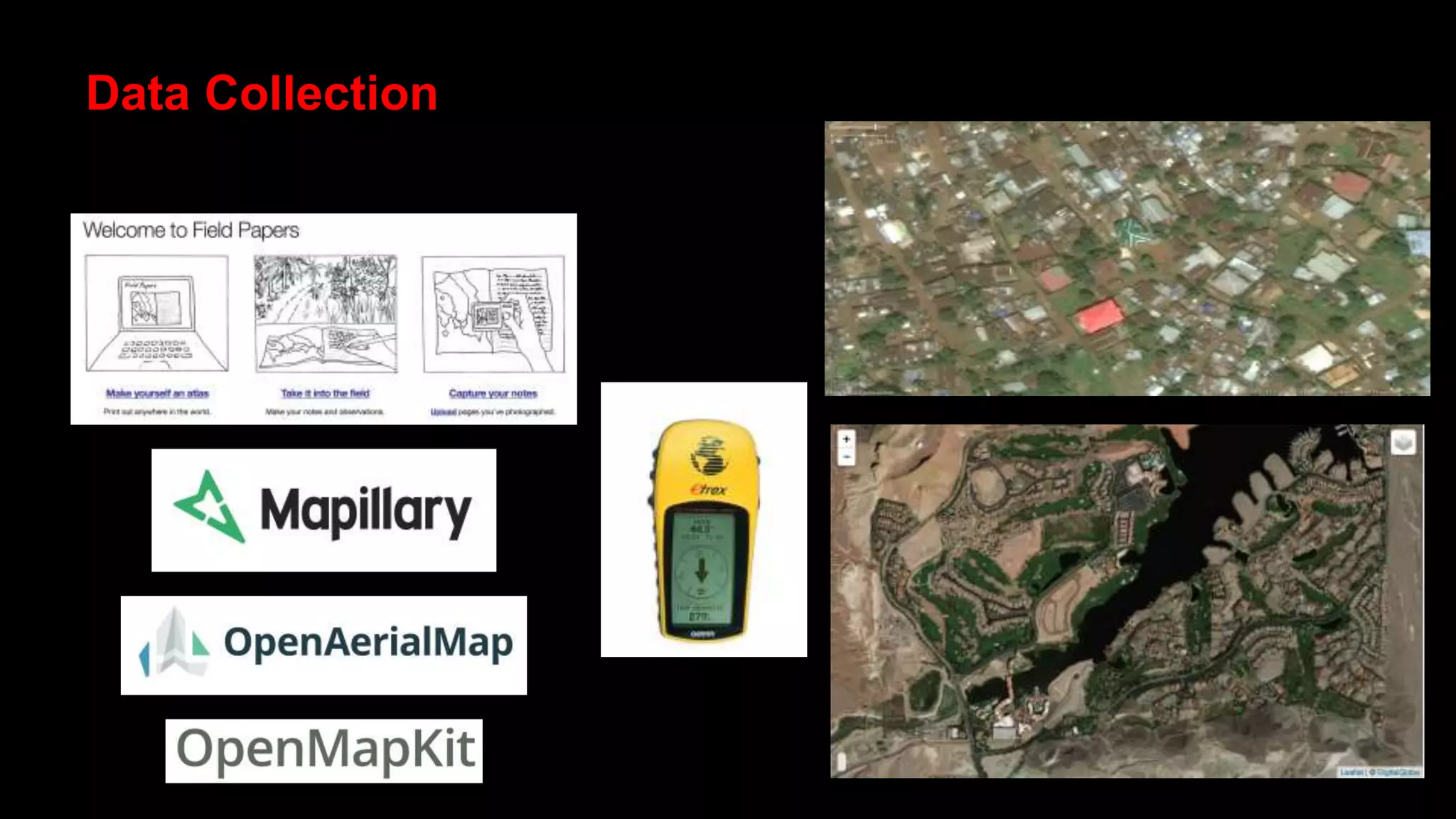
Data Collection
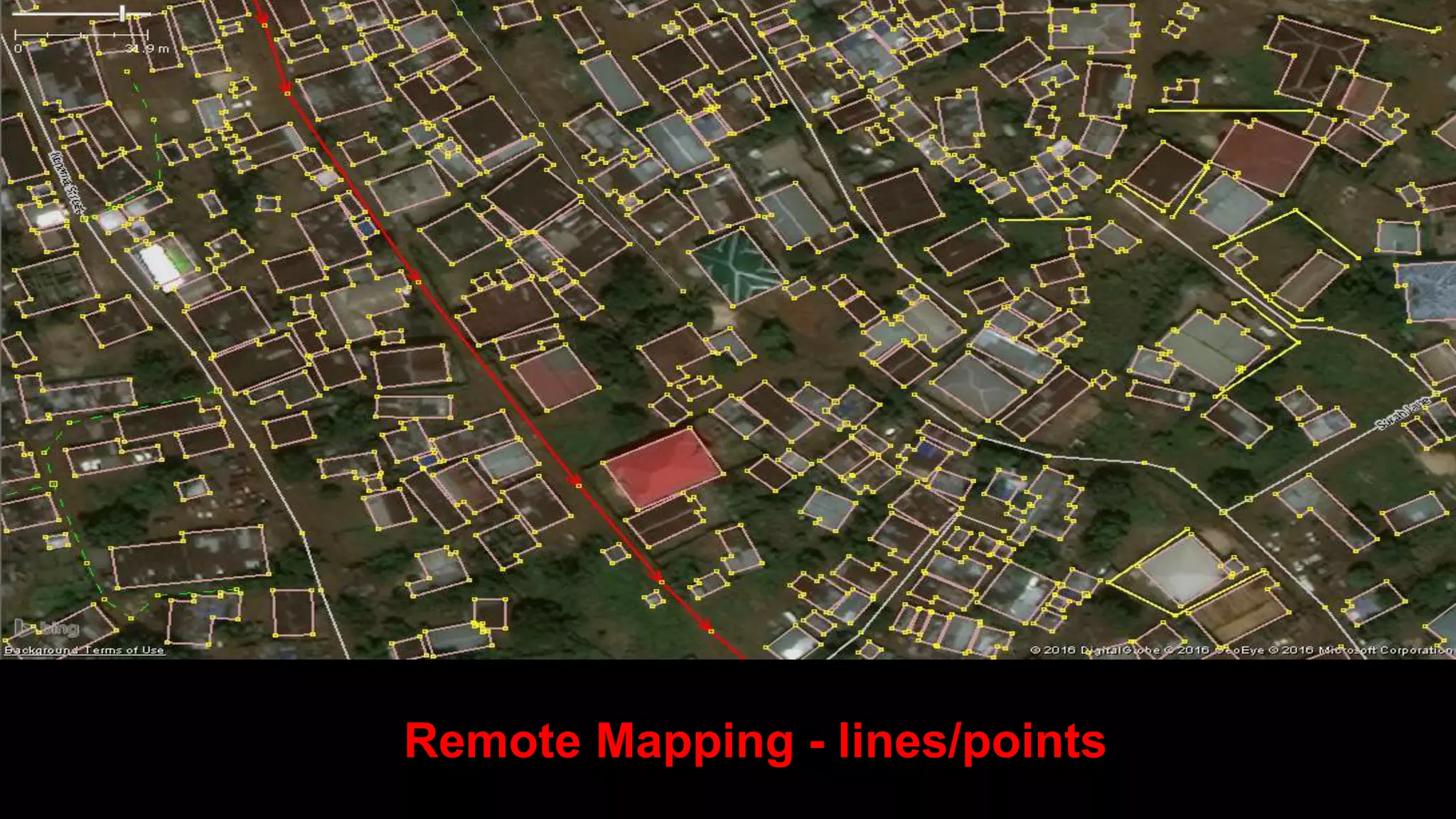
Remote Mapping - lines/points
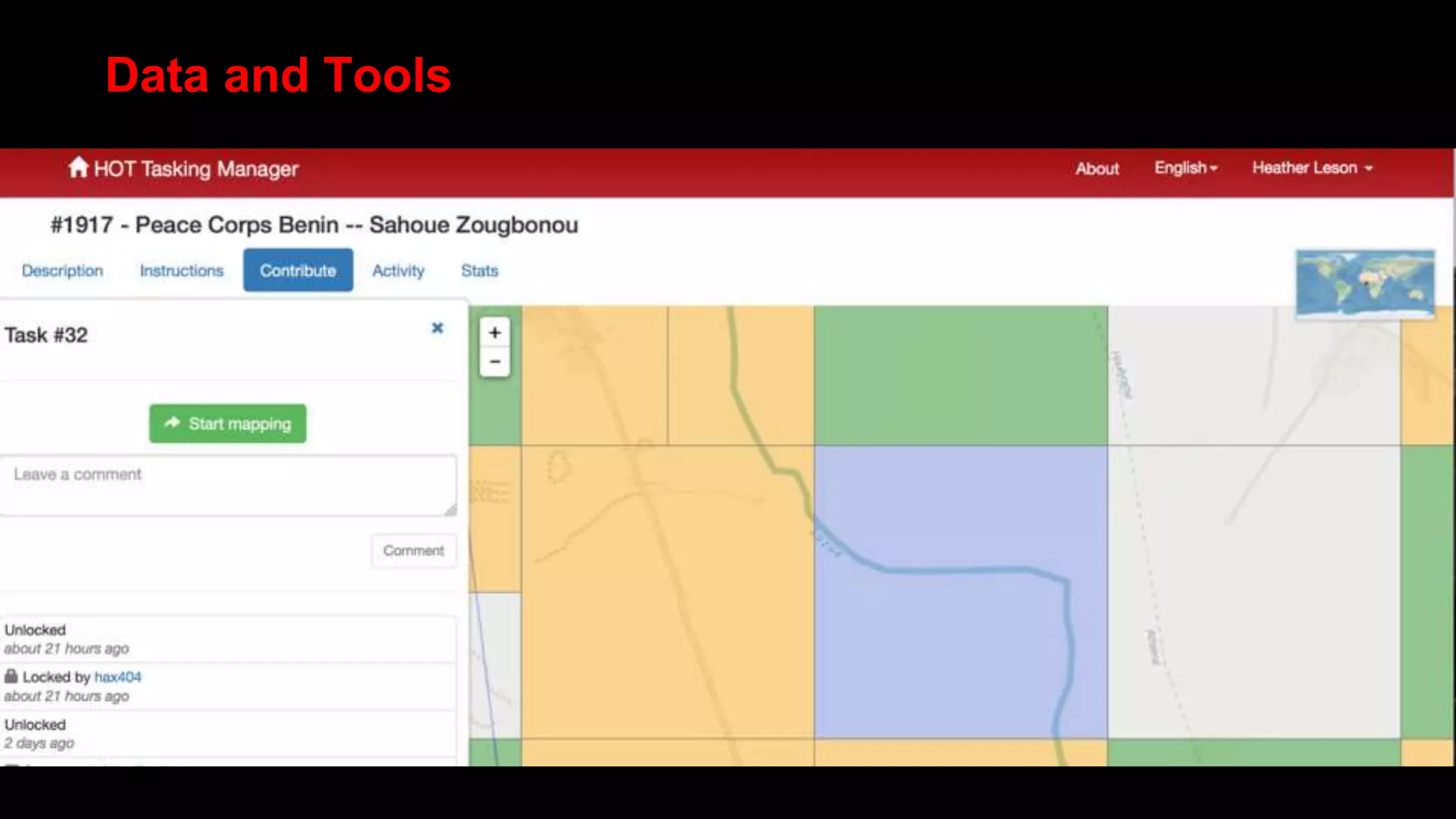
Data and Tools
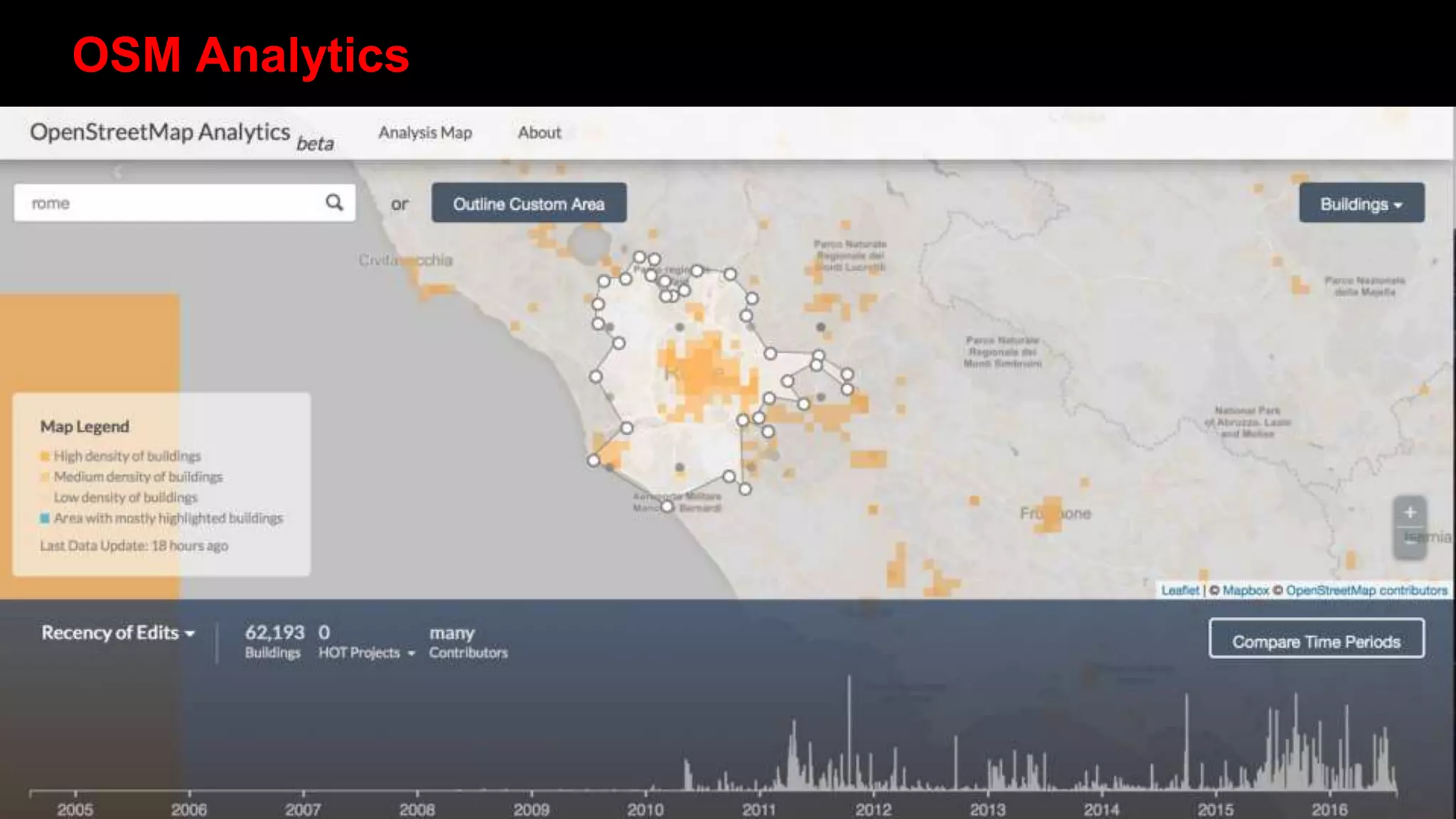
OSM Analytics
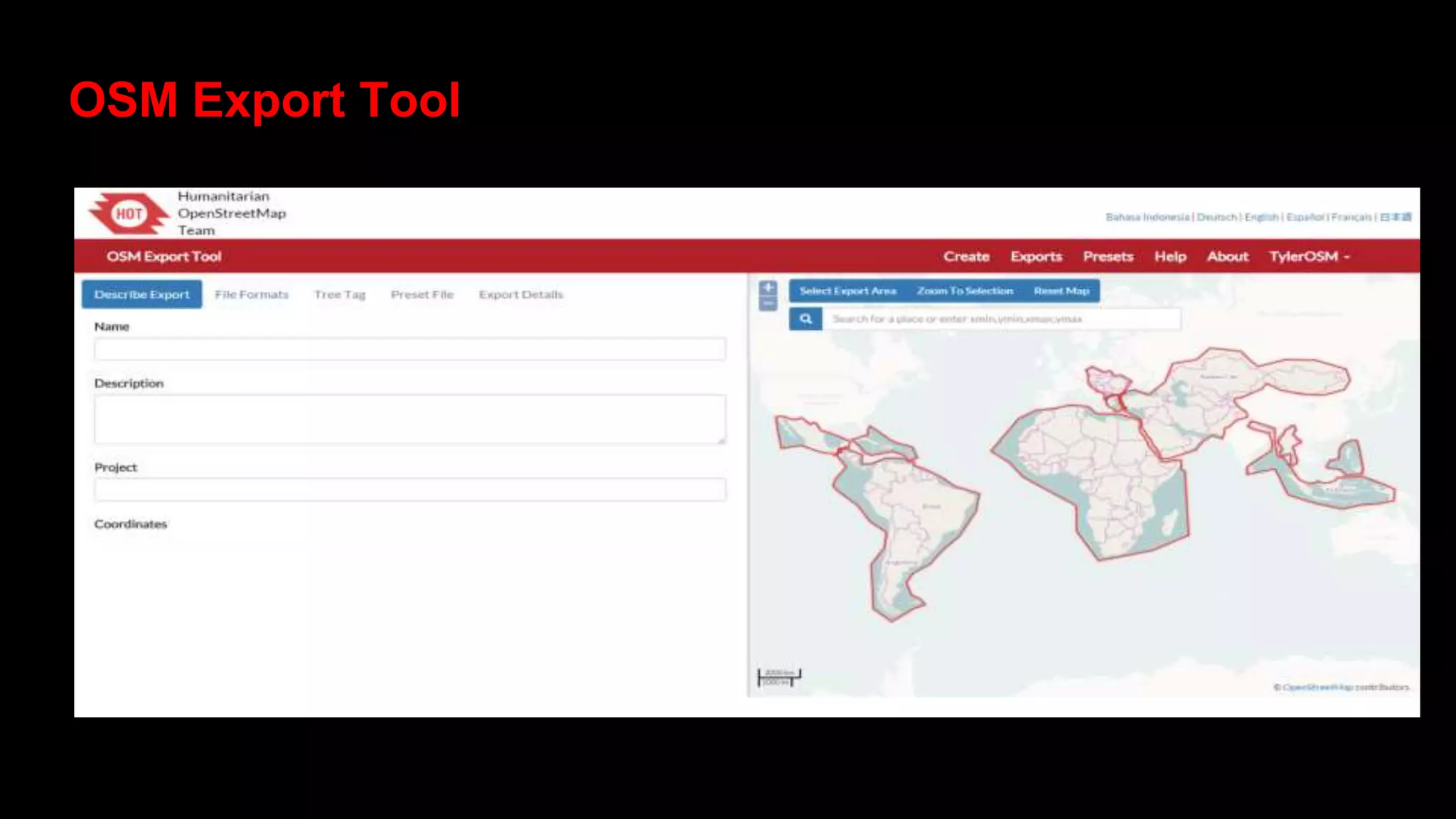
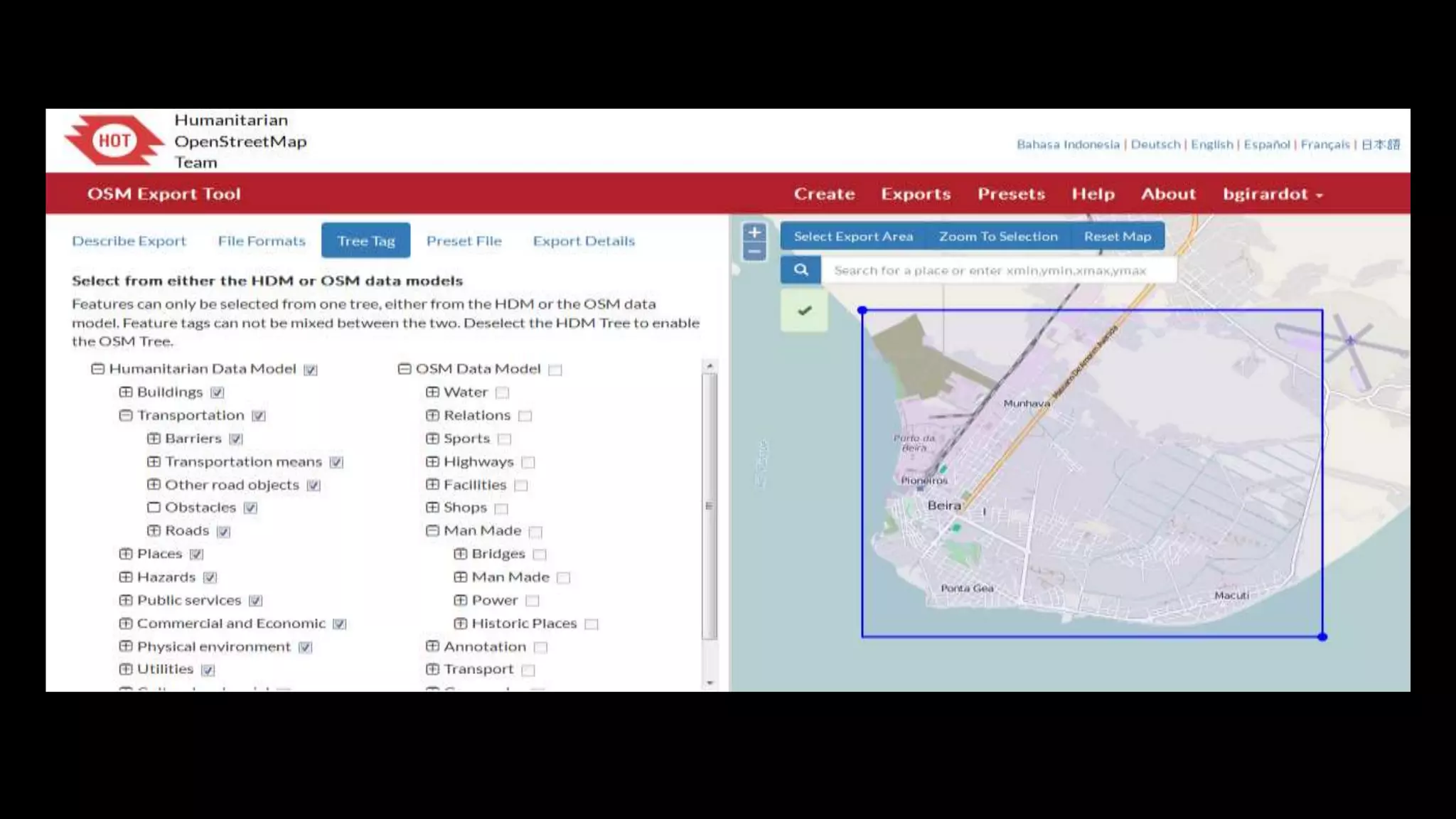
OSM Export Tool
add a slide on how the tool works
minute by minute replication of OSM
etc
Drazen?
HOT and Missing Maps are not
“research” projects. Research is welcome.
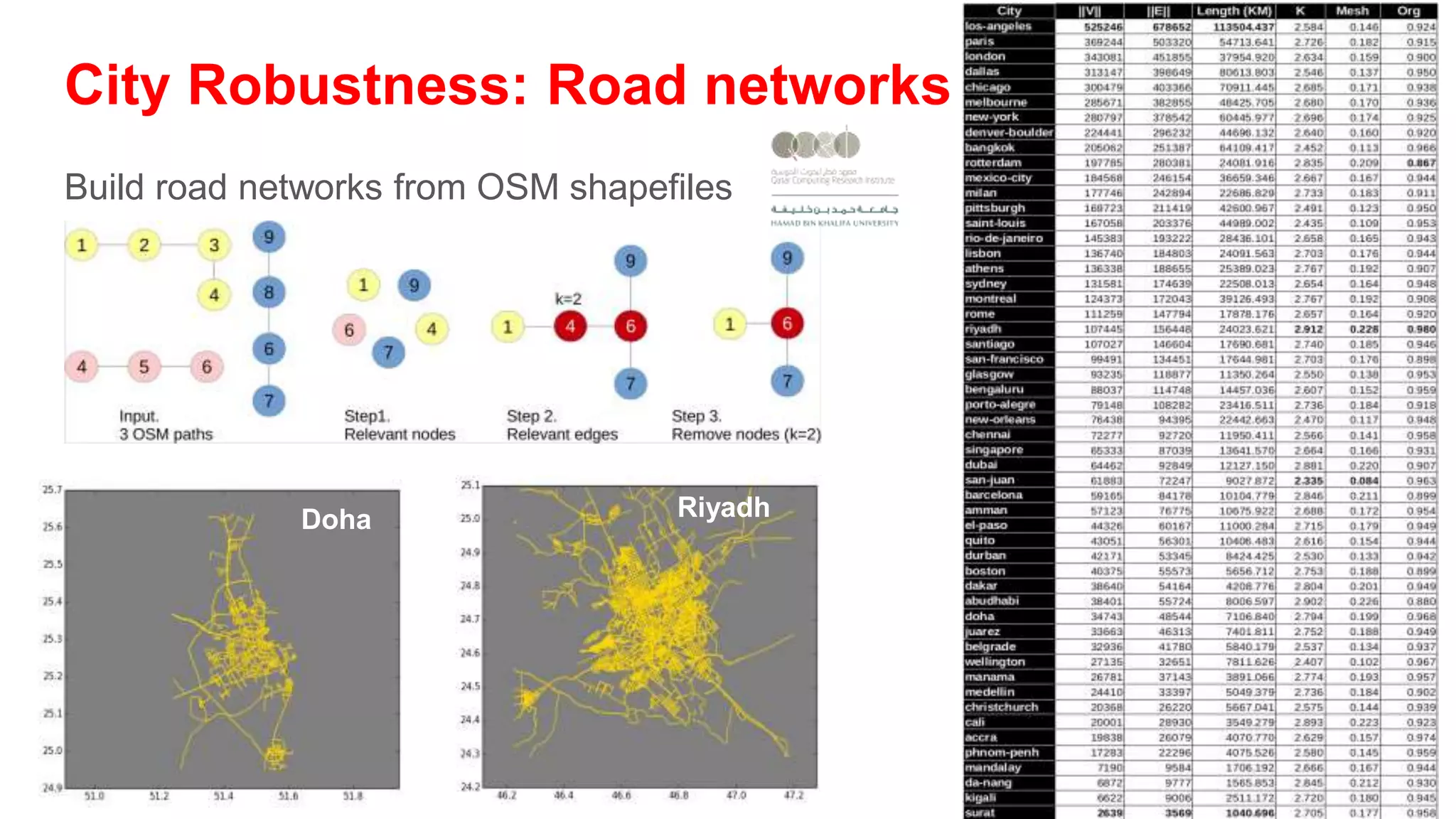
City Robustness: Road networks
Build road networks from OSM shapefiles
Doha Riyadh
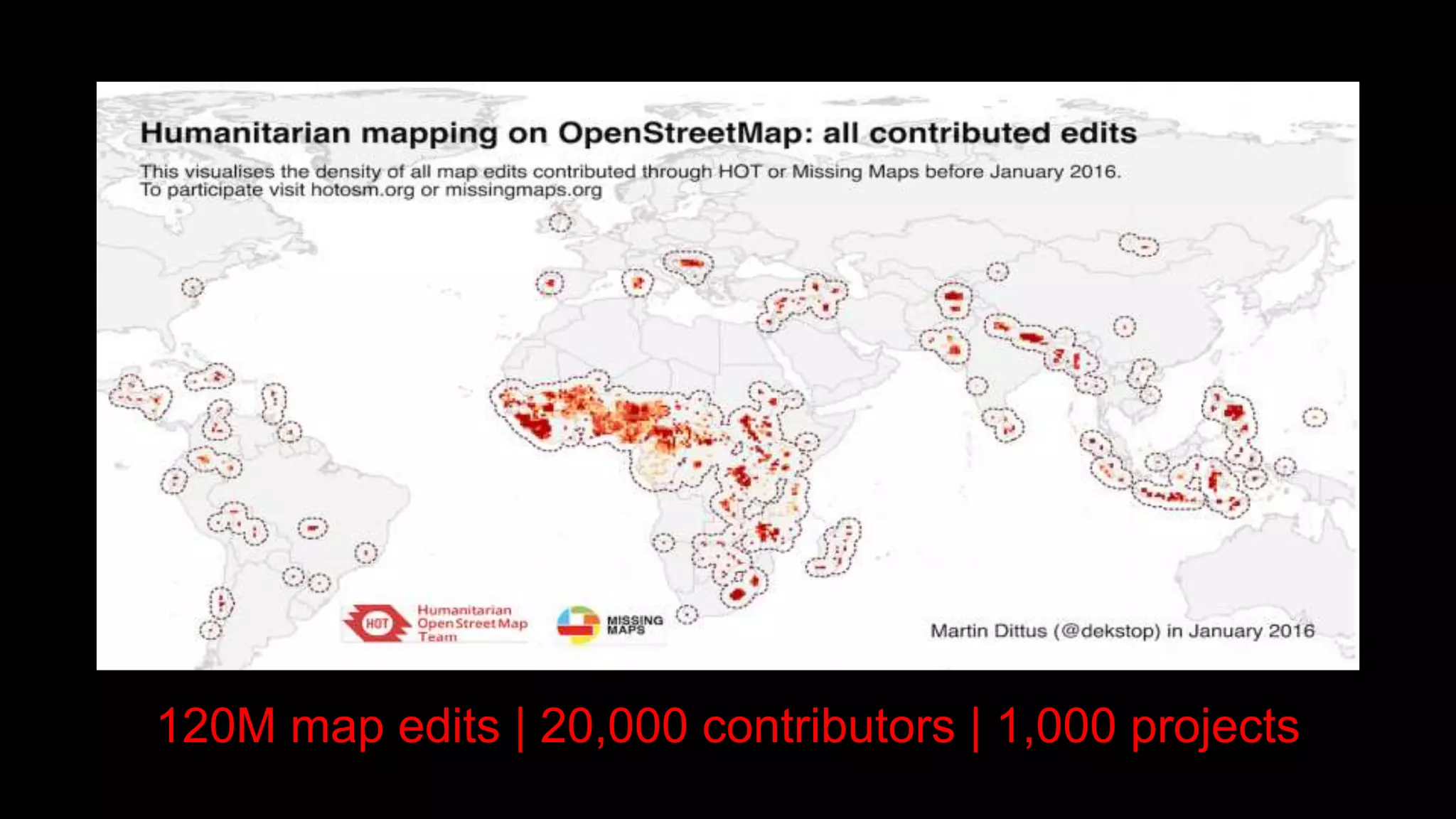
120M map edits | 20,000 contributors | 1,000 projects
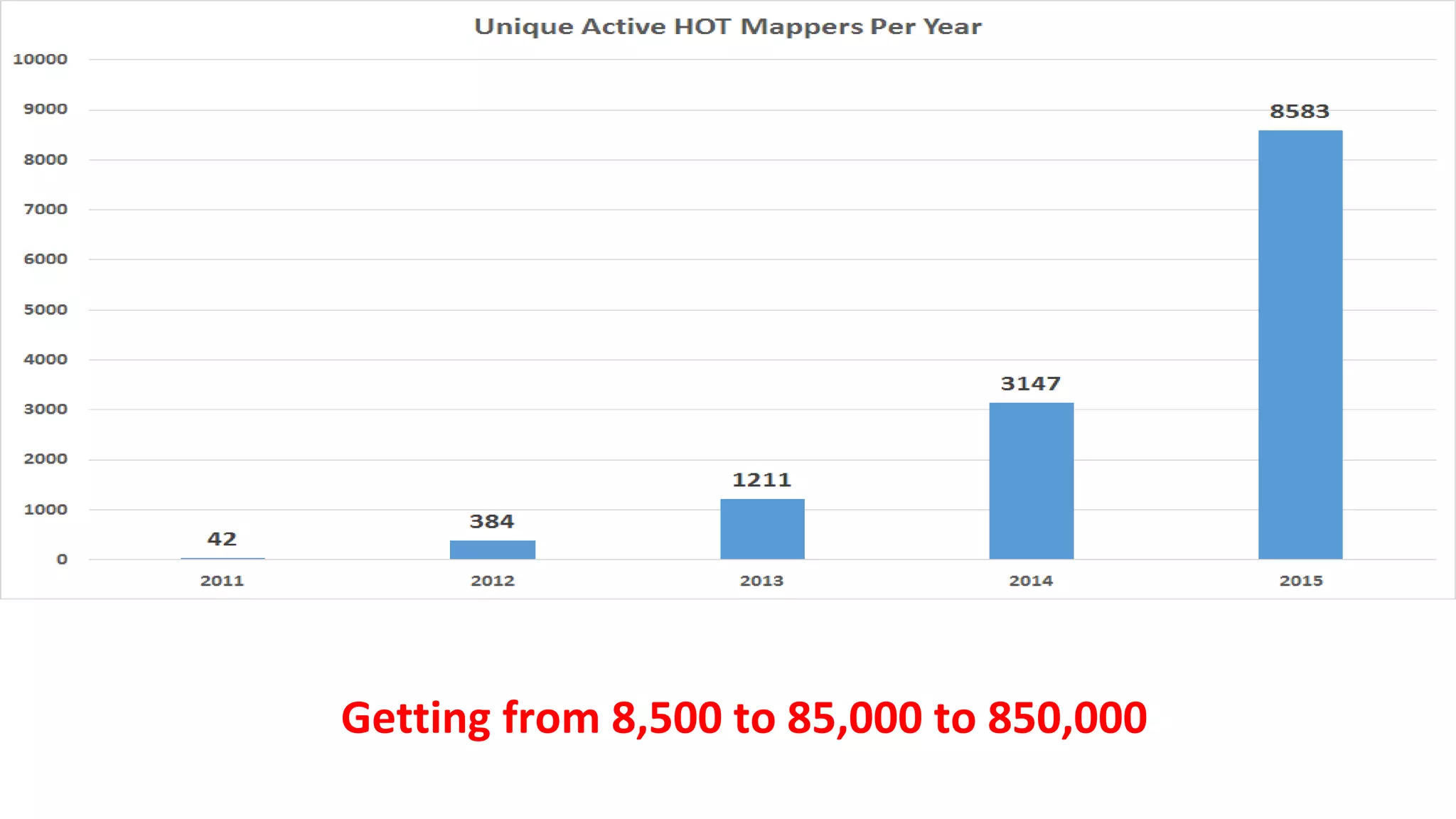
Getting from 8,500 to 85,000 to 850,000
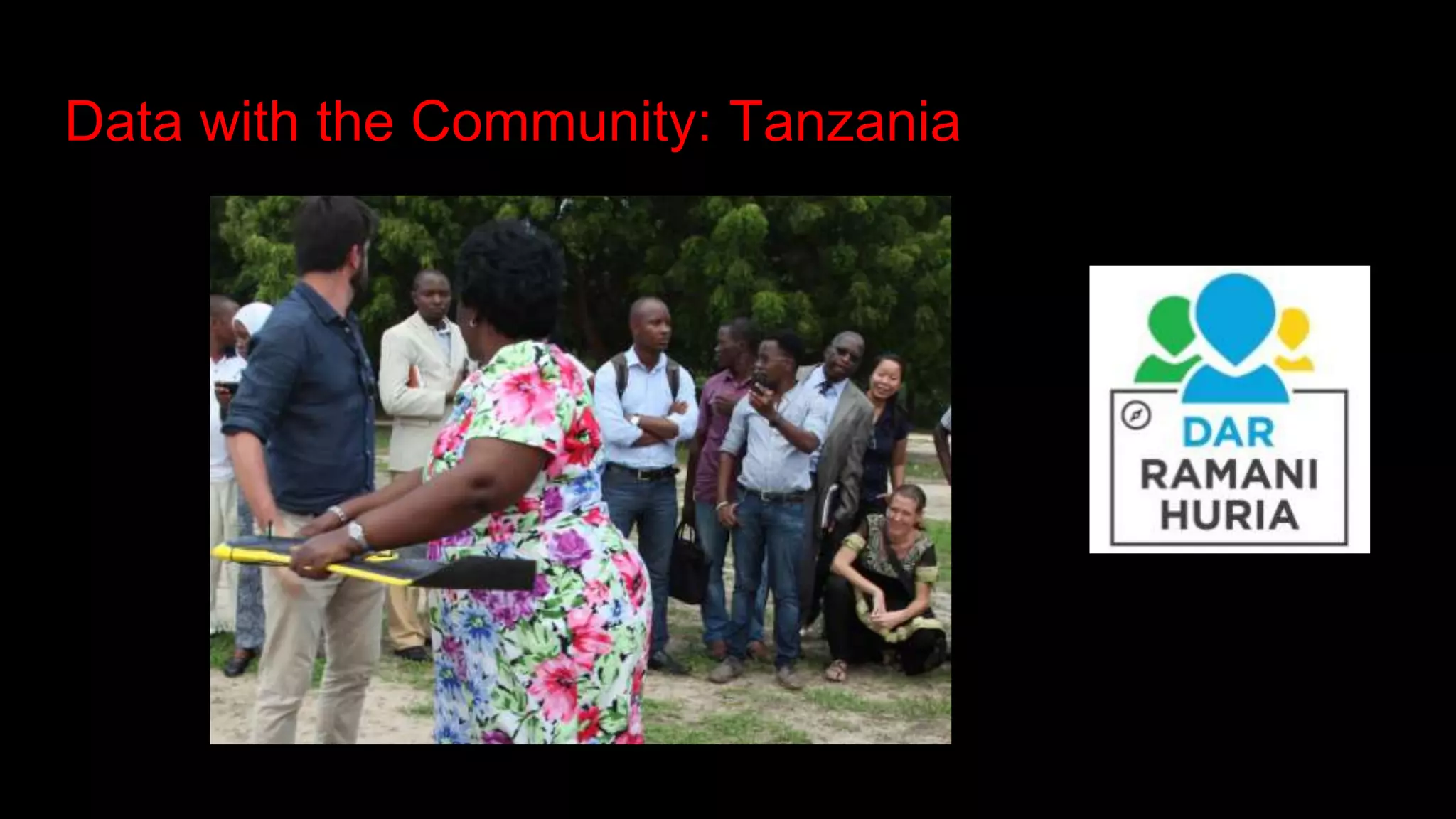
Data with the Community: Tanzania
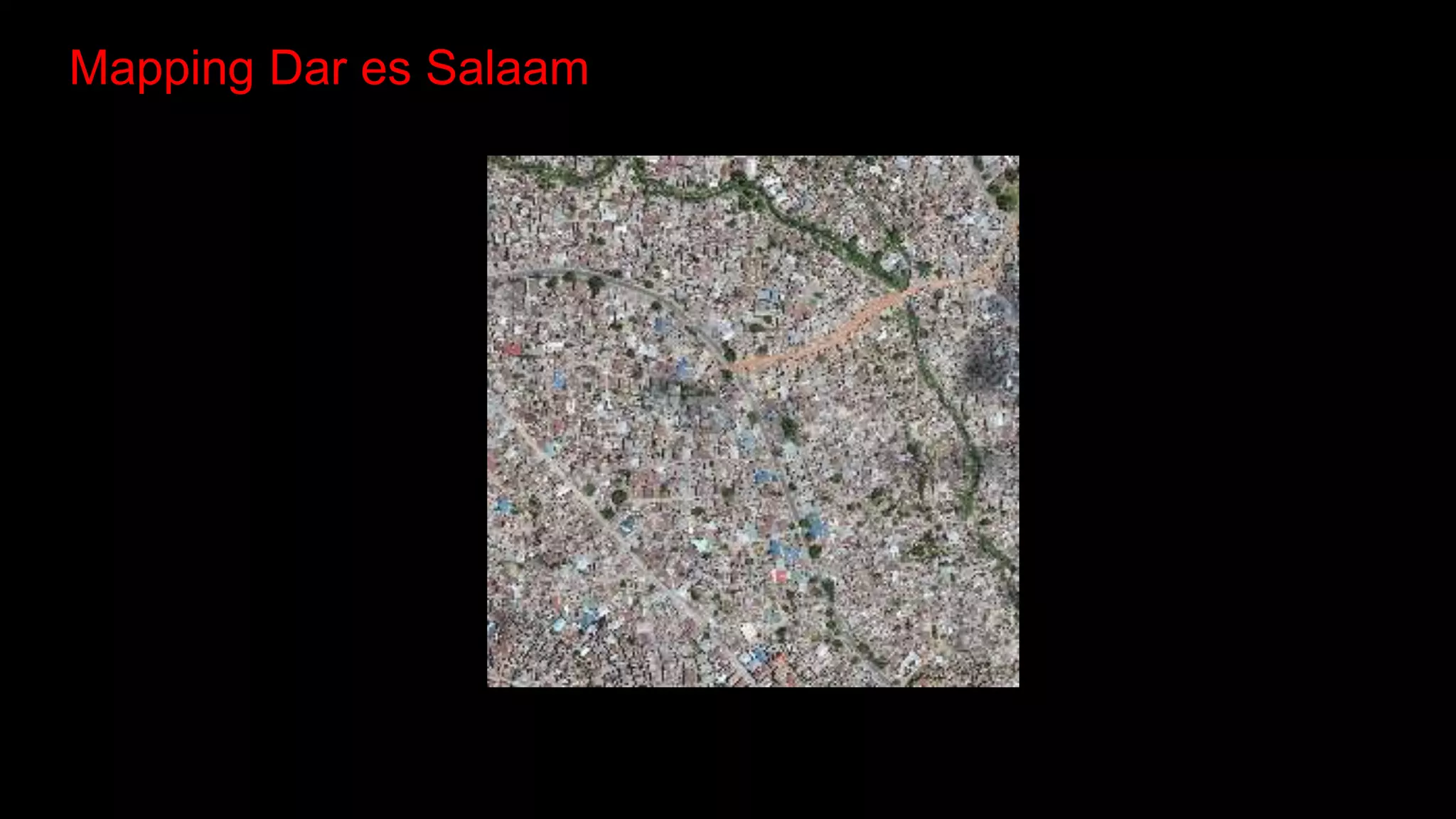
Mapping Dar es Salaam
Research Paper
The Praxis of Community Mapping in
Developing Countries - Mark Iliffe
● Research done in collaboration with the local
communities, HOT and the World Bank.
● The programme was not a result of the research
but it informed the work.
● Mark has been advocating for more research in
HOT and is setting an example for methodology
and community development.
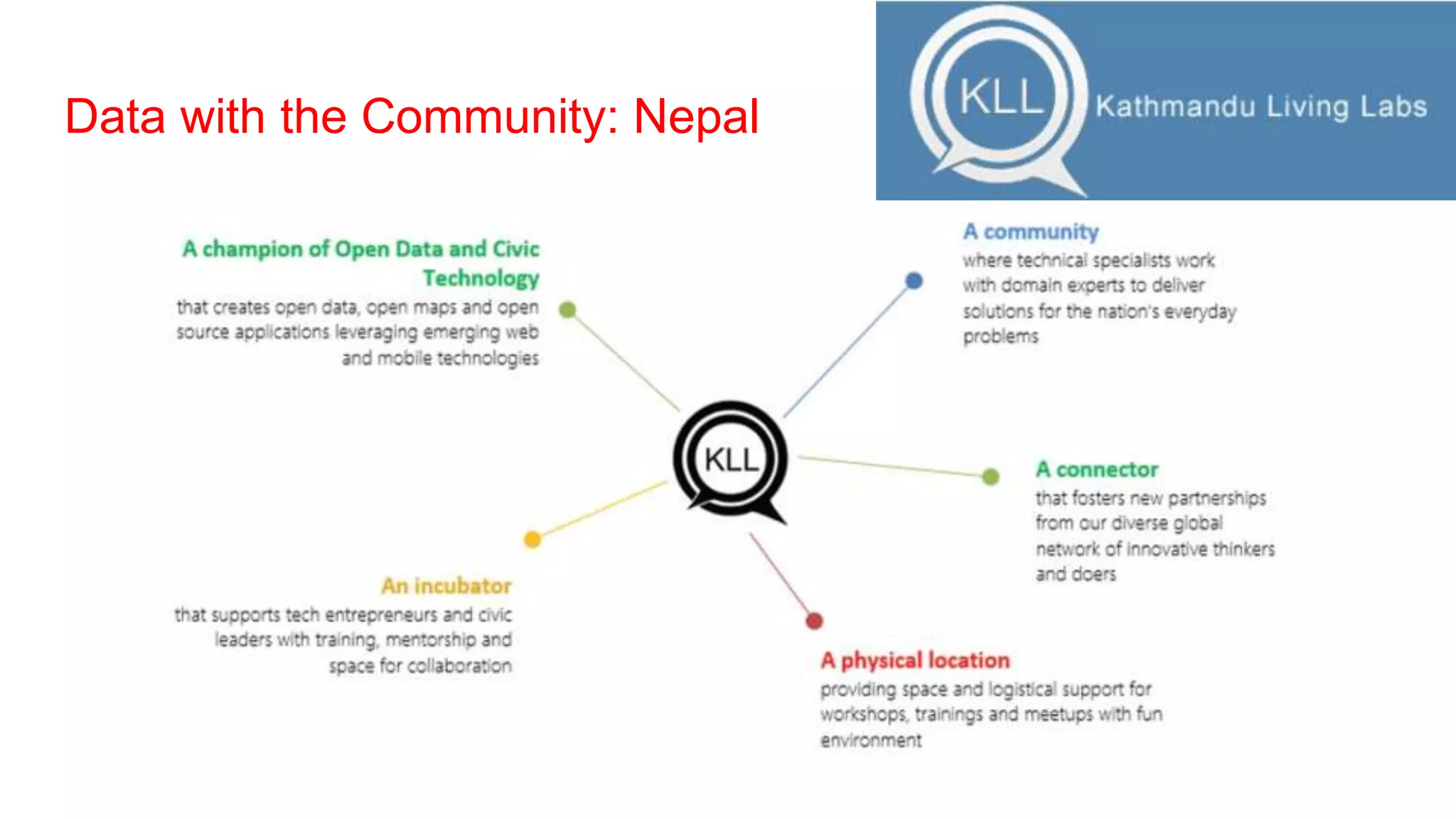
Data with the Community: Nepal
Research Papers
Community as curriculum youth community informatics curriculum
integrating inquiry and social action with technology – Nama Budhathoki
Infrastructure in the wild: What mapping in Post-Earthquake Nepal Reveals
about infrastructural emergence – Robert Soden, Leysia Palen
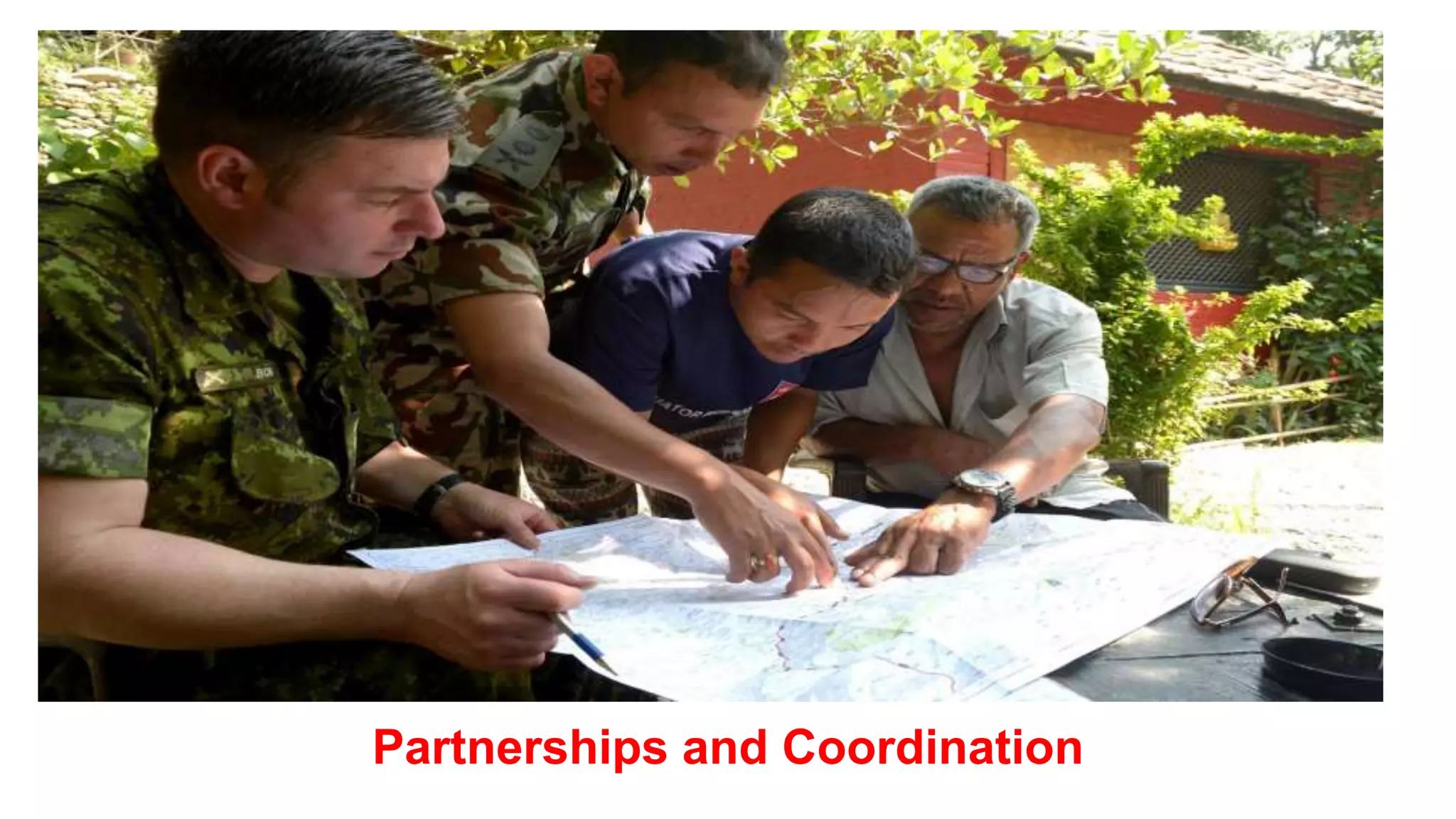
Partnerships and Coordination
Potential HOT Research Topics
New Tools
● Satellite quality, Algorithms, Computer Vision
● Help and Local guides
Contributor Experiences
Evaluating/understanding community
Impact of UX on mapping activities
Quality control / Validation
Impact of the map on the lives of affected communities
Diversity in the community
Ask a Researcher!
What is the timeline of the research?
Tell me more about your background and your institution
How much time will a survey /interview take?
Do you have an IRB (Institutional Review Board) process?
Will this call or email be recorded?
Did you user test the survey before sharing?
Who else are you speaking with from the digital community?
Will we (digital community) be cited or just the individual?
Are there anonymization issues that require attention (E.g. the value of your product may be
sensitive for first responders and humanitarian workers in the field)?
What other information products/ papers will you produce?
Can I review the work before you publish it?
Can you please confirm that [insert org] will be credited in the notes as a contributor?
HOT Academic Partnerships
1. Get to know us
2. Be clear from the start on your purpose
3. Let us help
4. Need research ideas? We’ve got research ideas
5. There are other ways to collaborate with HOT
6. Let us know about your findings
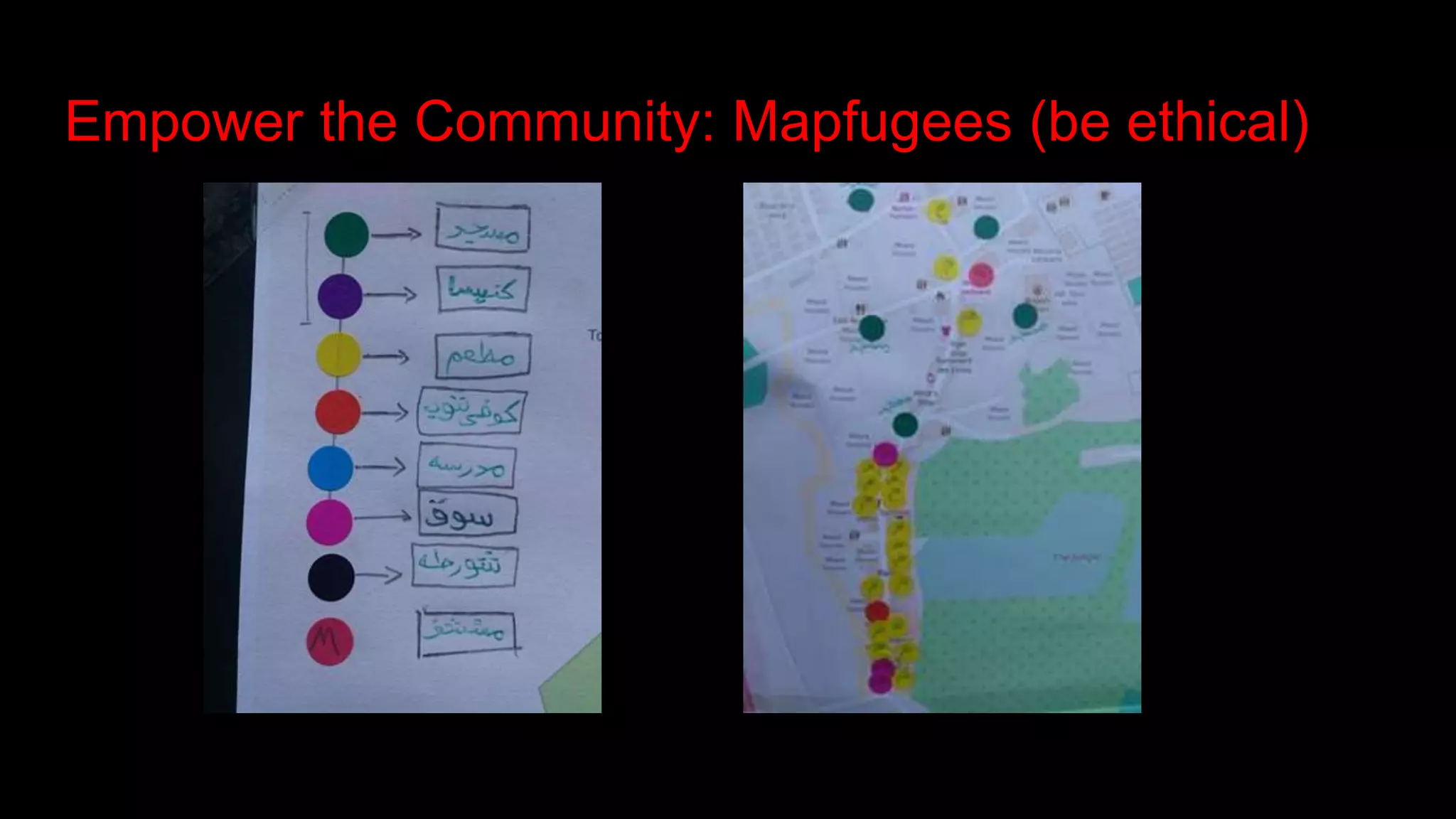
Empower the Community: Mapfugees (be ethical)
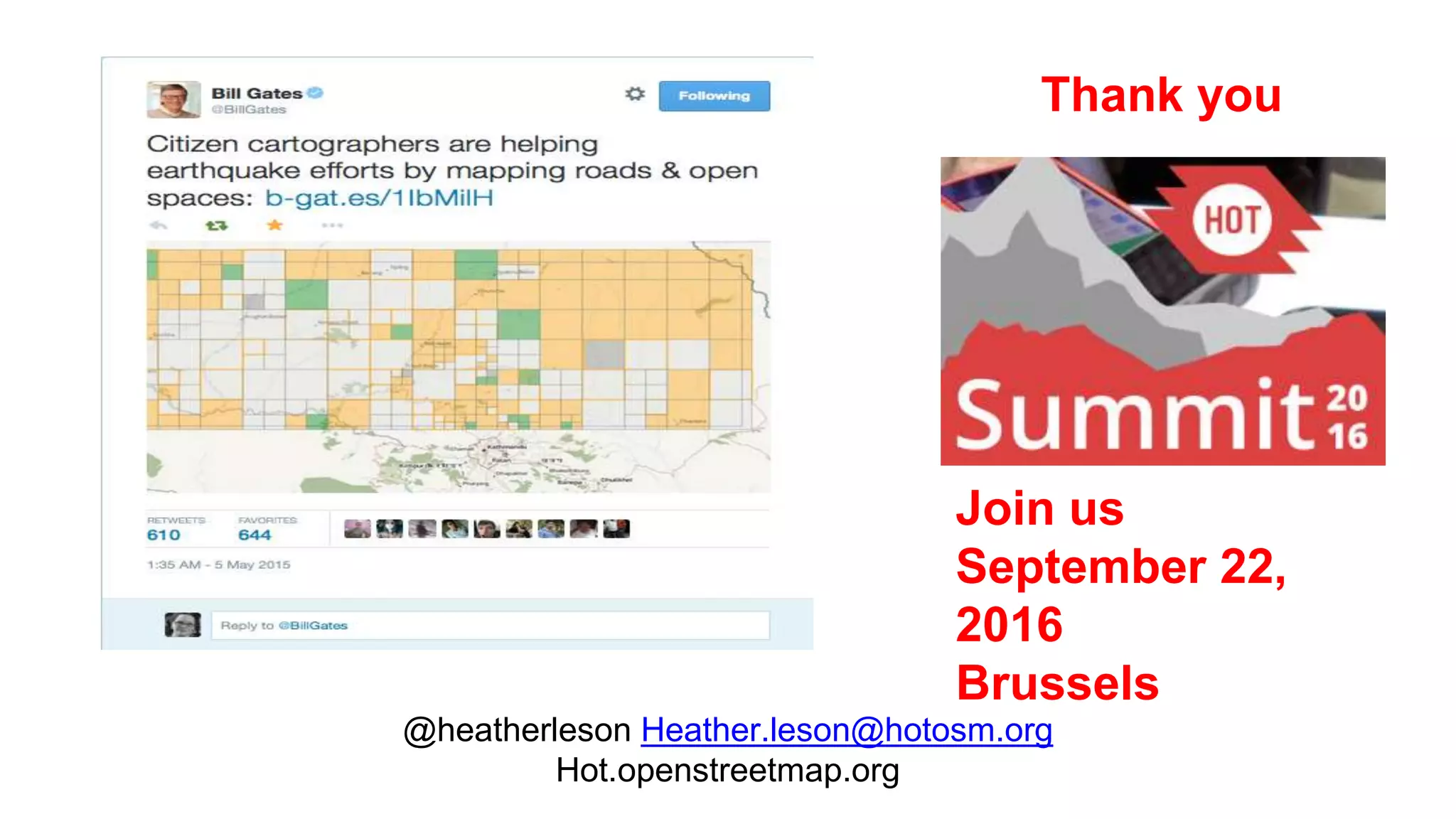
@heatherleson Heather.leson@hotosm.org
Hot.openstreetmap.org
Thank you
Join us
September 22,
2016
Brussels

Building a Citizen Engaged Research Project

  • 1.
    Building a CitizenEngaged Research Project Case Study: Humanitarian OpenStreetMap Team Heather Leson ESA Earth Observation Summer School Frascati, Italy August 4, 2016
  • 2.
    About Free, up-to-date mapsare a critical resource when relief organizations are responding to disasters or political crises. The Humanitarian OpenStreetMap Team (HOT) creates and provides those maps. HOT provides community driven mapping, technical tools and training to support the use of OSM for humanitarian and economic development purposes. Missing Maps is an open, collaborative project in which you can help to map areas where humanitarian organisations are trying to meet the needs of vulnerable people. Partners include American Red Cross, British Red Cross, Medicine San Frontieres, CartoONG, Dutch Red Cross and HOT.
  • 3.
  • 4.
    Learning and buildingover time Haiti Earthquake 2010 Typhoon Haiyan Philippines 2013 Indonesian Preparedness 2012 - 2015 West African Ebola Response 2014
  • 5.
    OpenStreetMap and HOT’stools are built with large open source tools, software and products.
  • 6.
  • 8.
    Remote Mapping -lines/points
  • 9.
  • 10.
  • 11.
  • 12.
    add a slideon how the tool works minute by minute replication of OSM etc Drazen?
  • 13.
    HOT and MissingMaps are not “research” projects. Research is welcome.
  • 14.
    City Robustness: Roadnetworks Build road networks from OSM shapefiles Doha Riyadh
  • 15.
    120M map edits| 20,000 contributors | 1,000 projects
  • 16.
    Getting from 8,500to 85,000 to 850,000
  • 17.
    Data with theCommunity: Tanzania
  • 18.
  • 19.
    Research Paper The Praxisof Community Mapping in Developing Countries - Mark Iliffe ● Research done in collaboration with the local communities, HOT and the World Bank. ● The programme was not a result of the research but it informed the work. ● Mark has been advocating for more research in HOT and is setting an example for methodology and community development.
  • 20.
    Data with theCommunity: Nepal
  • 21.
    Research Papers Community ascurriculum youth community informatics curriculum integrating inquiry and social action with technology – Nama Budhathoki Infrastructure in the wild: What mapping in Post-Earthquake Nepal Reveals about infrastructural emergence – Robert Soden, Leysia Palen
  • 22.
  • 23.
    Potential HOT ResearchTopics New Tools ● Satellite quality, Algorithms, Computer Vision ● Help and Local guides Contributor Experiences Evaluating/understanding community Impact of UX on mapping activities Quality control / Validation Impact of the map on the lives of affected communities Diversity in the community
  • 24.
    Ask a Researcher! Whatis the timeline of the research? Tell me more about your background and your institution How much time will a survey /interview take? Do you have an IRB (Institutional Review Board) process? Will this call or email be recorded? Did you user test the survey before sharing? Who else are you speaking with from the digital community? Will we (digital community) be cited or just the individual? Are there anonymization issues that require attention (E.g. the value of your product may be sensitive for first responders and humanitarian workers in the field)? What other information products/ papers will you produce? Can I review the work before you publish it? Can you please confirm that [insert org] will be credited in the notes as a contributor?
  • 25.
    HOT Academic Partnerships 1.Get to know us 2. Be clear from the start on your purpose 3. Let us help 4. Need research ideas? We’ve got research ideas 5. There are other ways to collaborate with HOT 6. Let us know about your findings
  • 26.
    Empower the Community:Mapfugees (be ethical)
  • 27.