Smart InvestingEmmetO’Neal LibraryMountain Brook, ALBudgets and Budgeting
DisclaimerAndreas Rauterkus is not a registered investment advisor or broker/dealer. Readers are advised that the material contained herein should be used solely for informational purposes. Andreas Rauterkus  does not purport to tell or suggest which investment securities attendants should buy or sell for themselves. You should always conduct your own research and due diligence and obtain professional advice before making any investment decision.
ObjectivesWhat is a financial goal?Learn how to track daily spending habitsPrepare personal spending planEstimate monthly income and expensesFind ways to decrease spending and increase incomeDiscover budgeting tools to help you manage your money
Financial GoalsBe realisticBe specificHave a time frameInclude a dollar amountState the action to betakenSet milestones
Time HorizonsShort TermFinancial activities that occur within the next yearMedium TermCan be anywhere from one to five years or even ten yearsGenerally, the “not-so distant” futureLong TermFar out in the futureE.g. retiring comfortably
ConstraintsObstacles in the way of the pursuit of the financial goalPersonalEconomicGovernmental“Expect the unexpected”
Develop a budgetCalculate your monthly incomeTrack you daily spendingDetermine spending on monthly billsFind ways to decrease spending and increase incomeCreate a monthly budget
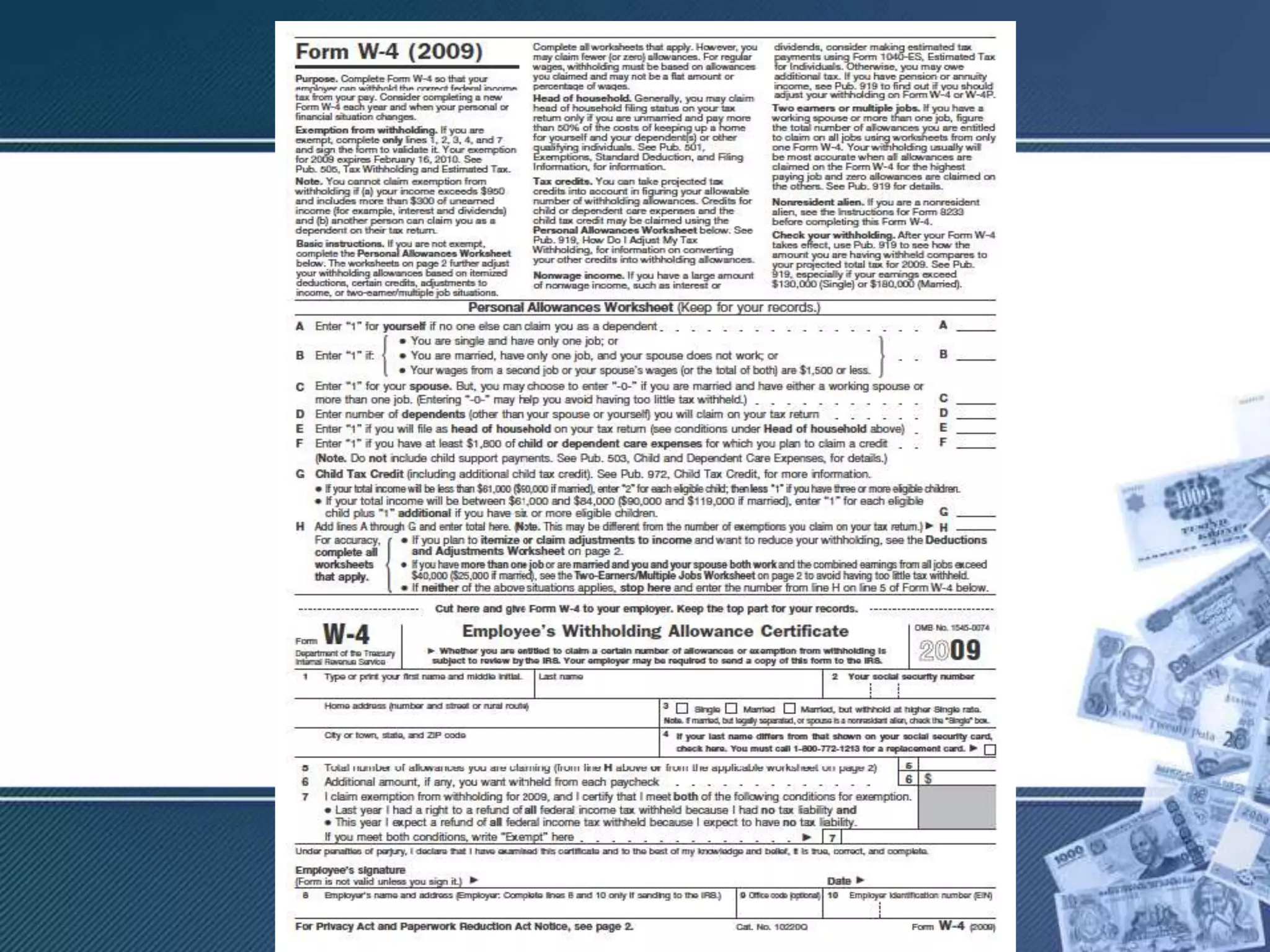
Calculate Monthly IncomeGross versus Net IncomeGross income – deductions = Net incomeFederal Income Tax WithholdingsMust complete Form W-4 to specify tax withholdingsIf you do not fill out a form W-4 you will most likely overpay on your taxes
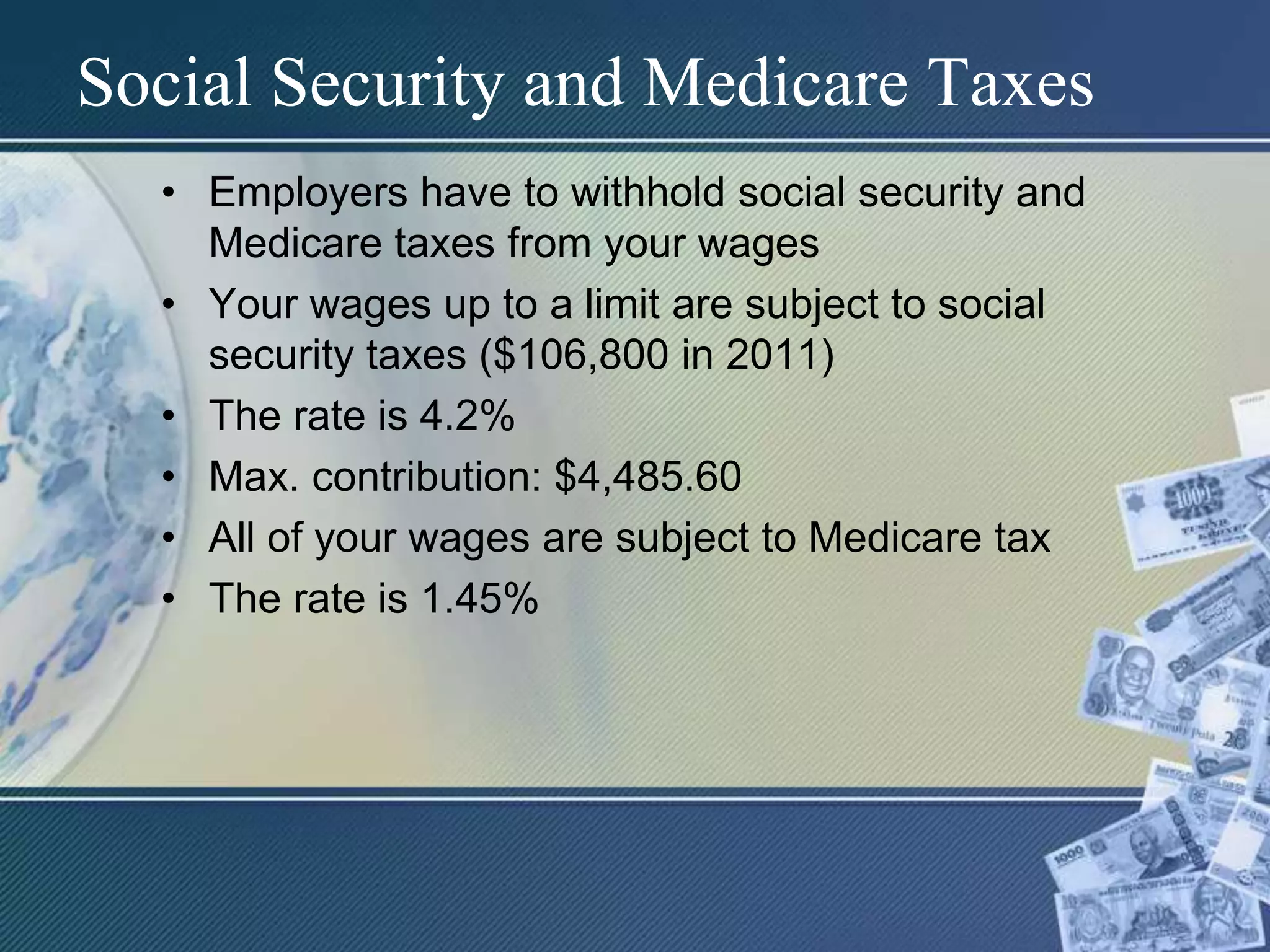
Social Security and Medicare TaxesEmployers have to withhold social security and Medicare taxes from your wagesYour wages up to a limit are subject to social security taxes ($106,800 in 2011)The rate is 4.2% Max. contribution: $4,485.60All of your wages are subject to Medicare taxThe rate is 1.45%
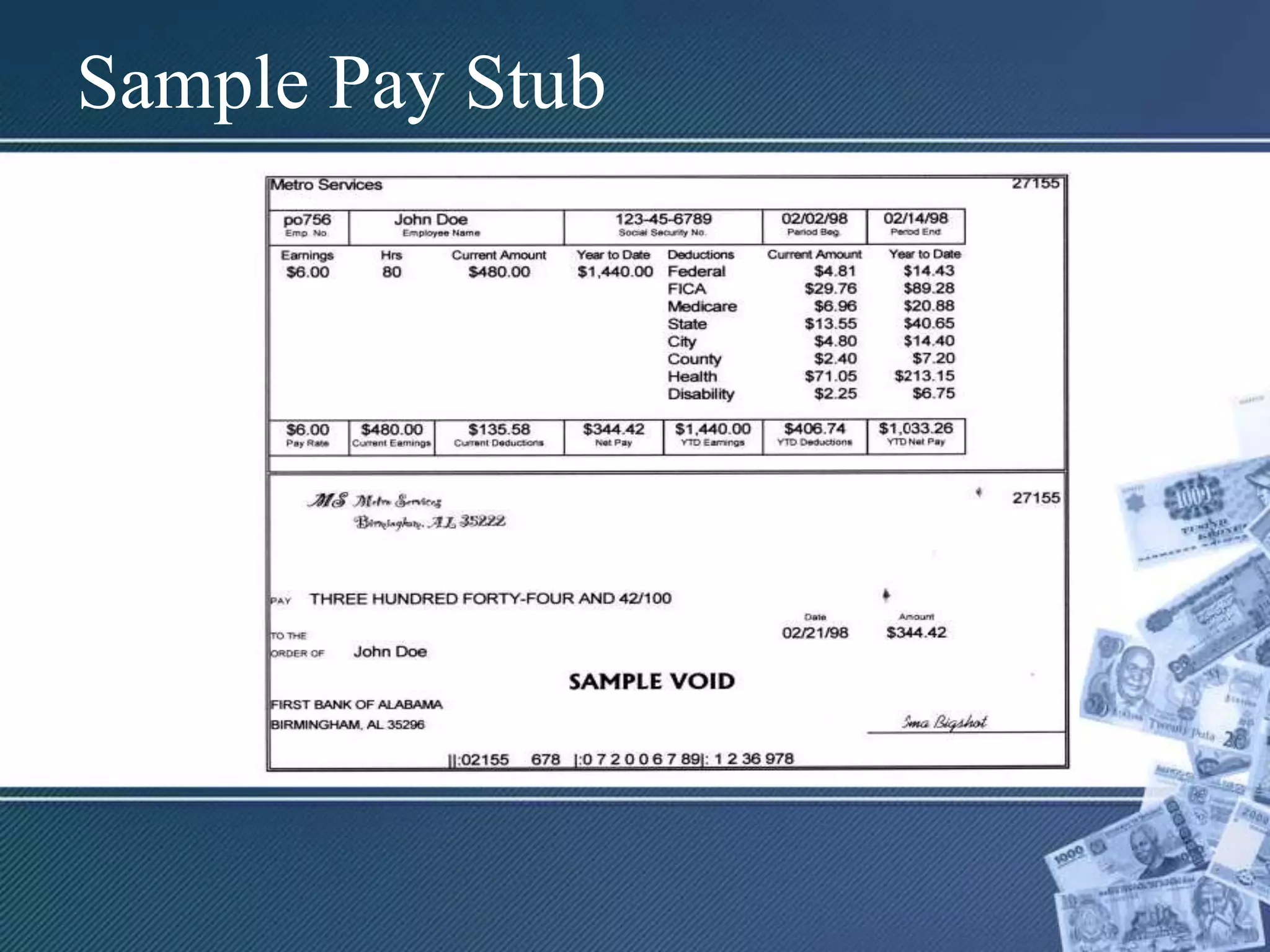
Sample Pay Stub
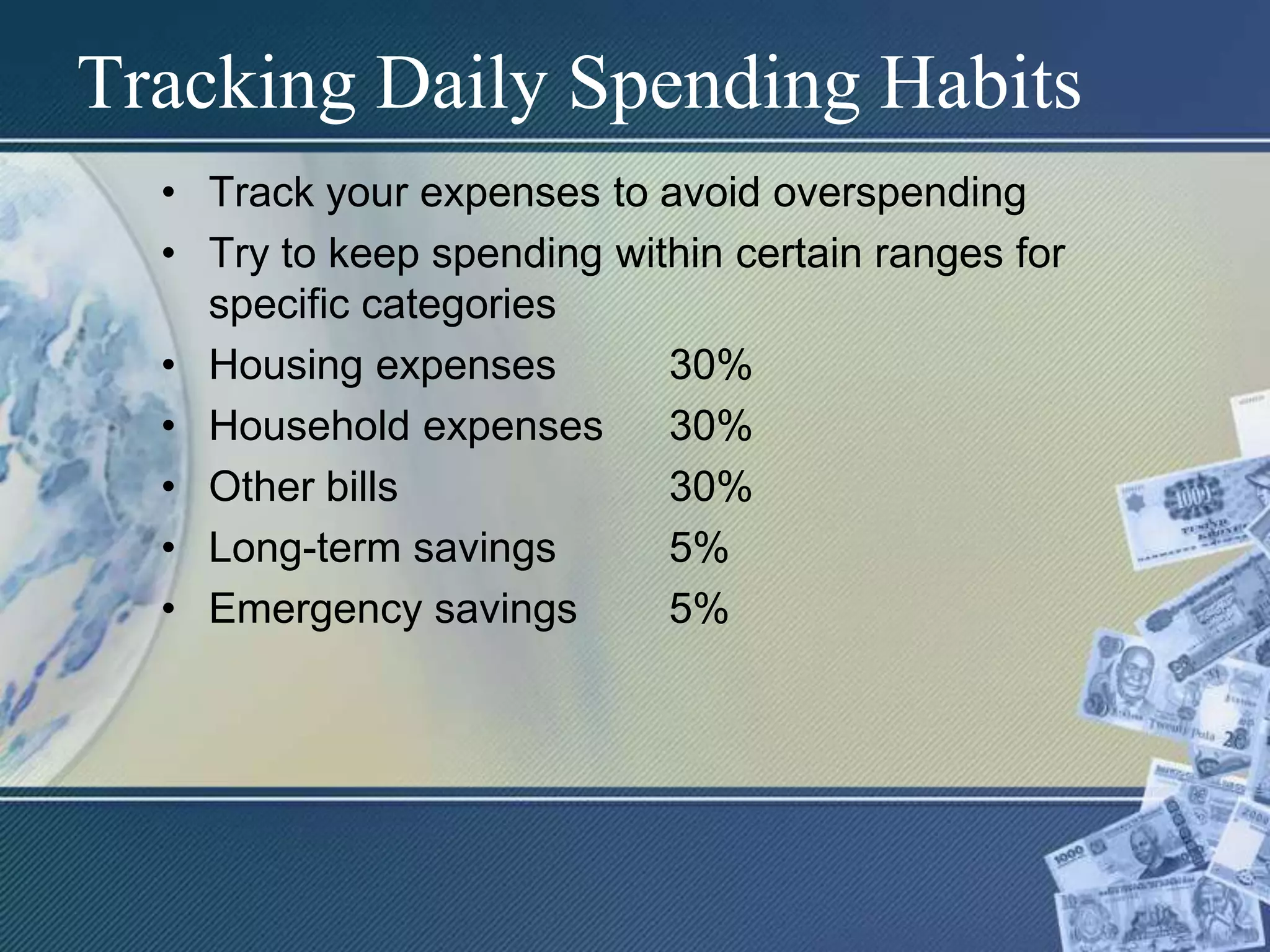
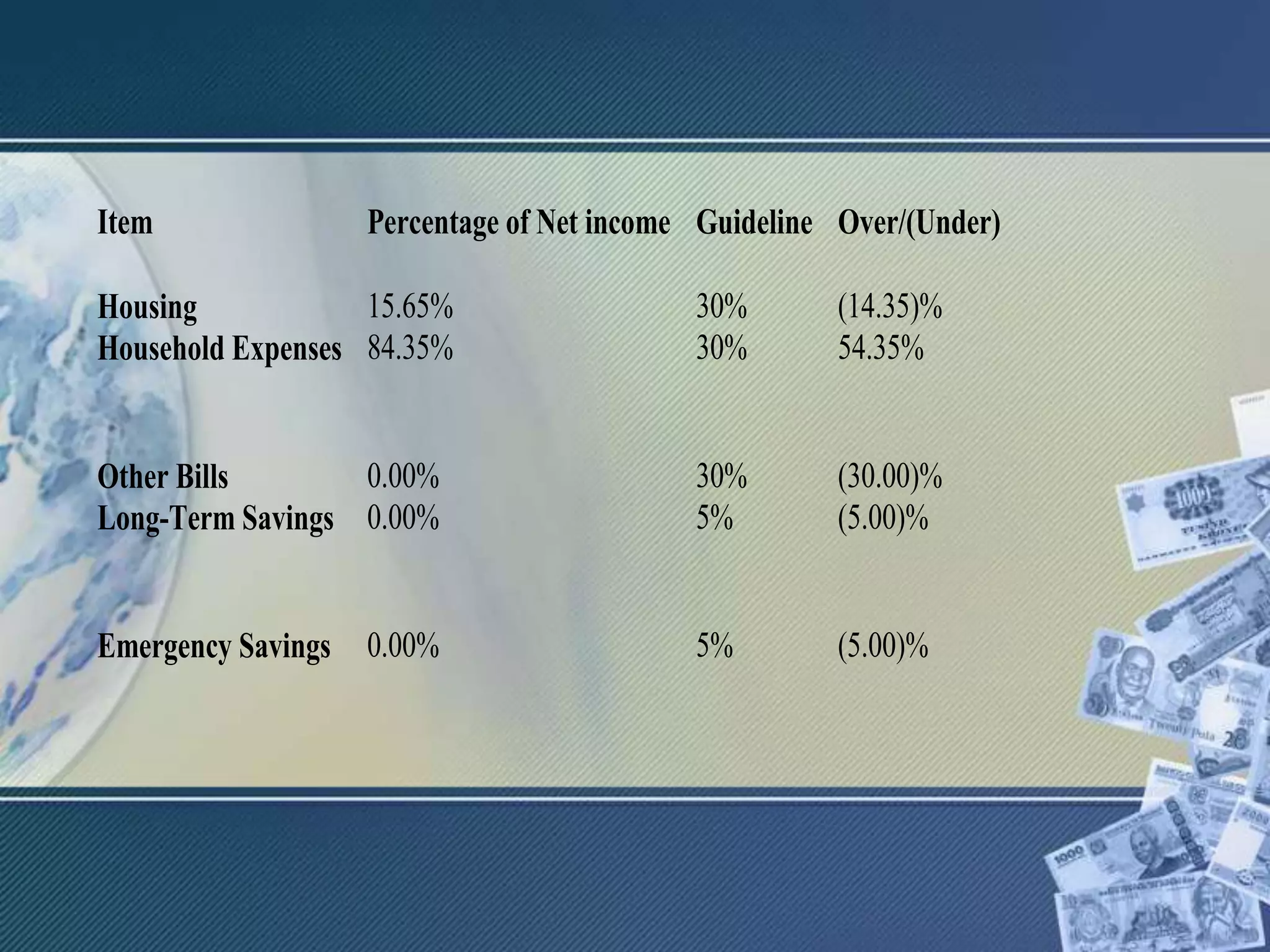
Tracking Daily Spending HabitsTrack your expenses to avoid overspendingTry to keep spending within certain ranges for specific categoriesHousing expenses	30%Household expenses	30%Other bills			30%Long-term savings	5%Emergency savings	5%
Create Spending DiaryFind out where your money goes
Determine Monthly ExpensesExpenses are items you spend money on each monthFixed expenses	Do not change from month to monthE.g. car payments, car insurance, rentVariable expensesMight change from month to monthE.g. utilities, miscellaneous expenses
Prepare a BudgetList your monthly income and expensesNet income needs to exceed expensesIf not, go back and revise budget until you achieve a positive net income
If you can’t pay your billsPay your rent and mortgage firstPay your necessary expenses nextIf you have trouble paying off your loans:Pay off loans with the highest interest ratesTalk to your creditors
Personal Financial StatementCreate a financial statement to track your financial conditionA personal balance sheet is called a statement of net worthList all of your assets and liabilitiesThe difference between assets and liabilities is your net worthA negative net worth is not a sustainable financial condition

Budgets and budgeting

  • 1.
    Smart InvestingEmmetO’Neal LibraryMountainBrook, ALBudgets and Budgeting
  • 2.
    DisclaimerAndreas Rauterkus isnot a registered investment advisor or broker/dealer. Readers are advised that the material contained herein should be used solely for informational purposes. Andreas Rauterkus does not purport to tell or suggest which investment securities attendants should buy or sell for themselves. You should always conduct your own research and due diligence and obtain professional advice before making any investment decision.
  • 3.
    ObjectivesWhat is afinancial goal?Learn how to track daily spending habitsPrepare personal spending planEstimate monthly income and expensesFind ways to decrease spending and increase incomeDiscover budgeting tools to help you manage your money
  • 4.
    Financial GoalsBe realisticBespecificHave a time frameInclude a dollar amountState the action to betakenSet milestones
  • 5.
    Time HorizonsShort TermFinancialactivities that occur within the next yearMedium TermCan be anywhere from one to five years or even ten yearsGenerally, the “not-so distant” futureLong TermFar out in the futureE.g. retiring comfortably
  • 6.
    ConstraintsObstacles in theway of the pursuit of the financial goalPersonalEconomicGovernmental“Expect the unexpected”
  • 7.
    Develop a budgetCalculateyour monthly incomeTrack you daily spendingDetermine spending on monthly billsFind ways to decrease spending and increase incomeCreate a monthly budget
  • 8.
    Calculate Monthly IncomeGrossversus Net IncomeGross income – deductions = Net incomeFederal Income Tax WithholdingsMust complete Form W-4 to specify tax withholdingsIf you do not fill out a form W-4 you will most likely overpay on your taxes
  • 10.
    Social Security andMedicare TaxesEmployers have to withhold social security and Medicare taxes from your wagesYour wages up to a limit are subject to social security taxes ($106,800 in 2011)The rate is 4.2% Max. contribution: $4,485.60All of your wages are subject to Medicare taxThe rate is 1.45%
  • 11.
  • 12.
    Tracking Daily SpendingHabitsTrack your expenses to avoid overspendingTry to keep spending within certain ranges for specific categoriesHousing expenses 30%Household expenses 30%Other bills 30%Long-term savings 5%Emergency savings 5%
  • 13.
    Create Spending DiaryFindout where your money goes
  • 16.
    Determine Monthly ExpensesExpensesare items you spend money on each monthFixed expenses Do not change from month to monthE.g. car payments, car insurance, rentVariable expensesMight change from month to monthE.g. utilities, miscellaneous expenses
  • 17.
    Prepare a BudgetListyour monthly income and expensesNet income needs to exceed expensesIf not, go back and revise budget until you achieve a positive net income
  • 18.
    If you can’tpay your billsPay your rent and mortgage firstPay your necessary expenses nextIf you have trouble paying off your loans:Pay off loans with the highest interest ratesTalk to your creditors
  • 19.
    Personal Financial StatementCreatea financial statement to track your financial conditionA personal balance sheet is called a statement of net worthList all of your assets and liabilitiesThe difference between assets and liabilities is your net worthA negative net worth is not a sustainable financial condition