i
UNIVERSITY OF CAPE COAST
SCHOOL OF AGRICULTURE
THE EFFECT OF RATES OF BIOCHAR ADDITIONS ON SOIL NITROGEN
DYNAMICS AND YIELD OF LETTUCE (Lactuca Sativa. L.) IN A TROPICAL STAGNIC
LIXISOL AMENDED WITH COW MANURE.
STEPHEN OWUSU
A DISSERTATION PRESENTED TO THE SCHOOL OF AGRICULTURE, UNIVERSITY
OF CAPE COAST, IN PARTIAL FULFILLMENT OF THE REQUIREMENT FOR THE
AWARD OF BACHELOR OF SCIENCE DEGREE IN AGRICULTURE
JUNE, 2013
ii
DECLARATION
Candidate’s Declaration
I, Stephen Owusu, hereby declare that this dissertation is the result of my own original
research and that, except for other people’s work which have been duly acknowledged, no
part of this piece of work has been presented for another degree in this university or
elsewhere.
Candidate’s Signature:……………………… Date: ………………………
STEPHEN OWUSU
(STUDENT)
Supervisors’ Declaration
I hereby declare that the preparation and presentation of this dissertation were supervised in
accordance with the guidelines on supervision of thesis laid down by the University of Cape
Coast.
Supervisor’s Signature:………………… Date: ……………………….
DR. KWAME AGYEI FRIMPONG
iii
iv
ABSTRACT
Overcoming the constraints of soil fertility under tropical conditions is a topical issue
in sustainable agriculture. Biochar addition to soil has been shown to mitigate soil fertility
problems through its positive influence on soil physical and chemical properties in relation to
plant growth, water holding capacity as well as soil nitrogen dynamics.
An incubation experiment was conducted to investigate the effect of corn cob biochar
(pyrolysed at 350o
C) and cow manure additions on soil nitrogen dynamics and on yield of
lettuce (Lactuca sativa.L) under controlled conditions on a Stagnic Lixisol. The biochar was
incorporated in the soil at rates of 0, 10, 15 and 20 t ha-1
either alone, or in combination with
cow manure at rates of 0, 0.42, 0.83 and 1.67 t ha -1
. Each treatment was replicated three (3)
times in a Completely Randomized Design (CRD). The biomass yield of lettuce grown in
each treatment for a period of 5 weeks was determined. During the growth of the test crop
selected soil characteristics such as soil pH, soil organic carbon and soil mineral-N were also
measured fortnightly. Total dry matter yield of lettuce was determined at maturity (5 weeks
after transplanting) by oven drying.
Biochar and cow manure additions (both sole and combined) significantly increased
total soil organic C, soil pH and total dry matter yield of lettuce compared to the control
treatment. Addition of biochar solely or in combination with cow manure resulted in higher
NO3
-
N concentrations, whereas only the sole addition of cow manure gave rise to higher
NH4
+
N concentrations. Based on the observations, it is recommended that farmers who grow
lettuce on the coastal savannah soil should use a combination of biochar and cow manure
amendments to maximize yields and improve the soil pH and soil organic carbon.
v
ACKNOWLEDGEMENTS
I am especially grateful to my supervisor, Dr. Kwame Agyei Frimpong of the
Department of Soil Science, University of Cape Coast (UCC), who diligently and patiently
offered constructive comments and valuable suggestions on this piece of work. I appreciate all
the guidance and advice you proffered to me. May God richly bless you. I am also very
grateful to Dr. Daniel Okae-Anti, Dr. Ampofo, and Dr. (Mrs.) Grace Vanderpuije for their
contribution and encouragement.
I acknowledge with special thanks to Mr. Kofi Atiah of the Department of Soil
Science, University of Cape Coast (UCC), who was always there for me from the beginning
to the completion of this piece of work. I am also thankful to Mr. Osei Agyemang and Mr.
Stephen Adu of the Soil Science Laboratory and the Animal Science Department,
respectively, UCC, for making the laboratory analysis very successful for me.
I thank my wonderful mother, Mrs. Martha Takyiwaa, my brothers Mr. Matthew
Sabbi and Julius Acquoco Adjei, my sisters, Mrs. Zippora Takyiwaa, Mrs. Mina Amoah, Mrs.
Emma Gyan and Mrs. Grace Affoah, my nieces, Miss Rita Ofosua, Mavis, Ivy, Esther,
Philipa, Gloria, Perpetua, Genefa, Sandra, and Tracy, my nephews, Enoch, Clement, Reginald
and Melvin for their financial assistance and moral support.
Last but not least, my appreciation goes to Mr. Asare Tetteh Paul, Isaac Owusu-
Ansah, Enoch Boateng, Ellen Kusi, Jonathan Otchie, and everybody who in one way or the
other offered guidance and support to me. May God bless you all.
vi
DEDICATION
To God Almighty and to the Memory of my beloved Father, Mr. Emmanuel K. Sabbi.
vii
TABLE OF CONTENTS
CONTENT PAGE
DECLARATION ii
ABSTRACT iii
ACKNOWLEDGEMENTS iv
DEDICATION v
TABLE OF CONTENTS vi
LIST OF TABLES ix
LIST OF FIGURES x
CHAPTER ONE
INTRODUCTION 1
1.1: Background of the Study 1
1.2: Problem Statement 3
1.3.1: General Objectives 4
1.3.2: Specific Objectives 4
1.4: Justification 5
CHAPTER TWO: LITERATURE REVIEW 6
2.1: The Effect of Biochar on the Nitrogen Cycle 6
2.1.1: Nitrogen Fixation 7
2.1.2: Nitrogen Mineralization 7
2.1.2.1: Aminization 8
2.1.2.2: Ammonification 8
2.1.2.3: Nitrification 8
viii
2.1.3: Denitrification 9
2.1.4: Volatilization 9
2.1.5: Immobilization 10
2.1.6: Leaching 10
2.2: Nutrient Content of Biochar 11
2.3: Biochar Effects on Soil pH 11
2.4: Effect of Biochar on Ion Exchange Capacity of Soils 12
2.5: Biochar Effects on Soil Biological Activity 13
2.6: Biochar for Carbon Sequestration 14
2.7: Biochar Effect on Plant Diseases 15
2.8: Effect of Biochar on Plant Growth 16
CHAPTER THREE: MATERIALS AND METHODS 18
3.1: Site Location and Description 18
3.2: Climatic Conditions 18
3.3: Preparation of Biochar for Incorporation into Soil 19
3.4.0: Biochar Characterization 19
3.4.1: pH Determination 19
3.4.2: Total Carbon Determination 20
3.4.3: Total Nitrogen Determination 20
3.5: Treatment and Laboratory Analysis of Cow manure 21
3.6: Soil Sampling 21
3.7: Preliminary Soil Analyses 22
3.7.1: Soil Chemical Properties 22
ix
3.7.1.1: Determination of Organic Carbon 22
3.7.1.2: Determination of Total Nitrogen 22
3.7.1.3: Determination of Soil pH 23
3.7.1.4: Determination of NH4
+
N and NO3
-
N
concentrations 23
3.7.2: Soil Physical Properties 24
3.8: Experimental Design 25
3.9: Statistical Analysis 26
CHAPTER FOUR: RESULTS AND DISCUSSION
4.1: Physico-chemical characteristics of the Soil and
Amendments before the Incubation Experiment 27
4.2: Effect of Biochar and Cow manure Amendments 29
4.2.1: Soil pH 29
4.2.2: Soil Organic Carbon (SOC) 30
4.2.3: Soil Nitrogen Mineralization Dynamics 33
4.3: Dry Matter Yield of Lettuce 37
CHAPTER FIVE: RESULTS AND DISCUSSION
5.1: Conclusion 40
5.2: Recommendations 41
REFERENCES 42
x
LIST OF TABLES
TABLE PAGE
1. Physico-chemical Characteristics of the Soil Sample 27
2. Selected Chemical Properties of Soil Amendments 28
xi
LIST OF FIGURES
FIGURE PAGE
1. The Nitrogen Cycle 6
2. Soil pH as affected by Biochar and Cow manure Amendments 29
3. Soil Organic Carbon (SOC) as affected by Biochar and Cow manure31
4. Available Soil N (NH4
+
N & NO3
-
N) concentrations as affected by
Biochar and Cow manure Amendments 2 Weeks after Treatment 33
5. Available Soil N (NH4
+
N & NO3
-
N) concentrations as affected by
Biochar and Cow manure Amendments 5 Weeks after Treatment 34
6. Lettuce Dry Matter Yield as affected by Biochar and
Cow manure Amendments 37
1
CHAPTER ONE
INTRODUCTION
This chapter highlights the background, problem statement, objectives, and justification,
respectively of the study.
1.1 Background of the study
The soil comes first. It is the foundation of farming. Soils with poor fertility
result in poor farming and poor farmer livelihood, but fertile soils result in good
farming and better living conditions. An understanding of good farming therefore,
begins with an understanding of the soil (Ahlgren, 1948). A definitive understanding
of the soil nitrogen dynamics for improvement in crop yield is not a luxury but a
necessity in many regions of the world. Lack of food security is especially common in
sub-Saharan Africa and South Asia with malnutrition in 32 and 22% of the total
population respectively (FAO, 2006). To solve this problem, Glaser et al., (2002a)
recognizes that an intensification of agricultural production on a global scale is a
necessary requirement to secure adequate food supply for an increasing world
population.
In areas with adequate rainfall, crop yields are governed by supply of nitrogen
than by any other nutrient element supplied by the soil. Nitrogen (N) is essential for
the development of field crops. Nitrogen is part of chlorophyll used in photosynthesis
and helps to induce good vegetative growth and deep green colour of plants. It also
improves the quality and quantity of dry matter in leafy vegetables and protein in grain
2
crops. When N is deficient, root systems and plant growth are stunted, older leaves
turn yellow and the crop is low in crude protein. Too much N, however, can delay
maturity and cause excessive vegetative growth at the expense of crop yield (Johnson
et al., 2005). Soil nitrogen is of special importance because plants need it in rather
large amount, but it is easily lost from the soil (Silva and Uchida, 2000).
Over the years, numerous efforts have been made to improve soil nitrogen
availability to crops in many parts of the world through addition of soil amendments
such as mulches, composts, manures and fertilizers. Applications of mulches,
composts, and manures have frequently been shown to increase soil fertility, minimize
nutrient leaching and improve soil structure. However, under tropical conditions it is
not uncommon to experience rapid mineralization of organic matter (Tiessen et al.,
1994) and only a small portion of the applied organic compounds will be stabilized in
the soil in the long term, but continually released to the atmosphere as carbon dioxide
(Fearnside, 2000). Although chemical fertilizers are essential to modern agriculture,
their overuse can have harmful effects on plants and crops and on soil quality. In
addition, leaching of nutrients from chemical fertilizers into bodies of water can lead
to water pollution problems such as eutrophication, by causing excessive growth of
vegetation (Odesola and Owoseni, 2010).
In recent times, enhanced soil nutrient availability (especially nitrogen) and the
subsequent improvement in the yield of crops through the addition of biochar to soils
has been demonstrated by research in several areas across the globe. The term
“biochar” was coined by Peter Read to describe fine-grained by-product, high in
organic carbon, made from biological material (biomass), pyrolysed under limited
3
supply of oxygen (O2), and at relatively low temperatures (<700°C), used as a soil
amendment to improve soil properties for agricultural purpose (Ernsting and Smolker,
2009).
Previous research has consistently indicated that biochar possesses considerable
potential to enhance long-term soil carbon pool as it has been found to be
biochemically recalcitrant as compared to un-charred organic matter (Lehmann et al.,
2006). In soil, biochar significantly increases the efficiencies of other soil amendments
such as manure, composts, and fertilizers. Thus, biochar addition to soil can reduce the
amount of chemicals needed to enhance crop yields. Research has also revealed that
poor soils amended with biochar promotes higher growth rates and also results in
higher and quality crop yields.
The reasons advanced above justify the need to use biochar as a sustainable soil
amendment that would offer enhanced soil nitrogen availability for increased lettuce
yield.
1.2 Problem Statement
The effect of biochar on crop production depends on the rate of application
(Blackwell et al., 2009). Various studies conducted by previous researchers have
shown that biochar increases crop productivity, yet there is inadequate research
findings to confirm the optimum application rates required for ideal crop productivity
on a specified soil. Determination of the correct application rate suitable for any
particular soil is essential, considering that soil incorporation of some biochars has
been found to adversely affect plant growth. (Kwapinski et al., 2010; Sohi et al.,
4
2010). For example, Kwapinski et al. (2010) has reported suppression of plant growth
resulting from soil incorporation of biochar made from miscanthus.
The use of biochar as a soil amendment in Ghana is not widespread.
Productivity of the tropical soils of Ghana is typically constrained by the inherently
low soil fertility status of most soils especially around the coastal savannah zone of the
country. If the limitations posed by low soil fertility are addressed crop productivity
could be significantly increased in the coastal savannah zone. Biochar offers the
potential to improve soil fertility and productivity in this area, but these soils have not
been extensively assessed for their use with biochar as a soil amendment.
1.3 Objectives of the Study
1.3.1 General Objectives
The general objective of this research is to evaluate the effect of different rates
of biochar application on soil N dynamics and on the yield of lettuce grown on a
coastal savannah soil.
1.3.2 Specific Objectives: The specific objectives underlying the study are
as follows:
1. Assess the effect of biochar incorporation on soil NH4
+
-N and NO3
-
N
concentrations.
2. Characterize the soil sample (Benya Series ) for chemical and physical
properties.
3. Characterize the corn cob biochar for physico-chemical properties before soil
5
incorporation.
4. Evaluate the effect of the use of corn cob biochar as a soil Amendment on the
yield of lettuce (Lactuca sativa.L)
6. Evaluate the impact of combined biochar and cow manure applications on the
yield of lettuce (Lactuca sativa.L)
1.4. Justification of the Study
The application of biochar as a sustainable approach for managing soil is a
subject matter of growing interest (Brussaard, 1997 cited by Lehmann et al., 2011).
The interest in biochar research is an important one because biochar is thought to
provide several beneficial effects for its use as soil amendment. Biochar is thought to
help in the development of soil structure and stability, nutrient cycling, soil aeration,
soil water use efficiency, disease resistance, and C storage capacity of soils.
Regardless of the benefits derived from biochar, data on the effect of biochar
application rates on crop yields is still rudimentary, and before large scale deployment
can be considered the application rates of biochar will have to be studied in far more
detail (Woolf, 2008).
This research therefore seeks to provide vital information necessary for
establishing an appropriate application rate of biochar for lettuce production on a
coastal savannah soil in Ghana. The outcome of the study will contribute significantly
to existing literature and inform policy makers and implementers about the appropriate
application rate necessary for large scale deployment of biochar on the Coastal
Savannah Soil in Ghana or elsewhere.
6
CHAPTER TWO
LITERATURE REVIEW
2.1 The Effect of Biochar on the Nitrogen Cycle
The N cycle explains how N from sources such as manure, fertilizers and plants
moves through the soil to crops, water and the air. A good understanding of the N
cycle is a necessary first step towards soil N management to meet crop needs while
safeguarding the environment.
FIG. 2.1 The Nitrogen Cycle (Source: http://nmsp.css.cornell.edu)
7
In general, the N cycle processes of fixation, mineralization and nitrification
increase plant available N, but processes like - Denitrification, volatilization,
immobilization, and leaching, can result in permanent or temporary N losses from the
root zone.
2.1.1 Nitrogen Fixation
Fixation refers to the conversion of atmospheric N to a plant available form.
DeLuca et al. (2009) explained that biological N2 fixation is exclusively significant in
low-input agro-ecosystems where external N inputs are negligible. Consequently, it is
an indispensable strategy to know whether biochar applications have the capacity to
alter symbiotic or free-living N2-fixing organisms. Rondon et al. (2007) noted that
biochar may stimulate N2 fixation as the result of increased availability of trace metals
such as nickel (Ni), iron (Fe), boron (B), titanium (Ti) and molybdenum (Mo).
Rondon et al. (2007) recommended that in-depth field studies be conducted to
investigate the observed significant improvement in productivity resulting from soil
incorporation of biochar.
2.1.2 Nitrogen Mineralization
Nitrogen mineralization refers to transformation of nitrogen held in organic
forms (such as humus and decaying plant and animal matter) to forms available for
uptake by plant roots; namely ammonium (NH4
+
) and nitrate (NO3
-
). Mineralization
consists of two major transformations that are catalyzed by different groups of biota.
8
2.1.2.1 Aminization:
Protein  + R-NH2 + CO2 + (NH2)2C=O + Energy
Aminization is the first process of mineralization and consists of numerous
reactions of organic compound decomposition accomplished by heterotrophic
microbes (bacteria and fungi)
2.1.2.1 Ammonification:
The breakdown of organic forms of nitrogen to ammonium.
R-NH2 + H2O  R-OH + NH3 + Energy
NH3 + H2O  NH4
+
+ OH-
Ammonification is a biotic process that is principally driven by heterotrophic
bacteria and a variety of fungi (Stevenson and Cole, 1999).
2.1.2.2 Nitrification
Nitrification is the process by which microorganisms convert ammonium to
nitrate to obtain energy. Nitrate is the most plant available form of N, but is also
highly susceptible to leaching losses (Johnson et al., 2005).
2NH4
+
+ 2O2  2NO2
-
+ 2H2 + 4H+
2NO2
-
+ O2  2NO3
-
DeLuca et al. (2009) postulated that biochar increases nitrification rates in
natural forest soils that have very low natural nitrification rates. Conversely, in
NH2
H
COOHR C
9
agricultural soils, which already have appreciable rates of nitrification, the effect of
biochar on nitrification was rather minimal. DeLuca et al. (2009) explained further
that biochar additions to agricultural soils decreased apparent ammonification rates
probably due to adsorption of NH4
+
onto biochar surface and subsequently reducing
the concentration of NH4
+
in the soil solution. In another instance, Granatstein et al.
(2009) found that addition of biochar to soils led to a decrease in soil nitrification and
a decrease in the amount of nitrogen available to plants.
2.1.3 Denitrification
Denitrification occurs when N is lost through the conversion of nitrate to
gaseous forms of N, such as nitric oxide, nitrous oxide and dinitrogen gas; usually in
poorly drained soils where the bacteria use nitrate as an oxygen source. Biochar is
thought to be able to catalyze the reduction of nitrous oxide to nitrogen gas, by
completing denitrification process and reducing the amount of nitrous oxide (an
important greenhouse gas) entering the atmosphere (DeLuca et al., 2009; Van Zwieten
et al., 2009).
2.1.4 Volatilization
Volatilization is the loss of N through the conversion of ammonium to ammonia
gas, which is released to the atmosphere. The volatilization losses increase at higher
soil pH and when high concentrations of NH4
+
are present (Stevenson and Cole,
1999), and conditions that favor evaporation such as hot and windy climate (Johnson
et al.,2005). Biochar is thought to reduce the potential for ammonia volatilization,
10
because it decreases available ammonium in the soil solution and moderately raises
the pH of soils; both conditions which do not favour ammonia formation and
volatilization (Van Zwieten et al., 2009). Biochar and biochar mixed with ash have the
potential to raise the pH of acid soils (Glaser et al., 2002a), but not to a level that
would increase volatilization (Stevenson and Cole, 1999). Biochar additions to
agricultural soils have been found to reduce NH4
+
concentrations, which could be a
result of volatilization; but it is more likely that surface adsorption of NH4
+
(Le Leuch and Bandosz, 2007) reduces soil NH4
+
concentrations and reduces the
potential for NH3 volatilization.
2.1.5 Immobilization
Immobilization refers to the process in which nitrate and ammonium are taken
up by soil organisms and therefore become unavailable to crops. Immobilization is the
reverse of mineralization. Incorporation of materials with a high carbon to nitrogen
ratio (e.g. sawdust, straw, etc.), will increase biological activity and cause a greater
demand for N, and thus result in N immobilization. Immobilization only temporarily
locks up N so that the microorganisms die, the organic N contained in their cells is
converted by mineralization and nitrification to plant available nitrate (Johnson et al.,
2005).
2.1.6 Leaching
Leaching is a pathway of N loss of a high concern to water quality. Soil
particles do not retain nitrate very well because both are negatively charged. As a
11
result, nitrate easily moves with water in the soil. The rate of leaching depends on soil
drainage, rainfall, amount of nitrate present in the soil, and crop uptake (Rowell,
1994).
2.2 Nutrient Content of Biochar
DeLuca et al. (2009) documented that during pyrolysis, volatilization of some
nutrients occurs especially at the surface of the biochar material, while other nutrients
become concentrated in the remaining biochar. Hence, biochar is somewhat depleted
in N and slightly depleted in S relative to more thermally stable nutrients. The N
content of high-temperature biochar is exceptionally low because N is the most
sensitive of all macronutrients to heating (Tyron, 1948 cited by DeLuca et al., 2009).
Generally, there seems to be a decrease in the extractable concentrations of NH4
+
and
PO4
3-
with increasing pyrolysis temperature during biochar production, with a portion
of NH4+
being oxidized to a small exchangeable NO3
-
pool at higher temperatures
(Gundale and DeLuca, 2006).
Adding biochar to soil ensures a moderate contribution of nutrients, which is
relatively influenced by the nature of the feedstock (i.e. wood or manure) and the
temperature at which the material is pyrolysed (Bridle and Pritchard, 2004). Biochar
may strategically act as a soil conditioner and driver of nutrient transformations rather
than being primary source of nutrients (Glaser et al., 2002a).
12
2.3 Biochar Effects on Soil pH
Numerous studies have demonstrated that biochar can modify soil pH, normally
by increasing pH in acidic soils (Matsubara et al., 2002). There are few, if any, studies
that have demonstrated a reduction in pH with biochar addition in alkaline soils,
however, the addition of acid biochar to acidic soils has been observed to reduce soil
pH (Cheng et al., 2006). An increase in pH associated with adding biochar to acid
soils is due to an increased concentration of alkaline metal (Ca2+
, Mg2+
and K+
) oxides
in the biochar and a reduced concentration of soluble soil Al3+
(Steiner et al., 2007).
Adding these alkaline metals, both as soluble salts and associated with biochar
exchange sites, is likely the single most significant effect of biochar on P solubility,
particularly in acidic soils where subtle changes in pH can result in substantially
reduced P precipitation with Al3+
and Fe3+
.
Lehmann et al. (2011) explained that biochars with high mineral ash content
have greater pH values than those with lower ash contents and that pH of biochar also
increases with greater pyrolysis temperature. They recognized that the pH of biochars
may change over time and either decrease or increase depending on type of feedstock
used. For example, Nguyen and Lehmann (2009) observed a pH decrease with
mineral-poor oak wood biochar from pH 4.9 to 4.7, but an increase with mineral-rich
corn stover biochar from pH 6.7 to 8.1 over the course of one year incubation. Cheng
et al. (2006) expounded that the driving force behind a pH decrease is oxidation of C
to form acidic carboxyl groups, whereas, Lehmann et al. (2011) proposed that the
increase in pH is possibly associated with the dissolution of alkaline minerals.
13
2.4 The Effect of Biochar on Ion Exchange Capacity of soils
High temperature (800°C) biochar demonstrated higher pH, electrical
conductivity (EC) and extractable NO3
-
relative to low temperature (350°C) biochar
(Gundale and DeLuca, 2006). The biochemical basis for the high CEC is not fully
understood, but is likely due to the presence of oxidized functional groups (such as
carboxyl groups), whose presence is indicated by high O/C ratios on the surface of
charred materials following microbial degradation (Liang et al., 2006) and is further
influenced by the great surface area (Gundale and DeLuca, 2006) and high charge
density of biochar (Liang et al., 2006). In addition to directly releasing soluble P,
biochar can have a high ion exchange capacity (Liang et al., 2006), and may alter P
availability by providing anion exchange capacity or by influencing the activity of
cations that interact with P. It has been demonstrated that fresh biochar has an
abundance of anion exchange capacity in the acid pH range (Cheng et al., 2008),
which can initially be in excess of the total cation exchange capacity of the biochar.
2.5 Biochar Effects on Soil Biological Activity
Soils can be viewed as complex communities of organisms which are
continually changing in response to soil characteristics and climatic and management
factors, especially the addition of organic matter (Thies and Rillig, 2009). Biochar
addition to soils can stimulate microorganism activity in the soil, potentially affecting
the soil microbiological properties (Hammes and Schmidt, 2009). Rather than
supplying microorganisms with a primary source of nutrients, biochar is thought to
improve the physical and chemical environment in soils, providing microbes with a
14
more favourable habitat (Krull et al., 2010). Biochar, because of its porous nature,
high surface area and its ability to adsorb soluble organic matter and inorganic
nutrients, provides a highly suitable habitat for microbes. This is true for bacteria,
actinomycete and arbuscular mycorrhizal fungi from which some types may
preferentially colonize biochars depending on its physico-chemical properties. Biochar
pores may act as a refuge for some microbes, protecting them from competition and
predation. Microbial abundance, diversity and activity are strongly influenced by pH.
The soil buffering capacity imparted by biochar cation exchange capacity may help
maintain appropriate pH conditions and minimize pH fluctuations in the microhabitats
within biochar particles. Biochar is relatively stable and has long soil residence times,
which suggests that biochar is not a good substrate (food) for soil biota. However,
biochars freshly added to soils may contain suitable substrates to support microbial
growth. Depending on feedstock type and production conditions, some biochars may
contain bio-oils or recondensed organic compounds which could support the growth
and reproduction of certain microbial groups over others. The implications of this are
that microbial communities in biochar will change over time once it has been added to
the soil (DeLuca et al., 2009).
2.6 Biochar for Carbon Sequestration
Baldock and Smernik (2002) reported that soil incorporation of biochar does
not only avoid adverse environmental impact but also constitutes a net sink of
atmospheric carbon dioxide. This means that biochar additions to soil not only reduce
carbon dioxide emissions from energy production, but it is also a form of carbon
15
burial, which constitutes a net withdrawal of carbon dioxide from the atmosphere.
There is a high theoretical potential to reduce global greenhouse gas emissions
through the use of biochar sequestration in combination with bioenergy, but this needs
to be vetted against economic realities (Lehmann, 2007).
Ornstein et al. (2009) proposed a rather drastic but theoretically effective way
of using photosynthesis to draw down atmosphere carbon dioxide with biochar
addition to soils because it will benefit the farm economy of those farmers who
sequester the carbon. It has also been documented that the effectiveness of using
biochar as an approach to mitigate climate change rests on its relative recalcitrance
against microbial decay and thus on its slower return of terrestrial organic carbon as
carbon dioxide (CO2) to the atmosphere (Lehmann, 2007).
2.7 Biochar Effect on Plant Diseases
For over a century ago, farmers have reported of the indirect effect of biochar-
type materials on suppressing plant diseases. For instance, potato rot or rust and
mildew (Allen, 1846 cited by Lehmann et al., 2011) and isolated studies have
observed reduced damping off (caused by various pathogens) after additions of
charcoal (Retan, 1915). It has been proposed that the effect of biochar may be
analogous to compost in suppressing plant diseases, thought little direct
experimentation has been conducted so far. The following are some principal
mechanisms proposed by (Hoitink and Fahy, 1986; Noble and Coventry, 2005), which
is somewhat proven for compost, and which may also be applicable to biochar. These
include (1) a direct release of inhibitors of plant pathogens; (2) the promotion of
16
microorganisms that act antagonistic to pathogens, such as parasites, through
production of antibiotics, or by successful competition for nutrients; (3) improved
plant nutrition and vigor, leading to enhanced disease resistance; and (4) activation of
plant defense mechanisms (induced systemic resistance) by enhancing certain
microorganisms. Added to the aforementioned mechanisms is that the known strong
sorption of organic compounds onto biochar may modify signaling between plant and
pathogens, or affect the mobility and activity of the pathogen itself (Lehmann et al.,
2011).
Matsubara et al. (2002) reported that Fusarium infection of asparagus was
found to decrease after addition of coconut biochar and was similar to the benefits
derived from manure made from coffee residue. A decrease in Fusarium infection of
asparagus was also reported after addition of biochar made by fast pyrolysis of wood
powder (Elmer and Pignatello, 2011). Elmer and Pignatello (2011) therefore proposed
the following explanation for their observed decline in Fusarium infection of
asparagus. In this case, biochar may have adsorbed allelopathic compounds in replant
soil such as coumaric, caffeic and ferulic acids which led to a measurable increase in
mycorrhizal infection. Also, greater AM abundance may have led to suppression of
the disease. For soil-borne root diseases, it is also conceivable that biochars reduce
compounds in the soil solution that would otherwise facilitate the ability of pathogens
to detect and infect roots.
17
2.8 Effects of Biochar on Plant Growth
With the modification to soil characteristics described above, the effect of
biochar additions to soil on plant productivity is the most important outcome for its
use in agriculture. Evidence gathered from both glasshouse and field trials indicates
that biochar additions to acidic and nutrient poor soils, combined with fertilizer
application, can produce yields greater than either fertilizer or biochar alone.
However, the effect of biochar on crop growth depends on application rates and the
soil type to which it is applied. A key feature of biochar addition to soils is increased
nitrogen use efficiency by plants (Sparkes and Stoutjesdijk, 2011).
18
CHAPTER THREE
MATERIALS AND METHODS
3.1 Site Location and Description
The research was undertaken at the School of Agriculture Teaching and
Research Farm, University of Cape Coast, in the Central Region of Ghana. The land is
gently sloping and forms part of the Edina series. The Teaching and Research Farms
and the Technology village are both located within longitude 0.30
W and Latitude
0.50
N and the area is about 1500m - 3000m above sea level (Meteorological Services
Dept. UCC, 2010).
The soil used in the study, the Benya series, classified as Stagnic Lixisol
(WRB), is located at the lower slope of the Edina toposequence. The top soil (0 – 15
cm) sample used for the study is very dark grayish brown (10YR 3/2) in colour. The
Benya series is developed from colluvium derived from conglomerates of sandstone,
shale and mudstone over a Sekondian deposits with medium internal drainage and
moderate permeability (Agyarko-Mintah, 2008).
3.2 Climatic Conditions
The Edina toposequence, to which the soil used in the study belongs, lies in the
dry-equatorial climate. The area has a bimodal rainfall pattern; between the peaks of
rainfall is a short dry spell that occurs in August. The major raining season start in the
middle of March. It peaks in June and end in July. The minor rainy season start in
19
September, peaks in October and ends in November. The dry season start from
November and ends in February. The mean annual rainfall is between 750mm-
1500mm. The area also experience uniform high temperature through the year with a
mean annual maximum of about 28o
C and a humidity which ranges between 85–95%
in the morning and about 70% in the afternoon (Meteorological Services Dept. UCC,
2011).
3.3 Preparation of Biochar for Incorporating into Soil
The feedstock (corn cobs) used for biochar preparation was obtained from the
University of Cape Coast Research and Teaching Farms. Five (5) Lucia biomass
pyrolytic stoves - Top Lit-up Draft (ETHOS, 2009) were obtained from the Soil
Science Laboratory of the School of Agriculture, and the feedstock was subjected to
pyrolysis at 350ºC to produce the biochar. The corn cob biochar was ground,
thoroughly mixed and oven-dried at 65°C till constant weight and sieved through a 2
mm sieve. The biochar (< 2mm) was retained in a labeled polythene bags for
laboratory analysis.
3.4.0 Biochar Characterization
3.4.1 pH Determination
Five (5) grams of sieved biochar was weighed into a 50 ml centrifuge tube and
20 ml of distilled water was added to make a biochar-water suspension. Three
replicates of the biochar-water suspension were shaken on a mechanical shaker for 15
minutes. The pH of each suspension was recorded with a Suntex 701 Model pH Meter
20
after it had been calibrated with potassium hydrogen phthalate, and potassium
dihydrogen orthophosphate and disodium hydrogen orthophosphate (Rowell, 1994).
3.4.2 Total Carbon Determination
Total carbon content in the corn cob biochar was determined by following the
ashing method described by Mclaughlin (2010). Briefly, three crucibles containing
five grams of biochar were placed in a pre-warmed furnace and the temperature set at
550 °C. The ashing process was left to complete overnight. The crucibles with the
ashes were allowed to cool. After cooling, the masses of each crucible in addition to
the ashes were weighed and recorded. Total carbon determination was calculated as
follows:
% C =
Where:
W1= wet weight of biochar and porcelain crucible (grams)
W2= dry weight of biochar and porcelain crucible (grams)
W3= weight of porcelain (grams)
3.4.3 Total Nitrogen Determination
The Total Kjeldahl Nitrogen content of the corn cob biochar was determined
following the method described by Rowell, (1994). Briefly, a sample of biochar
weighing 0.2 g was digested with conc. H2SO4-H2O2 mixture in a Tecator Digester
21
2012. A blank digest was also prepared. Twenty milliliters of the digest was distilled
into a 100 ml conical flask containing 2% boric acid. The distillate was titrated against
M HCl from the initial green colour to pink. The titre values were recorded and
used in the calculations.
3.5 Treatment and laboratory analysis of Cow manure
Cow manure used in the study was obtained from the cattle kraal at the School
of Agriculture Farms, University of Cape Coast. It was air-dried for 3 days after which
it was sieved through a 2 mm sieve before a representative sample was used in the
experiment. The pH, total N and organic C carbon concentrations in the cow manure
were determined using similar procedures as described for biochar.
3.6 Soil Sampling
The topsoil layer (0 – 15cm) was randomly sampled at twenty points on the site
and bulked to form a composite sample. The soil sample was air-dried for 3 days,
ensuring that the soil sample was not contaminated with any non-soil material. After
air-drying, the soil was crushed with porcelain pestle and sieved through a 2 mm
sieve. The fine earth fraction (<2mm) was used for laboratory analysis and pot
experiments.
22
3.7 Preliminary Soil Analyses
The physical and chemical properties of the soil were determined at the Soil
Science Laboratory of the School of Agriculture, University of Cape Coast between
October 2012 and February 2013.
3.7.1 Soil Chemical Properties
Sub samples from the composite sample were analyzed to determine the soil pH
and concentrations of Soil Organic Carbon (SOC), Total Kjeldahl Nitrogen (N),
Nitrate Nitrogen (NO3-N), Ammonium Nitrogen (NH4
+
-N), respectively.
3.7.1.1 Determination of Organic Carbon
Organic carbon was determined by the Walkley – Black method described by
Rowell (1994). Briefly, 0.5g of the soil sample was wet combusted with Normal
K2Cr2O7 solution and conc. H2SO4. Using diphenylamine indicator the unreduced
K2Cr2O7 was back-titrated with Ammonium Ferrous solution. A blank titration was
carried also carried out.
3.7.1.2 Determination of Total Nitrogen
The Total Kjeldahl Nitrogen content of the soil sample was determined from
the method described by Rowell, (1994). Briefly, a sample of biochar weighing 0.5 g
was digested with conc. H2SO4-H2O2 mixture in a Foss Tecator Digester 2012. The
determination also involved preparation of a blank digest. Twenty milliliters of the
digest was distilled into a 100 ml conical flask containing 2% boric acid. The distillate
23
was titrated against M HCl from the initial green colour to pink. The titre values
were recorded and used in the calculations.
3.7.1.3 Determination of Soil pH
Ten grams of the soil sample was weighed into a centrifuge tube and 25ml of
distilled water was added to the soil in the centrifuge tube to obtain a 1 : 2.5 ratio, soil
: water suspension. The suspension was shaken intermittently for 10 minutes. The
suspension was then allowed to stay undisturbed for 15 minutes. The electrodes of a
Suntex 701 pH meter were dipped into the supernatant to determine the pH of the soil.
(The initial pH of the soil sample was obtained to be 5.1)
3.7.1.4 Determination of NH4
+
N and NO3
-
N
The concentrations of NH4
+
N and NO3
-
N were determined from the method
described by Rowell, (1994). Briefly, 10g of freshly sampled moist soil was shaken
with 40ml of 2M KCl for 1hr after which the suspension was filtered through a
Whatmann No. 42 filter paper. The mineral-N content of this extract was then
determined by steam distillation.
Ammonium – N: Twenty (20) ml of the extract was pipetted into the steam
distillation flask with 10 ml of fresh boric acid solution in the receiving flask inserted
under the condenser of the steam distillation apparatus. After a drop of octan-2-ol and
0.5g of MgO had been added to the extract, steam was passed through the apparatus
and 40 ml of the distillate was collected. The NH4
+
N receiving flask was removed and
24
retained for titration after the steam line had been disconnected. Another receiving
flask was again placed under the condenser for analysis of NO3
-
N.
Nitrate- N: Half a gram (0.5g) of Devarda’s alloy was added to the extract in
the distillation flask and the steam line was immediately reconnected to distill a
further 40 ml of distillate. The NO3
-
N receiving flask was also retained for titration.
Each distillate was titrated against 0.01 M HCl using a methyl red-bromocresol
green indicator solution. The procedure also involved carrying out a blank
determination. The titre values were recorded and used in the calculation.
3.7.2 Soil Physical Properties
The procedure described by Anderson and Ingram (1993) for non-stony soil
was used to determine the bulk density of the soil. The moist soil cores were oven-
dried at 105°C until a constant weight was obtained. The dry bulk density was
calculated from the formula:
Pb =
Where, Pb is the bulk density (g cm-3
),
W1 is the mass (g) of the metal cylinder,
W2 is the mass (g) of the metal cylinder plus the oven-dried soil,
and V is the volume (cm3
) of the metal cylinder.
Particle size distribution was determined using the Bouyoucos Hydrometer
method (Anderson & Ingram, 1993). Distilled water was added to the air-dried soil
25
sample, followed by 20 ml of 30 % H2O2 to digest the organic matter. The mixture
was heated in a boiling water bath and amyl alcohol was added to minimize frothing.
Complete dispersion was achieved by adding 2 g of sodium hexa-metaphosphate. The
suspension was shaken and transferred into a one-litre sedimentation cylinder. The
suspension was shaken vigorously and both hydrometer and thermometer readings
taken at 40 s and 5 hr.
3.8 Experimental Design
The effect of different rates of biochar additions on the N mineralization
dynamics and yield of lettuce was investigated in Completely Randomized Design
(CRD), with biochar and cow manure as the experimental factors. This incubation
experiment included a total of sixteen completely randomized treatments in triplicates
(16 x 3). The biochar and cow manure treatments used in the study were as follows:
T0 = CONTROL (soil only)
T1 = Biochar Treatment 1 (10 t ha -1
)
T2 = Biochar Treatment 2 (15 t ha -1
)
T3 = Biochar Treatment 3 (20 t ha -1
)
T4 = Cow manure Treatment 1 (0.42 t ha -1
)
T5 = Cow manure Treatment 2 (0.83 t ha -1
)
T6 = Cow manure Treatment 3 (1.67 t ha -1
)
T7 = 10 t ha-1
Biochar + 0.42 t ha-1
of Cow manure
T8 = 10 t ha-1
Biochar + 0.83 t ha-1
of Cow manure
T9 = 10 t ha-1
Biochar + 1.67 t ha-1
of Cow manure
26
T10 = 15 t ha-1
Biochar + 0.42 t ha-1
of Cow manure
T11 = 15 t ha-1
Biochar + 0.83 t ha-1
of Cow manure
T12 = 15 t ha-1
Biochar + 1.67 t ha-1
of Cow manure
T13 = 20 t ha-1
Biochar + 0.42 t ha-1
of Cow manure
T14 = 20 t ha-1
Biochar + 0.83 t ha-1
of Cow manure
T15 = 20 t ha-1
Biochar + 1.67 t ha-1
of Cow manure
The above mentioned amendments were thoroughly mixed with the air-dried
soil (except the control), and packed into plastic cylindrical pots (127 cm3
) to attain a
bulk density of approximately 1.3 g/cm3
. All the pots were then wetted using distilled
water. The lettuce seedlings were transplanted into pots two weeks after germination
(at 2 seedlings per pot and thinned to one). The pots were placed individually in
shallow trays and watered regularly to maintain water content at approximately 60 %
of Field Capacity using distilled water, by mass balance until maturity of the plants.
The plants were harvested at 5 weeks after transplanting (WAT) and the total dry
matter of the lettuce was determined by oven drying the biomass at 60°C till constant
weight.
3.9 Statistical Analysis
The data were analyzed using GenSTAT 12.1 (VSN International Ltd, 2009)
and the results have been presented in bar charts.
27
CHAPTER FOUR
RESULTS AND DISCUSSION
4.1 Physico-chemical Characteristics of the Soil and Amendments before the
Incubation Experiment
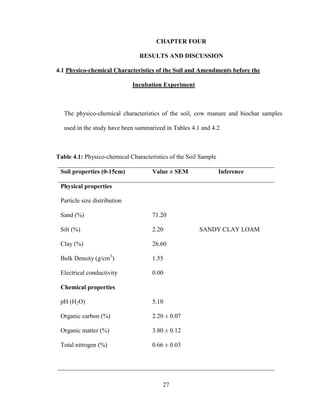
The physico-chemical characteristics of the soil, cow manure and biochar samples
used in the study have been summarized in Tables 4.1 and 4.2
Table 4.1: Physico-chemical Characteristics of the Soil Sample
Soil properties (0-15cm) Value ± SEM Inference
Physical properties
Particle size distribution
Sand (%)
Silt (%)
Clay (%)
Bulk Density (g/cm3
)
Electrical conductivity
Chemical properties
pH (H2O)
Organic carbon (%)
Organic matter (%)
Total nitrogen (%)
71.20
2.20
26.60
1.55
0.00
5.10
2.20 ± 0.07
3.80 ± 0.12
0.66 ± 0.03
SANDY CLAY LOAM
28
The soil sample was found to be a moderately acidic, with a pH of 5.1 and bulk
density of 1.55g/cm3
. It had a total nitrogen, organic carbon and organic matter
content of 0.66%, 2.20% and 3.80% respectively (Table 4.1).
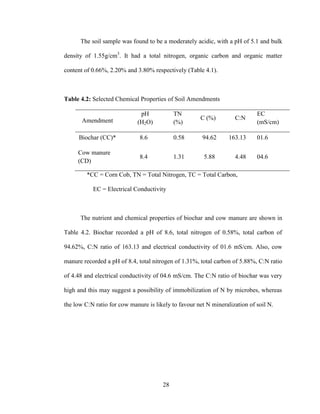
Table 4.2: Selected Chemical Properties of Soil Amendments
Amendment
pH
(H2O)
TN
(%)
C (%) C:N
EC
(mS/cm)
Biochar (CC)* 8.6 0.58 94.62 163.13 01.6
Cow manure
(CD)
8.4 1.31 5.88 4.48 04.6
*CC = Corn Cob, TN = Total Nitrogen, TC = Total Carbon,
EC = Electrical Conductivity
The nutrient and chemical properties of biochar and cow manure are shown in
Table 4.2. Biochar recorded a pH of 8.6, total nitrogen of 0.58%, total carbon of
94.62%, C:N ratio of 163.13 and electrical conductivity of 01.6 mS/cm. Also, cow
manure recorded a pH of 8.4, total nitrogen of 1.31%, total carbon of 5.88%, C:N ratio
of 4.48 and electrical conductivity of 04.6 mS/cm. The C:N ratio of biochar was very
high and this may suggest a possibility of immobilization of N by microbes, whereas
the low C:N ratio for cow manure is likely to favour net N mineralization of soil N.
29
4.2 Effects of Biochar and Cow manure Amendments on Soil Properties
4.2.1 Soil pH
FIG 4.1 Soil pH as affected by Biochar and Cow manure Amendments. Error bars
denote ± 1S.E.M
0.00
1.00
2.00
3.00
4.00
5.00
6.00
7.00
T0 T1 T2 T3 T4 T5 T6 T7 T8 T9 T10 T11 T12 T13 T14 T15
SoilpHat5weeksafterTreatment
Biochar and Cowdung Treatments
30
Results obtained from this experiment have shown that biochar addition
increased soil pH in all the treatments. However, while the pH of all the biochar
amended soils were significantly higher (P< 0.05) than the control there was no
significant difference among the different biochar rates (10 t ha-1
, 15 t ha-1
, 20 t ha-1
)
of treatments. This observation is in accordance with the view expressed by Sparkes
and Stoutjesdijk (2011) that high pH biochars may not have a big impact on the pH of
soils to which they are added and further ascribed this phenomenon to the acid
neutralizing ability of biochar. This suggests that there could only be a marginal
reduction of soil acidity in response to the incorporation of high pH biochar. The acid
neutralizing ability of biochar could result from a possible adsorption of cations such
as Al3+
onto biochar surfaces, hence, reducing exchangeable (Al3+
and H+
) acidity of
the soil.
Addition of cow manure at all rates (0.42 t ha-1
, 0.83 t ha-1
, 1.67 t ha-1
)
increased pH of the soil above the control, but there was no significant differences in
soil pH between the rates of cow manure treatments. This means that although
addition of cow manure as a nutrient enhancer can give an added benefit of raising soil
pH, the effect did not vary with the rate of cow manure added. The increase in pH
after cow manure application was explained by Lekasi et al. (2005) to be due to the
production of ammonia resulting from deamination of proteins. Also, the combined
effect of biochar and cow manure treatments increased pH of the soil above the
control, but the increase in pH was not significantly different from the rise in soil pH
observed in the sole biochar or cow manure treatments (FIGURE 4.1).
31
4.2.2 Soil Organic Carbon (SOC)
FIG 4.2 Soil Organic Carbon (SOC) as affected by Biochar and Cow manure
Amendments. Error bars denote ± 1 S.E.M
The soil organic carbon content increased significantly following the
application of biochar and cow manure treatments. The results showed that soil
organic carbon concentrations in the sole biochar, sole cow manure and combined
biochar and cow manure were significantly higher (p<0.05) than in the control
32
(FIGURE 4.2). When considered alone, there was a trend of increasing soil organic
carbon concentrations with increasing rates of biochar addition to the soil. The soil
organic carbon concentration measured in the 20 t ha-1
biochar treatment was
significantly higher (p<0.05) than in the 10 t ha-1
and 5 t ha-1
biochar treatments. This
finding agrees with Lehmann et al., (2011) who suggested that biochar has a great
potential for carbon sequestration in soil. Lehmann et al., (2011) found that the soil
organic carbon (SOC) increased markedly with increasing rate of biochar application.
Lal (2004) also concludes that the use of biochar to improve soil organic carbon
concentration is a sustainable strategy in any situation to conserve or promote soil
health.
Steiner et al, (2007) also suggested that the addition of manure with biochar to
soil offers the potential to increase bioavailability of organic C in the soil solution.
Increased bioavailability of organic C has implication for environmental quality,
especially in the presence of nitrate-N. According to DeLuca et al, (2009) the
abundance of available C and NO3
-
(terminal electron acceptor) in the soil could
increase denitrification potential and hence N2O emissions in mineral soils amended
with a mixture of biochar and manure.
33
4.2.3 Soil Nitrogen Mineralization Dynamics
FIG 4.3 Available Soil N (NH4
+
N & NO3
-
N) concentrations as affected by
Biochar and Cow manure Amendments 2 Weeks After Treatment.
Error bars denote ± 1 S.E.M
0.00
5.00
10.00
15.00
20.00
25.00
30.00
35.00
40.00
45.00
50.00
T0
T1
T2
T3
T4
T5
T6
T7
T8
T9
T10
T11
T12
T13
T14
T15
AvailableSoilNConcentrations(mgNkg-1)atthe2ndWeek
ofTreatment
Biochar and Cow dung Treatments
NH4-N
NO3-N
34
FIG. 4.4: Available Soil N (NH4
+
N & NO3
-
N) concentrations as affected
By Biochar and Cow manure Amendments 5 Weeks After
Treatment. Error bars denote ± 1 S.E.M
The concentrations of soil mineral N (NO3
-
and NH4
+
) remained low in the
control treatment throughout the experimentation (FIGURE 4.3 and FIGURE 4.4),
0.00
10.00
20.00
30.00
40.00
50.00
60.00
70.00
T0 T1 T2 T3 T4 T5 T6 T7 T8 T9 T10T11T12 T13T14T15
AvailableSoilNconcentrations(mgNkg-1)at5weeks
afterTreatment
Biochar and Cow dung Treatments
NH4-N
NO3-N
35
which is indicative that net N mineralization in the coastal savannah soil prior to the
addition of biochar and/or cow manure was minimal. On the other hand, laboratory
analysis of all the soil samples that received biochar and cow manure treatments
revealed a significant (P<0.05) increase in available N (NO3
-
N and NH4
+
-N)
concentrations of the soil above the control treatment. This suggests that addition of
biochar and cow manure amendments stimulated N mineralization on the coastal
savannah soil. Although the high C:N ratio (about 163:1) corn cob biochar could
decrease N mineralization in the coastal savannah soil, it did not proof to be true with
this experiment most probably because of the tendency for mineralization to increase
even with the addition of a high C:N ratio biochar. Zackrisson et al. (1996) explained
that there is a rapid response of the nitrifier community toward addition of biochar to
soils with low nitrification activity because biochar is capable of absorbing inhibitory
compounds in the soil environment and hence allow nitrification to continue.
Therefore, in this study incorporation of biochar could have increased the nitrifier
population. (Glaser et al., 2002a) also reported that due to its high surface area,
biochar may offer a suitable habitat for the proliferation of microbes. Furthermore,
Stevenson and Cole, (1999) noted that autotrophic nitrifying bacteria are favoured by
less acidic soil conditions. This suggests that the modifying effect of biochar on the
soil pH in this experiment possibly stimulated the proliferation of the nitrifier
community resulting in an enhanced cow manure mineralization rate. In contrast to the
results from this experiment, Tammeorg et al. (2010) argued that biochar additions
decreased the mineral N concentrations in all treatments when softwood chips biochar
was added to a sandy loam soil. They further explained that the reduction in NO3
-
N
36
concentrations following incorporation of high quantities of biochar could be due to N
immobilization by microbes rather than denitrification.
In this study, NO3
-
N concentration was moderately high in the combined cow
manure and biochar treatments two weeks after incubation (FIGURE 4.3), but
increases in NO3
-
N concentration measured between 2nd
and 5th
weeks after incubation
were marginal (FIGURE 4.3 & 4.4). DeLuca et al. (2006) have explained that
combined application of biochar and organic N inputs such as cow manure often result
in net N nitrification, but the addition of organic N without biochar resulted in high
rates of NH4
+
N production that were not immobilized probably due to a lack of
surface adsorption of NH4
+
onto biochar surface.
Experimental results indicated that NH4
+
N concentrations increased steadily in
cow manure treatments up to the fifth week of incubation (FIGURE 4.3 & 4.4). At the
second week after incubation, NH4
+
N concentration was highest (P < 0.05) in the 10 t
ha-1
biochar + 1.67 t ha-1
cow manure treatment. However, by the 5th
week after
incubation, NH4
+
N concentrations were high only in the sole cow manure treatments,
showing a decreasing trend of T6 > T5 > T4. In other treatments, NH4
+
N
concentrations decreased at week 5 after incubation compared to those measured at the
2nd
week after incubation, respectively. The low NH4
+
N concentrations measured in
these treatments (at the 5th
week after incubation) could be attributed to an increased
nitrification of NH4
+
N over time or adsorption of ammonium onto biochar surfaces.
The observed trends in NH4
+
N and NO3
-
N dynamics with time are consistent with
earlier reports by Gundale and DeLuca, (2006) and Tammeorg et al. (2010) who
reported that ammonium concentrations remained low whereas nitrate dominated the
37
mineral N pool with 97-100% share in all experimental treatments with respect to
biochar addition to soil in an incubation experiment.
4.3 Effects of Biochar and Cow manure Amendments on Dry Matter Yield
of Lettuce (Lactuca sativa L.) at 5 Weeks after Transplanting (WAT)
FIG 4.5 Lettuce Dry Matter Yield as affected by Biochar and
Cow manure Amendments. Error bars denote ± 1 S.E.M
38
The application of biochar and cow manure amendments to the soil had showed
a significant impact on the dry matter yield of lettuce in that significantly higher
(P<0.05) dry matter contents were measured in the biochar and cow manure
treatments than in the control (FIGURE 4.5). In this study, dry matter content was
highest in lettuce plants that received a combination of biochar and cow manure
treatments at rates of 15 t ha-1
and 0.42 t ha-1
respectively.
The sole biochar treatments resulted in significant increases in dry matter yield
of lettuce but the dry matter yield decreased with increasing rates of added biochar (T1
> T2 > T3). Increases in yields resulting from biochar application to soil have also been
documented by several researchers. For instance, when comparing maize yields
between disused charcoal production sites and adjacent fields in Kotokosu watershed
in Ghana, Oguntunde et al. (2004) found that grain yield was 91% better and dry
matter yield, 44% higher than in the control treatment. In another instance, Atiah,
(2012) observed an initial increase in dry matter yield of lettuce in an Oxisol amended
with biochar at rates of 0% to 3%, but afterwards a decline in dry matter yield was
found in treatments amended with biochar rates of 4% to 5%. He attributed the
increases in total dry matter yield to biochar’s ability to modify the soil pH from 3.73
to 5.69, and improved the N and P availability in the soil. Further, he attributed the
decline in dry matter yield from the 4 and 5% biochar treatments to P fixation at high
pH levels. This report suggests that incorporation of lower rates of biochar to soil may
lead to an increase in the yield of crops, but larger quantities of biochar could rather
result in yield decline.
39
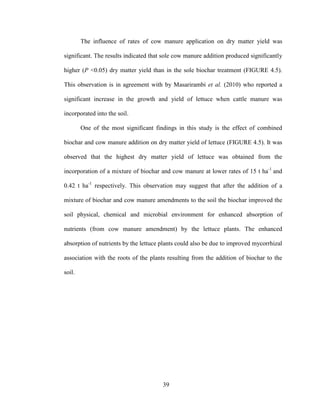
The influence of rates of cow manure application on dry matter yield was
significant. The results indicated that sole cow manure addition produced significantly
higher (P <0.05) dry matter yield than in the sole biochar treatment (FIGURE 4.5).
This observation is in agreement with by Masarirambi et al. (2010) who reported a
significant increase in the growth and yield of lettuce when cattle manure was
incorporated into the soil.
One of the most significant findings in this study is the effect of combined
biochar and cow manure addition on dry matter yield of lettuce (FIGURE 4.5). It was
observed that the highest dry matter yield of lettuce was obtained from the
incorporation of a mixture of biochar and cow manure at lower rates of 15 t ha-1
and
0.42 t ha-1
respectively. This observation may suggest that after the addition of a
mixture of biochar and cow manure amendments to the soil the biochar improved the
soil physical, chemical and microbial environment for enhanced absorption of
nutrients (from cow manure amendment) by the lettuce plants. The enhanced
absorption of nutrients by the lettuce plants could also be due to improved mycorrhizal
association with the roots of the plants resulting from the addition of biochar to the
soil.
40
CHAPTER FIVE
CONCLUSION AND RECOMMENDATION
5.1 Conclusion
The influence of rates of biochar and cow manure incorporation on some
physical properties (pH, organic carbon and N mineralization dynamics) of a coastal
savannah soil was assessed in this study. The effect of the above mentioned soil
amendments on lettuce dry matter yield was also assessed. Consequently, the
following conclusions were established at the end of the study:
1. Addition of biochar or cow manure either alone or in combination moderately
raised the pH of the Coastal Savannah Soil.
2. Soil organic carbon (SOC) increased considerably with increasing rates of biochar
addition to the soil.
3. Addition of biochar resulted in higher NO3
-
N concentrations than NH4
+
N
concentrations while incorporation of sole cow manure resulted in higher NH4
+
N
concentration than NO3
-
N concentration.
4. Lower rates of biochar (10 t ha-1
and 15 t ha-1
) resulted in higher dry matter yield
of lettuce, but the highest rate of biochar (20 t ha-1
) resulted in a lower lettuce
biomass yield.
5. For higher dry matter yield of lettuce, a combination of biochar and cow manure
at rates of 15 t ha-1
and 0.42 t ha-1
is agronomically viable.
41
5.2 Recommendations
Based on the findings of the study, the following recommendations have been
suggested:
1. Further studies should be carried out to determine the mechanism by which
biochar increases the pH of the Coastal Savannah Soil.
2. Another research is needed to determine nitrification and ammonification rates on
the Coastal Savannah Soil.
3. Another study is necessary to assess the presence of chemicals such phenols in the
Coastal Savannah Soil and how these phenolic compounds inhibit net N
mineralization of the soil.
42
REFERENCES
Agyarko-Mintah, E., (2008). ‘Land Use Potential of a Gleysol.’ Unpublished Thesis submitted
to the Department of Soil Science, University of Cape Coast, pp. 80-83.
Ahlgren, H. L. (1948). “First, the Care of the Soil” Corn Belt and Lake States, pp 423 – 425.
Anderson, J. & Ingram, J. (1993). ‘Tropical soil biology and fertility.’ A handbook of methods.
UK : CABI.
Atiah, K., (2012). ‘Evaluation of Local Feedstocks for Biochar Production and Potential Use of
It as Soil Amendment for Lettuce (Lactuca Sativa L.) Production.’ Unpublished Thesis
submitted to the Department of Soil Science, University of Cape Coast, pp 60 – 63
Baldock, J. A., & Smernik, R. J. (2002). Chemical composition and bioavailability of thermally
altered Pinus resinosa (Red pine) wood. Organic Geochemistry 33: 1093-1109.
Blackwell, P., Riethmuller, G. &Collins, M. (2009). ‘Biochar application to soil’, in Lehmann,
J & Joseph, S, Biochar for environmental management: science and technology,
Earthscan, United Kingdom: 207–26.
Bridle, T. R. & Pritchard, D. (2004). ‘Energy and nutrient recovery from sewage sludge via
pyrolysis’,Water Science and Technology, vol 50, pp169–175.
Cheng, C., Lehmann, J., Thies J. E., Burton, S. D. & Engelhard, M. H. (2006). ‘Oxidation of
black carbon by biotic and abiotic processes’,Organic Geochemistry, vol. 37, pp1477–
1488
Cheng, C. H., Lehmann, J. & Engelhard, M. H. (2008). ‘Natural oxidation of black carbon in
soils: Changes in molecular form and surface charge along a climosequence’,
Geochimica et Cosmochimica Acta, vol 72, pp1598–1610
43
DeLuca, T. H., MacKenzie, M. D., Gundale, M. J. & Holben, W. E. (2006). ‘Wildfire-
produced charcoal directly influences nitrogen cycling in forest ecosystems’, Soil
Science Society America Journal, vol 70, pp448–453
DeLuca, T. H., MacKenzie M. D., & Gundale M. J., (2009). ‘Biochar Effects on Soil Nutrient
Transformations’ ES_BEM_13-1 Retrieved from http://216.194.248.126/projects/book
Ernsting, A. & Smolker, R. (2009). Biochar for Climate Change Mitigation : Fact or Fiction?
Retrieved from http://www.biofuelwatch.org.uk/docs/biocharbriefing.pdf.
Elmer, W.H. & Pignatello, J.J., (2011). Effect of biochar amendments on mycorrhizal
associations and Fusarium crown and root rot of asparagus in replant soils. Plant
Disease published online.
ETHOS, (2009) . Retrieved from: http://www.biochar-international.org/stoves/ethos
FAO, (2006). ‘The State of Food Insecurity in the World,’ FAO, Rome, available at
www.fao.org/docrep/009/a0750e/a0750e00.htm, accessed on August 7, 2008
Fearnside, P. M. (2000) Global warming and tropical land-use change: greenhouse gas
emissions from biomass burning, decomposition and soils in forest conversion, shifting
cultivation and secondary vegetation. Climatic Change 46:115–158
Glaser, B., Lehmann, J. & Zech W (2002a). ‘Ameliorating physical and chemical properties of
highly weathered soils in the tropics with charcoal’—a review. Biology and Fertility of
Soils, 35, 219–230.
doi: 10.1007/s00374-002-0466-4.
Granatstein, D., Kruger, C.E., Collins, H., Galinato, S., Garcia-Perez, M., & Yoder, J. (2009).
‘Use of biochar from the pyrolysis of waste organic material as a soil amendment’ final
44
project report, Centre for Sustaining Agriculture and Natural Resources, Washington
State University, Wenatchee, WA.
Gundale, M. J., & DeLuca, T. H. (2006). ‘Temperature and substrate influence the chemical
properties of charcoal in the ponderosa pine/Douglas-fir ecosystem’, Forest Ecology and
Management, vol 231, pp86–93
Hammes, K., & Schmidt, W. I., (2009). ‘Changes of biochar in soil’, in Lehmann, J. & Joseph,
S., Biochar for environmental management: science and technology, Earthscan, United
Kingdom: 169–82.
Hoitink, H.A.J., & Fahy, P.C., (1986). ‘Basis for the control of soil-borne plant pathogens with
composts.’ Annual Review of Phytopathology 24, 93e114.
Johnson C., Albrecht G., Ketterings Q., Beckman J., & Stockin K. (2005). ‘Nutrient
Management Spear Program’ Agronomy Fact Sheet Series http://nmsp.css.cornell.edu
Accessed on 22nd
January, 2013.
Krull, E., Singh., B., & Joseph, S. (2010). ‘Preface to special issue: proceedings from the First
Asia- Pacific Biochar Conference, 2009, Gold Coast, Australia’, Australian Journal of
Soil Research 48(6–7)
Kwapinski, W. Byrne, C. M. P. Kryachko, E. Wolfram, P. Adley, C. Leahy, JJ. Novotny, E. H.
& Hayes, M. H. B. (2010). ‘Biochar from biomass and waste’, Waste Biomass Valor 1:
177–89.
Lal, R. (2004). Soil carbon sequestration impacts on global climate change and food security.
Science 304:1623–1627
45
Lehmann, J., Gaunt, J., & Rondon, M., (2006). ‘Bio-char sequestration in terrestrial
ecosystems’ – a review. Mitigation and Adaptation Strategies for Global Change 11,
403 – 427
Lehmann, J. (2007). ‘Biochar for mitigating climate change: carbon sequestration in the black’,
US-Ithaca (NY), pp 1-3.
Lehmann, J., Rillig, M. C., Thies, J., Masiello, C. A., Hockaday, W. C. & Crowley, D. (2011).
‘Biochar effects on soil biota’- A review. Soil Biology & Biochemistry 43 (2011)
1812e1836
Lekasi, J.K., Nmanure’u, K. W., & Kifuko, M. N. (2005). ‘Organic Resource Management in
Kenya’. Perspective and Guidelines. Forum for organic resource management and
Agricultural Technologies.(FORMAT).
Le Leuch, L. M., & Bandosz, T. J., (2007). ‘The role of water and surface acidity on the
reactive adsorption of ammonia on modified activated carbons’ Carbon, vol 45, pp568–
578
Liang, B., Lehmann, J., Solomon, D., Kinyangi, J., Grossman, J., O’Neill, B., Skjemstad, J.O.,
Thies, J., Luizão, F.J., Petersen, J., & Neves, E.G., (2006). ‘Black carbon increases
cation exchange capacity in soils.’ Soil Science Society of America Journal 70, 1719 –
1730
Masarirambi, M. T., Hlawe, M. M., Oseni, O. T., & Sibiya, T. E. (2010).‘Effects of organic
fertilizers on growth, yield, quality and sensory evaluation of red lettuce’ (Lactuca
sativa L.) ‘Veneza Roxa’ Agric. Biol. J. N. Am., 1(6):1319-1324
Matsubara, Y., Hasegawa, N., & Fukui, H. (2002). ‘Incidence of Fusarium root rot in asparagus
seedlings infected with arbuscular mycorrhizal fungus as affected by several soil
46
amendments.’ Journal of the Japanese Society for Horticultural Science 71, 370 and
374.
Mclaughlin, H. (2010). ‘Characterizing Biochars prior to Additions to Soils-Version I’
(January, 2010). Alterna Biocarbon Inc.
Nguyen, B. T. & Lehmann, J. (2009). Black carbon decomposition under varying water
regimes. Organic Geochemistry, 40, 846–853. doi:10.1016/j.orggeochem.2009.05.004.
Noble, R. & Coventry, E. (2005). ‘Suppression of soil-borne plant diseases with composts’ - a
review. Biocontrol Science and Technology, pp3 – 20.
Odesola, I. F. & Owoseni, and T. A. (2010). ‘Small Scale Biochar Production Technologies.’ A
Review, Journal of Emerging Trends in Engineering and Applied Sciences (JETEAS) 1
(2): 151-156.
Oguntunde, P., Fosu, M., Ajayi, A. & van de Giesen, A., (2004). “Effects of charcoal
production on maize yield, chemical properties and texture of soil”, Biology and
Fertility of Soils 39: 4
Ornstein, L., Aleinov, I. & Rind, D. (2009). Irrigated afforestation of the Sahara and Australian
outback to end global warming. Climate Change. doi:10.1007/s10584-009-9626-y
(Cornell- Lehmann 2009 Biological Carbon sequestration
Retan, G. A. (1915). ‘Charcoal as a means of solving some nursery problems’, Forestry
Quarterly, vol 13, pp25-30
Rondon, M. A., Lehmann, J., Ramirez, J., & Hurtado, M., (2007). ‘Biological nitrogen fixation
by common beans (Phaseolus vulgaris L.) increases with bio-char additions.’ Biology
and Fertility of Soils, pp43, 699.
47
Rowell, D. L. (1994). Soil Science: Methods and Applications, Longman Group UK Limited,
pp 48 - 227.
Silva, J. A., & Uchida, R. (2000). College of Tropical Agriculture and Human Resources,
University of Hawaii at Manoa, Essential Nutrients for Plant Growth: Nutrient
Functions and Deficiency Symptoms
Sohi, S. P., Krull, E., Lopez-Capel, E., & Bol, R., (2010). ‘ A review of biochar and its use and
function in soil’, Advances in Agronomy 105: 47–82.
Sparkes, J & Stoutjesdijk, P. (2011). ‘Biochar: implications for agricultural productivity.’
ABARES technical report 11.6, Australian Bureau of Agricultural and Resource
Economics and Sciences, Canberra, pp 13 – 21.
Steiner, C., Teixeira, W.G., Lehmann, J., Nehls, T., de Macedo, J. L.V., Blum, W. E. H. &
Zech, W. (2007). ‘Long term effects of manure, charcoal, and mineral fertilization on
crop production and fertility on a highly weathered Central Amazonian upland soil’,
Plant and Soil, vol 291, pp275–290
Steiner, C., Garcia, M., & Zech, W., (2009). ‘Effects of charcoal as slow release nutrient carrier
on N-P-K dynamics and soil microbial population’ – pot experiments with ferralsol
substrate. Wim Sombroek’s Vision. Springer, Berlin, pp. 325-338.
Stevenson, F.J. & Cole, M.A. (1999). ‘Cycles of the Soil,’ second edition, John Wiley and
Sons, Inc, New York, NY
Tammeorg, P., Brandstaka, T., Simojoki, A. & Helenius, J. (2010). “Nitrogen mineralization
dynamics of meat bone meal and cattle manure as affected by the application of
softwood chips biochar in soil” pp 1 – 7.
48
Thies, J. E., & Rillig, M. C., (2009). ‘Characteristics of Biochar: Biological Properties’, in
Lehmann, J., & Joseph, S., Biochar for environmental management: science and
technology, Earthscan, United Kingdom, 85–105.
Tiessen, H., Cuevas, E. & Chacon, P. (1994). ‘The role of soil organic matter in sustaining soil
fertility.’ Nature, 371, 783–785.
Van Zwieten, L., Singh, B., Joseph, S., Kimber, S., Cowie, A., & Chan, K. Y. (2009). ‘Biochar
and emissions of non-CO2 greenhouse gases from soil’, in Lehmann, J. & Joseph, S., -
Biochar for environmental management: science and technology, Earthscan, United
Kingdom: 227–50.
Walkley, A., & A., Black, (1934). An examination of the degtrareff method for determining soil
organic matter and a proposed modification of the chronic acid titration method. Soil
Science., 37: 29-38.
Woolf, D., (2008). ‘Biochar as a soil amendment’ - A review of the environmental implications:
Retrieved from: http://www.ctahr.hawaii.edu/oc/freepubs/pdf/SCM-30.pdf
Zackrisson, O., Nilsson, M. C. and Wardle, D. A. (1996). ‘Key ecological function of charcoal
from wildfire in the Boreal forest’, Oikos, vol 77, pp10–19

BSc Dissertation

  • 1.
    i UNIVERSITY OF CAPECOAST SCHOOL OF AGRICULTURE THE EFFECT OF RATES OF BIOCHAR ADDITIONS ON SOIL NITROGEN DYNAMICS AND YIELD OF LETTUCE (Lactuca Sativa. L.) IN A TROPICAL STAGNIC LIXISOL AMENDED WITH COW MANURE. STEPHEN OWUSU A DISSERTATION PRESENTED TO THE SCHOOL OF AGRICULTURE, UNIVERSITY OF CAPE COAST, IN PARTIAL FULFILLMENT OF THE REQUIREMENT FOR THE AWARD OF BACHELOR OF SCIENCE DEGREE IN AGRICULTURE JUNE, 2013
  • 2.
    ii DECLARATION Candidate’s Declaration I, StephenOwusu, hereby declare that this dissertation is the result of my own original research and that, except for other people’s work which have been duly acknowledged, no part of this piece of work has been presented for another degree in this university or elsewhere. Candidate’s Signature:……………………… Date: ……………………… STEPHEN OWUSU (STUDENT) Supervisors’ Declaration I hereby declare that the preparation and presentation of this dissertation were supervised in accordance with the guidelines on supervision of thesis laid down by the University of Cape Coast. Supervisor’s Signature:………………… Date: ………………………. DR. KWAME AGYEI FRIMPONG
  • 3.
  • 4.
    iv ABSTRACT Overcoming the constraintsof soil fertility under tropical conditions is a topical issue in sustainable agriculture. Biochar addition to soil has been shown to mitigate soil fertility problems through its positive influence on soil physical and chemical properties in relation to plant growth, water holding capacity as well as soil nitrogen dynamics. An incubation experiment was conducted to investigate the effect of corn cob biochar (pyrolysed at 350o C) and cow manure additions on soil nitrogen dynamics and on yield of lettuce (Lactuca sativa.L) under controlled conditions on a Stagnic Lixisol. The biochar was incorporated in the soil at rates of 0, 10, 15 and 20 t ha-1 either alone, or in combination with cow manure at rates of 0, 0.42, 0.83 and 1.67 t ha -1 . Each treatment was replicated three (3) times in a Completely Randomized Design (CRD). The biomass yield of lettuce grown in each treatment for a period of 5 weeks was determined. During the growth of the test crop selected soil characteristics such as soil pH, soil organic carbon and soil mineral-N were also measured fortnightly. Total dry matter yield of lettuce was determined at maturity (5 weeks after transplanting) by oven drying. Biochar and cow manure additions (both sole and combined) significantly increased total soil organic C, soil pH and total dry matter yield of lettuce compared to the control treatment. Addition of biochar solely or in combination with cow manure resulted in higher NO3 - N concentrations, whereas only the sole addition of cow manure gave rise to higher NH4 + N concentrations. Based on the observations, it is recommended that farmers who grow lettuce on the coastal savannah soil should use a combination of biochar and cow manure amendments to maximize yields and improve the soil pH and soil organic carbon.
  • 5.
    v ACKNOWLEDGEMENTS I am especiallygrateful to my supervisor, Dr. Kwame Agyei Frimpong of the Department of Soil Science, University of Cape Coast (UCC), who diligently and patiently offered constructive comments and valuable suggestions on this piece of work. I appreciate all the guidance and advice you proffered to me. May God richly bless you. I am also very grateful to Dr. Daniel Okae-Anti, Dr. Ampofo, and Dr. (Mrs.) Grace Vanderpuije for their contribution and encouragement. I acknowledge with special thanks to Mr. Kofi Atiah of the Department of Soil Science, University of Cape Coast (UCC), who was always there for me from the beginning to the completion of this piece of work. I am also thankful to Mr. Osei Agyemang and Mr. Stephen Adu of the Soil Science Laboratory and the Animal Science Department, respectively, UCC, for making the laboratory analysis very successful for me. I thank my wonderful mother, Mrs. Martha Takyiwaa, my brothers Mr. Matthew Sabbi and Julius Acquoco Adjei, my sisters, Mrs. Zippora Takyiwaa, Mrs. Mina Amoah, Mrs. Emma Gyan and Mrs. Grace Affoah, my nieces, Miss Rita Ofosua, Mavis, Ivy, Esther, Philipa, Gloria, Perpetua, Genefa, Sandra, and Tracy, my nephews, Enoch, Clement, Reginald and Melvin for their financial assistance and moral support. Last but not least, my appreciation goes to Mr. Asare Tetteh Paul, Isaac Owusu- Ansah, Enoch Boateng, Ellen Kusi, Jonathan Otchie, and everybody who in one way or the other offered guidance and support to me. May God bless you all.
  • 6.
    vi DEDICATION To God Almightyand to the Memory of my beloved Father, Mr. Emmanuel K. Sabbi.
  • 7.
    vii TABLE OF CONTENTS CONTENTPAGE DECLARATION ii ABSTRACT iii ACKNOWLEDGEMENTS iv DEDICATION v TABLE OF CONTENTS vi LIST OF TABLES ix LIST OF FIGURES x CHAPTER ONE INTRODUCTION 1 1.1: Background of the Study 1 1.2: Problem Statement 3 1.3.1: General Objectives 4 1.3.2: Specific Objectives 4 1.4: Justification 5 CHAPTER TWO: LITERATURE REVIEW 6 2.1: The Effect of Biochar on the Nitrogen Cycle 6 2.1.1: Nitrogen Fixation 7 2.1.2: Nitrogen Mineralization 7 2.1.2.1: Aminization 8 2.1.2.2: Ammonification 8 2.1.2.3: Nitrification 8
  • 8.
    viii 2.1.3: Denitrification 9 2.1.4:Volatilization 9 2.1.5: Immobilization 10 2.1.6: Leaching 10 2.2: Nutrient Content of Biochar 11 2.3: Biochar Effects on Soil pH 11 2.4: Effect of Biochar on Ion Exchange Capacity of Soils 12 2.5: Biochar Effects on Soil Biological Activity 13 2.6: Biochar for Carbon Sequestration 14 2.7: Biochar Effect on Plant Diseases 15 2.8: Effect of Biochar on Plant Growth 16 CHAPTER THREE: MATERIALS AND METHODS 18 3.1: Site Location and Description 18 3.2: Climatic Conditions 18 3.3: Preparation of Biochar for Incorporation into Soil 19 3.4.0: Biochar Characterization 19 3.4.1: pH Determination 19 3.4.2: Total Carbon Determination 20 3.4.3: Total Nitrogen Determination 20 3.5: Treatment and Laboratory Analysis of Cow manure 21 3.6: Soil Sampling 21 3.7: Preliminary Soil Analyses 22 3.7.1: Soil Chemical Properties 22
  • 9.
    ix 3.7.1.1: Determination ofOrganic Carbon 22 3.7.1.2: Determination of Total Nitrogen 22 3.7.1.3: Determination of Soil pH 23 3.7.1.4: Determination of NH4 + N and NO3 - N concentrations 23 3.7.2: Soil Physical Properties 24 3.8: Experimental Design 25 3.9: Statistical Analysis 26 CHAPTER FOUR: RESULTS AND DISCUSSION 4.1: Physico-chemical characteristics of the Soil and Amendments before the Incubation Experiment 27 4.2: Effect of Biochar and Cow manure Amendments 29 4.2.1: Soil pH 29 4.2.2: Soil Organic Carbon (SOC) 30 4.2.3: Soil Nitrogen Mineralization Dynamics 33 4.3: Dry Matter Yield of Lettuce 37 CHAPTER FIVE: RESULTS AND DISCUSSION 5.1: Conclusion 40 5.2: Recommendations 41 REFERENCES 42
  • 10.
    x LIST OF TABLES TABLEPAGE 1. Physico-chemical Characteristics of the Soil Sample 27 2. Selected Chemical Properties of Soil Amendments 28
  • 11.
    xi LIST OF FIGURES FIGUREPAGE 1. The Nitrogen Cycle 6 2. Soil pH as affected by Biochar and Cow manure Amendments 29 3. Soil Organic Carbon (SOC) as affected by Biochar and Cow manure31 4. Available Soil N (NH4 + N & NO3 - N) concentrations as affected by Biochar and Cow manure Amendments 2 Weeks after Treatment 33 5. Available Soil N (NH4 + N & NO3 - N) concentrations as affected by Biochar and Cow manure Amendments 5 Weeks after Treatment 34 6. Lettuce Dry Matter Yield as affected by Biochar and Cow manure Amendments 37
  • 12.
    1 CHAPTER ONE INTRODUCTION This chapterhighlights the background, problem statement, objectives, and justification, respectively of the study. 1.1 Background of the study The soil comes first. It is the foundation of farming. Soils with poor fertility result in poor farming and poor farmer livelihood, but fertile soils result in good farming and better living conditions. An understanding of good farming therefore, begins with an understanding of the soil (Ahlgren, 1948). A definitive understanding of the soil nitrogen dynamics for improvement in crop yield is not a luxury but a necessity in many regions of the world. Lack of food security is especially common in sub-Saharan Africa and South Asia with malnutrition in 32 and 22% of the total population respectively (FAO, 2006). To solve this problem, Glaser et al., (2002a) recognizes that an intensification of agricultural production on a global scale is a necessary requirement to secure adequate food supply for an increasing world population. In areas with adequate rainfall, crop yields are governed by supply of nitrogen than by any other nutrient element supplied by the soil. Nitrogen (N) is essential for the development of field crops. Nitrogen is part of chlorophyll used in photosynthesis and helps to induce good vegetative growth and deep green colour of plants. It also improves the quality and quantity of dry matter in leafy vegetables and protein in grain
  • 13.
    2 crops. When Nis deficient, root systems and plant growth are stunted, older leaves turn yellow and the crop is low in crude protein. Too much N, however, can delay maturity and cause excessive vegetative growth at the expense of crop yield (Johnson et al., 2005). Soil nitrogen is of special importance because plants need it in rather large amount, but it is easily lost from the soil (Silva and Uchida, 2000). Over the years, numerous efforts have been made to improve soil nitrogen availability to crops in many parts of the world through addition of soil amendments such as mulches, composts, manures and fertilizers. Applications of mulches, composts, and manures have frequently been shown to increase soil fertility, minimize nutrient leaching and improve soil structure. However, under tropical conditions it is not uncommon to experience rapid mineralization of organic matter (Tiessen et al., 1994) and only a small portion of the applied organic compounds will be stabilized in the soil in the long term, but continually released to the atmosphere as carbon dioxide (Fearnside, 2000). Although chemical fertilizers are essential to modern agriculture, their overuse can have harmful effects on plants and crops and on soil quality. In addition, leaching of nutrients from chemical fertilizers into bodies of water can lead to water pollution problems such as eutrophication, by causing excessive growth of vegetation (Odesola and Owoseni, 2010). In recent times, enhanced soil nutrient availability (especially nitrogen) and the subsequent improvement in the yield of crops through the addition of biochar to soils has been demonstrated by research in several areas across the globe. The term “biochar” was coined by Peter Read to describe fine-grained by-product, high in organic carbon, made from biological material (biomass), pyrolysed under limited
  • 14.
    3 supply of oxygen(O2), and at relatively low temperatures (<700°C), used as a soil amendment to improve soil properties for agricultural purpose (Ernsting and Smolker, 2009). Previous research has consistently indicated that biochar possesses considerable potential to enhance long-term soil carbon pool as it has been found to be biochemically recalcitrant as compared to un-charred organic matter (Lehmann et al., 2006). In soil, biochar significantly increases the efficiencies of other soil amendments such as manure, composts, and fertilizers. Thus, biochar addition to soil can reduce the amount of chemicals needed to enhance crop yields. Research has also revealed that poor soils amended with biochar promotes higher growth rates and also results in higher and quality crop yields. The reasons advanced above justify the need to use biochar as a sustainable soil amendment that would offer enhanced soil nitrogen availability for increased lettuce yield. 1.2 Problem Statement The effect of biochar on crop production depends on the rate of application (Blackwell et al., 2009). Various studies conducted by previous researchers have shown that biochar increases crop productivity, yet there is inadequate research findings to confirm the optimum application rates required for ideal crop productivity on a specified soil. Determination of the correct application rate suitable for any particular soil is essential, considering that soil incorporation of some biochars has been found to adversely affect plant growth. (Kwapinski et al., 2010; Sohi et al.,
  • 15.
    4 2010). For example,Kwapinski et al. (2010) has reported suppression of plant growth resulting from soil incorporation of biochar made from miscanthus. The use of biochar as a soil amendment in Ghana is not widespread. Productivity of the tropical soils of Ghana is typically constrained by the inherently low soil fertility status of most soils especially around the coastal savannah zone of the country. If the limitations posed by low soil fertility are addressed crop productivity could be significantly increased in the coastal savannah zone. Biochar offers the potential to improve soil fertility and productivity in this area, but these soils have not been extensively assessed for their use with biochar as a soil amendment. 1.3 Objectives of the Study 1.3.1 General Objectives The general objective of this research is to evaluate the effect of different rates of biochar application on soil N dynamics and on the yield of lettuce grown on a coastal savannah soil. 1.3.2 Specific Objectives: The specific objectives underlying the study are as follows: 1. Assess the effect of biochar incorporation on soil NH4 + -N and NO3 - N concentrations. 2. Characterize the soil sample (Benya Series ) for chemical and physical properties. 3. Characterize the corn cob biochar for physico-chemical properties before soil
  • 16.
    5 incorporation. 4. Evaluate theeffect of the use of corn cob biochar as a soil Amendment on the yield of lettuce (Lactuca sativa.L) 6. Evaluate the impact of combined biochar and cow manure applications on the yield of lettuce (Lactuca sativa.L) 1.4. Justification of the Study The application of biochar as a sustainable approach for managing soil is a subject matter of growing interest (Brussaard, 1997 cited by Lehmann et al., 2011). The interest in biochar research is an important one because biochar is thought to provide several beneficial effects for its use as soil amendment. Biochar is thought to help in the development of soil structure and stability, nutrient cycling, soil aeration, soil water use efficiency, disease resistance, and C storage capacity of soils. Regardless of the benefits derived from biochar, data on the effect of biochar application rates on crop yields is still rudimentary, and before large scale deployment can be considered the application rates of biochar will have to be studied in far more detail (Woolf, 2008). This research therefore seeks to provide vital information necessary for establishing an appropriate application rate of biochar for lettuce production on a coastal savannah soil in Ghana. The outcome of the study will contribute significantly to existing literature and inform policy makers and implementers about the appropriate application rate necessary for large scale deployment of biochar on the Coastal Savannah Soil in Ghana or elsewhere.
  • 17.
    6 CHAPTER TWO LITERATURE REVIEW 2.1The Effect of Biochar on the Nitrogen Cycle The N cycle explains how N from sources such as manure, fertilizers and plants moves through the soil to crops, water and the air. A good understanding of the N cycle is a necessary first step towards soil N management to meet crop needs while safeguarding the environment. FIG. 2.1 The Nitrogen Cycle (Source: http://nmsp.css.cornell.edu)
  • 18.
    7 In general, theN cycle processes of fixation, mineralization and nitrification increase plant available N, but processes like - Denitrification, volatilization, immobilization, and leaching, can result in permanent or temporary N losses from the root zone. 2.1.1 Nitrogen Fixation Fixation refers to the conversion of atmospheric N to a plant available form. DeLuca et al. (2009) explained that biological N2 fixation is exclusively significant in low-input agro-ecosystems where external N inputs are negligible. Consequently, it is an indispensable strategy to know whether biochar applications have the capacity to alter symbiotic or free-living N2-fixing organisms. Rondon et al. (2007) noted that biochar may stimulate N2 fixation as the result of increased availability of trace metals such as nickel (Ni), iron (Fe), boron (B), titanium (Ti) and molybdenum (Mo). Rondon et al. (2007) recommended that in-depth field studies be conducted to investigate the observed significant improvement in productivity resulting from soil incorporation of biochar. 2.1.2 Nitrogen Mineralization Nitrogen mineralization refers to transformation of nitrogen held in organic forms (such as humus and decaying plant and animal matter) to forms available for uptake by plant roots; namely ammonium (NH4 + ) and nitrate (NO3 - ). Mineralization consists of two major transformations that are catalyzed by different groups of biota.
  • 19.
    8 2.1.2.1 Aminization: Protein + R-NH2 + CO2 + (NH2)2C=O + Energy Aminization is the first process of mineralization and consists of numerous reactions of organic compound decomposition accomplished by heterotrophic microbes (bacteria and fungi) 2.1.2.1 Ammonification: The breakdown of organic forms of nitrogen to ammonium. R-NH2 + H2O  R-OH + NH3 + Energy NH3 + H2O  NH4 + + OH- Ammonification is a biotic process that is principally driven by heterotrophic bacteria and a variety of fungi (Stevenson and Cole, 1999). 2.1.2.2 Nitrification Nitrification is the process by which microorganisms convert ammonium to nitrate to obtain energy. Nitrate is the most plant available form of N, but is also highly susceptible to leaching losses (Johnson et al., 2005). 2NH4 + + 2O2  2NO2 - + 2H2 + 4H+ 2NO2 - + O2  2NO3 - DeLuca et al. (2009) postulated that biochar increases nitrification rates in natural forest soils that have very low natural nitrification rates. Conversely, in NH2 H COOHR C
  • 20.
    9 agricultural soils, whichalready have appreciable rates of nitrification, the effect of biochar on nitrification was rather minimal. DeLuca et al. (2009) explained further that biochar additions to agricultural soils decreased apparent ammonification rates probably due to adsorption of NH4 + onto biochar surface and subsequently reducing the concentration of NH4 + in the soil solution. In another instance, Granatstein et al. (2009) found that addition of biochar to soils led to a decrease in soil nitrification and a decrease in the amount of nitrogen available to plants. 2.1.3 Denitrification Denitrification occurs when N is lost through the conversion of nitrate to gaseous forms of N, such as nitric oxide, nitrous oxide and dinitrogen gas; usually in poorly drained soils where the bacteria use nitrate as an oxygen source. Biochar is thought to be able to catalyze the reduction of nitrous oxide to nitrogen gas, by completing denitrification process and reducing the amount of nitrous oxide (an important greenhouse gas) entering the atmosphere (DeLuca et al., 2009; Van Zwieten et al., 2009). 2.1.4 Volatilization Volatilization is the loss of N through the conversion of ammonium to ammonia gas, which is released to the atmosphere. The volatilization losses increase at higher soil pH and when high concentrations of NH4 + are present (Stevenson and Cole, 1999), and conditions that favor evaporation such as hot and windy climate (Johnson et al.,2005). Biochar is thought to reduce the potential for ammonia volatilization,
  • 21.
    10 because it decreasesavailable ammonium in the soil solution and moderately raises the pH of soils; both conditions which do not favour ammonia formation and volatilization (Van Zwieten et al., 2009). Biochar and biochar mixed with ash have the potential to raise the pH of acid soils (Glaser et al., 2002a), but not to a level that would increase volatilization (Stevenson and Cole, 1999). Biochar additions to agricultural soils have been found to reduce NH4 + concentrations, which could be a result of volatilization; but it is more likely that surface adsorption of NH4 + (Le Leuch and Bandosz, 2007) reduces soil NH4 + concentrations and reduces the potential for NH3 volatilization. 2.1.5 Immobilization Immobilization refers to the process in which nitrate and ammonium are taken up by soil organisms and therefore become unavailable to crops. Immobilization is the reverse of mineralization. Incorporation of materials with a high carbon to nitrogen ratio (e.g. sawdust, straw, etc.), will increase biological activity and cause a greater demand for N, and thus result in N immobilization. Immobilization only temporarily locks up N so that the microorganisms die, the organic N contained in their cells is converted by mineralization and nitrification to plant available nitrate (Johnson et al., 2005). 2.1.6 Leaching Leaching is a pathway of N loss of a high concern to water quality. Soil particles do not retain nitrate very well because both are negatively charged. As a
  • 22.
    11 result, nitrate easilymoves with water in the soil. The rate of leaching depends on soil drainage, rainfall, amount of nitrate present in the soil, and crop uptake (Rowell, 1994). 2.2 Nutrient Content of Biochar DeLuca et al. (2009) documented that during pyrolysis, volatilization of some nutrients occurs especially at the surface of the biochar material, while other nutrients become concentrated in the remaining biochar. Hence, biochar is somewhat depleted in N and slightly depleted in S relative to more thermally stable nutrients. The N content of high-temperature biochar is exceptionally low because N is the most sensitive of all macronutrients to heating (Tyron, 1948 cited by DeLuca et al., 2009). Generally, there seems to be a decrease in the extractable concentrations of NH4 + and PO4 3- with increasing pyrolysis temperature during biochar production, with a portion of NH4+ being oxidized to a small exchangeable NO3 - pool at higher temperatures (Gundale and DeLuca, 2006). Adding biochar to soil ensures a moderate contribution of nutrients, which is relatively influenced by the nature of the feedstock (i.e. wood or manure) and the temperature at which the material is pyrolysed (Bridle and Pritchard, 2004). Biochar may strategically act as a soil conditioner and driver of nutrient transformations rather than being primary source of nutrients (Glaser et al., 2002a).
  • 23.
    12 2.3 Biochar Effectson Soil pH Numerous studies have demonstrated that biochar can modify soil pH, normally by increasing pH in acidic soils (Matsubara et al., 2002). There are few, if any, studies that have demonstrated a reduction in pH with biochar addition in alkaline soils, however, the addition of acid biochar to acidic soils has been observed to reduce soil pH (Cheng et al., 2006). An increase in pH associated with adding biochar to acid soils is due to an increased concentration of alkaline metal (Ca2+ , Mg2+ and K+ ) oxides in the biochar and a reduced concentration of soluble soil Al3+ (Steiner et al., 2007). Adding these alkaline metals, both as soluble salts and associated with biochar exchange sites, is likely the single most significant effect of biochar on P solubility, particularly in acidic soils where subtle changes in pH can result in substantially reduced P precipitation with Al3+ and Fe3+ . Lehmann et al. (2011) explained that biochars with high mineral ash content have greater pH values than those with lower ash contents and that pH of biochar also increases with greater pyrolysis temperature. They recognized that the pH of biochars may change over time and either decrease or increase depending on type of feedstock used. For example, Nguyen and Lehmann (2009) observed a pH decrease with mineral-poor oak wood biochar from pH 4.9 to 4.7, but an increase with mineral-rich corn stover biochar from pH 6.7 to 8.1 over the course of one year incubation. Cheng et al. (2006) expounded that the driving force behind a pH decrease is oxidation of C to form acidic carboxyl groups, whereas, Lehmann et al. (2011) proposed that the increase in pH is possibly associated with the dissolution of alkaline minerals.
  • 24.
    13 2.4 The Effectof Biochar on Ion Exchange Capacity of soils High temperature (800°C) biochar demonstrated higher pH, electrical conductivity (EC) and extractable NO3 - relative to low temperature (350°C) biochar (Gundale and DeLuca, 2006). The biochemical basis for the high CEC is not fully understood, but is likely due to the presence of oxidized functional groups (such as carboxyl groups), whose presence is indicated by high O/C ratios on the surface of charred materials following microbial degradation (Liang et al., 2006) and is further influenced by the great surface area (Gundale and DeLuca, 2006) and high charge density of biochar (Liang et al., 2006). In addition to directly releasing soluble P, biochar can have a high ion exchange capacity (Liang et al., 2006), and may alter P availability by providing anion exchange capacity or by influencing the activity of cations that interact with P. It has been demonstrated that fresh biochar has an abundance of anion exchange capacity in the acid pH range (Cheng et al., 2008), which can initially be in excess of the total cation exchange capacity of the biochar. 2.5 Biochar Effects on Soil Biological Activity Soils can be viewed as complex communities of organisms which are continually changing in response to soil characteristics and climatic and management factors, especially the addition of organic matter (Thies and Rillig, 2009). Biochar addition to soils can stimulate microorganism activity in the soil, potentially affecting the soil microbiological properties (Hammes and Schmidt, 2009). Rather than supplying microorganisms with a primary source of nutrients, biochar is thought to improve the physical and chemical environment in soils, providing microbes with a
  • 25.
    14 more favourable habitat(Krull et al., 2010). Biochar, because of its porous nature, high surface area and its ability to adsorb soluble organic matter and inorganic nutrients, provides a highly suitable habitat for microbes. This is true for bacteria, actinomycete and arbuscular mycorrhizal fungi from which some types may preferentially colonize biochars depending on its physico-chemical properties. Biochar pores may act as a refuge for some microbes, protecting them from competition and predation. Microbial abundance, diversity and activity are strongly influenced by pH. The soil buffering capacity imparted by biochar cation exchange capacity may help maintain appropriate pH conditions and minimize pH fluctuations in the microhabitats within biochar particles. Biochar is relatively stable and has long soil residence times, which suggests that biochar is not a good substrate (food) for soil biota. However, biochars freshly added to soils may contain suitable substrates to support microbial growth. Depending on feedstock type and production conditions, some biochars may contain bio-oils or recondensed organic compounds which could support the growth and reproduction of certain microbial groups over others. The implications of this are that microbial communities in biochar will change over time once it has been added to the soil (DeLuca et al., 2009). 2.6 Biochar for Carbon Sequestration Baldock and Smernik (2002) reported that soil incorporation of biochar does not only avoid adverse environmental impact but also constitutes a net sink of atmospheric carbon dioxide. This means that biochar additions to soil not only reduce carbon dioxide emissions from energy production, but it is also a form of carbon
  • 26.
    15 burial, which constitutesa net withdrawal of carbon dioxide from the atmosphere. There is a high theoretical potential to reduce global greenhouse gas emissions through the use of biochar sequestration in combination with bioenergy, but this needs to be vetted against economic realities (Lehmann, 2007). Ornstein et al. (2009) proposed a rather drastic but theoretically effective way of using photosynthesis to draw down atmosphere carbon dioxide with biochar addition to soils because it will benefit the farm economy of those farmers who sequester the carbon. It has also been documented that the effectiveness of using biochar as an approach to mitigate climate change rests on its relative recalcitrance against microbial decay and thus on its slower return of terrestrial organic carbon as carbon dioxide (CO2) to the atmosphere (Lehmann, 2007). 2.7 Biochar Effect on Plant Diseases For over a century ago, farmers have reported of the indirect effect of biochar- type materials on suppressing plant diseases. For instance, potato rot or rust and mildew (Allen, 1846 cited by Lehmann et al., 2011) and isolated studies have observed reduced damping off (caused by various pathogens) after additions of charcoal (Retan, 1915). It has been proposed that the effect of biochar may be analogous to compost in suppressing plant diseases, thought little direct experimentation has been conducted so far. The following are some principal mechanisms proposed by (Hoitink and Fahy, 1986; Noble and Coventry, 2005), which is somewhat proven for compost, and which may also be applicable to biochar. These include (1) a direct release of inhibitors of plant pathogens; (2) the promotion of
  • 27.
    16 microorganisms that actantagonistic to pathogens, such as parasites, through production of antibiotics, or by successful competition for nutrients; (3) improved plant nutrition and vigor, leading to enhanced disease resistance; and (4) activation of plant defense mechanisms (induced systemic resistance) by enhancing certain microorganisms. Added to the aforementioned mechanisms is that the known strong sorption of organic compounds onto biochar may modify signaling between plant and pathogens, or affect the mobility and activity of the pathogen itself (Lehmann et al., 2011). Matsubara et al. (2002) reported that Fusarium infection of asparagus was found to decrease after addition of coconut biochar and was similar to the benefits derived from manure made from coffee residue. A decrease in Fusarium infection of asparagus was also reported after addition of biochar made by fast pyrolysis of wood powder (Elmer and Pignatello, 2011). Elmer and Pignatello (2011) therefore proposed the following explanation for their observed decline in Fusarium infection of asparagus. In this case, biochar may have adsorbed allelopathic compounds in replant soil such as coumaric, caffeic and ferulic acids which led to a measurable increase in mycorrhizal infection. Also, greater AM abundance may have led to suppression of the disease. For soil-borne root diseases, it is also conceivable that biochars reduce compounds in the soil solution that would otherwise facilitate the ability of pathogens to detect and infect roots.
  • 28.
    17 2.8 Effects ofBiochar on Plant Growth With the modification to soil characteristics described above, the effect of biochar additions to soil on plant productivity is the most important outcome for its use in agriculture. Evidence gathered from both glasshouse and field trials indicates that biochar additions to acidic and nutrient poor soils, combined with fertilizer application, can produce yields greater than either fertilizer or biochar alone. However, the effect of biochar on crop growth depends on application rates and the soil type to which it is applied. A key feature of biochar addition to soils is increased nitrogen use efficiency by plants (Sparkes and Stoutjesdijk, 2011).
  • 29.
    18 CHAPTER THREE MATERIALS ANDMETHODS 3.1 Site Location and Description The research was undertaken at the School of Agriculture Teaching and Research Farm, University of Cape Coast, in the Central Region of Ghana. The land is gently sloping and forms part of the Edina series. The Teaching and Research Farms and the Technology village are both located within longitude 0.30 W and Latitude 0.50 N and the area is about 1500m - 3000m above sea level (Meteorological Services Dept. UCC, 2010). The soil used in the study, the Benya series, classified as Stagnic Lixisol (WRB), is located at the lower slope of the Edina toposequence. The top soil (0 – 15 cm) sample used for the study is very dark grayish brown (10YR 3/2) in colour. The Benya series is developed from colluvium derived from conglomerates of sandstone, shale and mudstone over a Sekondian deposits with medium internal drainage and moderate permeability (Agyarko-Mintah, 2008). 3.2 Climatic Conditions The Edina toposequence, to which the soil used in the study belongs, lies in the dry-equatorial climate. The area has a bimodal rainfall pattern; between the peaks of rainfall is a short dry spell that occurs in August. The major raining season start in the middle of March. It peaks in June and end in July. The minor rainy season start in
  • 30.
    19 September, peaks inOctober and ends in November. The dry season start from November and ends in February. The mean annual rainfall is between 750mm- 1500mm. The area also experience uniform high temperature through the year with a mean annual maximum of about 28o C and a humidity which ranges between 85–95% in the morning and about 70% in the afternoon (Meteorological Services Dept. UCC, 2011). 3.3 Preparation of Biochar for Incorporating into Soil The feedstock (corn cobs) used for biochar preparation was obtained from the University of Cape Coast Research and Teaching Farms. Five (5) Lucia biomass pyrolytic stoves - Top Lit-up Draft (ETHOS, 2009) were obtained from the Soil Science Laboratory of the School of Agriculture, and the feedstock was subjected to pyrolysis at 350ºC to produce the biochar. The corn cob biochar was ground, thoroughly mixed and oven-dried at 65°C till constant weight and sieved through a 2 mm sieve. The biochar (< 2mm) was retained in a labeled polythene bags for laboratory analysis. 3.4.0 Biochar Characterization 3.4.1 pH Determination Five (5) grams of sieved biochar was weighed into a 50 ml centrifuge tube and 20 ml of distilled water was added to make a biochar-water suspension. Three replicates of the biochar-water suspension were shaken on a mechanical shaker for 15 minutes. The pH of each suspension was recorded with a Suntex 701 Model pH Meter
  • 31.
    20 after it hadbeen calibrated with potassium hydrogen phthalate, and potassium dihydrogen orthophosphate and disodium hydrogen orthophosphate (Rowell, 1994). 3.4.2 Total Carbon Determination Total carbon content in the corn cob biochar was determined by following the ashing method described by Mclaughlin (2010). Briefly, three crucibles containing five grams of biochar were placed in a pre-warmed furnace and the temperature set at 550 °C. The ashing process was left to complete overnight. The crucibles with the ashes were allowed to cool. After cooling, the masses of each crucible in addition to the ashes were weighed and recorded. Total carbon determination was calculated as follows: % C = Where: W1= wet weight of biochar and porcelain crucible (grams) W2= dry weight of biochar and porcelain crucible (grams) W3= weight of porcelain (grams) 3.4.3 Total Nitrogen Determination The Total Kjeldahl Nitrogen content of the corn cob biochar was determined following the method described by Rowell, (1994). Briefly, a sample of biochar weighing 0.2 g was digested with conc. H2SO4-H2O2 mixture in a Tecator Digester
  • 32.
    21 2012. A blankdigest was also prepared. Twenty milliliters of the digest was distilled into a 100 ml conical flask containing 2% boric acid. The distillate was titrated against M HCl from the initial green colour to pink. The titre values were recorded and used in the calculations. 3.5 Treatment and laboratory analysis of Cow manure Cow manure used in the study was obtained from the cattle kraal at the School of Agriculture Farms, University of Cape Coast. It was air-dried for 3 days after which it was sieved through a 2 mm sieve before a representative sample was used in the experiment. The pH, total N and organic C carbon concentrations in the cow manure were determined using similar procedures as described for biochar. 3.6 Soil Sampling The topsoil layer (0 – 15cm) was randomly sampled at twenty points on the site and bulked to form a composite sample. The soil sample was air-dried for 3 days, ensuring that the soil sample was not contaminated with any non-soil material. After air-drying, the soil was crushed with porcelain pestle and sieved through a 2 mm sieve. The fine earth fraction (<2mm) was used for laboratory analysis and pot experiments.
  • 33.
    22 3.7 Preliminary SoilAnalyses The physical and chemical properties of the soil were determined at the Soil Science Laboratory of the School of Agriculture, University of Cape Coast between October 2012 and February 2013. 3.7.1 Soil Chemical Properties Sub samples from the composite sample were analyzed to determine the soil pH and concentrations of Soil Organic Carbon (SOC), Total Kjeldahl Nitrogen (N), Nitrate Nitrogen (NO3-N), Ammonium Nitrogen (NH4 + -N), respectively. 3.7.1.1 Determination of Organic Carbon Organic carbon was determined by the Walkley – Black method described by Rowell (1994). Briefly, 0.5g of the soil sample was wet combusted with Normal K2Cr2O7 solution and conc. H2SO4. Using diphenylamine indicator the unreduced K2Cr2O7 was back-titrated with Ammonium Ferrous solution. A blank titration was carried also carried out. 3.7.1.2 Determination of Total Nitrogen The Total Kjeldahl Nitrogen content of the soil sample was determined from the method described by Rowell, (1994). Briefly, a sample of biochar weighing 0.5 g was digested with conc. H2SO4-H2O2 mixture in a Foss Tecator Digester 2012. The determination also involved preparation of a blank digest. Twenty milliliters of the digest was distilled into a 100 ml conical flask containing 2% boric acid. The distillate
  • 34.
    23 was titrated againstM HCl from the initial green colour to pink. The titre values were recorded and used in the calculations. 3.7.1.3 Determination of Soil pH Ten grams of the soil sample was weighed into a centrifuge tube and 25ml of distilled water was added to the soil in the centrifuge tube to obtain a 1 : 2.5 ratio, soil : water suspension. The suspension was shaken intermittently for 10 minutes. The suspension was then allowed to stay undisturbed for 15 minutes. The electrodes of a Suntex 701 pH meter were dipped into the supernatant to determine the pH of the soil. (The initial pH of the soil sample was obtained to be 5.1) 3.7.1.4 Determination of NH4 + N and NO3 - N The concentrations of NH4 + N and NO3 - N were determined from the method described by Rowell, (1994). Briefly, 10g of freshly sampled moist soil was shaken with 40ml of 2M KCl for 1hr after which the suspension was filtered through a Whatmann No. 42 filter paper. The mineral-N content of this extract was then determined by steam distillation. Ammonium – N: Twenty (20) ml of the extract was pipetted into the steam distillation flask with 10 ml of fresh boric acid solution in the receiving flask inserted under the condenser of the steam distillation apparatus. After a drop of octan-2-ol and 0.5g of MgO had been added to the extract, steam was passed through the apparatus and 40 ml of the distillate was collected. The NH4 + N receiving flask was removed and
  • 35.
    24 retained for titrationafter the steam line had been disconnected. Another receiving flask was again placed under the condenser for analysis of NO3 - N. Nitrate- N: Half a gram (0.5g) of Devarda’s alloy was added to the extract in the distillation flask and the steam line was immediately reconnected to distill a further 40 ml of distillate. The NO3 - N receiving flask was also retained for titration. Each distillate was titrated against 0.01 M HCl using a methyl red-bromocresol green indicator solution. The procedure also involved carrying out a blank determination. The titre values were recorded and used in the calculation. 3.7.2 Soil Physical Properties The procedure described by Anderson and Ingram (1993) for non-stony soil was used to determine the bulk density of the soil. The moist soil cores were oven- dried at 105°C until a constant weight was obtained. The dry bulk density was calculated from the formula: Pb = Where, Pb is the bulk density (g cm-3 ), W1 is the mass (g) of the metal cylinder, W2 is the mass (g) of the metal cylinder plus the oven-dried soil, and V is the volume (cm3 ) of the metal cylinder. Particle size distribution was determined using the Bouyoucos Hydrometer method (Anderson & Ingram, 1993). Distilled water was added to the air-dried soil
  • 36.
    25 sample, followed by20 ml of 30 % H2O2 to digest the organic matter. The mixture was heated in a boiling water bath and amyl alcohol was added to minimize frothing. Complete dispersion was achieved by adding 2 g of sodium hexa-metaphosphate. The suspension was shaken and transferred into a one-litre sedimentation cylinder. The suspension was shaken vigorously and both hydrometer and thermometer readings taken at 40 s and 5 hr. 3.8 Experimental Design The effect of different rates of biochar additions on the N mineralization dynamics and yield of lettuce was investigated in Completely Randomized Design (CRD), with biochar and cow manure as the experimental factors. This incubation experiment included a total of sixteen completely randomized treatments in triplicates (16 x 3). The biochar and cow manure treatments used in the study were as follows: T0 = CONTROL (soil only) T1 = Biochar Treatment 1 (10 t ha -1 ) T2 = Biochar Treatment 2 (15 t ha -1 ) T3 = Biochar Treatment 3 (20 t ha -1 ) T4 = Cow manure Treatment 1 (0.42 t ha -1 ) T5 = Cow manure Treatment 2 (0.83 t ha -1 ) T6 = Cow manure Treatment 3 (1.67 t ha -1 ) T7 = 10 t ha-1 Biochar + 0.42 t ha-1 of Cow manure T8 = 10 t ha-1 Biochar + 0.83 t ha-1 of Cow manure T9 = 10 t ha-1 Biochar + 1.67 t ha-1 of Cow manure
  • 37.
    26 T10 = 15t ha-1 Biochar + 0.42 t ha-1 of Cow manure T11 = 15 t ha-1 Biochar + 0.83 t ha-1 of Cow manure T12 = 15 t ha-1 Biochar + 1.67 t ha-1 of Cow manure T13 = 20 t ha-1 Biochar + 0.42 t ha-1 of Cow manure T14 = 20 t ha-1 Biochar + 0.83 t ha-1 of Cow manure T15 = 20 t ha-1 Biochar + 1.67 t ha-1 of Cow manure The above mentioned amendments were thoroughly mixed with the air-dried soil (except the control), and packed into plastic cylindrical pots (127 cm3 ) to attain a bulk density of approximately 1.3 g/cm3 . All the pots were then wetted using distilled water. The lettuce seedlings were transplanted into pots two weeks after germination (at 2 seedlings per pot and thinned to one). The pots were placed individually in shallow trays and watered regularly to maintain water content at approximately 60 % of Field Capacity using distilled water, by mass balance until maturity of the plants. The plants were harvested at 5 weeks after transplanting (WAT) and the total dry matter of the lettuce was determined by oven drying the biomass at 60°C till constant weight. 3.9 Statistical Analysis The data were analyzed using GenSTAT 12.1 (VSN International Ltd, 2009) and the results have been presented in bar charts.
  • 38.
    27 CHAPTER FOUR RESULTS ANDDISCUSSION 4.1 Physico-chemical Characteristics of the Soil and Amendments before the Incubation Experiment The physico-chemical characteristics of the soil, cow manure and biochar samples used in the study have been summarized in Tables 4.1 and 4.2 Table 4.1: Physico-chemical Characteristics of the Soil Sample Soil properties (0-15cm) Value ± SEM Inference Physical properties Particle size distribution Sand (%) Silt (%) Clay (%) Bulk Density (g/cm3 ) Electrical conductivity Chemical properties pH (H2O) Organic carbon (%) Organic matter (%) Total nitrogen (%) 71.20 2.20 26.60 1.55 0.00 5.10 2.20 ± 0.07 3.80 ± 0.12 0.66 ± 0.03 SANDY CLAY LOAM
  • 39.
    28 The soil samplewas found to be a moderately acidic, with a pH of 5.1 and bulk density of 1.55g/cm3 . It had a total nitrogen, organic carbon and organic matter content of 0.66%, 2.20% and 3.80% respectively (Table 4.1). Table 4.2: Selected Chemical Properties of Soil Amendments Amendment pH (H2O) TN (%) C (%) C:N EC (mS/cm) Biochar (CC)* 8.6 0.58 94.62 163.13 01.6 Cow manure (CD) 8.4 1.31 5.88 4.48 04.6 *CC = Corn Cob, TN = Total Nitrogen, TC = Total Carbon, EC = Electrical Conductivity The nutrient and chemical properties of biochar and cow manure are shown in Table 4.2. Biochar recorded a pH of 8.6, total nitrogen of 0.58%, total carbon of 94.62%, C:N ratio of 163.13 and electrical conductivity of 01.6 mS/cm. Also, cow manure recorded a pH of 8.4, total nitrogen of 1.31%, total carbon of 5.88%, C:N ratio of 4.48 and electrical conductivity of 04.6 mS/cm. The C:N ratio of biochar was very high and this may suggest a possibility of immobilization of N by microbes, whereas the low C:N ratio for cow manure is likely to favour net N mineralization of soil N.
  • 40.
    29 4.2 Effects ofBiochar and Cow manure Amendments on Soil Properties 4.2.1 Soil pH FIG 4.1 Soil pH as affected by Biochar and Cow manure Amendments. Error bars denote ± 1S.E.M 0.00 1.00 2.00 3.00 4.00 5.00 6.00 7.00 T0 T1 T2 T3 T4 T5 T6 T7 T8 T9 T10 T11 T12 T13 T14 T15 SoilpHat5weeksafterTreatment Biochar and Cowdung Treatments
  • 41.
    30 Results obtained fromthis experiment have shown that biochar addition increased soil pH in all the treatments. However, while the pH of all the biochar amended soils were significantly higher (P< 0.05) than the control there was no significant difference among the different biochar rates (10 t ha-1 , 15 t ha-1 , 20 t ha-1 ) of treatments. This observation is in accordance with the view expressed by Sparkes and Stoutjesdijk (2011) that high pH biochars may not have a big impact on the pH of soils to which they are added and further ascribed this phenomenon to the acid neutralizing ability of biochar. This suggests that there could only be a marginal reduction of soil acidity in response to the incorporation of high pH biochar. The acid neutralizing ability of biochar could result from a possible adsorption of cations such as Al3+ onto biochar surfaces, hence, reducing exchangeable (Al3+ and H+ ) acidity of the soil. Addition of cow manure at all rates (0.42 t ha-1 , 0.83 t ha-1 , 1.67 t ha-1 ) increased pH of the soil above the control, but there was no significant differences in soil pH between the rates of cow manure treatments. This means that although addition of cow manure as a nutrient enhancer can give an added benefit of raising soil pH, the effect did not vary with the rate of cow manure added. The increase in pH after cow manure application was explained by Lekasi et al. (2005) to be due to the production of ammonia resulting from deamination of proteins. Also, the combined effect of biochar and cow manure treatments increased pH of the soil above the control, but the increase in pH was not significantly different from the rise in soil pH observed in the sole biochar or cow manure treatments (FIGURE 4.1).
  • 42.
    31 4.2.2 Soil OrganicCarbon (SOC) FIG 4.2 Soil Organic Carbon (SOC) as affected by Biochar and Cow manure Amendments. Error bars denote ± 1 S.E.M The soil organic carbon content increased significantly following the application of biochar and cow manure treatments. The results showed that soil organic carbon concentrations in the sole biochar, sole cow manure and combined biochar and cow manure were significantly higher (p<0.05) than in the control
  • 43.
    32 (FIGURE 4.2). Whenconsidered alone, there was a trend of increasing soil organic carbon concentrations with increasing rates of biochar addition to the soil. The soil organic carbon concentration measured in the 20 t ha-1 biochar treatment was significantly higher (p<0.05) than in the 10 t ha-1 and 5 t ha-1 biochar treatments. This finding agrees with Lehmann et al., (2011) who suggested that biochar has a great potential for carbon sequestration in soil. Lehmann et al., (2011) found that the soil organic carbon (SOC) increased markedly with increasing rate of biochar application. Lal (2004) also concludes that the use of biochar to improve soil organic carbon concentration is a sustainable strategy in any situation to conserve or promote soil health. Steiner et al, (2007) also suggested that the addition of manure with biochar to soil offers the potential to increase bioavailability of organic C in the soil solution. Increased bioavailability of organic C has implication for environmental quality, especially in the presence of nitrate-N. According to DeLuca et al, (2009) the abundance of available C and NO3 - (terminal electron acceptor) in the soil could increase denitrification potential and hence N2O emissions in mineral soils amended with a mixture of biochar and manure.
  • 44.
    33 4.2.3 Soil NitrogenMineralization Dynamics FIG 4.3 Available Soil N (NH4 + N & NO3 - N) concentrations as affected by Biochar and Cow manure Amendments 2 Weeks After Treatment. Error bars denote ± 1 S.E.M 0.00 5.00 10.00 15.00 20.00 25.00 30.00 35.00 40.00 45.00 50.00 T0 T1 T2 T3 T4 T5 T6 T7 T8 T9 T10 T11 T12 T13 T14 T15 AvailableSoilNConcentrations(mgNkg-1)atthe2ndWeek ofTreatment Biochar and Cow dung Treatments NH4-N NO3-N
  • 45.
    34 FIG. 4.4: AvailableSoil N (NH4 + N & NO3 - N) concentrations as affected By Biochar and Cow manure Amendments 5 Weeks After Treatment. Error bars denote ± 1 S.E.M The concentrations of soil mineral N (NO3 - and NH4 + ) remained low in the control treatment throughout the experimentation (FIGURE 4.3 and FIGURE 4.4), 0.00 10.00 20.00 30.00 40.00 50.00 60.00 70.00 T0 T1 T2 T3 T4 T5 T6 T7 T8 T9 T10T11T12 T13T14T15 AvailableSoilNconcentrations(mgNkg-1)at5weeks afterTreatment Biochar and Cow dung Treatments NH4-N NO3-N
  • 46.
    35 which is indicativethat net N mineralization in the coastal savannah soil prior to the addition of biochar and/or cow manure was minimal. On the other hand, laboratory analysis of all the soil samples that received biochar and cow manure treatments revealed a significant (P<0.05) increase in available N (NO3 - N and NH4 + -N) concentrations of the soil above the control treatment. This suggests that addition of biochar and cow manure amendments stimulated N mineralization on the coastal savannah soil. Although the high C:N ratio (about 163:1) corn cob biochar could decrease N mineralization in the coastal savannah soil, it did not proof to be true with this experiment most probably because of the tendency for mineralization to increase even with the addition of a high C:N ratio biochar. Zackrisson et al. (1996) explained that there is a rapid response of the nitrifier community toward addition of biochar to soils with low nitrification activity because biochar is capable of absorbing inhibitory compounds in the soil environment and hence allow nitrification to continue. Therefore, in this study incorporation of biochar could have increased the nitrifier population. (Glaser et al., 2002a) also reported that due to its high surface area, biochar may offer a suitable habitat for the proliferation of microbes. Furthermore, Stevenson and Cole, (1999) noted that autotrophic nitrifying bacteria are favoured by less acidic soil conditions. This suggests that the modifying effect of biochar on the soil pH in this experiment possibly stimulated the proliferation of the nitrifier community resulting in an enhanced cow manure mineralization rate. In contrast to the results from this experiment, Tammeorg et al. (2010) argued that biochar additions decreased the mineral N concentrations in all treatments when softwood chips biochar was added to a sandy loam soil. They further explained that the reduction in NO3 - N
  • 47.
    36 concentrations following incorporationof high quantities of biochar could be due to N immobilization by microbes rather than denitrification. In this study, NO3 - N concentration was moderately high in the combined cow manure and biochar treatments two weeks after incubation (FIGURE 4.3), but increases in NO3 - N concentration measured between 2nd and 5th weeks after incubation were marginal (FIGURE 4.3 & 4.4). DeLuca et al. (2006) have explained that combined application of biochar and organic N inputs such as cow manure often result in net N nitrification, but the addition of organic N without biochar resulted in high rates of NH4 + N production that were not immobilized probably due to a lack of surface adsorption of NH4 + onto biochar surface. Experimental results indicated that NH4 + N concentrations increased steadily in cow manure treatments up to the fifth week of incubation (FIGURE 4.3 & 4.4). At the second week after incubation, NH4 + N concentration was highest (P < 0.05) in the 10 t ha-1 biochar + 1.67 t ha-1 cow manure treatment. However, by the 5th week after incubation, NH4 + N concentrations were high only in the sole cow manure treatments, showing a decreasing trend of T6 > T5 > T4. In other treatments, NH4 + N concentrations decreased at week 5 after incubation compared to those measured at the 2nd week after incubation, respectively. The low NH4 + N concentrations measured in these treatments (at the 5th week after incubation) could be attributed to an increased nitrification of NH4 + N over time or adsorption of ammonium onto biochar surfaces. The observed trends in NH4 + N and NO3 - N dynamics with time are consistent with earlier reports by Gundale and DeLuca, (2006) and Tammeorg et al. (2010) who reported that ammonium concentrations remained low whereas nitrate dominated the
  • 48.
    37 mineral N poolwith 97-100% share in all experimental treatments with respect to biochar addition to soil in an incubation experiment. 4.3 Effects of Biochar and Cow manure Amendments on Dry Matter Yield of Lettuce (Lactuca sativa L.) at 5 Weeks after Transplanting (WAT) FIG 4.5 Lettuce Dry Matter Yield as affected by Biochar and Cow manure Amendments. Error bars denote ± 1 S.E.M
  • 49.
    38 The application ofbiochar and cow manure amendments to the soil had showed a significant impact on the dry matter yield of lettuce in that significantly higher (P<0.05) dry matter contents were measured in the biochar and cow manure treatments than in the control (FIGURE 4.5). In this study, dry matter content was highest in lettuce plants that received a combination of biochar and cow manure treatments at rates of 15 t ha-1 and 0.42 t ha-1 respectively. The sole biochar treatments resulted in significant increases in dry matter yield of lettuce but the dry matter yield decreased with increasing rates of added biochar (T1 > T2 > T3). Increases in yields resulting from biochar application to soil have also been documented by several researchers. For instance, when comparing maize yields between disused charcoal production sites and adjacent fields in Kotokosu watershed in Ghana, Oguntunde et al. (2004) found that grain yield was 91% better and dry matter yield, 44% higher than in the control treatment. In another instance, Atiah, (2012) observed an initial increase in dry matter yield of lettuce in an Oxisol amended with biochar at rates of 0% to 3%, but afterwards a decline in dry matter yield was found in treatments amended with biochar rates of 4% to 5%. He attributed the increases in total dry matter yield to biochar’s ability to modify the soil pH from 3.73 to 5.69, and improved the N and P availability in the soil. Further, he attributed the decline in dry matter yield from the 4 and 5% biochar treatments to P fixation at high pH levels. This report suggests that incorporation of lower rates of biochar to soil may lead to an increase in the yield of crops, but larger quantities of biochar could rather result in yield decline.
  • 50.
    39 The influence ofrates of cow manure application on dry matter yield was significant. The results indicated that sole cow manure addition produced significantly higher (P <0.05) dry matter yield than in the sole biochar treatment (FIGURE 4.5). This observation is in agreement with by Masarirambi et al. (2010) who reported a significant increase in the growth and yield of lettuce when cattle manure was incorporated into the soil. One of the most significant findings in this study is the effect of combined biochar and cow manure addition on dry matter yield of lettuce (FIGURE 4.5). It was observed that the highest dry matter yield of lettuce was obtained from the incorporation of a mixture of biochar and cow manure at lower rates of 15 t ha-1 and 0.42 t ha-1 respectively. This observation may suggest that after the addition of a mixture of biochar and cow manure amendments to the soil the biochar improved the soil physical, chemical and microbial environment for enhanced absorption of nutrients (from cow manure amendment) by the lettuce plants. The enhanced absorption of nutrients by the lettuce plants could also be due to improved mycorrhizal association with the roots of the plants resulting from the addition of biochar to the soil.
  • 51.
    40 CHAPTER FIVE CONCLUSION ANDRECOMMENDATION 5.1 Conclusion The influence of rates of biochar and cow manure incorporation on some physical properties (pH, organic carbon and N mineralization dynamics) of a coastal savannah soil was assessed in this study. The effect of the above mentioned soil amendments on lettuce dry matter yield was also assessed. Consequently, the following conclusions were established at the end of the study: 1. Addition of biochar or cow manure either alone or in combination moderately raised the pH of the Coastal Savannah Soil. 2. Soil organic carbon (SOC) increased considerably with increasing rates of biochar addition to the soil. 3. Addition of biochar resulted in higher NO3 - N concentrations than NH4 + N concentrations while incorporation of sole cow manure resulted in higher NH4 + N concentration than NO3 - N concentration. 4. Lower rates of biochar (10 t ha-1 and 15 t ha-1 ) resulted in higher dry matter yield of lettuce, but the highest rate of biochar (20 t ha-1 ) resulted in a lower lettuce biomass yield. 5. For higher dry matter yield of lettuce, a combination of biochar and cow manure at rates of 15 t ha-1 and 0.42 t ha-1 is agronomically viable.
  • 52.
    41 5.2 Recommendations Based onthe findings of the study, the following recommendations have been suggested: 1. Further studies should be carried out to determine the mechanism by which biochar increases the pH of the Coastal Savannah Soil. 2. Another research is needed to determine nitrification and ammonification rates on the Coastal Savannah Soil. 3. Another study is necessary to assess the presence of chemicals such phenols in the Coastal Savannah Soil and how these phenolic compounds inhibit net N mineralization of the soil.
  • 53.
    42 REFERENCES Agyarko-Mintah, E., (2008).‘Land Use Potential of a Gleysol.’ Unpublished Thesis submitted to the Department of Soil Science, University of Cape Coast, pp. 80-83. Ahlgren, H. L. (1948). “First, the Care of the Soil” Corn Belt and Lake States, pp 423 – 425. Anderson, J. & Ingram, J. (1993). ‘Tropical soil biology and fertility.’ A handbook of methods. UK : CABI. Atiah, K., (2012). ‘Evaluation of Local Feedstocks for Biochar Production and Potential Use of It as Soil Amendment for Lettuce (Lactuca Sativa L.) Production.’ Unpublished Thesis submitted to the Department of Soil Science, University of Cape Coast, pp 60 – 63 Baldock, J. A., & Smernik, R. J. (2002). Chemical composition and bioavailability of thermally altered Pinus resinosa (Red pine) wood. Organic Geochemistry 33: 1093-1109. Blackwell, P., Riethmuller, G. &Collins, M. (2009). ‘Biochar application to soil’, in Lehmann, J & Joseph, S, Biochar for environmental management: science and technology, Earthscan, United Kingdom: 207–26. Bridle, T. R. & Pritchard, D. (2004). ‘Energy and nutrient recovery from sewage sludge via pyrolysis’,Water Science and Technology, vol 50, pp169–175. Cheng, C., Lehmann, J., Thies J. E., Burton, S. D. & Engelhard, M. H. (2006). ‘Oxidation of black carbon by biotic and abiotic processes’,Organic Geochemistry, vol. 37, pp1477– 1488 Cheng, C. H., Lehmann, J. & Engelhard, M. H. (2008). ‘Natural oxidation of black carbon in soils: Changes in molecular form and surface charge along a climosequence’, Geochimica et Cosmochimica Acta, vol 72, pp1598–1610
  • 54.
    43 DeLuca, T. H.,MacKenzie, M. D., Gundale, M. J. & Holben, W. E. (2006). ‘Wildfire- produced charcoal directly influences nitrogen cycling in forest ecosystems’, Soil Science Society America Journal, vol 70, pp448–453 DeLuca, T. H., MacKenzie M. D., & Gundale M. J., (2009). ‘Biochar Effects on Soil Nutrient Transformations’ ES_BEM_13-1 Retrieved from http://216.194.248.126/projects/book Ernsting, A. & Smolker, R. (2009). Biochar for Climate Change Mitigation : Fact or Fiction? Retrieved from http://www.biofuelwatch.org.uk/docs/biocharbriefing.pdf. Elmer, W.H. & Pignatello, J.J., (2011). Effect of biochar amendments on mycorrhizal associations and Fusarium crown and root rot of asparagus in replant soils. Plant Disease published online. ETHOS, (2009) . Retrieved from: http://www.biochar-international.org/stoves/ethos FAO, (2006). ‘The State of Food Insecurity in the World,’ FAO, Rome, available at www.fao.org/docrep/009/a0750e/a0750e00.htm, accessed on August 7, 2008 Fearnside, P. M. (2000) Global warming and tropical land-use change: greenhouse gas emissions from biomass burning, decomposition and soils in forest conversion, shifting cultivation and secondary vegetation. Climatic Change 46:115–158 Glaser, B., Lehmann, J. & Zech W (2002a). ‘Ameliorating physical and chemical properties of highly weathered soils in the tropics with charcoal’—a review. Biology and Fertility of Soils, 35, 219–230. doi: 10.1007/s00374-002-0466-4. Granatstein, D., Kruger, C.E., Collins, H., Galinato, S., Garcia-Perez, M., & Yoder, J. (2009). ‘Use of biochar from the pyrolysis of waste organic material as a soil amendment’ final
  • 55.
    44 project report, Centrefor Sustaining Agriculture and Natural Resources, Washington State University, Wenatchee, WA. Gundale, M. J., & DeLuca, T. H. (2006). ‘Temperature and substrate influence the chemical properties of charcoal in the ponderosa pine/Douglas-fir ecosystem’, Forest Ecology and Management, vol 231, pp86–93 Hammes, K., & Schmidt, W. I., (2009). ‘Changes of biochar in soil’, in Lehmann, J. & Joseph, S., Biochar for environmental management: science and technology, Earthscan, United Kingdom: 169–82. Hoitink, H.A.J., & Fahy, P.C., (1986). ‘Basis for the control of soil-borne plant pathogens with composts.’ Annual Review of Phytopathology 24, 93e114. Johnson C., Albrecht G., Ketterings Q., Beckman J., & Stockin K. (2005). ‘Nutrient Management Spear Program’ Agronomy Fact Sheet Series http://nmsp.css.cornell.edu Accessed on 22nd January, 2013. Krull, E., Singh., B., & Joseph, S. (2010). ‘Preface to special issue: proceedings from the First Asia- Pacific Biochar Conference, 2009, Gold Coast, Australia’, Australian Journal of Soil Research 48(6–7) Kwapinski, W. Byrne, C. M. P. Kryachko, E. Wolfram, P. Adley, C. Leahy, JJ. Novotny, E. H. & Hayes, M. H. B. (2010). ‘Biochar from biomass and waste’, Waste Biomass Valor 1: 177–89. Lal, R. (2004). Soil carbon sequestration impacts on global climate change and food security. Science 304:1623–1627
  • 56.
    45 Lehmann, J., Gaunt,J., & Rondon, M., (2006). ‘Bio-char sequestration in terrestrial ecosystems’ – a review. Mitigation and Adaptation Strategies for Global Change 11, 403 – 427 Lehmann, J. (2007). ‘Biochar for mitigating climate change: carbon sequestration in the black’, US-Ithaca (NY), pp 1-3. Lehmann, J., Rillig, M. C., Thies, J., Masiello, C. A., Hockaday, W. C. & Crowley, D. (2011). ‘Biochar effects on soil biota’- A review. Soil Biology & Biochemistry 43 (2011) 1812e1836 Lekasi, J.K., Nmanure’u, K. W., & Kifuko, M. N. (2005). ‘Organic Resource Management in Kenya’. Perspective and Guidelines. Forum for organic resource management and Agricultural Technologies.(FORMAT). Le Leuch, L. M., & Bandosz, T. J., (2007). ‘The role of water and surface acidity on the reactive adsorption of ammonia on modified activated carbons’ Carbon, vol 45, pp568– 578 Liang, B., Lehmann, J., Solomon, D., Kinyangi, J., Grossman, J., O’Neill, B., Skjemstad, J.O., Thies, J., Luizão, F.J., Petersen, J., & Neves, E.G., (2006). ‘Black carbon increases cation exchange capacity in soils.’ Soil Science Society of America Journal 70, 1719 – 1730 Masarirambi, M. T., Hlawe, M. M., Oseni, O. T., & Sibiya, T. E. (2010).‘Effects of organic fertilizers on growth, yield, quality and sensory evaluation of red lettuce’ (Lactuca sativa L.) ‘Veneza Roxa’ Agric. Biol. J. N. Am., 1(6):1319-1324 Matsubara, Y., Hasegawa, N., & Fukui, H. (2002). ‘Incidence of Fusarium root rot in asparagus seedlings infected with arbuscular mycorrhizal fungus as affected by several soil
  • 57.
    46 amendments.’ Journal ofthe Japanese Society for Horticultural Science 71, 370 and 374. Mclaughlin, H. (2010). ‘Characterizing Biochars prior to Additions to Soils-Version I’ (January, 2010). Alterna Biocarbon Inc. Nguyen, B. T. & Lehmann, J. (2009). Black carbon decomposition under varying water regimes. Organic Geochemistry, 40, 846–853. doi:10.1016/j.orggeochem.2009.05.004. Noble, R. & Coventry, E. (2005). ‘Suppression of soil-borne plant diseases with composts’ - a review. Biocontrol Science and Technology, pp3 – 20. Odesola, I. F. & Owoseni, and T. A. (2010). ‘Small Scale Biochar Production Technologies.’ A Review, Journal of Emerging Trends in Engineering and Applied Sciences (JETEAS) 1 (2): 151-156. Oguntunde, P., Fosu, M., Ajayi, A. & van de Giesen, A., (2004). “Effects of charcoal production on maize yield, chemical properties and texture of soil”, Biology and Fertility of Soils 39: 4 Ornstein, L., Aleinov, I. & Rind, D. (2009). Irrigated afforestation of the Sahara and Australian outback to end global warming. Climate Change. doi:10.1007/s10584-009-9626-y (Cornell- Lehmann 2009 Biological Carbon sequestration Retan, G. A. (1915). ‘Charcoal as a means of solving some nursery problems’, Forestry Quarterly, vol 13, pp25-30 Rondon, M. A., Lehmann, J., Ramirez, J., & Hurtado, M., (2007). ‘Biological nitrogen fixation by common beans (Phaseolus vulgaris L.) increases with bio-char additions.’ Biology and Fertility of Soils, pp43, 699.
  • 58.
    47 Rowell, D. L.(1994). Soil Science: Methods and Applications, Longman Group UK Limited, pp 48 - 227. Silva, J. A., & Uchida, R. (2000). College of Tropical Agriculture and Human Resources, University of Hawaii at Manoa, Essential Nutrients for Plant Growth: Nutrient Functions and Deficiency Symptoms Sohi, S. P., Krull, E., Lopez-Capel, E., & Bol, R., (2010). ‘ A review of biochar and its use and function in soil’, Advances in Agronomy 105: 47–82. Sparkes, J & Stoutjesdijk, P. (2011). ‘Biochar: implications for agricultural productivity.’ ABARES technical report 11.6, Australian Bureau of Agricultural and Resource Economics and Sciences, Canberra, pp 13 – 21. Steiner, C., Teixeira, W.G., Lehmann, J., Nehls, T., de Macedo, J. L.V., Blum, W. E. H. & Zech, W. (2007). ‘Long term effects of manure, charcoal, and mineral fertilization on crop production and fertility on a highly weathered Central Amazonian upland soil’, Plant and Soil, vol 291, pp275–290 Steiner, C., Garcia, M., & Zech, W., (2009). ‘Effects of charcoal as slow release nutrient carrier on N-P-K dynamics and soil microbial population’ – pot experiments with ferralsol substrate. Wim Sombroek’s Vision. Springer, Berlin, pp. 325-338. Stevenson, F.J. & Cole, M.A. (1999). ‘Cycles of the Soil,’ second edition, John Wiley and Sons, Inc, New York, NY Tammeorg, P., Brandstaka, T., Simojoki, A. & Helenius, J. (2010). “Nitrogen mineralization dynamics of meat bone meal and cattle manure as affected by the application of softwood chips biochar in soil” pp 1 – 7.
  • 59.
    48 Thies, J. E.,& Rillig, M. C., (2009). ‘Characteristics of Biochar: Biological Properties’, in Lehmann, J., & Joseph, S., Biochar for environmental management: science and technology, Earthscan, United Kingdom, 85–105. Tiessen, H., Cuevas, E. & Chacon, P. (1994). ‘The role of soil organic matter in sustaining soil fertility.’ Nature, 371, 783–785. Van Zwieten, L., Singh, B., Joseph, S., Kimber, S., Cowie, A., & Chan, K. Y. (2009). ‘Biochar and emissions of non-CO2 greenhouse gases from soil’, in Lehmann, J. & Joseph, S., - Biochar for environmental management: science and technology, Earthscan, United Kingdom: 227–50. Walkley, A., & A., Black, (1934). An examination of the degtrareff method for determining soil organic matter and a proposed modification of the chronic acid titration method. Soil Science., 37: 29-38. Woolf, D., (2008). ‘Biochar as a soil amendment’ - A review of the environmental implications: Retrieved from: http://www.ctahr.hawaii.edu/oc/freepubs/pdf/SCM-30.pdf Zackrisson, O., Nilsson, M. C. and Wardle, D. A. (1996). ‘Key ecological function of charcoal from wildfire in the Boreal forest’, Oikos, vol 77, pp10–19