THE HR PRACTITIONER AS CHANGE AGENT 
IMPSA 30THANNUAL CONFERENCE 
Bruno Bruniquel 
29 October 2014
Agenda 
•The need to improve service delivery 
•Role of HR in building sound people management and HR practice 
•HR as change agents 
•HR standards as catalyst for change 
•Closing the loop with HR audits
Crisis in service delivery 
•Service delivery should be priority nr 1 
•Building organisational capability at municipal level 
•Without sound HR management there will be little or no improvement in service delivery in local government 
•We need competent HR professionals to improve HR practice
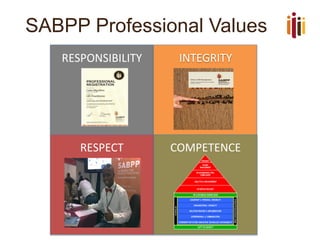
SABPP Professional Values 
RESPONSIBILITY 
I 
RESPECT 
INTEGRITY 
COMPETENCE
Key questions 
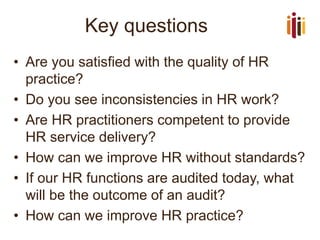
•Are you satisfied with the quality of HR practice? 
•Do you see inconsistencies in HR work? 
•Are HR practitioners competent to provide HR service delivery? 
•How can we improve HR without standards? 
•If our HR functions are audited today, what will be the outcome of an audit? 
•How can we improve HR practice?
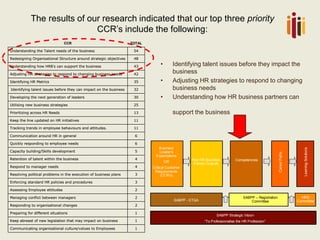
• Identifying talent issues before they impact the 
business 
• Adjusting HR strategies to respond to changing 
business needs 
• Understanding how HR business partners can 
support the business 
The results of our research indicated that our top three priority 
CCR’s include the following: 
SABPP Strategic Vision 
“To Professionalise the HR Profession” 
SABPP - ETQA 
SABPP – Registration 
Committee 
HRD 
Committee 
Business 
Leader’s 
Expectations 
OR 
Critical Customer 
Requirements 
(CCR’s) 
Key HR Business 
Partner Outputs 
Competencies 
Career Paths 
Learning Solutions 
Communicating organisational culture/values to Employees 1 
Keep abreast of new legislation that may impact on business 1 
Preparing for different situations 1 
Responding to organisational changes 2 
Managing conflict between managers 2 
Assessing Employee attitudes 2 
Enforcing standard HR policies and procedures 3 
Resolving political problems in the execution of business plans 3 
Respond to manager needs 4 
Retention of talent within the business 4 
Capacity building/Skills development 5 
Quickly responding to employee needs 6 
Communication around HR in general 6 
Tracking trends in employee behaviours and attitudes. 11 
Keep the line updated on HR initiatives 11 
Prioritizing across HR Needs 13 
Utilising new business strategies 25 
Developing the next generation of leaders 30 
Identifying talent issues before they can impact on the business 32 
Identifying HR Metrics 35 
Adjusting HR strategies to respond to changing business needs 42 
Understanding how HRB’s can support the business 43 
Redesigning Organisational Structure around strategic objectives 48 
Understanding the Talent needs of the business 54 
CCR TOTAL
Top HR priorities 
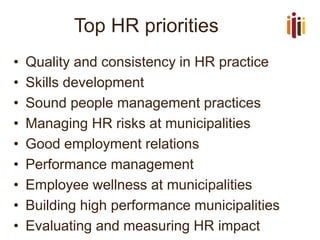
•Quality and consistency in HR practice 
•Skills development 
•Sound people management practices 
•Managing HR risks at municipalities 
•Good employment relations 
•Performance management 
•Employee wellness at municipalities 
•Building high performance municipalities 
•Evaluating and measuring HR impact
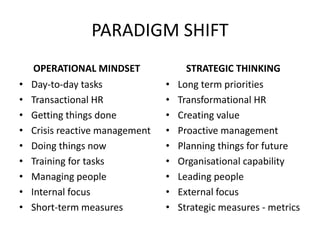
PARADIGM SHIFT 
OPERATIONAL MINDSET 
•Day-to-day tasks 
•Transactional HR 
•Getting things done 
•Crisis reactive management 
•Doing things now 
•Training for tasks 
•Managing people 
•Internal focus 
•Short-term measures 
STRATEGIC THINKING 
•Long term priorities 
•Transformational HR 
•Creating value 
•Proactive management 
•Planning things for future 
•Organisational capability 
•Leading people 
•External focus 
•Strategic measures -metrics
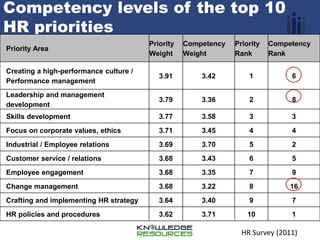
Competency levels of the top 10 HR priorities 
Priority Area 
Priority Weight 
Competency Weight 
Priority Rank 
Competency Rank 
Creating a high-performance culture / Performance management 
3.91 
3.42 
1 
6 
Leadership and management development 
3.79 
3.36 
2 
8 
Skills development 
3.77 
3.58 
3 
3 
Focus on corporate values, ethics 
3.71 
3.45 
4 
4 
Industrial / Employee relations 
3.69 
3.70 
5 
2 
Customer service / relations 
3.68 
3.43 
6 
5 
Employee engagement 
3.68 
3.35 
7 
9 
Change management 
3.68 
3.22 
8 
16 
Crafting and implementing HR strategy 
3.64 
3.40 
9 
7 
HR policies and procedures 
3.62 
3.71 
10 
1 
HR Survey (2011)
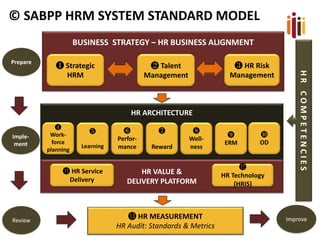
BUSINESS STRATEGY –HR BUSINESS ALIGNMENT 
❶Strategic 
HRM 
❷Talent 
Management 
❸HR Risk 
Management 
HR ARCHITECTURE 
HR VALUE & 
DELIVERY PLATFORM 
❹ Work- force 
planning 
❺ 
Learning 
❻ 
Perfor- mance 
❼ 
Reward 
❽ 
Well- ness 
❾ 
ERM 
❿ 
OD 
⓫HR Service Delivery 
⓬ 
HR Technology 
(HRIS) 
Prepare 
Imple- 
ment 
Review 
Improve 
⓭HR MEASUREMENT 
HR Audit: Standards & Metrics 
H R C O M P E T E N C I E S 
© SABPP HRM SYSTEM STANDARD MODEL
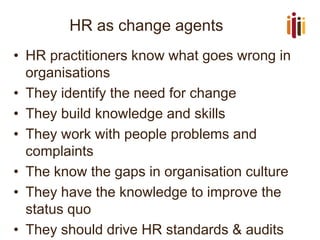
HR as change agents 
•HR practitioners know what goes wrong in organisations 
•They identify the need for change 
•They build knowledge and skills 
•They work with people problems and complaints 
•The know the gaps in organisation culture 
•They have the knowledge to improve the status quo 
•They should drive HR standards & audits
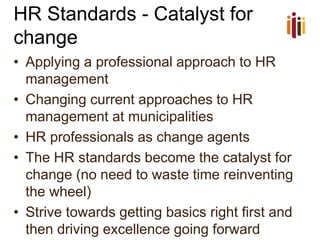
HR Standards -Catalyst for change 
•Applying a professional approach to HR management 
•Changing current approaches to HR management at municipalities 
•HR professionals as change agents 
•The HR standards become the catalyst for change (no need to waste time reinventing the wheel) 
•Strive towards getting basics right first and then driving excellence going forward
HR standards at municipalities 
•The need for HR professionalism according to nationally agreed HR standards of practice 
•Implementing sound HR management in all municipalities 
•Building consistency in HR practices 
•Providing a framework that can inspire HR to improve current practice 
•Standards can be audited
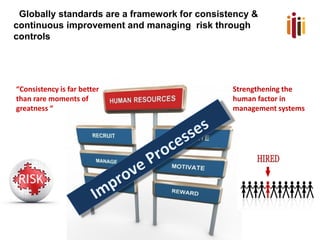
Globally standards are a framework for consistency & continuous improvement and managing risk through controls 
“Consistency is far better than rare moments of greatness “ 
Strengthening the human factor in management systems
Why HR auditing? 
•“HR Auditing crosses the boundaries between HR management and auditing… it can be a suitable method for evaluating the contribution of HR activities to organisational objectives assessed on the basis of value for money.”–Abstract from Dissertation; Chris Andrews: Bond University. 
•This model provides HR Professionals with a robust, risk-based framework to ensure an integrated, aligned and well-governedapproach to auditing the National HR Standards. 
•Ensures that HR controls qualityand consistencyin accordance with the spirit of good governance as documented in King III. 
•Focus on strengtheningthe HR Business Partner philosophy without compromising the principles of quality and independence.
HR audits –the future 
•HR audits will be implemented to audit organisations against the HR standards 
•Audits provide independent verification of the quality of HR practice, and to highlight gaps and opportunities for improvement 
•National HR audits will make benchmarking so much easier 
•The HR practitioner is empowered to act on the results of audits
Guidelines for HR change agents 
•Internalise the HR standards at your municipality 
•Ensure that all HR practitioners have knowledge of the HR standards 
•Improve all aspects of HR according to the standards 
•Get line management involved 
•Do an HR standards self-assessment 
•When ready, go for external HR auditing
Conclusion 
HR practitioners should be change agents to raise the bar on HR practice. 
We need to improve the quality of HR practice at local government level if we are serious about service delivery in our cities and towns. This is the opportunity for HR to step up and deliver high impact HR. Thank you for joining us on the HR standards and auditing journey.

Bruno Bruniquel at IMPSA 2014

  • 1.
    THE HR PRACTITIONERAS CHANGE AGENT IMPSA 30THANNUAL CONFERENCE Bruno Bruniquel 29 October 2014
  • 2.
    Agenda •The needto improve service delivery •Role of HR in building sound people management and HR practice •HR as change agents •HR standards as catalyst for change •Closing the loop with HR audits
  • 3.
    Crisis in servicedelivery •Service delivery should be priority nr 1 •Building organisational capability at municipal level •Without sound HR management there will be little or no improvement in service delivery in local government •We need competent HR professionals to improve HR practice
  • 4.
    SABPP Professional Values RESPONSIBILITY I RESPECT INTEGRITY COMPETENCE
  • 5.
    Key questions •Areyou satisfied with the quality of HR practice? •Do you see inconsistencies in HR work? •Are HR practitioners competent to provide HR service delivery? •How can we improve HR without standards? •If our HR functions are audited today, what will be the outcome of an audit? •How can we improve HR practice?
  • 6.
    • Identifying talentissues before they impact the business • Adjusting HR strategies to respond to changing business needs • Understanding how HR business partners can support the business The results of our research indicated that our top three priority CCR’s include the following: SABPP Strategic Vision “To Professionalise the HR Profession” SABPP - ETQA SABPP – Registration Committee HRD Committee Business Leader’s Expectations OR Critical Customer Requirements (CCR’s) Key HR Business Partner Outputs Competencies Career Paths Learning Solutions Communicating organisational culture/values to Employees 1 Keep abreast of new legislation that may impact on business 1 Preparing for different situations 1 Responding to organisational changes 2 Managing conflict between managers 2 Assessing Employee attitudes 2 Enforcing standard HR policies and procedures 3 Resolving political problems in the execution of business plans 3 Respond to manager needs 4 Retention of talent within the business 4 Capacity building/Skills development 5 Quickly responding to employee needs 6 Communication around HR in general 6 Tracking trends in employee behaviours and attitudes. 11 Keep the line updated on HR initiatives 11 Prioritizing across HR Needs 13 Utilising new business strategies 25 Developing the next generation of leaders 30 Identifying talent issues before they can impact on the business 32 Identifying HR Metrics 35 Adjusting HR strategies to respond to changing business needs 42 Understanding how HRB’s can support the business 43 Redesigning Organisational Structure around strategic objectives 48 Understanding the Talent needs of the business 54 CCR TOTAL
  • 7.
    Top HR priorities •Quality and consistency in HR practice •Skills development •Sound people management practices •Managing HR risks at municipalities •Good employment relations •Performance management •Employee wellness at municipalities •Building high performance municipalities •Evaluating and measuring HR impact
  • 8.
    PARADIGM SHIFT OPERATIONALMINDSET •Day-to-day tasks •Transactional HR •Getting things done •Crisis reactive management •Doing things now •Training for tasks •Managing people •Internal focus •Short-term measures STRATEGIC THINKING •Long term priorities •Transformational HR •Creating value •Proactive management •Planning things for future •Organisational capability •Leading people •External focus •Strategic measures -metrics
  • 9.
    Competency levels ofthe top 10 HR priorities Priority Area Priority Weight Competency Weight Priority Rank Competency Rank Creating a high-performance culture / Performance management 3.91 3.42 1 6 Leadership and management development 3.79 3.36 2 8 Skills development 3.77 3.58 3 3 Focus on corporate values, ethics 3.71 3.45 4 4 Industrial / Employee relations 3.69 3.70 5 2 Customer service / relations 3.68 3.43 6 5 Employee engagement 3.68 3.35 7 9 Change management 3.68 3.22 8 16 Crafting and implementing HR strategy 3.64 3.40 9 7 HR policies and procedures 3.62 3.71 10 1 HR Survey (2011)
  • 10.
    BUSINESS STRATEGY –HRBUSINESS ALIGNMENT ❶Strategic HRM ❷Talent Management ❸HR Risk Management HR ARCHITECTURE HR VALUE & DELIVERY PLATFORM ❹ Work- force planning ❺ Learning ❻ Perfor- mance ❼ Reward ❽ Well- ness ❾ ERM ❿ OD ⓫HR Service Delivery ⓬ HR Technology (HRIS) Prepare Imple- ment Review Improve ⓭HR MEASUREMENT HR Audit: Standards & Metrics H R C O M P E T E N C I E S © SABPP HRM SYSTEM STANDARD MODEL
  • 11.
    HR as changeagents •HR practitioners know what goes wrong in organisations •They identify the need for change •They build knowledge and skills •They work with people problems and complaints •The know the gaps in organisation culture •They have the knowledge to improve the status quo •They should drive HR standards & audits
  • 12.
    HR Standards -Catalystfor change •Applying a professional approach to HR management •Changing current approaches to HR management at municipalities •HR professionals as change agents •The HR standards become the catalyst for change (no need to waste time reinventing the wheel) •Strive towards getting basics right first and then driving excellence going forward
  • 13.
    HR standards atmunicipalities •The need for HR professionalism according to nationally agreed HR standards of practice •Implementing sound HR management in all municipalities •Building consistency in HR practices •Providing a framework that can inspire HR to improve current practice •Standards can be audited
  • 14.
    Globally standards area framework for consistency & continuous improvement and managing risk through controls “Consistency is far better than rare moments of greatness “ Strengthening the human factor in management systems
  • 15.
    Why HR auditing? •“HR Auditing crosses the boundaries between HR management and auditing… it can be a suitable method for evaluating the contribution of HR activities to organisational objectives assessed on the basis of value for money.”–Abstract from Dissertation; Chris Andrews: Bond University. •This model provides HR Professionals with a robust, risk-based framework to ensure an integrated, aligned and well-governedapproach to auditing the National HR Standards. •Ensures that HR controls qualityand consistencyin accordance with the spirit of good governance as documented in King III. •Focus on strengtheningthe HR Business Partner philosophy without compromising the principles of quality and independence.
  • 16.
    HR audits –thefuture •HR audits will be implemented to audit organisations against the HR standards •Audits provide independent verification of the quality of HR practice, and to highlight gaps and opportunities for improvement •National HR audits will make benchmarking so much easier •The HR practitioner is empowered to act on the results of audits
  • 17.
    Guidelines for HRchange agents •Internalise the HR standards at your municipality •Ensure that all HR practitioners have knowledge of the HR standards •Improve all aspects of HR according to the standards •Get line management involved •Do an HR standards self-assessment •When ready, go for external HR auditing
  • 18.
    Conclusion HR practitionersshould be change agents to raise the bar on HR practice. We need to improve the quality of HR practice at local government level if we are serious about service delivery in our cities and towns. This is the opportunity for HR to step up and deliver high impact HR. Thank you for joining us on the HR standards and auditing journey.