REVISITINGCLASSROOM
MANAGEMENT
Ma’am Jubie L. Albania
Teacher II
refers to the array of skills and strategies
teachers use to ensure that their classrooms
are organized, safe, and conducive learning
creates an environment where students feel
comfortable and can focus academics
it is a complex and multi-faceted endeavor
and no single approach will work in all
situations
classroom management
ten pillars of an effective
classroom management
Establishing rapport and
Building Relationships
Creating a Positive Learning
Environment
Providing Engaging
Instructions
Promoting Student
Engagement
Having a Clear and Concise
Behavior Policy
ten pillars of an effective
classroom management
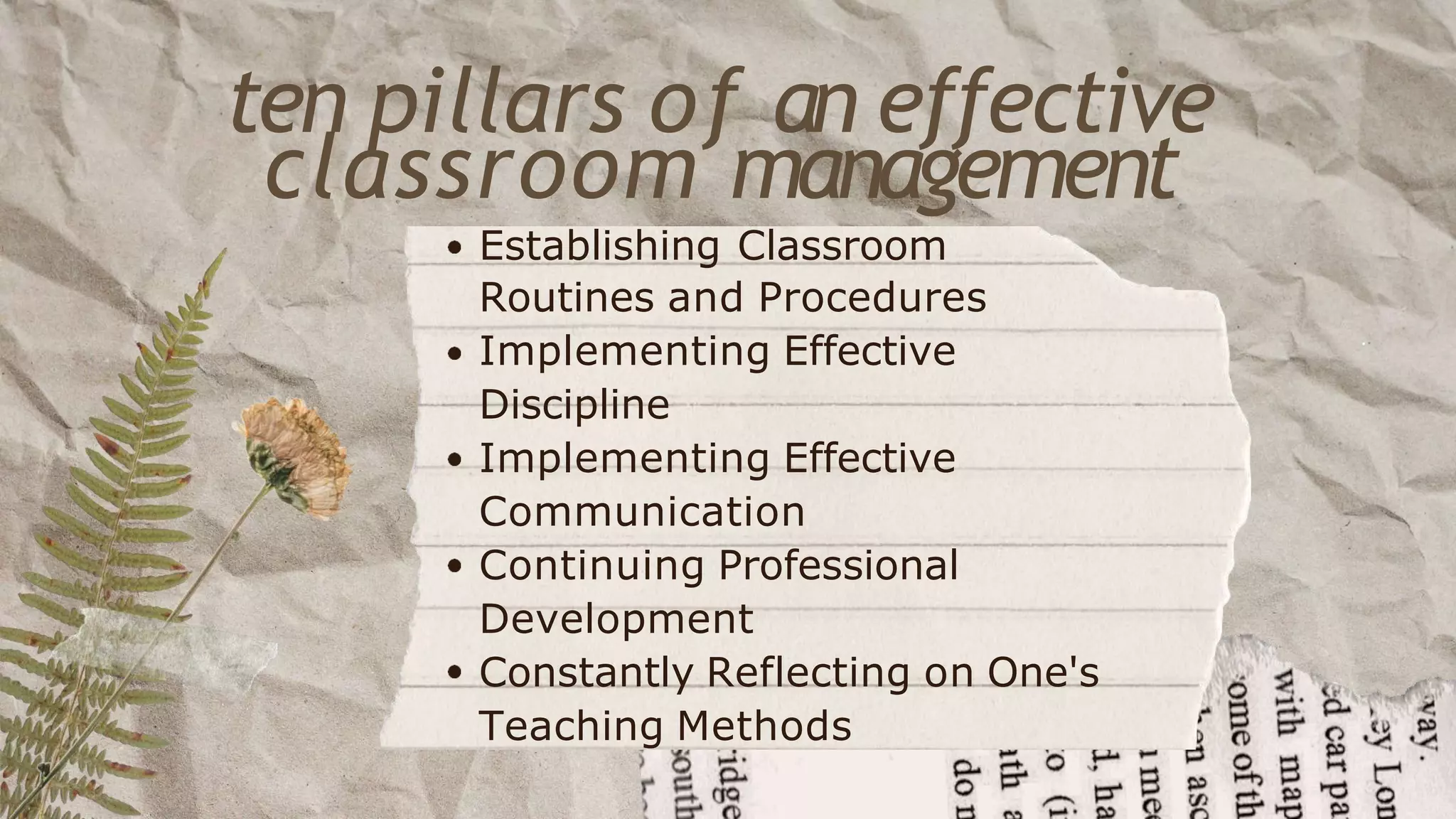
Establishing Classroom
Routines and Procedures
Implementing Effective
Discipline
Implementing Effective
Communication
Continuing Professional
Development
Constantly Reflecting on One's
Teaching Methods
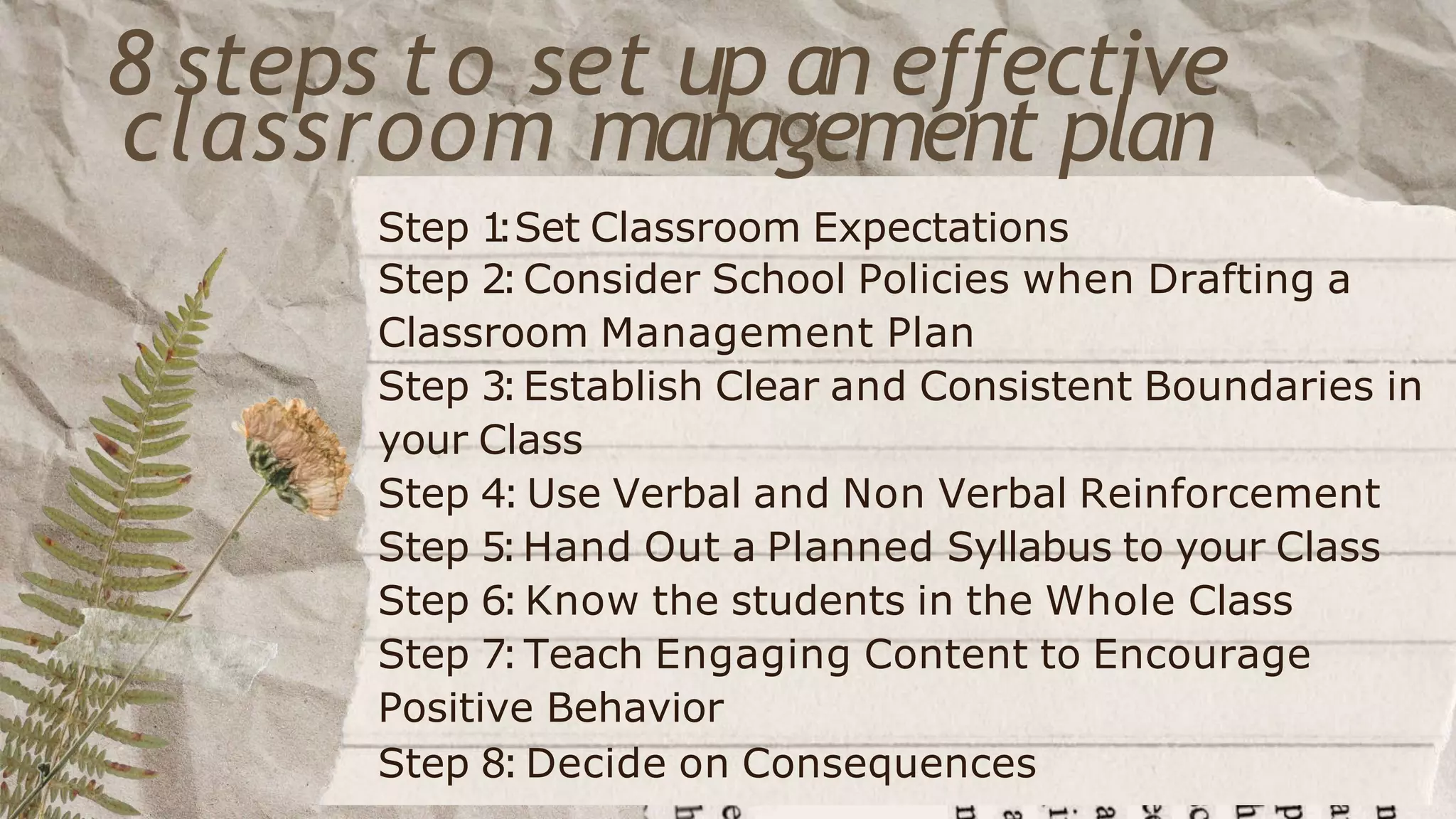
8 steps to set up an effective
classroom management plan
Step 1
:Set Classroom Expectations
Step 2:Consider School Policies when Drafting a
Classroom Management Plan
Step 3:Establish Clear and Consistent Boundaries in
your Class
Step 4: Use Verbal and Non Verbal Reinforcement
Step 5:Hand Out a Planned Syllabus to your Class
Step 6:Know the students in the Whole Class
Step 7:Teach Engaging Content to Encourage
Positive Behavior
Step 8:Decide on Consequences
responding to misbehavior
In the Responsive Classroom approach to discipline , the
overarching goal is to keep the focus on learning, while maintaining
a classroom that's physically and emotionally safe for all. to achieve
this, responses to misbehavior should:
Stop the misbehavior and reestablish positive behavior as
quickly as possible
Maintain children's dignity
Develop children's self control and self regulation skills
Help children recognize and fix any harm caused by their
mistakes
Demonstrate the rules help make make the classroom a safe
place where all can learn
strategies for Responding to
Misbehavior
1.Visual and Verbal
Cues
2. Increased Teacher
Proximity
3.Logical Consequences
Thank you
for
Listening!

Brown-And-Beige-Minimalist-Vintage-Scrapbook-Self-Introduction-Presentation-1.pptx

  • 1.
  • 2.
    refers to thearray of skills and strategies teachers use to ensure that their classrooms are organized, safe, and conducive learning creates an environment where students feel comfortable and can focus academics it is a complex and multi-faceted endeavor and no single approach will work in all situations classroom management
  • 3.
    ten pillars ofan effective classroom management Establishing rapport and Building Relationships Creating a Positive Learning Environment Providing Engaging Instructions Promoting Student Engagement Having a Clear and Concise Behavior Policy
  • 4.
    ten pillars ofan effective classroom management Establishing Classroom Routines and Procedures Implementing Effective Discipline Implementing Effective Communication Continuing Professional Development Constantly Reflecting on One's Teaching Methods
  • 5.
    8 steps toset up an effective classroom management plan Step 1 :Set Classroom Expectations Step 2:Consider School Policies when Drafting a Classroom Management Plan Step 3:Establish Clear and Consistent Boundaries in your Class Step 4: Use Verbal and Non Verbal Reinforcement Step 5:Hand Out a Planned Syllabus to your Class Step 6:Know the students in the Whole Class Step 7:Teach Engaging Content to Encourage Positive Behavior Step 8:Decide on Consequences
  • 6.
    responding to misbehavior Inthe Responsive Classroom approach to discipline , the overarching goal is to keep the focus on learning, while maintaining a classroom that's physically and emotionally safe for all. to achieve this, responses to misbehavior should: Stop the misbehavior and reestablish positive behavior as quickly as possible Maintain children's dignity Develop children's self control and self regulation skills Help children recognize and fix any harm caused by their mistakes Demonstrate the rules help make make the classroom a safe place where all can learn
  • 7.
    strategies for Respondingto Misbehavior 1.Visual and Verbal Cues 2. Increased Teacher Proximity 3.Logical Consequences
  • 9.