CHILD AND ADOLESCENT DEVELOPMENT
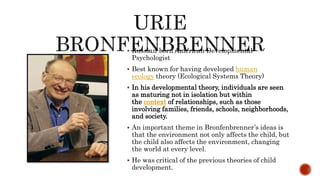
 Russian-born American Developmental
Psychologist
 Best known for having developed human
ecology theory (Ecological Systems Theory)
 In his developmental theory, individuals are seen
as maturing not in isolation but within
the context of relationships, such as those
involving families, friends, schools, neighborhoods,
and society.
 An important theme in Bronfenbrenner’s ideas is
that the environment not only affects the child, but
the child also affects the environment, changing
the world at every level.
 He was critical of the previous theories of child
development.
 The things that have direct contact with the child in their immediate environment
are as such: parents, siblings, teachers and school peers.
 Relationships in a microsystem are bi-directional, meaning the child can be
influenced by other people in their environment and is also capable of changing
the beliefs and actions of other people too.
 The reactions of the child to individuals in their microsystem can influence how
they treat them in return.
 The interactions within microsystems are often very personal and are crucial for
fostering and supporting the child’s development.
 If a child has a strong nurturing relationship with their parents, this is said to
have a positive effect on the child. Whereas, distant and unaffectionate parents
will have a negative effect on the child.
 Encompasses the interactions between the child’s microsystems, such as the
interactions between the child’s parents and teachers, or between school peers and
siblings.
 It is where a person's individual microsystems do not function independently, but
are interconnected and assert influence upon one another.
 For instance, if a child’s parents communicate with the child’s teachers, this
interaction may influence the child’s development. Essentially, a mesosystem is a
system of microsystems.
 According to the ecological systems theory, if the child’s parents and teachers get
along and have a good relationship, this should have positive effects on the child’s
development, compared to negative effects on development if the teachers and
parents do not get along.
 It incorporates other formal and informal social structures, which do not
themselves contain the child, but indirectly influence them as they affect one of
the microsystems.
 Examples of exosystems include the neighborhood, parent’s workplaces, parent’s
friends and the mass media. These are environments in which the child is not
involved, and are external to their experience, but nonetheless affects them
anyway.
 An instance of exosystems affecting the child’s development could be if one of the
parents had a dispute with their boss at work.
 The parent may come home and have a short temper with the child as a result of
something which happened in the workplace, resulting in a negative effect on
development.
 Focuses on how cultural elements affect a child's development, such as
socioeconomic status, wealth, poverty, and ethnicity.
 Thus, culture that individuals are immersed within may influence their beliefs
and perceptions about events that transpire in life.
 The macrosystem differs from the previous ecosystems as is does not refer to the
specific environments of one developing child, but the already established society
and culture which the child is developing in.
 This can also include the socioeconomic status, ethnicity, geographic location and
ideologies of the culture.
 For example, a child living in a third world country would experience a different
development than a child living in a wealthier country.
 This system consists of all of the environmental changes that occur over the
lifetime which influence development, including major life transitions, and
historical events.
 These can include normal life transitions such as starting school but can also
include non-normative life transitions such as parents getting a divorce or having
to move to a new house.
 Bronfenbrenner revised his theory in 1994 and instead named the “Bioecological
Model”.
 Bronfenbrenner became more concerned with the proximal processes of
development.
 His focus shifted from focusing on environmental influences to developmental
processes individuals experience over time.
 ‘…development takes place through the process of progressively more complex
reciprocal interactions between an active, evolving biopsychological human
organism and the persons, objects, and symbols in its immediate external
environment.’ (Bronfenbrenner, 1995).
 To strengthen the development between the ecological systems in educational
practice according to the theory, teachers and parents should keep good
communication with each other and work together to benefit the child.
 Teachers should also be understanding of the situations their student’s families
may be experiencing, including social and economic factors that are part of the
various systems.
 According to the theory, if parents and teachers have a good relationship, this
should shape the child’s development in a positive way.
 Likewise, the child must also be active in their learning, engaged both
academically and socially. They must work as a team with their peers and get
involved in meaningful learning experiences to enable positive development.
 Bronfenbrenner's ecological systems theory views child development as a complex
system of relationships affected by multiple levels of the surrounding
environment, from immediate settings of family and school to broad cultural
values, laws, and customs.
 To study a child's development then, we must look not only at the child and her
immediate environment, but also at the interaction of the larger environment as
well.
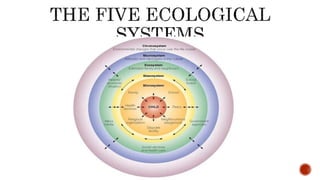
 Bronfenbrenner divided the person's environment into five different systems: the
microsystem, the mesosystem, the exosystem, the macrosystem, and the
chronosystem.
 The microsystem is the most influential level of the ecological systems theory. This
is the most immediate environmental settings containing the developing child,
such as family and school.
 Bronfenbrenner's ecological systems theory has implications for educational
practice.

Bronfenbrenner’s ecological theory report

  • 1.
  • 2.
     Russian-born AmericanDevelopmental Psychologist  Best known for having developed human ecology theory (Ecological Systems Theory)  In his developmental theory, individuals are seen as maturing not in isolation but within the context of relationships, such as those involving families, friends, schools, neighborhoods, and society.  An important theme in Bronfenbrenner’s ideas is that the environment not only affects the child, but the child also affects the environment, changing the world at every level.  He was critical of the previous theories of child development.
  • 4.
     The thingsthat have direct contact with the child in their immediate environment are as such: parents, siblings, teachers and school peers.  Relationships in a microsystem are bi-directional, meaning the child can be influenced by other people in their environment and is also capable of changing the beliefs and actions of other people too.  The reactions of the child to individuals in their microsystem can influence how they treat them in return.  The interactions within microsystems are often very personal and are crucial for fostering and supporting the child’s development.  If a child has a strong nurturing relationship with their parents, this is said to have a positive effect on the child. Whereas, distant and unaffectionate parents will have a negative effect on the child.
  • 5.
     Encompasses theinteractions between the child’s microsystems, such as the interactions between the child’s parents and teachers, or between school peers and siblings.  It is where a person's individual microsystems do not function independently, but are interconnected and assert influence upon one another.  For instance, if a child’s parents communicate with the child’s teachers, this interaction may influence the child’s development. Essentially, a mesosystem is a system of microsystems.  According to the ecological systems theory, if the child’s parents and teachers get along and have a good relationship, this should have positive effects on the child’s development, compared to negative effects on development if the teachers and parents do not get along.
  • 6.
     It incorporatesother formal and informal social structures, which do not themselves contain the child, but indirectly influence them as they affect one of the microsystems.  Examples of exosystems include the neighborhood, parent’s workplaces, parent’s friends and the mass media. These are environments in which the child is not involved, and are external to their experience, but nonetheless affects them anyway.  An instance of exosystems affecting the child’s development could be if one of the parents had a dispute with their boss at work.  The parent may come home and have a short temper with the child as a result of something which happened in the workplace, resulting in a negative effect on development.
  • 7.
     Focuses onhow cultural elements affect a child's development, such as socioeconomic status, wealth, poverty, and ethnicity.  Thus, culture that individuals are immersed within may influence their beliefs and perceptions about events that transpire in life.  The macrosystem differs from the previous ecosystems as is does not refer to the specific environments of one developing child, but the already established society and culture which the child is developing in.  This can also include the socioeconomic status, ethnicity, geographic location and ideologies of the culture.  For example, a child living in a third world country would experience a different development than a child living in a wealthier country.
  • 8.
     This systemconsists of all of the environmental changes that occur over the lifetime which influence development, including major life transitions, and historical events.  These can include normal life transitions such as starting school but can also include non-normative life transitions such as parents getting a divorce or having to move to a new house.
  • 9.
     Bronfenbrenner revisedhis theory in 1994 and instead named the “Bioecological Model”.  Bronfenbrenner became more concerned with the proximal processes of development.  His focus shifted from focusing on environmental influences to developmental processes individuals experience over time.  ‘…development takes place through the process of progressively more complex reciprocal interactions between an active, evolving biopsychological human organism and the persons, objects, and symbols in its immediate external environment.’ (Bronfenbrenner, 1995).
  • 10.
     To strengthenthe development between the ecological systems in educational practice according to the theory, teachers and parents should keep good communication with each other and work together to benefit the child.  Teachers should also be understanding of the situations their student’s families may be experiencing, including social and economic factors that are part of the various systems.  According to the theory, if parents and teachers have a good relationship, this should shape the child’s development in a positive way.  Likewise, the child must also be active in their learning, engaged both academically and socially. They must work as a team with their peers and get involved in meaningful learning experiences to enable positive development.
  • 11.
     Bronfenbrenner's ecologicalsystems theory views child development as a complex system of relationships affected by multiple levels of the surrounding environment, from immediate settings of family and school to broad cultural values, laws, and customs.  To study a child's development then, we must look not only at the child and her immediate environment, but also at the interaction of the larger environment as well.  Bronfenbrenner divided the person's environment into five different systems: the microsystem, the mesosystem, the exosystem, the macrosystem, and the chronosystem.  The microsystem is the most influential level of the ecological systems theory. This is the most immediate environmental settings containing the developing child, such as family and school.  Bronfenbrenner's ecological systems theory has implications for educational practice.