
CLO Symposium

   April
13,
2010    


   Steelcase
inc.

What’s
in
a
name?


Research
and
Development

Research
and
Business
Development

Advanced
Concepts
and
Research
&
Development


WorkSpace
Futures

WorkSpace
Futures


    we
are
about
 Gaining
a
greater
understanding

             of
 Work,
workers
&
workspaces


        through

Human
Centered
Design

Our
Core
Belief


“Ba”


The
concept
of
explicit
and

tacit
knowledge

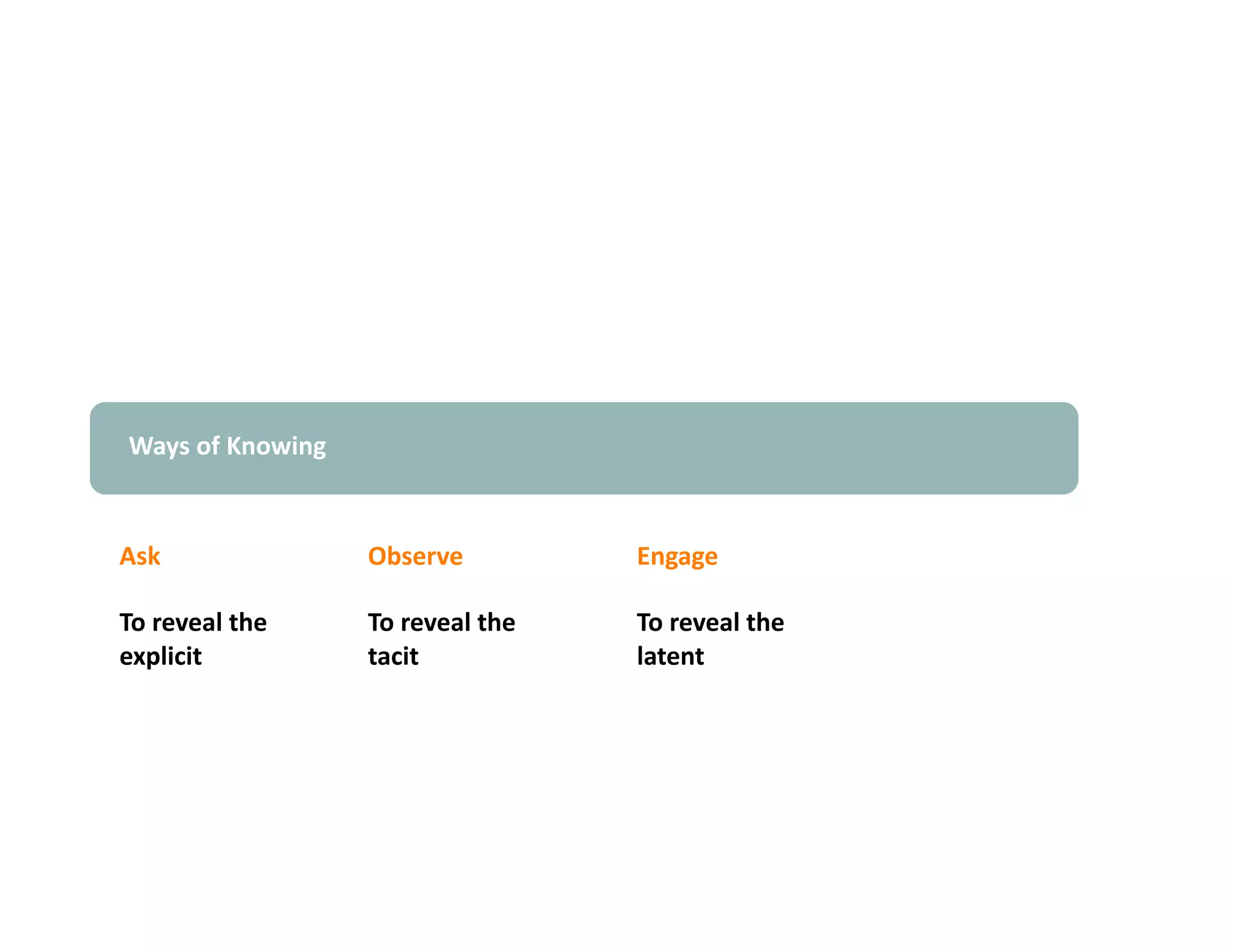
Ways
of
Knowing


Ask
               Observe
         Engage


To
reveal
the
     To
reveal
the
   To
reveal
the

explicit
          tacit
           latent

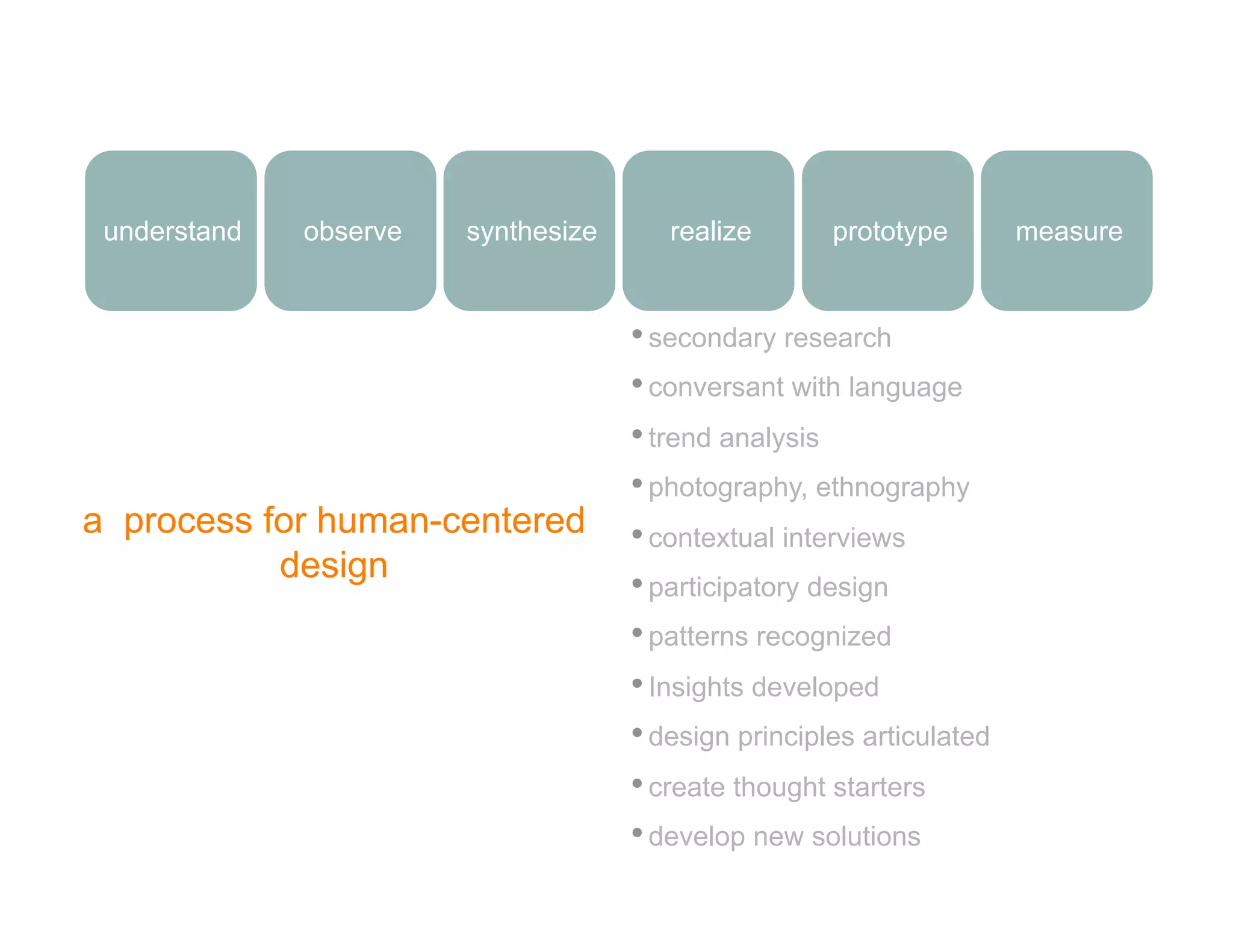
understand   observe   synthesize      realize       prototype         measure


                                     •  secondary research
                                     •  conversant with language
                                     •  trend analysis
                                     •  photography, ethnography
a process for human-centered         •  contextual interviews
           design
                                     •  participatory design
                                     •  patterns recognized
                                     •  Insights developed
                                     •  design principles articulated
                                     •  create thought starters
                                     •  develop new solutions
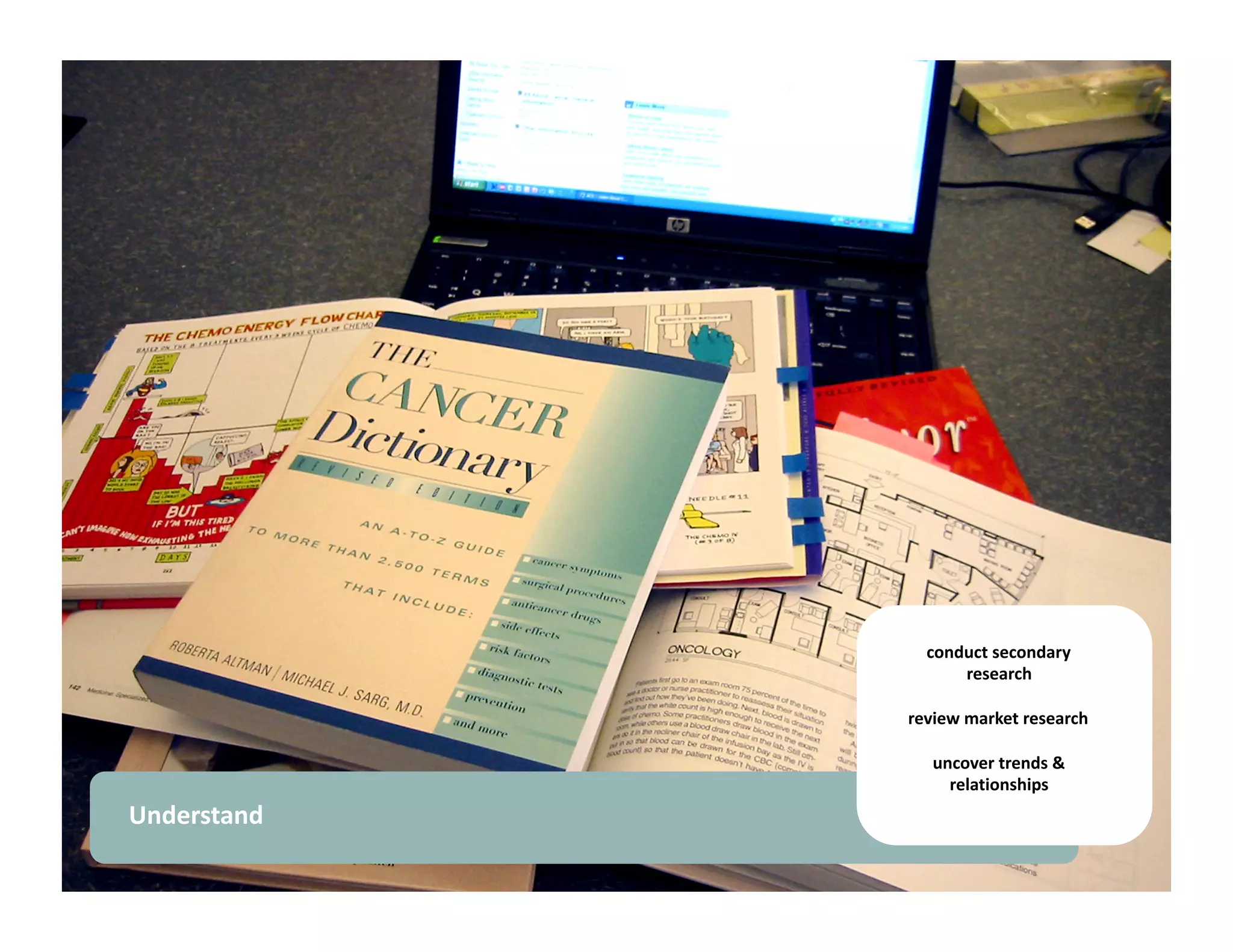
conduct
secondary


                    research


              review
market
research


                 uncover
trends
&


                   relationships

Understand

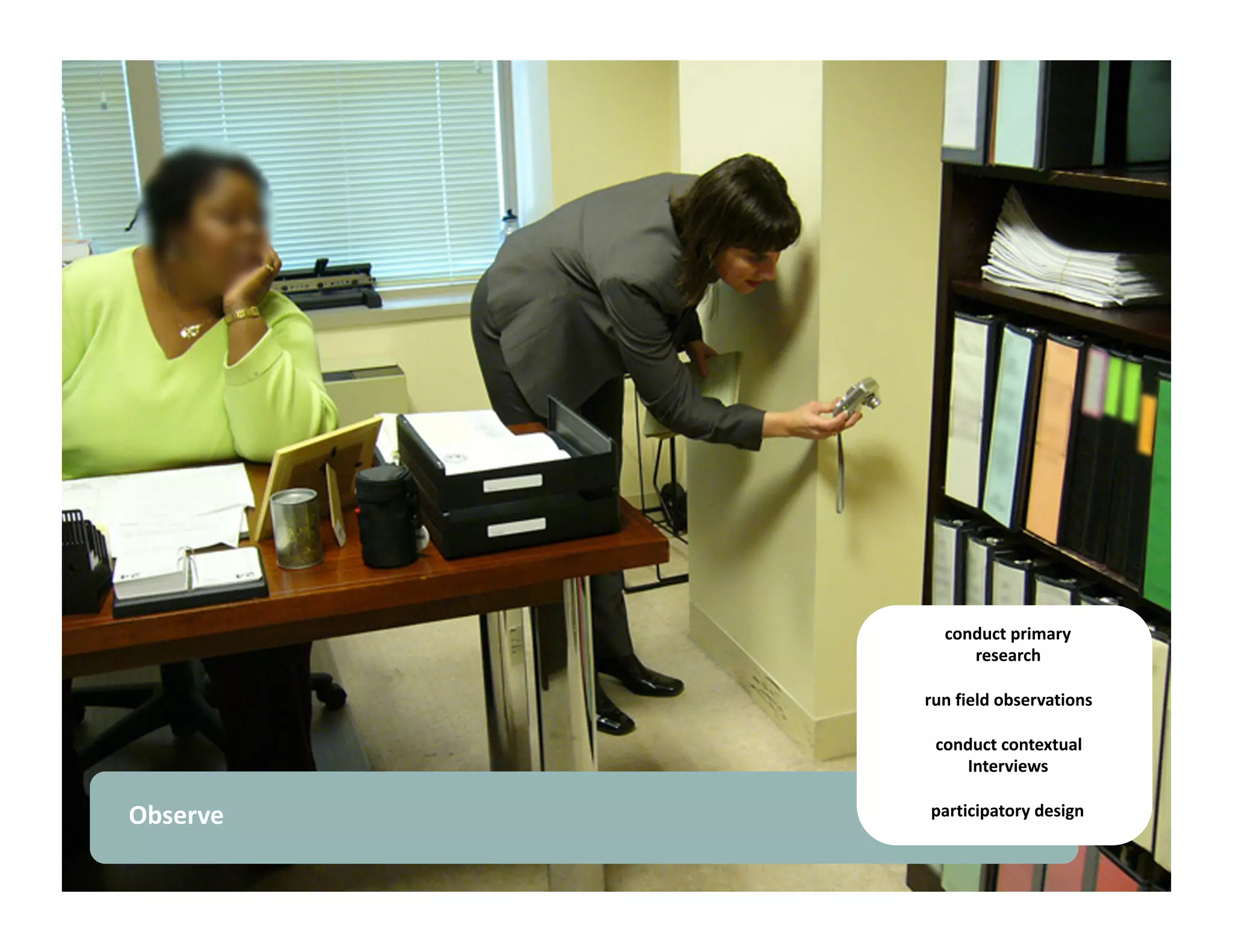
conduct
primary


                research


           run
field
observations


            conduct
contextual


               Interviews


Observe
   participatory
design

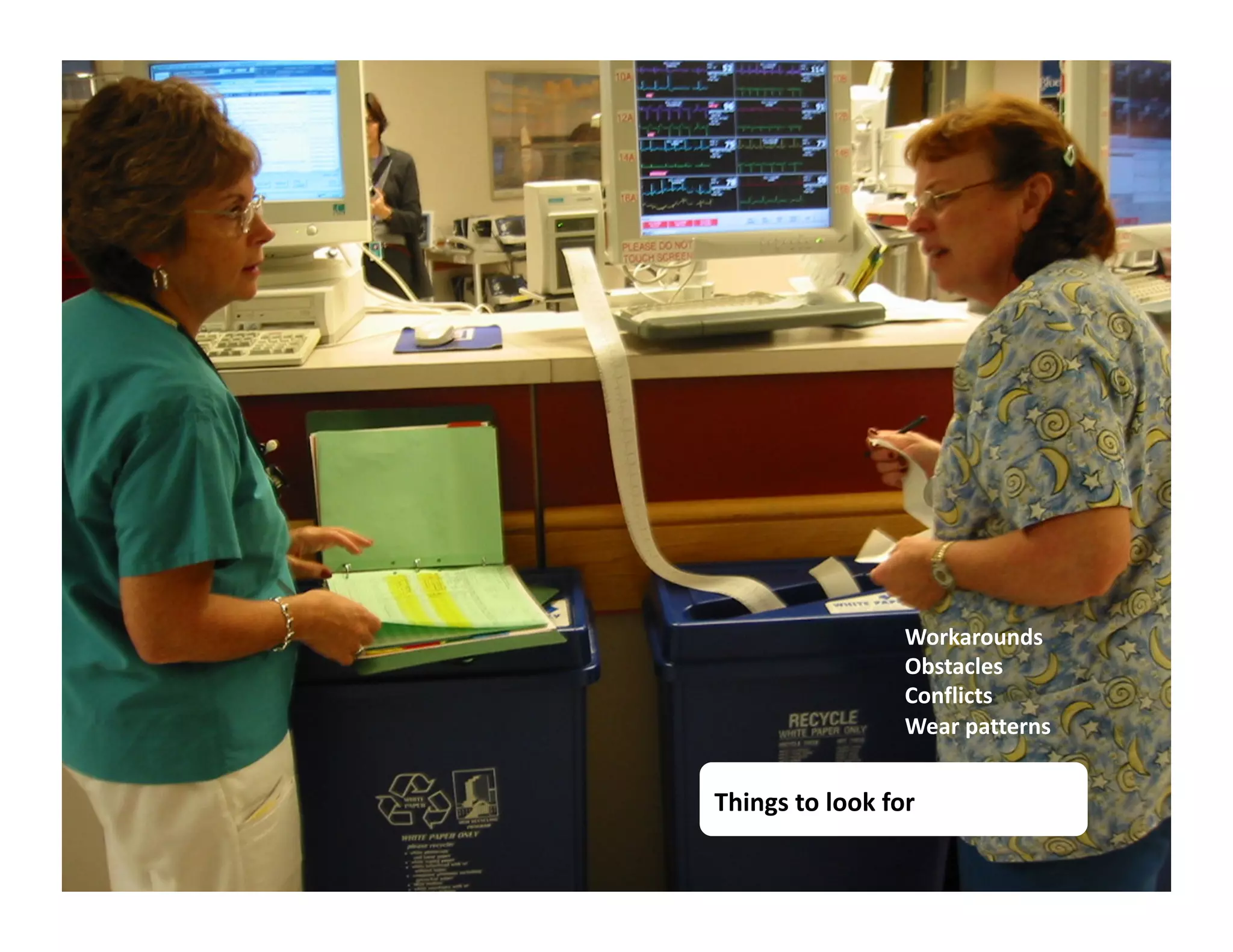
Workarounds

                   Obstacles

                          Workarounds

                   Conflicts

                          Obstacles

                   Wear
patterns

                          Conflicts

                          Wear
patterns


Things
to
look
for

                Things
to
look
for

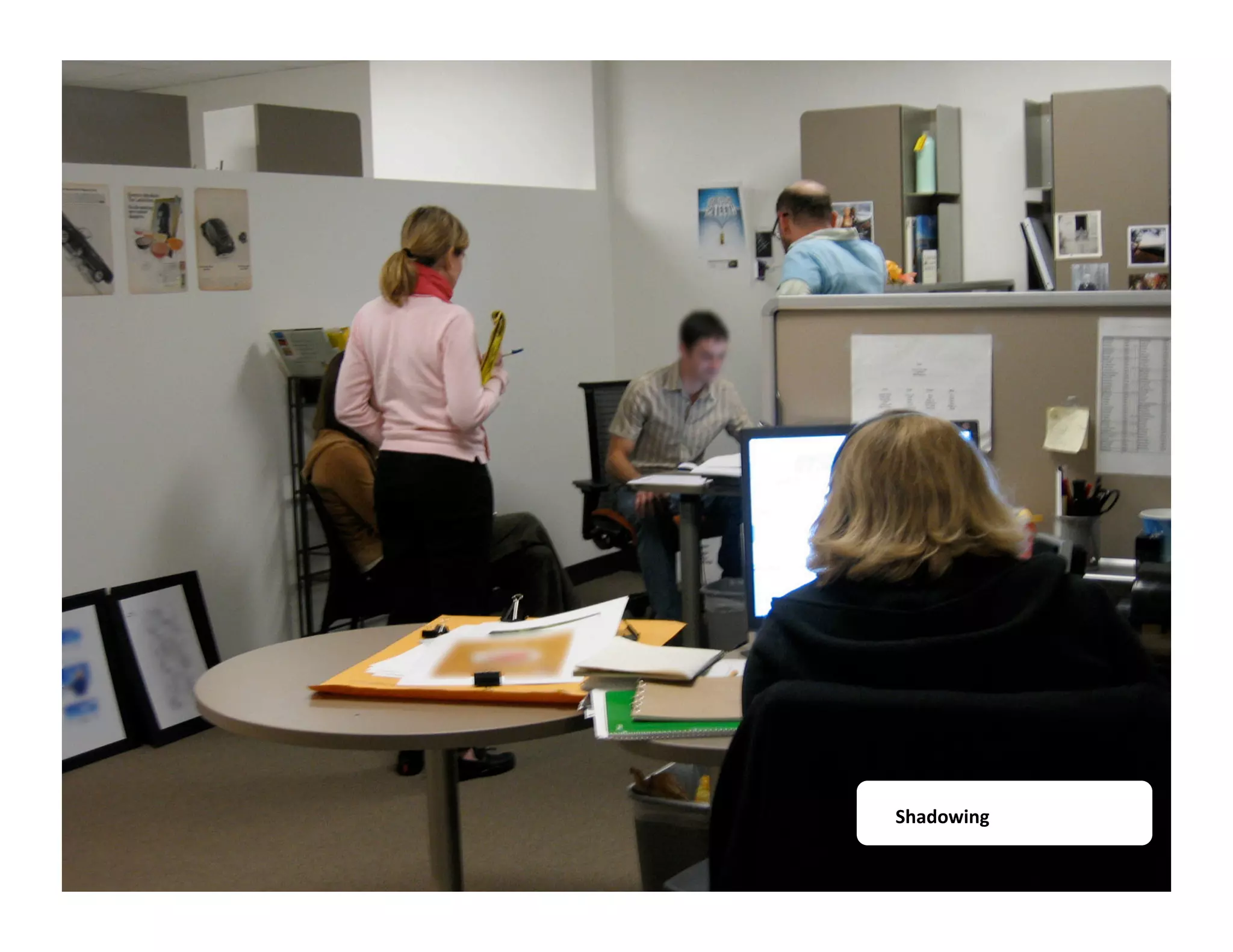
Shadowing

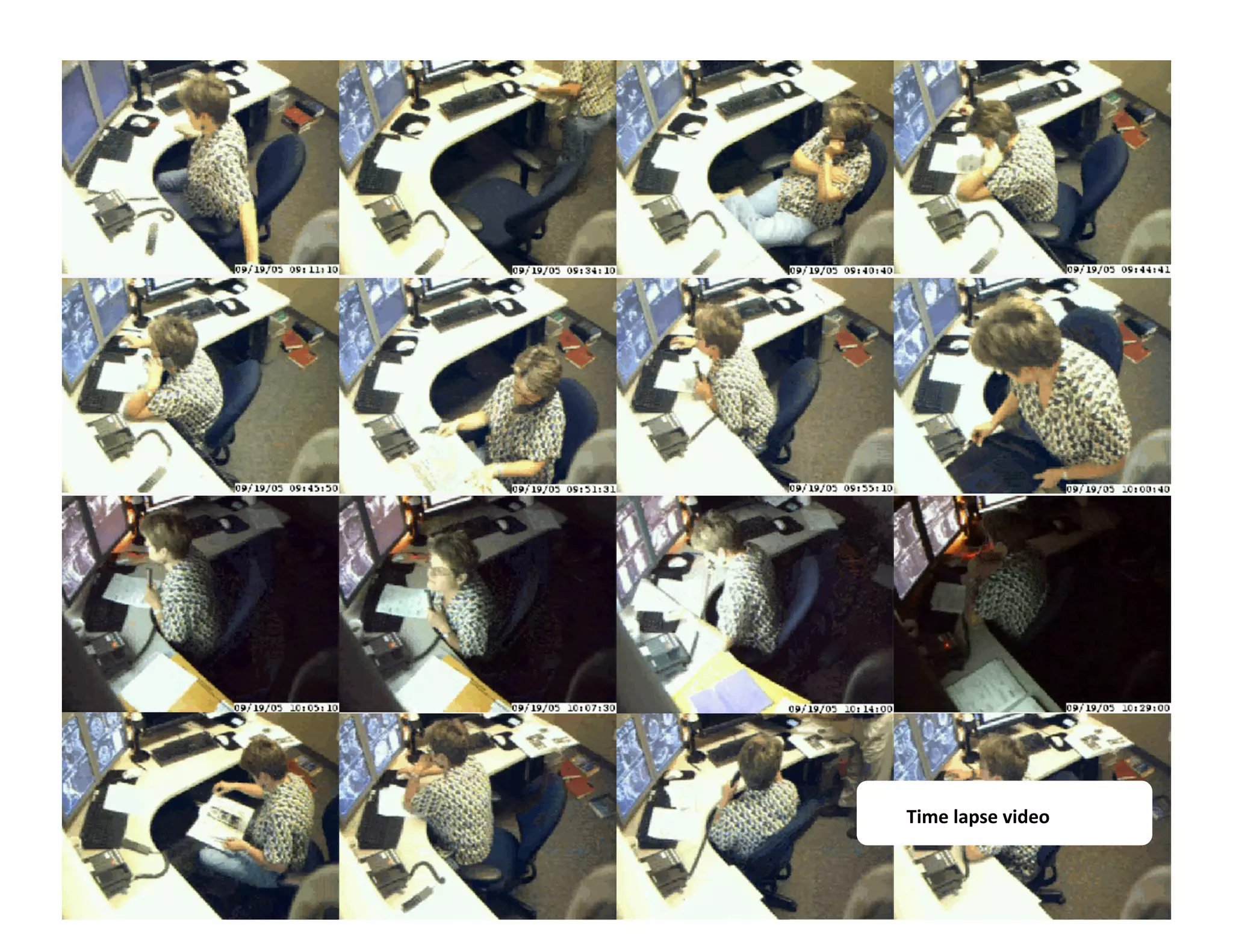
Time
lapse
video

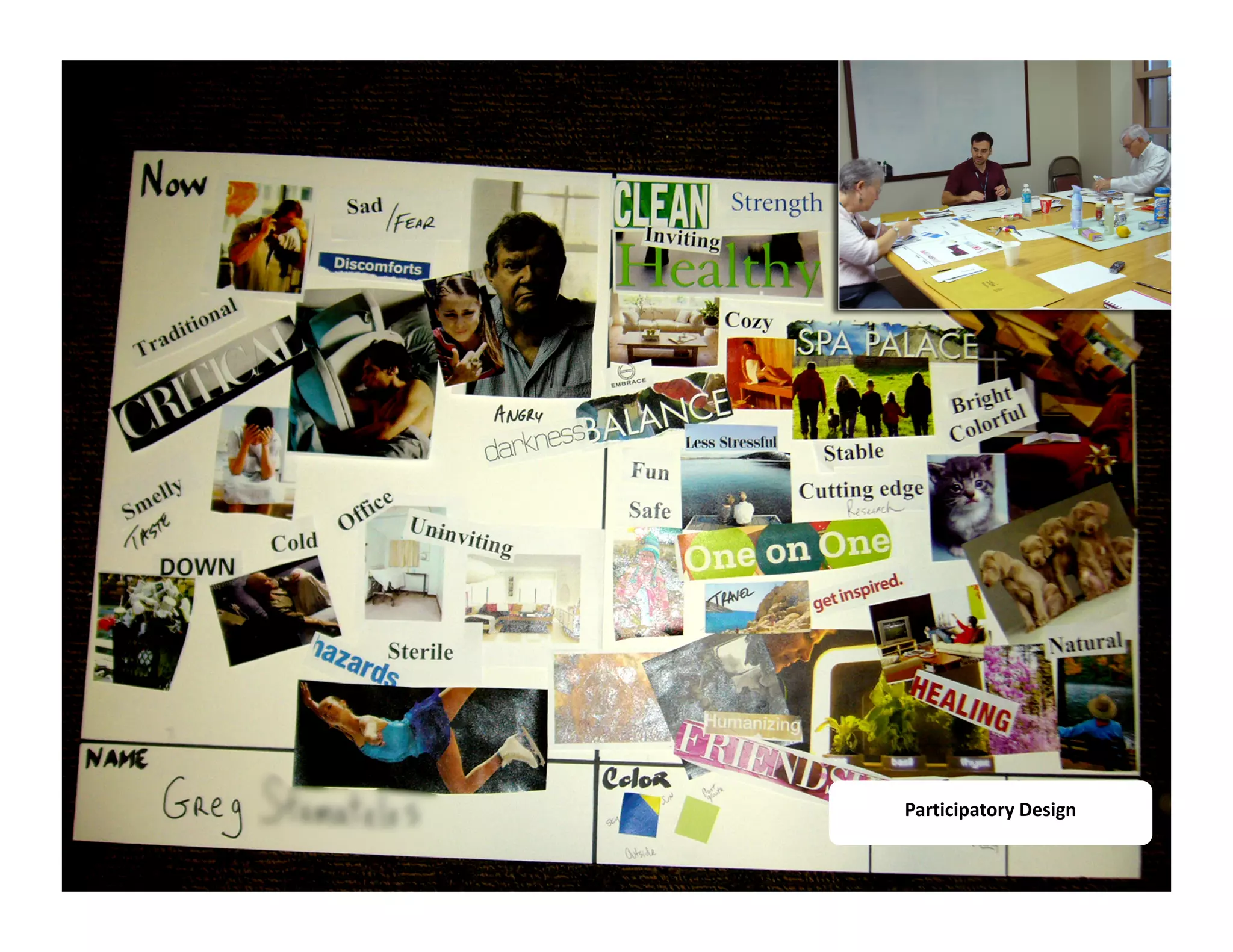
Participatory
Design

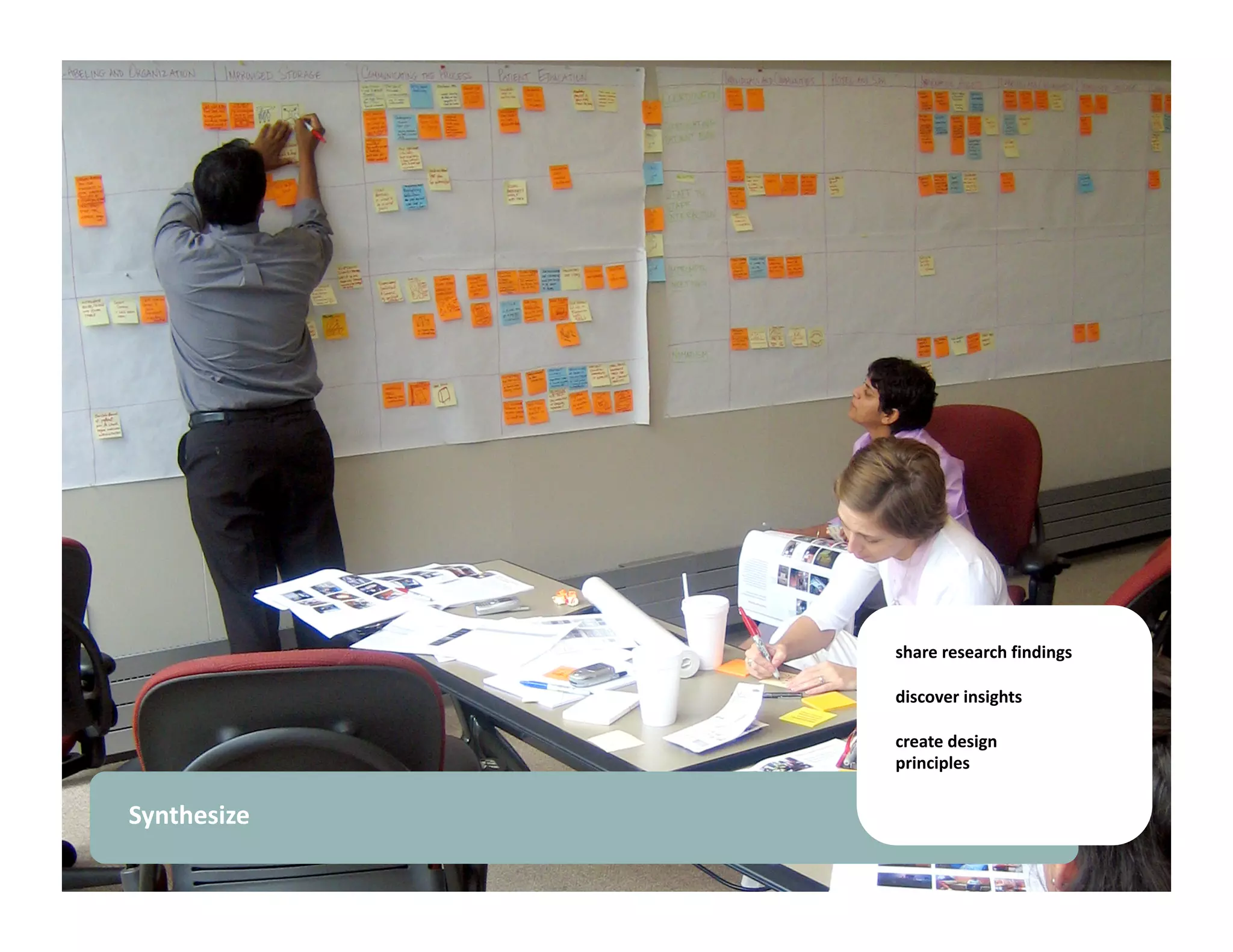
share
research
findings


              discover
insights


              create
design


              principles


Synthesize

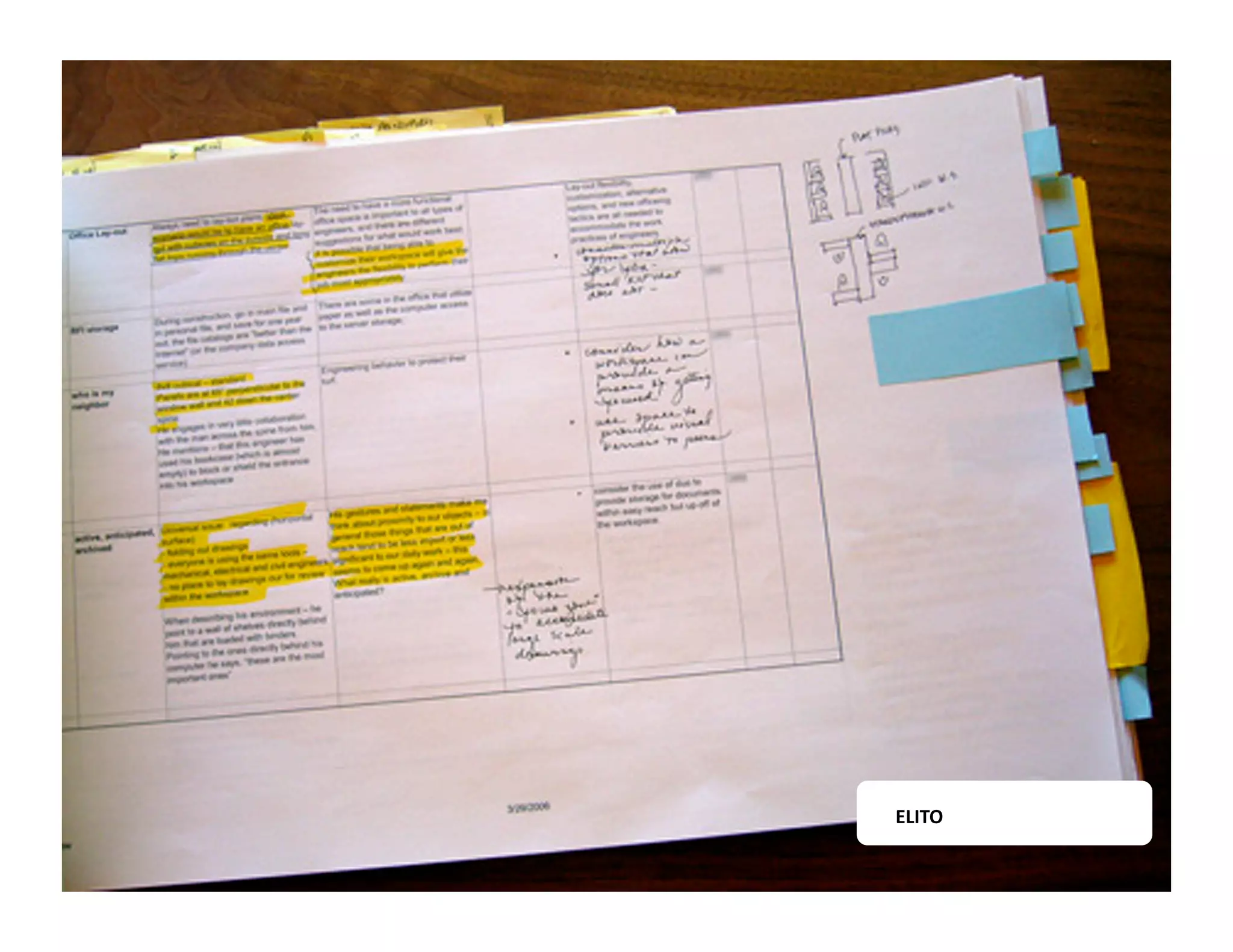
ELITO

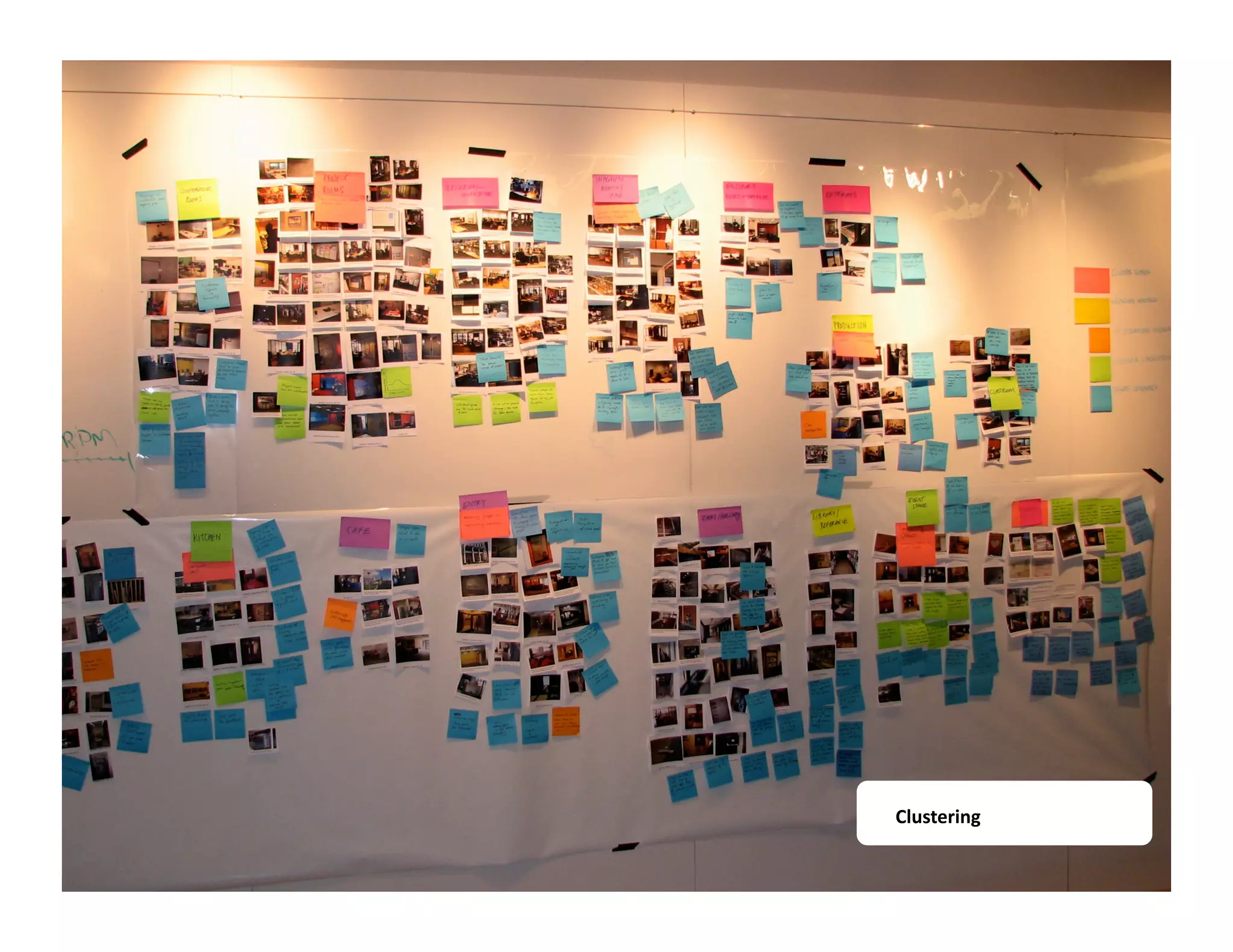
Clustering

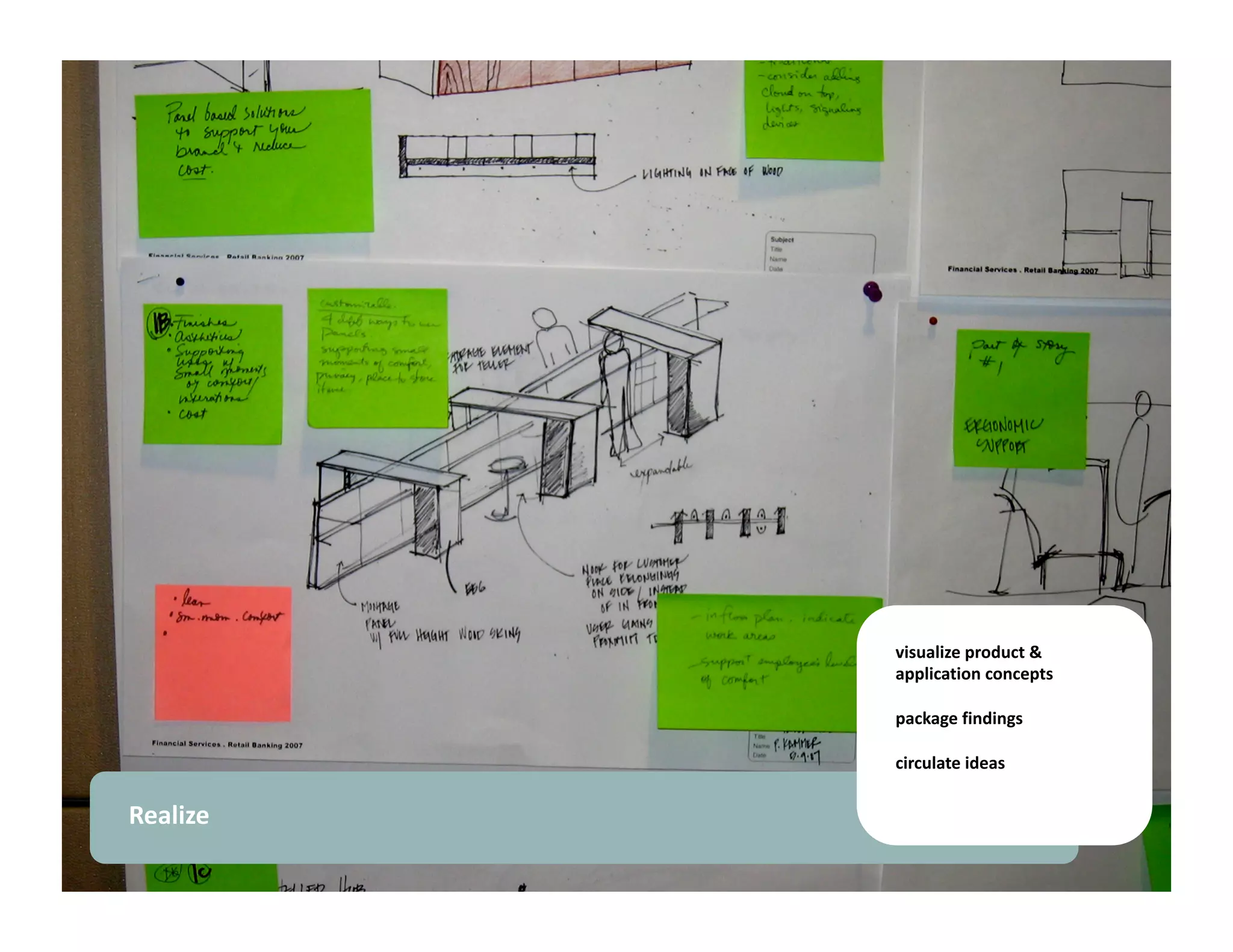
visualize
product
&

           application
concepts


           package
findings


           circulate
ideas


Realize

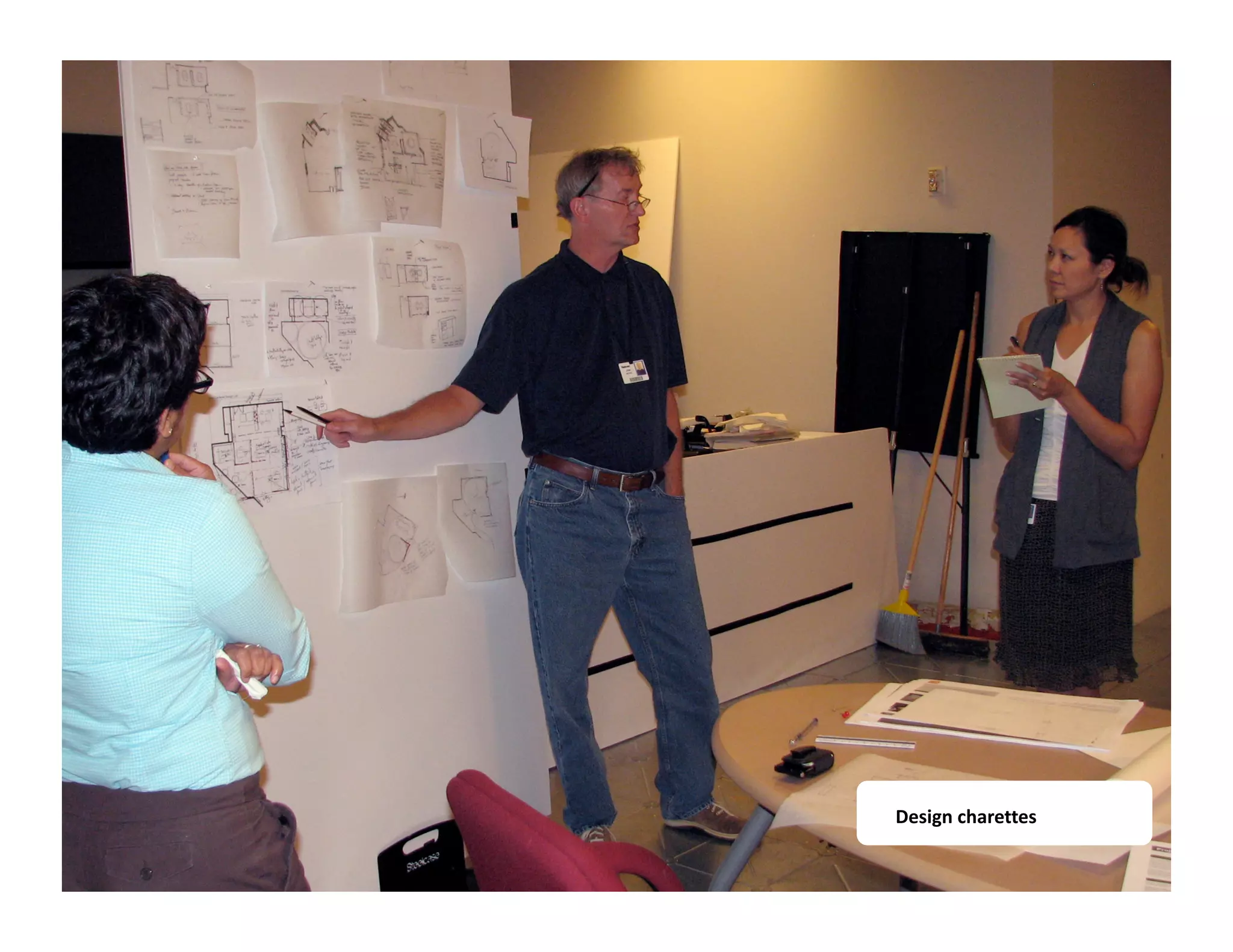
Design
charettes

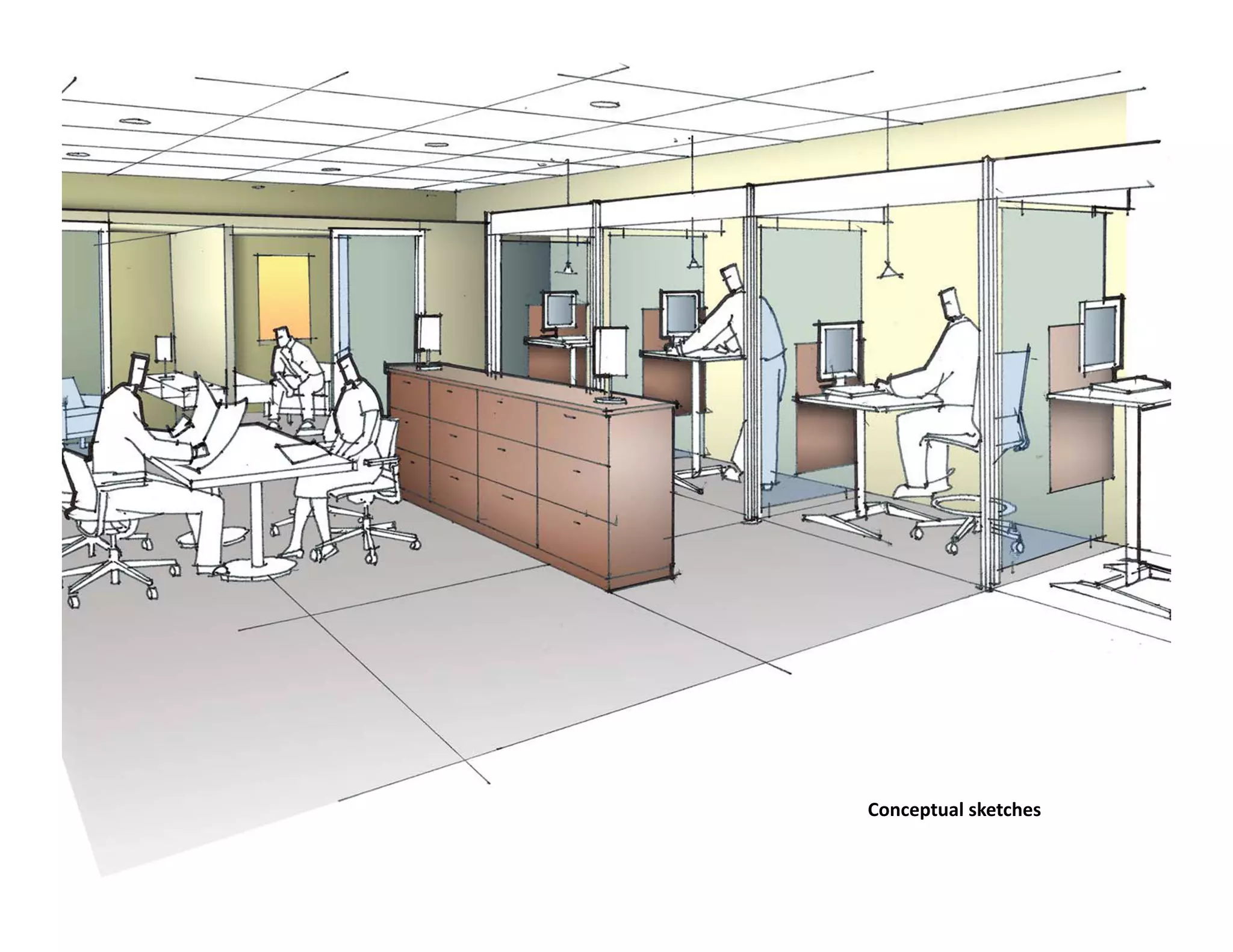
Conceptual
sketches

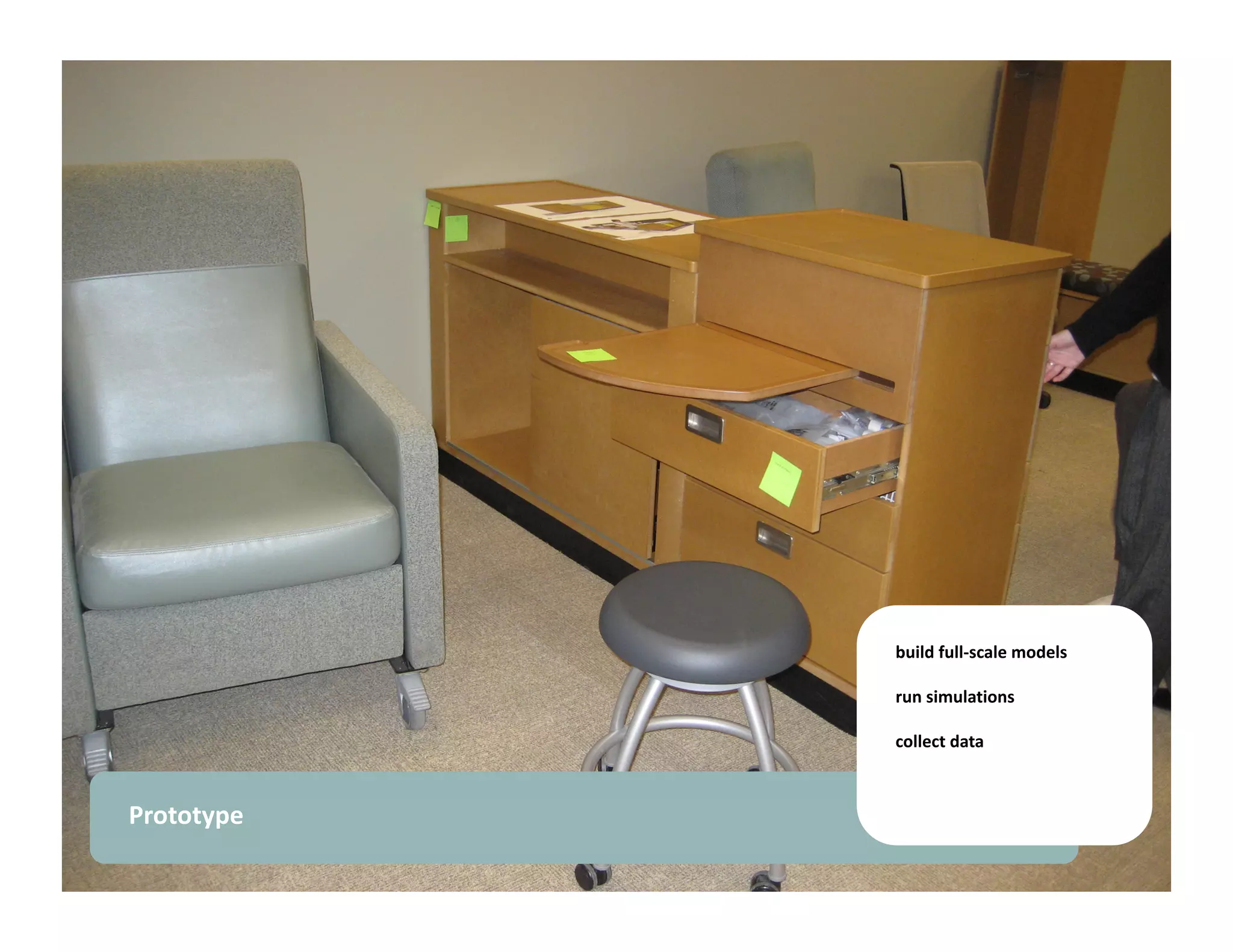
build
full‐scale
models


             run
simulations


             collect
data


Prototype

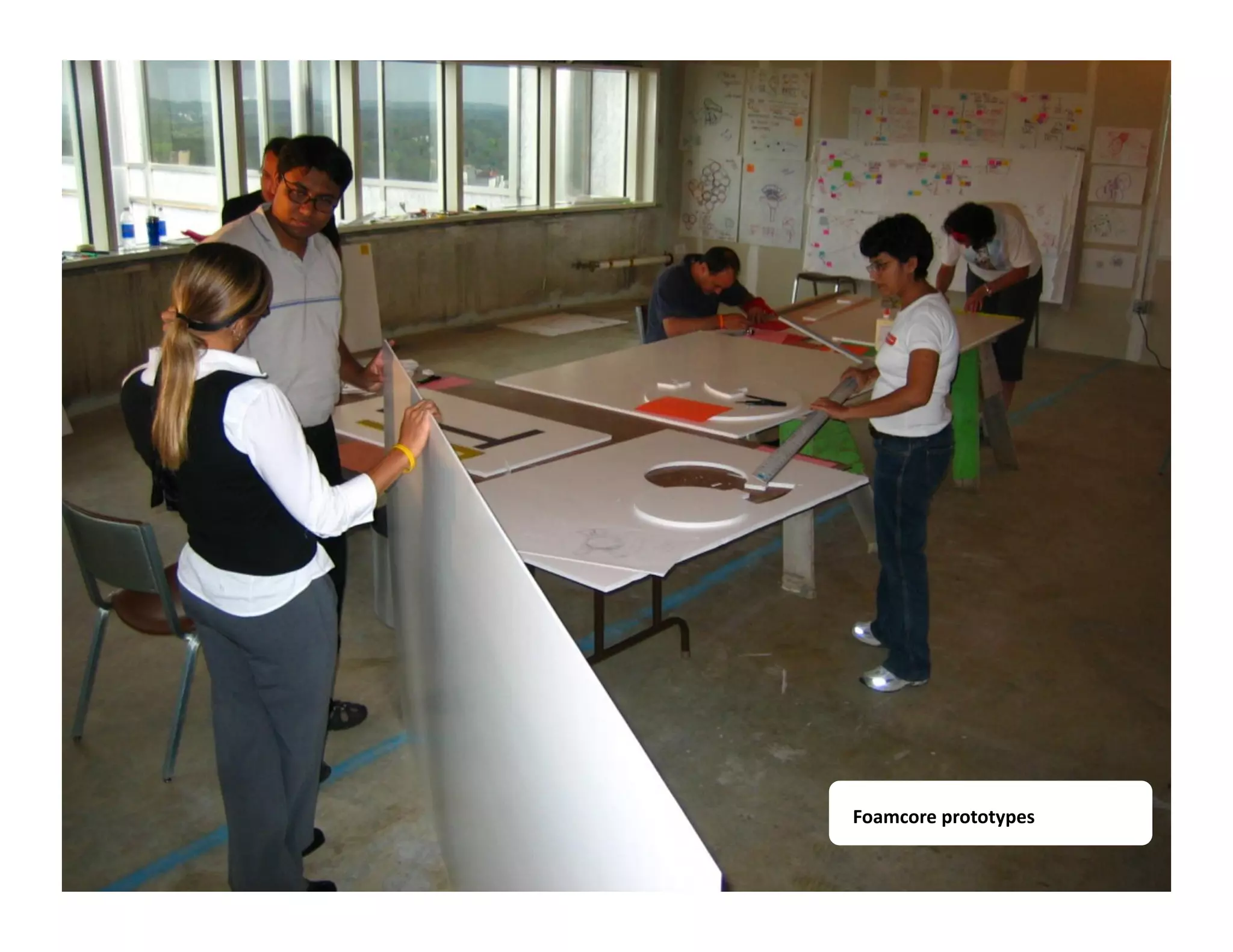
Foamcore
prototypes

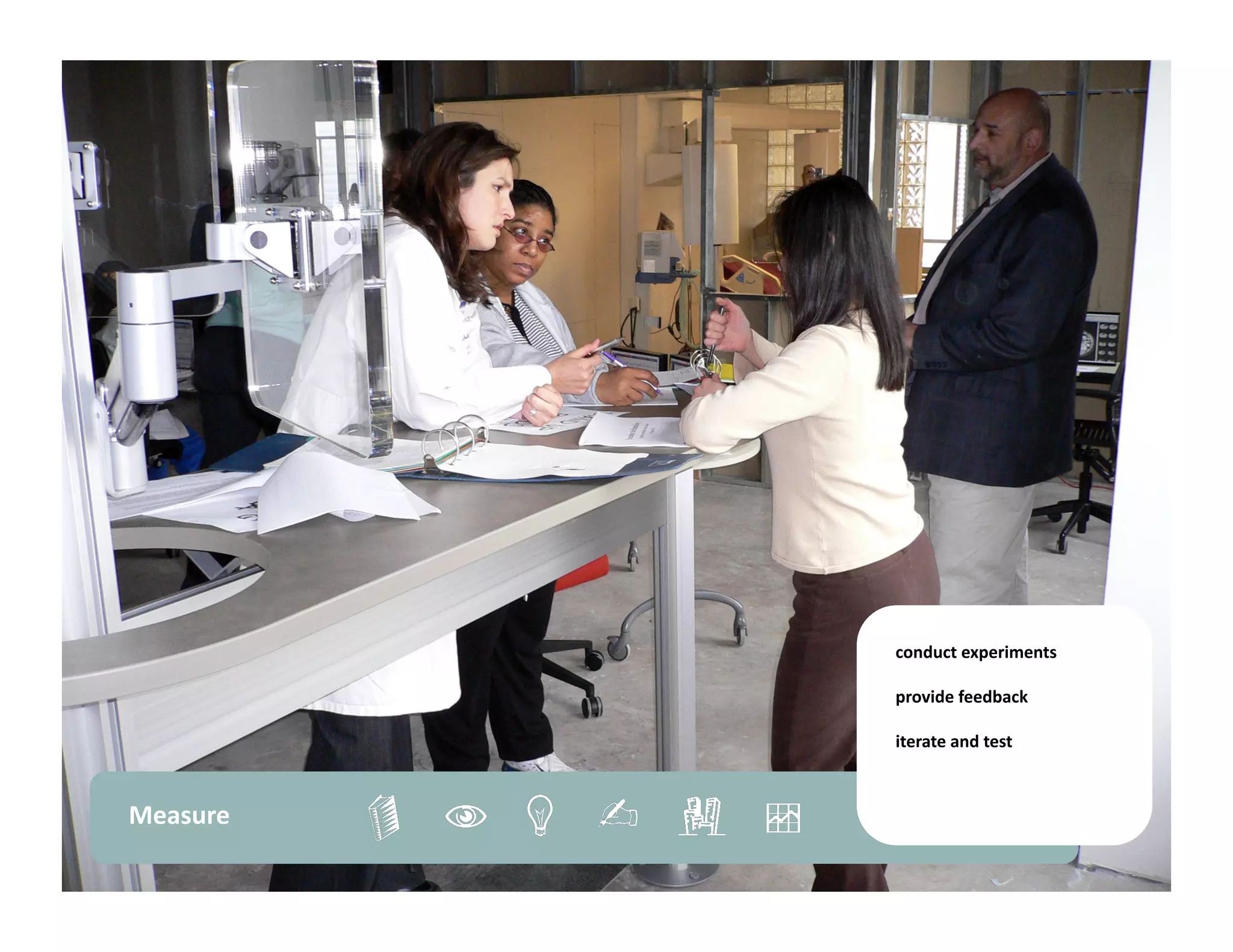
conduct
experiments


           provide
feedback


           iterate
and
test


Measure

Human
Centered
Design

 It’s
about
the
power
of
photos
and
stories
to
create
new

 markets,
new
products
and
new
experiences.

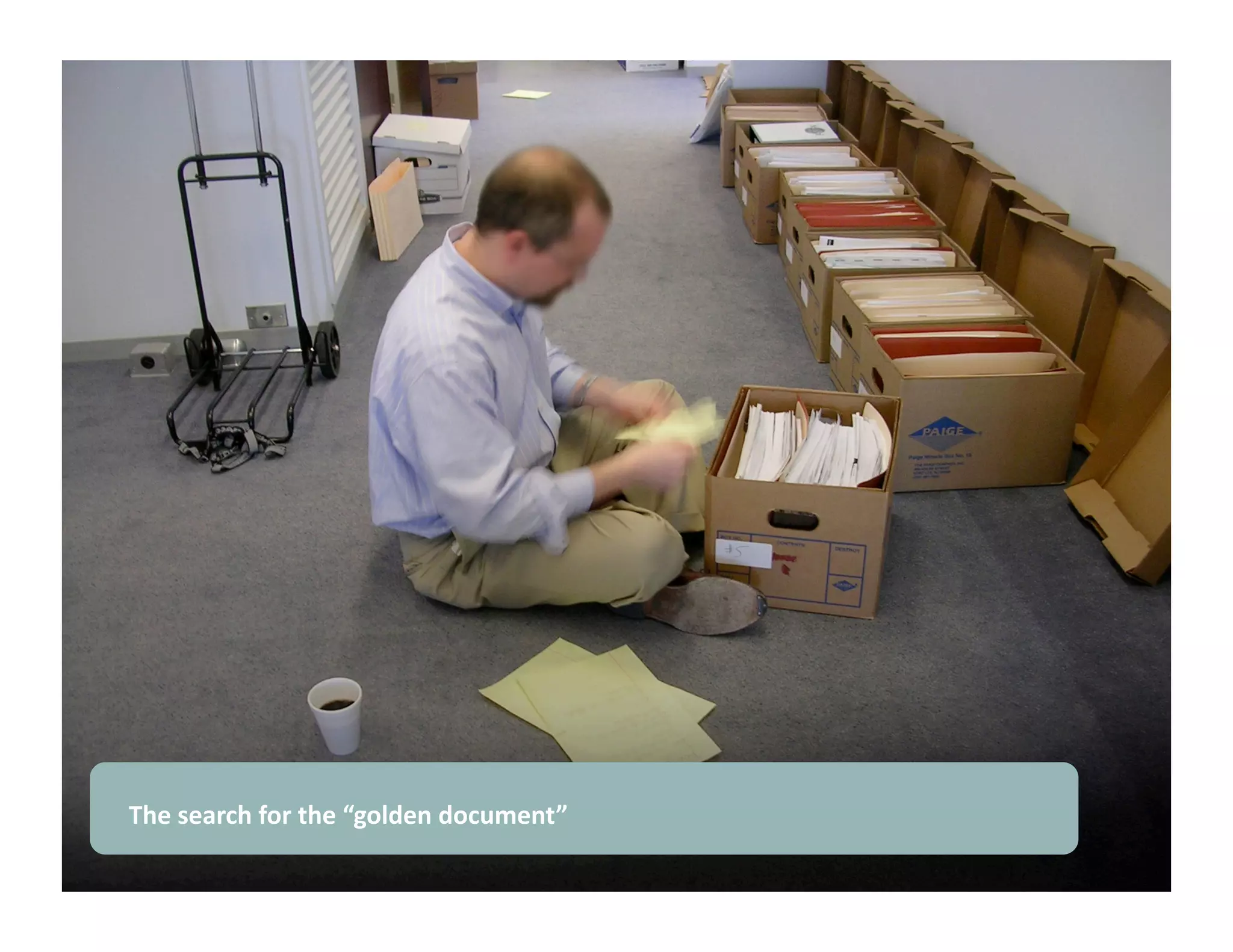
The
search
for
the
“golden
document”

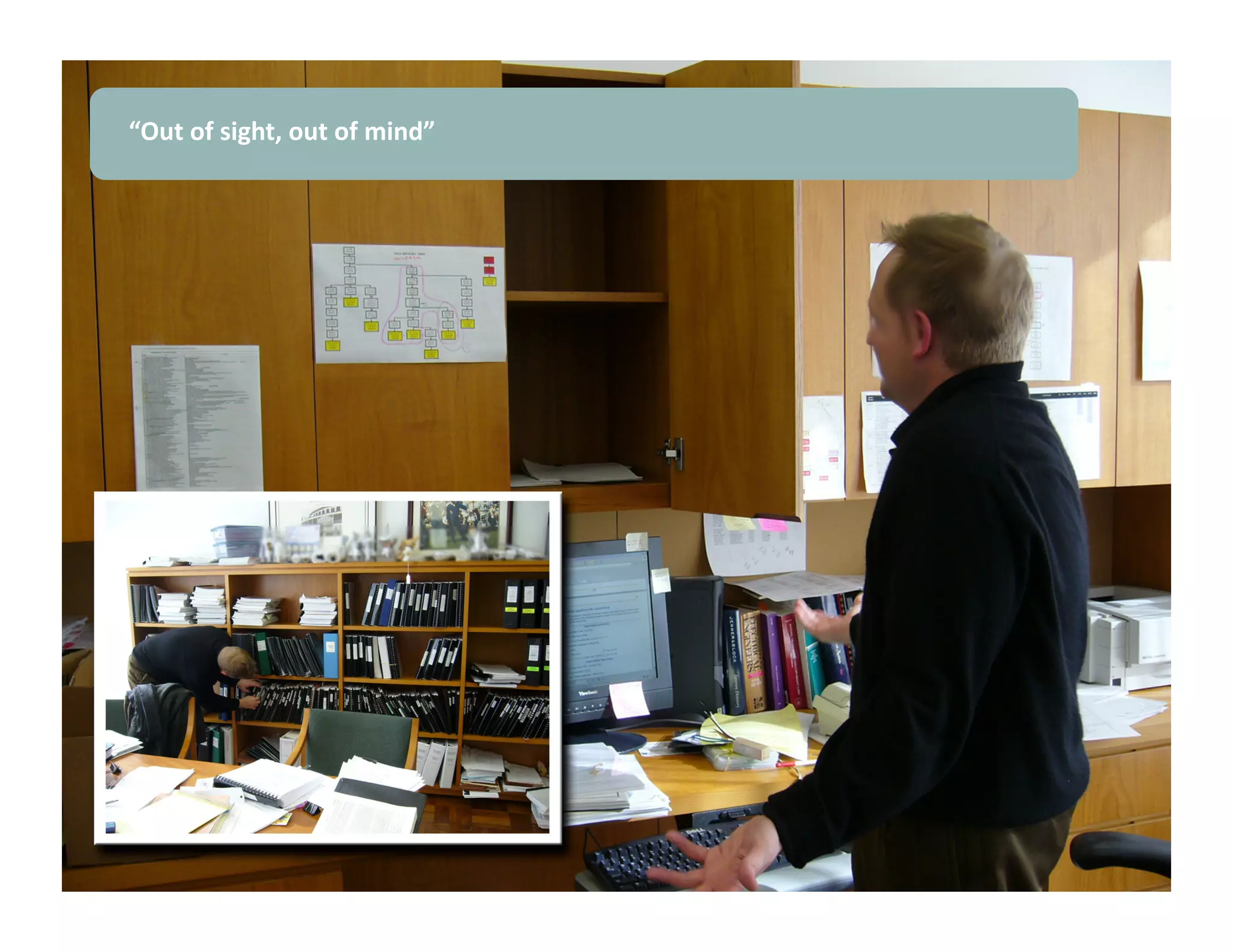
“Out
of
sight,
out
of
mind”

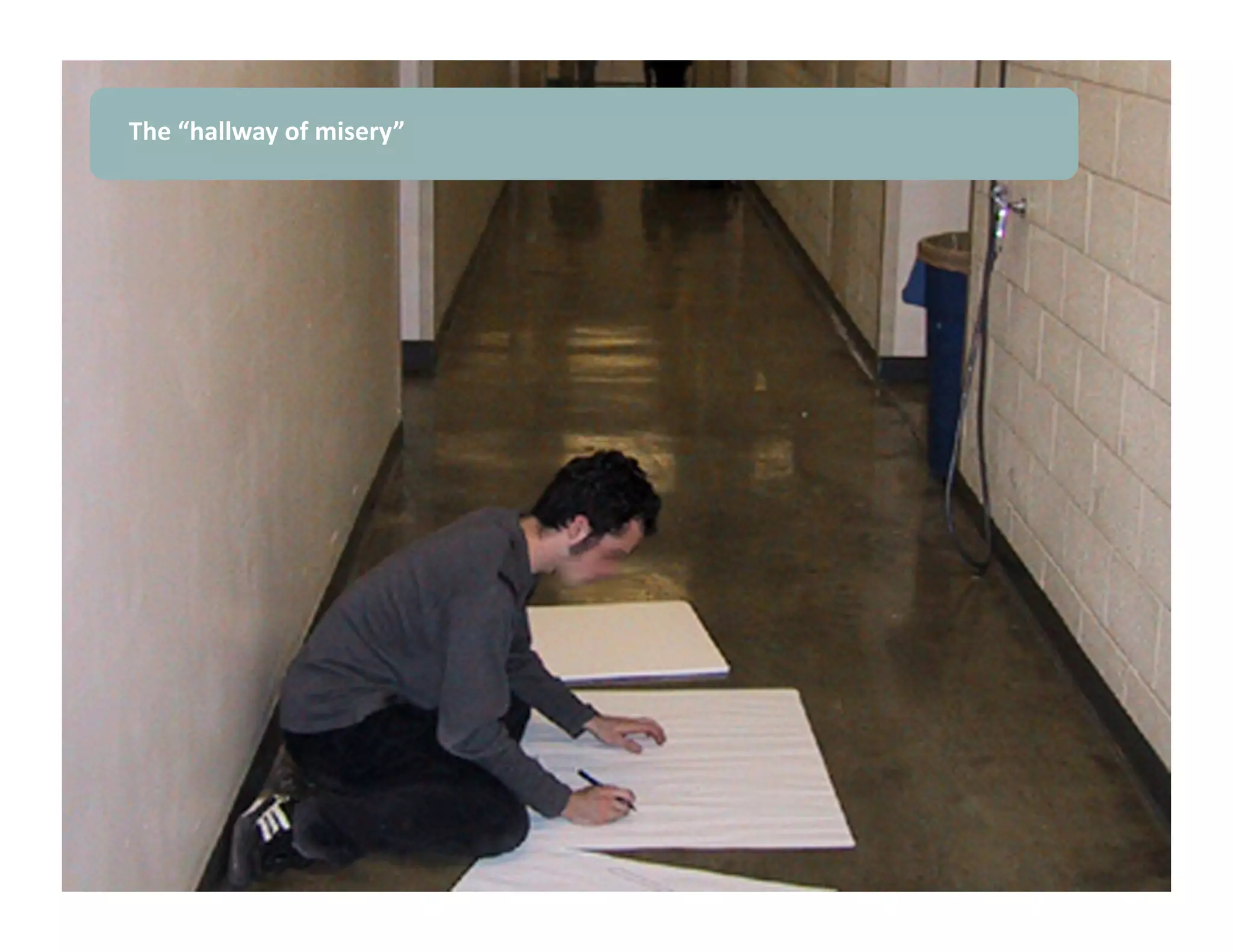
The
“hallway
of
misery”

Examples
from
current
research:

Classrooms

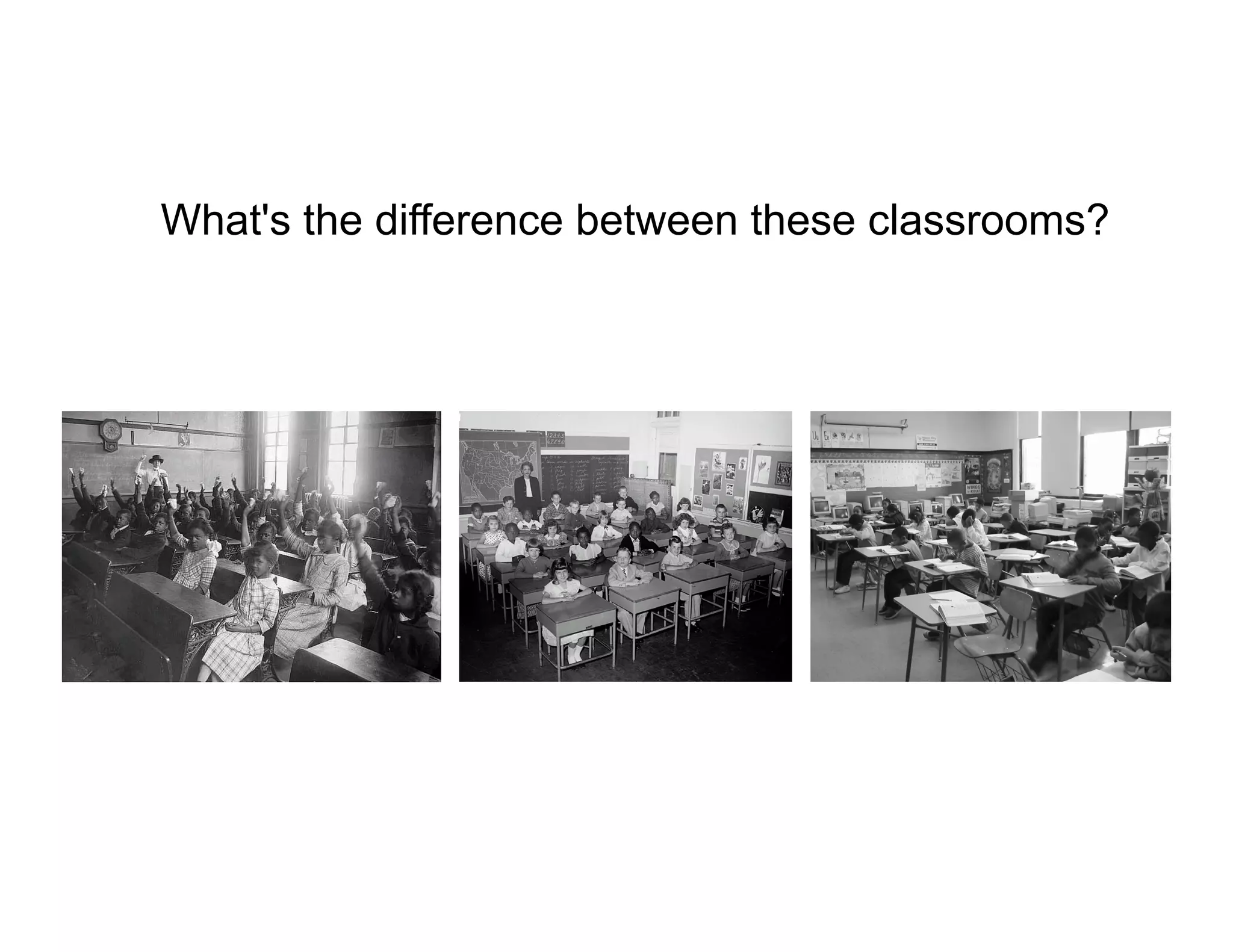
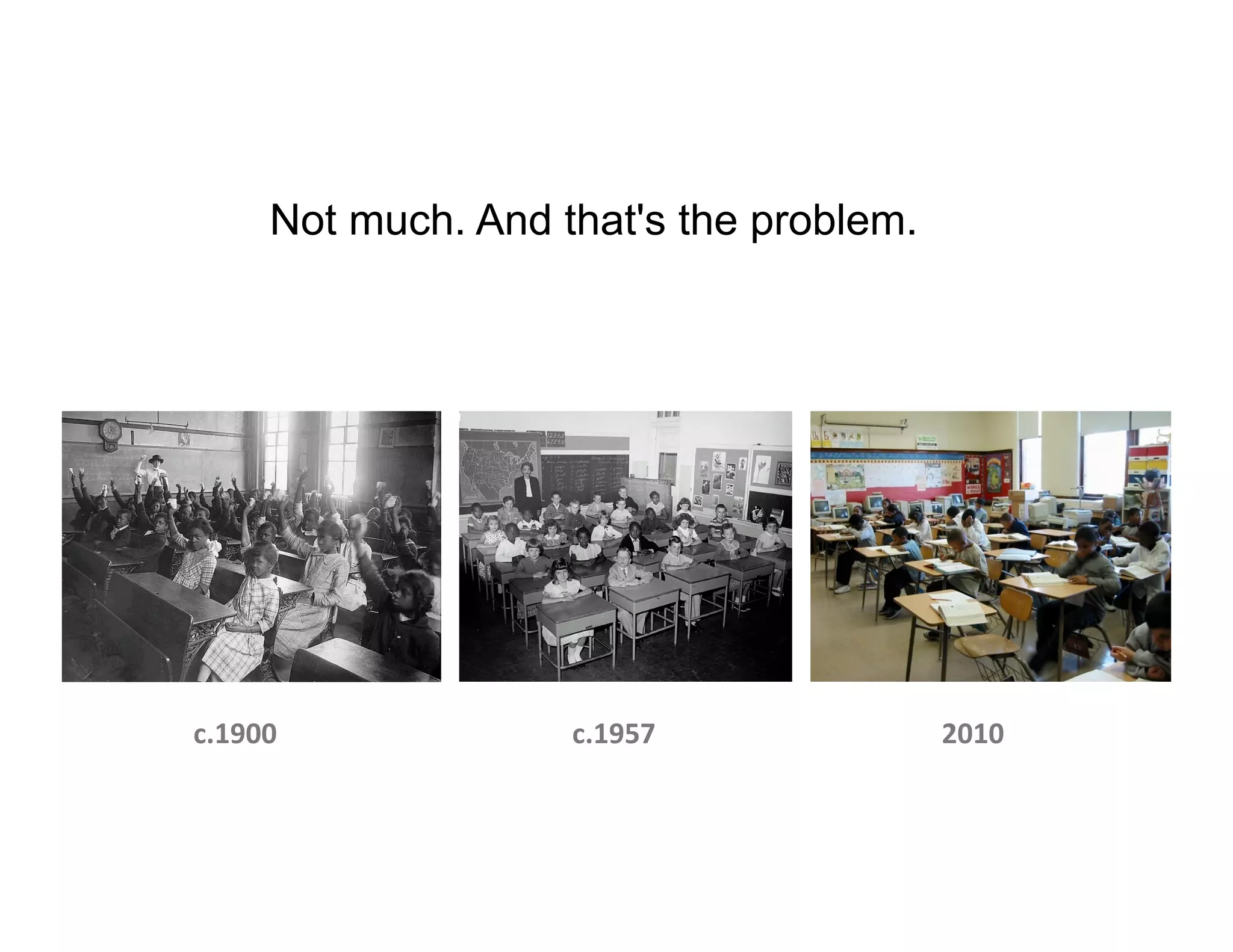
What's the difference between these classrooms?
Not much. And that's the problem.


c.1900
             c.1957
              2010

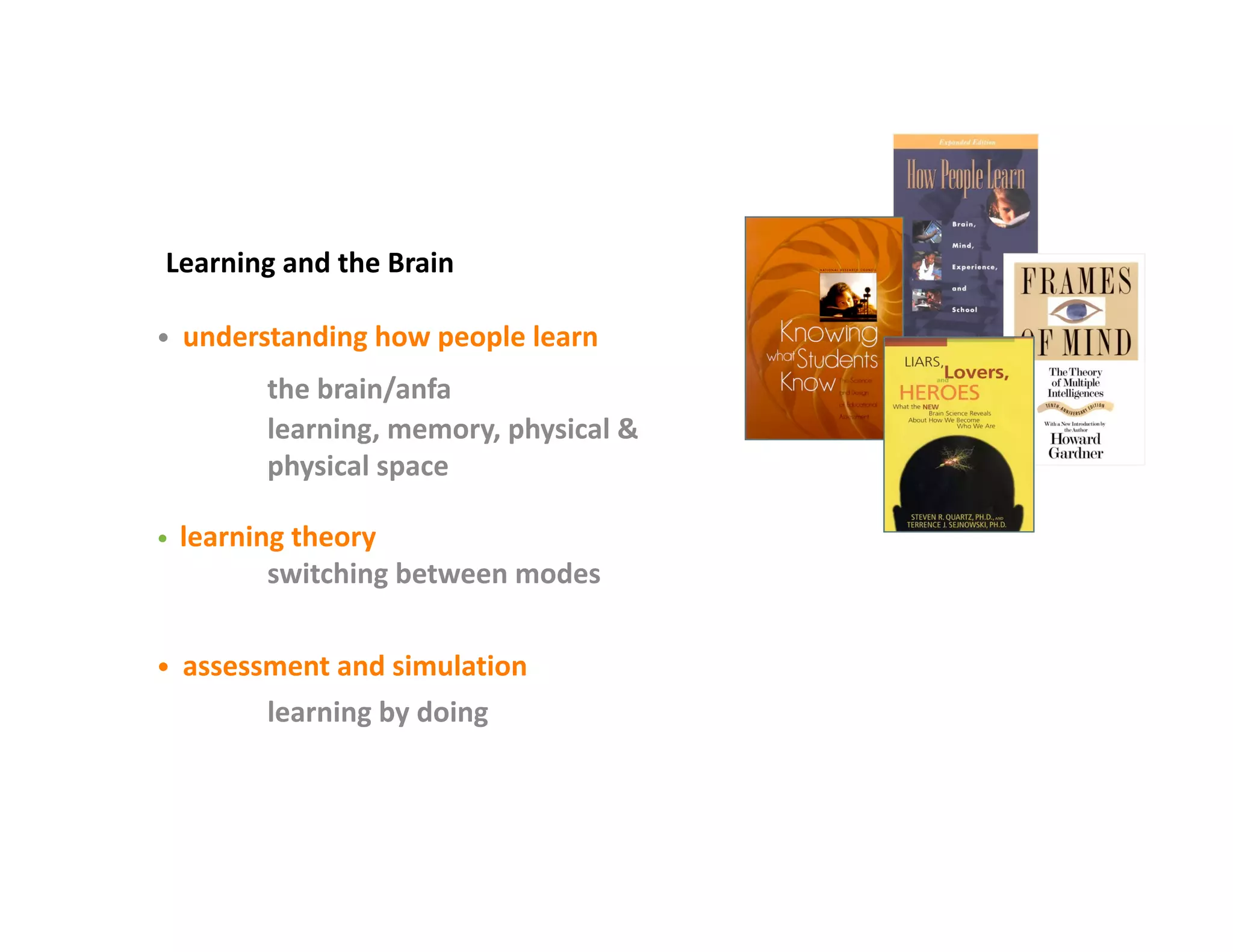
Learning
and
the
Brain


•

understanding
how
people
learn


           the
brain/anfa


           learning,
memory,
physical
&


           physical
space


•

learning
theory


           switching
between
modes


•

assessment
and
simulation


           learning
by
doing

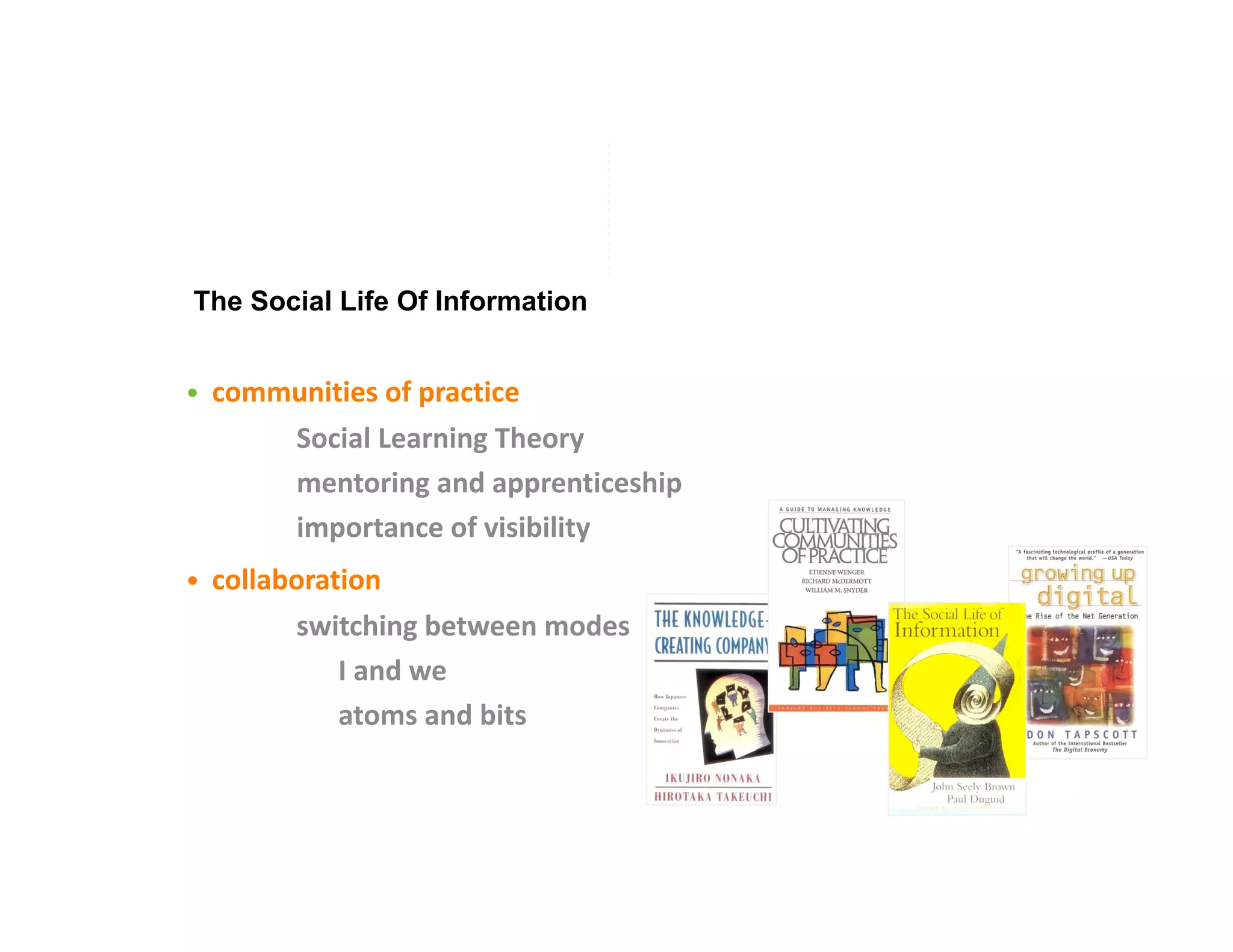
The Social Life Of Information


•

communities
of
practice

           Social
Learning
Theory

           mentoring
and
apprenticeship

           importance
of
visibility

•

collaboration


          switching
between
modes


I
and
we


atoms
and
bits

.
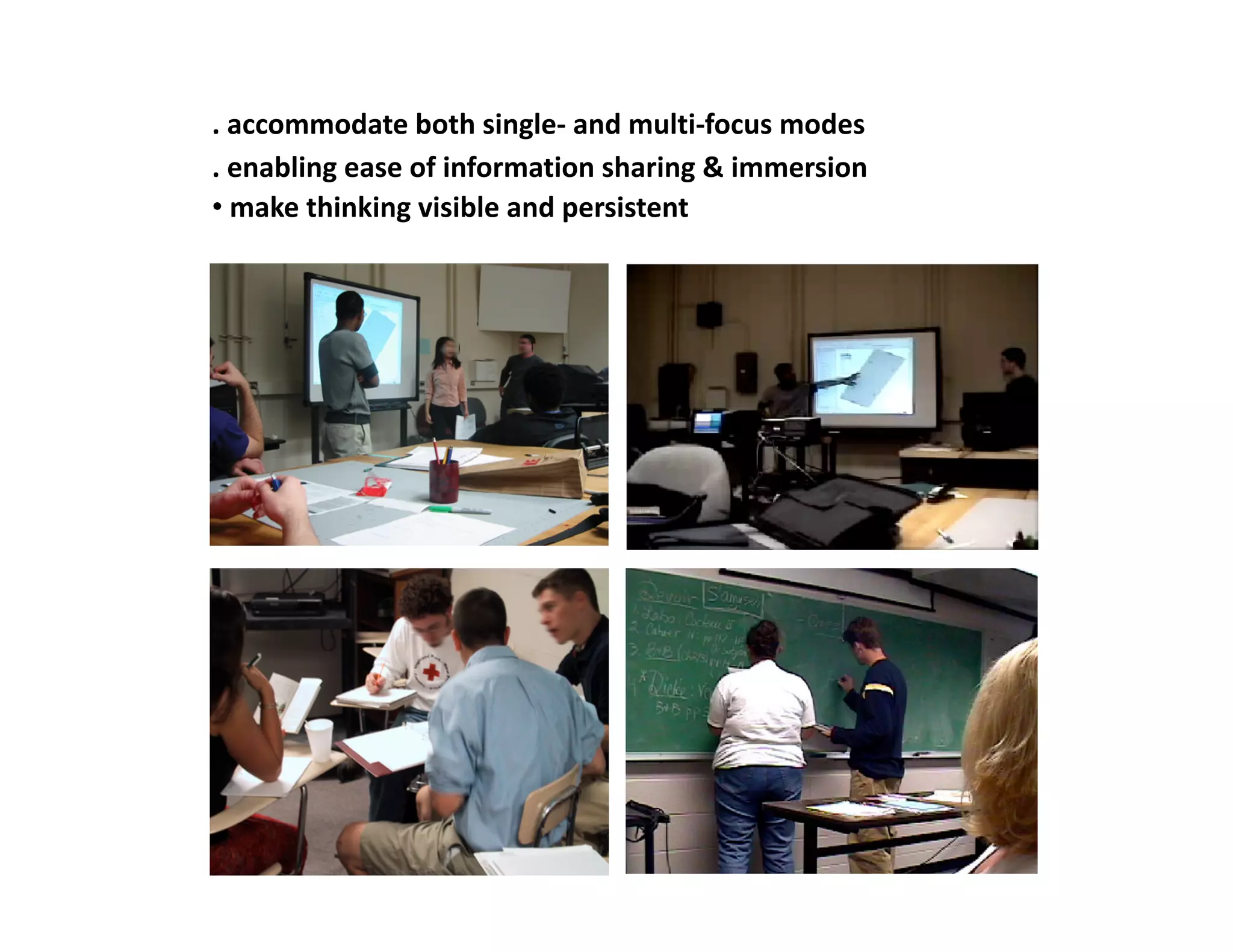
accommodate
both
single‐
and
multi‐focus
modes

.
enabling
ease
of
information
sharing
&
immersion

• 
make
thinking
visible
and
persistent

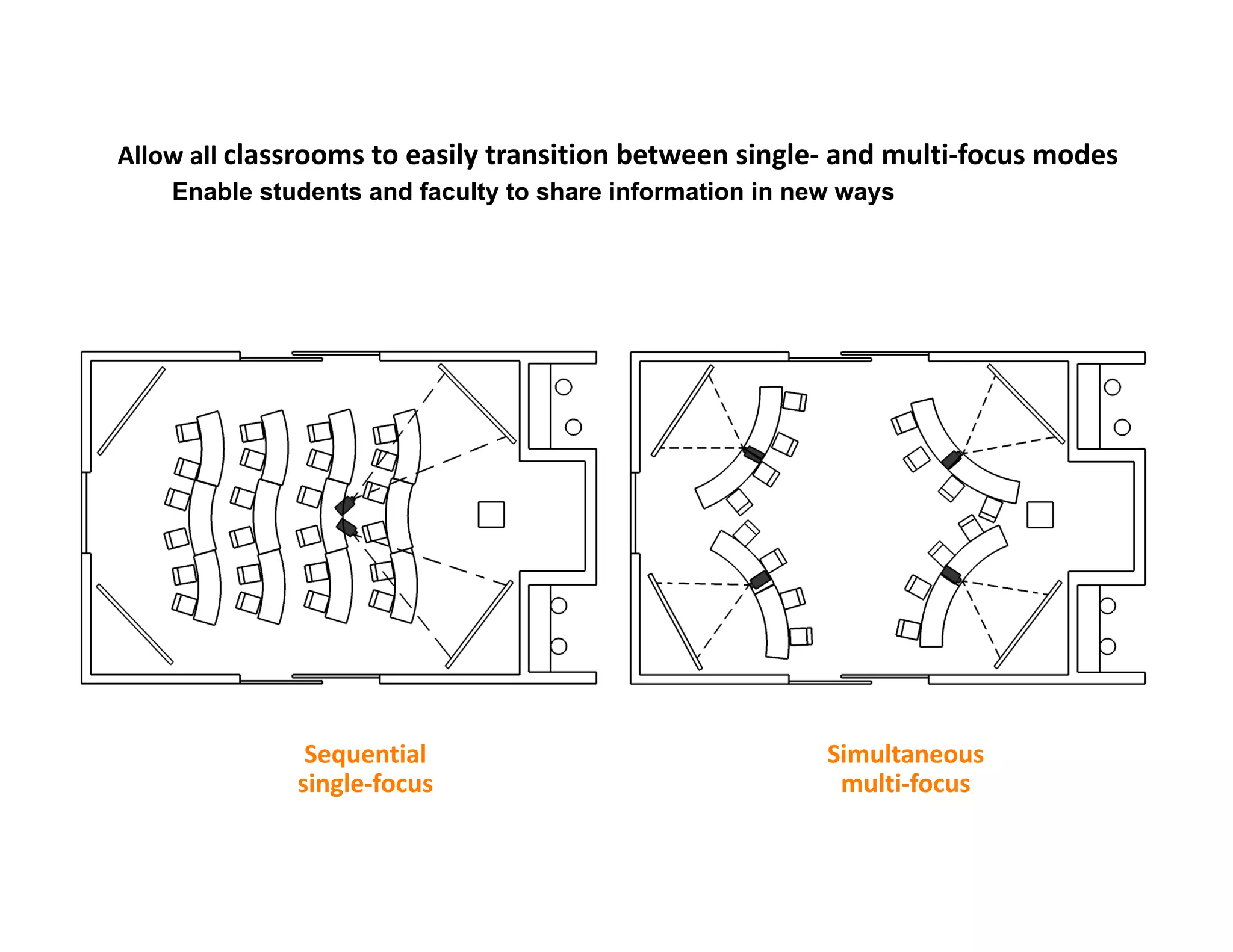
Allow
all
classrooms
to
easily
transition
between
single‐
and
multi‐focus
modes


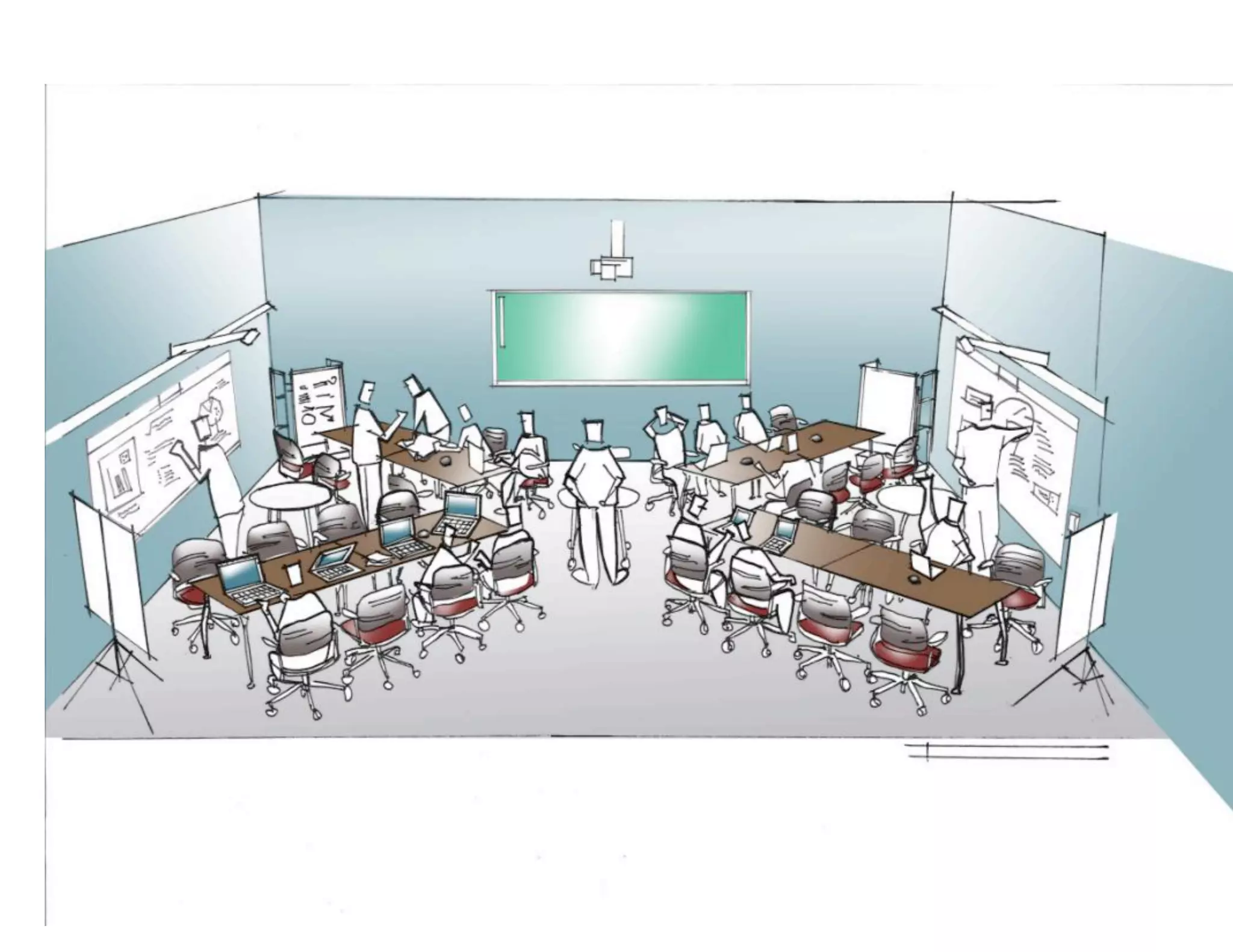
Enable students and faculty to share information in new ways


               Sequential
                              Simultaneous

              single‐focus
                              multi‐focus

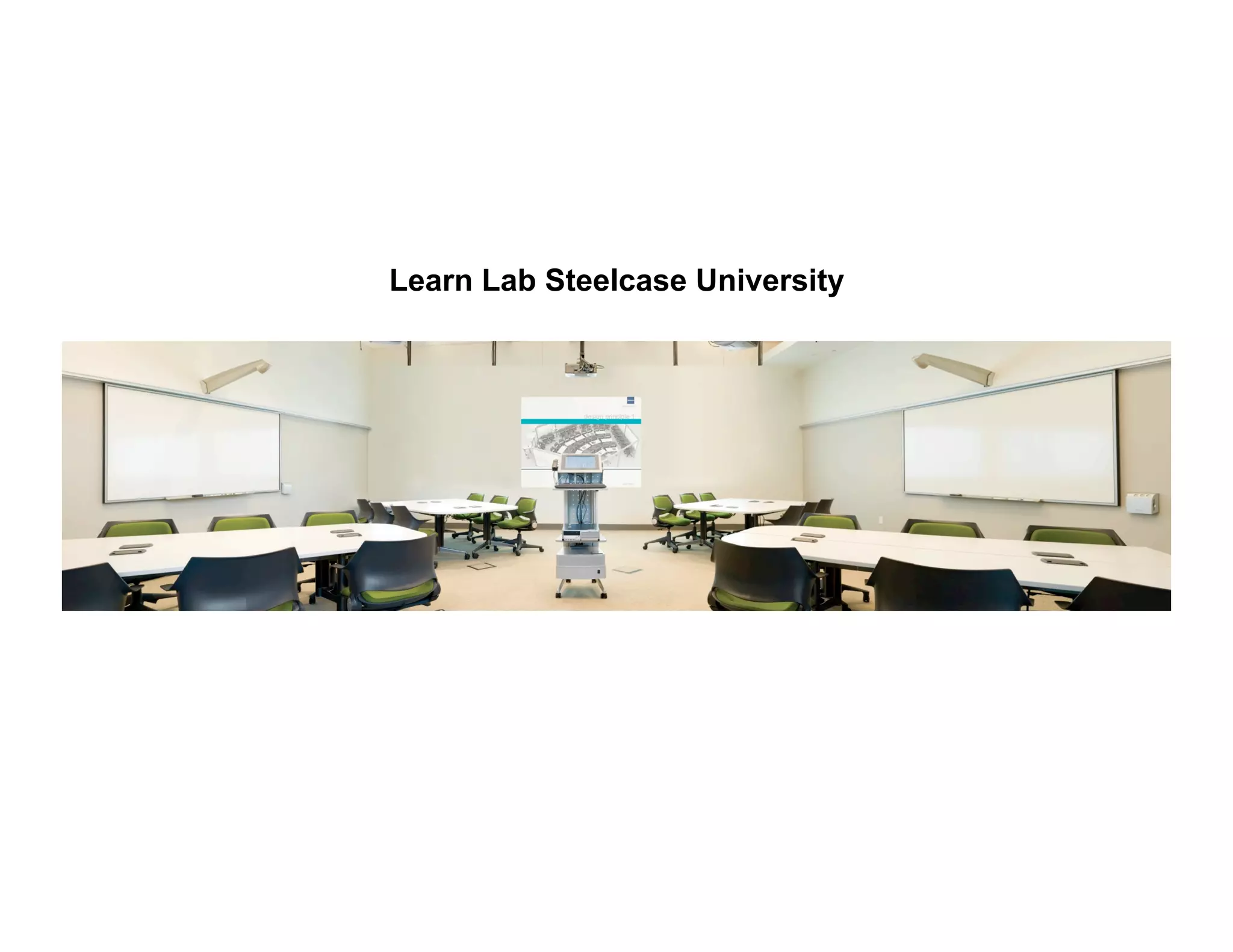
Learn Lab Steelcase University
Examples
from
current
research:

Knowledge
Management
and
Physical
Space

Knowledge
Worker

“Knowledge
worker,
a
term
coined
by
Peter
Drucker
in

1959,
is
one
who
works
primarily
with
information
or
one

who
develops
and
uses
knowledge
in
the
workplace.”


“
Due
to
the
constant
industrial
growth
in
North
America

and
globally,
there
is
increasing
need
for
an
academically

capable
workforce.
In
direct
response
to
this,
Knowledge

Workers
are
now
estimated
to
outnumber
all
other

workers
in
North
America
by
at
least
a
four
to
one
margin

(Haag
et
al,
2006,
pg.
4)”


“A
Knowledge
Worker's
benefit
to
a
company
could
be
in

the
form
of
developing
business
intelligence,
increasing

the
value
of
intellectual
capital,
gaining
insight
into

customer
preferences,
or
a
variety
of
other
important

gains
in
knowledge
that
aid
the
business”

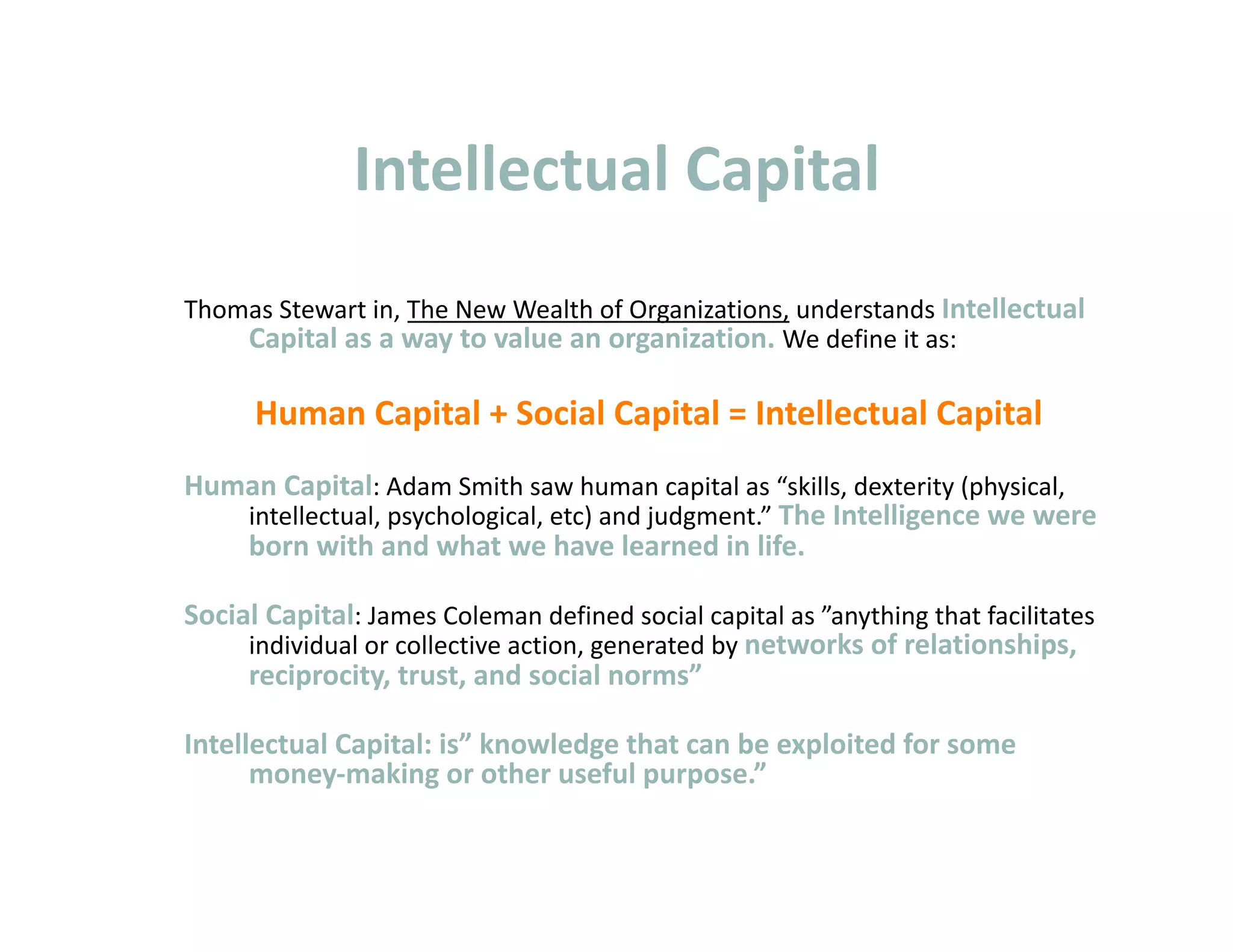
Intellectual
Capital

Thomas
Stewart
in,
The
New
Wealth
of
Organizations,
understands
Intellectual

    Capital
as
a
way
to
value
an
organization.
We
define
it
as:


Human
Capital
+
Social
Capital
=
Intellectual
Capital

Human
Capital:
Adam
Smith
saw
human
capital
as
“skills,
dexterity
(physical,

   intellectual,
psychological,
etc)
and
judgment.”
The
Intelligence
we
were

   born
with
and
what
we
have
learned
in
life.


Social
Capital:
James
Coleman
defined
social
capital
as
”anything
that
facilitates

     individual
or
collective
action,
generated
by
networks
of
relationships,

     reciprocity,
trust,
and
social
norms”


Intellectual
Capital:
is”
knowledge
that
can
be
exploited
for
some

      money‐making
or
other
useful
purpose.”

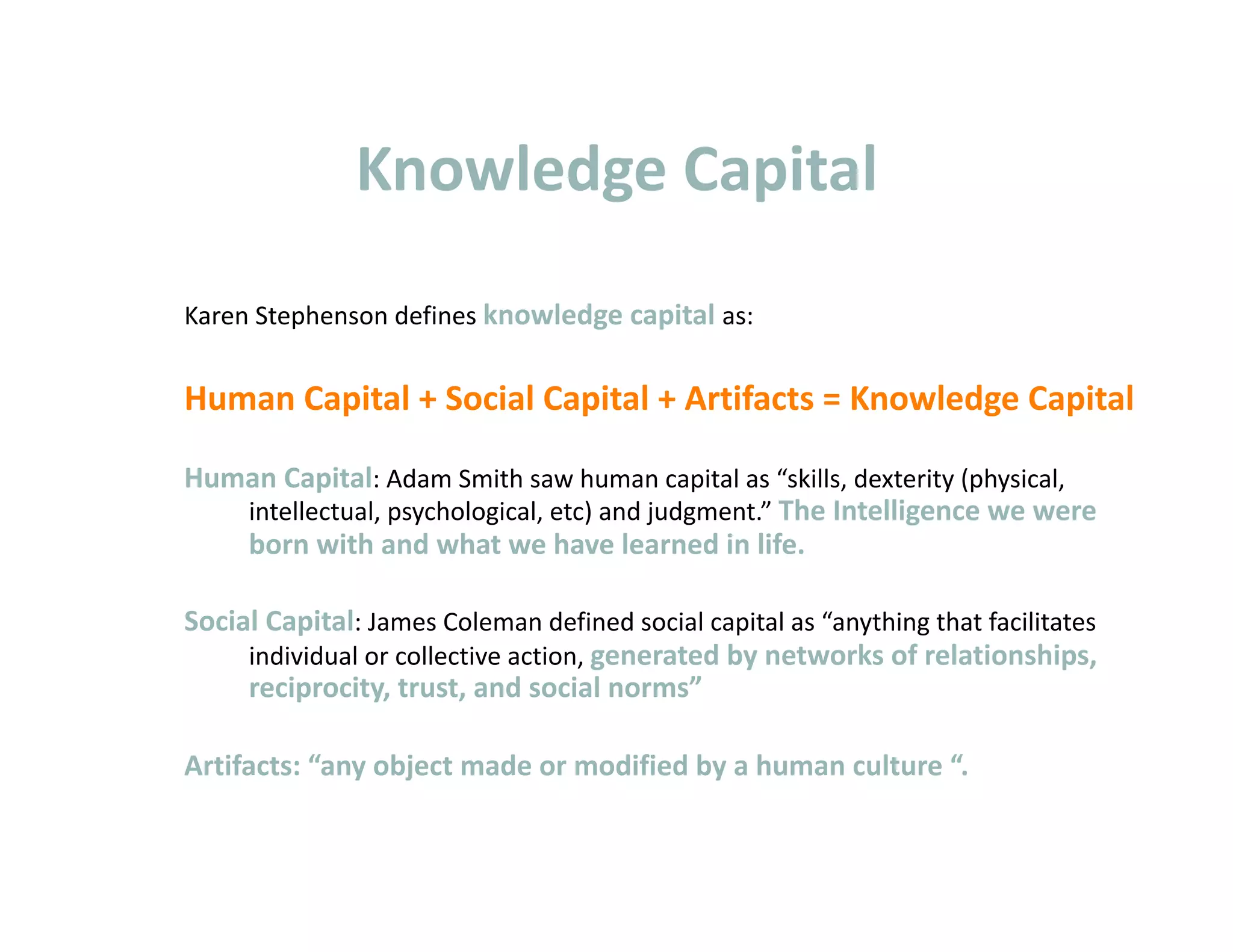
Knowledge
Capital

Karen
Stephenson
defines
knowledge
capital
as:


Human
Capital
+
Social
Capital
+
Artifacts
=
Knowledge
Capital


Human
Capital:
Adam
Smith
saw
human
capital
as
“skills,
dexterity
(physical,

   intellectual,
psychological,
etc)
and
judgment.”
The
Intelligence
we
were

   born
with
and
what
we
have
learned
in
life.


Social
Capital:
James
Coleman
defined
social
capital
as
“anything
that
facilitates

     individual
or
collective
action,
generated
by
networks
of
relationships,

     reciprocity,
trust,
and
social
norms”


Artifacts:
“any
object
made
or
modified
by
a
human
culture
“.


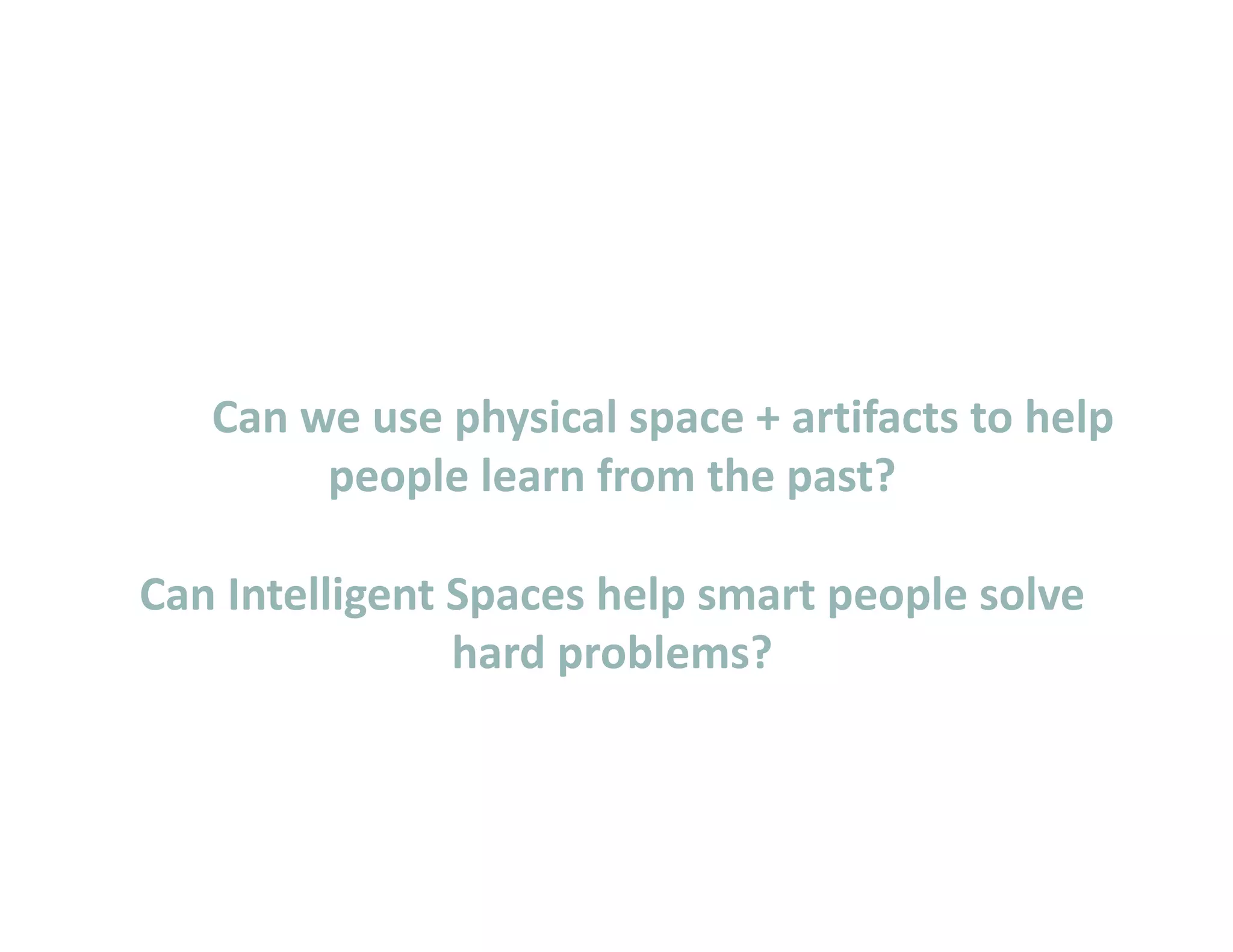
      Can
we
use
physical
space
+
artifacts
to
help


            people
learn
from
the
past?


    Can
Intelligent
Spaces
help
smart
people
solve


                    hard
problems?


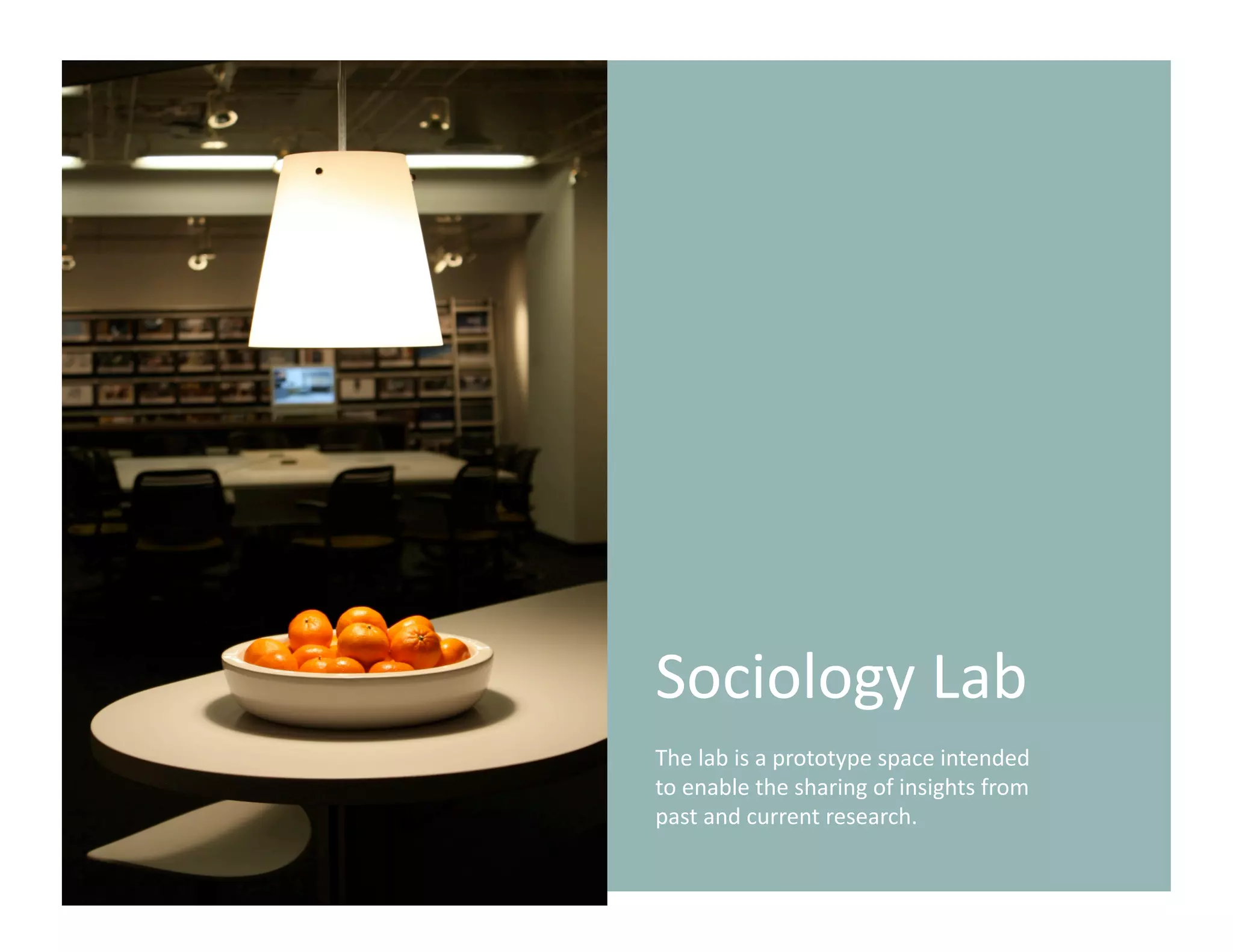
Sociology
Lab

The
lab
is
a
prototype
space
intended

to
enable
the
sharing
of
insights
from

past
and
current
research.


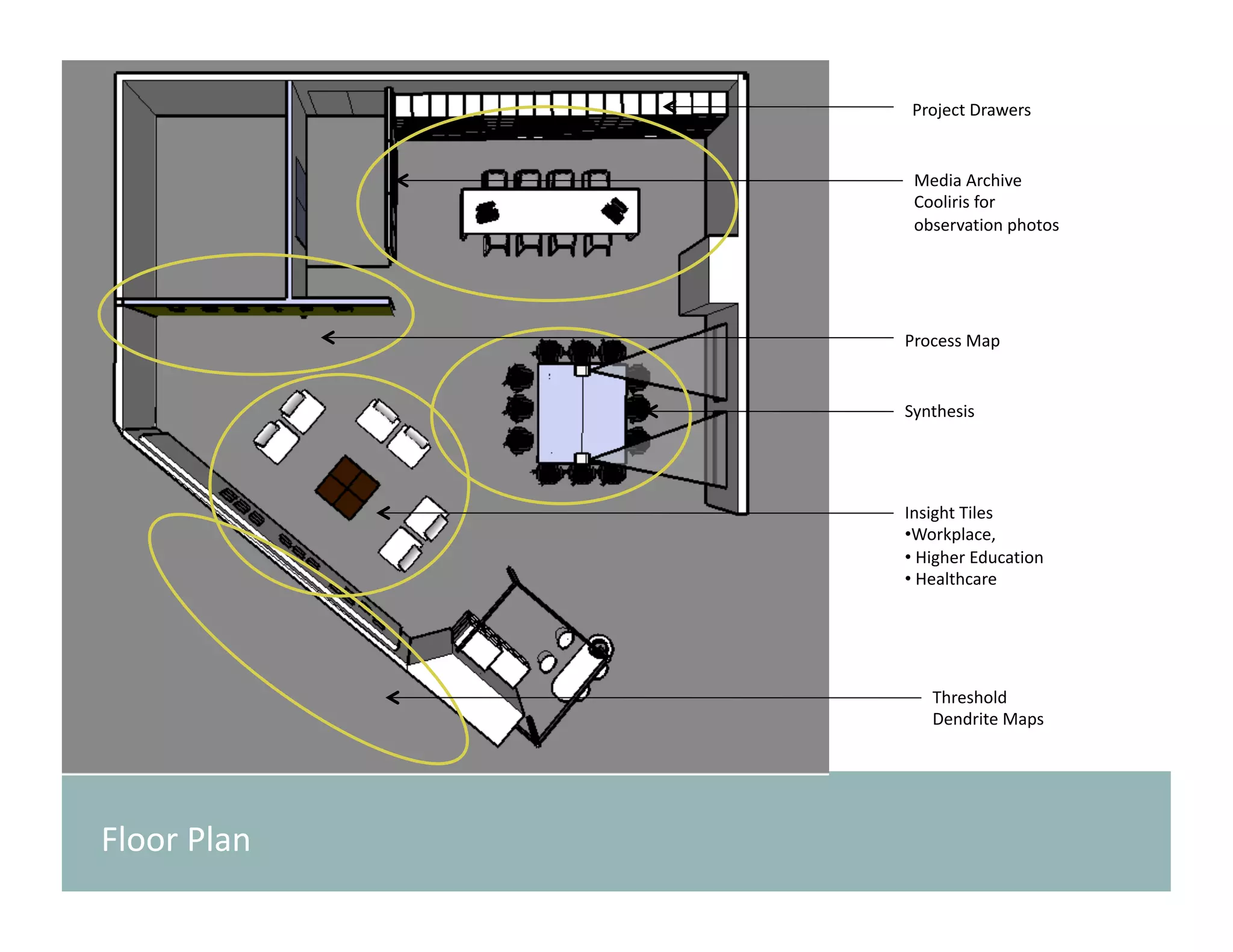
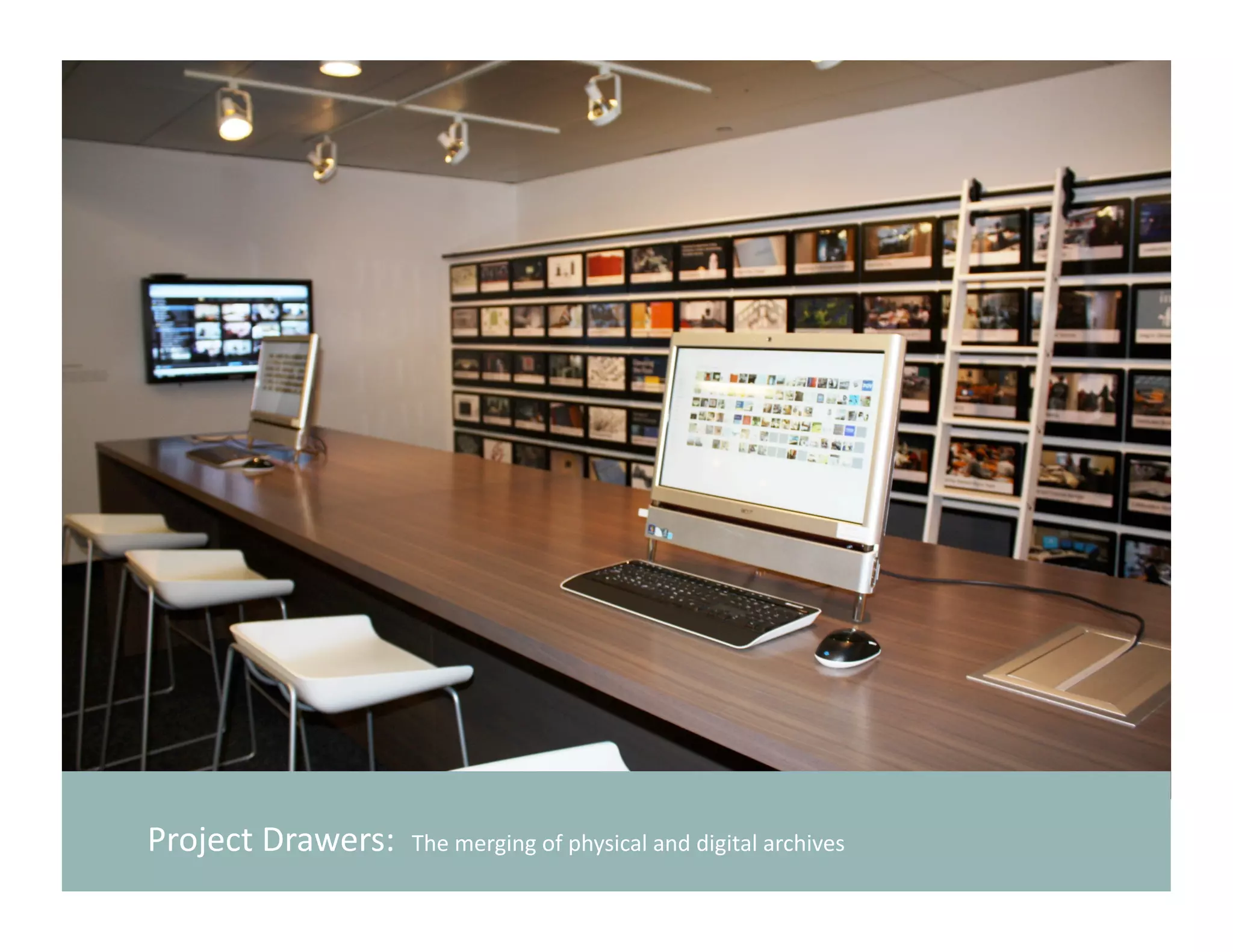
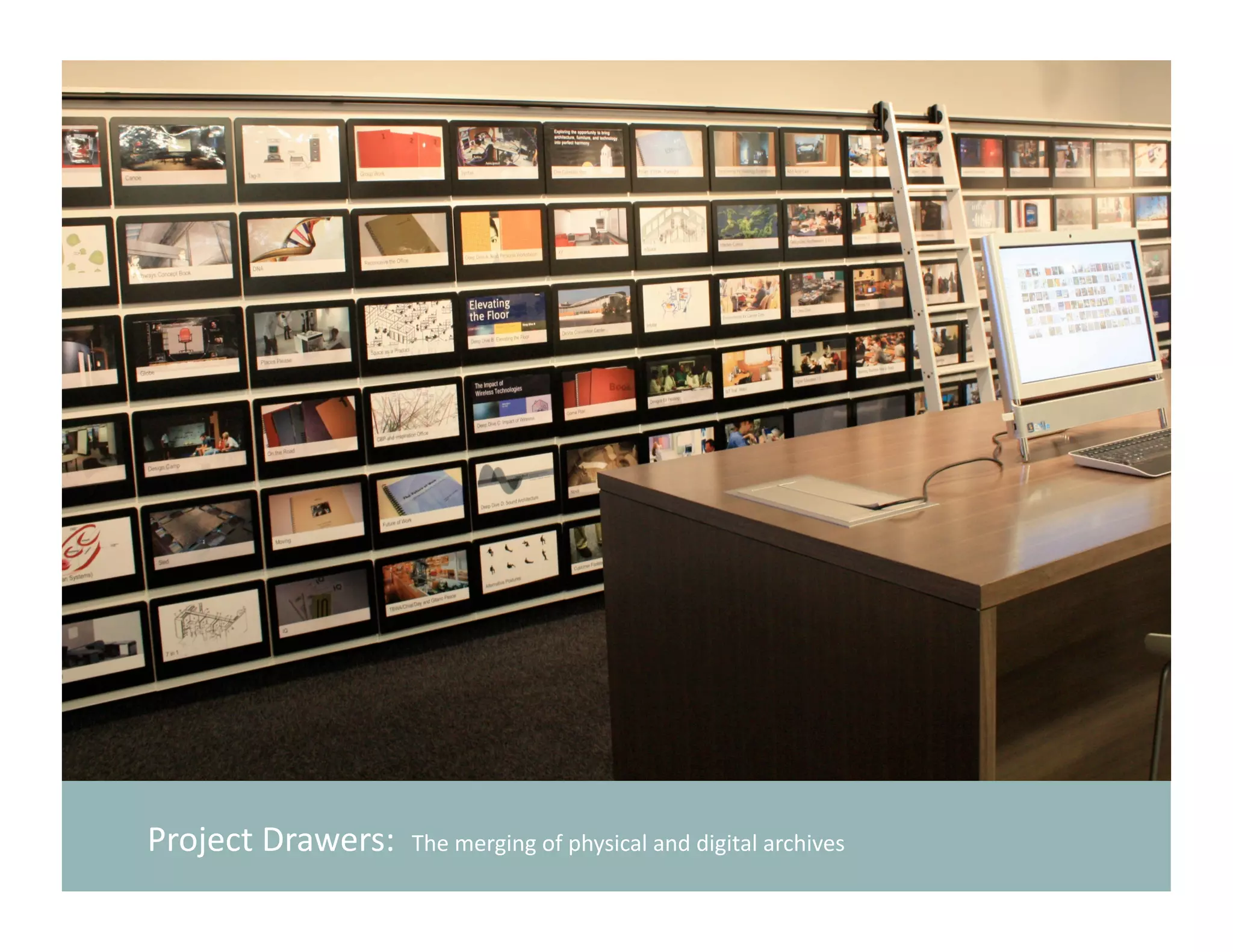
Project
Drawers


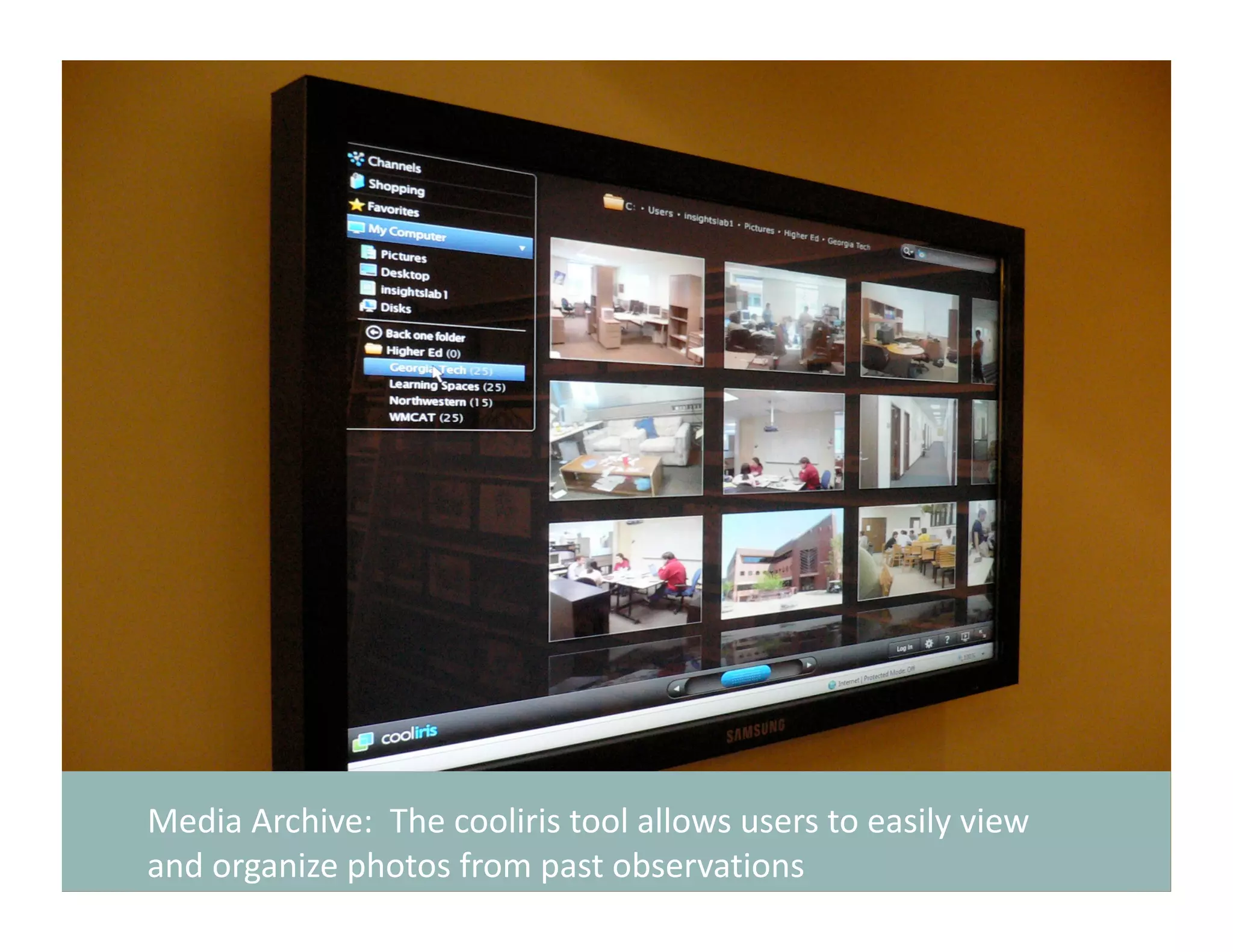
                 Media
Archive

                 Cooliris
for

                 observation
photos


                Process
Map


                Synthesis


                Insight
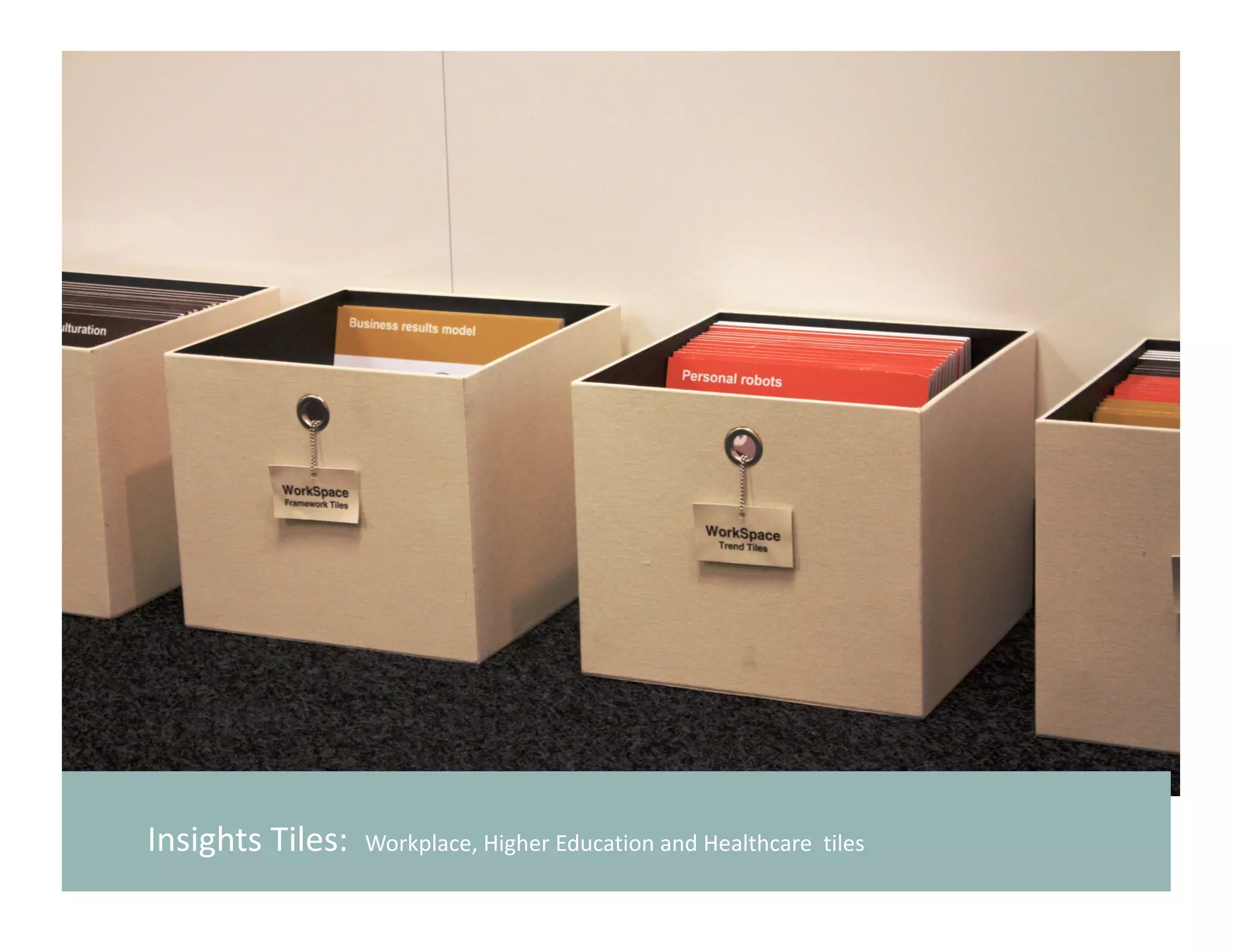
Tiles

                • Workplace,


                • 
Higher
Education

                • 
Healthcare


                    Threshold

                    Dendrite
Maps


Floor
Plan


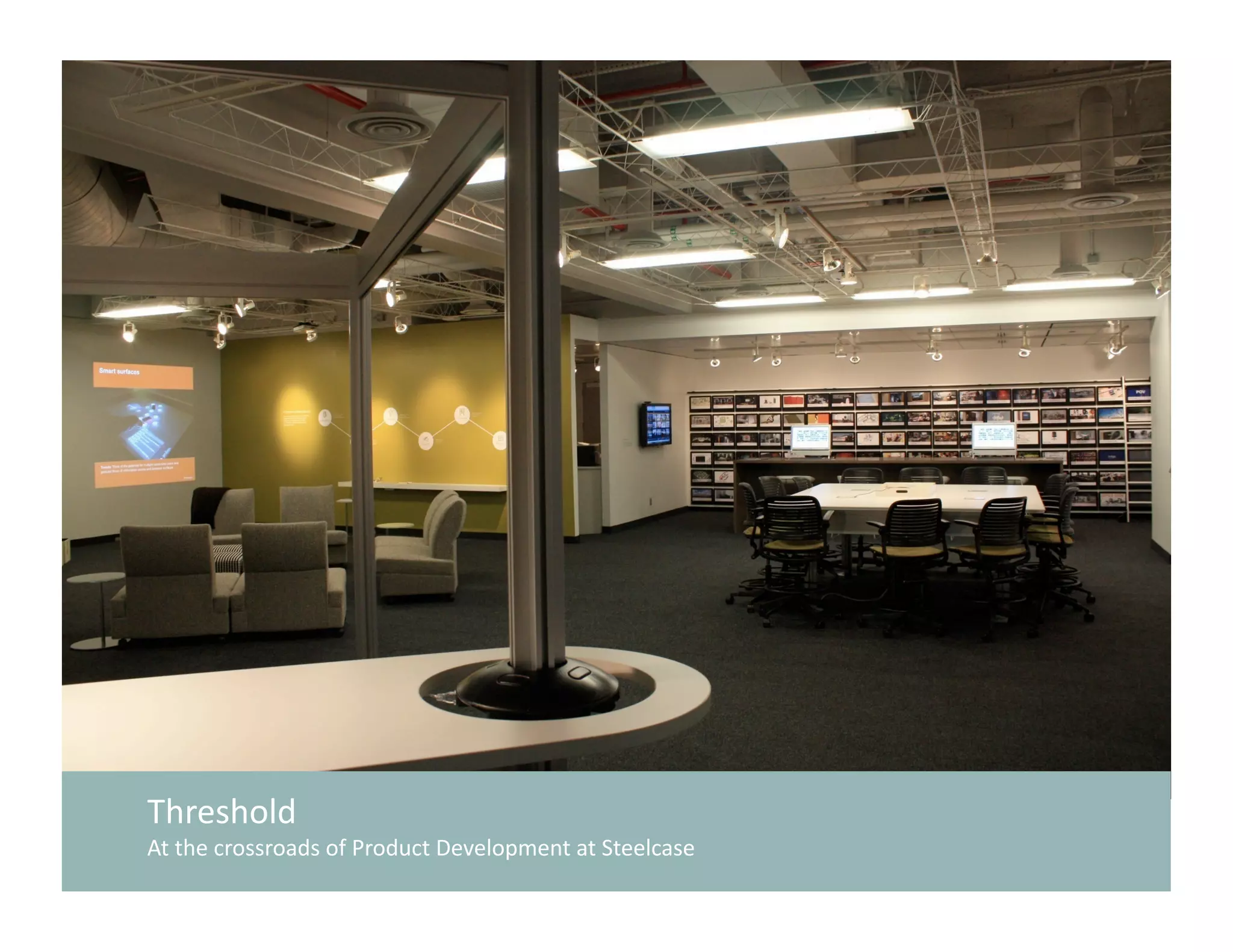
Threshold


At
the
crossroads
of
Product
Development
at
Steelcase

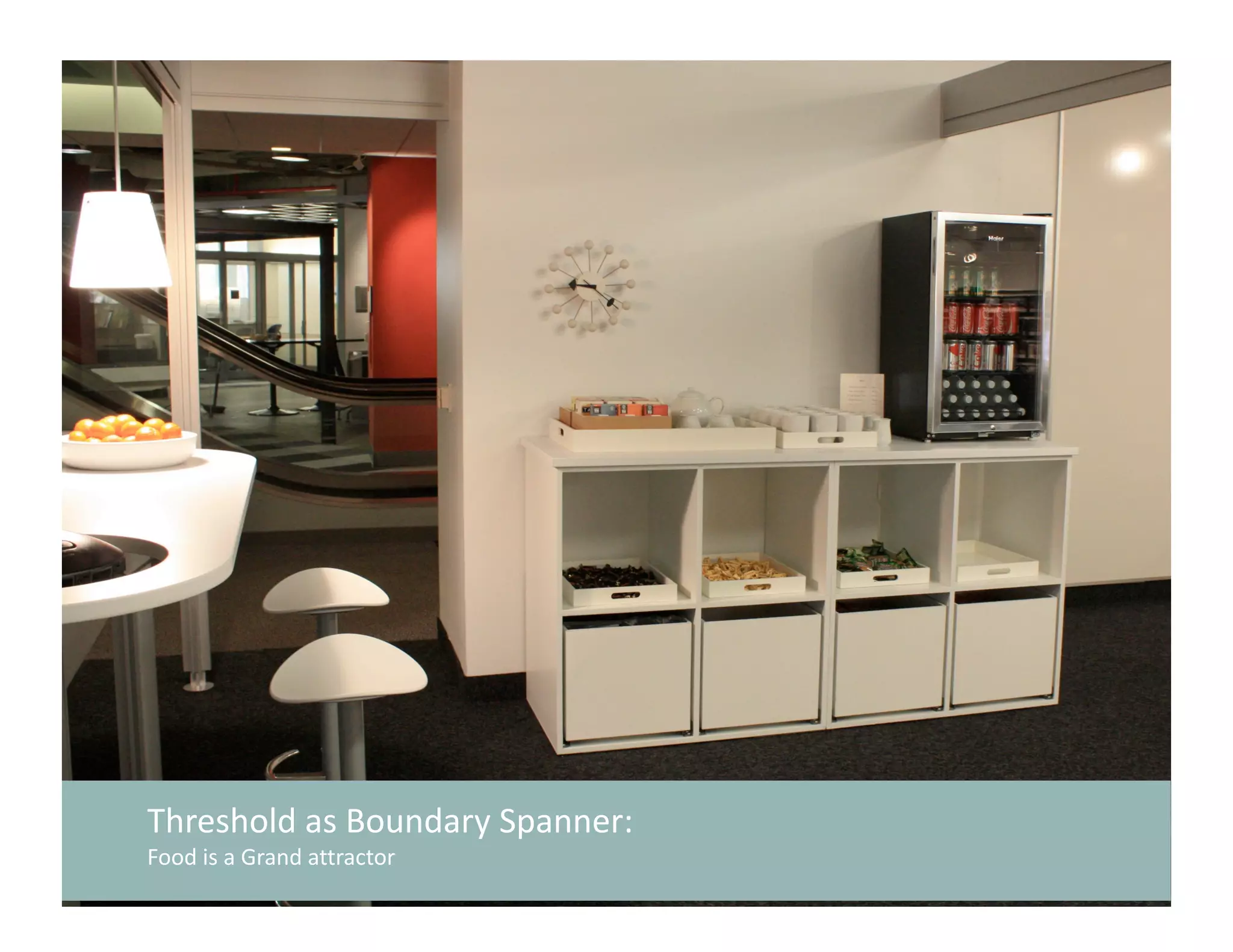
Threshold
as
Boundary
Spanner:


Food
is
a
Grand
attractor

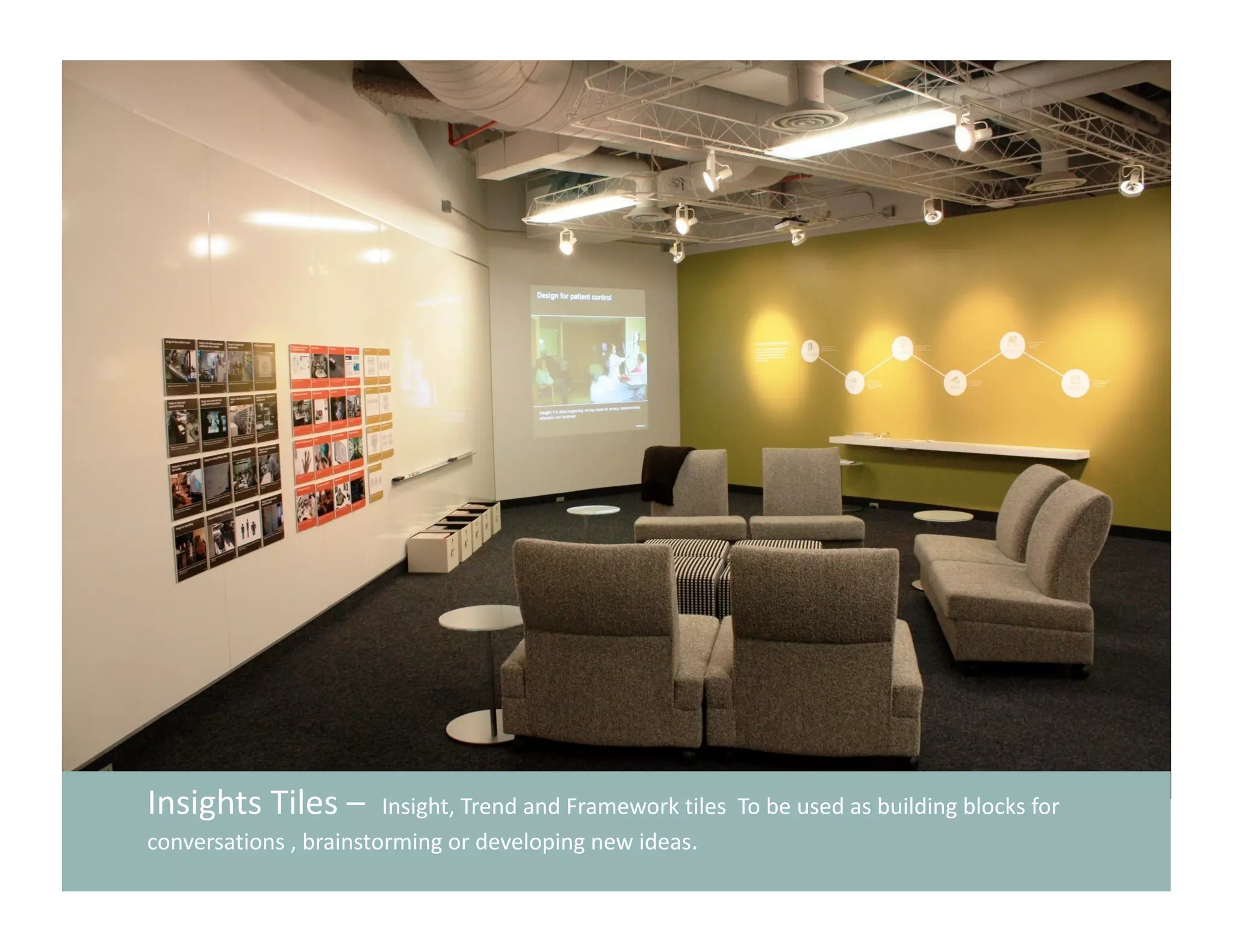
Insights
Tiles
–

Insight,
Trend
and
Framework
tiles

To
be
used
as
building
blocks
for

conversations
,
brainstorming
or
developing
new
ideas.

Insights
Tiles:

Workplace,
Higher
Education
and
Healthcare

tiles

Media
Archive:

The
cooliris
tool
allows
users
to
easily
view

and
organize
photos
from
past
observations

Project
Drawers:

The
merging
of
physical
and
digital
archives

Project
Drawers:

The
merging
of
physical
and
digital
archives

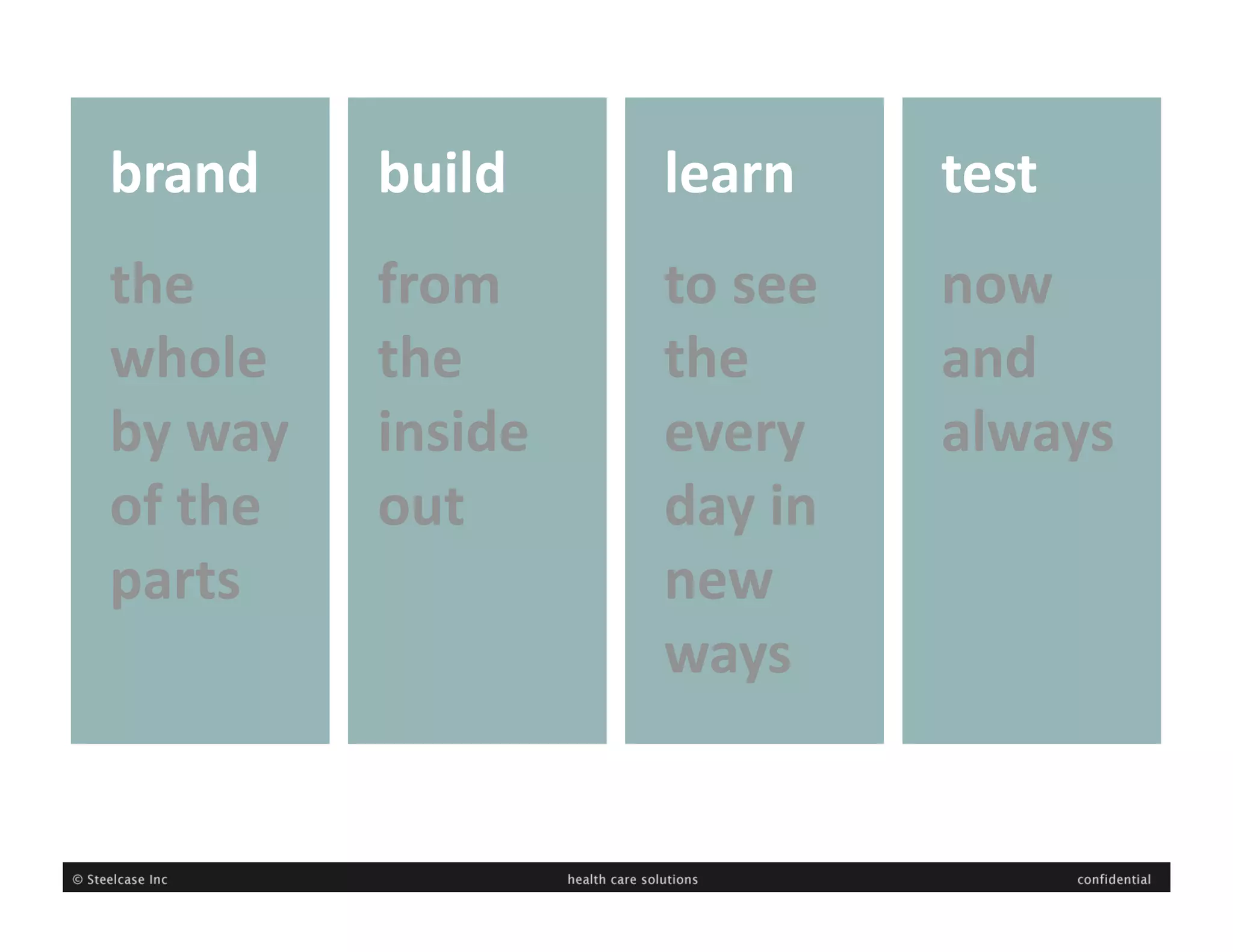
brand

   build

   learn

   test


the
      from
     to
see
   now

whole
    the
      the
      and

by
way
   inside
   every
    always
of
the
   out
      day
in

parts

             new

                    ways
Space Matters
Examples
from
current
research:

The
Social
Life
of
Learning

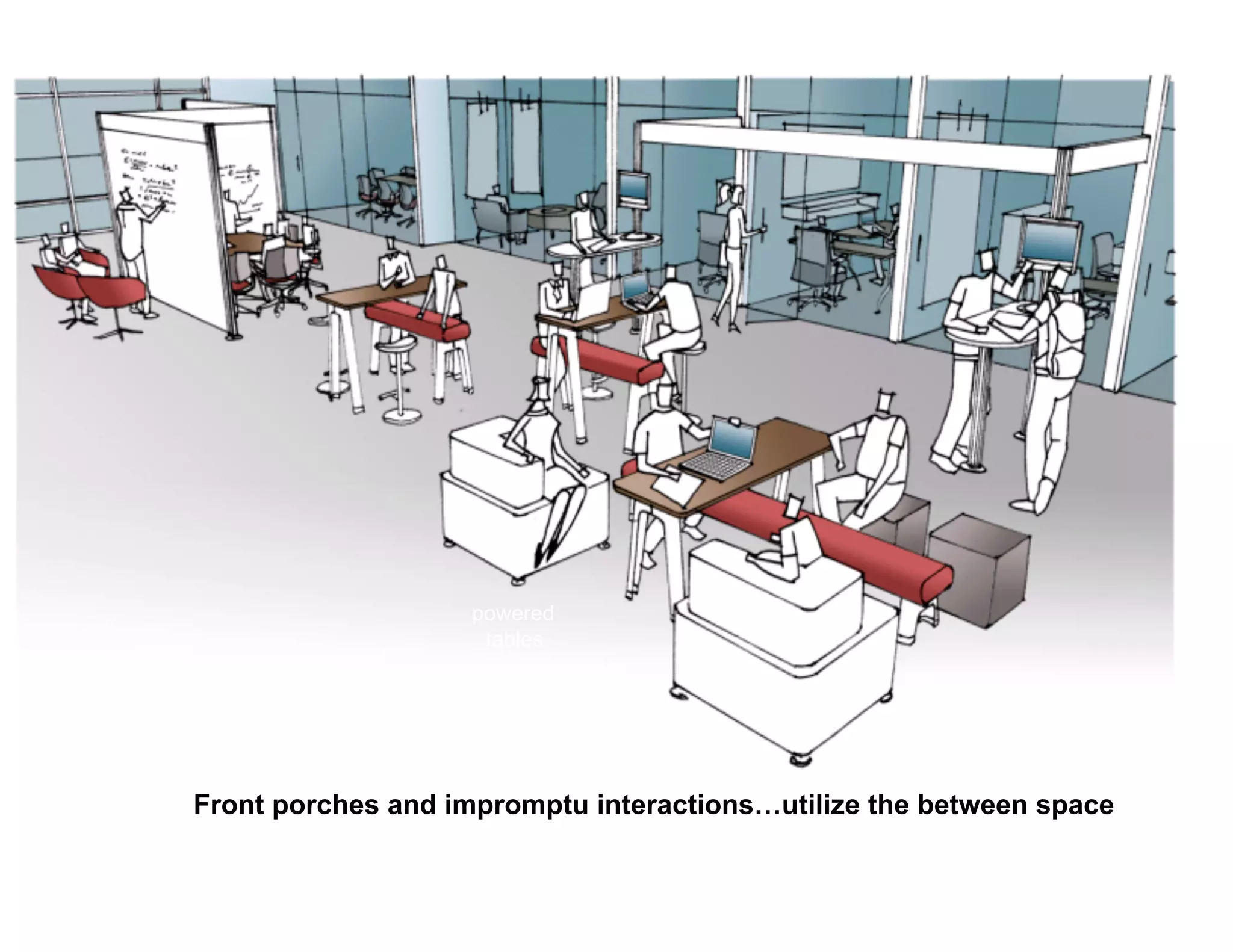
powered
                    tables


Front porches and impromptu interactions…utilize the between space
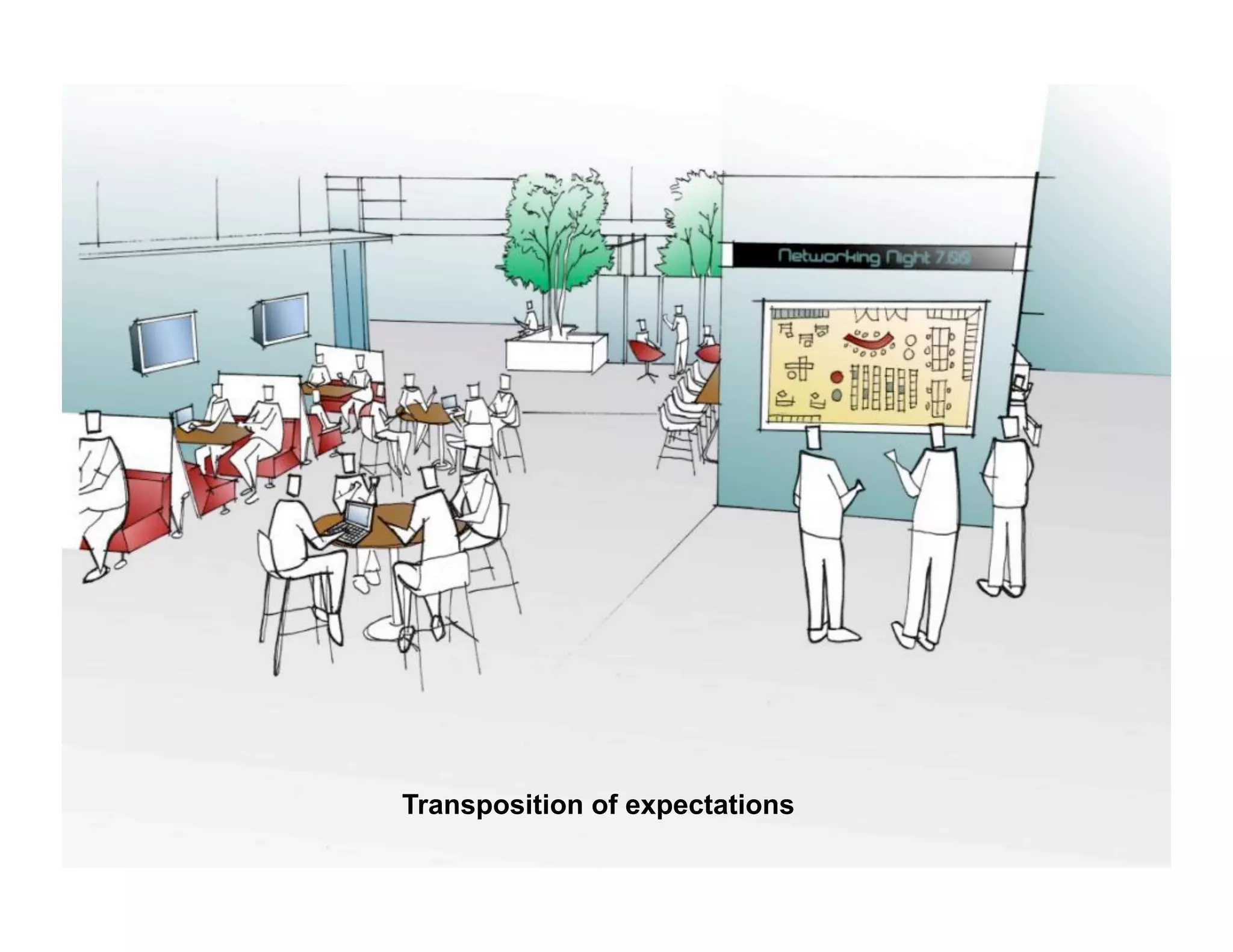
Transposition of expectations
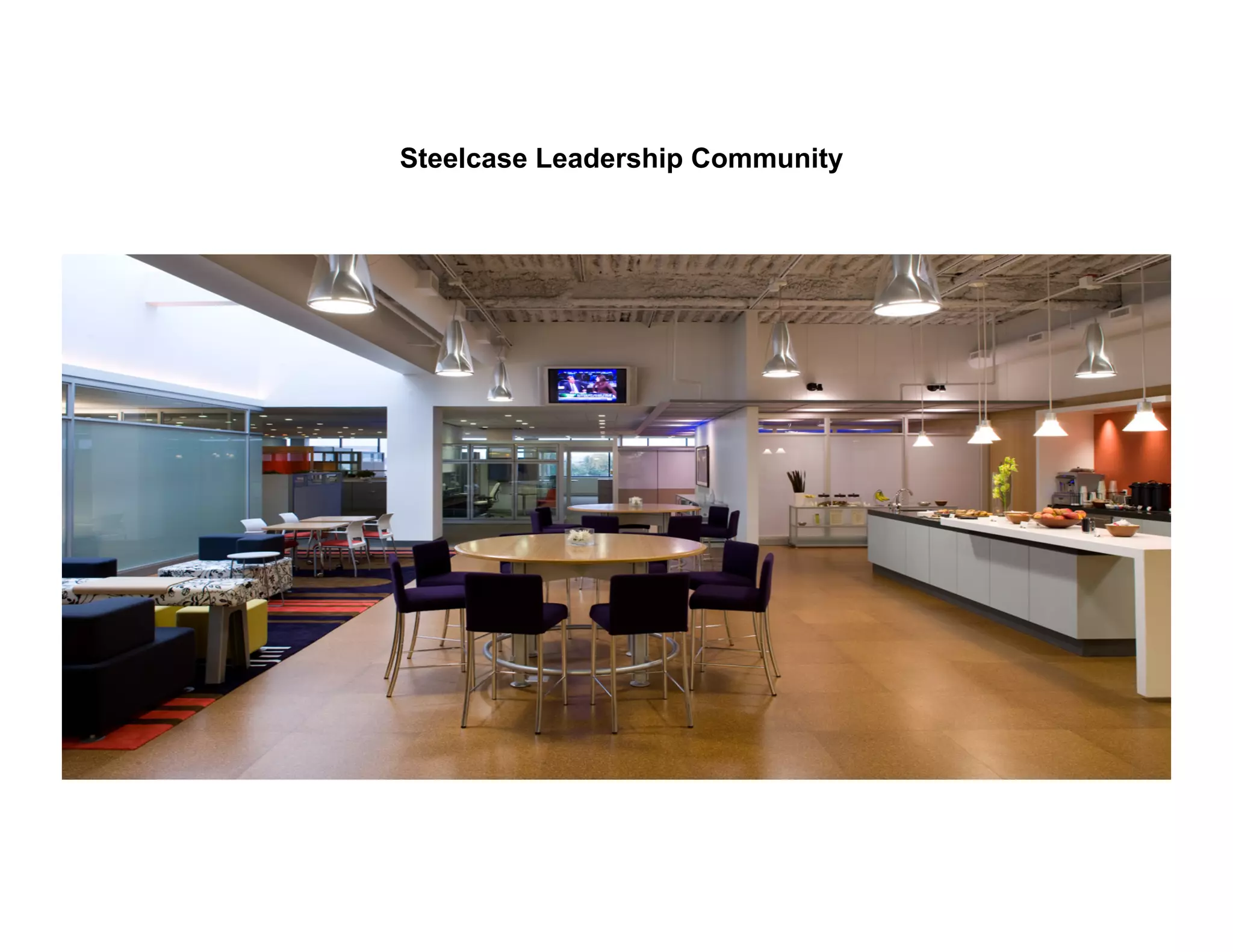
Steelcase Leadership Community

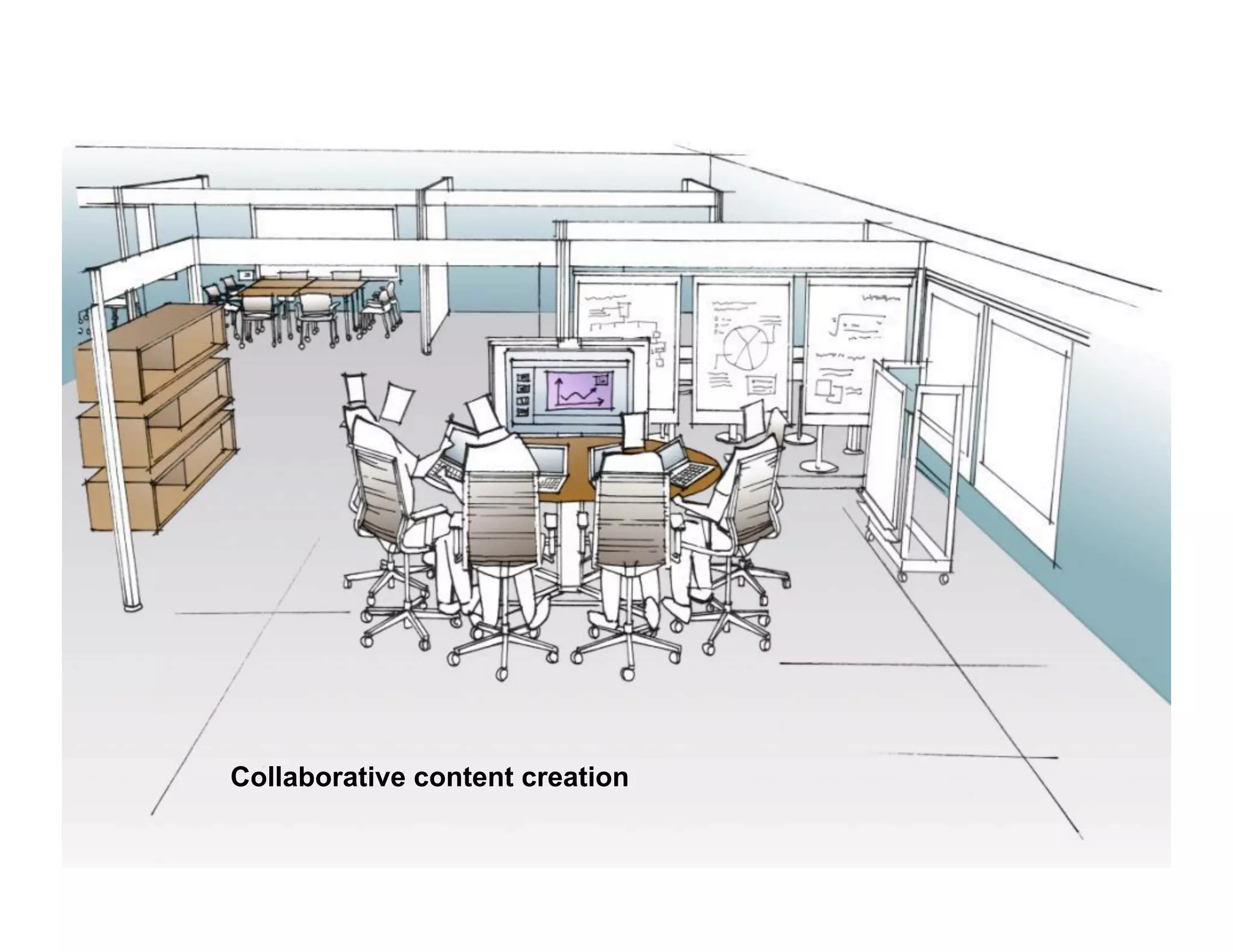
Collaborative content creation
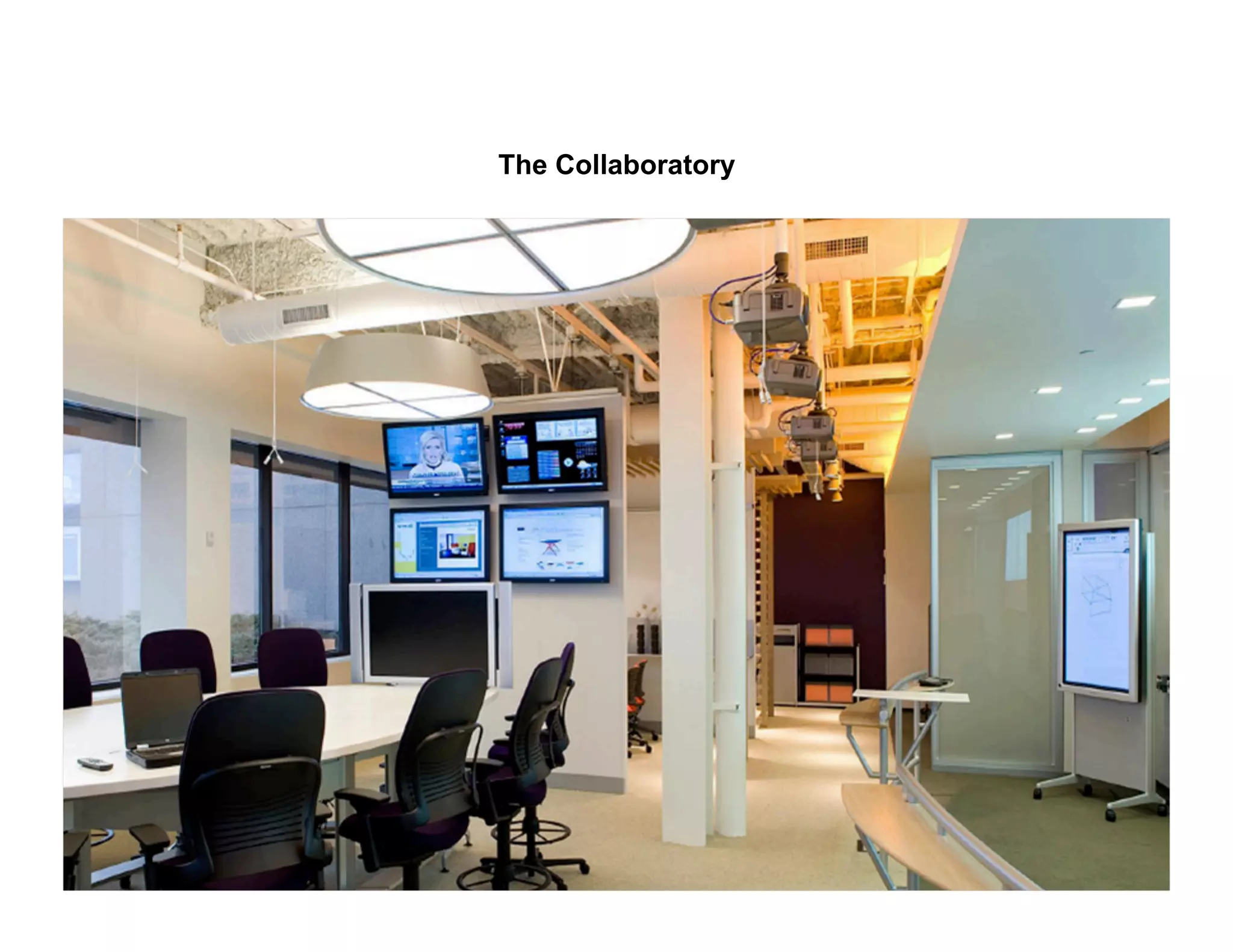
The Collaboratory
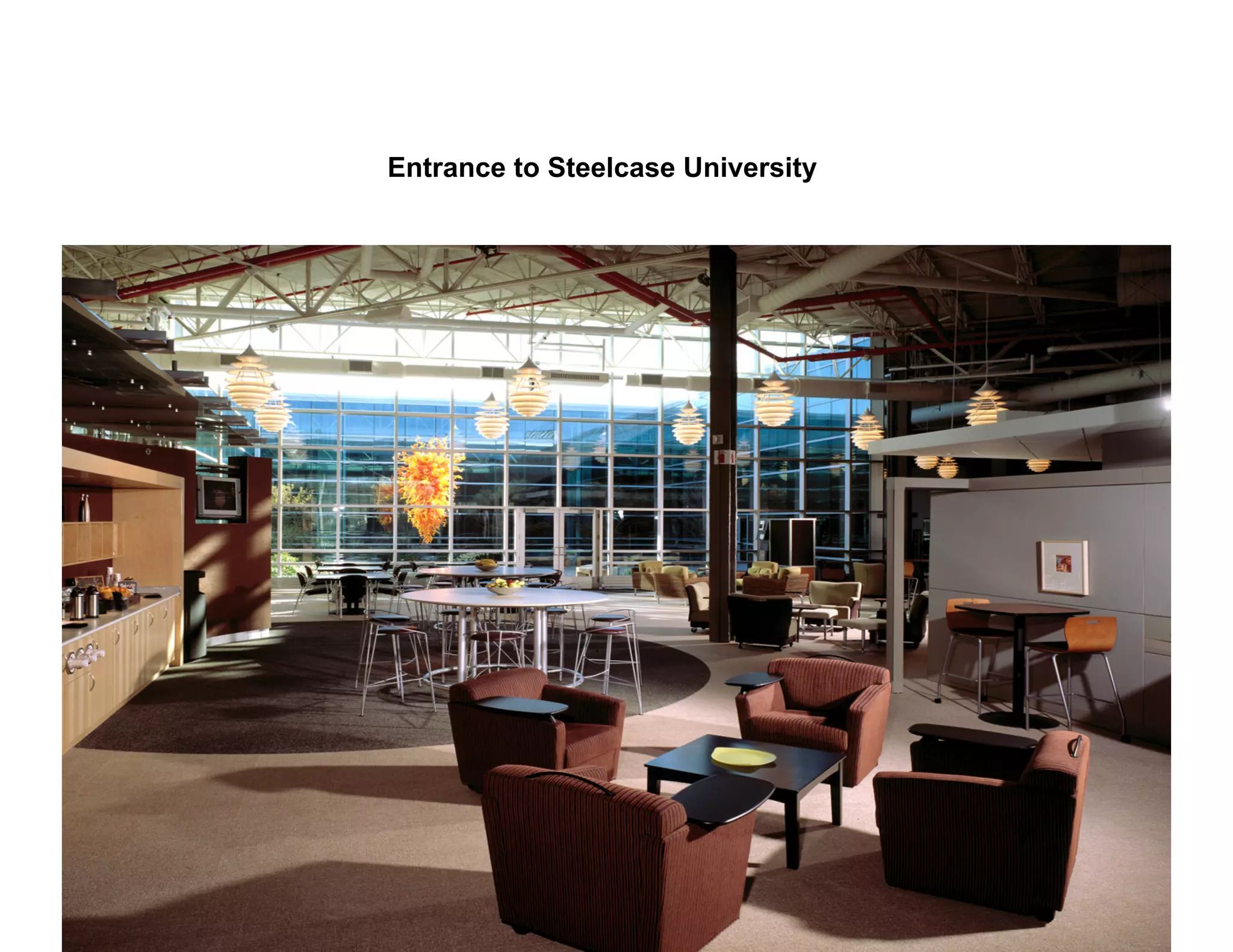
Entrance to Steelcase University
Putting People First at Steelcase

Putting People First at Steelcase